
How Did Spices Really Move Along the Silk Roads?
Follow the handoffs that changed cargo, price, names, and kitchens.
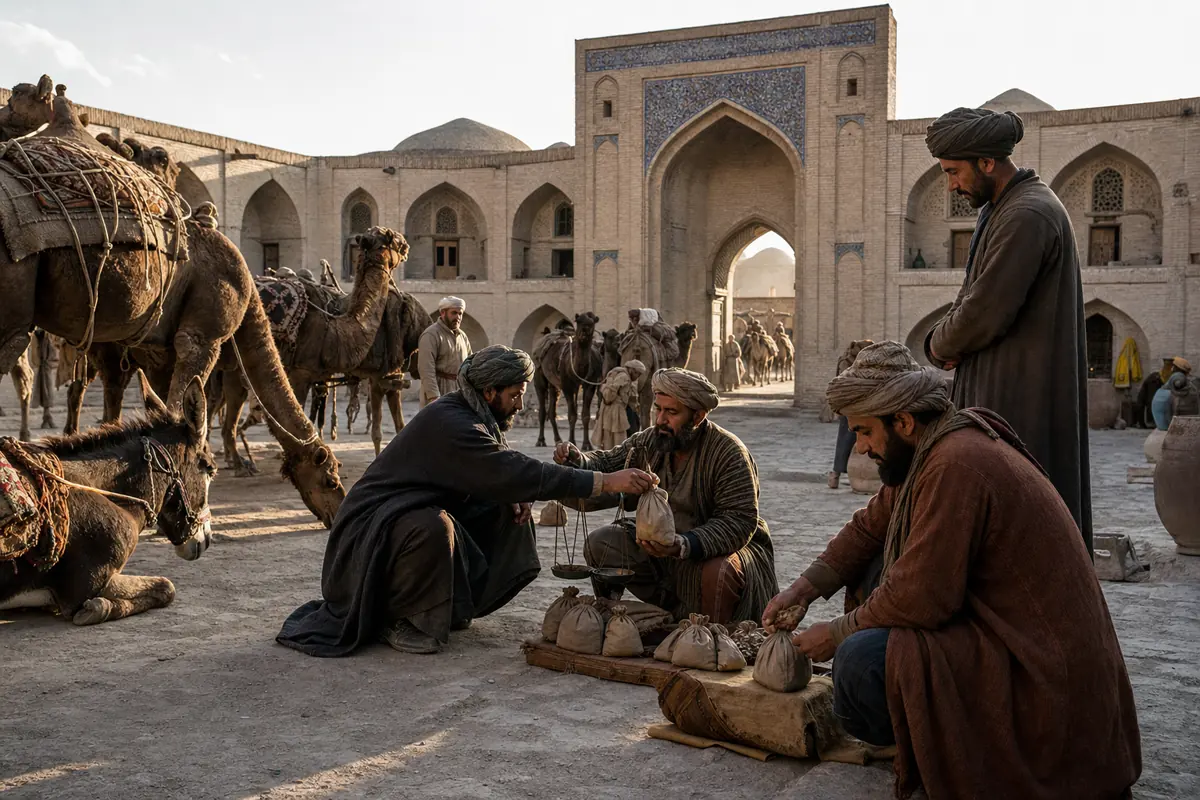
The Silk Roads linked changing land and sea networks where dry, compact spices moved through Indian Ocean ports, inland caravans, and regional markets. Merchants worked route segments and repacked cargo at handoffs, while monsoons, borders, taxes, war, and new shipping access kept redrawing the network.
The Silk Road was a network, not one spice highway
Most spice merchants did not travel from a growing region to a distant final kitchen. They bought, carried, and sold cargo along one section.
The familiar singular name hides branching roads across Central Asia and connected sea routes across the Indian Ocean. UNESCO uses the plural Silk Roads for good reason.
| Simple picture | What usually happened | Why it matters |
|---|---|---|
| One road | Many corridors opened and closed | No single route explains every cargo |
| One merchant | Goods changed hands repeatedly | Price and labels shifted at each sale |
| Only caravans | Ships carried major spice cargo | Ports were central to the network |
| China to Rome | Regional trade linked many markets | Exchange moved in several directions |
The term itself is modern. Ancient and medieval traders did not operate under one named system with a central planner.
A caravan road could connect with an Indian route, a Persian market, a river port, or a Mediterranean ship. The joins mattered more than the label.
This network view keeps the broader spice trade from becoming one arrow across a map.
Which spices could survive long-distance transport?
Long routes favored goods that held value without taking much pack space. Dried aromatics fit that problem unusually well.
Whole peppercorns, cinnamon bark, cardamom pods, cloves, and saffron tolerated movement better than fresh leaves. They still needed protection from damp and pests.
| Cargo | Transport advantage | Main weakness |
|---|---|---|
| Pepper | Dense, dry, broad demand | Moisture and adulteration |
| Cinnamon bark | Light, stackable pieces | Origin and species confusion |
| Cardamom pods | Shell protects seeds | Aroma fades after opening |
| Cloves | Strong aroma in tiny dose | Mold if stored damp |
| Saffron | Extreme value at low weight | Crushing and adulteration |
Value-to-weight mattered because animals had limits and ship space had a cost. A small pouch could represent many meals or a large payment.
Packaging was part of quality. Cloth, baskets, jars, inner wrappings, and sealed bundles separated cargo from rain, bilge water, dust, and insects.
Aromatic loss changed bargaining power. Buyers could reject a damp lot or demand a lower price after cracking a pod and finding weak seeds.
The cargo still changed. Aroma weakened, pieces broke, and merchants mixed grades, so distance could alter both price and flavor.
Sea lanes carried the spice routes around Asia
Spice movement was never only an overland caravan story. Indian Ocean ships carried far more weight than a string of pack animals.
Sailors used seasonal monsoon winds to plan departures and returns. A missed wind could delay cargo for months.
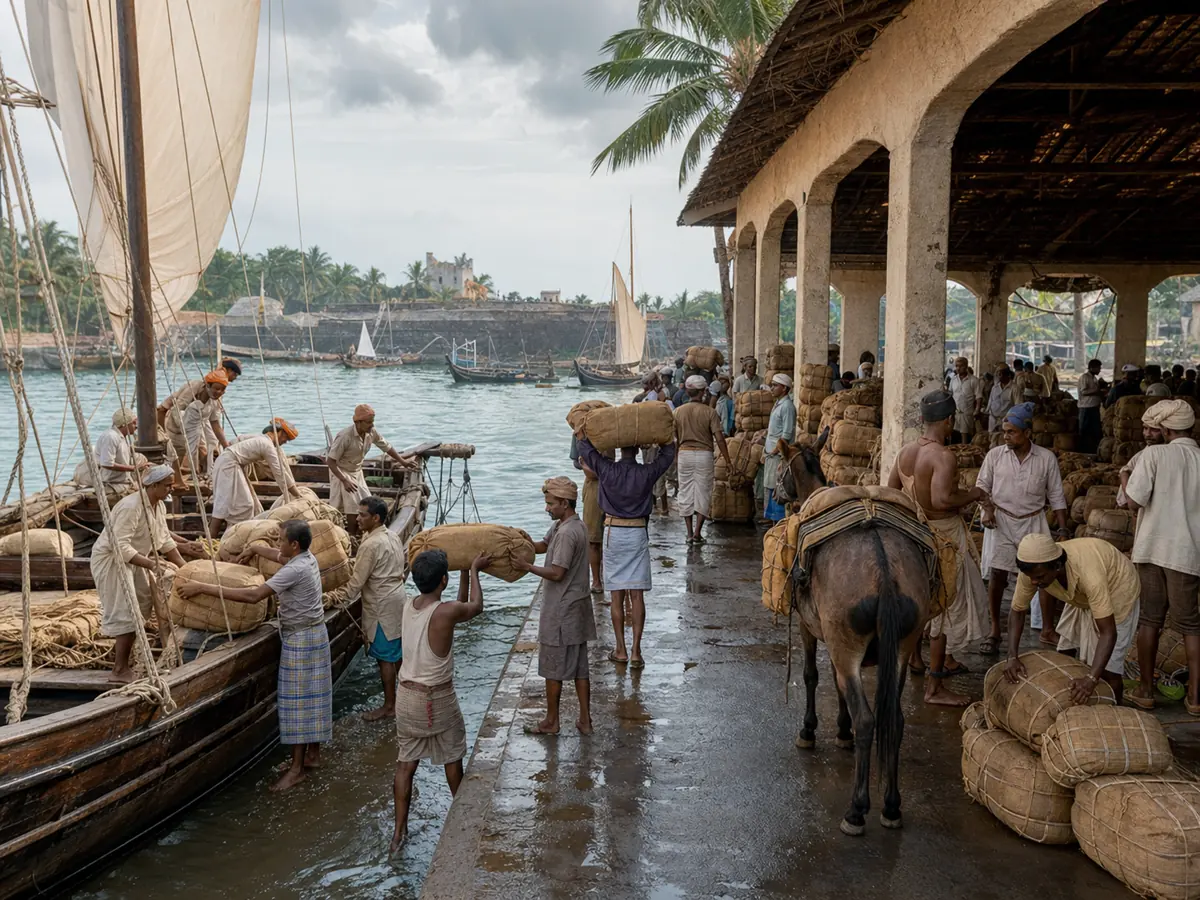
- Port: Warehouses gathered cargo from several growing regions.
- Season: Monsoon timing shaped sailing schedules and inventory.
- Handoff: River craft, carts, and animals carried goods beyond the coast.
Ports on the Indian subcontinent connected pepper and cardamom regions to Arabia, East Africa, Southeast Asia, and routes toward China.
The Red Sea and Persian Gulf then offered different approaches to Mediterranean and West Asian markets. Political control could favor one passage over another.
Maritime capacity lowered the cost of bulk movement, but it added shipwreck, piracy, storm, and port-tax risks.
Sailing schedules shaped warehouses on land. Merchants needed stock to bridge months when the favorable wind blew in the other direction.
Calling these spice routes part of the Silk Roads does not erase the ocean. It restores the largest missing piece in the popular map.
Oases and cities turned cargo into markets
A caravan city did more than offer water and walls. It concentrated storage, credit, interpreters, animal care, customs officials, and buyers.
At each node, a sealed bundle could be inspected, divided, repacked, taxed, pledged, or sold. The next carrier needed a new margin.
Credit let a merchant move cargo before the final buyer paid. A lender could claim the bundle or its sale proceeds as security.
Local weights and currencies also changed at the market gate. A broker translated measures so both sides could judge the price.
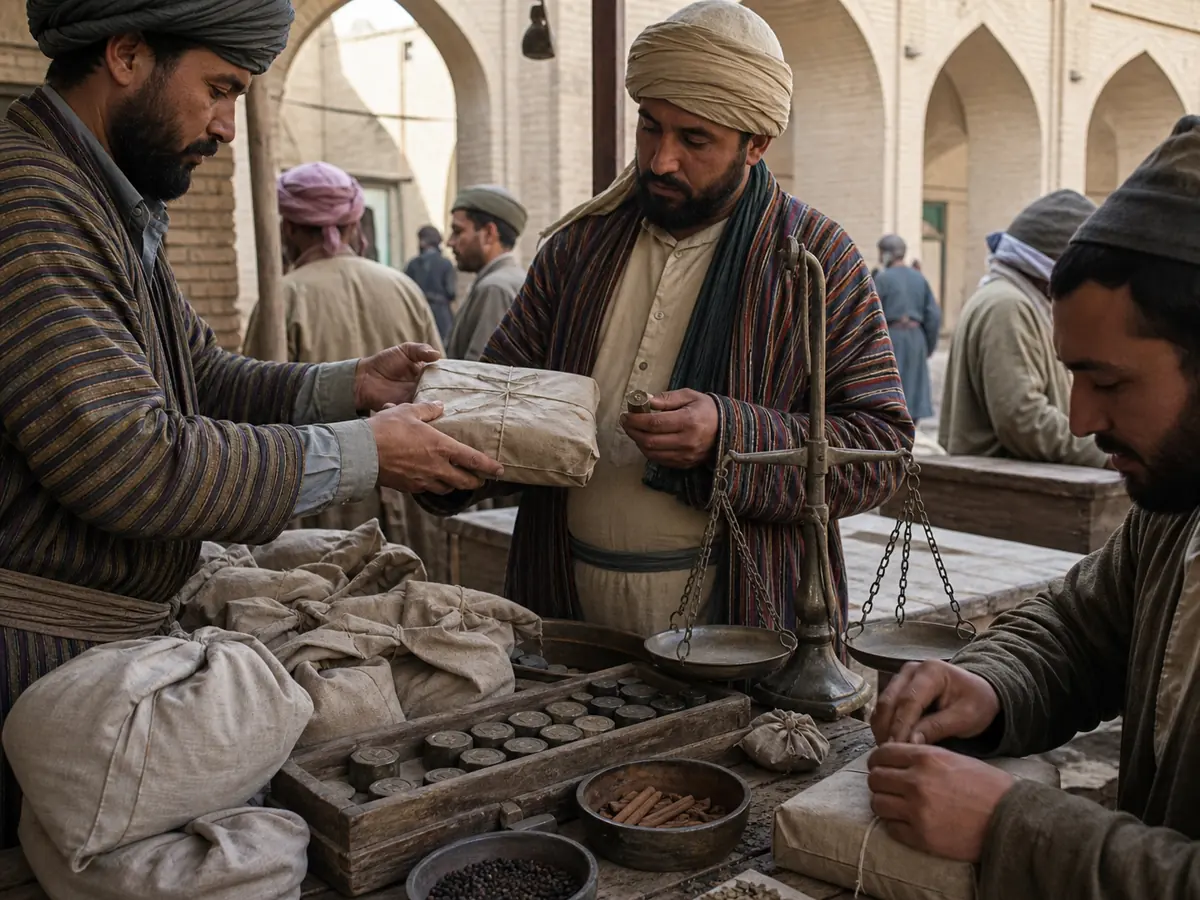
- Weigh: Local measures translated one market into another.
- Inspect: Buyers checked moisture, aroma, breakage, and contamination.
- Repack: Smaller lots opened the trade to another class of merchant.
Repacking changed who could afford to trade. A large sealed bale could become smaller lots for shopkeepers, physicians, or court buyers.
Samarkand, Kashgar, Merv, and other cities rose or fell under different political conditions. Their importance was never fixed.
Baghdad linked commerce with scholarship and administration. Medical, botanical, and culinary techniques could move beside physical goods.
Customs revenue made safe trade useful to rulers, yet conflict or predatory tax could send merchants elsewhere.
Warehouses absorbed seasonal delay. They also let merchants wait for a better buyer instead of accepting the first price offered at arrival.
Inspection created reputation. A merchant known for dry, honestly graded cargo could sell faster when buyers could not trace the distant harvest.
The route was therefore a business decision made many times. No merchant needed to understand the full network for the cargo to cross it.
Spice names often hid their true origin
A market name might point to a port, an intermediary, a broad region, or a merchant claim rather than the plant's actual growing place.
Cinnamon bark caused confusion because several aromatic species entered trade. Buyers far from origin judged rolls, color, sweetness, and seller reputation.
- Origin name: May describe a large region rather than one farm.
- Port name: Tells where cargo was bought, not where the plant grew.
- Merchant name: Can preserve an intermediary identity.
- Modern species: Botanical certainty may be stronger than the old written label allows.
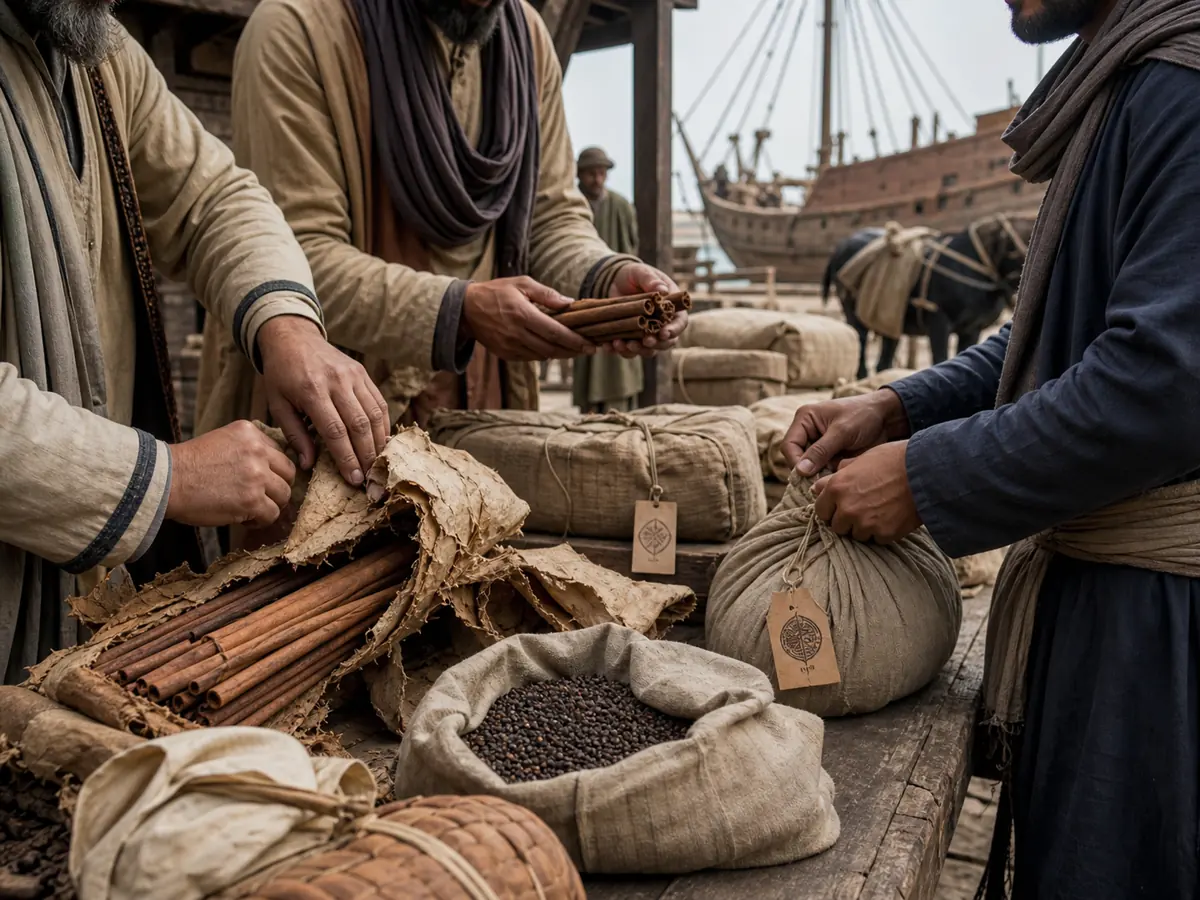
- Open: Inspection exposed aroma, moisture, breakage, and grade.
- Rewrap: A new bundle carried the identity of the next market.
- Result: Repeated handoffs could hide the distant growing region from the final buyer.
Pepper also arrived in several forms and grades. A distant writer could collapse different pepper pungency into loose language.
Repacking separated evidence from the field. Once bark or seed left its original container, a buyer relied more heavily on sensory inspection and trust.
Good history keeps the uncertainty visible. A plausible route cannot by itself identify a residue, seed, bark, or translated plant name.
Trade changed kitchens in many directions
The network did not simply carry Asian spices west toward European diners. Ingredients, cooks, techniques, beliefs, and medical texts moved through many regional circuits.
Central Asian, Persian, South Asian, Chinese, Arab, and Mediterranean cooks adapted aromatics to grains, meats, fruits, fats, and preservation methods.
- Goods moved: Pepper, aromatics, dried fruit, tea, sugar, and many nonfood materials crossed linked routes.
- Techniques moved: Grinding, distilling, preserving, and rice cookery changed through contact.
- People moved: Merchants, pilgrims, soldiers, captives, and craftspeople carried habits.
- Ideas moved: Medical and religious systems changed how ingredients were valued.
A cuisine did not appear because one sack crossed a border. Local repetition turned a foreign good into a familiar dish.
That process also produced substitution. Cooks used what arrived, replaced what did not, and changed dose around local taste.
A spice could arrive whole, broken, ground, or blended after several sales. Each form encouraged a different kitchen use and storage decision.
Translated medical texts gave aromatics another path into kitchens. Cooks could adopt an ingredient through a remedy, a court dish, or market imitation.
The strongest influence claim names a dish, period, and mechanism. A vague two-way meeting is too broad to explain a kitchen.
Adoption moved at household speed rather than caravan speed. A port city might use a spice regularly while an inland neighbor still treated it as rare.
Religious rules could redirect demand as well. Fasting, pilgrimage, and dietary law created markets for particular oils, aromatics, and preserved foods.
Technique could travel without a named recipe. Grinding finer, scenting rice steam, or balancing fruit with meat became local practice through repeated use.
The result was adaptation, not simple copying. New cooks changed the carrier, dose, and companion ingredients until the imported spice served local food.
Why routes shifted or disappeared
A route stayed useful only while safety, cost, demand, and political access remained acceptable. Change in one link could reroute the whole chain.
Pack animals needed pasture, water, replacement stock, and trained handlers. A drought could weaken a corridor before any border officially closed.
- Empire: New borders changed protection, taxes, and official markets.
- War: Armies closed corridors or redirected cargo toward safer ports.
- Disease and climate: Labor loss, drought, and pasture failure weakened particular segments.
- Shipping: New ocean access could bypass several inland handoffs.
Political stability lowered escort costs and made schedules more predictable. When protection collapsed, merchants divided loads or chose longer routes with safer checkpoints.
Merchants adapted because the network had alternatives. That flexibility also explains the links between medieval European spice use and several source regions.
Sea routes also depended on timing. A dependable monsoon departure could outweigh a shorter land distance that crossed several unstable tax zones.
A port could decline while its merchants moved elsewhere. Commercial skill and family ties often outlasted a particular corridor.
Bypassing one corridor did not end regional trade. It shifted warehousing, credit, and customs income toward another port or caravan city.
Read any Silk Road spice map as a dated snapshot. The next season, dynasty, or port agreement may draw another line.
A durable map therefore shows choices, not destiny. Mark alternate ports and crossings beside the famous corridor to reveal how trade recovered from disruption.