
Why Does Black Pepper Make You Sneeze Near the Grinder?
The sneeze is a particle and nerve reflex, not proof that pepper is unsafe.
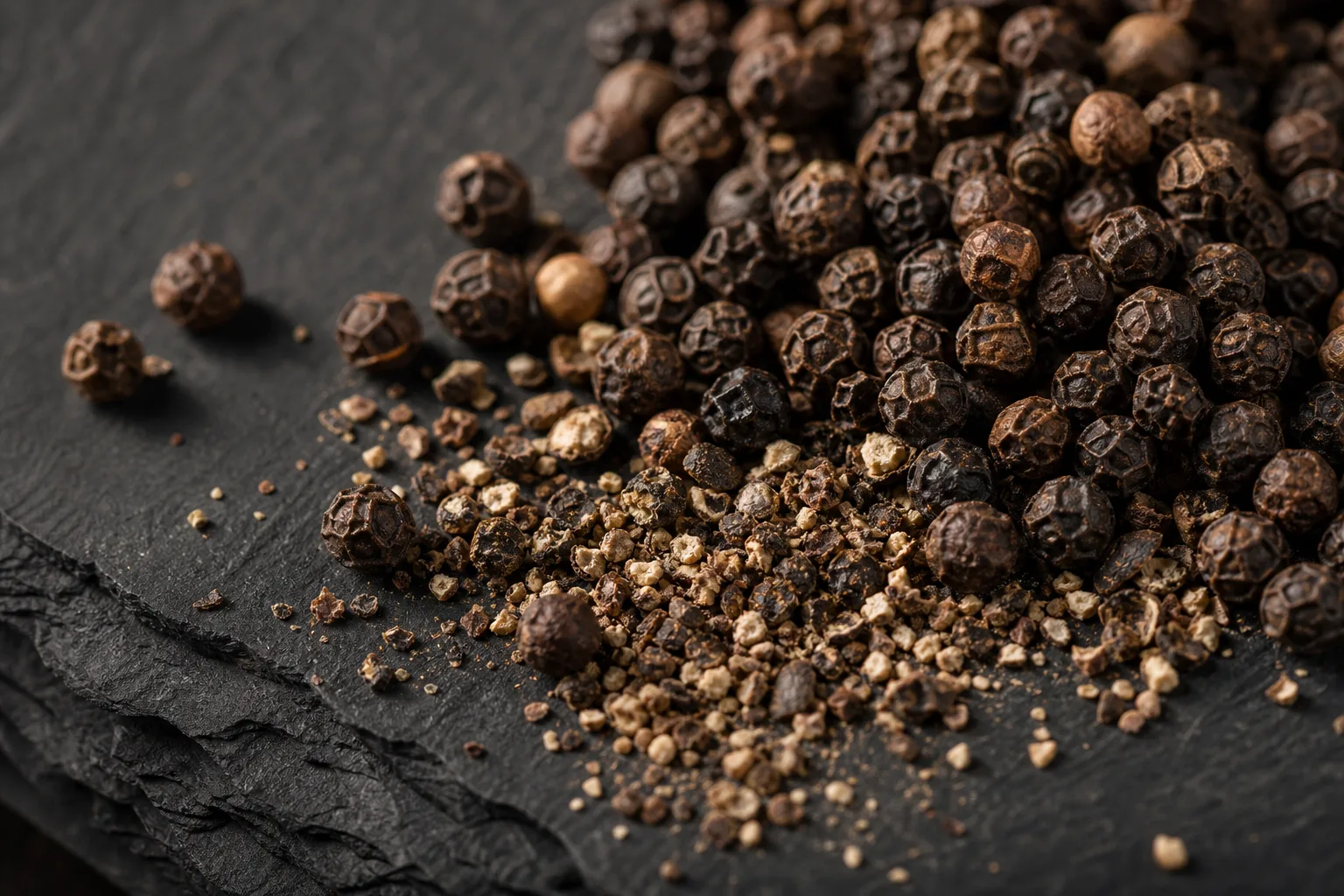
Black pepper makes you sneeze because tiny pepper particles and piperine irritate nerve endings inside the nose. The sneeze reflex tries to clear those particles before they move deeper into the airway. Fresh grinding makes the effect stronger because it releases fine dust and volatile aroma at the same moment.
The sneeze starts in your nose, not the pan
Black pepper makes you sneeze when fine dust reaches sensitive nerve endings inside your nose. Piperine adds pungent irritation to that particle hit.
The reflex is mechanical and chemical at the same time. Your body tries to clear the irritant quickly.
That is why fresh black pepper near a grinder can trigger sneezing before you taste anything.
The pan is not required for the reaction. Dry pepper dust near your face is enough.
| Trigger | What happens | Kitchen cue |
|---|---|---|
| Fine dust | Particles enter the nose | Cloud appears above grinder |
| Piperine | Pungent compound irritates nerves | Fresh pepper feels sharp |
| Volatile aroma | Smell rises fast after grinding | Aroma is strongest immediately |
| Distance | Closer grinder sends more dust upward | Sneezing happens before cooking |
Sneezing does not mean the pepper is bad. It means the powder reached the wrong place first.
Pepper dust hangs around because the particles are tiny
A pepper mill makes more than visible flakes. It also creates tiny particles that lift with the first puff of air.
Those particles matter because they can reach the nose before gravity pulls them down. The closer the mill, the faster that happens.
| Cause | What you see | What to change |
|---|---|---|
| Fine setting | Light dust above food | Use medium or coarse near the table |
| Fast grinding | Puff from the mill top | Grind slower and lower |
| Dry plate | Dust sits on the surface | Grind near moist food when possible |
| Dirty mill cap | Old dust exits first | Wipe the top before use |
This explains why a quiet-looking grinder can still trigger sneezing. The irritating particles are often smaller than the flakes you notice.
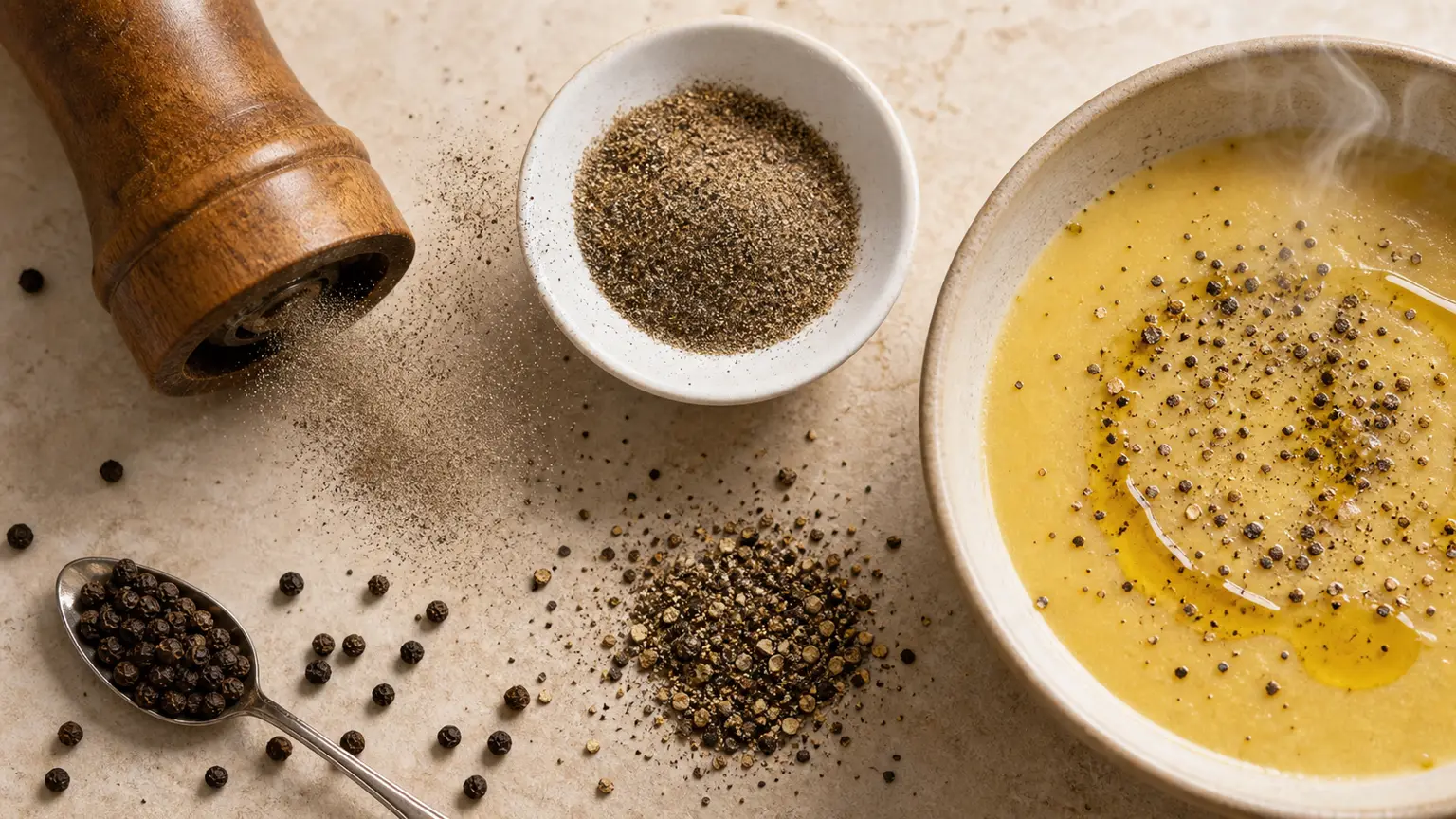
- Fine setting: More dust floats above the plate.
- Fast turns: The mill pushes a first puff upward.
- Dry surface: Particles stay loose longer.
- Close face: The nose catches dust before food does.
Steam can help because wet air and wet food catch particles. Your face should not be the first surface they meet.
Piperine is pungent, but dust gives it a ride
Piperine is the main pungent compound in black pepper. It creates bite on the tongue and irritation near sensitive tissue.
Pepper dust matters because piperine is carried on particles. A coarse crack is less likely to float than a fine powder cloud.
Piperine is different from capsaicin. Chile heat lingers differently from black pepper bite.
That difference matters in cooking too. Pepper feels sharp and aromatic, while chile heat builds and stays longer.
- Coarse grind: Bigger pieces fall faster and usually sneeze less.
- Fine grind: Smaller particles hang in the air and reach the nose faster.
- Fresh grind: Aroma and dust appear together, so the effect feels stronger.
- Pre-ground jar: Often smells weaker, but the fine powder can still float.
This is a useful cooking clue. The same fresh grind that smells loud also loses aroma faster after grinding.
Grind size changes both sneezing and flavor
Pepper grind size changes where the spice lands. Fine pepper disappears into sauce, while coarse pepper stays on the surface longer.
Surface pepper is easier to smell, so it is also easier to inhale. That is why table grinding can trigger sneezing quickly.
| Grind | Cooking result | Sneeze risk |
|---|---|---|
| Very fine | Spreads through sauces and dressings | High if shaken near face |
| Medium | Works for everyday seasoning | Moderate |
| Coarse | Gives bursts on steak, eggs, salad | Lower airborne dust |
| Cracked | Best for crusts and pickles | Lowest, but texture is obvious |
Use the finest grind near wet food, not over a dry plate at nose height.
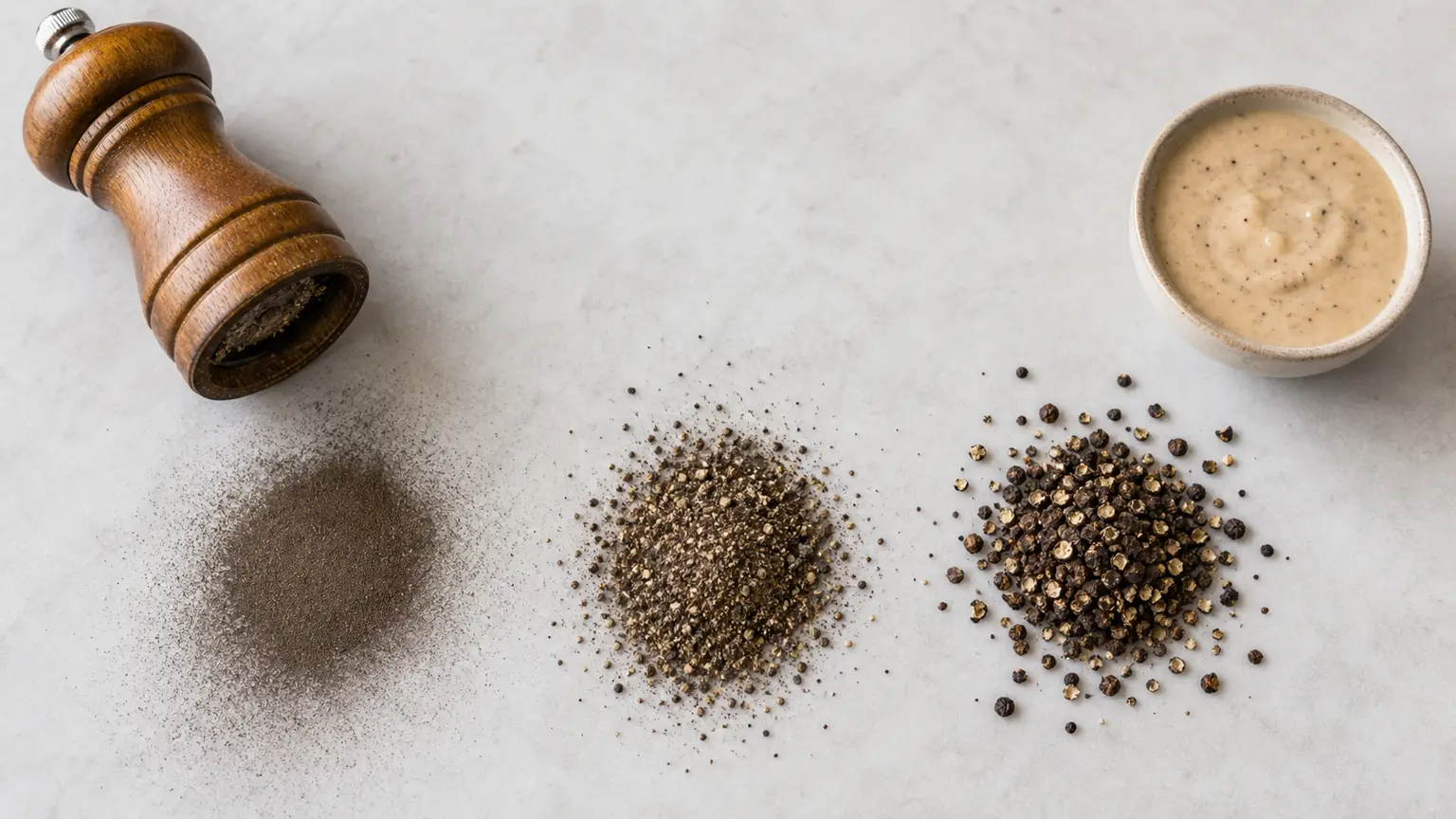
- Very fine: Smooth sauce, highest dust risk.
- Medium: Everyday seasoning, moderate risk.
- Coarse: Visible bursts, lower dust.
- Cracked: Strong texture, lowest dust cloud.
Fresh, stale, and pre-ground pepper sneeze for different reasons
Fresh pepper tends to sneeze because grinding releases aroma and dust together. Stale pepper may sneeze because it is already fine and dry.
Pre-ground pepper often tastes weaker, but it can still float easily when shaken. Weak flavor does not mean low dust.
- Fresh mill pepper: Strong aroma, more immediate dust, better flavor control.
- Pre-ground pepper: Less aroma, but fine particles can leave the shaker fast.
- Old pepper: Weak smell and dry dust, so it can irritate without tasting good.
- Cracked pepper: Lower dust, stronger texture, and slower flavor spread.
This is why replacing old pepper can improve food without reducing every sneeze. Grind size still controls the air problem.
If pepper tastes flat and still makes you sneeze, the jar is giving irritation without reward.
Heat changes flavor more than the sneeze reflex
Cooking black pepper changes aroma, harshness, and timing. It does not make airborne dust less irritating before the pepper enters the pan.
Pepper timing matters because pepper top notes fade with long heat. Late pepper tastes sharper.
This is separate from browning chemistry. Pepper bite comes from pungent compounds, not browned sugars or proteins.
Wet food lowers dust immediately. It does not change what happened while you were grinding dry pepper.
| Timing | Flavor result | Sneeze relevance |
|---|---|---|
| Before cooking | Milder bite after heat | Dust can still rise while grinding |
| During simmer | Pepper blends into sauce | Less dust once wet |
| At the table | Sharpest aroma and bite | Highest dust risk near face |
| Bloomed in oil | Warmer, rounder pepper note | Dust risk happens before oil contact |
When cooking, blooming spices in oil can round pepper flavor. It cannot stop sneezing if you inhale the dust first.
Long heat also changes toasted spice aroma. That aroma question is different from nasal irritation.
How to grind pepper without sneezing
The practical fix is distance and particle control. Grind pepper lower, away from your face, and close the grinder before shaking it.
Use a coarser setting when finishing food at the table. Use finer pepper near the stove, where steam and food catch particles.
A clean spice grinder also leaves less stale dust around the lid. That reduces the first puff.
- Turn your face away: Keep the grinder below chest level, not under your nose.
- Grind into a small bowl: Let dust settle for a few seconds before adding it.
- Use coarser pepper: It floats less and gives cleaner bursts in finished food.
- Clean the mill: Old fine dust around the top can puff out first.
The same advice applies when using a spice grinder. Fresh powder is useful, but airborne powder is waste.
Reduce the cloud before you change the pepper
If pepper makes you sneeze, change the handling before blaming the pepper. Most fixes reduce airborne dust.
Start with grinder height, speed, and setting. Those three choices decide how much pepper reaches your nose.
| Situation | Better habit | Why it helps |
|---|---|---|
| Cooking at the stove | Grind beside the pot, not above your face | Steam catches some particles |
| Seasoning salad | Grind into a bowl first | Dust settles before tossing |
| Table pepper | Use medium grind | Less powder floats upward |
| Refilling a mill | Wipe the cap and threads | Old dust exits first |
| Using pre-ground pepper | Spoon it low over wet food | Shaking lifts fine powder |
Changing to white pepper does not automatically solve the reflex. Fine particles can still irritate your nose.
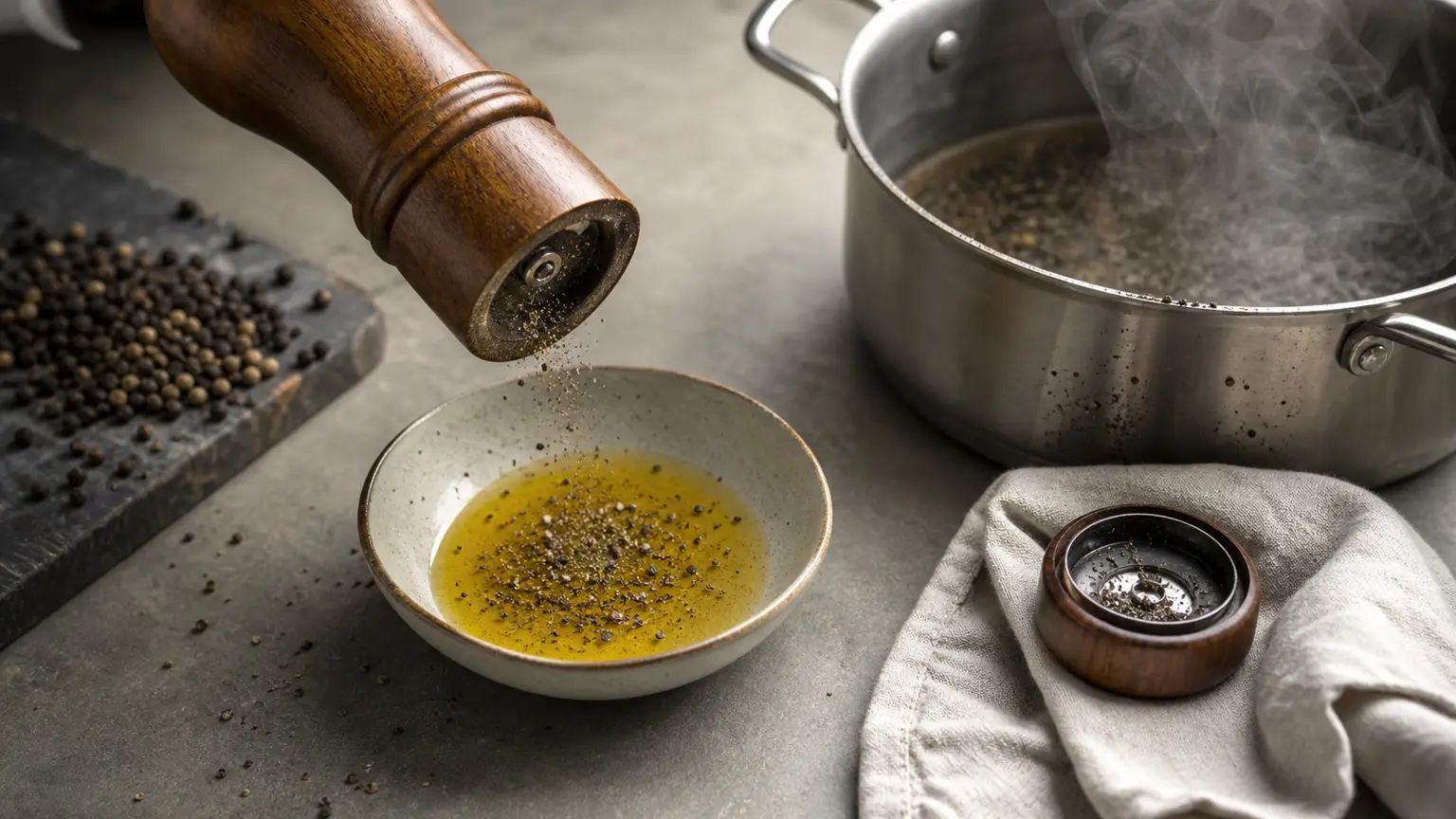
- Lower mill: Keep dust below breathing height.
- Small bowl: Let particles settle before adding.
- Wet food: Grind near steam, oil, or dressing.
- Clean cap: Remove old dust before the first turn.
Changing to coarse pepper helps only when the dish can tolerate texture. Smooth sauces may still need finer pepper.
The practical goal is simple. Keep pepper close to food and away from your breathing path.
- For soup: Grind near the steam and stir before leaning over the pot.
- For eggs: Grind from the side of the plate, then step back before serving.
- For steak: Use cracked pepper before cooking and a smaller fresh grind after resting.
- For dressing: Grind into oil or vinegar, not onto a dry spoon.
The sneeze fix should not ruin the food. Match the safer handling to the texture the dish needs.
If every grind causes discomfort, use a spooned pre-ground pepper briefly while you clean or replace the mill.
A loose grinder top can throw dust upward even on a coarse setting. Tighten the mill before blaming the peppercorns.
A very dry shaker can do the same thing. Tap it low over the food instead of shaking from face height.
If the pepper is for guests, grind it before serving and let the air settle. The flavor stays, but the first dust puff fades.
For meal prep, grind pepper into oil, butter, or dressing first. Wet fat traps particles better than a dry bowl.
For finishing, use fewer turns and taste. The sharpest pepper note arrives before the largest visible pile.
Fresh pepper can sneeze more and taste better
Fresh pepper often smells stronger because grinding breaks the berry right before use. That same break releases more dust.
This creates the tradeoff. The best aroma arrives with the highest chance of a small pepper cloud.
- For soup: Grind near the pot so steam catches dust before your nose does.
- For salad: Grind lower and wait a few seconds before tossing.
- For steak: Use coarse pepper before cooking, then finish with a smaller fresh grind.
- For eggs: Grind onto the plate from the side, not straight down from face level.
The goal is not avoiding fresh pepper. The goal is keeping fresh pepper in the food instead of the air.
What the sneeze does not prove
Pepper sneezing does not prove allergy, spoilage, or unusual strength by itself. It usually proves fine particles reached your nose.
Health claims about pepper need a separate evidence standard. Culinary amounts are not the same as supplement doses.
That boundary matters for health benefit claims and for black pepper absorption discussions.
Dose and evidence decide black pepper absorption questions. A sneeze only tells you particles reached the nose.
If pepper causes wheezing, swelling, or serious breathing symptoms, treat that as a medical issue, not a cooking problem.
For normal cooking, the fix stays practical: control dust, distance, grind size, and timing.