
Why Does Toasting Spices Change Their Flavor?
Use dry heat for whole seeds, gentler fat contact for powders, and smell as the real timer.
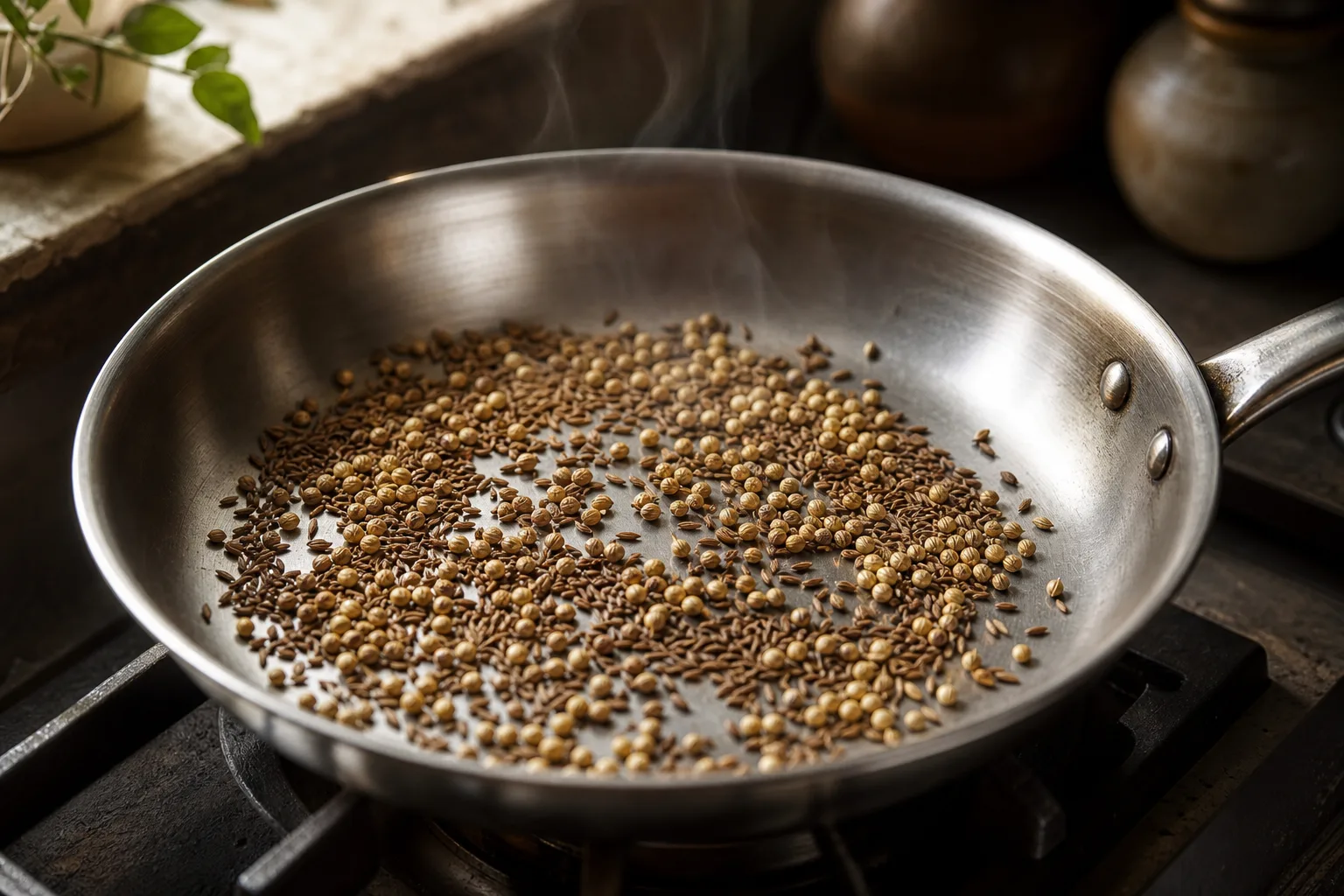
Toasting spices changes their flavor by removing moisture, moving volatile aroma into the air, and sometimes creating new roasted compounds. It does not simply release more essential oil, and the Maillard reaction is only part of the result. Whole seeds give you the widest margin, while fine powders and delicate blends often need fat or a late addition instead.
What changes first when spices hit a dry pan?
Toasting changes a spice before it becomes visibly brown. Surface moisture leaves, volatile molecules move into the air, and the solid plant material grows hot enough for other reactions to begin.
The first strong smell is evidence that aroma compounds are moving. Some reach your nose, some remain in the spice, and continued heating can drive away the very top notes you meant to keep.
This is why “releasing the essential oils” is an incomplete explanation.
Heat changes the balance between what escapes, what survives, and what forms for the first time.
- Moisture loss
- A drier seed crushes more cleanly and can heat beyond the wet-surface stage.
- Volatile movement
- Existing aroma compounds enter the air, which is why the pan becomes fragrant quickly.
- Roasted-compound formation
- Suitable heat can create nutty pyrazines, furans, and other new aroma molecules.
- Thermal degradation
- Excess heat destroys desirable compounds and replaces them with acrid or charred notes.
A useful toast therefore has a peak. Before that point the spice may smell raw or muted, while after it the aroma becomes flatter even if the color keeps deepening.
The nose often detects that peak sooner than the eye. Cumin and coriander can shift from raw and citrusy toward warm and nutty with little dramatic browning.
Smoke is a later event.
By the time smoke becomes the main cue, useful volatile loss and bitter degradation have already started.
Is the Maillard reaction doing all the work?
The Maillard reaction contributes to some toasted-spice aromas, but it does not explain every change. It is one set of reactions between reducing sugars and amino compounds under suitable heat and moisture conditions.
Those reactions can form pyrazines, furans, and other molecules associated with roasted nuts, bread crust, coffee, and browned seeds.
A spice may contain the necessary precursors, yet its first aromatic change can still come from moisture loss and existing volatiles escaping.
| Process | What it needs | What changes | Kitchen cue |
|---|---|---|---|
| Moisture loss | Heat above the wet surface | Texture and grinding behavior | Seed feels drier before it looks brown |
| Volatile release | Warm aromatic compounds | Existing aroma reaches the air | Fragrance rises rapidly |
| Maillard chemistry | Reducing sugars, amino compounds, useful heat | New roasted aroma compounds | Nutty notes may appear |
| Burning | Excess temperature or time | Desirable compounds degrade | Acrid smoke or black spots |
Caramelization is separate again because it concerns sugar breaking down under heat. A spice can experience several of these processes together, which is why a pan does not offer one clean chemical switch.
The small size of spices makes “more Maillard” a poor cooking target.
A bread crust has moisture and mass behind its browning surface, while a cumin seed or fine powder has much less room between a useful roast and damage.
The practical correction is simple.
Toasting works through overlapping physical and chemical changes, and the best result may happen before Maillard browning becomes visually obvious.
Does toasting make spices stronger or just different?
Toasting usually makes a spice different rather than uniformly stronger. It can add roasted notes while reducing some compounds that defined the raw seed.
A controlled cumin study found that conventional roasting changed the volatile profile and lowered recovered volatile-oil yield as heat exposure increased. The fresh sample yielded 5.6 percent volatile oil, while conventionally roasted samples ranged from 4.4 percent down to 1.8 percent under progressively stronger test conditions.
Those laboratory values do not give a home cook a pan timer.
They show the direction of the trade: heating can create a more roasted smell while leaving less total volatile oil to recover.
Research on black cumin, Nigella sativa, shows the same trade from another angle. Kiralan identified 38 volatile compounds across raw and heated samples, with thymoquinone and p-cymene decreasing while pyrazines and furans increased during roasting.
Black cumin and culinary cumin are different plants, so their numbers should not be merged.
Taken together, that evidence makes “stronger” too blunt a word for roasted spice.
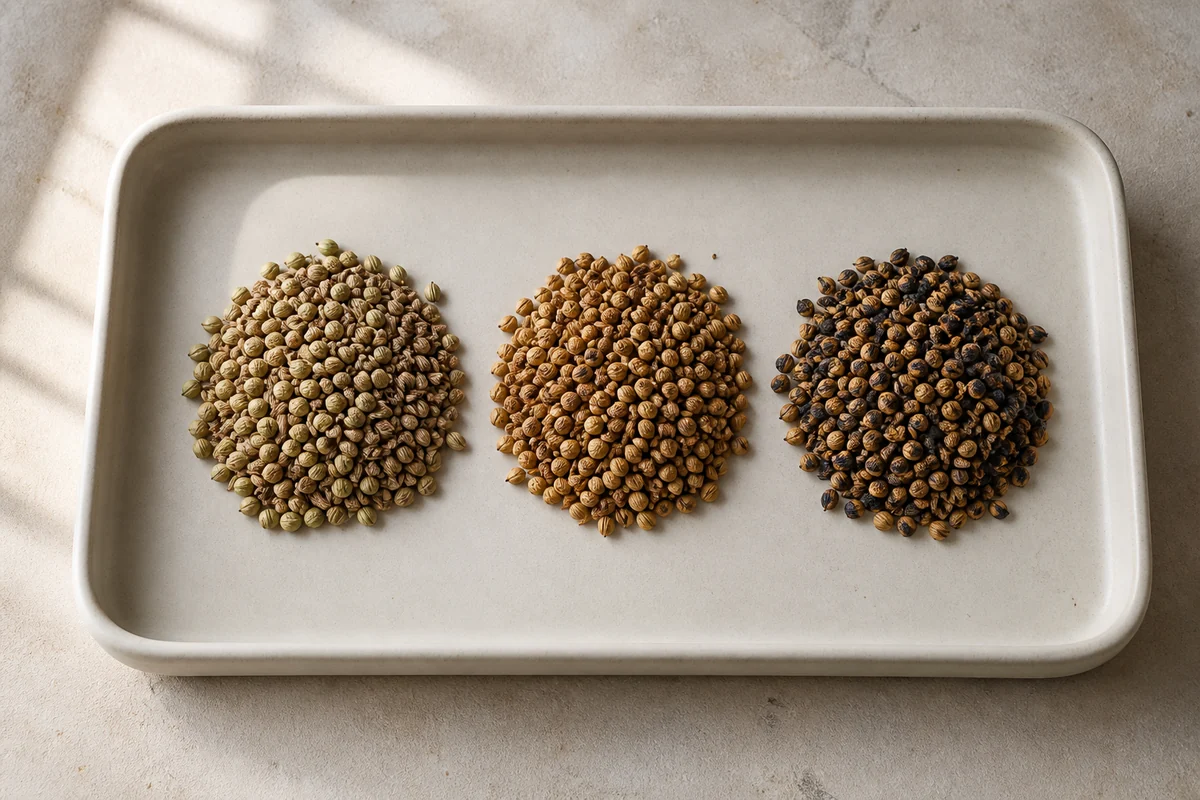
- Raw: Pale seeds retain their original high notes and moisture.
- Gently toasted: Warmer color can accompany nutty roasted aroma.
- Scorched: Black patches mark degradation, not extra flavor.
A freshly toasted cumin seed may seem louder than stale ground cumin because freshness and form were better before heat entered the comparison. Toasting cannot rebuild oils that have already oxidized in an old jar.
The aroma filling the kitchen also deserves caution.
Molecules that reach your nose have left the spice, so a huge pan smell is not proof that the finished dish will retain more aroma.
Why do whole seeds handle dry heat better than powders?
Whole seeds have structure between their aromatic interior and the pan. Seed coats and intact tissue slow heat transfer, giving moisture and aroma time to shift before every particle reaches the hottest metal.
Ground spice has far more exposed surface.
Fine particles touch hot metal and air at once, so evaporation, oxidation, and scorching accelerate together.
That difference explains why whole cumin and coriander are forgiving dry-toast candidates.
Ground turmeric and paprika can darken and turn bitter before a useful roasted note develops.
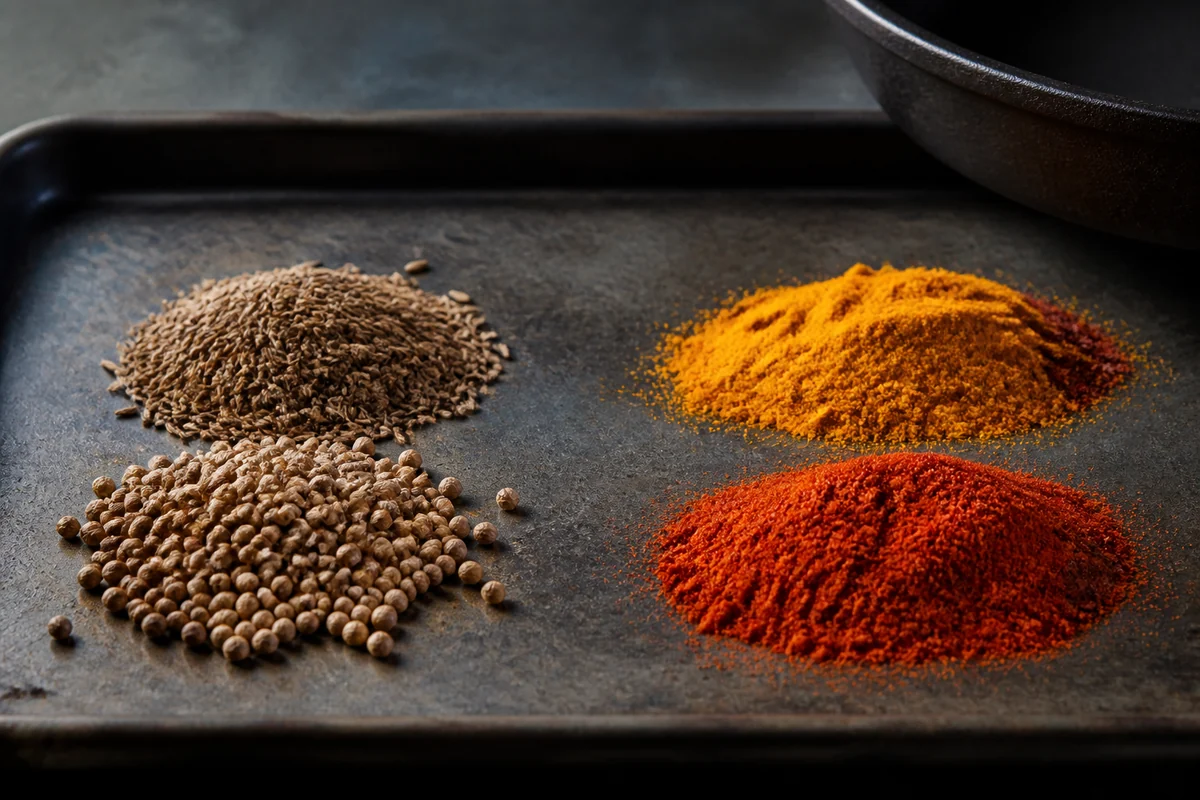
- Seed coat: Intact tissue buffers the aromatic interior.
- Particle size: Fine powder heats across many exposed surfaces at once.
- Pan contact: Thin powder patches can scorch before thicker clumps warm evenly.
- Cooling: Residual heat keeps acting after the burner drops.
Particle size also changes what “even heating” means. A single layer of similar whole seeds warms with a manageable spread, while fine powder forms thin patches and thicker clumps that reach different temperatures.
Mixed whole-spice batches narrow that margin too.
A peppercorn and a cumin seed in the same pan do not share mass, moisture, or surface area, so the smaller seed can lose aroma while the larger one is still warming.
The same mismatch appears in blends that combine whole seeds with broken flakes. Heating each form separately preserves the change each ingredient needs without turning the result into a compromise.
Once a spice is ground, its aromatic interior is no longer protected during storage either. Dry heat adds another burst of exposure, which is why stale powder often becomes dusty or harsh rather than newly vivid.
Cooling whole spices before grinding protects the result.
Warm seeds soften fixed oils and carry residual heat into the grinder, where the powder can clump and lose more aroma.
The science leads to a form decision, not a universal rule. Give sturdy whole seeds dry heat when roasted character helps, and give fine powders a gentler path.
Why is simmering different from dry toasting?
Simmering cannot reproduce a dry pan because free water limits the temperature around the spice. At sea level, a watery mixture stays near 100°C while liquid water remains, although salt, altitude, and concentration shift the exact number.
A dry metal surface can rise far above that range.
It removes moisture quickly and gives roasting reactions more opportunity, along with a much greater risk of degradation.
Hot fat creates a third environment. It can exceed water’s boiling point and dissolve many hydrophobic aroma compounds, spreading them through a sauce instead of leaving them concentrated in dry particles.
| Environment | Main physical condition | Flavor result | Best fit |
|---|---|---|---|
| Dry pan | No added carrier and high surface heat | Moisture loss plus possible roasted compounds | Sturdy whole seeds |
| Hot fat | High heat with an aroma-carrying solvent | Fast extraction and broad distribution | Many ground spices and whole tempering spices |
| Simmering liquid | Water keeps the mixture near its boiling range | Gentle extraction without the same dry roast | Pods, bark, seeds, and powders in wet dishes |
This is why blooming powder in oil is not a weaker version of dry toasting.
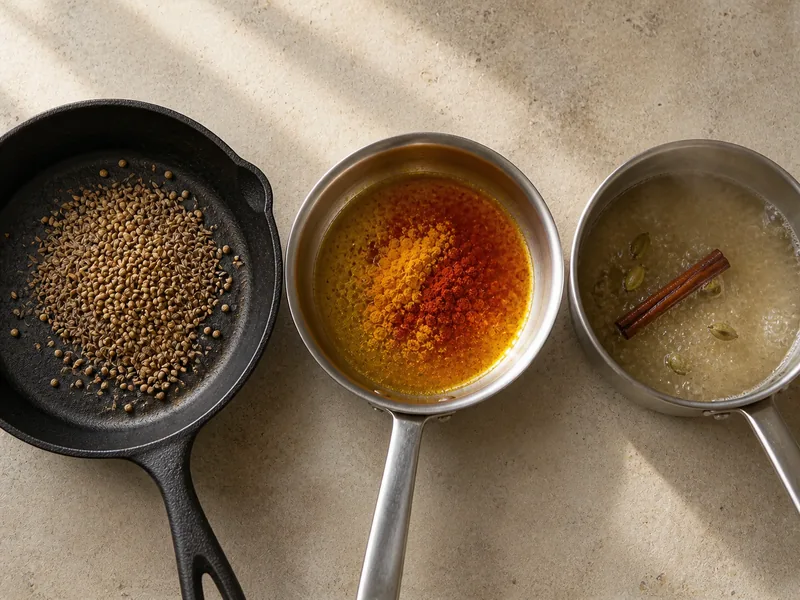
- Dry pan: Whole seeds meet high surface heat without a carrier.
- Hot fat: Ground spices release oil-soluble aroma into the cooking medium.
- Simmering: Water limits temperature while extracting a gentler profile.
The fat changes where the aroma compounds go and how the eater encounters them.
Water can preserve a gentler profile that dry heat would erase. Cardamom in milk uses that lower-temperature path.
Cinnamon in a broth releases aroma without needing a dark roasted edge.
The desired result chooses the environment.
Dry heat creates a roasted direction, fat carries aroma across the dish, and water extracts under a lower temperature ceiling.
When does toasted aroma turn bitter?
Useful toasting moves through a sequence, not one fixed minute count. The spice first smells warmer and clearer, then its original top notes begin to fade as roasted notes move forward.
The peak is short because the pan keeps supplying energy after the first vivid aroma arrives.
Continued heating drives off more volatiles and raises the chance of oxidation and thermal breakdown.
A slight color change can support the smell cue, but it should not replace it. Different seeds begin with different colors, moisture levels, sizes, and oil content, so one shade cannot mark readiness across a mixed batch.
Bitterness starts to dominate when the smell turns acrid, black spots appear, or smoke replaces the spice’s recognizable aroma. At that point the pan is creating damage faster than useful flavor.
Residual heat can cross the line after the burner drops.
A heavy skillet stores enough energy to keep cooking small seeds, which is why the spice may smell right at the stove and bitter by the time it is ground.
Old spice creates a quieter failure. A cook may keep heating while waiting for an aroma that the jar no longer contains, then mistake the first burnt smell for the moment the spice finally opened.
Freshness is therefore part of heat control.
If a whole seed smells faint or dusty after a brief warm-up, replacing it is a better decision than chasing color.
Should every spice be toasted?
No.
The right choice depends on the spice’s form, its current freshness, and whether the dish benefits from a roasted note.
- Dry-toast sturdy whole seeds: Cumin, coriander, fennel, and similar seeds have enough structure to make the trade controllable when the dish needs warmth or nuttiness.
- Bloom fine powders in fat: Turmeric, paprika, and many ground blends distribute more evenly with gentle oil contact than with direct dry heat.
- Add delicate blends late: Garam masala and other aromatic finishing mixtures may already contain roasted spices, so another dry-pan stage can flatten their high notes.
- Replace a stale jar: Heat can rearrange or destroy compounds that remain, but it cannot restore volatile oils lost during months of oxidation.
Skipping toasting is also correct when the raw spice supplies a bright, floral, or sharp note that the recipe wants to preserve. Coriander in a fresh chutney and pepper added at the table make that choice visible.
If roasted character is the goal, the exact pan method belongs to the cooking technique.
The chemistry here supplies the stop condition: change the aroma deliberately, and do not assume that darker always means better.
A cook who understands that trade can choose among dry heat, fat, liquid, and late seasoning without treating one technique as a compulsory flavor upgrade.