
What Is in Garam Masala, and Why Does It Work?
Use this North Indian blend as a late-stage aromatic lift, not an all-purpose curry powder.
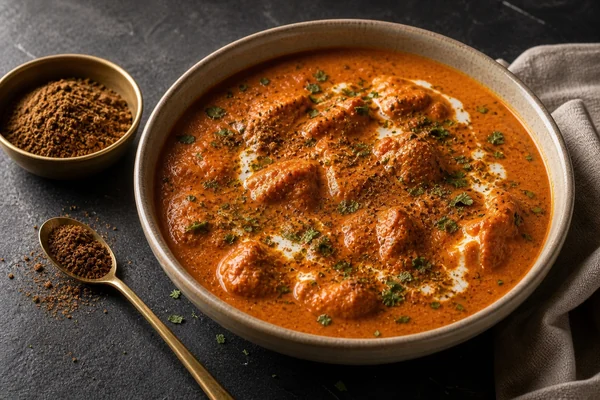
Garam masala is a roasted warming spice blend used most often near the end of cooking. It usually centers on cumin, coriander, cardamom, cinnamon, cloves, black pepper, and nutmeg, but regional blends vary widely. Add it late, use small amounts, and replace stale jars quickly because the blend loses its high notes faster than whole spices.
What garam masala actually does
Garam masala is a finishing spice blend that adds warm aroma after a dish has built its base. It should sharpen the last spoonful, not carry the whole curry.
The phrase means warm spice mixture in Hindi and Urdu. The warmth usually comes from aromatic spices, not from chile heat.
Warm here means the warmth of cardamom and pepper rather than the burn of a chile.
That catches people out, because an Indian blend is expected to be hot. Most garam masala carries no chile at all, and the versions that do are usually sold for one regional dish rather than as the default jar.
Heat is a separate decision from aroma, and it goes in at a separate time. Chile powder, fresh green chile or Kashmiri chile belong early with the onions, where fat and time can open them up.
The masala then arrives at the end, and neither one is competing for the same moment.
If a jar does taste hot on its own, read the label again. A blend carrying chile behaves more like a curry powder and needs to go in earlier than a finishing masala would.
Think of garam masala as the top note over onions, ginger, garlic, tomatoes, and earlier bloomed spices.
Garam masala solves the timing and ratio problems common to spice blends.
- Finishing aroma: Add a small pinch near the end so cardamom, clove, and cinnamon stay vivid.
- Warm frame: Use it to make dal, chana masala, or korma taste rounded after salt and acid are balanced.
- Blend discipline: Do not replace every spice in the pan with garam masala. It cannot build the whole base alone.
The blend works best when you already have fat, salt, acid, and sweetness in balance. If the dish tastes thin, fix those first.
The ingredient logic behind the blend
Garam masala recipes vary, but most versions organize spices by job. Earthy seeds create the base, while bark, pods, and buds create lift.
Cumin and coriander often supply the foundation. Their shared Apiaceae family gives the blend continuity without making it taste flat.
| Spice group | Typical ingredients | Cooking job |
|---|---|---|
| Earthy base | Cumin, coriander | Adds savory depth under legumes and meat |
| Sweet warmth | Cinnamon, cassia, nutmeg, mace | Rounds tomato, onion, cream, and rice dishes |
| High aroma | Green cardamom, cloves | Adds fragrance that survives as a finishing note |
| Pepper heat | Black pepper, sometimes long pepper | Gives warmth without chile color |
In the dish, cumin gives many garam masala blends their savory floor. Without it, the sweet spices can taste perfumed instead of edible.
In the dish, cinnamon changes the blend in the opposite direction. It softens tomatoes, cream, and onions without adding sugar.
This is why a jar can smell sweet while still tasting savory in food. The blend is built on contrast, not one flavor.
Regional versions are the rule
Garam masala is not one fixed recipe. Region, family habit, religion, and dish type all change the blend.
North Indian versions often lean into cardamom, cinnamon, cloves, black pepper, and cumin.
Bengali garam masala may focus tightly on cardamom, cinnamon, and cloves.
- Punjabi-style dishes: Use a fuller blend with cumin, coriander, black pepper, cardamom, cinnamon, cloves, and bay-like warmth.
- Bengali-style finishing: Use a smaller aromatic trio of cardamom, cinnamon, and cloves for meat, dal, and rich vegetable dishes.
- Mughlai-style gravies: Favor cardamom, mace, nutmeg, and cinnamon when cream, nuts, or yogurt shape the sauce.
- Home blends: Adjust the ratio around the dishes you cook most. A biryani blend does not need to match a chana masala blend.
The safest shopping assumption is simple: the label describes one maker, not all Indian cooking. Taste the jar before trusting the ratio.
In that cuisine, regional cooking logic matters more than chasing one universal spice formula.
Why it is not curry powder
Garam masala and curry powder solve different problems. Curry powder usually builds the sauce earlier, while garam masala refreshes aroma later.
Curry powder often carries turmeric, fenugreek, chile, and coriander in a yellow base. Garam masala usually stays darker, sweeter, and more aromatic.
| Question | Garam masala | Curry powder |
|---|---|---|
| Main job | Finishes aroma near the end | Builds the seasoning base earlier |
| Color | Usually brown or tan | Often yellow from turmeric |
| Heat style | Pepper warmth and sweet spice | May include chile or mustard heat |
| Best timing | Last 3-5 minutes | Bloomed earlier in oil or paste |
In curry powder, turmeric can lead the color and flavor structure. In garam masala, turmeric is usually absent or minor.
If a recipe asks for both, add curry powder early and garam masala late. That order gives the dish base depth and final lift.
When to add garam masala
Garam masala usually belongs late because many of its aromatic oils fade under long heat. Add it too early and the blend turns quiet.
A curry base can simmer for an hour, but cardamom and clove do not need that long. They need enough heat to bloom, then restraint.
| Dish | When to add it | Why it works |
|---|---|---|
| Dal | Last 5 minutes | Keeps aroma above lentils without making them bitter |
| Chana masala | Last 3-5 minutes | Rounds tomato acidity after the chickpeas soften |
| Biryani | Layer with rice or finish the gravy | Lets steam carry aroma without burning ground spices |
| Keema or meat curry | Final simmer | Refreshes richness after meat and onions have cooked down |
If you want deeper roasted flavor, toast the whole spices before grinding instead of cooking the powder longer. That keeps aroma cleaner.
There are also two ways to get it into the pot, and they do not taste the same.
Stirred straight into a simmering sauce, the blend disperses through the dish and the aroma comes up within a minute. That is the safe route and the one most written recipes assume.
Bloomed in a spoonful of hot ghee and poured over the top, the same blend lands louder and sits on the surface instead of running through the sauce.
That second route is closer to a tadka, and it is easy to overshoot. Ground spice scorches in seconds at tempering heat, so the pan comes off the flame before the powder goes anywhere near it.
Use the pour over dal, plain rice, or anything where a bright top note is the point. Stir it in for tomato-heavy curries, where the sauce wants the aroma spread through it rather than floating on top.
A marinade looks like it breaks the late rule, and it is worth saying why it does not.
In yogurt with salt, garlic and ginger, the blend is not sitting in a hot pan losing its oils. It is suspended in something cold and slightly acidic, where the dairy fat holds the aromatics rather than driving them off.
Then the marinade goes onto the food and the heat arrives all at once, at the surface, for a few minutes.
So the spice still gets its short exposure. The clock simply starts when the meat hits the grill instead of when the powder hits the pot.
That is also why a marinade takes roughly twice the dose of a finishing pinch, around a teaspoon per pound, and still tastes measured.
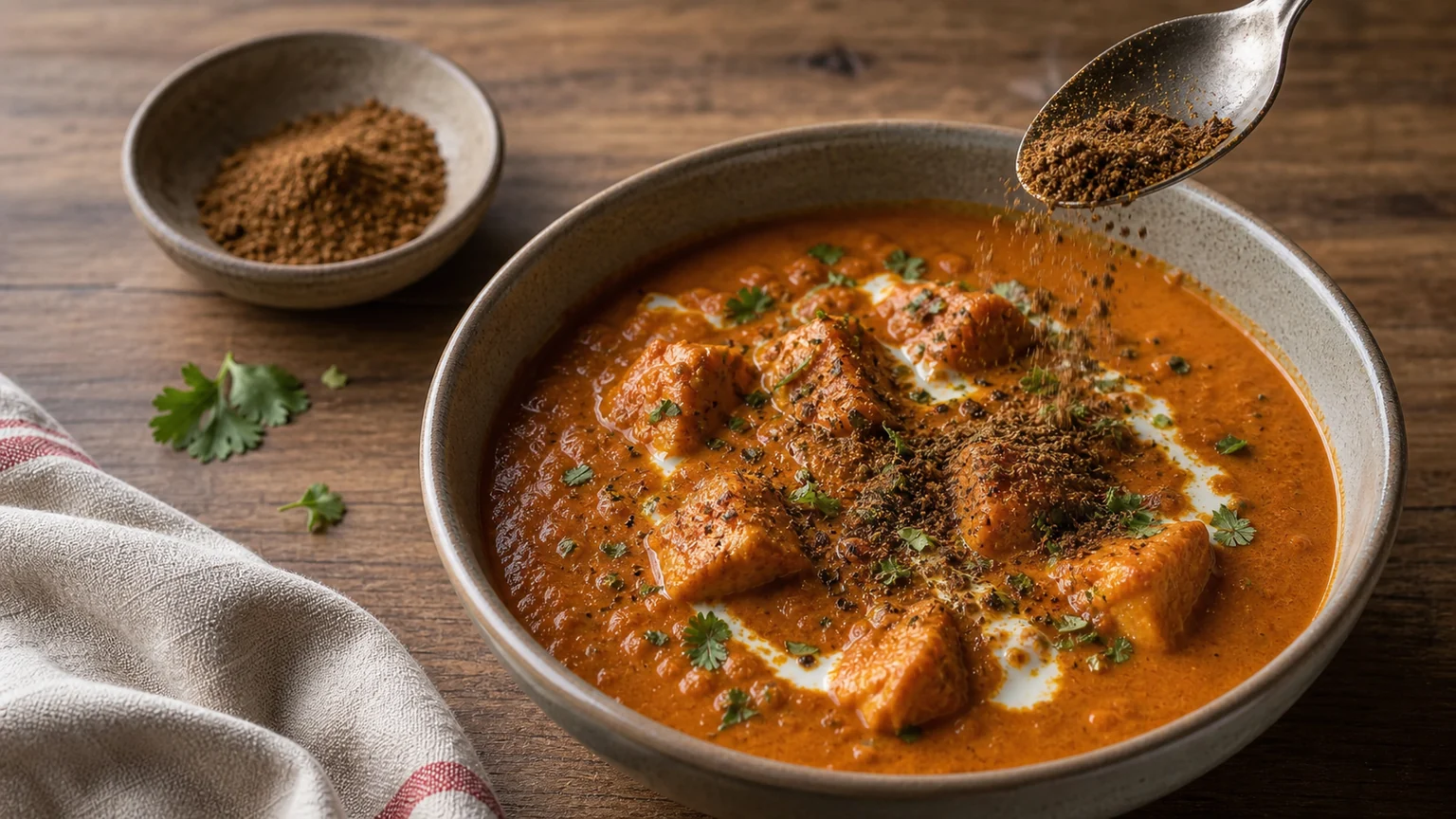
- Base first: Onion, tomato, salt, and earlier spices should already taste integrated.
- Short heat: Three to five minutes opens the blend without flattening cardamom and clove.
- Finish cue: The dish should smell warmer without turning dusty or bitter.
- Restraint: Add a pinch, taste, then stop when the top aroma returns.
The same timing rule appears across cooking techniques for spices. Ground aromatics need fat, heat, and an exit before they taste scorched.
How much to use without flattening flavor
Garam masala is concentrated, so small amounts usually work best. Start with 1/4 teaspoon for two servings, then taste.
Use 1/2 teaspoon for a four-serving pot of dal or chickpeas. Rich meat curries can handle 1 teaspoon when the blend is fresh.
- Dal: Use 1/4 to 1/2 teaspoon near the end, especially when the lentils already contain turmeric and cumin.
- Chana masala: Use 1/2 teaspoon after tomato acidity softens. Too much can make chickpeas taste dusty.
- Biryani: Use a pinch in the gravy and another light pinch between rice layers. Steam carries aroma upward.
- Roasted vegetables: Mix 1/2 teaspoon with oil after roasting, or add it during the last five minutes.
- Marinades: Use 1 teaspoon per pound with yogurt, salt, garlic, and ginger. Acid and dairy cushion the blend.
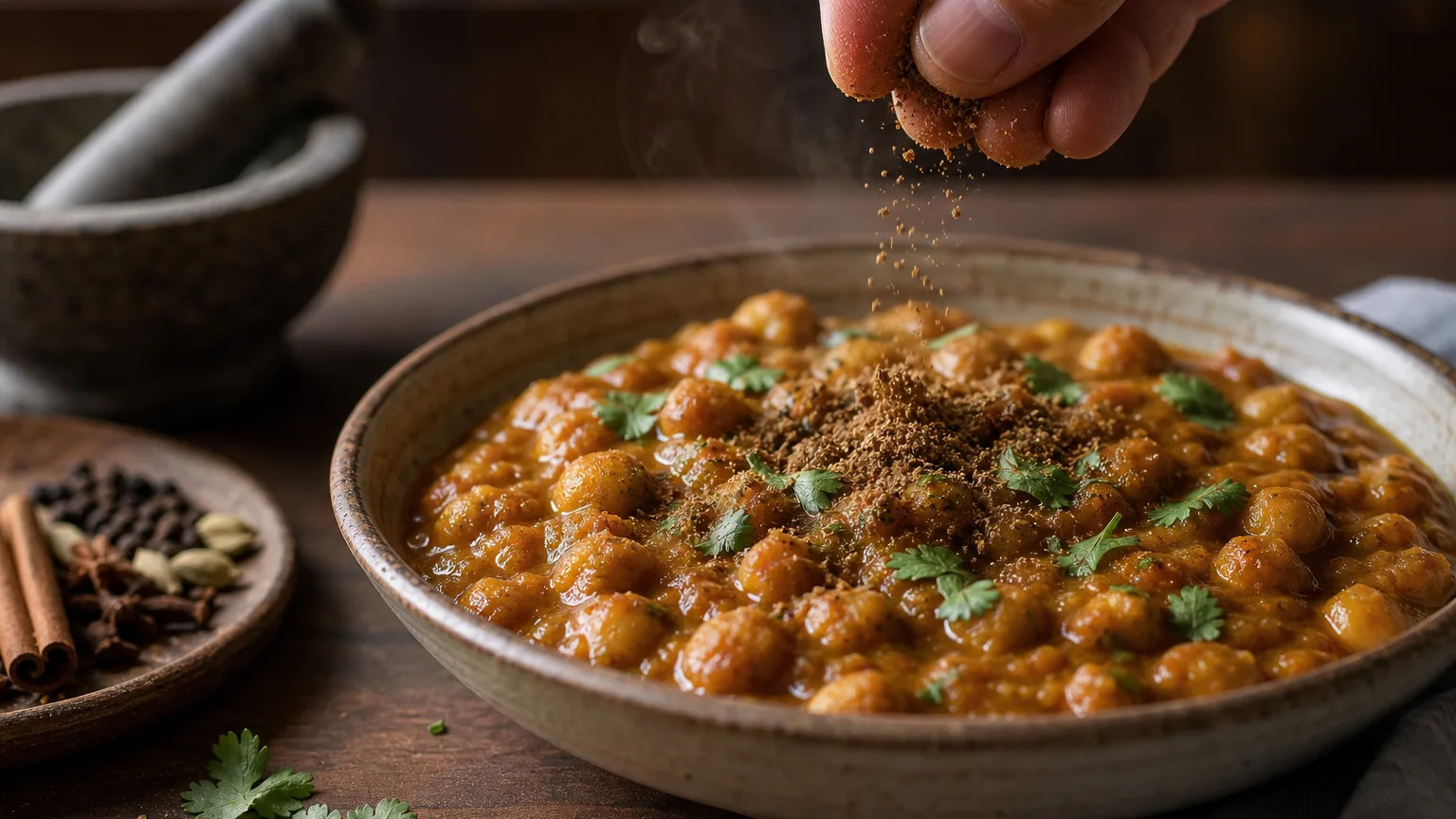
- Small dose: Start with a pinch because cardamom and clove rise quickly.
- Late timing: Add it after the base already tastes cooked and salted.
- Steam carry: Hot food releases the aroma without long simmering.
- Stop cue: The dish should smell finished, not perfumed.
In the dish, cardamom becomes loud fast in homemade blends. If a mix tastes soapy, reduce cardamom before reducing cumin.
A good blend should make the dish smell finished, not make every dish taste identical. Stop adding when the sauce gains lift.
Why does garam masala taste bitter or dusty?
Four things turn a finishing blend against you, and the fix is different for each.
Scorching is the common one. Ground spice has no husk left to shield it, so it burns in a dry or over-hot pan long before whole seeds would have.
Clove is the second. It is the loudest thing in most blends, and one extra clove in a home batch pushes the whole jar toward medicinal.
Then there is age, which works indirectly. A faded blend tempts you into a bigger spoon, and a bigger spoon of stale powder is what tastes dusty rather than warm.
The last is timing. Put it in at the start of a long simmer and the aromatic oils cook away, leaving the woody, tannic part of the bark and pods behind.
| What it tastes like | What happened | What to change |
|---|---|---|
| Acrid, slightly burnt | The powder met a dry or over-hot pan | Take the pan off the heat before it goes in |
| Medicinal, almost numbing | Too much clove in the blend | Cut clove to a quarter part and rebuild |
| Dusty and flat, no lift | The jar is stale and the dose crept up | Replace it, then go back to a pinch |
| Woody and tannic | It went in at the start of a long cook | Move it to the last five minutes |
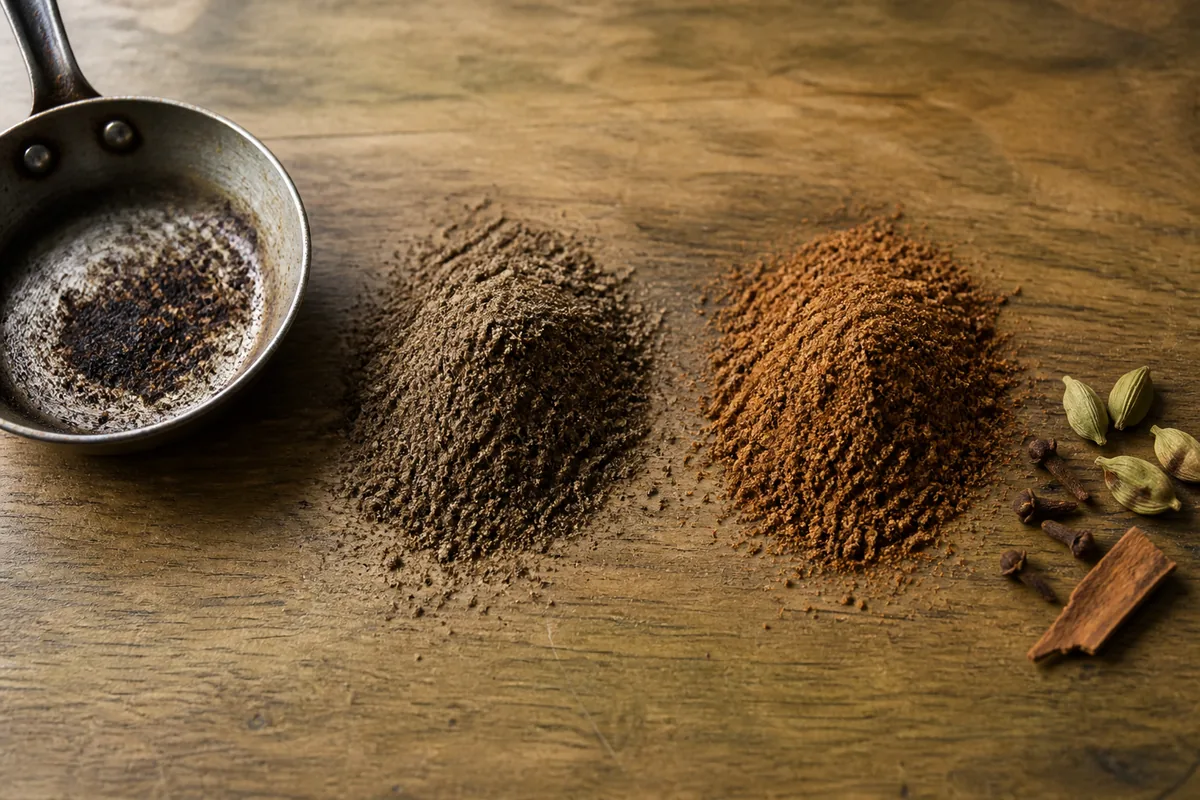
- Left: Overheated in a dry pan, ashy and grey, and it will taste acrid.
- Right: Freshly ground, warm red-brown, with the whole spices it came from.
- Pan: The burnt dusting is what a few seconds too long leaves behind.
None of the four is fixed by adding more of the same blend.
Salt and a little acid will mask a bitter dish, but the masala has already given what it had.
How to make a practical homemade version
Homemade garam masala tastes brighter because whole spices keep volatile oils longer. Grind only what you can use within a few months.
A practical base uses equal parts cumin and coriander, then smaller amounts of sweet and floral spices. Adjust after one cooked dish, not from the grinder alone.
| Ingredient | Starting ratio | Adjustment cue |
|---|---|---|
| Cumin seed | 2 parts | Increase for dal, chickpeas, and meat depth |
| Coriander seed | 2 parts | Increase when the blend tastes too heavy |
| Green cardamom seeds | 1 part | Reduce if the blend tastes perfumed |
| Cinnamon or cassia | 1 part | Reduce for tomato-heavy curries |
| Cloves | 1/2 part | Use lightly because clove dominates quickly |
| Black pepper | 1/2 to 1 part | Increase for pepper warmth without chile color |
| Nutmeg or mace | 1/4 part | Use as a background note, not a lead flavor |
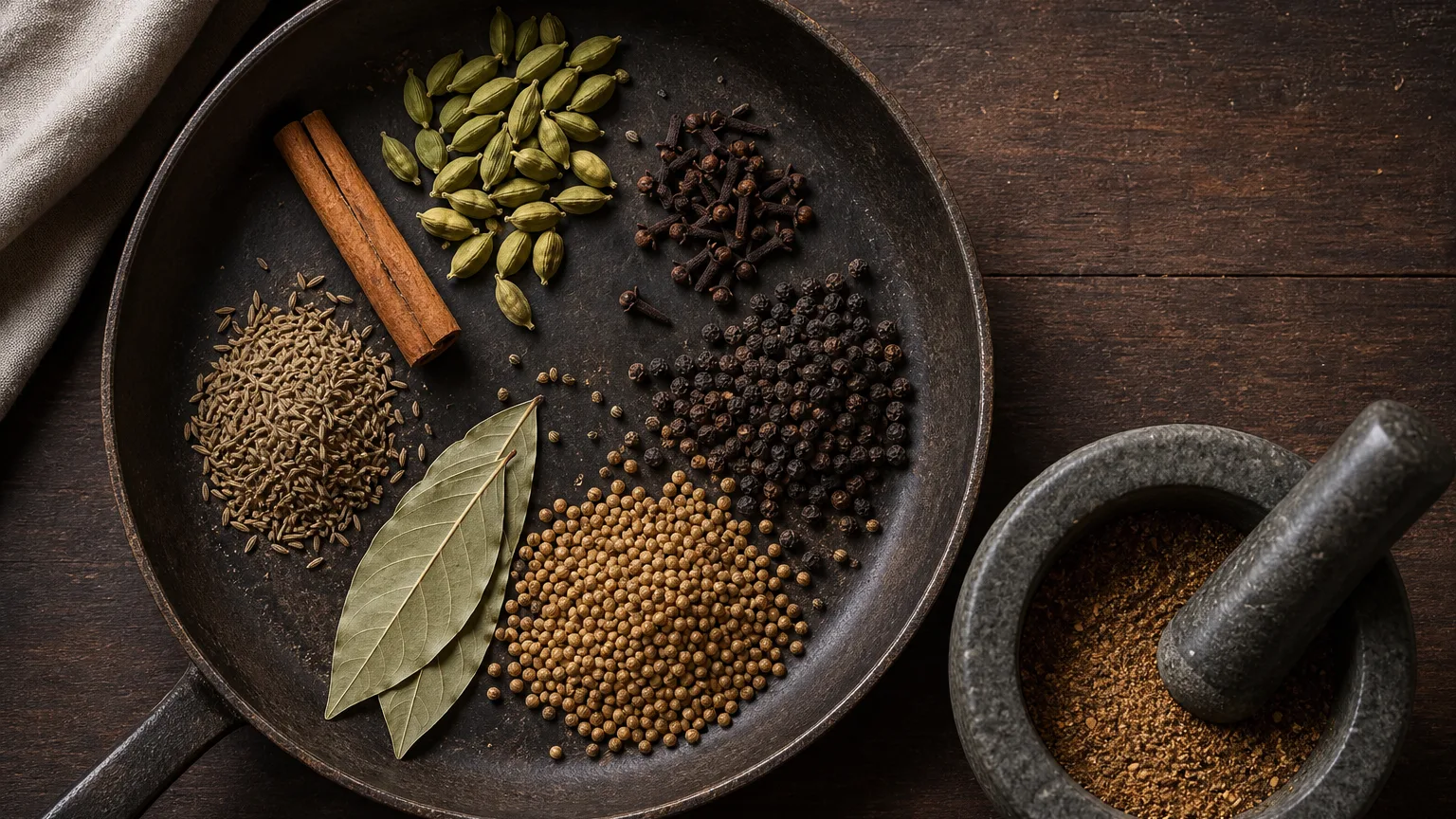
- Cumin and coriander: They build the savory base that keeps the blend useful.
- Cardamom: Use less than the base spices or the blend turns perfumed.
- Clove: Keep it tiny because one extra clove can dominate a batch.
- Cooling step: Toasted spices should stop steaming before grinding.
In the dish, turmeric is usually not the core of garam masala. If a commercial blend is yellow, it may behave more like curry powder.
Toasting is where a homemade blend is won or lost, and the mistake is treating the spices as one batch.
They do not cook at the same rate. Coriander and cumin want two to three minutes over medium-low heat, cardamom pods and cloves want under a minute, and cinnamon bark only needs warming through.
So work in groups, hardest and largest first, and pull each one when it smells vivid rather than when a clock says so.
The cue is aroma and not color. A seed that has visibly darkened has usually gone a step past the point where it smelled best.
Spread everything onto a cold plate afterwards. Spices left in the hot pan keep cooking, and spices ground while still warm trap steam and cake on the grinder walls.
Sieve the batch if you want a fine powder. Cinnamon bark and cardamom husk are the two that refuse to break down, and the grit they leave behind is what a lot of people mistake for a bitter blend.
Substitutes when the jar is missing
The best garam masala substitute depends on the dish. You need warmth, sweetness, pepper lift, and a little savory depth.
Curry powder is not a perfect swap because it often contains turmeric, fenugreek, and chile. It can work in saucy dishes, but it changes the color.
| Substitute | Ratio | Best use | Falls short when |
|---|---|---|---|
| Cumin plus coriander plus cinnamon | 2:2:1 blend, use 1:1 | Dal, chickpeas, roasted vegetables | You need cardamom fragrance |
| Curry powder | Use 3/4 amount | Saucy curries and lentils | You need a clean finishing aroma |
| Pumpkin pie spice plus cumin | 1 part sweet spice to 2 parts cumin | Emergency roasted vegetables | You need savory Indian flavor |
| Baharat or ras el hanout | Use 1/2 to 3/4 amount | Meat, rice, and braises | You need a specifically North Indian profile |
The cumin and coriander balance decides whether the substitute tastes deep or bright.
Start equal, then adjust after cooking.
If the dish already contains cumin, coriander, cinnamon, and cardamom, you may not need a substitute. Finish with black pepper instead.
Buying and storing garam masala
Garam masala goes stale quickly because it is usually sold ground. Buy small jars from shops with high turnover.
A fresh blend should smell vivid as soon as you open it. If it smells like dry dust, it will taste like dry dust.
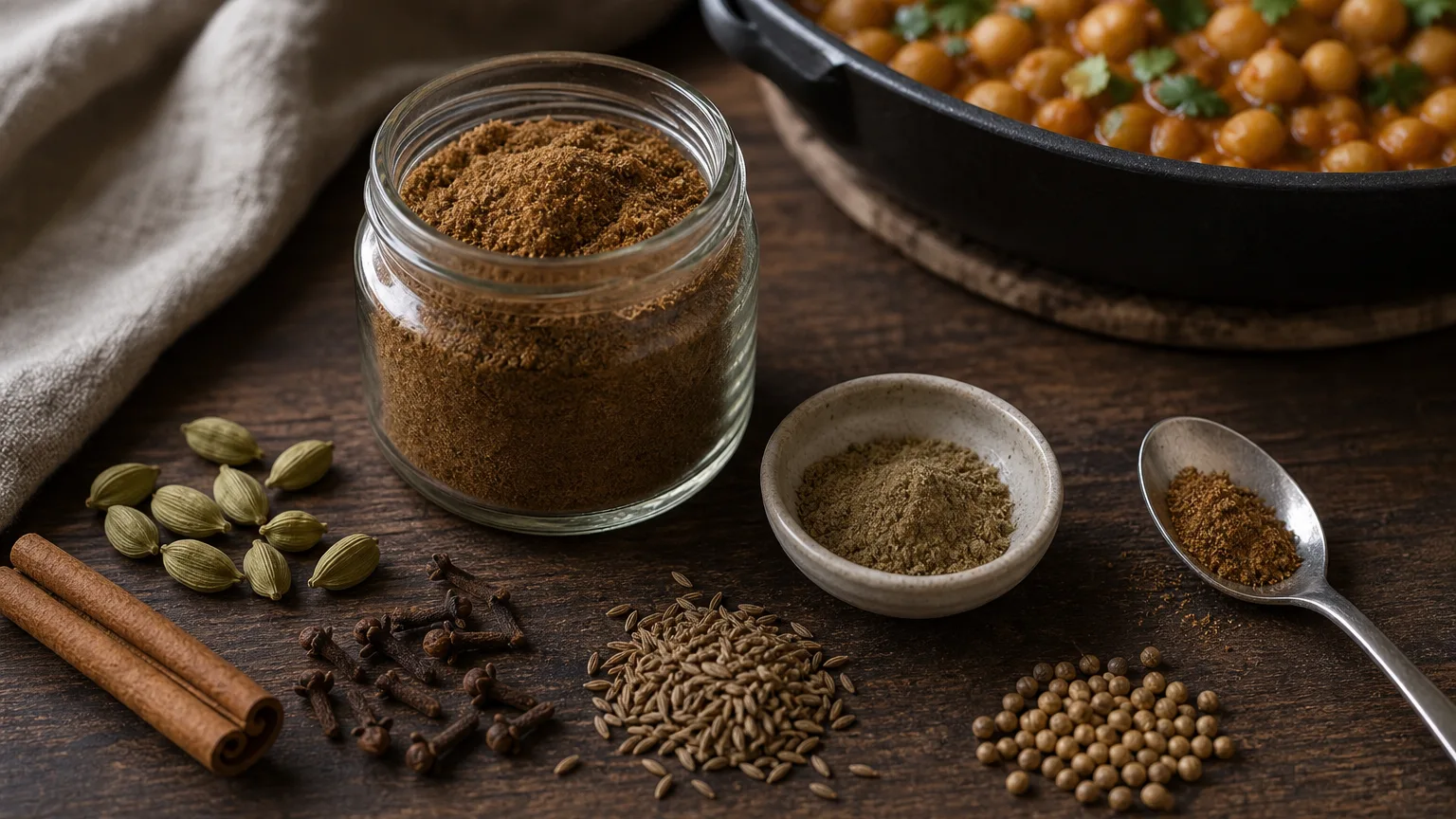
- Fresh blend: Cardamom, clove, pepper, cumin, and coriander should all register.
- Faded blend: Dusty aroma means a larger spoon will only flatten the dish.
- Whole spice cue: Visible source spices help you judge whether the blend makes sense.
- Small jar: Buy less so the finishing aroma survives until the last spoonful.
- Good label: Look for whole spice names, a packed date, and no vague seasoning base.
- Bad color: Very yellow powder often signals turmeric-heavy curry powder behavior, not classic finishing masala.
- Best package: Choose opaque or metal packaging when possible. Clear jars speed aroma loss under store lights.
- Storage move: Keep the jar away from the stove. Heat and steam damage ground blends faster than darkness alone.
- Replacement cue: Replace opened ground garam masala after 3 to 4 months if the aroma fades.
If you cook Indian food often, keep whole cumin, coriander, cardamom, cinnamon, cloves, and pepper instead. Grind a small batch when the dish deserves it.
That habit gives you fresher garam masala and better control. It also stops one stale jar from flattening every curry you cook.