
How Did Medieval European Cooks Really Use Spices?
Read the mortar, sauce, fast-day table, and manuscript before repeating the myth.
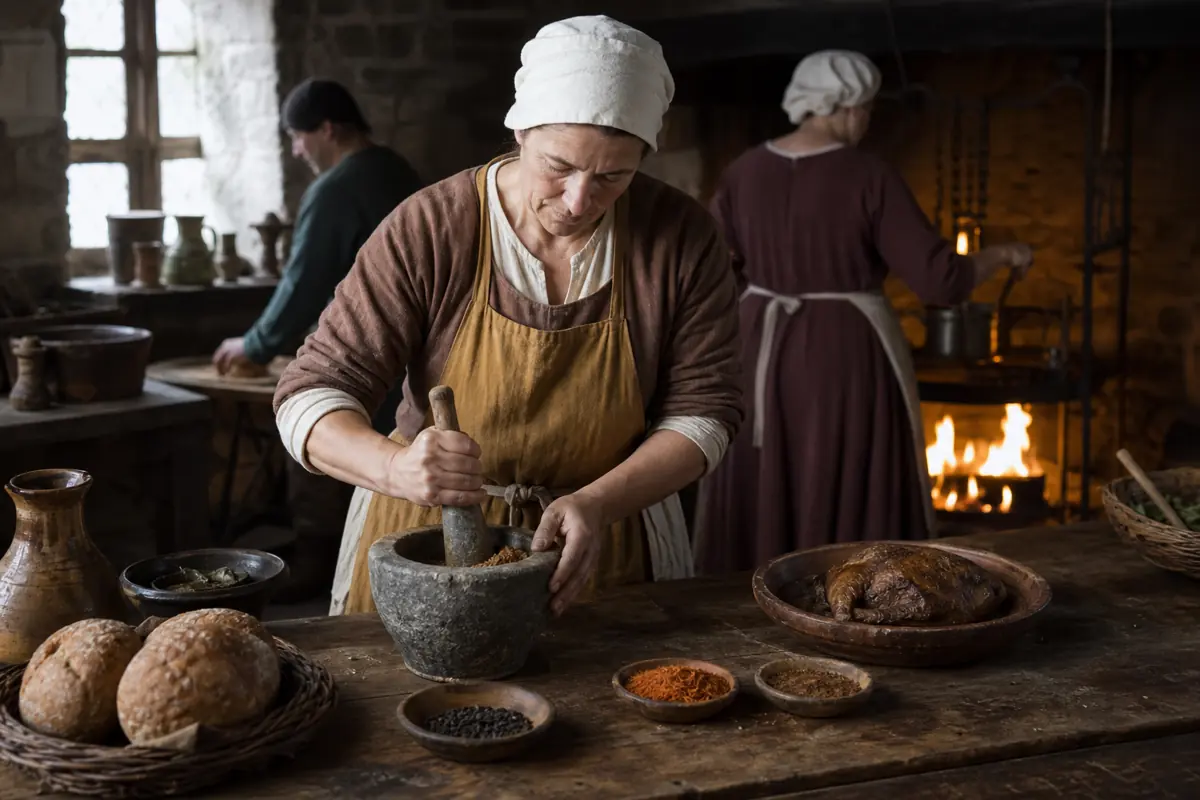
Medieval European cooks used pepper, ginger, cinnamon, saffron, and cloves for aroma, heat, color, and status, while bread, wine, vinegar, or verjuice built the sauce. The surviving books mainly describe wealthy and institutional kitchens, so sweet meat dishes and costly spice lists cannot represent every household meal.
Did medieval cooks use spices to hide rotten meat?
No. Expensive spice was a poor solution for meat that had become unsafe, and strong aroma could not reverse bacterial spoilage.
The claim survives because it gives one neat reason for unfamiliar seasoning.
It ignores price, household skill, slaughter cycles, salting, smoking, and the value of usable meat.
Meat quality could vary without being rotten. Age, animal, cut, season, and cooking method all changed texture before spice entered the sauce.
A household that slaughtered seasonally managed fresh cuts, salted stores, and offal on different clocks. Seasoning did not erase those practical distinctions.
Court and urban recipe collections used spices in sauces served to people who could afford good ingredients. The same meal could display skilled grinding, color, and imported goods.
Strong seasoning also made a planned flavor visible to diners. Ginger heat, saffron color, or clove aroma showed choices that required money and labor.
Medicine and food also overlapped. Writers described ingredients through qualities such as hot, cold, dry, and moist, yet cooks still pursued taste and appearance.
The better answer is plural. Spices supplied heat, fragrance, color, prestige, and a learned style of balance.
That explanation fits the whole plate. It accounts for acid sauces, colored dishes, sweet-savory balance, and careful service without inventing a safety benefit.
Ginger, pepper, cinnamon, saffron, and cloves did different work
Dried ginger and pepper often supplied a clean, dry heat. They could sharpen a sauce without the fruit character of chiles, which arrived in Europe later.
Cinnamon and cloves added sweet wood and concentrated perfume to meat, fish, fruit, and wine. Saffron could color a dish before its flavor became obvious.
| Spice | Main sensory job | Common context |
|---|---|---|
| Black pepper | Dry bite | Meat, fish, broth, sauce |
| Ginger | Warm sharpness | Sauces, pottages, meat, sweets |
| Cinnamon | Sweet wood | Meat sauces, fruit, wine |
| Saffron | Golden color and hay-like aroma | Rice, broth, pastry, feast dishes |
| Cloves | Intense perfume | Sauces, drinks, preserved fruit |
A list of ingredients hides those differences. One clove could dominate, while a larger measure of ginger built the sauce body.
Whole and ground form mattered too. Mortar grinding made spice fine enough to suspend in liquid, and straining removed rough particles.
This is why the period pantry cannot be read as one warm blend. Each aromatic entered a different part of the recipe.
A medieval sauce was often bread, acid, liquid, and spice
Many surviving sauces begin with structure rather than fat. Bread crumbs or toasted bread thickened broth, wine, vinegar, or verjuice.
The cook ground bread and spices, loosened them with liquid, then pushed the mixture through a cloth or sieve. The result could coat meat without a modern roux.
Bread choice changed the sauce. Toasted crumbs added color and roasted flavor, while pale bread kept a saffron or almond preparation lighter.
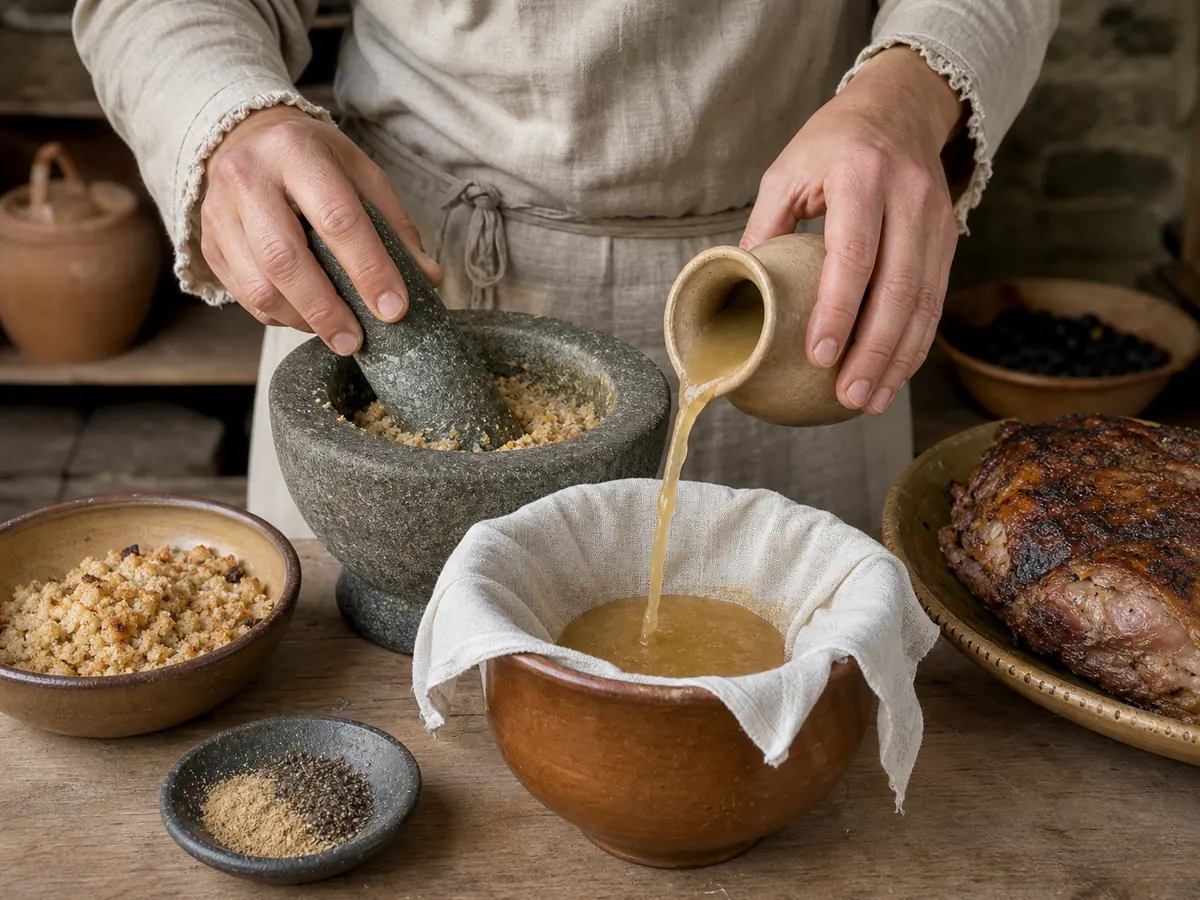
- Thicken: Bread used an ingredient already present in the kitchen.
- Sharpen: Vinegar or verjuice kept rich meat and sugar from tasting flat.
- Strain: A smooth sauce displayed labor and controlled coarse spice.
Verjuice came from unripe grapes or other sour fruit. Its role resembles the controlled acid used when balancing rich flavors today.
Ground ginger, pepper, cinnamon, or saffron then had a carrier. The sauce held aroma on the food rather than leaving dry powder on top.
Grinding order mattered because hard pepper and fibrous ginger resisted the mortar differently. Fine particles produced an even sauce and reduced gritty bursts.
Straining removed coarse bread and husk after extraction. The cook could then adjust thickness with broth instead of adding another handful of costly spice.
A modern reconstruction should taste the acid before adding more spice. Too little acid makes bread-thickened sauces heavy and dull.
Add liquid gradually because bread continues to swell. A sauce that looks loose in the mortar may tighten before it reaches the serving dish.
This technique connects history to the pan. The recipe works because texture, liquid, and seasoning were designed together.
Sweet and savory had not split into modern courses
Meat could meet sugar, dried fruit, clove and cinnamon, and vinegar without becoming dessert. The dish balanced sweetness against acid, salt, and broth.
- Sugar: A seasoning and status ingredient, not always the base of a final course.
- Dried fruit: Added body, sweetness, and tartness to sauces and pottages.
- Warm spice: Linked meat, fruit, and wine through shared aroma.
- Acid: Prevented sweet ingredients from flattening the dish.
Modern labels can make this combination sound confused.
It becomes coherent once the sauce is tasted as sweet, sour, salty, and aromatic at once.
Color mattered alongside taste. Saffron gold, dark bread sauce, green herbs, and pale almond preparations made a feast easier to read.
Texture carried the contrast. Soft fruit and smooth sauce could surround roasted meat, while toasted crumbs supplied body without visible flour.
Aromatic strength also marked sequence. A highly perfumed sauce could announce a ceremonial course before the first bite.
The goal was not random excess. Skilled cooks controlled contrast and repeated a courtly flavor grammar their diners recognized.
Fasting days changed the spice pantry
Religious calendars created many days when meat or animal products were restricted. Kitchens needed another way to build richness and variety.
Fish, legumes, grains, oil, and almond milk moved forward. Black pepper helped distinguish preparations, but the ingredient base changed first.
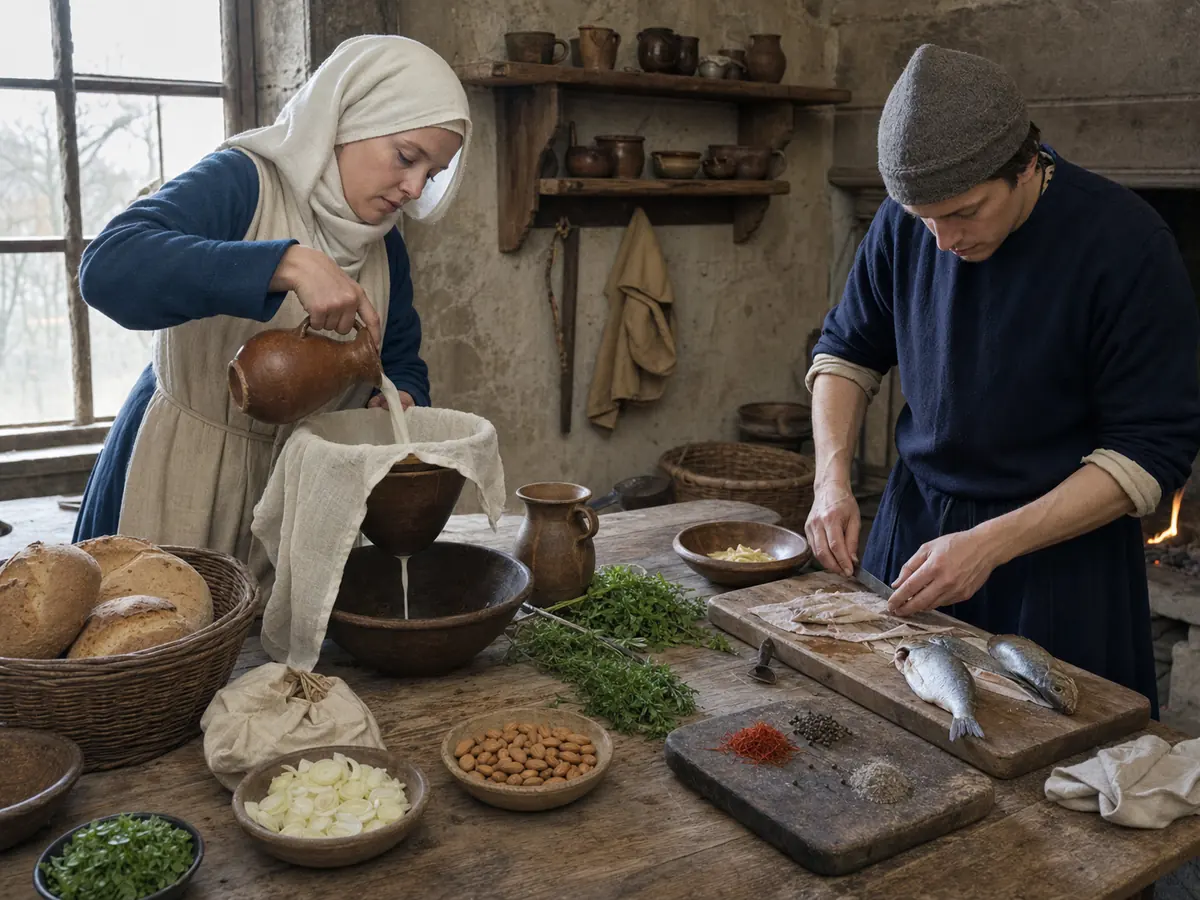
- Almond milk: Ground almonds and water created body without dairy.
- Fish: Fresh, salted, or dried forms required different sauces.
- Saffron: A small amount could signal a feast even on a meatless day.
Institutional kitchens planned around this calendar at scale.
They needed advance supplies of almonds, oil, dried fish, and grain for repeated restricted days. That demand affected purchasing long before service.
Pantry management included both the season and the church year.
Almond milk could thicken a sauce, soften pepper heat, and carry saffron color. It performed several jobs that dairy handled on other days.
The result was not one fasting cuisine. Coast, river access, class, and regional rules changed what appeared.
Still, the constraint explains why some manuscripts repeat almond and fish techniques. Those patterns are culinary evidence, not decorative ritual.
A reconstruction should identify whether the source describes a fast day. Replacing almond milk with cream can erase the reason the method existed.
The substitution also changes flavor release. Almond solids carry saffron and warm spice differently from dairy fat, so the same measure can taste sharper.
Whose food survives in the manuscripts?
Written recipe books overrepresent courts, wealthy households, guild cooks, and institutions. These were places with scribes, patrons, large staffs, and reason to preserve formulas.
| Setting | Visible evidence | What stays uncertain |
|---|---|---|
| Court feast | Courses, costly ingredients, display | Routine household meals |
| Institution | Purchases, rations, calendar rules | Personal taste |
| Urban household | Some recipes and accounts | Poorer kitchens |
| Rural household | Archaeology and scattered records | Daily seasoning ratios |
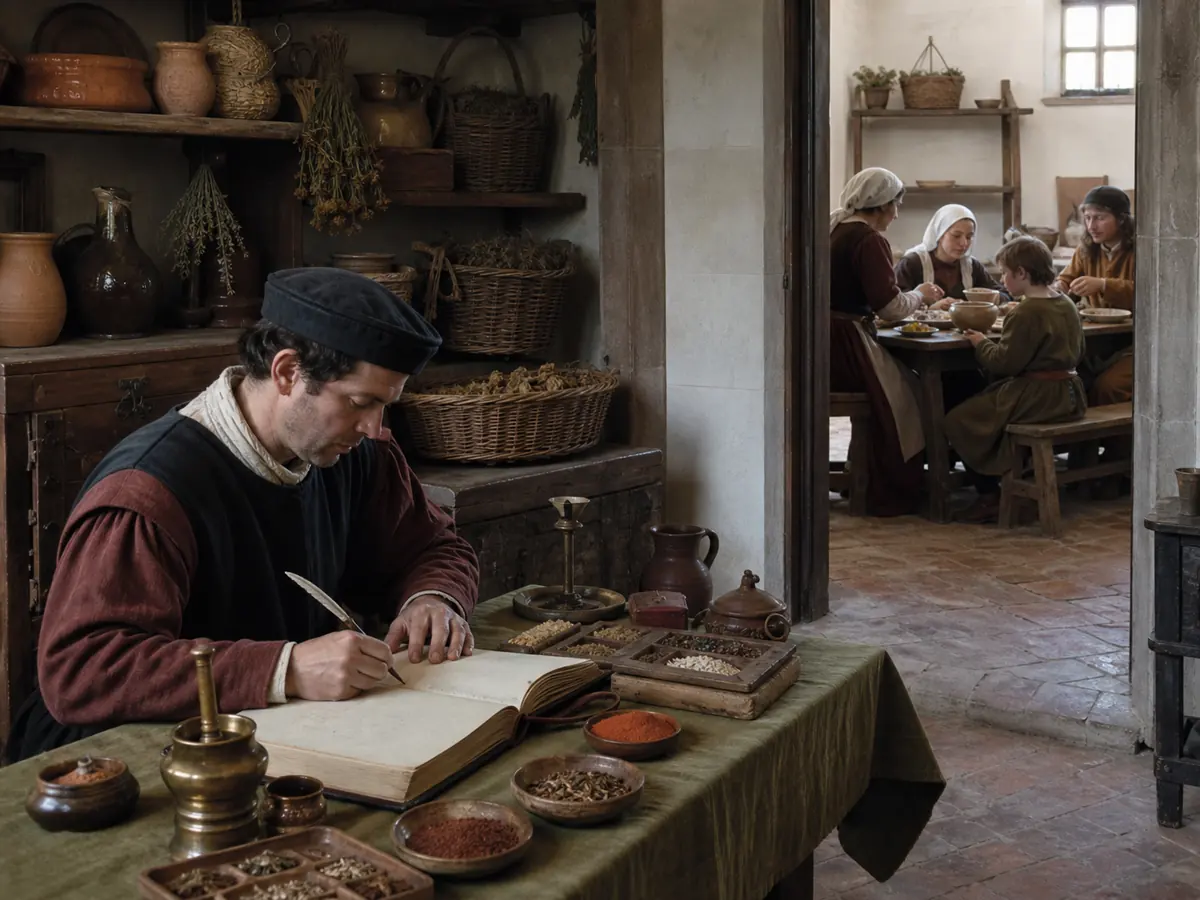
- Ledger: Makes elite buying visible in names and measures.
- Household: Leaves evidence in pots, seeds, bones, and staples.
- Bias: Surviving recipes overrepresent kitchens that could pay scribes and keep records.
Bread, ale, pottage, onions, greens, legumes, dairy, and local culinary herbs mattered more widely than imported spice lists suggest.
Kitchen accounts can reveal bulk purchases that recipes omit. Archaeology may expose cooking pots, animal bones, seeds, and fuel choices beyond the written menu.
Neither source is complete by itself.
Agreement between text, account, and material evidence supports a firmer claim.
Region and century also matter. A fourteenth-century English collection cannot stand for Italy, Iberia, Scandinavia, or the entire medieval millennium.
The honest claim is narrower. Manuscripts show what certain trained cooks prepared under particular social conditions.
Recipe silence also matters. An ingredient absent from one collection may have been local, ordinary, orally taught, or irrelevant to its patron.
That limit makes the evidence stronger. It prevents an elite feast from swallowing ordinary food history.
How to test a modern medieval recipe
Start with a dated manuscript recipe and a reputable edition. A modern dish name alone cannot establish a medieval formula.
- Name the source: Record the manuscript, region, and approximate date.
- Keep the method: Grinding, bread thickening, acid, and straining matter as much as the spice list.
- Scale carefully: Household batches need less clove and pepper than feast instructions suggest.
- Label substitutions: Lemon juice is not verjuice, though it can supply needed acidity.
Taste for structure rather than theatrical strength. Bread should thicken, acid should lift, and spice should remain distinct without numbing the dish.
Write down each change before the second attempt. Reconstruction improves when a cook can separate source instruction from modern repair.
A transparent adaptation teaches more than a false claim of perfect authenticity. The source and the cook can both remain visible.
Serve the first test beside plain bread or meat. That neutral reference exposes whether acid, thickener, salt, or one imported spice has taken over.
A second batch should change one variable. Otherwise the cook cannot tell whether smoother grinding or a lower clove dose fixed the sauce.
Record the final texture as carefully as the flavor. A strained bread sauce can be historically useful even when its spice list looks familiar.