
Why Some Spices Work Together and Others Fight the Dish
Pair spices by function before you worry about long lists of compatible ingredients.
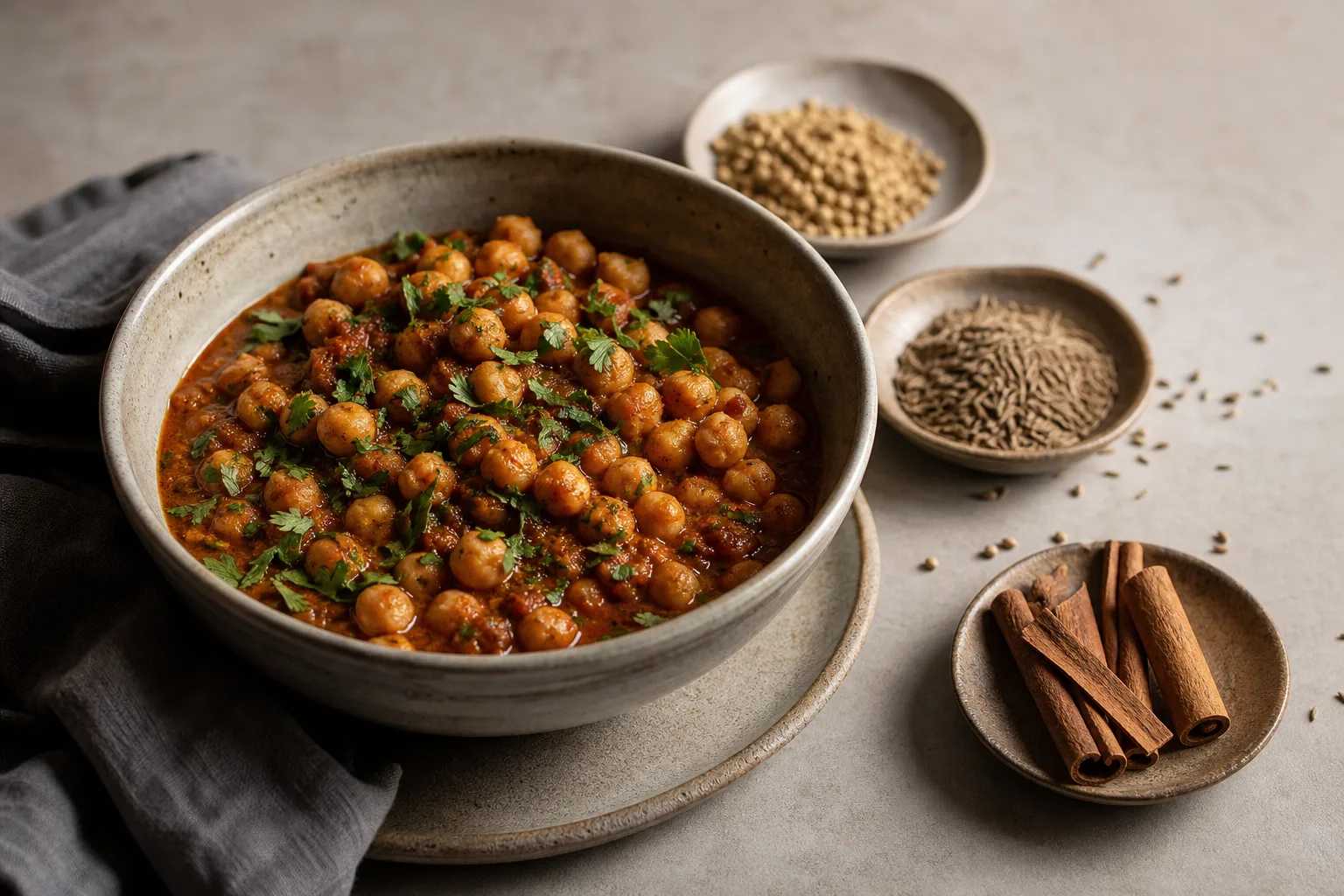
Spices pair well when they either share a useful aroma family or create a controlled contrast. The dish still decides the result because fat, acid, sweetness, heat, and cooking time change how spices behave. Start with one anchor spice, then add support instead of mixing every warm spice in the jar.
Start with one anchor spice, not a pantry list
Most crowded spice mixes come from one habit. You open several jars that all smell good and add a little of each.
A dish can only carry one clear direction at a time. The anchor spice sets that direction before anything else joins.
Cumin anchors earthiness, cinnamon anchors sweetness, smoked paprika anchors smoke, and black pepper anchors bite. Pick the anchor from the result you want.
If you want a warm braise, cinnamon or clove leads. If you want a savory chili, cumin leads and the rest supports it.
Every other spice is then a bridge or an accent. A bridge links the anchor to the dish, and an accent adds a small final signal.
Coriander bridges cumin toward brighter, citrus-leaning dishes. A pinch of cardamom accents a cinnamon braise without taking it over.
Support spices should sharpen the anchor or soften it. Two loud anchors in one pot read as noise instead of depth.
This is also why building flavor in layers works. You decide the anchor first, then choose supports around the job you already set.
When you feel stuck, let the cuisine pick the anchor for you. Indian curries lean on cumin or coriander, while North African tagines lean on cinnamon and cumin together.
- Anchor: the spice that names the dish and appears in the largest amount, such as cumin in chili or cinnamon in a tagine.
- Bridge: a spice that links the anchor to the dish base, like coriander softening cumin or fennel rounding a tomato sauce.
- Accent: a small note added last, like clove, mustard, or dried chile, that you would miss if it disappeared.
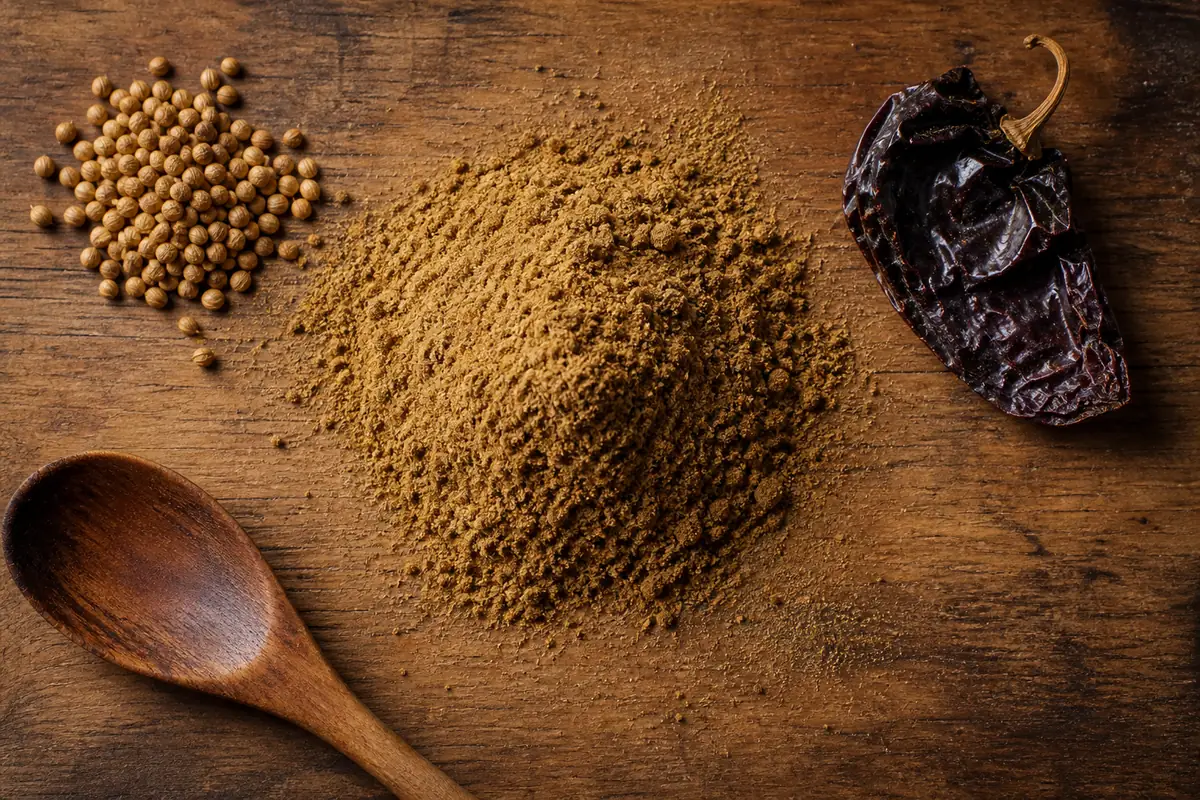
- Hero anchor sits in the largest amount at the center.
- Bridge and accent stay small and deliberate.
- Fewer spices keep the direction readable.
What makes two spices actually match
Two spices feel matched when they share an aroma family. Cinnamon, clove, nutmeg, and allspice all carry sweet, woody notes, so they blend into one voice.
Shared aroma is not folklore. Researchers mapped how ingredients share flavor compounds, and many classic spice pairs sit close together on that map.
You can sort most cooking spices into a few working families. Match inside a family for harmony, or reach across families for tension you control on purpose.
Earthy spices such as cumin, coriander seed, and fenugreek build a savory floor. Bright notes such as sumac and citrus zest lift that floor.
Pungent spices such as black pepper, mustard, and ginger add movement. They rescue a mix that tastes flat once the warm spices settle.
Warm spices almost always agree with each other.
Cross-family pairs need a reason to exist. Pair earthy cumin with bright sumac only when the dish wants both a floor and a lift.
The same shared aroma compounds explain why cumin and coriander read as one savory note instead of two competing ones.
When a blend feels muddy, it usually crosses too many families at once. Pull it back toward one family plus a single outside accent.
| Aroma family | Spices in it | Best partner move |
|---|---|---|
| Warm sweet | Cinnamon, clove, nutmeg, allspice | Stack within the family for rounder, deeper flavor |
| Earthy | Cumin, coriander seed, fenugreek | Add one bright note so it does not feel heavy |
| Bright citrus | Sumac, coriander leaf, lemon zest | Use to lift a heavy earthy or fatty base |
| Pungent heat | Black pepper, mustard, ginger, chile | Add last as an accent so it does not flatten the anchor |
When contrast lifts a dish and when it fights it
Contrast is the opposite move from matching. You set two different signals against each other, such as heat against sweetness.
Chile and cinnamon taste right in mole because the sauce carries fat, sugar, and long cooking. The base binds the two signals together.
The same chile and cinnamon over plain steamed rice feels confusing.
A thin, watery, or lean dish cannot hold a bold contrast. Give the pairing a body to sit in before you judge it.
Beans, braises, roasted meat, coconut milk, and tomato sauces all forgive stronger pairings. Their fat and long cooking round the sharp edges.
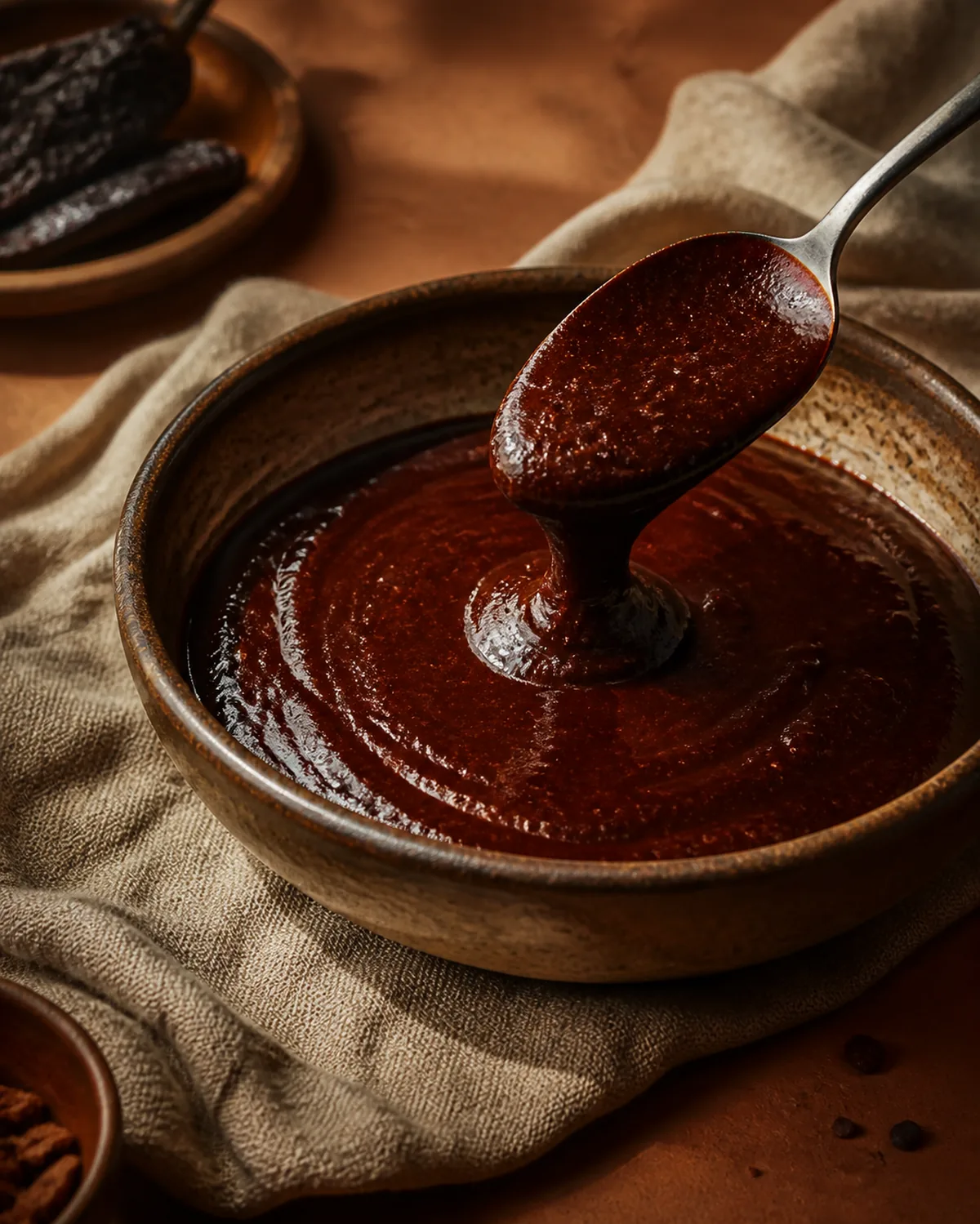
- Deep body holds heat and sweetness at once.
- Fat and slow cooking blunt the harsh edges.
- A thin base would expose the same pair.
A bold contrast needs range in the dish, not just in the jar. Sweetness pulls against heat while salt keeps both in view.
If a contrast tastes harsh, the fix is usually more base, not less spice. Add fat, salt, or simmering time before you cut the bold spice.
Let the dish base rewrite every pairing
A pairing that works in one dish can fail in another. The base ingredients change how each spice behaves before you taste a thing.
Fat carries and rounds. Cooking spices in oil or ghee spreads their aroma and softens harsh edges, so a bold pair feels smoother than it does in water.
That rounding is exactly what blooming spices in fat does. It turns a sharp raw pairing into a mellow, unified one.
Acid sharpens and separates. A squeeze of lemon or a splash of vinegar makes warm spices read brighter and can pull a heavy blend back into line.
Sweetness rounds heat and links warm spices. A little sugar or slow-cooked onion lets chile and cinnamon share the same plate.
Salt raises every spice at once. Under-salted food often reads as a bad pairing when the real problem is a flat base.
Water spreads flavor thin. A pairing that tastes strong in a paste can fade once broth or coconut milk goes in, so concentrate the spices first.
Timing shifts the result as much as the base. A good match can still fail late, which is why spice timing belongs inside pairing decisions.
Getting the heat, salt, and acid in proportion is its own craft. Balancing those tastes decides whether a smart pairing actually lands.
- Fat: rounds harsh spices and carries aroma. Bloom whole or ground spices in oil or ghee before the liquid goes in.
- Acid: lifts and brightens. Add lemon, vinegar, or tamarind near the end so the spices read fresh, not dull.
- Sweetness: softens heat and connects warm spices. A spoon of sugar or caramelized onion tames a sharp chile pairing.
- Salt: raises the whole mix. Salt in stages, because a flat dish often reads as a spice problem it does not have.
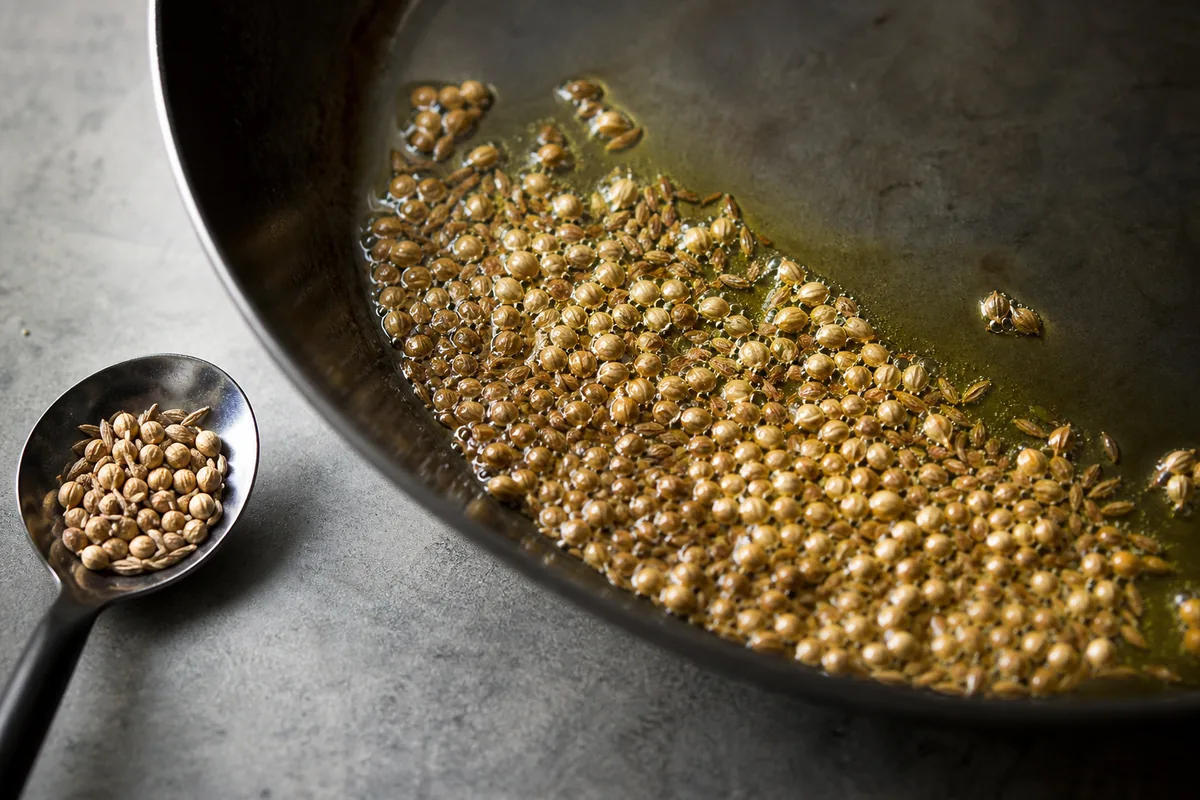
- Left spoon shows the raw, sharper starting point.
- Seeds in hot oil bloom and mellow within a minute.
- Fat binds the pair before any liquid dilutes it.
Borrow pairing grammar from cuisines that already solved it
You do not have to invent pairings from scratch. Long-running cuisines already encode reliable spice grammar in their classic blends.
Garam masala stacks warm spices, cardamom, cinnamon, clove, and cumin, so they read as one deep note over meat and lentils. It is a warm-family blend with a savory anchor.
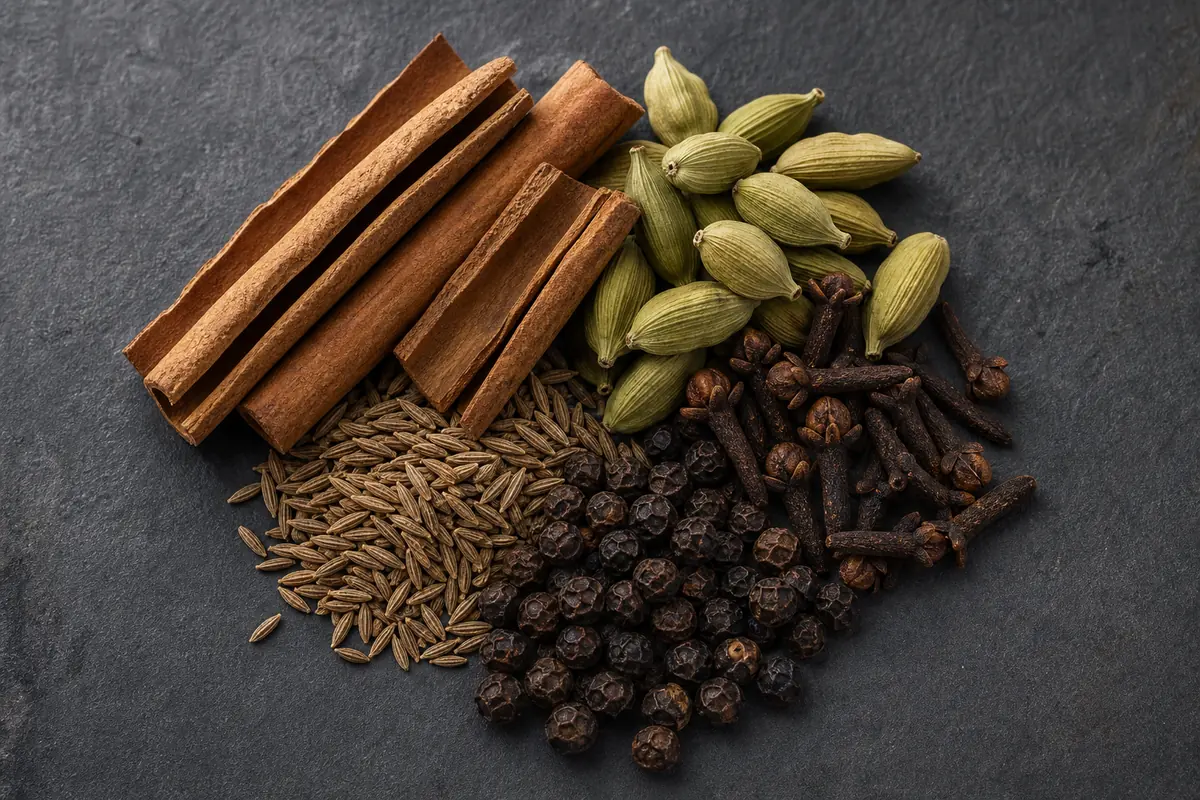
- Every spice here shares warm, sweet aroma.
- The stack has one savory anchor, not five leaders.
- Copy the grammar, then adjust one spice at a time.
A different grammar drives the za'atar blend, built from dried herb, sour sumac, and toasted sesame. It shows how a bright, nutty, sour stack works on bread, vegetables, and yogurt.
Chinese five-spice shows balance instead of stacking. Star anise, fennel, clove, cinnamon, and Sichuan pepper cover sweet, warm, and numbing notes in one measured mix.
Mexican cooking pairs cumin, oregano, and dried chile over beans and meat. Fat and long simmering bind the heat, so the base does the work, not the spice count.
When you want a safe starting pair, copy the logic of a blend that already fits your dish. Then adjust one spice at a time toward your own taste.
A fried spice paste is another proven pattern. Grinding aromatics with spice and cooking them in oil locks a pairing into a stable base.
Test with three spices, then fix what turns muddy
Start every new pairing with three spices, one anchor, one bridge, one accent. Taste that trio before you reach for a fourth jar.
Three spices give you a flavor you can still read. Past five or six, most cooks cannot tell which spice is causing a problem.
If the mix tastes muddy, remove the accent first. Muddiness usually means too many middle notes are fighting for the same space.
If the mix tastes flat, you are missing a bright or pungent lift. Add acid, pepper, or fresh chile instead of another warm spice.
If one spice takes over, cut its amount by half and cook a little longer. Toasting whole spices first can also even out a pushy raw edge.
Write down the trio that works. A short record of proven anchors and their best bridges turns guesswork into a small personal system.
A worked example makes the method concrete.
For a weeknight chili, cumin anchors, coriander bridges toward brightness, and a little chipotle accents the smoke.
Taste right after the coriander goes in. If the pot already sings, the chipotle becomes optional instead of automatic.
Fix the four most common pairing mistakes
Most pairing failures trace back to a few repeatable mistakes.
The first is stacking anchors. Two or three dominant spices in one dish cancel each other and leave a flat, tired taste.
Fix it by demoting all but one to a supporting pinch.
The second mistake is trusting a dry blend you never cook into the dish. Raw spice sits on top instead of joining the base.
The third mistake is chasing a long compatibility list.
A list of pairings gives you no order of operations. Decide the anchor, add one bridge, then judge the pot before any accent joins.
The fourth mistake is blaming the spice when the base is the real problem. Flat, thin, or under-salted food makes a good pairing taste wrong.
Correct the base before you touch the spices.
One habit prevents most of these. Taste after every addition, because a pairing is a run of small decisions, not one dump of the spice rack.