
Jerk Seasoning: What Makes the Jamaican Flavor Work?
Choose a dry rub or wet paste, control the chile, and build char without burning the aromatics.
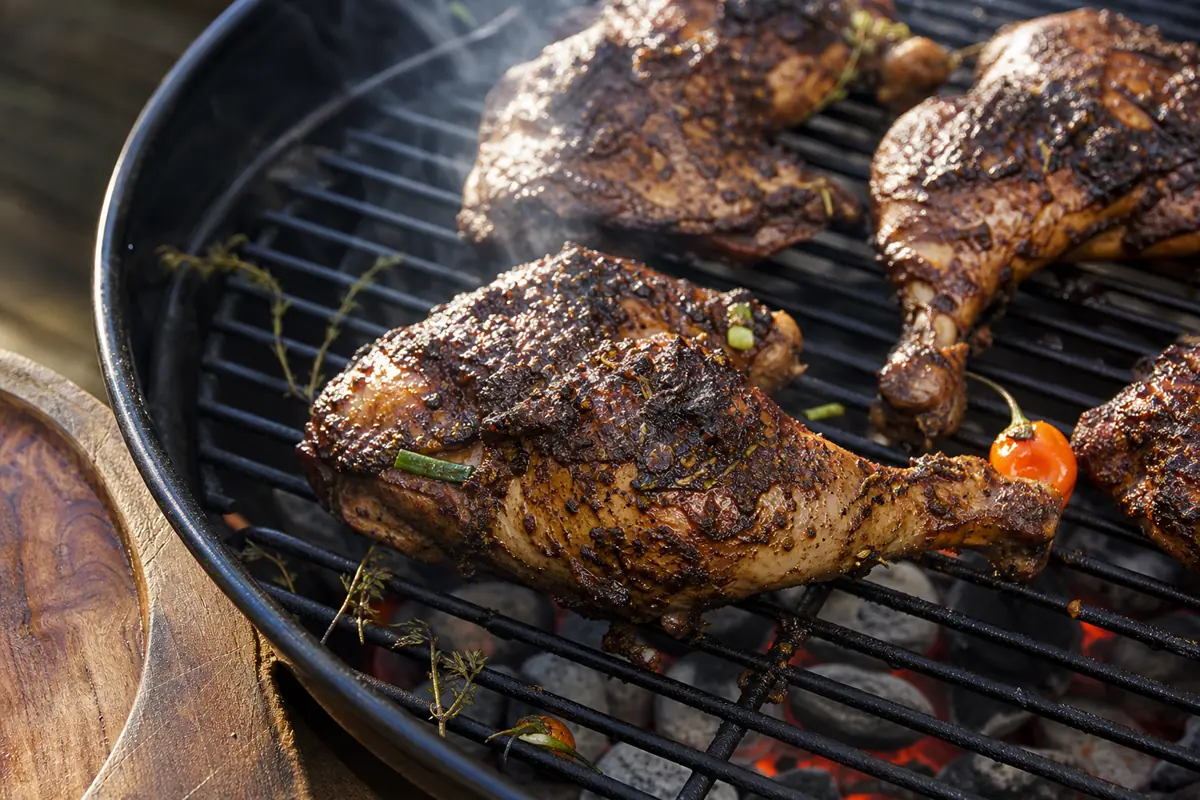
Jerk seasoning is Jamaican flavor built around allspice, Scotch bonnet chile, thyme, alliums, and smoky cooking. Choose dry seasoning for a crust or wet paste for fresh aromatics, then cook over moderate heat before finishing the surface over higher heat.
What makes jerk seasoning Jamaican?
Jerk seasoning is Jamaican because allspice, Scotch bonnet, thyme, aromatics, and smoky cooking work together as one recognizable structure.
The word jerk describes both the seasoning and the method. Meat is rubbed or marinated, then traditionally cooked with smoke and controlled heat.
Allspice is called pimento in Jamaica. The dried berry brings clove, cinnamon, pepper, and resin without using four separate spices.
Scotch bonnet provides intense heat plus a floral, tropical-fruit aroma. That fragrance distinguishes it from a flat dose of cayenne.
Dried thyme creates the herbal line running through warm pimento. It should remain noticeable after the meat browns.
Scallion, onion, garlic, and ginger give wet jerk paste its fresh savory body.
Dry blends approximate them with dehydrated powders.
Smoke completes the cooking method, but bottled smoke flavor cannot replace the seasoning. A spicy smoked chicken still needs pimento and thyme to taste like jerk.
| Element | Main job | If it is missing |
|---|---|---|
| Allspice | Warm peppery backbone | The rub tastes like generic chile seasoning |
| Scotch bonnet | Fruity heat | Heat loses floral character |
| Thyme | Dry herbal aroma | Warm spices become heavy |
| Alliums and ginger | Fresh savory body | Wet paste tastes thin |
| Smoke or char | Cooking aroma and dark edge | The flavor stays like a raw marinade |
Recipes can vary while these jobs remain clear. The cook can adjust heat, salt, or sweetness without erasing the structure.
What ingredients belong in jerk seasoning?
Ground allspice should lead a dry jerk blend. Its flavor is strong, but enough is needed to remain clear after grilling.
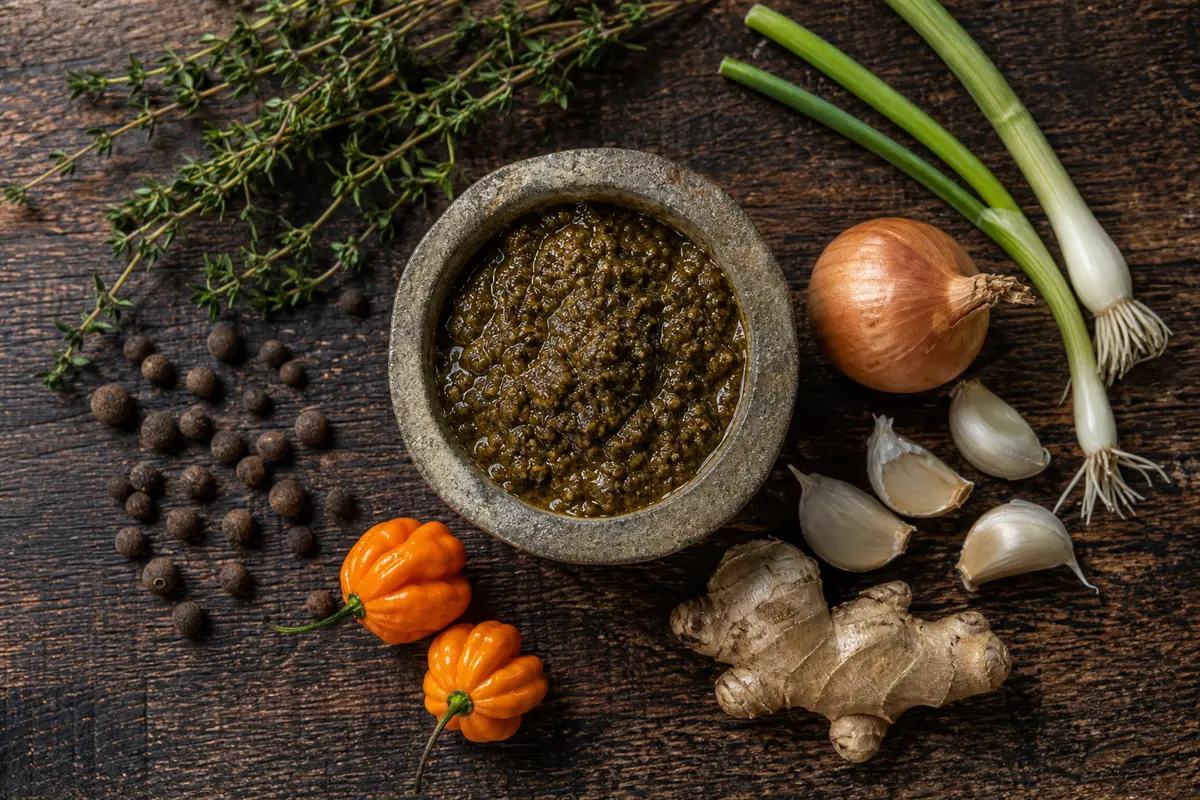
- Spice backbone: Whole allspice berries
- Fruity heat: Small orange Scotch bonnet chiles
- Fresh body: Thyme, scallion, onion, garlic, and ginger
Scotch bonnet belongs in wet paste as fresh chile and in dry blends as powder.
Each product varies sharply in heat.
Dried thyme supports allspice with mint, earth, and a slight bitterness. Fine leaves distribute better than long woody stems.
Garlic, onion, and ginger make the mixture savory and pungent. Fresh versions suit paste, while powders keep a dry blend shelf-stable.
Black pepper heat widens the burn without copying Scotch bonnet fruit. Nutmeg and cinnamon reinforce pimento in much smaller amounts.
Brown sugar is optional. It helps browning, while too much ground nutmeg makes pimento taste like baking spice.
Lime juice or vinegar belongs to wet paste, not dry seasoning.
Acid brightens the surface but can soften delicate fish during a long rest.
| Group | Ingredients | Control point |
|---|---|---|
| Core | Allspice, Scotch bonnet, thyme | Keep all three recognizable |
| Fresh aromatics | Scallion, onion, garlic, ginger | Use in paste or replace with powders |
| Warm support | Black pepper, nutmeg, cinnamon | Keep nutmeg and cinnamon small |
| Optional balance | Sugar, lime, vinegar, soy sauce | Account for burning, acid, and salt |
A commercial label that lists sugar or salt first will season differently. Reduce separate salt and watch the grill more closely.
Dry jerk seasoning or wet jerk paste: which should you use?
Dry jerk seasoning is best when you want a drier crust, easy measurement, and no extra liquid on the food.
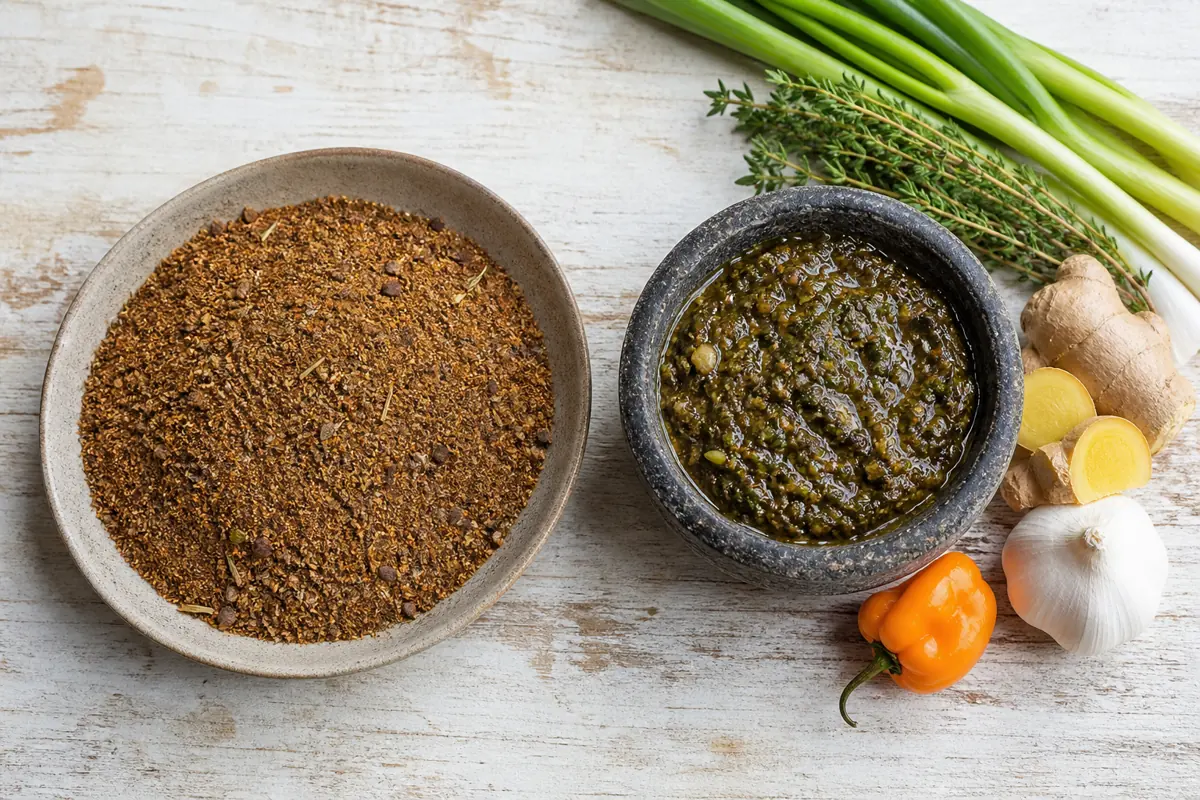
- Dry: Powder, dried herbs, and no added liquid
- Wet: Fresh chile and aromatics blended into paste
- Choose by surface: Dry for crust, wet for a fresh aromatic coating
Wet jerk paste carries fresh Scotch bonnet, scallion, garlic, ginger, and acid. It clings in a thicker aromatic layer.
Dry seasoning works well on wings, pork chops, roasted vegetables, and quick skillet food. Oil helps the powder coat the surface.
Paste suits chicken legs, pork shoulder, and tofu when fresh alliums matter. Scrape off a heavy excess before high heat.
Spices and aromatics remain mostly near the surface. Salt moves deeper over time, so marinating changes seasoning more than spice penetration.
Bottled paste may already contain salt, sugar, oil, and acid. A tablespoon of paste is not equal to a tablespoon of dry powder.
| Form | Best result | Good uses | Main risk |
|---|---|---|---|
| Dry seasoning | Drier seasoned crust | Wings, chops, vegetables | Powder falls off without oil |
| Wet paste | Fresh aromatic coating | Chicken legs, pork, tofu | Alliums and sugar burn |
| Thinned paste | Brushable sauce | Late glazing | Too much acid or salt |
Choose the form before measuring. Converting by volume ignores the water, salt, and fresh ingredients that paste adds.
How spicy is jerk seasoning, and can you make it milder?
Jerk seasoning can range from warm to extremely hot because chile amount and Scotch bonnet strength vary across recipes and brands.
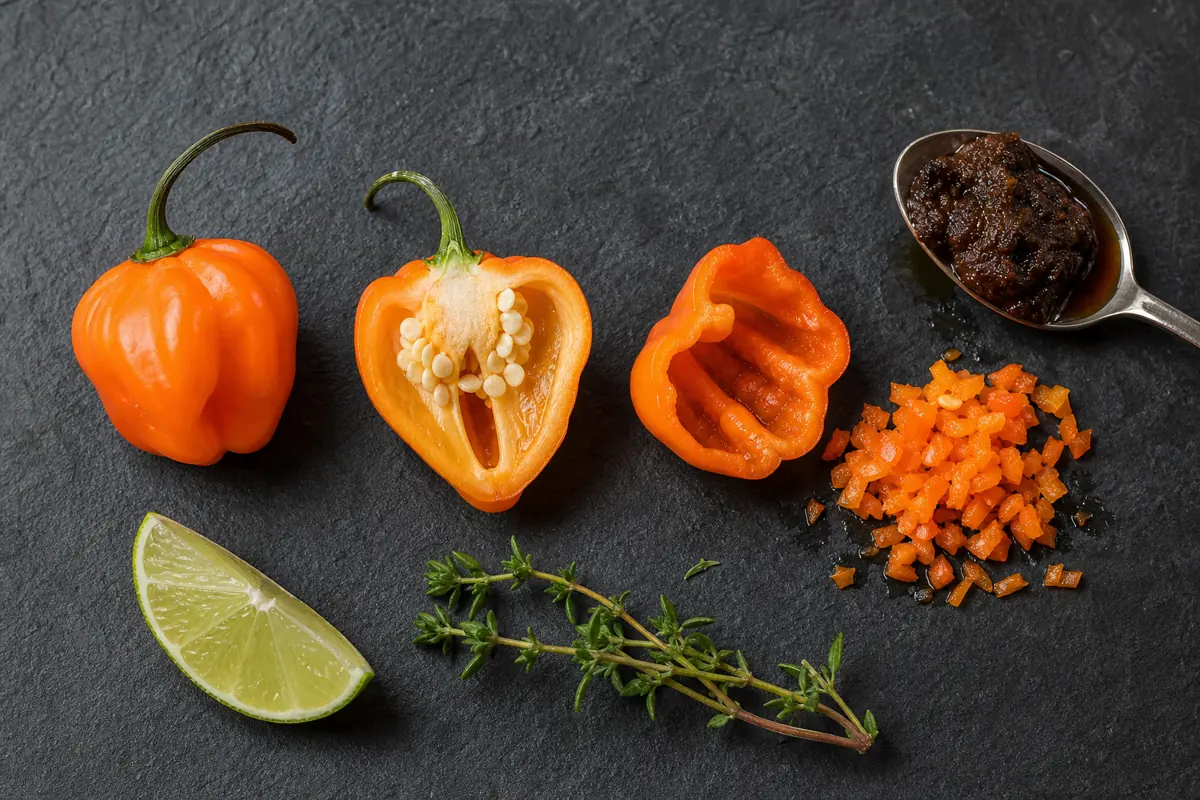
- Hotter: Use the chile with its pale inner ribs
- Milder: Remove ribs and use a smaller measured piece
- Keep aroma: Use a restrained amount of the chile flesh
Most capsaicin concentrates in the pale tissue that holds the seeds. Removing that tissue lowers heat more than shaking out loose seeds alone.
Wear gloves when cutting Scotch bonnet and keep fingers away from eyes. Soap and water should follow before touching other food.
For a milder paste, use less Scotch bonnet and add sweet pepper for fresh pepper body. Keep allspice and thyme unchanged.
Habanero is the closest common substitute because it has similar fruity heat. Use a smaller piece first, since individual peppers differ.
Cayenne powder can make a dry blend hot, but it lacks Scotch bonnet fragrance. Pair it with sweet paprika for broader pepper flavor.
- Mild: Use a small seeded Scotch bonnet piece plus sweet pepper in the wet paste.
- Medium: Keep some pale chile tissue and test the paste on a cooked spoonful of food.
- Hot: Use more whole Scotch bonnet, but keep salt and sugar steady so heat is the only moving variable.
- At the table: Serve cooling slaw or yogurt beside the food instead of sweetening the entire batch.
Sugar makes heat feel softer for a moment, but it does not remove capsaicin. Sweet paprika adds pepper body without equal burn.
How do you make a balanced dry jerk seasoning?
Start with two tablespoons ground allspice and one tablespoon dried thyme. This keeps pimento in front and the herbal line clear.
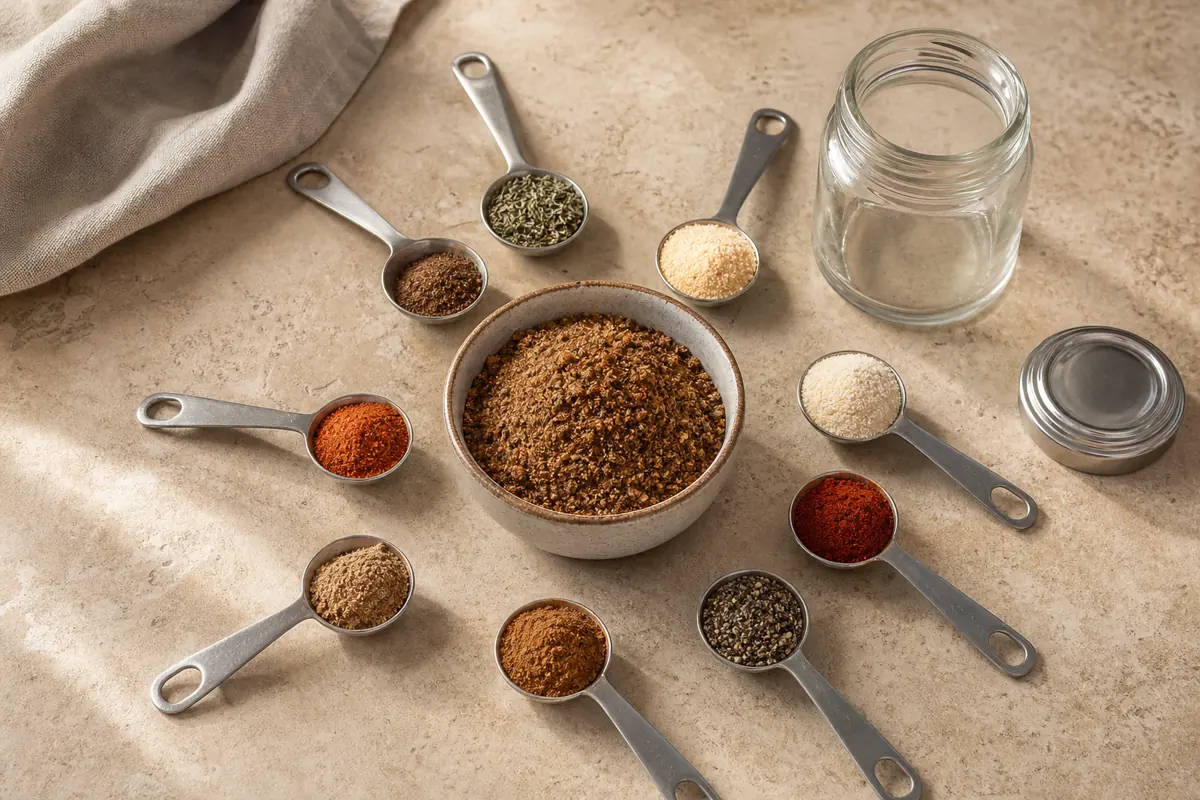
- Largest share: Allspice and thyme
- Smallest share: Cinnamon and nutmeg
- Adjustable: Scotch bonnet powder or cayenne
Add one tablespoon each garlic powder and onion powder, then two teaspoons ground ginger and two teaspoons black pepper.
Use one teaspoon nutmeg and one-half teaspoon ground cinnamon. Larger amounts can make the blend resemble sweet baking spice.
Add one-half to two teaspoons Scotch bonnet powder or cayenne according to heat. Start low when the chile powder is unfamiliar.
Salt can stay outside the jar for better control. If included, record the amount and reduce salt in every recipe that uses the blend.
- Lead: Two tablespoons ground allspice and one tablespoon dried thyme.
- Build: Garlic, onion, ginger, and black pepper create savory weight.
- Support: Nutmeg and cinnamon remain measured in small teaspoons.
- Set heat: Add chile last, mix, and test a pinch in warm oil.
Whisk in a broad bowl, then break every clump. Fine chile powder can hide below the larger thyme leaves.
Test the blend on one oiled potato piece or a spoonful of beans. Dry tasting makes chile feel harsher and pimento feel dusty.
How much jerk seasoning should you use, and how long should it sit?
Start with one tablespoon of salt-free dry jerk seasoning per pound of chicken, pork, tofu, or sturdy vegetables.
Mix the powder with one tablespoon oil so it coats rather than falls away. Salt the food separately unless the blend already contains it.
For wet paste, begin with one to two tablespoons per pound. Read the label before adding extra salt, sugar, or acid.
Chicken pieces benefit from two to twelve hours, while pork shoulder can rest overnight. Refrigerate throughout the wait.
Fish and shrimp need only fifteen to thirty minutes when the paste contains lime or vinegar. Longer acid contact can soften the surface.
Pressed tofu can rest for one hour after its surface dries. Vegetables usually need immediate coating rather than a long marinade.
| Food | Starting amount per pound | Useful rest | Watch for |
|---|---|---|---|
| Chicken | 1 tbsp dry or 2 tbsp paste | 2 to 12 hours | Paste under loose skin |
| Pork | 1 tbsp dry or 2 tbsp paste | 4 to 24 hours | Sugar burning |
| Fish or shrimp | 2 tsp dry or 1 tbsp paste | 15 to 30 minutes | Acid-softened surface |
| Tofu | 1 tbsp dry or paste | About 1 hour | Wet surface blocking browning |
| Vegetables | 2 tsp dry | Cook soon after coating | Loose powder and burnt edges |
A thick coating does not make flavor penetrate farther. It mostly increases surface salt, chile, and the chance of scorching.
How do you cook jerk without burning the seasoning?
Cook jerk over moderate or indirect heat first, then move the food over higher heat to finish the dark aromatic edges.
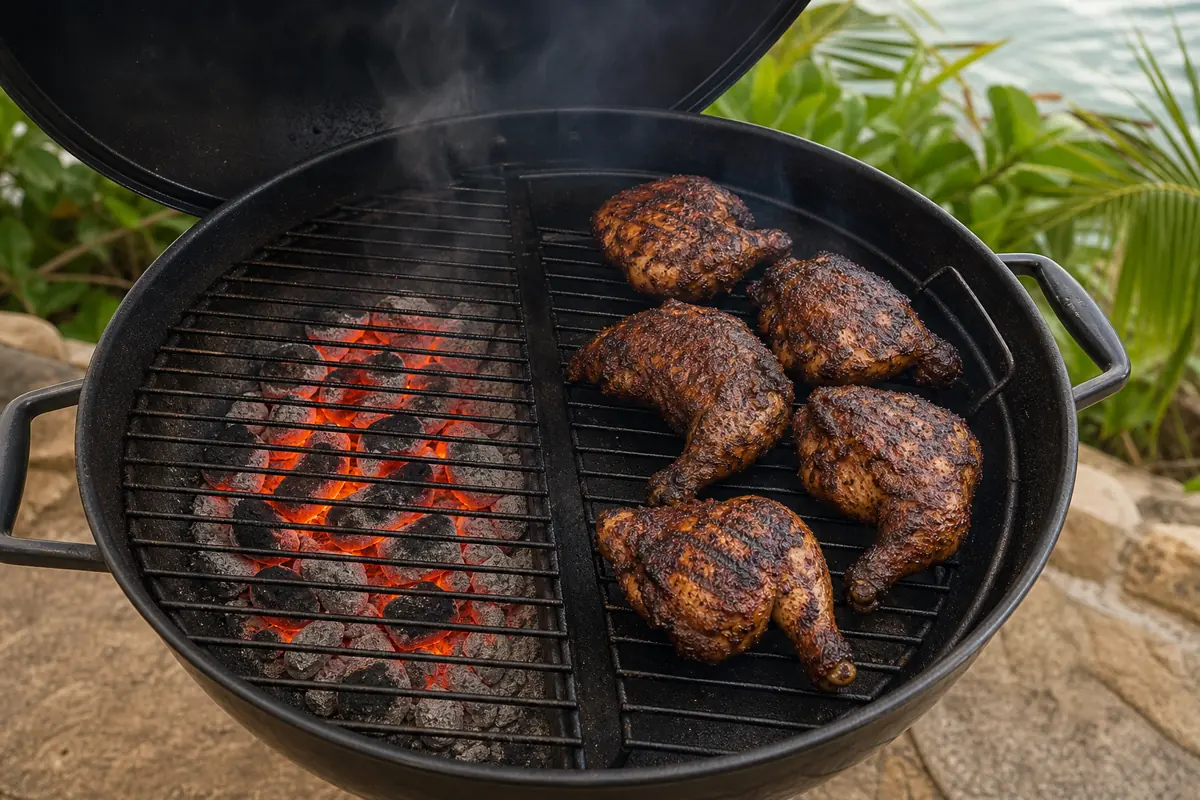
- Cool side: Cook the meat through with the lid closed
- Hot side: Finish the surface briefly over the coals
- Move when: The paste darkens before it burns
Scrape off pools of wet paste before grilling. A thin coating clings while scallion, garlic, and sugar brown instead of turning black.
Chicken thighs and legs need time for fat to render and meat to cook through. Constant direct flame burns the outside too early.
Turn only after the first side releases easily. Repeated movement tears the coating and drops aromatic pieces into the fire.
An oven can cook the food through at moderate heat before a broiler finishes the surface.
Watch closely because the final change is fast.
Pimento wood is traditional and reinforces allspice aroma. Smoked paprika adds smoke in a dry blend but cannot recreate live fire.
- Set two zones: Keep one moderate area for cooking and one hotter area for final color.
- Thin the coating: Leave an even film rather than wet clumps around joints and folds.
- Close the lid: Trap clean smoke and steady heat without feeding constant flames.
- Finish briefly: Move to direct heat only after the center is nearly done.
Black sugary crust tastes bitter and cannot be balanced with more sauce. Trim the worst patches and serve fresh paste only after cooking it safely.
What foods work with jerk seasoning besides chicken?
Pork shoulder and chops support jerk's warm spice and long resting time. Dry seasoning makes a crust, while paste suits slow cooking.
Firm fish and shrimp take a lighter coating.
Short contact keeps acid from changing texture before the seafood reaches heat.
Pressed tofu carries wet paste well when its surface is dry. High heat then creates contrast between crisp edges and a mild center.
Black beans or rice can take a small spoonful of cooked paste. Add it with onion so raw allium flavor softens.
Sweet potato, squash, cauliflower, and mushrooms hold a dry mix through oil.
Their browning supports pimento and thyme.
Pineapple can take a light late dusting, but sweet jerk paste burns quickly on fruit. Grill clean slices before adding a cooked glaze.
| Food | Best form | Cooking path | Adjustment |
|---|---|---|---|
| Pork | Dry or wet | Grill, roast, smoke | Allow a longer rest |
| Seafood | Thin wet paste | Quick grill or pan | Reduce acid contact |
| Tofu | Wet paste | Roast or grill | Dry the surface first |
| Root vegetables | Dry seasoning | Roast | Use oil for adhesion |
| Beans | Cooked paste | Simmer | Start with one teaspoon |
What can substitute for jerk seasoning, and how should it be stored?
The best emergency mix combines allspice, thyme, garlic, onion, ginger, black pepper, and a fruity hot chile.
Habanero can replace Scotch bonnet in wet paste because its heat also carries fruit. Start with less and adjust after blending.
Cayenne supplies heat in a dry mix but not tropical aroma. Add sweet paprika for pepper body and keep allspice prominent.
Cajun seasoning can season grilled food, yet it lacks jerk's pimento-thyme center. Add allspice and thyme instead of treating it as equal.
| Option | Ratio | Preserves | Falls short |
|---|---|---|---|
| Homemade core mix | 1:1 | Allspice, thyme, chile, aromatics | No fresh scallion unless added |
| Habanero for Scotch bonnet | Use less first | Fruity heat | Different exact aroma |
| Cayenne plus paprika | Small blended amount | Heat and pepper body | Less floral fruit |
| Cajun seasoning plus allspice | Adjust by salt | Savory heat | Different herb and garlic balance |
Follow ground spice storage rules for dry jerk seasoning. Steam creates clumps, while light weakens chile color and thyme aroma.
Fresh jerk paste belongs in the refrigerator in a clean sealed container. Discard it if mold, gas, or an unpleasant fermented odor develops.
Freeze extra paste in measured spoonfuls for longer keeping. Thaw only the portion needed and cook it before serving.