
Which Jerk Seasoning Substitute Fits Your Rub or Marinade?
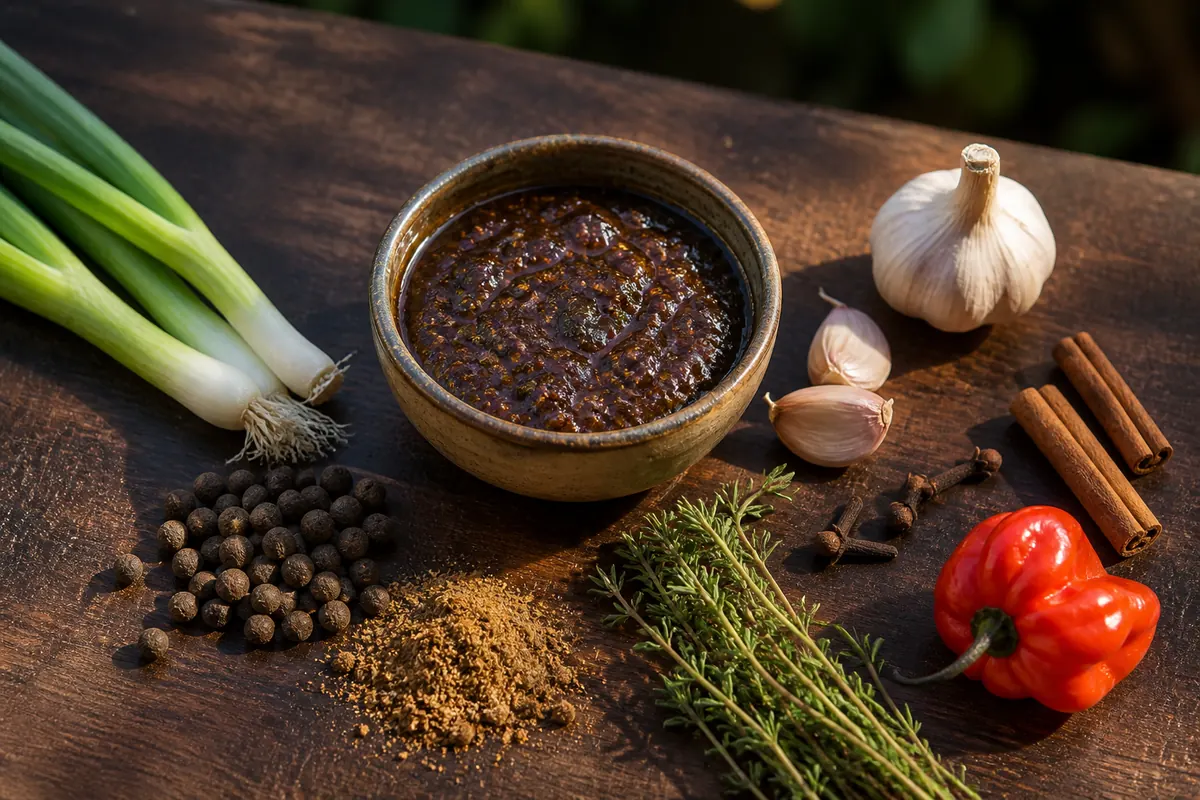
Jerk Seasoning Needs Allspice, Thyme, and Chile Together
The closest jerk seasoning substitute is a small homemade blend built around allspice, dried thyme, cayenne, garlic, and a little cinnamon or clove. For each tablespoon of jerk seasoning, combine 1 1/2 teaspoons allspice, 1 teaspoon thyme, 1/4 teaspoon cayenne, 1/4 teaspoon garlic powder, and a small pinch each of cinnamon and clove.
That mixture restores the main aromatic pattern without pretending that every spicy seasoning tastes like jerk.
Traditional Jamaican jerk draws its identity from pimento, the Jamaican name for allspice, together with thyme, scallion, onion, garlic, and Scotch bonnet chile. A dry pantry substitute cannot reproduce fresh scallion or the fruity character of Scotch bonnet exactly, but it can keep those flavor jobs in balance.
- Allspice core
- Warm, woody, peppery aroma gives jerk its most recognizable spice note.
- Herbal line
- Thyme supplies a dry green aroma that prevents the blend from tasting like plain chile powder.
- Chile heat
- Scotch bonnet is fruity as well as hot, while cayenne supplies cleaner, narrower heat.
- Savory aromatics
- Garlic and onion support meat, tofu, beans, and vegetables without becoming the main flavor.
- Warm accents
- Cinnamon, clove, or nutmeg belong in small amounts because they can quickly turn a savory rub sweet or medicinal.
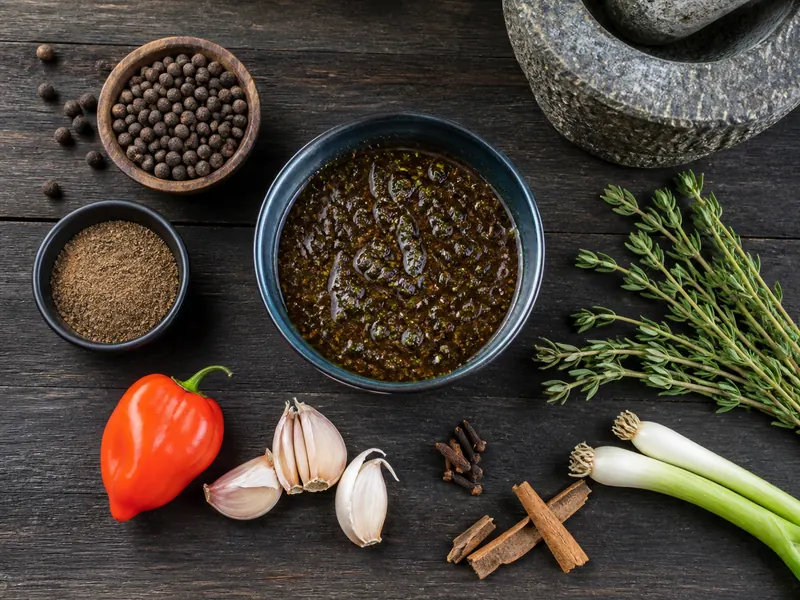
- Allspice bowl: The largest aromatic measure forms the warm center.
- Thyme leaves: The herbal note separates jerk from a generic hot rub.
- Chile and garlic: Heat and savory depth support rather than replace the core.
Commercial jerk seasonings vary widely.
Some are salt-free spice blends, while others list salt or sugar first.
Replacing them tablespoon for tablespoon can change the seasoning level even when the aromas seem close.
Read the missing product's label if you still have it. When salt was a leading ingredient, season the food separately and add only enough to reach the original recipe's likely salt level.
Fresh jerk paste creates another difference because it usually includes moist aromatics and acid.
A spoonful of dry substitute needs oil and lime juice before it can coat food in the same way.
Choose the replacement by the job in the dish.
A homemade blend works across grills and roasts, a short allspice mixture suits a sparse pantry, corrected Cajun seasoning favors savory meat, and berbere creates a deliberate warm-chile variation in a braise.
Four Jerk Seasoning Substitutes with Clear Limits
These starting amounts replace one tablespoon of dry jerk seasoning. Reduce them when the recipe already contains thyme, garlic, cayenne, salt, or sugar because those ingredients should not enter twice at full strength.
| Number | Substitute | Starting amount | Best use | Main limit |
|---|---|---|---|---|
| 1 | Homemade jerk blend | 1 1/2 tsp allspice + 1 tsp thyme + 1/4 tsp cayenne + 1/4 tsp garlic + pinches cinnamon and clove | Dry rubs, roasting, grilling, marinades | Scotch bonnet fruitiness is missing |
| 2 | Allspice, thyme, and cayenne | 2 tsp allspice + 3/4 tsp thyme + 1/4 tsp cayenne | Vegetables, beans, simple meat rubs | Less onion and garlic depth |
| 3 | Cajun seasoning corrected with allspice | 2 tsp Cajun seasoning + 1 tsp allspice + 1/4 tsp thyme | Chicken, pork, shrimp, potatoes | Salt and paprika may lead |
| 4 | Berbere | 2 tsp berbere + 1 tsp allspice | Braises, lentils, dark sauces | Different chile and warm-spice direction |
1. A Small Homemade Jerk Blend
Mix 1 1/2 teaspoons ground allspice, 1 teaspoon dried thyme, 1/4 teaspoon cayenne, and 1/4 teaspoon garlic powder. Add one small pinch of cinnamon and one smaller pinch of ground clove, then smell the mixture before using it.
This is the most adaptable replacement because each flavor remains adjustable. Allspice takes the largest share, thyme forms the second layer, and the sharper ingredients stay below both.
- Measure the corePut allspice and thyme in a small bowl and rub any coarse thyme between your fingers.
- Add heat and garlicMix in cayenne and garlic powder so they disperse before touching the food.
- Add warm spiceUse only a pinch each of cinnamon and clove.
- Smell before saltingAdd another thyme pinch if the blend smells sweet, or more allspice if cayenne speaks first.
- Season the dishApply the mixture, then add salt and sugar separately according to the recipe.
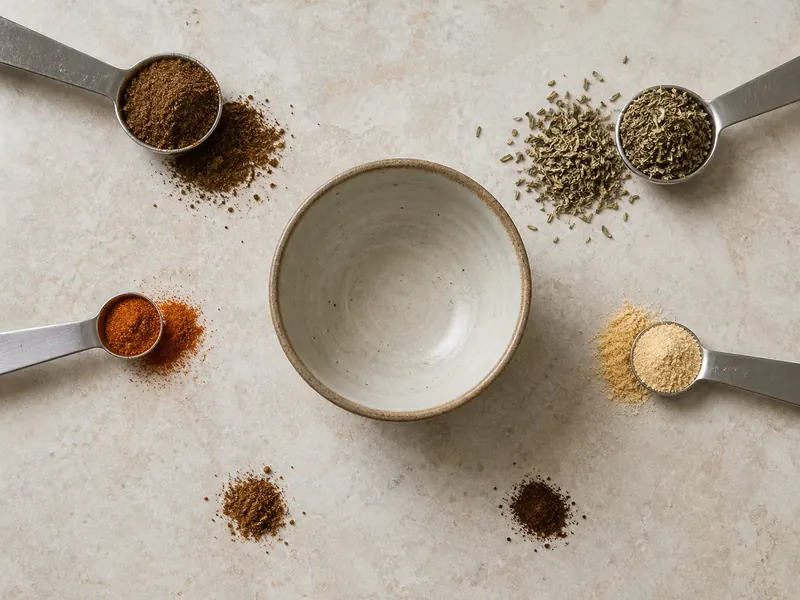
- Large measures: Allspice and thyme establish the main aroma.
- Small measures: Cayenne and garlic add heat and savory depth.
- Tiny pinches: Cinnamon and clove should remain background notes.
Use the blend on chicken thighs, pork shoulder, firm fish, mushrooms, cauliflower, tofu, or sweet potato. Fat and browning carry the allspice aroma particularly well, while a little lime at the end brings back some of the brightness that a dry blend lacks.
For a mild dish, cut the cayenne to a pinch and leave the allspice and thyme unchanged.
Lowering every spice together makes the result merely faint, while controlling chile keeps its jerk-like aromatic shape.
A recipe that already includes garlic and thyme needs a narrower mix. Use 1 1/2 teaspoons allspice, 1/4 teaspoon cayenne, and the tiny warm-spice pinches, then rely on the recipe's existing aromatics.
Do not add an equal measure of cinnamon or clove to make the mixture seem fuller. Both spices become dominant long before allspice does, especially in a light sauce or a small portion of fish.
2. Allspice, Thyme, and Cayenne
Combine 2 teaspoons ground allspice, 3/4 teaspoon dried thyme, and 1/4 teaspoon cayenne.
This short mixture is useful when garlic or onion already appears elsewhere in the recipe.
Allspice supplies warm wood, pepper, and clove-like aroma in one ingredient. Thyme pulls the mixture toward a savory herb rub, and cayenne provides heat without adding paprika, cumin, or another blend's salt.
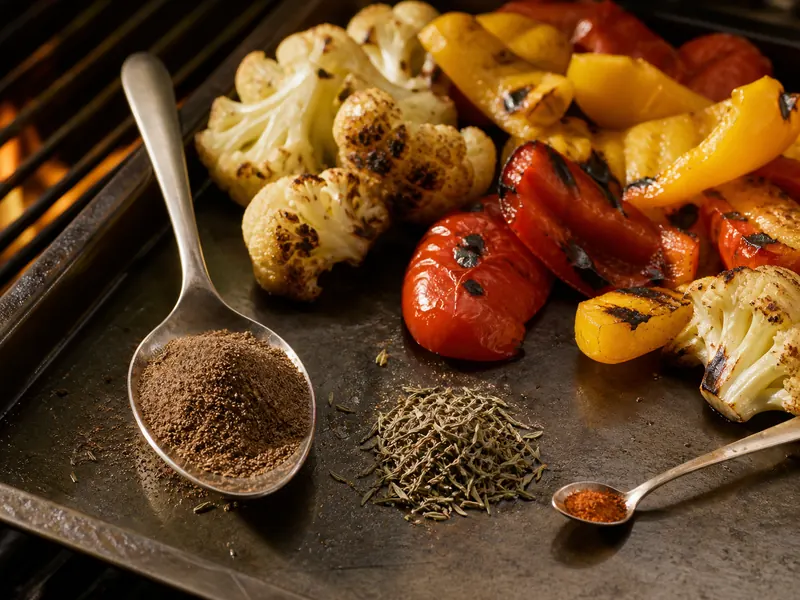
- Largest spoon: Allspice gives the mix its warm central aroma.
- Green leaves: Thyme keeps the blend savory and herbal.
- Small red spoon: Cayenne supplies controlled heat without fruity chile flavor.
Use the full amount for a pound of mushrooms, cauliflower, beans, chicken, or pork when the recipe calls for one tablespoon jerk seasoning. Toss the mixture with oil before roasting so the fine allspice does not gather in dry patches.
This option tastes leaner than the homemade blend because it has no garlic, onion, cinnamon, or clove added separately. That restraint can help in a bean stew or vegetable dish that already has chopped onion and fresh garlic in the pot.
Cayenne is hotter and less fruity than Scotch bonnet. Start with one-eighth teaspoon for children or heat-sensitive diners, then add the remaining pinch only after tasting a cooked sample.
The three-spice mix has a clear boundary.
It restores the main aromatic idea, but it will not create the fresh, rounded flavor of a wet jerk paste with scallion, ginger, citrus, and fresh chile.
3. Cajun Seasoning Corrected with Allspice
Mix 2 teaspoons Cajun seasoning with 1 teaspoon ground allspice and 1/4 teaspoon dried thyme. Begin with three-quarters of that mixture when the Cajun jar lists salt first.
Cajun seasoning can contribute cayenne, paprika, garlic, onion, and savory herbs.
It usually lacks enough allspice to suggest jerk, so the added teaspoon corrects the most important missing aroma rather than merely increasing heat.
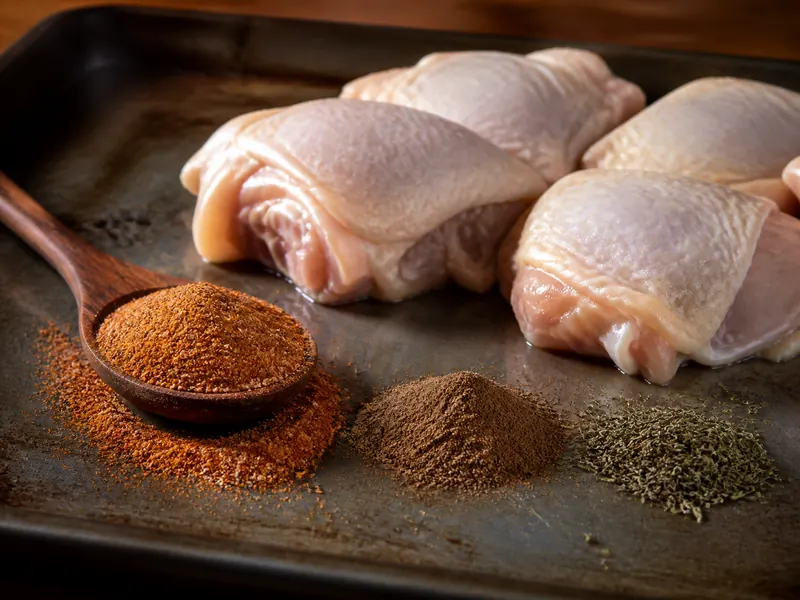
- Main spoon: Cajun seasoning supplies chile, garlic, and onion.
- Brown spice: Allspice shifts the aroma toward jerk.
- Thyme pinch: A green herbal note completes the correction.
This substitute works best on chicken, pork, shrimp, potatoes, or corn where paprika and garlic already make sense. A dark sear helps the blend feel integrated, though it still tastes more smoky or paprika-led than a true jerk mixture.
Avoid it in a pale coconut sauce or a recipe where allspice is meant to remain fragrant and clean. Paprika can color the sauce and cumin, when present in the jar, introduces an earthy direction that the original seasoning may not have had.
Taste the dry Cajun seasoning before mixing. If it is very salty, use 1 teaspoon Cajun seasoning, 1 1/2 teaspoons allspice, and 1/2 teaspoon thyme, then supply cayenne and garlic separately if the dish needs them.
The jar label decides the correction. A salt-free, herb-heavy blend can take the full ratio, while a salty commercial blend needs a smaller dose and more unsalted allspice or thyme.
4. Berbere for a Deliberate Warm-Chile Shift
Mix 2 teaspoons berbere with 1 teaspoon ground allspice for one tablespoon jerk seasoning.
Use it in a braise, lentil pot, bean stew, or dark sauce where its deeper chile and warm spices can become an intentional variation.
Berbere often combines chile with ginger, fenugreek, coriander, cardamom, cinnamon, or clove. Those ingredients create a broad aromatic blend, but the result follows an Ethiopian flavor direction rather than reproducing Jamaican jerk.
Moisture and long cooking integrate its chile and warm spices.
Rich meat can carry the blend's deep, earthy aroma.
Sweet flesh suits the warm-spice shift when heat stays controlled.
Usually skip it because the blend can obscure a delicate fillet.
Choose the homemade blend instead because berbere cannot supply scallion, citrus, or fresh chile character.
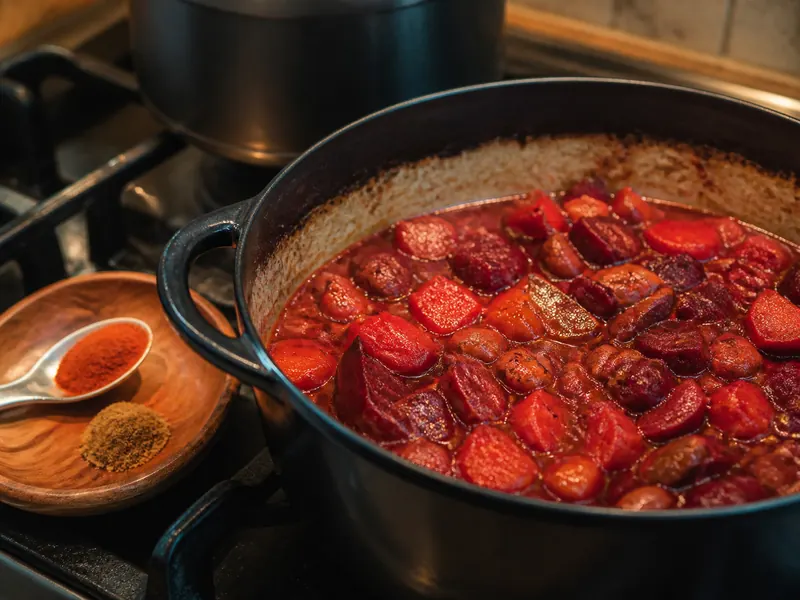
- Red braise: Moisture softens and distributes the chile blend.
- Small spoon: Begin below the full amount when the berbere is hot.
- Dark pan: Rich ingredients support deeper warm-spice notes.
Start with half the mixture when you do not know the berbere's heat level. Different blends range from aromatic and moderate to sharply hot, and adding more allspice later is easier than removing chile from a finished stew.
Thyme is the main missing note. Add 1/4 teaspoon dried thyme when the dish has no fresh herb, but leave it out when the recipe already includes thyme or another green herb in a noticeable amount.
Berbere is a poor invisible substitute in a recipe whose identity depends on Jamaican jerk. Choose it only when a warm, complex chile variation is acceptable and the diner does not expect the original flavor.
Curry powder is an even weaker direct swap because turmeric, cumin, and coriander can take the dish in a different direction before allspice or thyme becomes noticeable. If curry powder is the only option, use it as a new seasoning choice rather than labeling the result jerk.
Dry Rub and Wet Marinade Need Different Conversions
A tablespoon of dry seasoning can replace another dry seasoning directly after you account for salt.
A wet marinade needs liquid, fresh aromatics, and enough time to coat the food rather than fall away as loose powder.
For a dry rub, combine one tablespoon substitute with one tablespoon neutral oil for each pound of meat, tofu, or vegetables. Add 1/2 teaspoon salt only when neither the substitute nor the recipe already supplies it.
- Mix the spice basePut one tablespoon of the chosen dry substitute in a nonreactive bowl.
- Add fresh aromaticsStir in two sliced scallions and one small grated garlic clove when the recipe can accept them.
- Add liquidMix in one tablespoon lime juice and one tablespoon neutral oil.
- Check the textureAdd another teaspoon of oil or water if the paste will not spread in a thin coat.
- Marinate safelyCoat the food, refrigerate it, and discard marinade that has touched raw meat unless it is boiled thoroughly.
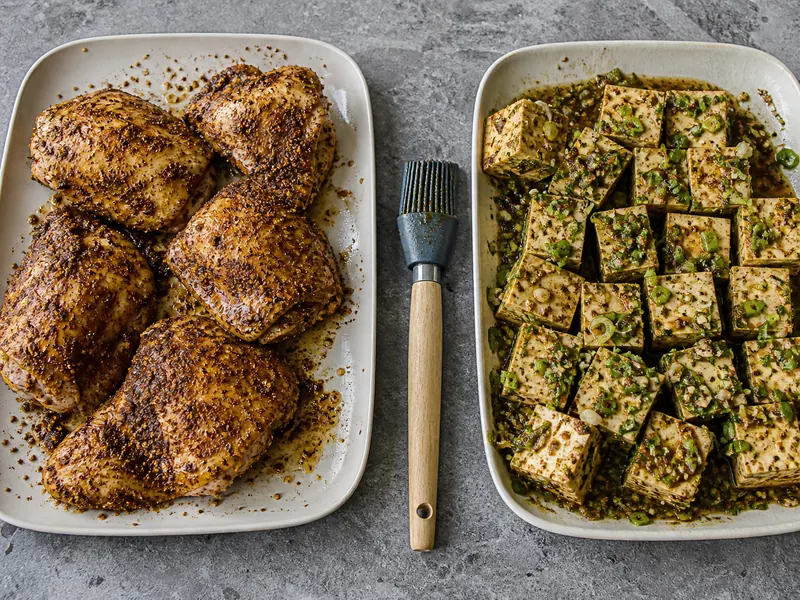
- Dry chicken: A thin oil film holds the spice mixture against the surface.
- Wet tofu: Lime, scallion, and oil carry the blend into a moist coating.
- Brush: An even layer seasons better than thick patches of powder.
Lime brightens the substitute but also changes texture over time. Marinate firm chicken thighs or pork for two to eight hours, while fish and shrimp need a much shorter rest because acid can make their surfaces firm or chalky.
Tofu and sturdy vegetables can take the wet mixture for thirty minutes before cooking. Pat very wet foods first so the marinade coats them instead of sliding into the bottom of the bowl.
A dry rub is better when you want a browned crust. Spread a thin, even layer and keep excess sugar away from very high direct heat because it can blacken before the food cooks through.
A wet marinade is better when fresh scallion, garlic, ginger, and citrus are part of the desired result. Reserve a clean portion before it touches raw meat if you want extra sauce for serving.
Do not pour used raw-meat marinade over cooked food. Boil it thoroughly as a sauce or discard it, and use a separate clean brush during the final minutes of grilling.
Correct Heat, Salt, Sweetness, and Warm Spice Separately
Taste a cooked sample before changing the whole batch.
Raw spice powder can seem harsh or dusty, while heat, sweetness, and allspice aroma change after fat and cooking distribute them.
Name the leading problem, then correct only that part. Adding another full spoonful of seasoning usually raises salt, heat, and warm spice together even when only one needs repair.
- Too hotAdd more unseasoned food, oil, coconut milk, beans, or vegetables. Do not try to cancel chile with more allspice.
- Too saltyIncrease the unsalted base and add acid only if the dish already welcomes lime. Sugar can distract from salt but does not remove it.
- Too sweetStop adding sugar and warm spice. Add more thyme, garlic, chile, or unsweetened base according to the dish.
- Too clove-likeDilute with unseasoned food and add a little thyme. More cinnamon creates competition rather than removing clove.
- Too flatAdd a small allspice pinch first, then thyme, then cayenne only if heat is also missing.
- Too dry or dustyAdd oil or cooking liquid and give the spices time to hydrate before seasoning again.
If the food is hot enough but does not smell like jerk, add allspice and thyme instead of cayenne. Stir 1/4 teaspoon allspice and a pinch of thyme into a wet dish, or dust a smaller amount over an oiled surface before the final stage of roasting.
When the dish tastes sweet and perfumed, cinnamon or clove is probably too strong. Increase the unsweetened base and fresh savory aromatics, since acid alone may brighten the food while leaving the perfume intact.
Salt needs the most caution because prepared Cajun seasoning and commercial jerk blends can contain far more than a homemade spice mixture. Cook one seasoned piece before adding salt to the remaining batch.
Sugar is optional in a substitute unless the original blend or recipe clearly calls for it.
One teaspoon brown sugar per tablespoon of spice can support browning on moderate heat, but it also burns quickly over a fierce flame.
Scotch bonnet flavor cannot be reconstructed fully with cayenne. A small amount of habanero can supply a closer fruity heat in a wet marinade, but its strength varies and bare hands should not touch the cut chile.
The safest final adjustment is small and specific. Add one pinch, mix it through the whole dish, let heat or moisture distribute it, then taste again before making a second change.
A successful substitute should leave allspice and thyme recognizable without making cinnamon, clove, salt, or raw chile the first thing you notice. Stop when the food tastes balanced for the dish in front of you, even if the measured volume ends below the tablespoon printed in the recipe.