
Berbere Changes Once It Meets Onion and Hot Fat
Judge the blend in food, then adjust chile heat without losing its fenugreek and warm-spice identity.
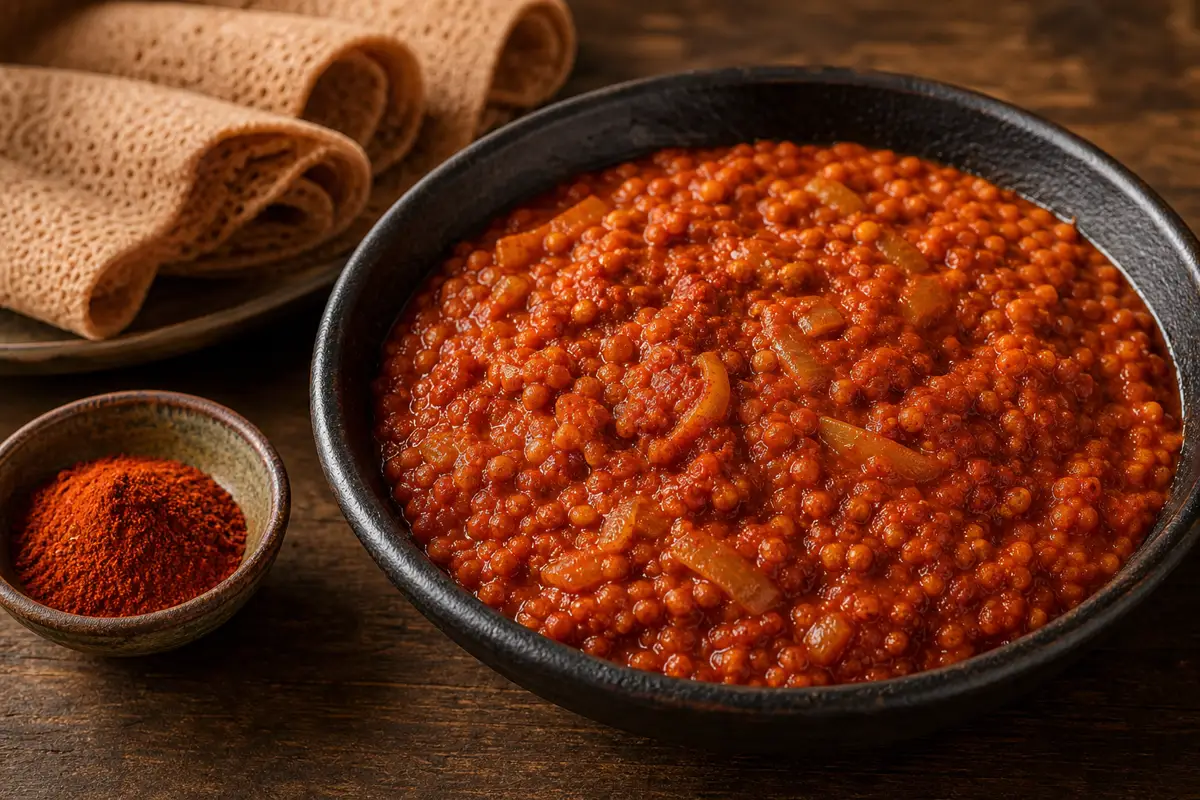
Berbere is an Ethiopian and Eritrean red spice blend whose dried chiles, fenugreek, ginger, garlic, and aromatic seeds vary by household and region. Cook it gently in fat after onions soften, then reduce the hottest chile rather than removing the aromatic backbone.
Why does berbere taste fuller after it cooks?
A pinch of raw berbere can taste dusty, sharp, and hotter than the finished dish.
In a wot, slowly cooked onions supply sweetness and body. Fat carries the chile pigments and the aromas from ginger, coriander, and cardamom.
Add berbere after the onions lose their raw bite. Stir over moderate heat until the red color darkens and the aroma becomes rounder.
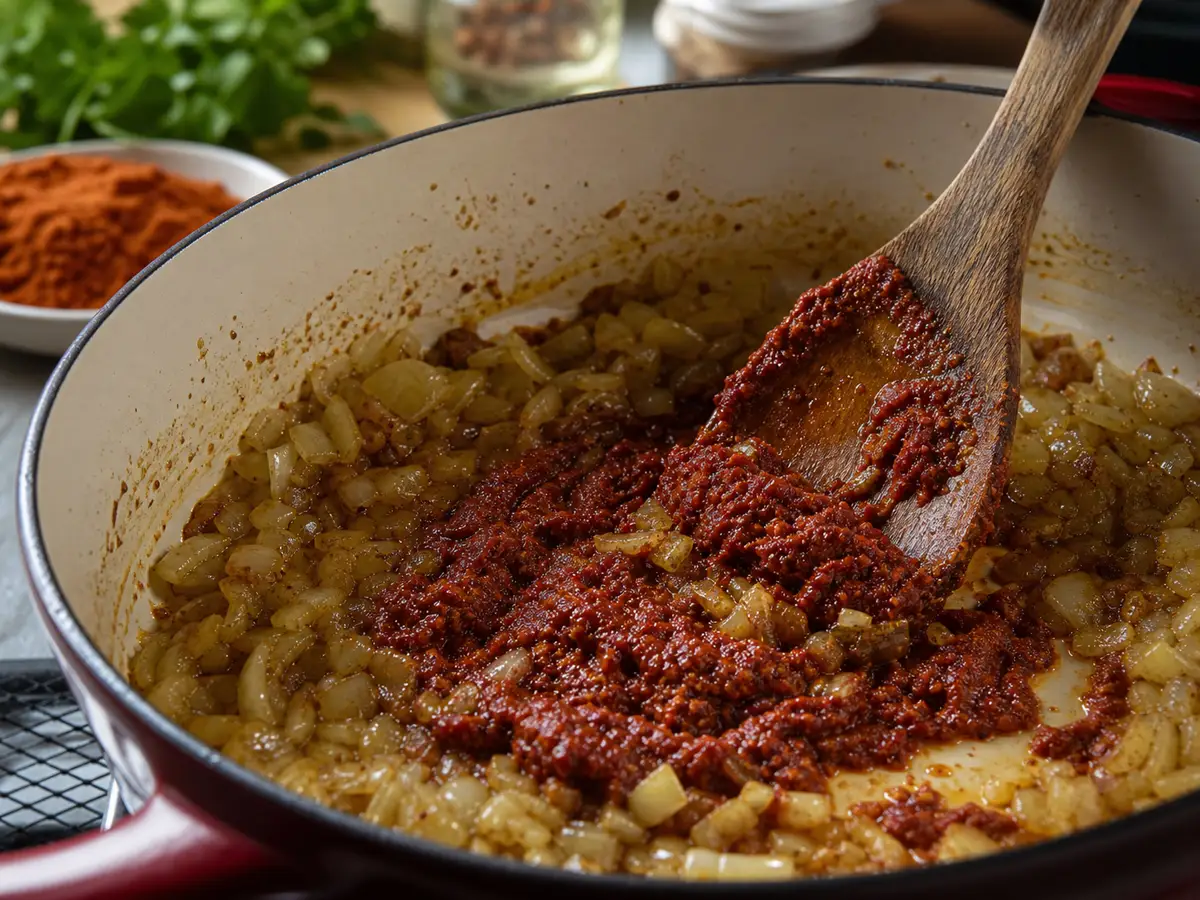
- Too early: Wet onions can leave the powder tasting raw.
- Too hot: Ground chile and garlic become bitter.
- Ready: The mixture smells toasted and looks brick red.
Splash in water if the paste catches. The goal is a slow cooked base, not fried spice stuck to the pan.
Onions for wot often cook longer than onions for a quick sauté. Their reduced moisture lets the spice paste cling without tasting watery.
Niter kibbeh adds another aromatic layer, but neutral oil still carries the blend. The onion stage matters more than buying one special fat.
A narrow pan crowds the onions and traps steam. Use a wide pot when making a larger batch so reduction happens evenly.
What is in berbere, and how hot should it be?
Dried red chiles provide color and heat, but ground fenugreek gives berbere a bittersweet, savory depth.
Dried ginger and garlic give the blend a sharp aromatic middle.
Coriander seed, cumin, and black pepper widen that middle. Clove and cinnamon add warmth without making the blend taste sweet.
Ethiopian korarima may bring a smoky, resinous cardamom note. Green cardamom is brighter, so it is an approximation rather than an exact match.
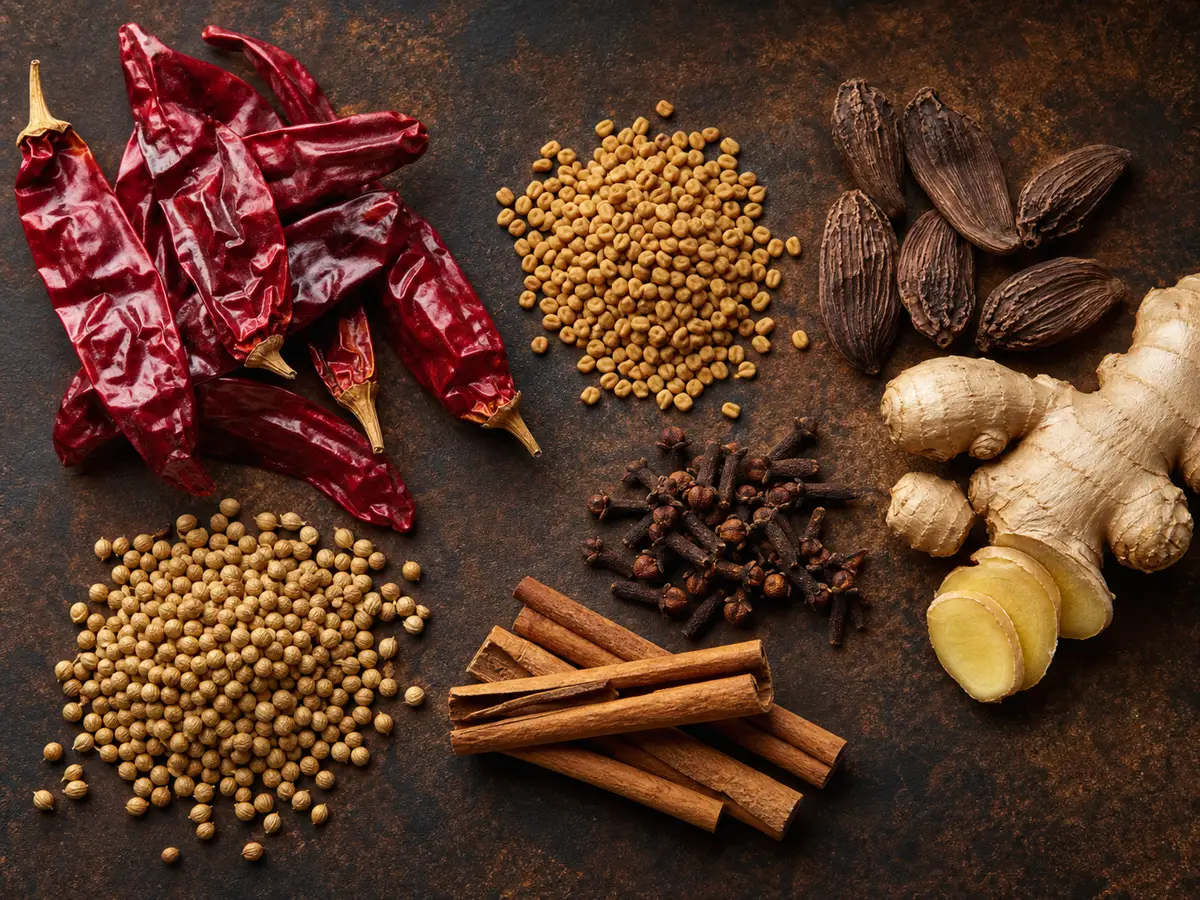
- Red layer: Dried chile and paprika control color and heat.
- Savory layer: Fenugreek, ginger, garlic, and coriander add depth.
- Warm layer: Korarima, clove, cinnamon, and allspice add lift.
No single formula defines every household blend. A recognizable version still needs more structure than generic chile powder.
Korarima can be difficult to find outside Ethiopian markets. Use a small green cardamom amount and accept the brighter aroma rather than overcorrecting.
Whole spices show freshness more clearly than old powder. Fenugreek should smell maple-like and savory, while coriander should smell citrusy when crushed.
Garlic and ginger powders burn faster than whole seeds. Mix them after toasted spices cool so residual pan heat does not make them bitter.
Once those signature notes are present, heat becomes a separate calibration instead of the blend's identity test.
Berbere heat ranges from warm to forceful because chile varieties and ratios change.
Taste the blend in a spoonful of warm broth or cooked onion. Water alone exposes heat but hides the flavor carried by fat.
| If the blend is | Change | Keep |
|---|---|---|
| Too hot | Reduce cayenne or hot dried chile | Paprika, fenugreek, ginger, clove, and cardamom |
| Too mild | Add cayenne in small pinches | The original aromatic ratio |
| Too bitter | Reduce fenugreek slightly and check scorching | Chile and coriander backbone |
| Too sweet-smelling | Reduce cinnamon and clove | Fenugreek, ginger, and pepper |
A mild paprika can preserve red color while lowering heat. Smoked paprika changes the profile and should remain a small supporting note.
Correct the finished stew with more onion, liquid, or fat before adding sugar. Sweetness can mask heat while making the dish taste unrelated.
Use sweet paprika when the blend needs more red color without a large heat increase.
Ground cayenne adjusts heat separately, so one chile powder does not control both decisions.
Heat grows as a stew reduces. Judge the pot after lentils or meat are tender, because an early tasting includes more water.
Dairy is not a neutral correction for every Ethiopian dish. Extra onion and the planned cooking liquid preserve the dish more faithfully.
A small cooked test keeps berbere heat adjustable
Toast whole coriander, cumin, fenugreek, and black pepper until fragrant. Cool them fully before grinding.
Mix two tablespoons mild red chile powder with one tablespoon paprika. Add two teaspoons each of coriander and ginger.
Add one teaspoon each of fenugreek, cumin, garlic, and black pepper. Finish with small pinches of cardamom, clove, cinnamon, and allspice.
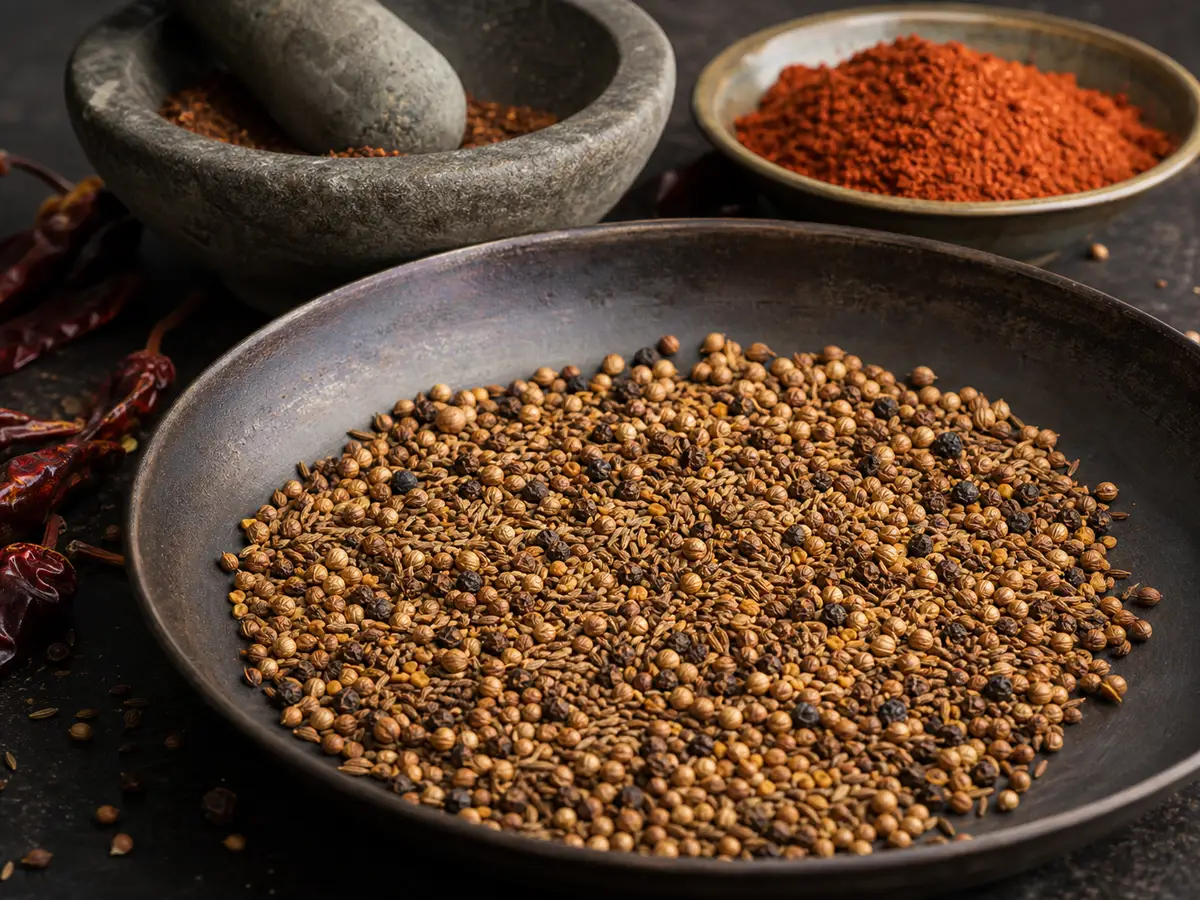
- Toast: Coriander, cumin, fenugreek, and pepper.
- Do not toast hard: Fine chile, ginger, and garlic powders.
- Test: Cook one teaspoon in onion and oil before scaling.
Leave salt out of the jar.
Stews reduce during cooking, so early salted blends can become too salty before their flavor concentrates.
Write down the chile brand and amount. A new bag can change the heat more than a small change in clove or cardamom.
Grind fenugreek with the toasted seeds, then sift the mixture. Large hard pieces can taste sharply bitter when they land in one spoonful.
A half batch is enough for several meals and makes correction cheaper. Scale only after testing the powder in cooked onion.
Do not return a tasted spoon to the jar. Moisture shortens the life of ground chiles and encourages dense clumps.
How do you add berbere to wot without scorching it?
For a simple lentil wot, cook chopped onion slowly until soft and reduced.
Add oil or niter kibbeh only after much of its water evaporates.
Stir in berbere and cook gently. Add small splashes of water whenever the red paste begins to stick.
Add lentils and enough liquid to simmer. The spice base should coat them rather than float as red powder on thin broth.
- Onion still crunchy: Wait before adding the blend.
- Paste smells acrid: Lower heat and loosen it immediately.
- Stew looks pale: Cook the spice base longer before adding all liquid.
- Heat grows too strong: Add lentils and liquid, then reassess after simmering.
Berbere also seasons doro wot and beef stews, but the cooking time and fat level differ. Follow the dish rather than one spoon-per-pot rule.
See how to bloom ground spices when you need tighter control over pan heat.
Red lentils break down and thicken the sauce, while beef releases fat and gelatin. Add water according to the ingredient rather than matching color alone.
If the paste tastes raw after liquid enters, simmer uncovered before adding more spice. Time can fix undercooked aromatics, but another spoon cannot.
Salt near the end of reduction when the blend is salt-free. Commercial salted berbere needs an earlier label check and smaller first dose.
That early base and late correction follow two different timing jobs. The first develops depth, while the second restores aroma.
Awaze turns berbere into a finishing sauce
Awaze loosens berbere with liquid into a bright, concentrated paste served with meat and other foods.
Mix one tablespoon berbere with enough water, tej, wine, or mild vinegar to make a spoonable paste. Add salt to taste.
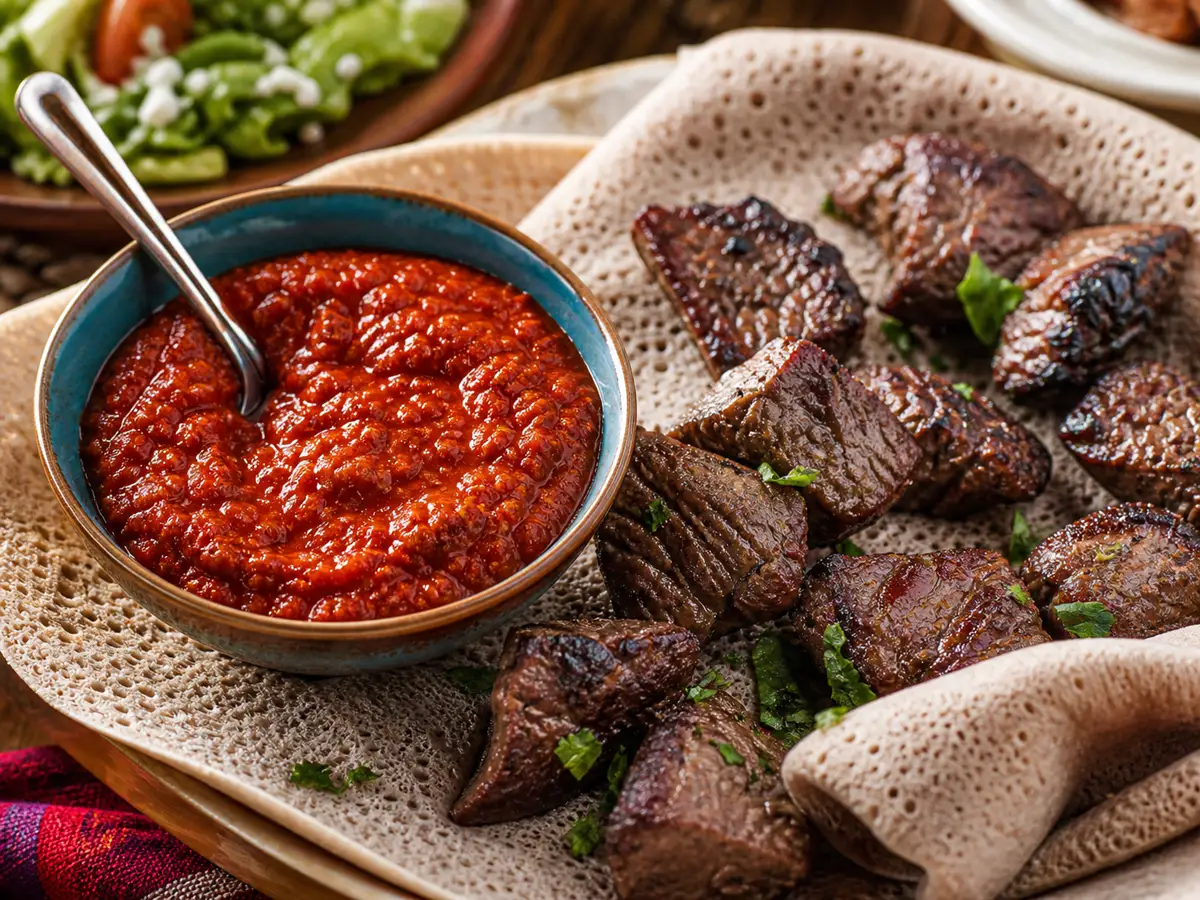
- Too thick: Add liquid a few drops at a time.
- Too sharp: Rest the paste before adding sweetness.
- Too hot: Serve less rather than thinning away all flavor.
Make only what you will use soon. Once hydrated, the mixture no longer keeps like a dry spice blend.
For roasted carrots or potatoes, mix berbere with oil instead. Roast under moderate heat so the chile coating does not scorch.
Awaze thickens as ground spices hydrate. Mix it ten minutes before serving, then adjust liquid after the texture settles.
A vinegar-heavy paste can overpower injera and meat. Add the acid by drops until the sauce tastes bright without becoming pickling liquid.
Keep the serving bowl small. The concentrated paste works as a condiment, so each person can choose a comfortable heat level.
Long cooking softens berbere on legumes and vegetables
Lentils, chickpeas, beef, chicken, cabbage, carrots, and potatoes all provide enough body for berbere.
A teaspoon in tomato sauce adds warmth, but a heavy dose can overwhelm the sauce with fenugreek and clove.
For eggs or popcorn, use a fine pinch as a finishing spice. These quick foods do not soften the blend through long cooking.
Ras el hanout is less chile-led and follows a different aromatic balance. Generic curry powder may share fenugreek, but turmeric moves color and flavor elsewhere.
Better substitutes combine paprika, cayenne, ginger, ground cumin, coriander, fenugreek, and a tiny amount of clove.
Roasted cauliflower needs less blend than a wet stew because every floret holds powder on several exposed surfaces.
For chickpeas, cook the blend with onion before adding the legumes. A finishing dust can leave fenugreek bitter and ginger chalky.
A tomato sauce can support a small amount, but tomato acid does not replace the slow onion base found in wot.
How can you tell whether berbere is still fresh?
Quick foods expose whether the jar still carries ginger, coriander, and chile fruit.
A fresh jar opens with dried chile, ginger, and warm spice aromas. Flat red powder with only harsh heat has lost much of its range.
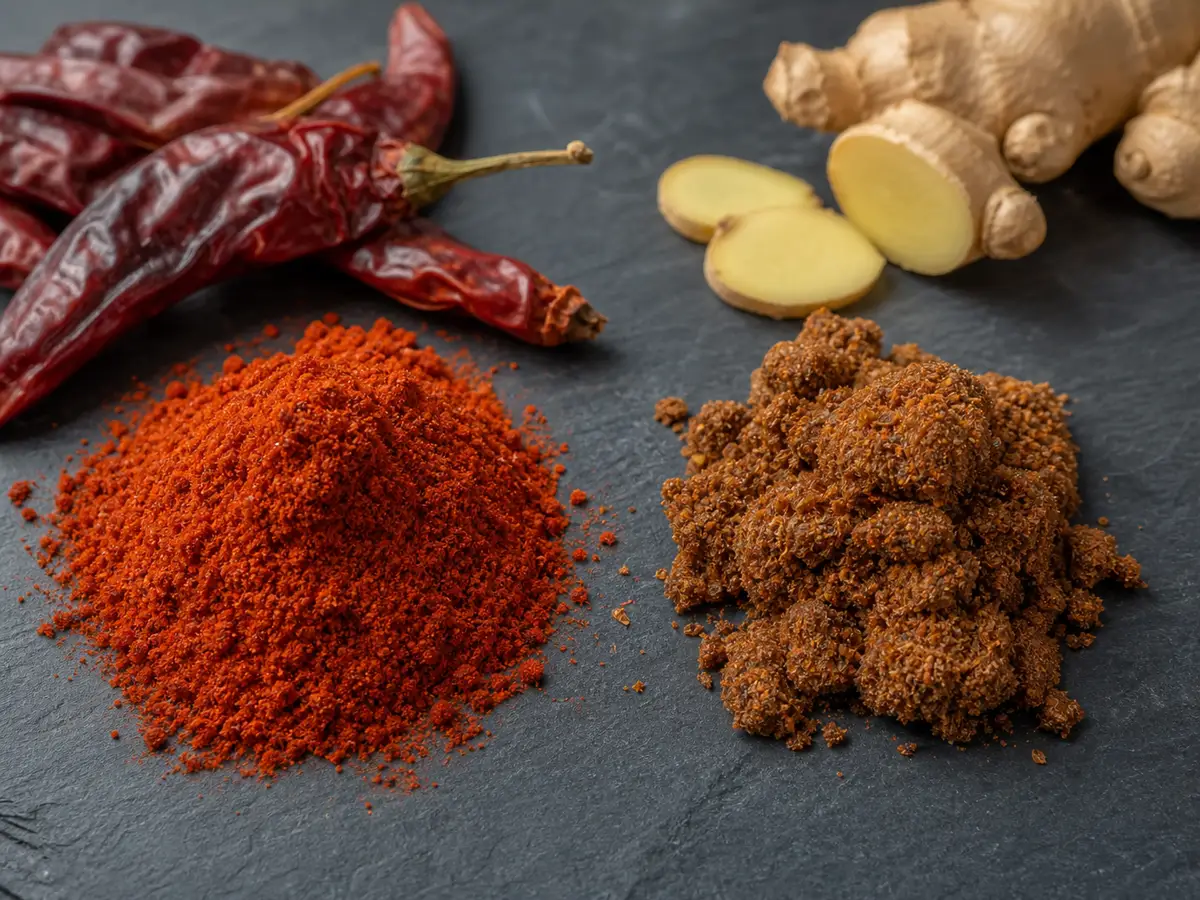
- Keep: Dry powder with chile fruit and ginger aroma.
- Use soon: Color remains strong but warm notes are faint.
- Replace: Musty smell, damp clumps, or no aroma beyond heat.
Store it airtight and away from stove steam. Ground chile loses aroma faster when heat and light reach a clear jar.
A small homemade batch is easier to correct and finish while lively. Freeze excess whole chiles, not an open jar of mixed powder.
Buy from a shop with steady turnover and a sealed package. A clear bag left in strong light may stay red while losing ginger and coriander aroma.
Follow the ground spice storage method and keep the jar away from stove steam.
Use a clean dry spoon every time.
Date homemade batches and compare them with a fresh pinch after three months. Gradual fading is easier to smell side by side.
Choose a package that names its producer or importer. That detail helps you buy the same heat profile after a successful cook.
Keep a tasting note with the jar. Record the first spoon used in lentils and whether the finished pot needed more.
A bitter raw taste does not always mean staleness. Cook a small pinch in oil before discarding an otherwise dry aromatic batch.
If only heat remains after cooking, the ginger and seed aromas have faded. Replace the blend instead of adding a larger dose.
Buy less than you expect to use in six months.