
Misir Wat Recipe with Berbere and Thick Red Lentils
Brown the onion patiently, protect the berbere paste, and add water in stages for a stew that holds on injera.
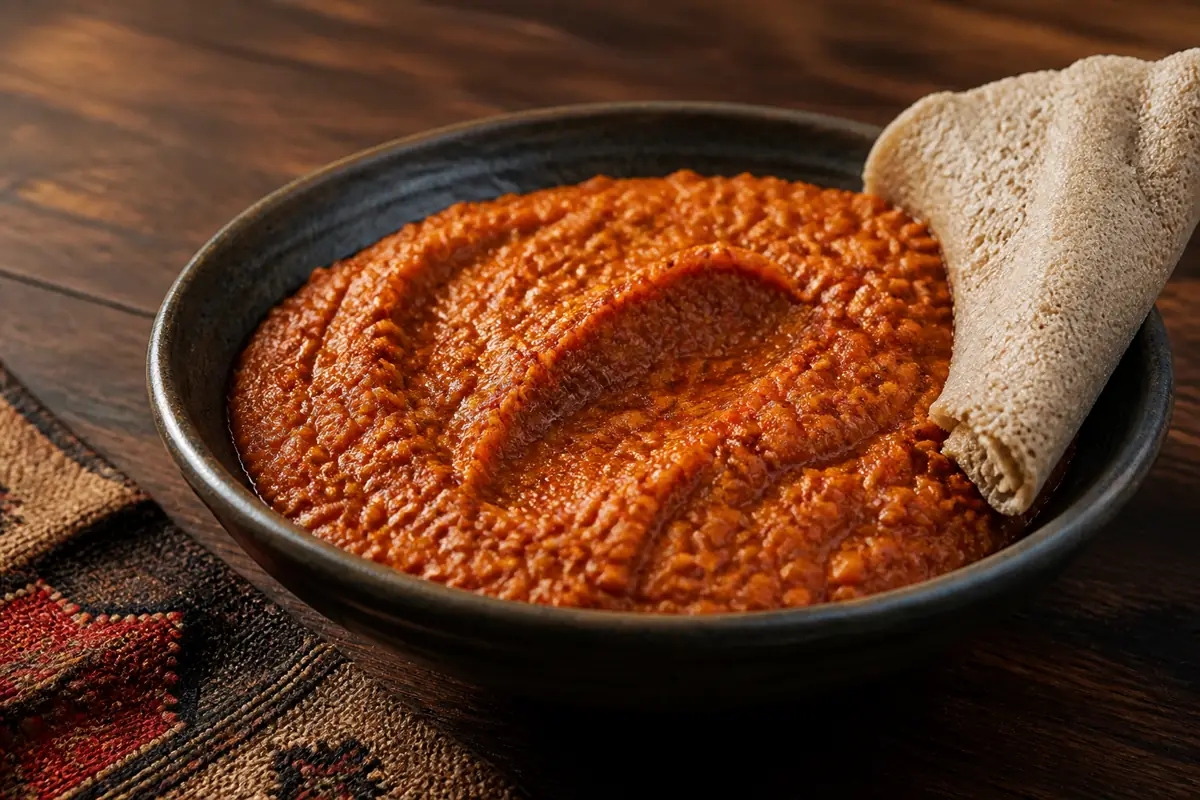
Misir wat should settle slowly from a spoon while still holding a shallow ridge. The onion base, protected berbere paste, and staged water additions create that texture without flour or cream.
Ingredients
- 2 tablespoons olive oil or niter kibbeh
- 1 large yellow onion, finely chopped
- 3 garlic cloves, grated
- 1 tablespoon grated ginger
- 2 tablespoons tomato paste
- 1 1/2 tablespoons berbere
- 1 cup split red lentils, rinsed
- 3 cups water, plus more as needed
- 3/4 teaspoon kosher salt
- 1 tablespoon niter kibbeh, optional for serving
Method
- Reduce the onion Heat oil in a heavy saucepan over medium-low heat. Cook onion for 12 to 15 minutes until deep gold and cohesive.
- Fry the berbere paste Add garlic and ginger for 1 minute. Stir in tomato paste until brick red, then lower the heat and add berbere with 1 tablespoon water.
- Simmer the lentils Add lentils and 3 cups water. Simmer partly covered for 20 to 25 minutes, scraping the bottom and adding water by the quarter cup only as needed.
- Set the final texture When the lentils have collapsed, season with salt and simmer uncovered until a spoon trench closes slowly.
- Rest and finish Rest for 5 minutes. Finish with niter kibbeh if using and adjust with a tablespoon of hot water when necessary.
Brown the onion before the lentils enter
Finely chopped onion needs to lose its free water before it can sweeten the stew.
Cook it in oil over medium-low heat for 12 to 15 minutes, stirring more often as the pan dries, until the pieces collapse into a cohesive deep-gold base.
A spoon drawn across the pan should leave a trail for a second before the onion slides back. Pale wet pieces at the edge mean moisture is still diluting the foundation.
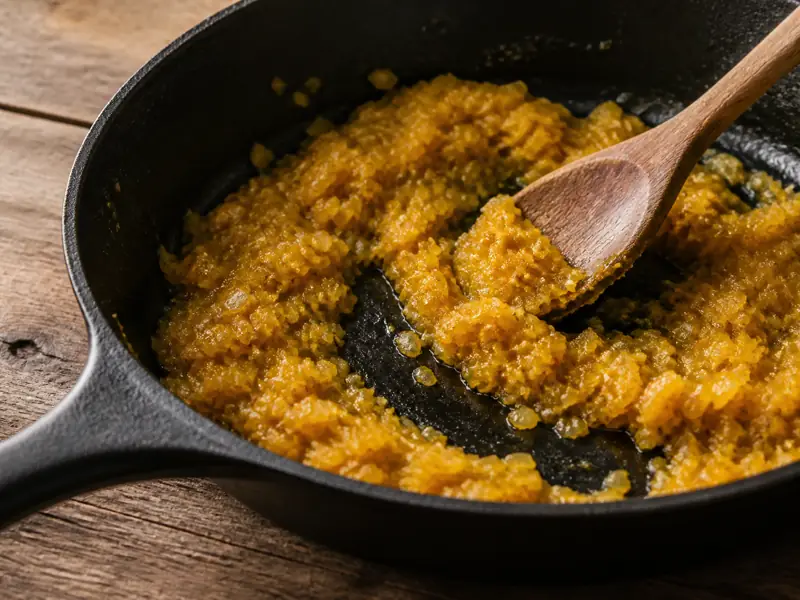
- Wet pieces: Keep cooking before adding garlic.
- Deep-gold paste: Sweet enough to support the berbere.
- Spoon trail: Moisture has reduced without burning.
- Black edges: Lower the heat and move to a clean pan if they smell acrid.
Salt enters later because an early dose draws more water from the onion. Garlic and ginger need only a minute once the base is ready, since both can catch on the dry pan.
Turn berbere into a paste without burning it
Stir tomato paste into the onion and cook until it darkens from bright red to brick red. Lower the heat before adding berbere, because its ground chiles and fine spices scorch faster than the wet onion base.
The mixture will tighten quickly. Add one tablespoon of water when the spatula leaves dry streaks, then keep it moving for about a minute until a thin line of oil appears at the edge.
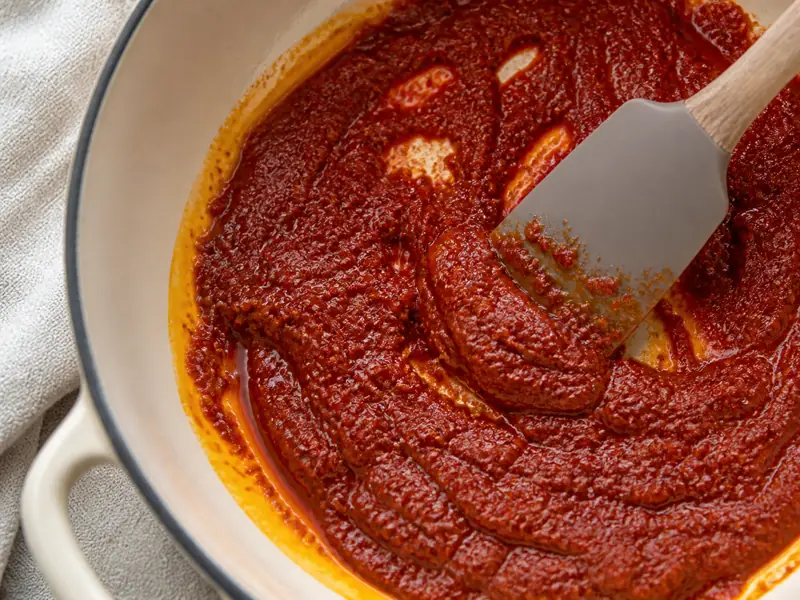
- Brick-red center: Tomato and berbere have cooked together.
- Oil line: The paste has concentrated.
- Dry streak: Add a spoonful of water.
- Acrid smoke: The spice has burned and should not be diluted into the stew.
Berbere blends vary in chile heat and salt. Use the measured amount for the base, then correct heat only after the lentils have softened and spread the seasoning through the whole pot.
Use water in stages to land on a spoonable stew
Rinsed split red lentils can go directly into the spice paste with three cups of water. Bring the pot to a gentle simmer, then cook partly covered for 20 to 25 minutes while scraping the bottom at regular intervals.
The lentils first swell, then lose their edges and thicken the liquid.
Add water in one-quarter-cup increments only when the bottom begins to catch before the lentils are soft.
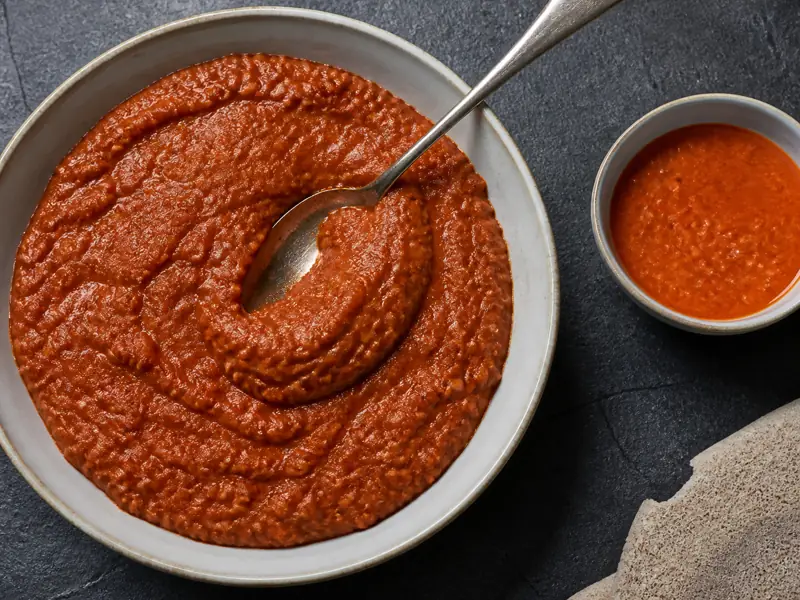
- Too loose: The trench closes immediately.
- Correct: The ridge relaxes over several seconds.
- Too firm: The spoon leaves a dry wall.
- After rest: Expect another small increase in thickness.
Salt when the lentils are tender, then simmer uncovered if the stew still runs like soup. Remove the pot from the heat while it looks slightly looser than the final target because the starch keeps absorbing water during a five-minute rest.
Rest first, then choose butter or oil at the table
A spoonful of niter kibbeh gives the finished misir wat a spiced-butter aroma, but olive oil keeps the dish vegan and lets packaged berbere remain the lead blend. Choose one finish after tasting rather than adding both by habit.
Serve the stew with injera, rice, or a flatbread that can carry its weight.
Misir wat can be made one day ahead because its texture returns with gentle heat and measured water. Cool leftovers promptly, refrigerate them in a shallow sealed container, and use within three days.
The stovetop is the best reheating route because you can watch the texture change.
Low heat and a lid warm the center before evaporation starts concentrating the berbere again.