
Saffron Rice Recipe with Separate, Fragrant Basmati Grains
Bloom crushed threads in warm water, steam measured basmati, and fold the gold through only part of the rice.
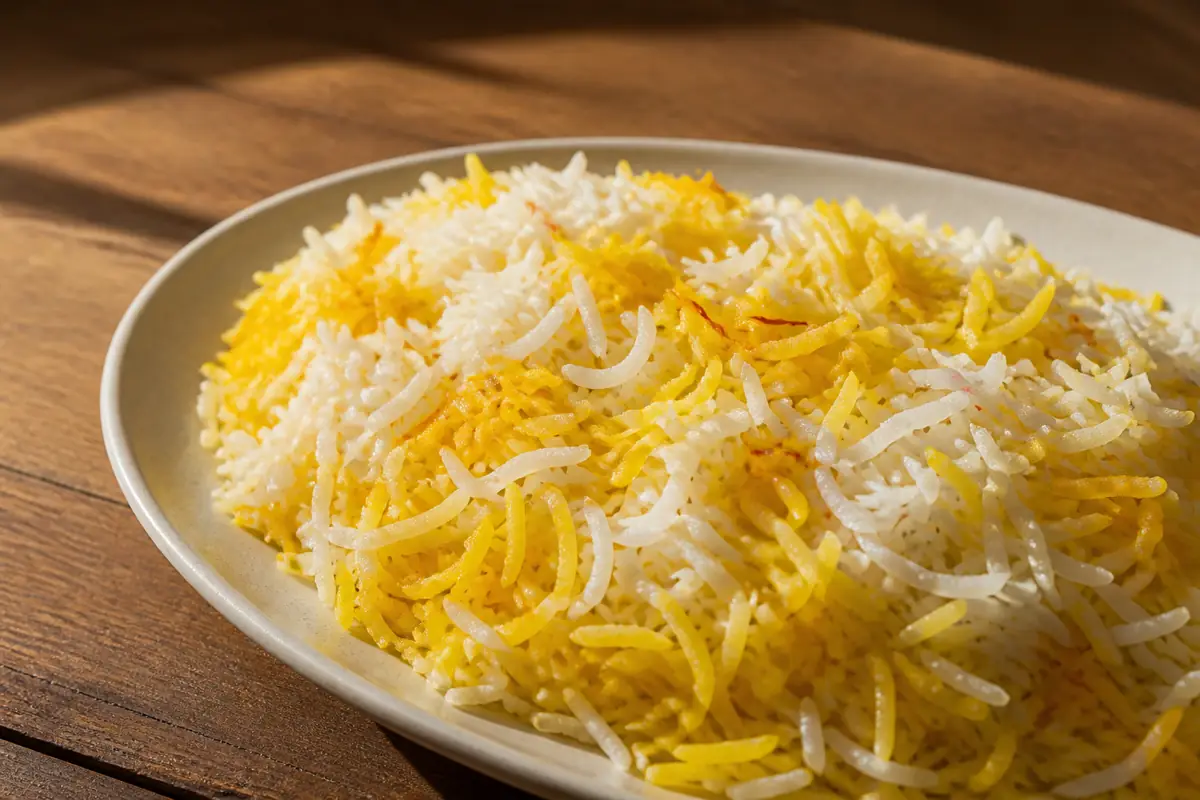
Saffron rice works best when the threads bloom separately and the basmati cooks with a measured amount of water. Coloring only part of the cooked rice preserves distinct grains and a deliberate white-and-gold finish.
Ingredients
- 1/4 teaspoon saffron threads
- 1 pinch granulated sugar
- 2 tablespoons warm water
- 1 1/2 cups aged basmati rice
- 1 3/4 cups water
- 1 tablespoon unsalted butter or olive oil
- 3/4 teaspoon kosher salt
Method
- Bloom the saffron Crush saffron with a pinch of sugar. Cover with 2 tablespoons warm water and bloom for 10 minutes.
- Rinse and drain the rice Rinse basmati until the water is much less cloudy, then drain for 5 minutes.
- Cook on low heat Combine rice, 1 3/4 cups water, butter or oil, and salt. Bring just to a boil, cover, and cook on the lowest heat for 12 minutes.
- Rest and fluff Turn off the heat and rest covered for 10 minutes. Fluff gently.
- Fold in the saffron rice Color one-quarter of the rice with the saffron infusion, then fold it through the remaining white rice with two broad strokes.
Bloom crushed saffron in warm water, not a boiling pot
Crush saffron threads with a pinch of sugar until most pieces are shorter than a grain of rice.
The sugar acts as an abrasive and makes a tiny quantity easier to grind without adding noticeable sweetness.
Pour two tablespoons of warm water over the powder and wait ten minutes. The liquid should become clear deep gold, with the aroma rising before the cup reaches your nose.
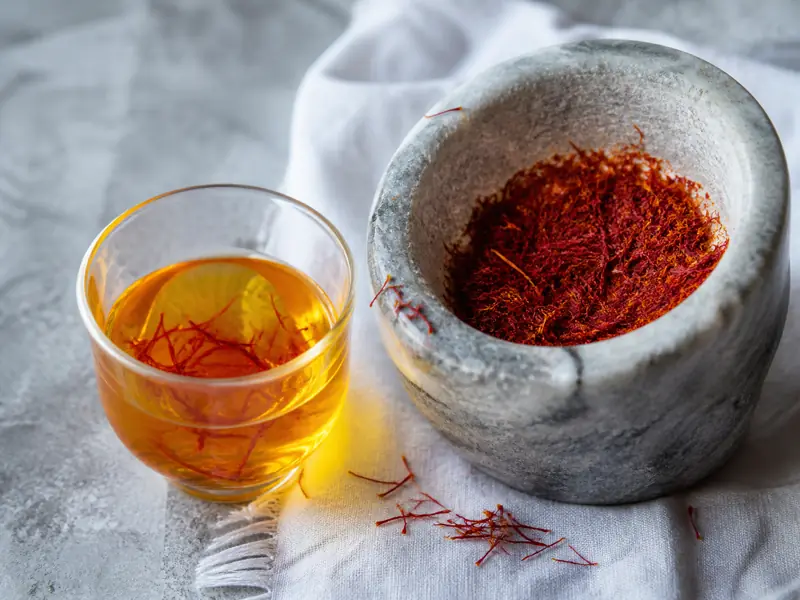
- Crushed threads: Expose more surface to water.
- Warm water: Extracts without a hard boil.
- Ten minutes: Gives the liquid time to deepen.
- Clear gold: Signals pigment has moved into the infusion.
Boiling the threads with the full pot is less controlled. Steam carries away aroma while the fine pieces collect in a few spoonfuls instead of seasoning the rice evenly.
Let measured steam cook the grain without stirring
Rinse aged basmati several times, then drain it for five minutes so clinging rinse water does not alter the pot ratio. Combine 1 1/2 cups rice with 1 3/4 cups water, butter or oil, and salt in a tight-lidded saucepan.
Bring the water just to a boil, cover, and reduce the heat to its lowest stable setting.
Cook for 12 minutes without lifting the lid or stirring, then turn off the heat and rest for another 10 minutes.
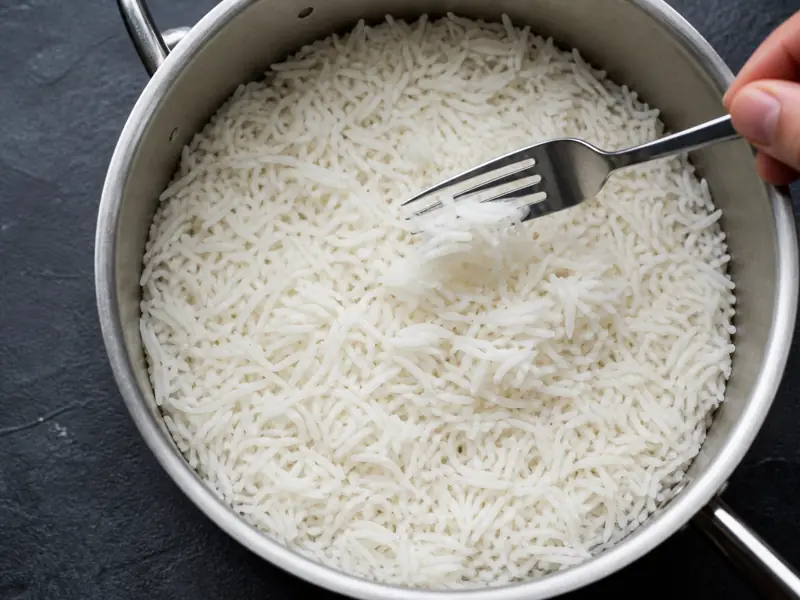
- Steam holes: Show that vapor moved through the rice.
- Dry surface: Means free water has been absorbed.
- Closed lid: Holds the finishing steam.
- Fork lift: Separates grains without pressing them together.
If water remains after the rest, return the uncovered pan to low heat for one minute. If the grains are firm but the pot is dry, add two tablespoons of hot water, cover, and steam for three more minutes.
Fold saffron through a small portion before combining
Move one-quarter of the cooked rice to a bowl and pour the saffron infusion over it.
Fold gently until those grains are evenly gold, then return them to the pot and make only two broad folds through the white rice.
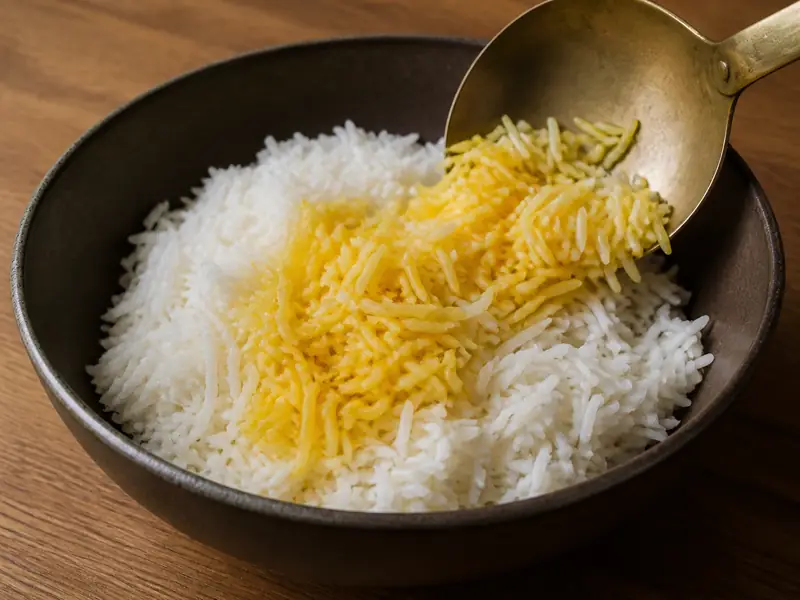
- Golden portion: Carries the concentrated infusion.
- White grains: Preserve contrast and clean basmati aroma.
- Broad spoon: Lifts instead of mashing.
- Two folds: Distribute color without making the rice sticky.
Taste after the fold. More saffron should come from another small bloom, not dry threads sprinkled over the finished dish where they stay hard and uneven.
Reheat with trapped steam rather than extra fat
Cool cooked rice promptly in a shallow container and refrigerate it within two hours.
Use it within three days, keeping the container covered so the long grains do not dry at the surface.
Extra butter coats brittle grains but does not replace lost water. A small measured splash and a lid recreate the steam that cooked the rice in the first place.