
Which Saffron Substitute Replaces Both Color and Aroma?
Choose a measured color substitute for savory food or an aromatic substitute for rice, dairy, and sweets.
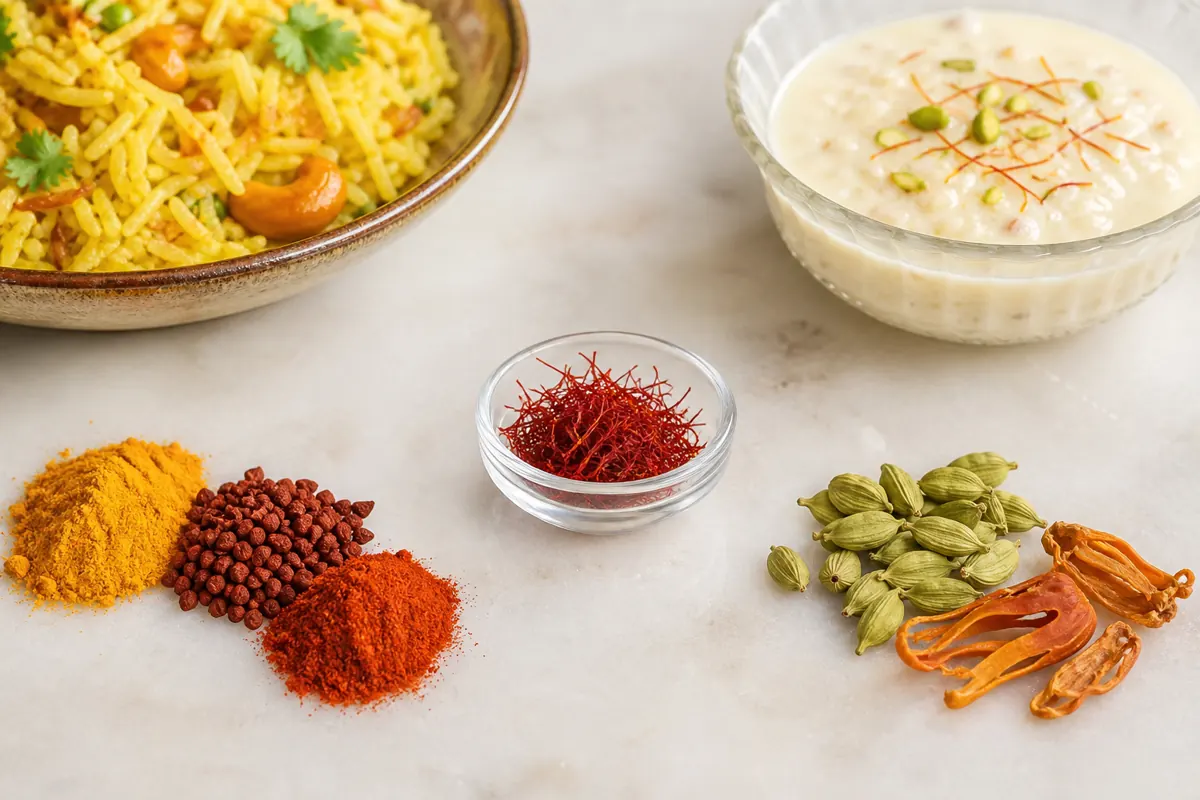
Five Saffron Substitutes, Each Solving a Different Problem
Saffron threads release both gold color and a floral, hay-like aroma after a gentle warm-water steep. No pantry spice recreates both qualities, so the right substitute depends on whether the recipe needs color, perfume, or a warm background note.
Turmeric is the most practical yellow color substitute, while annatto creates orange-gold color through oil. Paprika belongs in savory broth and rice, cardamom provides perfume in sweets, and mace gives warm aromatic depth without yellow pigment.
| Number | Substitute | Starting ratio for one generous pinch saffron | Best use | Main change |
|---|---|---|---|---|
| 1 | Turmeric | 1/4 tsp | Rice, soup, sauce | Earthier and strongly yellow |
| 2 | Annatto | 1/4 tsp seeds | Savory rice, seafood broth, stew | More orange, no flower-and-hay perfume |
| 3 | Paprika | 1/2 tsp sweet paprika | Seafood rice, soup, tomato sauce | Redder and pepper-like |
| 4 | Cardamom | 1/8 tsp ground | Rice pudding, custard, milk drinks | Floral-citrus, no color |
| 5 | Mace | 1/8 tsp ground | Biryani-style rice, custard, buns | Warm nutmeg direction |
1. Turmeric
Use one-quarter teaspoon turmeric for one generous pinch saffron in pilaf, paella-style rice, soup, or sauce.
That small amount colors a full dish effectively, but it moves the flavor toward earthy bitterness instead of saffron's light flower-and-hay perfume.
Dilute turmeric in warm stock or water before it reaches the pot. A smooth yellow liquid spreads more evenly than dry powder and makes it easier to stop before the rice turns opaque orange-yellow.
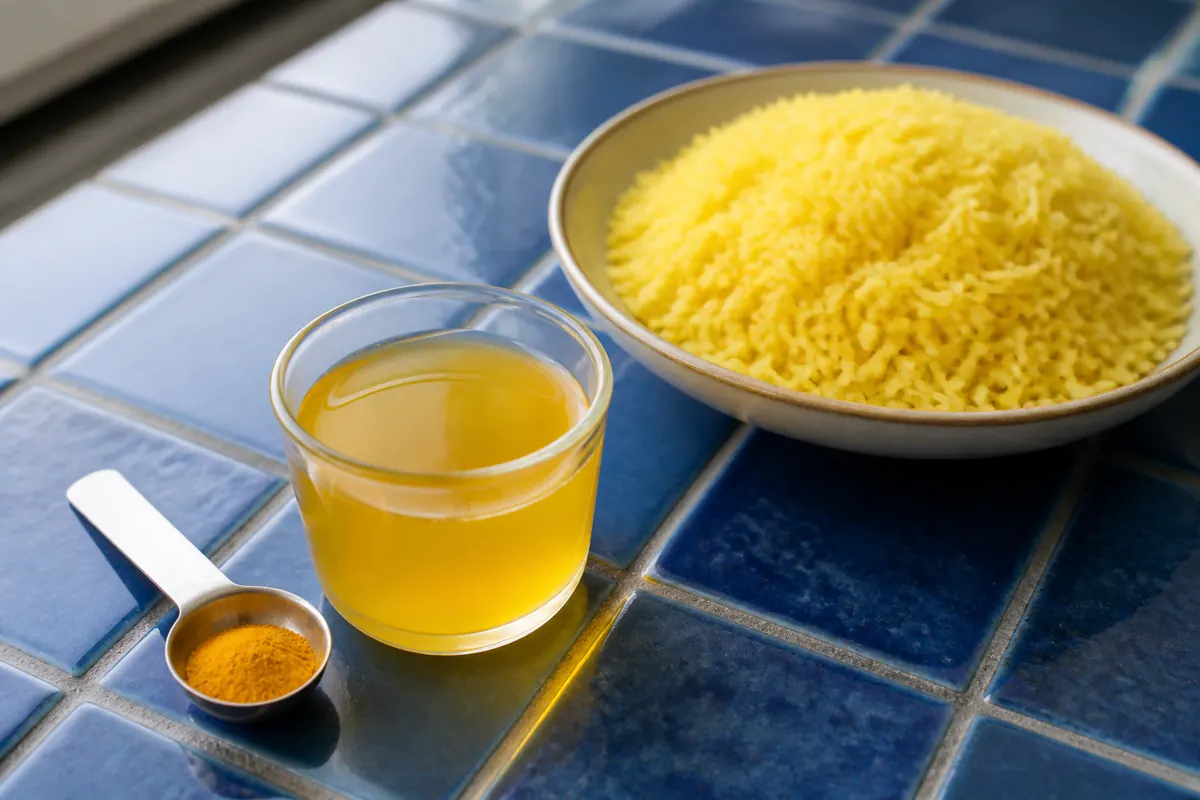
- Quarter teaspoon: Color-first dose.
- Warm liquid: Even dispersion.
- Golden rice: Aroma still differs.
Turmeric color continues developing as the liquid disperses through rice or soup. Judge a spoonful of the cooking liquid against a white plate before adding another dose.
The pot can look modestly yellow while hot and become noticeably deeper after reduction or absorption.
Acid shifts the appearance toward a brighter yellow, while browned onion and tomato make it look warmer and darker.
Add lemon or tomato before the final color correction whenever the recipe allows. This order prevents a second turmeric addition that becomes excessive once the acidic ingredient changes the hue.
2. Annatto
Begin with one-quarter teaspoon annatto seeds for one generous saffron pinch in savory rice, seafood broth, stew, or oil-based sauce.
Annatto gives a red-orange gold that can look natural beside tomato, shellfish, or browned aromatics.
Warm the seeds briefly in oil until the fat turns orange, then strain them before they darken. Annatto adds mild peppery earthiness and no saffron perfume, but it avoids turmeric's fine powder in a clear broth.
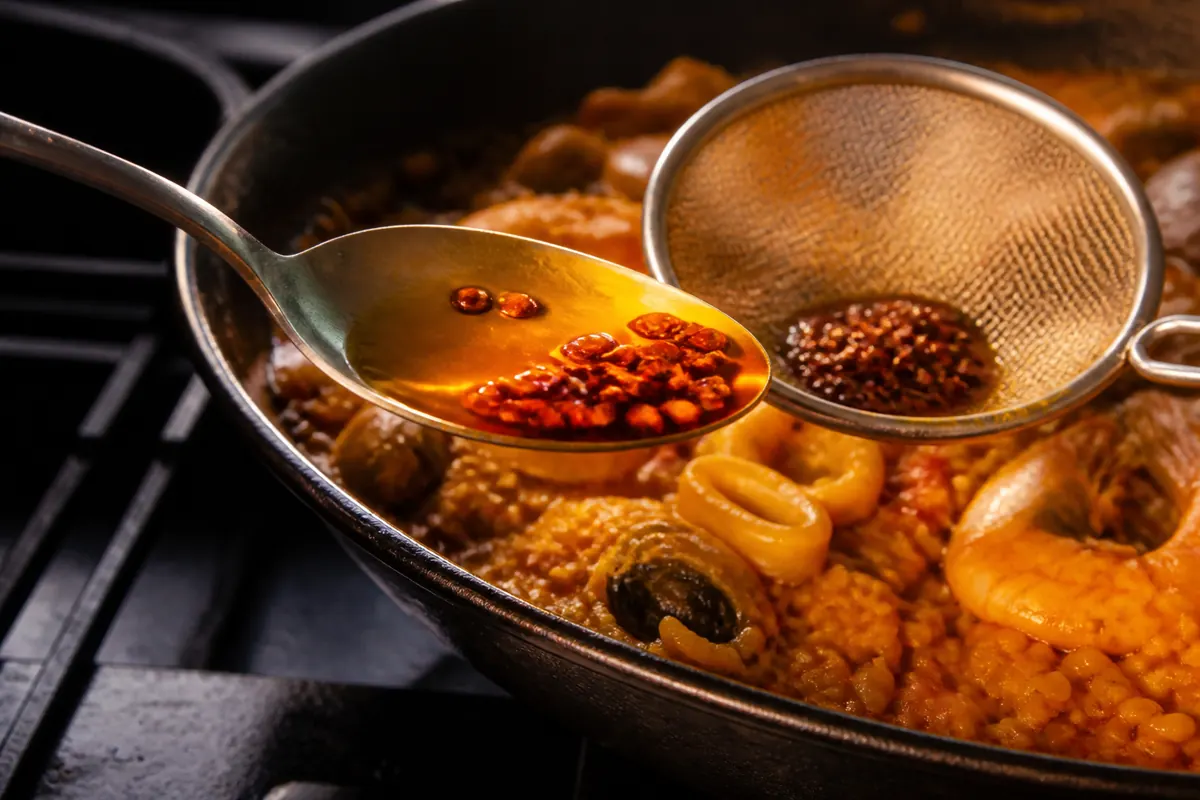
- Warm oil: Pulls orange pigment.
- Whole seeds: Easy to strain.
- Short extraction: Prevents dark bitterness.
- Warm the oil gentlyUse the cooking fat already planned for the dish.
- Add the measured seedsWatch for the oil to turn orange rather than brown.
- Strain promptlyRemove seeds before adding onion, rice, or stock.
- Judge the finished liquidAdd more color only through another small infusion.
3. Paprika
Use half a teaspoon sweet paprika for one generous saffron pinch in seafood rice, soup, stew, or tomato-based sauce. Paprika provides a mild pepper flavor and a redder color that integrates well when the dish already contains tomato or roasted pepper.
Bloom it briefly in oil, then add liquid before the powder browns.
Smoked paprika is a different decision because smoke can dominate delicate seafood and makes the dish taste farther from saffron.
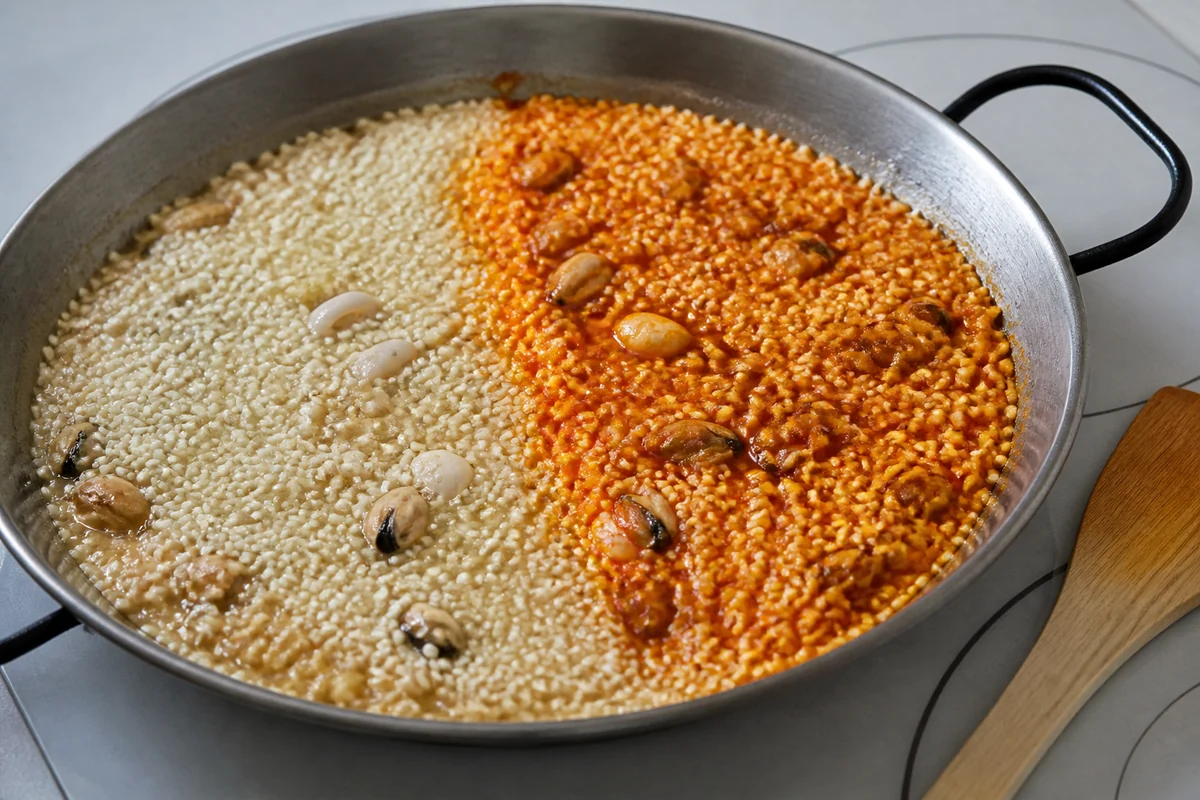
- Sweet paprika: Mild savory color.
- Pale grains: Reveal the red shift.
- Early liquid: Stops scorching.
Paprika needs protection from scorching because its fine pepper solids darken quickly in an empty hot pan.
Warm it in oil only until the color spreads, then add stock, tomato, or rice. A brown paprika bloom contributes bitterness and makes the finished food look muddy rather than gold.
Sweet paprika is the appropriate starting form.
Hot paprika introduces chile heat, and smoked paprika changes the entire aromatic frame around seafood. Use those forms only when the recipe already calls for their heat or smoke, not because their pigment looks similar in the jar.
4. Cardamom
Begin with one-eighth teaspoon ground cardamom for one generous saffron pinch in rice pudding, custard, sweet rice, milk drinks, or enriched buns.
Cardamom supplies floral-citrus lift where the missing perfume matters more than gold color.
Its eucalyptus-like aroma is recognizably different and much stronger at equal volume. Steep a lightly cracked pod in dairy when possible, then remove it before service for a softer result than ground powder gives.
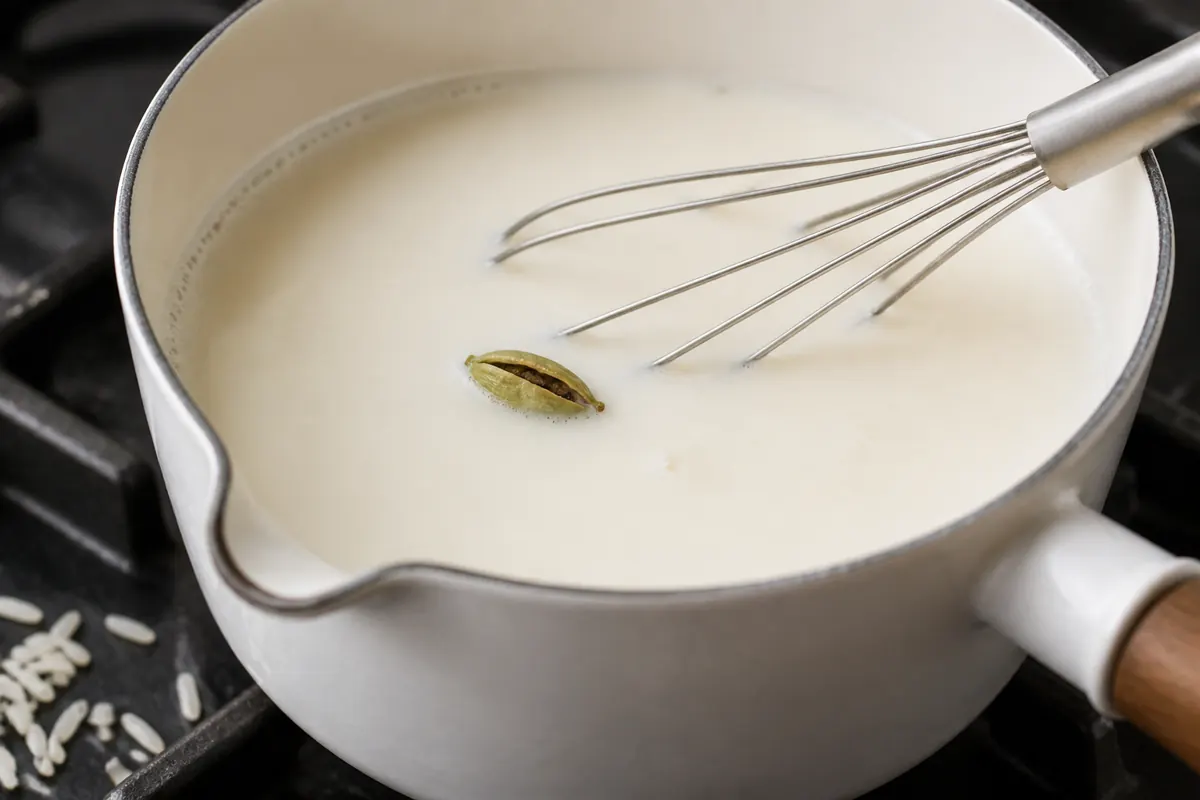
- Cracked pod: Gentle extraction.
- Milk base: Carries perfume.
- Pale dessert: Color remains unchanged.
Cardamom behaves differently as a pod, seed, and powder.
A cracked pod gives the cook a removable infusion and the widest margin in milk. Loose seeds release faster, while ground cardamom remains in the dessert and can create a gritty, eucalyptus-like concentration if it is not whisked evenly.
Sweetness can hide bitterness but cannot hide excessive perfume. Taste the dairy base warm and again after it cools, because chilled fat suppresses aroma.
A pudding that seems restrained from the stove may smell complete at serving temperature.
5. Mace
Use one-eighth teaspoon ground mace for one generous saffron pinch in biryani-style rice, custard, milk dessert, or enriched bread. Mace contributes a warm, fine-grained perfume related to nutmeg, which can support a dish where saffron was one background aromatic among several.
Mace gives no yellow color and becomes medicinal when pushed.
Let an existing yellow ingredient handle appearance rather than increasing the aromatic dose beyond what the food can absorb.
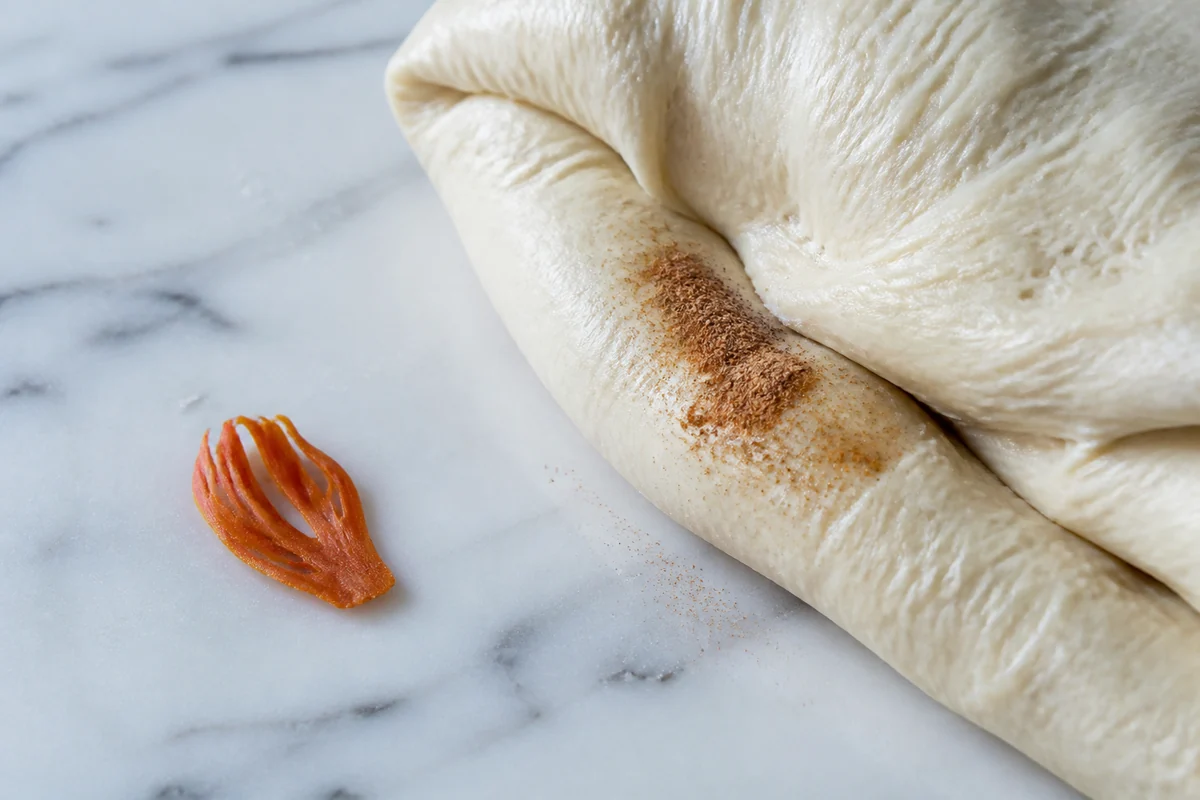
- Small dose: Keeps perfume restrained.
- Pale dough: Shows no color replacement.
- Intact blade: Identifies the ingredient form.
Mace works best when the dish already contains several aromatics.
In enriched bread or biryani-style rice, it can sit behind cardamom, cinnamon, or toasted nuts without carrying the whole identity.
Custard exposes mace more clearly because dairy spreads its aroma across every spoonful. Add it before thickening, then taste the warm base and stop before the nutmeg-like note becomes the first thing you smell.
Whole mace blades can be infused and removed from milk or rice liquid. Ground mace is faster and remains in the food, so the one-eighth-teaspoon start assumes complete dispersion.
Water and Fat Pull Different Qualities from the Substitute
Saffron is normally steeped in warm water or milk because moisture draws color and aroma from the threads.
Turmeric also disperses in warm liquid, but its fine particles remain in the dish rather than being removed.
Annatto and paprika work better through fat. Oil carries annatto pigment away from the seed and spreads paprika across rice or broth, while direct dry heat can darken both before the cooking liquid arrives.
Cardamom and mace need restraint in dairy. Warm milk opens their aroma quickly, so the extraction should stop when the base smells complete rather than when it matches saffron's color.
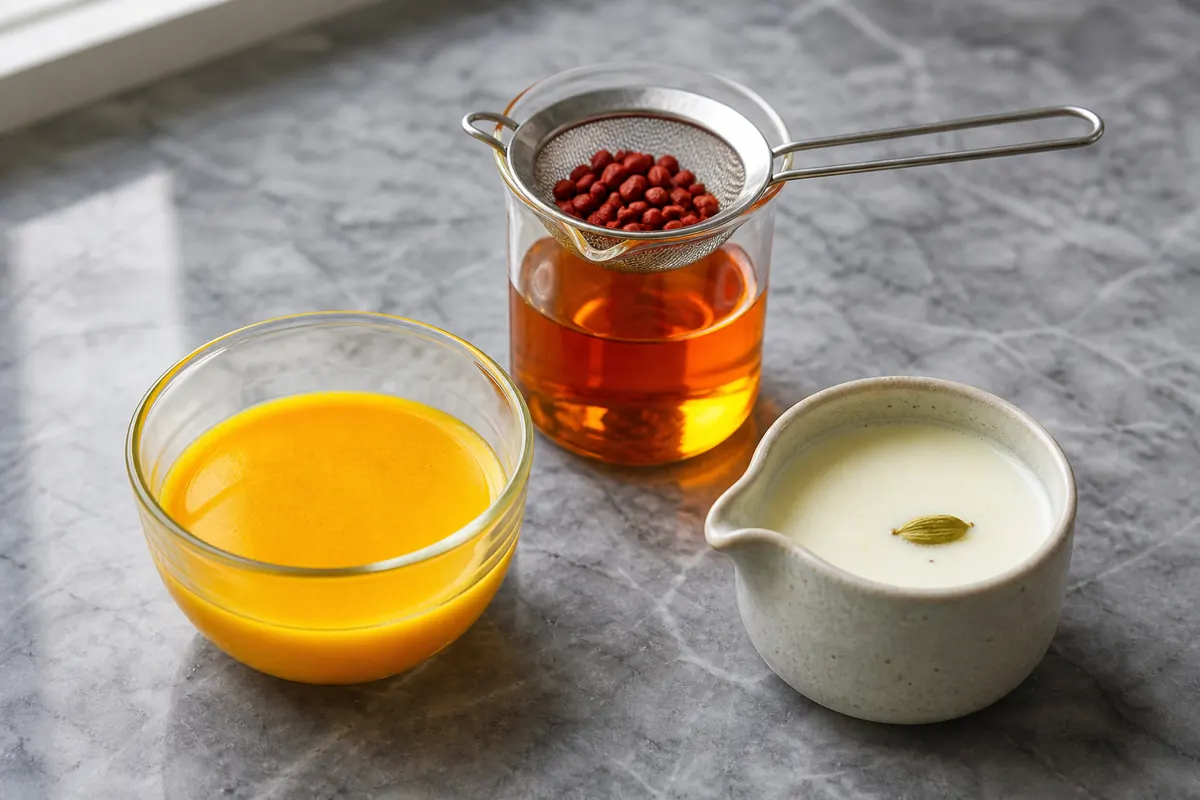
- Warm water: Turmeric dispersion.
- Oil: Annatto and paprika pigment.
- Milk: Cardamom or mace perfume.
- Identify the jobDecide whether color, aroma, or both is missing.
- Match the mediumUse warm liquid for turmeric, oil for annatto or paprika, and dairy for cardamom or mace.
- Extract a test portionWork in a spoonful of the recipe liquid before treating the whole dish.
- Stop at the first useful resultMore pigment or perfume does not make the substitute more saffron-like.
The starting liquid should determine the extraction method.
When rice cooks by absorption, dilute turmeric in part of the measured stock so every grain receives similar color. When rice is toasted in oil first, annatto or paprika can color that fat before the liquid enters.
Do not toast saffron substitutes as though they were whole cumin or coriander seeds.
Fine turmeric and paprika need only a brief bloom in warm oil, while cardamom pods can tolerate a longer infusion in milk. The visible cue is released color and aroma, not browning.
Regional spice context can make a directional substitute feel deliberate.
Cardamom and mace fit aromatic South Asian rice, while annatto fits preparations that already use an orange oil base. A Moroccan spice context may support turmeric and warm aromatics, but the combination still should not be described as saffron flavor.
Rice, Seafood Broth, and Dessert Need Separate Decisions
Rice often needs visible gold across many pale grains. Turmeric is efficient in pilaf, while annatto or paprika fits rice cooked with tomato, shellfish, or browned meat where an orange-red direction looks coherent.
Clear seafood broth exposes fine powder and heavy earthiness. Annatto-tinted oil can provide color without clouding the liquid, but the cook should accept that the broth will lack saffron's flower-and-hay perfume.
Dairy desserts reverse the priorities. Cardamom or mace supplies perfume in pudding and custard, while turmeric can make a pale sweet base look artificial and add an earthy note that sugar does not hide.
Use a small turmeric dilution for even yellow color.
Use annatto oil or sweet paprika when orange-red warmth fits.
Use cardamom for floral lift and leave the color pale.
Use a small mace dose for warm background complexity.
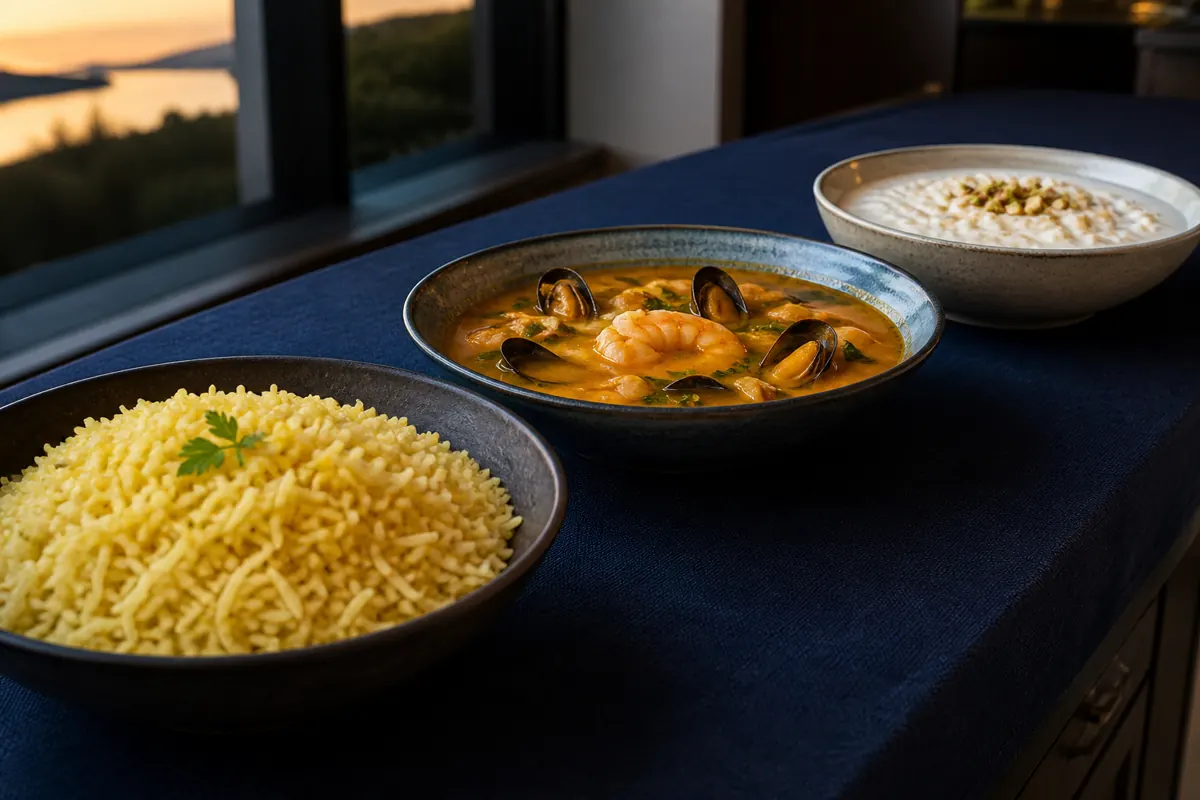
- Pilaf: Even gold across grains.
- Broth: Color without muddy powder.
- Dessert: Aroma before pigment.
Build aroma from ingredients already present before adding an unrelated substitute.
Onion, citrus peel, stock, seafood, rose water, or cardamom may already provide enough aromatic structure for the dish to remain complete without saffron. Adding mace or paprika only because the color seems quiet can crowd those established flavors.
The decision follows pairing and timing: preserve the strongest existing relationships before introducing another spice direction.
For baked sweets, compare the substitute against the wider family of baking spices rather than against color alone. Cardamom and mace belong in many batters, while turmeric and paprika usually do not.
Thread count is a poor conversion unit because thread size and saffron quality vary.
Treat one generous pinch as the article's practical reference, then keep the substitute dose tied to the whole dish. A large pot of rice may need more pigment, but the correction should still happen in small measured steps.
A Two-Part Substitute Can Cover Color and Aroma
One substitute rarely handles saffron's pigment and perfume at the same time. A restrained two-part approach can produce a more balanced dish when both qualities matter, but the components must be chosen for the food rather than combined as a universal formula.
For savory rice, begin with turmeric or annatto as the color component. Add only enough to tint the cooking liquid, then let ingredients already natural to the recipe provide aroma.
Cardamom can support fragrant rice, but it changes the dish toward citrus and eucalyptus. Use one lightly cracked pod in the cooking liquid and remove it before service rather than adding ground cardamom until the aroma becomes obvious.
Mace fits richer rice with browned onion, nuts, or warm spices.
A small pinch adds depth behind those flavors, while the color can come from a separate turmeric dilution.
Rose water is not a neutral saffron shortcut. Even a few drops create a recognizable floral direction, so use it only in a sweet or aromatic rice that already accepts rose.
Orange or lemon peel gives a safer lift in seafood rice because citrus can reinforce the stock without pretending to reproduce saffron. Remove the peel before service so bitterness does not build during absorption.
In milk desserts, toasted nuts can supply the warm background that saffron normally connects to. Let cardamom provide the high aroma, then keep pistachio or almond as the deeper note instead of adding a second powdered spice.
Paprika and cardamom usually pull in conflicting directions. The peppery red pigment suits tomato and seafood, while cardamom's perfume can seem detached unless that combination already belongs in the recipe.
| Dish | Color component | Aroma component | Starting method | Stop cue |
|---|---|---|---|---|
| Plain pilaf | 1/8 tsp turmeric | 1 cracked cardamom pod | Infuse both in measured stock | Rice is pale gold and aroma stays in the background |
| Rich aromatic rice | 1/8 tsp turmeric | Pinch of mace | Disperse powders separately before combining | Browned onion and nuts still lead |
| Tomato seafood rice | 1/4 tsp annatto seeds or 1/2 tsp sweet paprika | Existing citrus peel or seafood stock | Color the oil before adding rice | Liquid is orange-gold, not red and smoky |
| Milk dessert | No added pigment | 1 cracked cardamom pod or pinch of mace | Steep in warm milk, then remove pod | Dairy smells complete while remaining pale |
Test each component separately before combining them. A spoonful of tinted stock shows pigment strength, while a second spoonful can carry the aromatic infusion without risking the whole pot.
Combine the test portions only after both taste restrained. Saffron is subtle, so a replacement that announces turmeric, cardamom, or mace by name has already moved too far.
Do not use a two-part replacement to simulate visible threads.
The method can balance color and aroma in the liquid, but it cannot create saffron's strands or their uneven release across pale food.
Salt and reduction also change the result. A broth that seems lightly colored before simmering can become dark after evaporation, while salt makes warm aromas feel more pronounced.
Make the final correction near the end of cooking, not at the beginning. Add more pigment only through a diluted test, and add aroma through a short removable infusion whenever the ingredient form permits it.
The best two-part result still tastes like the dish rather than like a spice demonstration. If the color component and aroma component compete with the food, omission leaves a cleaner and more honest result.
When the Dish Should Wait for Real Saffron
Wait for saffron when the threads are the defining aroma rather than one background seasoning.
A saffron-forward risotto, clear bouillabaisse, kulfi, or syrup-soaked sweet will reveal pigment without the expected perfume immediately.
The same applies when whole threads are part of the presentation. Turmeric and paprika can color a liquid, but neither creates visible strands or the gradual uneven gold that a saffron steep produces.
- The recipe names saffron in the title: The missing aroma is probably central rather than optional.
- The base is pale and simple: Dairy, clear broth, and white rice leave nowhere for a substitute's earthiness to hide.
- Threads finish the dish: Powder and seeds cannot reproduce their shape.
- Several strong aromatics already lead: Omit saffron more readily than adding another loud spice that crowds the blend.
When omission is acceptable, correct color only if appearance affects the dish. A pale but balanced rice can be preferable to a deeply yellow pot that tastes primarily of turmeric.
When visible threads are part of the presentation, pigment alone leaves a recognizable gap. Delay the dish or serve it without claiming a saffron finish instead of adding more yellow powder.
A clear broth also gives substitutes very little cover. Turmeric clouds the liquid, paprika reddens it, and ground aromatics remain suspended, so omission can produce a cleaner result than a forced color match.