
Berbere Spice Substitutes for Heat and Savory Depth
Choose the base blend, then correct only the missing layer of chile, fenugreek, or warm spice.
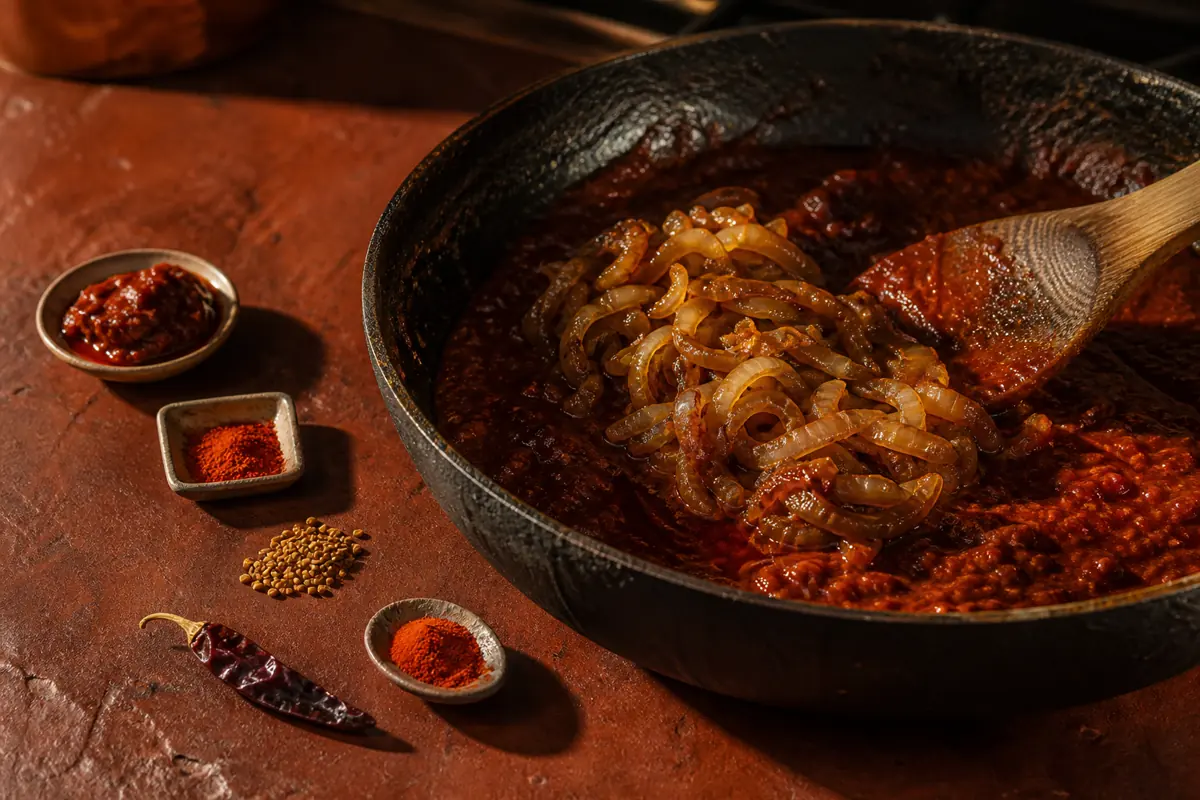
For a wet tomato stew, lentils, marinade, or roasted vegetables, start with one-half teaspoon harissa paste for each teaspoon of berbere. Harissa supplies chile and garlic quickly, but it does not replace berbere's fenugreek and warm-spice layers. Add chile for heat, a tiny amount of fenugreek for bitter-savory depth, or warm spice for aroma, but do not increase all three at once.
Five Berbere Substitutes Ranked by Missing Layer
Harissa is the most direct chile-led option for wet dishes, while Cajun seasoning gives paprika, garlic, and herbs to dry surfaces. Ras el hanout, garam masala, and baharat start from warm spice and need controlled chile added separately.
Judge every berbere substitute in a cooked base where onion sweetness, fat, and time soften raw bitterness and change apparent heat.
A raw-powder comparison rewards immediate chile and misses the fenugreek depth that appears only after cooking.
| Number | Substitute | Starting ratio for 1 tsp berbere | Strongest layer | Main correction |
|---|---|---|---|---|
| 1 | Harissa | 1/2 tsp paste | Chile and garlic | Check salt, liquid, and fenugreek gap |
| 2 | Cajun seasoning | 1/2 tsp | Paprika, chile, garlic | Check salt and herb direction |
| 3 | Ras el hanout | 3/4 tsp | Floral warm spice | Add a small pinch of cayenne |
| 4 | Garam masala | 1/2 tsp | Roasted warm spice | Add 1/8 tsp cayenne and optional paprika |
| 5 | Baharat | 3/4 tsp | Peppery savory warmth | Add 1/8 tsp cayenne after onions cook |
Ratios assume salt-free dry blends except harissa, which is wet and often salted. Read each label because commercial formulas change the heat, salt, garlic, and oil before the jar reaches the pan.
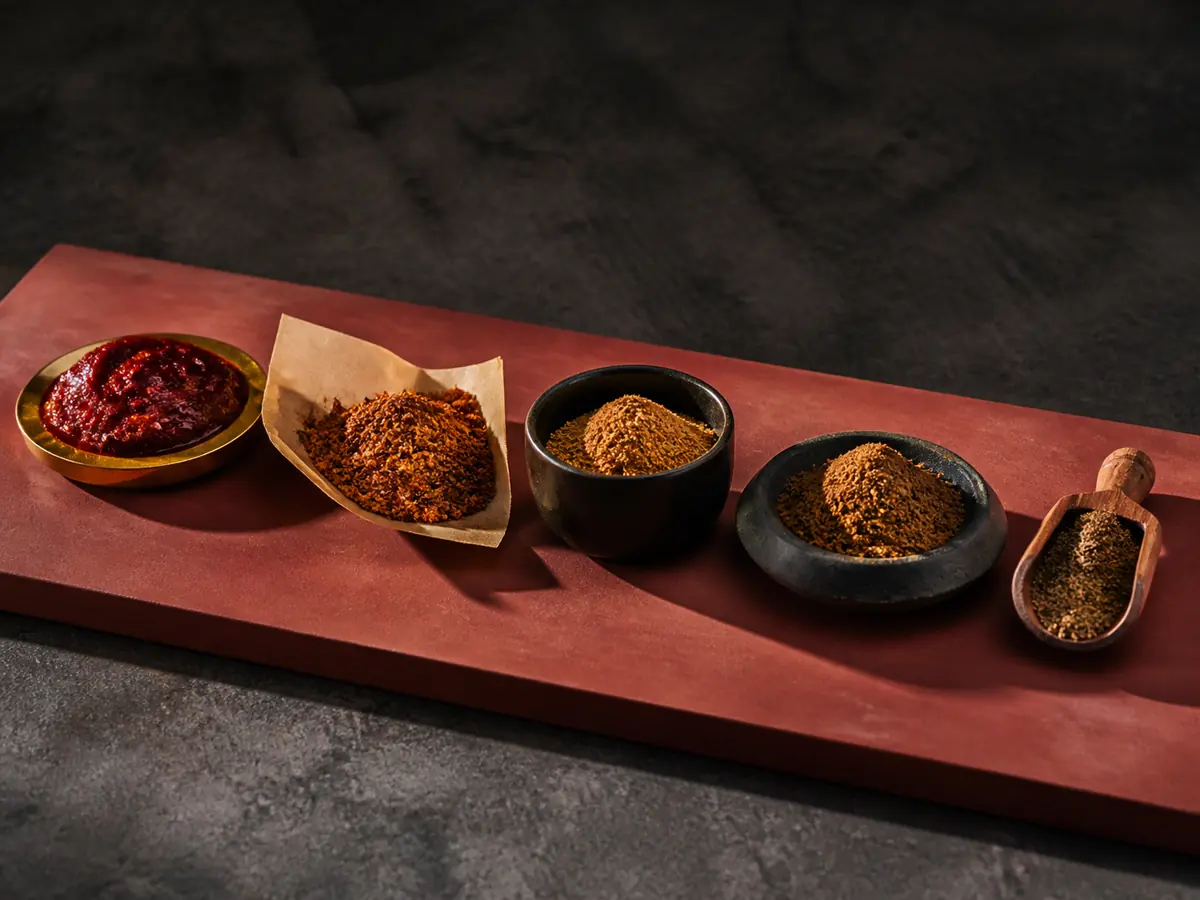
- Harissa: Wet chile base with a liquid and salt consequence.
- Cajun seasoning: Red dry surface seasoning that may already be salted.
- Ras el hanout and garam masala: Warm aroma without enough chile.
- Baharat: Peppery savory direction that accepts a measured heat correction.
1. Harissa
Use one-half teaspoon harissa paste for each teaspoon of berbere in tomato stew, lentils, marinades, or roasted vegetables, then reduce other liquid slightly and postpone extra salt until the food cooks.
- Starting ratio
- 1/2 teaspoon paste per 1 teaspoon berbere
- Best for
- tomato stew, lentils, marinades, carrots, cauliflower, and chickpeas
- Main tradeoff
- wet chile and garlic with little fenugreek or dry warm spice
- Adjust
- reduce liquid and salt before raising the harissa dose
Harissa supplies immediate red chile, and the paste disperses easily through tomato and oil. Caraway, coriander, garlic, and preserved acidity can move it toward North African flavor even when the heat level seems correct.
Cook harissa with the onions for one minute and cool a spoonful before deciding whether the pot needs more heat.
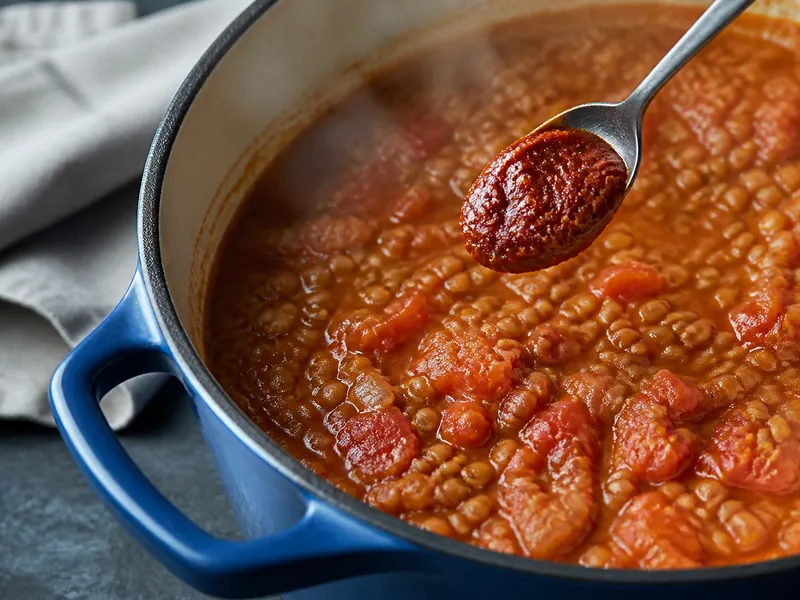
- Paste texture: Disperses quickly through tomato and lentils.
- Liquid load: Reduce another wet ingredient before raising the dose.
- Salt check: Taste after the paste cooks into the base.
- Missing depth: Add fenugreek only when the bitter-savory layer is absent.
The missing note is often fenugreek rather than chile. Add only a pinch of ground fenugreek when the food tastes hot and aromatic but lacks the bitter-savory finish associated with berbere.
On cauliflower or carrots, thin the harissa with unseasoned oil before tossing. A thin coating browns more evenly than small pockets of paste and leaves room to correct salt after roasting.
Avoid equal-volume harissa in a dry meat rub because its moisture can make the grill crust patchy.
Thin the paste with unseasoned oil for vegetables, but choose a dry blend when the recipe depends on an even crust.
2. Cajun Seasoning
Start with one-half teaspoon Cajun seasoning for each teaspoon of berbere on grilled meat, potatoes, or a quick tomato dish. Check whether salt appears first on the ingredient list.
- Starting ratio
- 1/2 teaspoon per 1 teaspoon berbere
- Best for
- grilled meat, roast potatoes, shrimp, and quick tomato sauces
- Main tradeoff
- paprika, garlic, onion, and herbs with possible high salt
- Adjust
- hold recipe salt and add fenugreek only after a cooked sample
Cajun seasoning can supply red pepper, garlic, and a dry texture that clings to food. Oregano and thyme may become more obvious than berbere's coriander, ginger, cardamom, and fenugreek.
That herb direction works better on a grilled surface than in a long Ethiopian-style onion stew. Char supports paprika and garlic, while a wet pot gives thyme and salt more time to spread.
Cook one small seasoned piece before coating the entire batch. Salt and cayenne both concentrate on a dry surface, so the safe amount depends on surface area as much as meat weight.
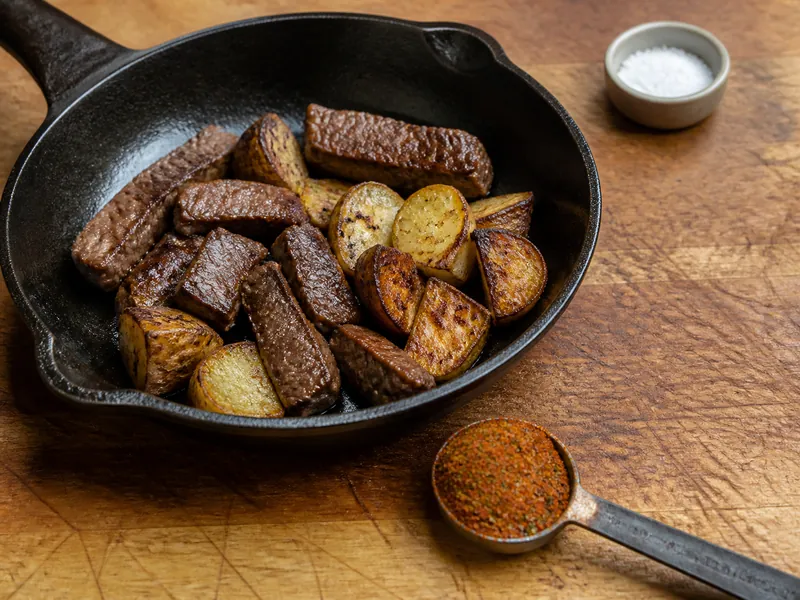
- Dry surface: Concentrates seasoning on the crust.
- Measured start: Keeps paprika and chile below the salt ceiling.
- Salt held back: Leaves room to judge the commercial blend.
- Test piece: Shows the cooked result before the whole batch is coated.
Stop when a test piece tastes salty before aromatic because more cayenne cannot create room for missing warm spices.
The only safe next move is more unseasoned food or a different low-salt blend, not a louder dose of the same seasoning.
3. Ras el Hanout
Use three-quarter teaspoon ras el hanout plus a small pinch of cayenne for each teaspoon of berbere in lamb, chickpeas, carrots, or a braise that can carry floral warmth.
- Starting ratio
- 3/4 teaspoon plus a small pinch of cayenne
- Best for
- lamb, chickpeas, carrots, squash, and brown braises
- Main tradeoff
- floral and sweet spice without enough chile or fenugreek
- Adjust
- stop if rose, lavender, cardamom, or clove leads the cooked aroma
Ras el hanout can overlap through coriander, cumin, ginger, cardamom, cinnamon, and clove. Its formulas often travel toward floral complexity rather than berbere's red chile and fenugreek center.
Add the cayenne separately so the amount can follow the food. A wet chickpea stew disperses heat, while a lamb rub concentrates it on the surface.
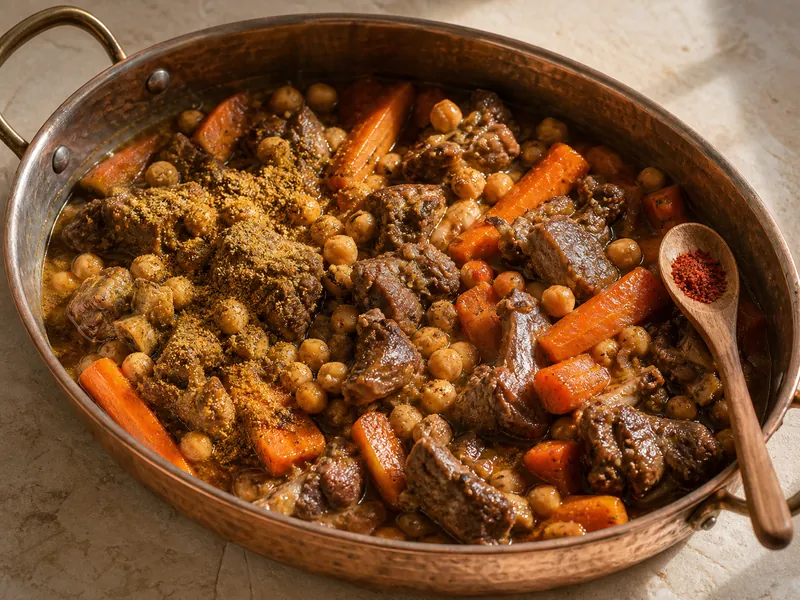
- Warm blend: Seasons lamb, chickpeas, and carrots.
- Separate chile: Keeps heat independent from floral aroma.
- Wet braise: Spreads a small correction through the pan.
- Stop point: Do not raise cayenne when rose or cardamom already leads.
Smell the blend before cooking. If rose, lavender, mace, or cardamom reaches you first, begin at one-half teaspoon and let browned onion and meat decide whether the floral note belongs.
Dilute a floral ras el hanout result or choose another blend instead of making it hot with extra cayenne.
Heat added to rose, lavender, or dominant cardamom preserves the floral direction and merely makes it harder to taste through.
4. Garam Masala
Start with one-half teaspoon garam masala and one-eighth teaspoon cayenne for each teaspoon of berbere in lentils or an onion-rich sauce. Add paprika only when red color matters independently of heat.
- Starting ratio
- 1/2 teaspoon plus 1/8 teaspoon cayenne
- Best for
- lentils, beans, tomato sauce, and long-cooked onions
- Main tradeoff
- roasted cardamom and clove with no built-in red chile
- Adjust
- split the garam masala between the cooked base and the finish
Garam masala provides a roasted aromatic top layer but usually lacks berbere's red body. Cumin, coriander, cardamom, cinnamon, and clove can feel familiar, yet the dish remains pale and less bitter-savory.
Cook half of the measure with the onions and reserve the rest. Adding all of it early can flatten the upper aroma before a long stew finishes.
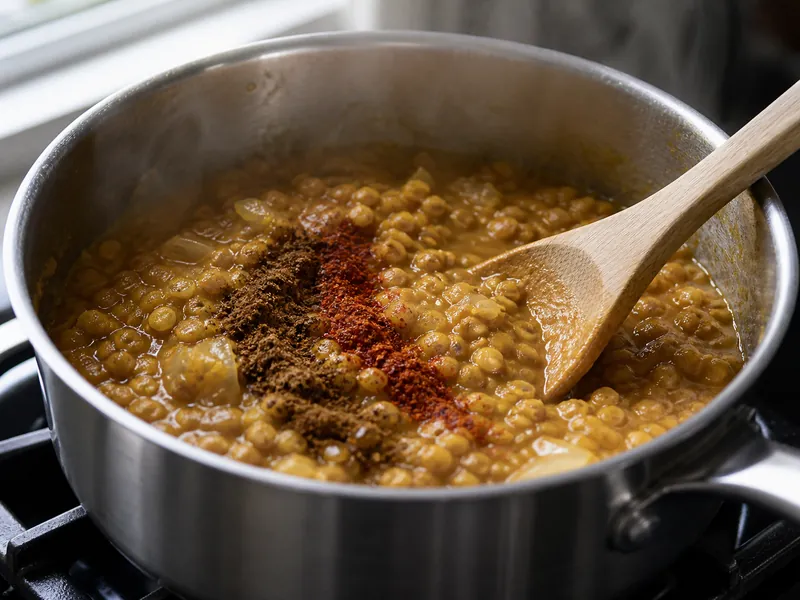
- Brown streak: Supplies roasted cardamom, cumin, and clove aroma.
- Red streak: Adds heat without pretending the blend already contains chile.
- Late fold: Preserves more of the finishing aroma.
- Color decision: Add paprika only when the lentils also need red body.
Paprika restores color while cayenne restores heat, so use them for separate jobs rather than treating red as proof of heat.
5. Baharat
Use three-quarter teaspoon baharat plus one-eighth teaspoon cayenne for each teaspoon of berbere in meat rubs, rice, or brown braises. Add the cayenne after the onions cook when you can judge the base sweetness.
- Starting ratio
- 3/4 teaspoon plus 1/8 teaspoon cayenne
- Best for
- meat rubs, rice, brown braises, and meatballs
- Main tradeoff
- black pepper and sweet spice with little fenugreek or red chile
- Adjust
- add paprika for color and fenugreek for depth only when each is missing
Baharat begins closer to a savory pepper blend than a chile blend. Black pepper, cumin, coriander, cinnamon, allspice, cardamom, and nutmeg can support meat and rice without creating berbere's heat.
This makes the correction predictable. Add cayenne for the hot layer, paprika for red body, and a very small fenugreek pinch for the bitter-savory layer.
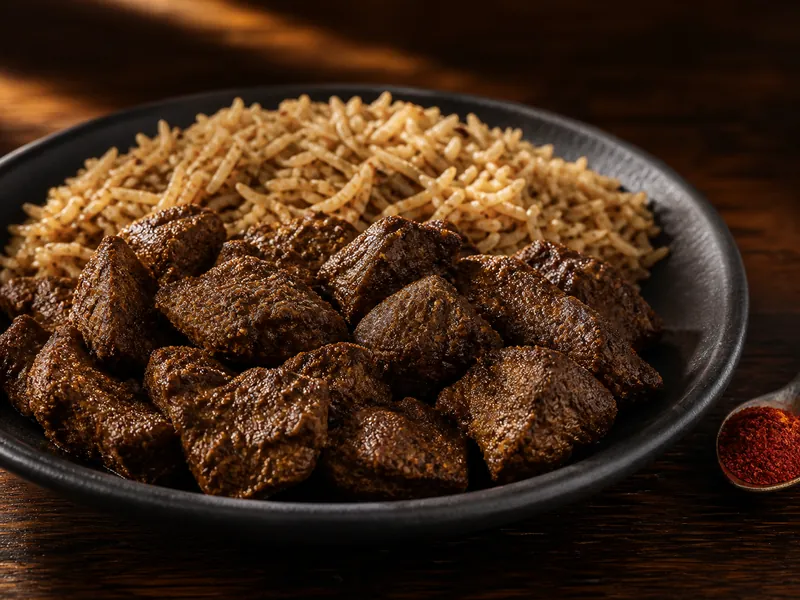
- Browned meat: Supports black pepper and warm spice.
- Rice: Carries aroma even when little extra heat is wanted.
- Chile held aside: Prevents an automatic full-dose correction.
- Fenugreek boundary: Add a tiny pinch only when savory bitterness is missing.
Do not add all three automatically because rice may need color and aroma with little heat, while a meat rub may need heat without extra fenugreek bitterness.
Wait until browned onions lose their raw edge before increasing cayenne. Onion sweetness changes the perceived heat enough that an early taste can lead to an unnecessary second dose.
Heat, Fenugreek, and Warm Spice Are Separate Layers
Chile heat is a sensation, not the whole berbere flavor. Cayenne can raise that sensation cleanly, while paprika provides a broader red pepper body with less heat.
Fenugreek contributes a bitter-savory note with a maple-like aroma that becomes more food-like after cooking. Too much tastes harsh and cannot be hidden by stronger chile.
Pros
- Cayenne raises heat without adding another herb blend.
- Paprika restores red body while keeping the heat easier to control.
- A pinch of fenugreek can rebuild the missing bitter-savory layer.
- Ginger, coriander, cardamom, and clove can restore aromatic range.
Cons
- Salted seasoning makes heat feel sharper and limits later correction.
- Adding every missing spice at once prevents useful diagnosis.
- Sugar softens the first impression but does not remove capsaicin.
Warm spice is the upper aroma formed by ginger, coriander, cardamom, cinnamon, and clove. A blend can have plenty of this layer and still fail because it lacks chile or fenugreek.
Name the first missing signal after a cooked taste. A pale but fragrant sauce needs paprika, a warm but mild sauce needs cayenne, and a hot but shallow sauce may need only a pinch of fenugreek.
Keep salt outside the flavor-correction ladder by diluting a salty base before changing its aroma.
Wet Paste and Salted Blends Change the Measurement
A teaspoon of harissa paste and a teaspoon of dry seasoning do not occupy the same role in the pan. Paste brings water, oil, acid, garlic, and often salt, while a dry blend changes the food mainly through concentrated spice solids.
Read the salt line before deciding whether a Cajun blend can be increased. If one-quarter teaspoon already makes a cooked sample salty, the recipe has reached its ceiling even when the aroma still seems too mild.
- Wet harissa: Reduce other liquid slightly and bloom it with the onion base.
- Salted Cajun blend: Hold the recipe salt until a cooked sample is tasted.
- Salt-free ras el hanout, garam masala, or baharat: Add chile and fenugreek separately instead of raising the whole blend.
- Dry meat rub: Judge the dose by coated surface area, not only by meat weight.
Oil also changes perception. A paste dispersed through the pot's fat tastes smoother and more even, while dry cayenne left on one patch can create a sharp hot spot that does not represent the rest of the dish.
Correct physical form first by thinning paste, dissolving dry powder in fat, and reserving salt until reduction.
Only then can the cook tell whether the remaining problem is chile heat, red pepper body, fenugreek depth, or warm aroma.
Correct One Missing Layer in Onion and Fat
Berbere meets a deeply cooked onion base in many of its most familiar uses. Onion sweetness and fat provide a better test than water because they reveal both aromatic spice and chile heat.
Use one spoonful of the actual onion base rather than making a separate generic spice test. That preserves the recipe's fat, salt, garlic, and browning level.
- Cook the onions until their raw sharpness has faded and the recipe's fat is evenly distributed.
- Move one tablespoon of onion base to the edge of the pan or a small heatproof dish.
- Stir in a proportional pinch of the chosen substitute and cook it briefly without scorching.
- Cool the sample for 20 seconds, then identify heat, red body, bitter-savory depth, and warm aroma separately.
- Correct only one missing layer, cook a second small sample, and stop when the food tastes integrated rather than merely louder.
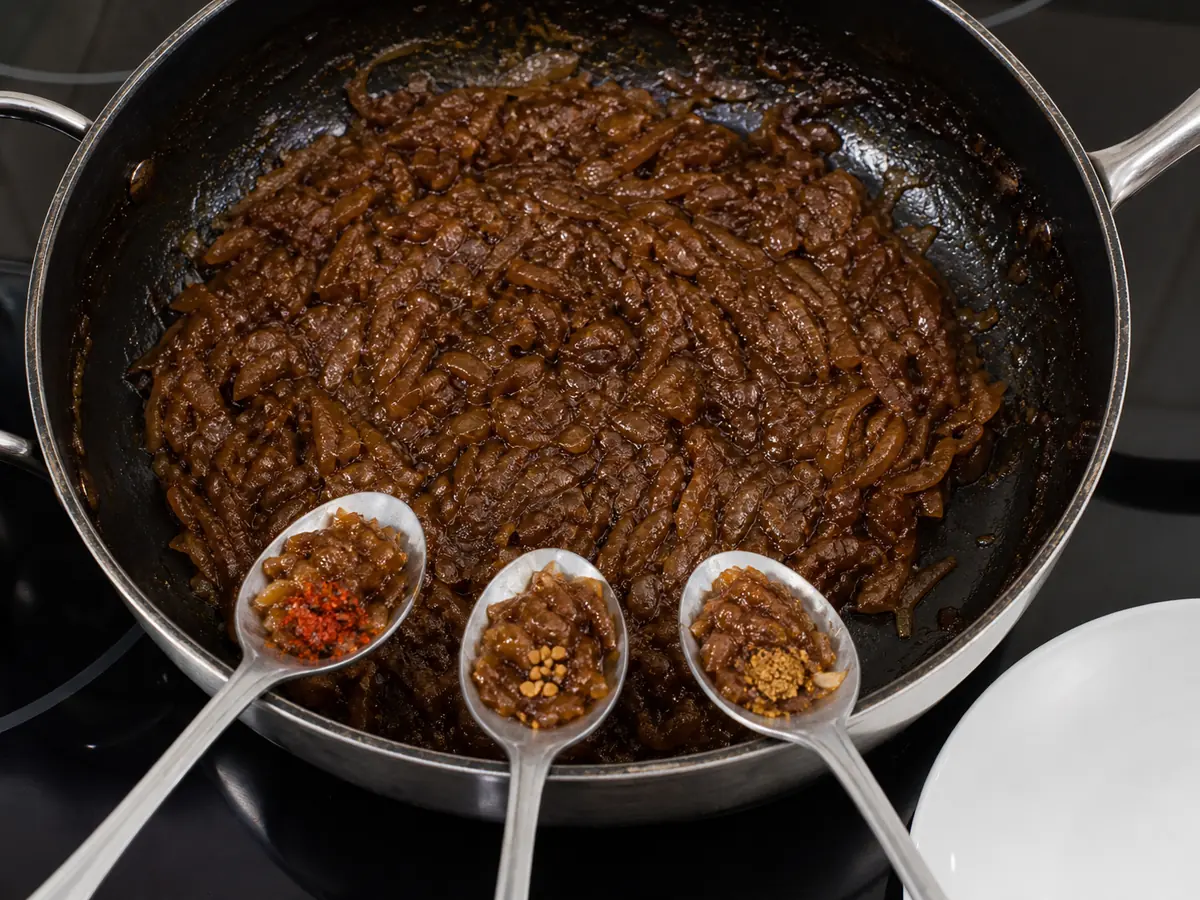
- Red sample: Tests heat and paprika body.
- Fenugreek sample: Tests the bitter-savory layer at a tiny dose.
- Warm sample: Tests aroma without increasing chile.
- Scale last: Hold back part of the correction until after reduction.
Raw fenugreek can overstate bitterness, while raw cayenne gives a sharp immediate burn. Brief cooking shows how both behave after the main pot receives them.
A dark onion base can also hide visual cues. Spread the sample thinly on a white spoon to see whether paprika or chile has provided enough red color.
Scale a balanced spoon sample carefully and hold back the final quarter of the correction until reduction.
This reserve protects the pot from a heat level that becomes harsher after water leaves the sauce.
Stew, Lentils, Meat, and Vegetables Set Different Heat Ceilings
A wet stew spreads chile through every spoonful and may reduce for a long time. Start with harissa or a warm blend below the table ratio when the liquid will lose substantial volume.
Lentils absorb seasoning and can make a first taste seem quiet. Wait until they are tender and the salt is correct before deciding the missing layer.
Harissa works well at half volume. Recheck after reduction because liquid loss concentrates salt and heat.
Garam masala or harissa can work. Correct fenugreek only after the legumes are tender.
Cajun seasoning or baharat gives a dry surface. Cook one test piece before scaling the rub.
Harissa clings well and char supports chile. Reduce added oil to account for the paste.
Baharat or ras el hanout keeps the grain aromatic. Use less cayenne because steam carries it through the pot.
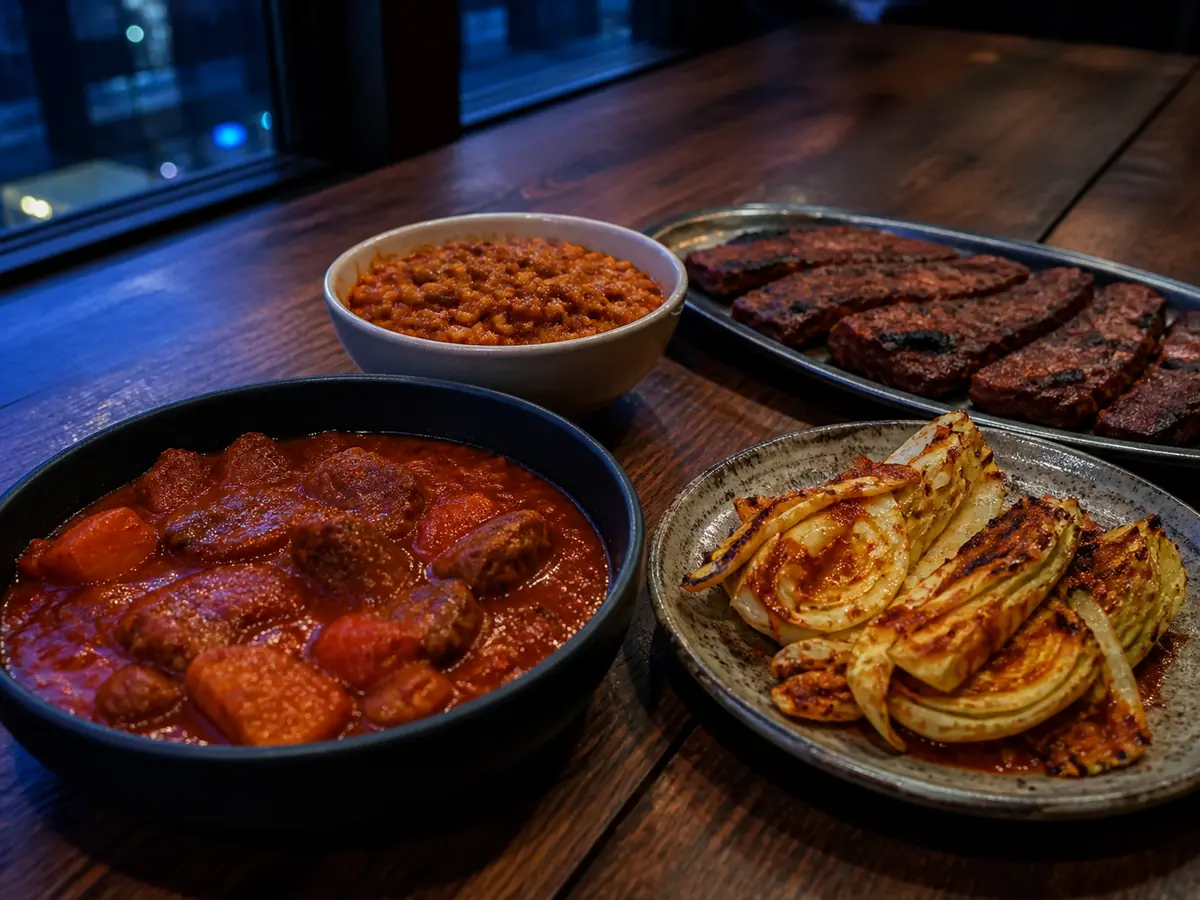
- Stew: Recheck after the liquid reduces.
- Lentils: Wait until tender before correcting salt and heat.
- Meat: Cook one test piece before scaling a dry rub.
- Vegetables: Thin the paste with unseasoned oil for even coverage.
Grilled meat creates a different ceiling because the seasoning remains concentrated on the crust. A half teaspoon spread through stew is gentler than the same half teaspoon pressed onto one small piece of meat.
Roasted cabbage and cauliflower can carry harissa because their browned edges support chile and garlic. Use enough unseasoned oil to spread the paste thinly rather than leaving hot patches.
Treat perfumed ras el hanout rice as its own variation instead of adding chile and calling it berbere-like.
Rebuild a Small Berbere-Style Batch for the Recipe
When the dish depends on all three layers, a small reconstruction is more controllable than another complete regional blend. Make only enough for the current recipe and label it as a practical berbere-style mixture rather than a universal formula.
Combine one teaspoon sweet paprika, one-half teaspoon cayenne, one-half teaspoon ground ginger, one-quarter teaspoon ground coriander, one-quarter teaspoon fenugreek, one-eighth teaspoon cardamom, and a small pinch each of cinnamon and cloves. This produces about three teaspoons after mixing.
- Set the heat first: Reduce cayenne when the dish also contains fresh chile.
- Keep fenugreek measured: A rounded quarter teaspoon can turn bitter after reduction.
- Use paprika for body: It should make the mix red without making every application equally hot.
- Break up warm-spice lumps: Cardamom and clove pockets create sharp bites.
- Test in the food: Bloom one pinch with the recipe's onions before seasoning the whole pot.
The formula gives a chile-led center and a restrained aromatic edge. Commercial and household berbere blends vary, so match the recipe and the blend you know rather than presenting one ratio as a regional standard.
Freshly ground coriander and cardamom provide a cleaner aroma, but cool any toasted spice fully before grinding. Warm seeds trap moisture in the grinder and shorten the useful life of the mixture.
Use the small batch at equal volume, make the final salt and heat decision after reduction, and store any remainder airtight away from the stove.
Use the remainder soon while chile and cardamom still smell separate instead of fading into a generic warm powder.