
How to Read Spice Labels and Spot What Actually Matters
Turn the jar around and follow a six-step check before front-panel claims influence the purchase.
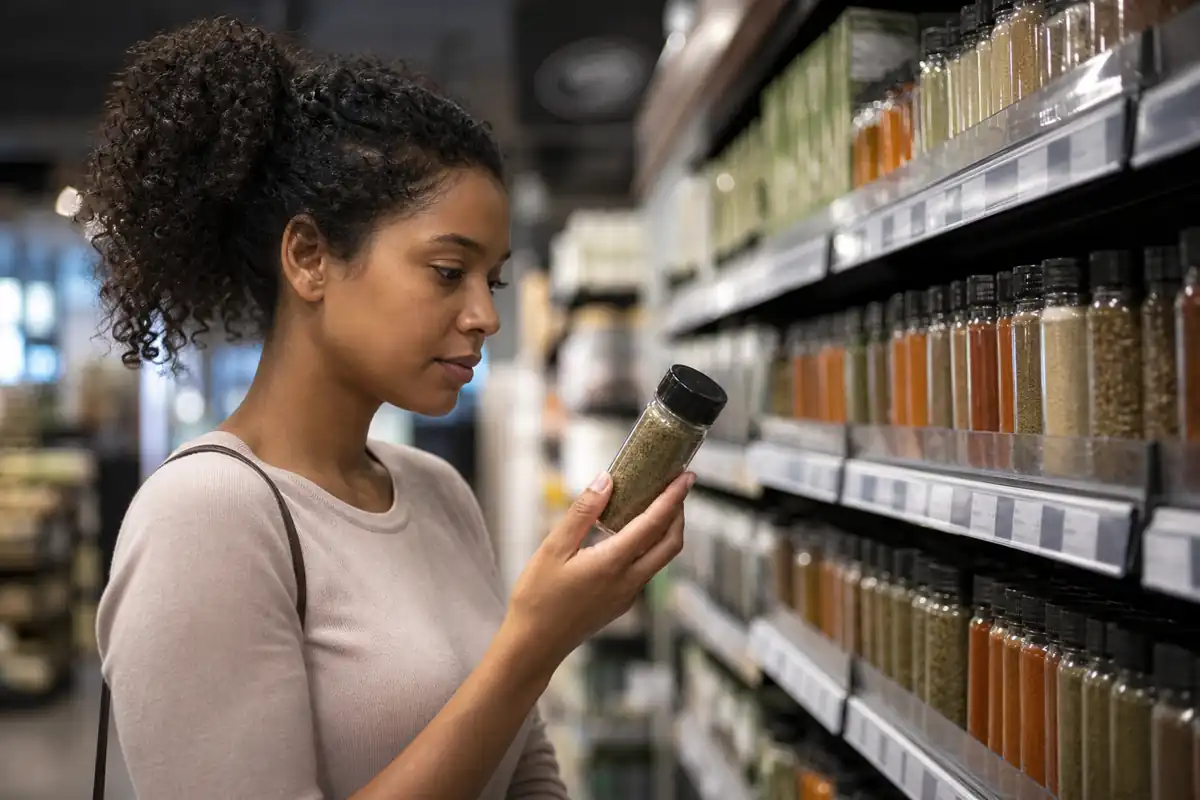
Read a spice label in this order: ingredients, treatment disclosures, certification, origin and responsible company, lot code, then dates. A single-spice jar should name that spice, while a blend may group seasonings under the word spices, and claims such as pure, natural, and premium need evidence elsewhere on the package.
What should you read first on a spice label?
A single-ingredient spice should name that ingredient. Turmeric powder should not need salt, starch, color, oil, or a vague flavor system.
Blends work differently. American labels list ingredients from greatest to least weight, so the first item reveals the formula’s bulk.
Salt-first seasoning is mostly salt by weight. Sugar-first rub will brown and burn differently from a spice-led mixture.
| Ingredient line | What it means | Buying consequence |
|---|---|---|
| Cumin | Single named spice | Judge freshness, source, and pack size |
| Salt, paprika, garlic, spices | Salt-led seasoning blend | Reduce other salt in the recipe |
| Sugar, salt, chile, spices | Sweet rub | Watch high heat and scorching |
| Spices, natural flavor | Formula partly undisclosed | Skip when exact ingredients matter |
For blends, connect order to use. A salt-heavy mixture may be convenient, but it removes control from final seasoning.
Stop the purchase when the formula conflicts with your needs. No front-panel photograph can repair an unsuitable ingredient list.
Why can a label say spices without naming them?
On some American labels, spices can stand for several flavoring ingredients instead of naming each one. The shorthand is legal, but it gives you less formula detail.
A collective term does not reveal the proportion or identity of every spice. That matters when you avoid a flavor, compare blends, or need repeatable heat.
- Named spice: Cumin or paprika tells you exactly which ingredient provides the flavor.
- Named blend: A full list lets you compare salt, chile, garlic, and supporting spices by weight.
- Spices: The collective word keeps part of the seasoning formula undisclosed.
- Natural flavor: The phrase may cover extracts or flavor systems that a spice name alone would not explain.
If one ingredient affects your diet or recipe, choose a product with full disclosure or ask the manufacturer before buying.
Treat missing detail as uncertainty. A shorter label is useful only when its few words still tell you what is inside.
Which allergens must be named even when the spices are not?
Whatever the ingredient line leaves out, a major allergen inside the jar still has to be declared by name.
In the United States that covers milk, eggs, fish, crustacean shellfish, tree nuts, peanuts, wheat, soybeans, and sesame. Sesame only joined that list in January 2023, so older label advice can be out of date.
Wheat is the one that catches people out in a spice jar. It arrives as a carrier or an anti-caking filler, so a blend can carry gluten with no obvious mention of flour anywhere on the panel.
The lists also differ by country.
The European Union and the United Kingdom require fourteen declarations, adding mustard, celery, lupin, and sulphites. All four turn up in ordinary seasoning mixes.
Read that line before the ingredient line when you are shopping for someone with a diagnosed spice allergy.
Do anti-caking agents or added colors matter?
Added ingredients do different jobs, so judge each one by how it changes the food. Salt and sugar affect cooking more than a small flow aid.
An anti-caking agent keeps fine powder free-flowing in humid storage. Its presence does not tell you whether the spice itself is fresh.
| Label item | Why it is used | Buying consequence |
|---|---|---|
| Salt | Adds bulk and seasoning | Reduce separate salt and compare price by spice content |
| Sugar | Balances heat and helps browning | Watch scorching in rubs and high-heat cooking |
| Anti-caking agent | Keeps fine powder flowing | Decide whether pourability matters more than a one-ingredient formula |
| Added color | Changes appearance | Do not use vivid color as proof of freshness |
Certified color additives must be named, while some exempt colors may appear as color added. A vivid powder is not automatically pure spice.
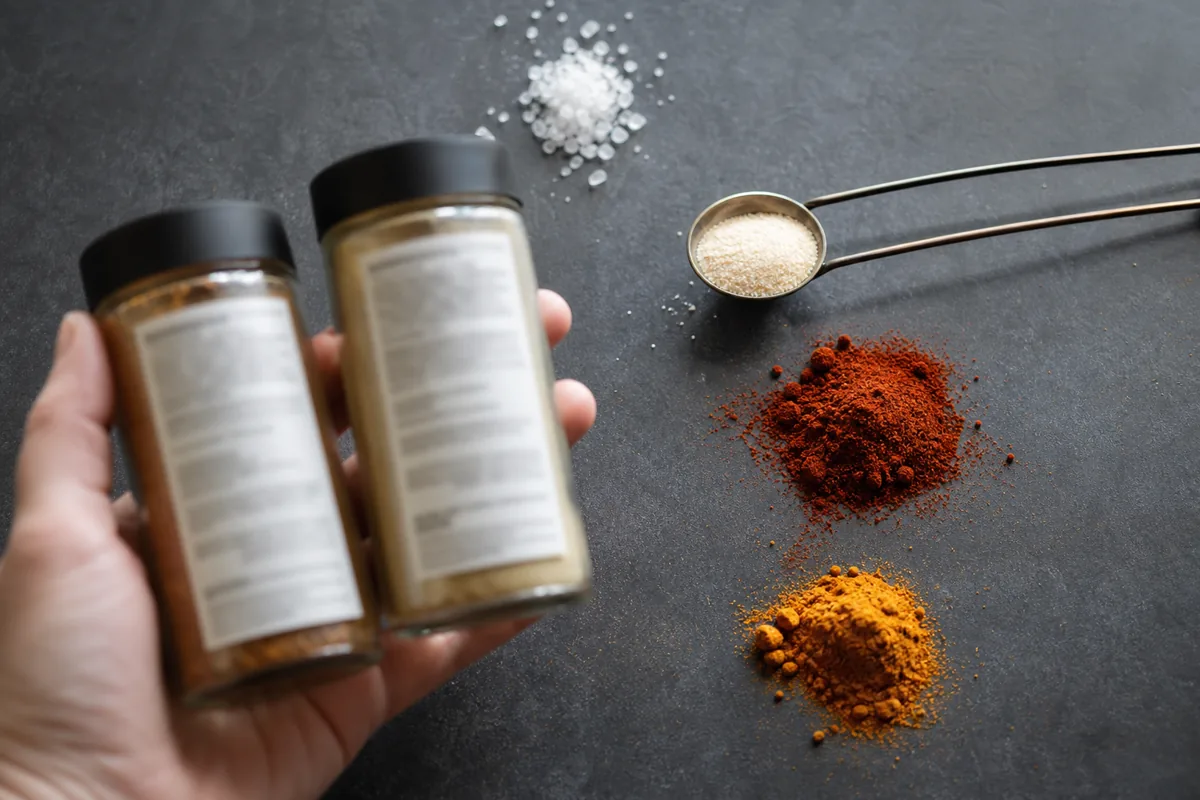
- Recipe control: Salt and sugar change seasoning and browning.
- Powder flow: Anti-caking agents help fine blends pour in humidity.
- Appearance: Added color can make powder look stronger than it smells.
- Single spice: Extra ingredients mean the jar contains more than the named spice.
For a single spice, starch, oil, salt, or color means the jar contains more than that spice. For a blend, decide whether the convenience earns the lost control.
What do pure, natural, and premium actually prove?
Words such as pure, natural, premium, artisan, and clean sound precise while answering little about the spice’s age or formula.
Pure may support a simple ingredient claim, but the ingredient line is stronger evidence. Natural does not disclose origin, harvest, testing, or freshness.
Ask what the adjective rules out.
If the package names no excluded ingredient, process, or measurable standard, you cannot verify the promise.
A third-party seal also needs a named program. A logo invented by the brand carries only the rules that the brand chooses to publish.
Organic differs because a certification program defines production and handling rules. Even then, certification does not grade aroma or batch purity.
Look for a concrete statement near each claim.
A reputable spice seller should name the source, tested hazard, and certifier.
Treat unsupported claims as decoration. Spend for information that changes how you cook, trace, or store the product.
How can you verify an organic spice label?
USDA organic labels use defined tiers.
The front wording and the ingredient statement should agree with the certified share.
A product labeled organic contains at least 95 percent certified organic ingredients, excluding water and salt. The USDA seal is allowed but optional.
Made with organic ingredients requires at least 70 percent certified organic content and cannot display the USDA seal.
In a blend, nonorganic ingredients may still occupy the remaining share. Read the marked ingredient list instead of assuming every component follows one tier.
- Wording: Distinguish 100% Organic, Organic, and Made with organic ingredients.
- Certifier: Find the statement naming who certified the finished product.
- Ingredients: Check which components are marked organic inside a blend.
- Seal: Remember that eligible products may choose not to display it.
A green package or leaf icon is not certification.
Verify the regulated wording and certifier before paying a premium.
Imported organic products still need recognized certification for the market where they are sold. Country scenery on the package does not supply that verification.
Whether the premium makes sense belongs to the organic versus conventional decision. This check only verifies the claim.
What does the Radura symbol mean on spices?
FDA permits irradiation of spices and seasonings to reduce pathogens.
Proper treatment does not make the food radioactive.
Retail irradiated food carries the Radura symbol with treated with radiation or treated by irradiation. The disclosure identifies a process.
Individual irradiated ingredients inside multi-ingredient foods do not always require the same disclosure. A seasoning blend may therefore reveal less than a single spice.
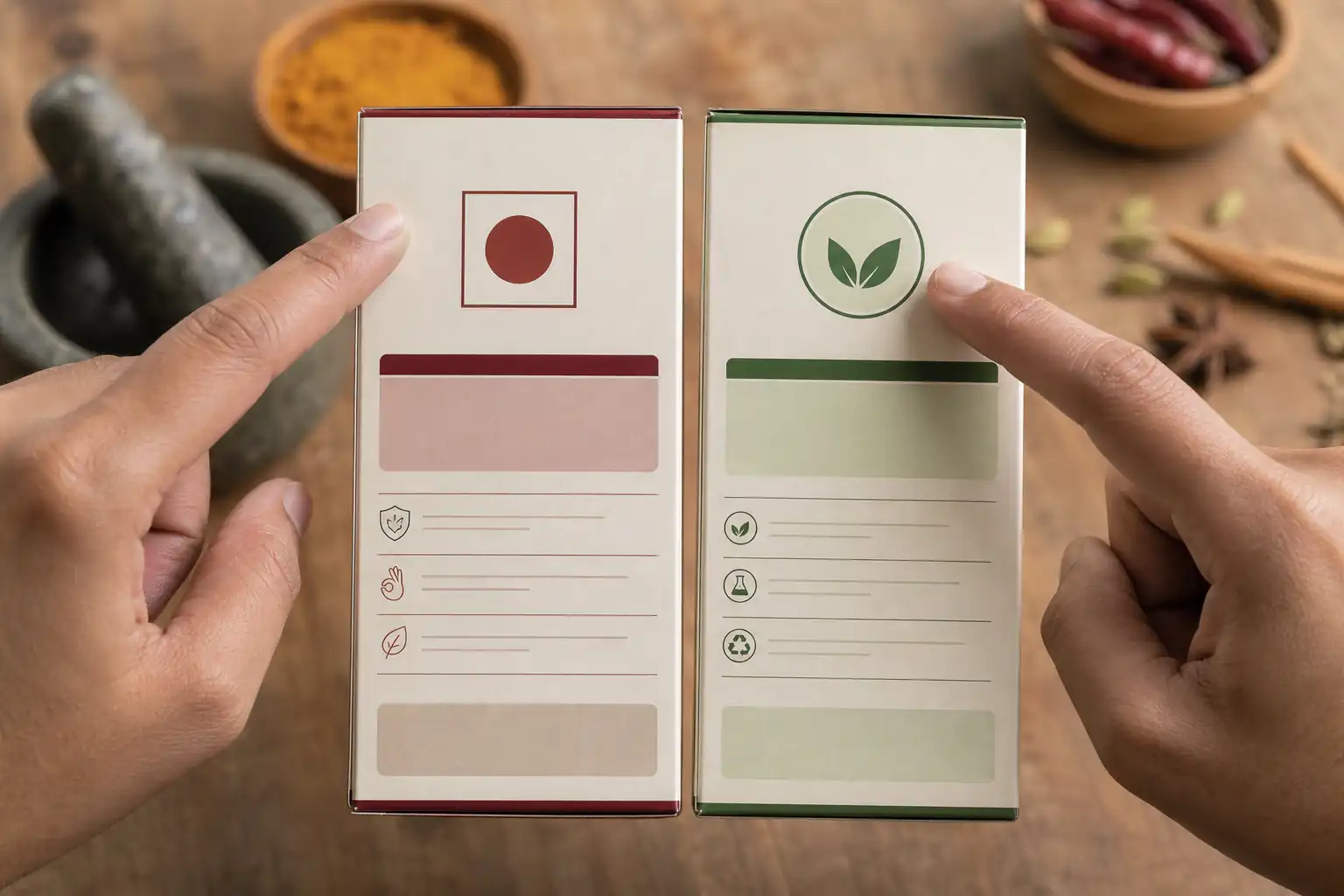
- Symbol: Radura marks a retail irradiated food.
- Statement: Look for treated with radiation or treated by irradiation.
- Purpose: The process helps control pathogens and insects.
- Boundary: USDA organic production excludes ionizing radiation.
FDA, USDA, CDC, and WHO endorse the safety of properly irradiated food.
The treatment does not replace clean handling after processing.
Choose based on your processing preference, not fear. If you require non-irradiated spice, seek an explicit statement or certified organic product.
Steam treatment is another common control, yet labels may not explain it. Ask the supplier when treatment method affects your purchase.
Can a spice label tell you where it was grown?
Growing origin, packing location, and responsible company are three different identities.
Read the wording closely instead of merging them.
Product of India may describe growing or substantial transformation. Packed in California describes where the final package was filled.
Distributed by identifies the company responsible in the market, not necessarily the farm, mill, importer, or packer.
A lot code connects one jar to a production batch. Regulators and companies use that code to narrow recalls.
The useful code may appear as ink on the lid, shoulder, seal, or pouch seam. Photograph it before discarding the outer package.
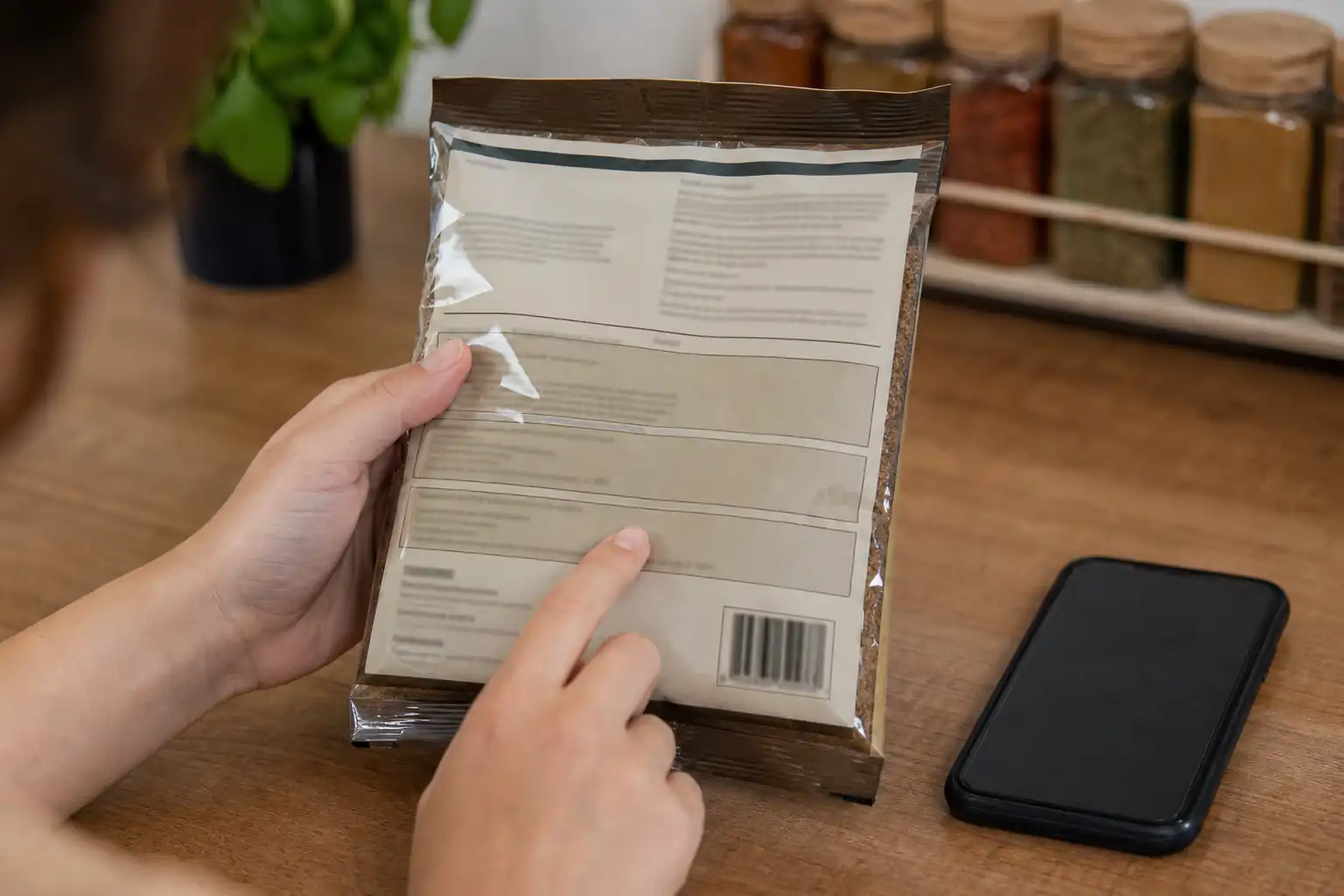
- Origin: Where the spice or ingredient came from.
- Packer: Where the retail package was prepared.
- Company: Who answers questions and handles a recall.
- Lot: Which batch the specific jar belongs to.
During a recall, match brand, product, package size, lot, and best-by details. A shared spice name alone does not identify the affected jar.
Keep the receipt for an unfamiliar online seller until the product passes inspection. The order record can identify a distributor when the pouch cannot.
Origin can support traceability but never proves quality by itself. The spice form, harvest, processing, and turnover still change performance.
Favor packages with enough detail to investigate. A seller who hides behind generic global sourcing gives you no useful chain.
Does a best-by date tell you whether spices are fresh?
A best-by date is usually a manufacturer’s quality promise. It is not the harvest date and does not guarantee strong aroma until that day.
Packed-on dates reveal when the retail container was filled, but the spice may already have spent months in bulk storage.
Harvest year is more useful and less common. Specialist sellers sometimes provide it for pepper, chile, saffron, vanilla, or seasonal crops.
A date also needs a storage story. Warm warehouse months can remove more aroma than a longer period in a cool sealed container.
| Date | What it can tell you | What it cannot prove |
|---|---|---|
| Harvest year | When the crop was gathered | How it was stored afterward |
| Packed on | When retail packaging occurred | Original crop age |
| Best by | Maker quality window | Current aroma strength |
| Opened on | Your exposure to air began | Pre-purchase handling |
Write the opened month on the jar. That small action gives the label a date tied to your actual use.
For frequently used spices, compare how quickly the package empties.
A smaller fresh jar can outperform a bargain size long before its printed date.
Smell, rub, crack, or bloom the spice when its performance matters. The shelf-life chart supplies windows, not a substitute for sensory evidence.
A distant best-by date cannot rescue weak aroma. Use the stale-versus-discard tests when an old jar reaches your kitchen.
How can you check a spice label in 60 seconds?
Turn the jar around and read in one fixed order.
The sequence prevents front-panel design from deciding before the evidence appears.
Give each line one job. Ingredients reveal formula, certification reveals a standard, and the lot code reveals which batch you hold.
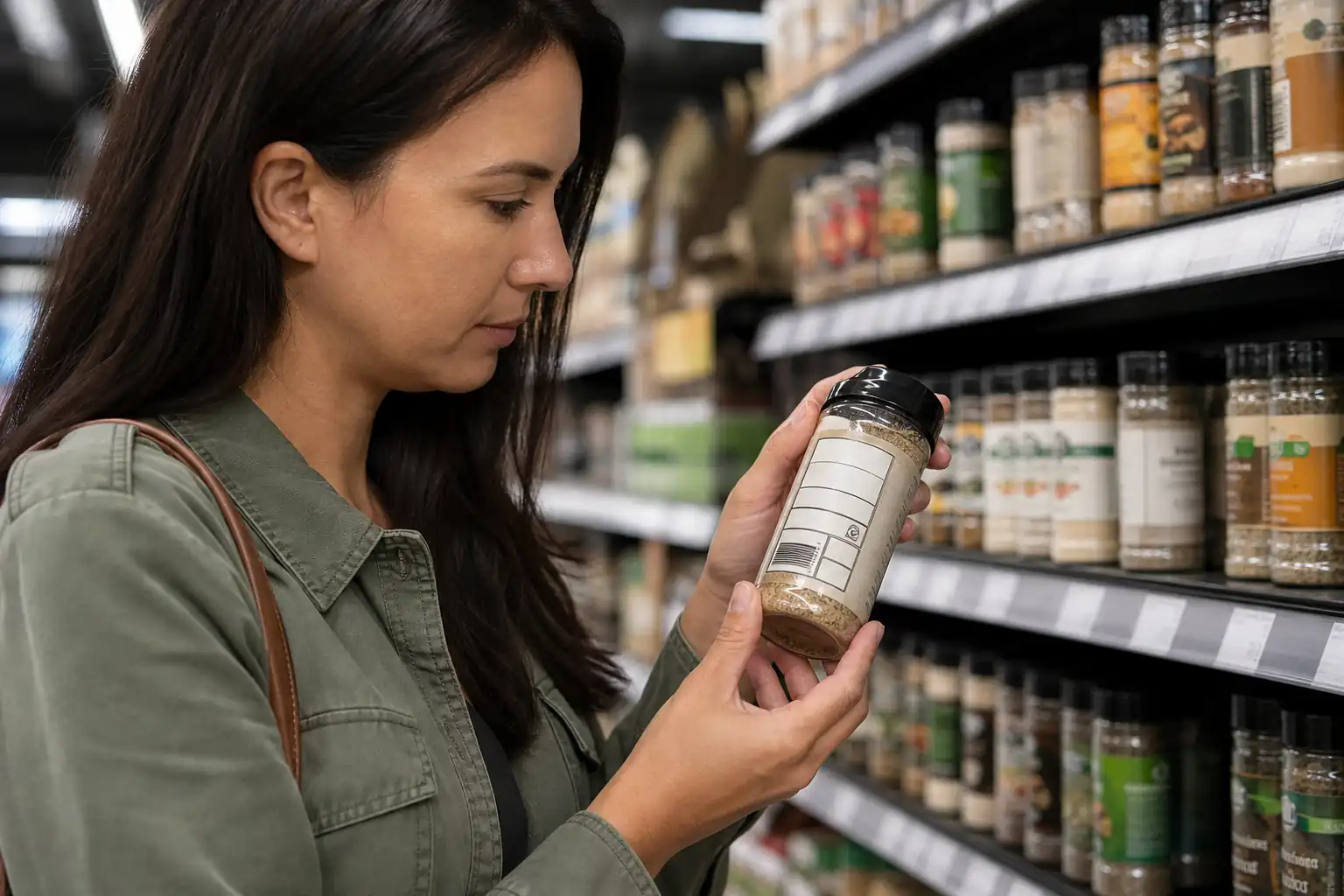
- 1 Ingredients: Confirm the spice or the blend direction.
- 2 Treatment: Note irradiation or other disclosed processing.
- 3 Certification: Verify the standard and certifier.
- 4 Traceability: Read origin and responsible company.
- 5 Batch details: Check the lot and treat the date as one freshness clue, not the verdict.
For a single spice, leave the jar if unexplained extras conflict with your recipe.
For a blend, check whether salt or sugar leads.
Pay more only when the package supplies a standard or source you value. Premium wording without evidence deserves no premium.
Choose the smallest pack that matches your use.
A fresh jar from the individual spice range beats impressive labeling on stale bulk powder.
Once home, use cool, dry, dark storage and keep the lot readable. Good label evidence remains useful after purchase.
Photograph the panel on an unfamiliar product.
You preserve the company, lot, and treatment details even if the small print later smears.
Repeat the same order across brands. A fixed scan makes missing evidence obvious and prevents one attractive claim from resetting your decision.