
What Goes Into Taco Seasoning and How Should You Use It?
Mix a salt-light batch, measure two tablespoons per pound, and reduce the liquid until it clings.
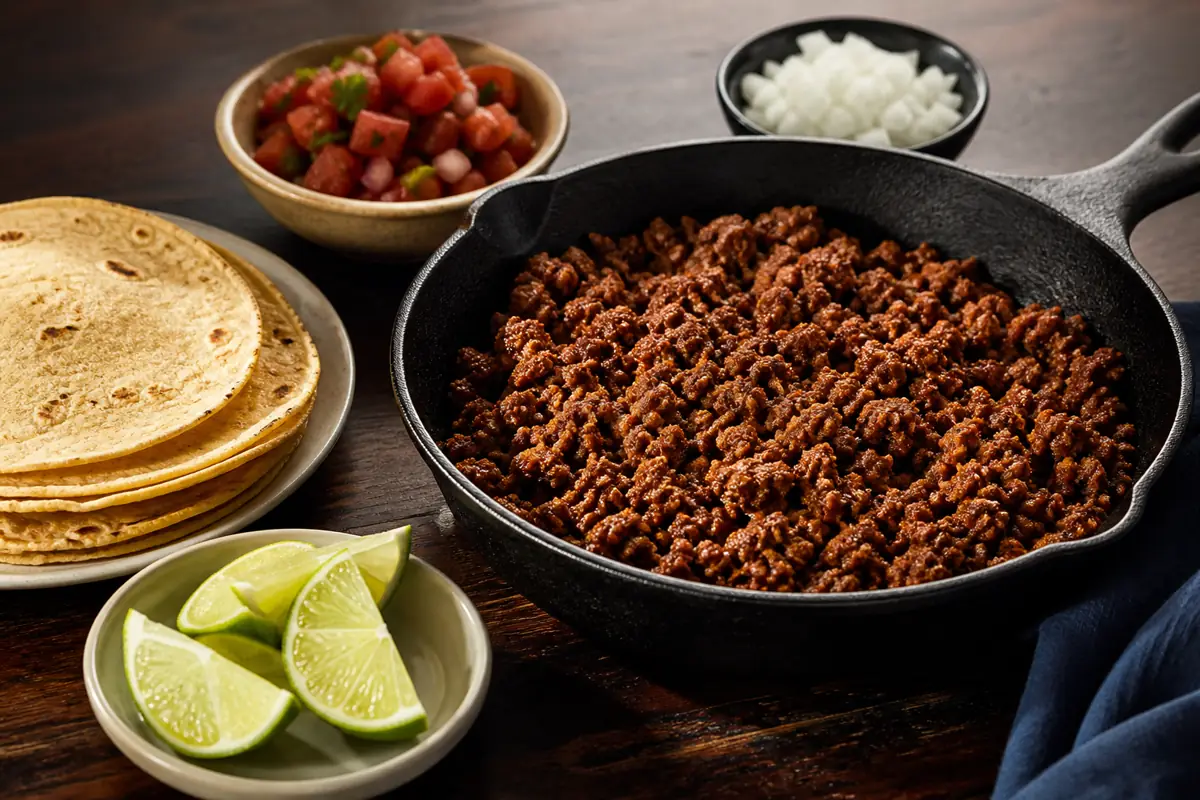
Taco seasoning is usually a chile-and-cumin blend with paprika, garlic, onion, oregano, pepper, and optional salt or starch. Start with two tablespoons for one pound of filling, add one-half cup liquid, then simmer until the mixture looks glossy and holds to the food.
What is taco seasoning made of?
Taco seasoning usually combines chili powder, cumin, paprika, garlic powder, onion powder, oregano, black pepper, and a controlled amount of cayenne.
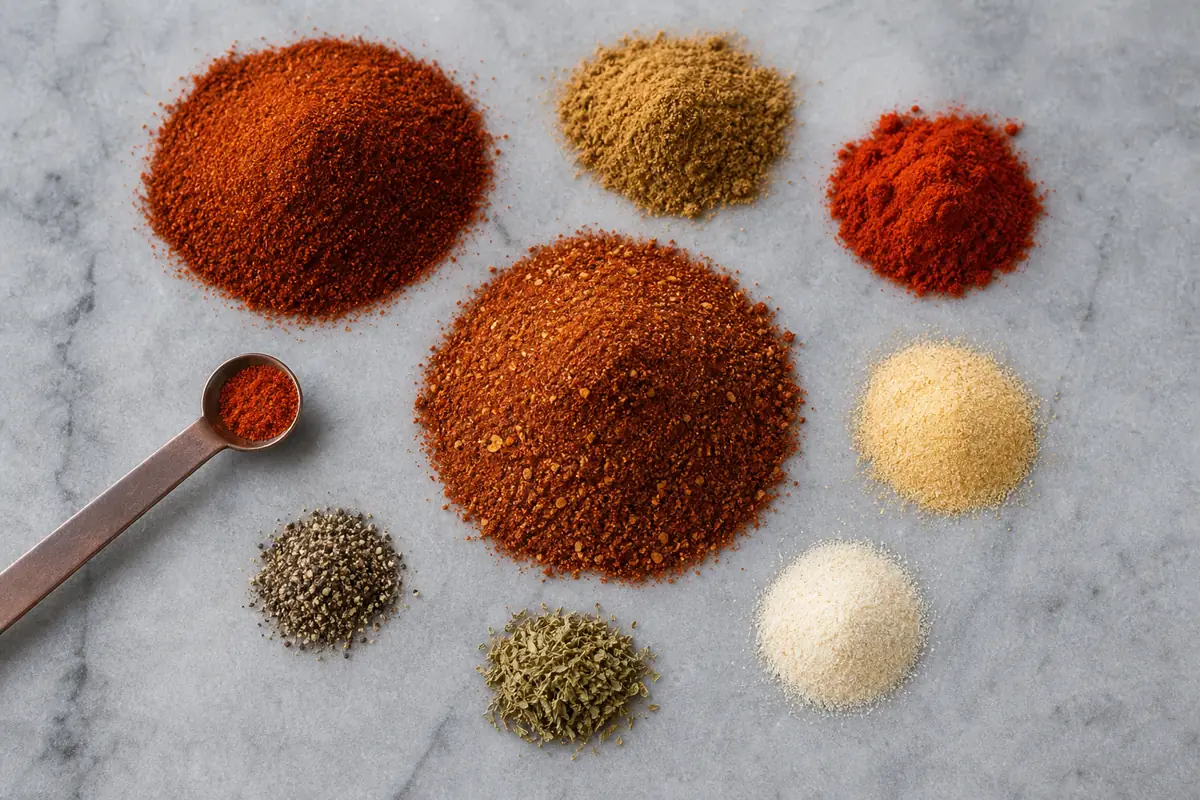
- Base: Chili powder
- Earthiness: Cumin
- Color: Paprika
- Heat control: Cayenne
American chili powder is often a blend rather than pure ground chile. Its label may already list cumin, garlic, oregano, and salt.
Doubling ground cumin can make the filling dusty and bitter before it tastes properly seasoned.
Paprika deepens the red-brown color and adds gentle pepper flavor. Paprika varieties range from sweet to hot or smoked.
Garlic and onion powders spread savory flavor through the pan without adding moisture. Oregano supplies a dry herbal edge rather than fresh green flavor.
Cayenne should control heat separately from the chili powder. One small adjustment then changes burn without disrupting the blend's main proportions.
Commercial packets may also contain salt, sugar, starch, anti-caking agents, or natural flavors. Those ingredients change seasoning power and sauce texture.
Unlike many Cajun seasoning blends, taco seasoning usually makes cumin a defining part of the finished flavor.
| Ingredient | Main job | What happens when heavy |
|---|---|---|
| Chili powder | Pepper base, color, mild heat | Other flavors disappear |
| Cumin | Earthy toasted backbone | Filling tastes dusty or bitter |
| Paprika | Red color and sweet pepper | Blend becomes flat |
| Garlic and onion | Savory body | Powder tastes harsh |
| Oregano | Dry herbal lift | Blend tastes medicinal |
| Cayenne | Direct heat | Burn outruns flavor |
The mixture belongs among American pantry blends developed for repeatable home seasoning.
A broader Mexican spice pantry includes regional chiles, herbs, seeds, and dish-specific techniques.
Where did taco seasoning actually come from?
The packet is a North American supermarket product rather than a Mexican tradition.
It grew out of mid-century convenience cooking, when one sachet replaced a spice shelf and a recipe at the same time. The cumin and paprika profile most people recognize as taco flavor comes from that packet, not from a regional Mexican kitchen.
A cook in Mexico is more likely to reach for dried chiles.
Guajillo, ancho, and chipotle get toasted and soaked, so the heat, fruit, and smoke come from the chile itself instead of from powdered blend plus salt.
None of that makes the packet worthless. It makes it a specific product with a specific job, which is fast weeknight seasoning for ground meat.
If you want the other thing, dried whole chiles are a different shopping trip and a different technique.
Is homemade taco seasoning better than a packet?
Homemade taco seasoning offers better control over salt, heat, freshness, and starch, while a packet wins on speed and repeatable convenience.
A packet can be the right choice when its flavor and sodium already suit the meal. Read its weight and directions before treating every packet equally.
Homemade mix lets you keep salt outside the jar. You can then season meat, beans, broth, and toppings without stacking several salty ingredients.
Freshness is the main quality advantage, but only when the pantry spices still smell strong. Old powders make a dull blend regardless of the recipe.
Mixing a small batch also lets you choose sweet, hot, or smoked paprika and adjust cayenne for the people eating the meal.
| Decision | Packet | Homemade |
|---|---|---|
| Speed | Open and pour | Measure once for several meals |
| Salt | Usually built in | Added after tasting |
| Starch | Often included | Optional and separate |
| Heat | Fixed by formula | Changed with cayenne |
| Consistency | Reliable within one brand | Depends on fresh spices and careful measuring |
Choose the packet for convenience and homemade for control. Neither option repairs stale spices, scorched seasoning, or a pan that never reduces.
How do you make a balanced taco seasoning mix?
A balanced taco seasoning starts with four parts chili powder, two parts cumin, and one part paprika before smaller aromatics and heat join.
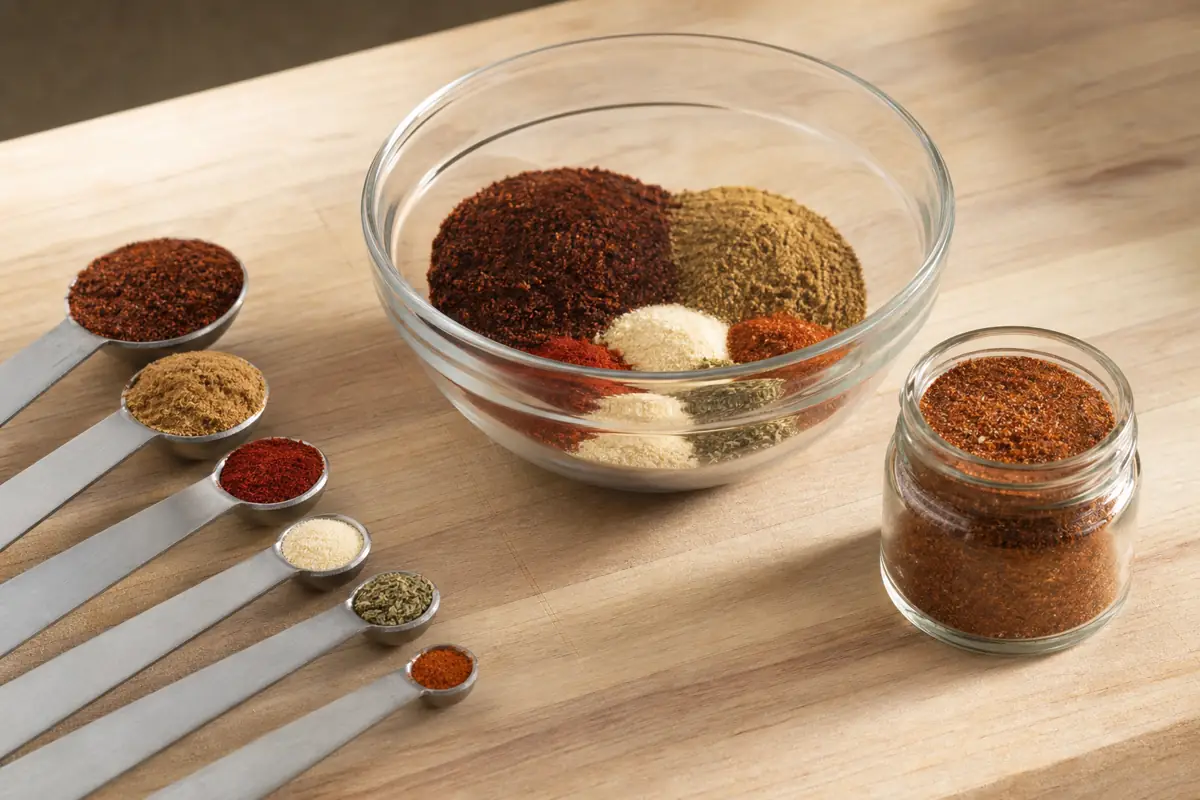
- Chili powder: 4 tbsp
- Cumin: 2 tbsp
- Paprika: 1 tbsp
- Aromatics: 2 tsp total
Combine four tablespoons chili powder, two tablespoons cumin, and one tablespoon paprika. This creates enough base for several one-pound batches.
Add one teaspoon each garlic powder and onion powder, then one teaspoon dried oregano. Rub the dried herb between your fingers first.
Add one-half teaspoon black pepper and one-quarter teaspoon cayenne. Increase cayenne only after testing the mixed seasoning on warm food.
Leave salt out of the jar or add no more than one teaspoon to this full batch. Unsalted mix works across more fillings.
- Mild blend: Use sweet paprika and omit cayenne until the pan is tasted.
- Smoky blend: Replace half the paprika with smoked paprika, not the whole chili base.
- Brighter blend: Add ground coriander sparingly for a citrusy seed note.
- Thicker sauce: Keep cornstarch separate and add it only when the filling needs body.
Whisk the powders until no pale garlic or dark cumin pockets remain. A narrow jar can hide uneven layers beneath its surface.
Cook one teaspoon in a spoonful of oil or add it to warm beans for testing. Raw powder exaggerates chalkiness and hides its finished aroma.
How much taco seasoning should you use per pound?
Use two tablespoons of salt-free taco seasoning for one pound of meat, beans, or firm vegetables, then adjust after the liquid reduces.
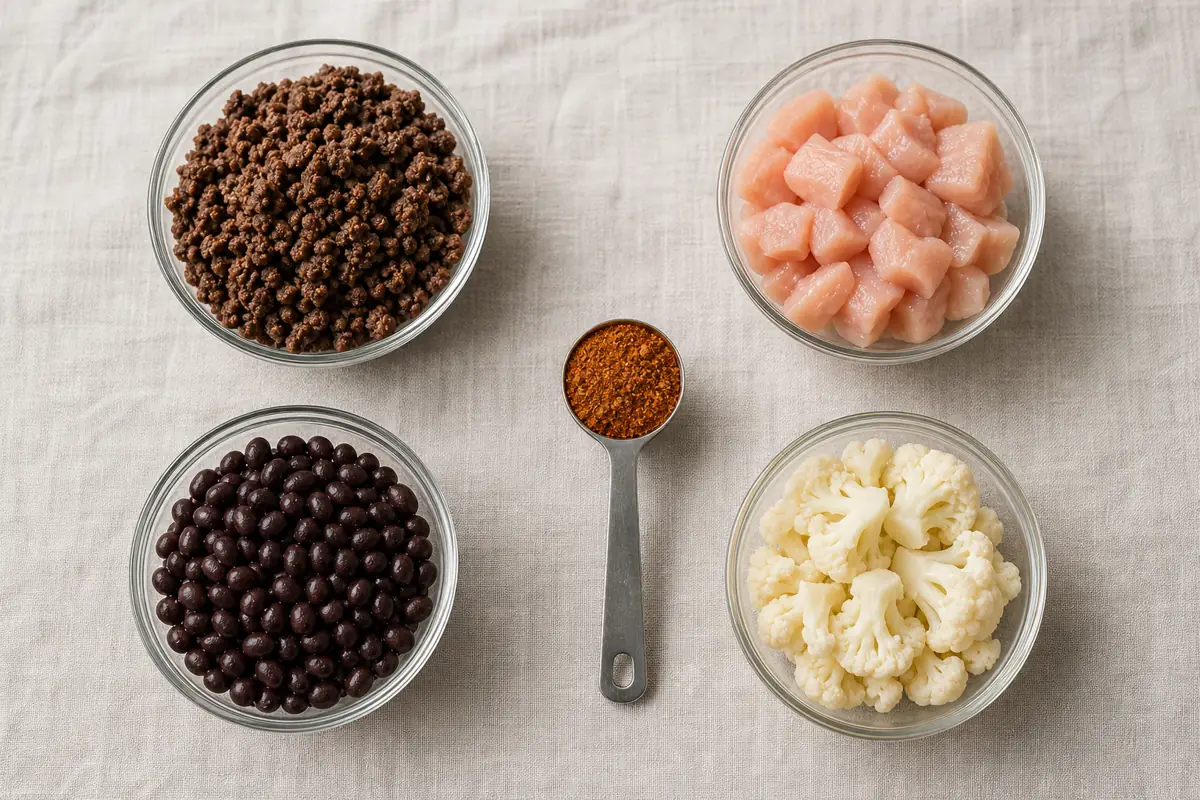
- Beef: 2 tbsp per lb
- Chicken: 1 1/2 to 2 tbsp
- Beans: 1 to 2 tbsp
- Vegetables: 1 to 1 1/2 tbsp
Two tablespoons is close to the volume of many one-ounce packets, but package weights and fillers vary. Measure the actual packet when precision matters.
Fatty ground beef carries spice well and may take the full amount. Drain only excessive grease because some fat helps dissolve aromatic compounds.
Lean turkey or chicken exposes cumin and cayenne quickly. Begin with one and one-half tablespoons, then taste after simmering.
Canned beans may already contain salt. Rinse them when appropriate and begin with one tablespoon before adding more seasoning.
Roasted vegetables need less powder because their water evaporates and concentrates the coating. Oil them lightly before adding the blend.
| Filling | Seasoning start | Liquid start | Adjustment cue |
|---|---|---|---|
| Ground beef | 2 tbsp per lb | 1/2 cup | Glossy coating |
| Ground chicken | 1 1/2 tbsp per lb | 1/3 cup | No dry powder remains |
| Cooked beans | 1 tbsp per 3 cups | 1/3 cup | Beans stay intact |
| Roasting vegetables | 1 tbsp per lb | No water | Even oil-coated surface |
| Fish | 1 to 2 tsp per lb | No water | Thin surface dusting |
Salt and acid should be judged after reduction. Tasting too early encourages extra seasoning that becomes harsh when the water disappears.
How much water do you add, and when is the filling done?
Add one-half cup water or unsalted broth per pound, then simmer uncovered until the liquid becomes a glossy coating around the filling.
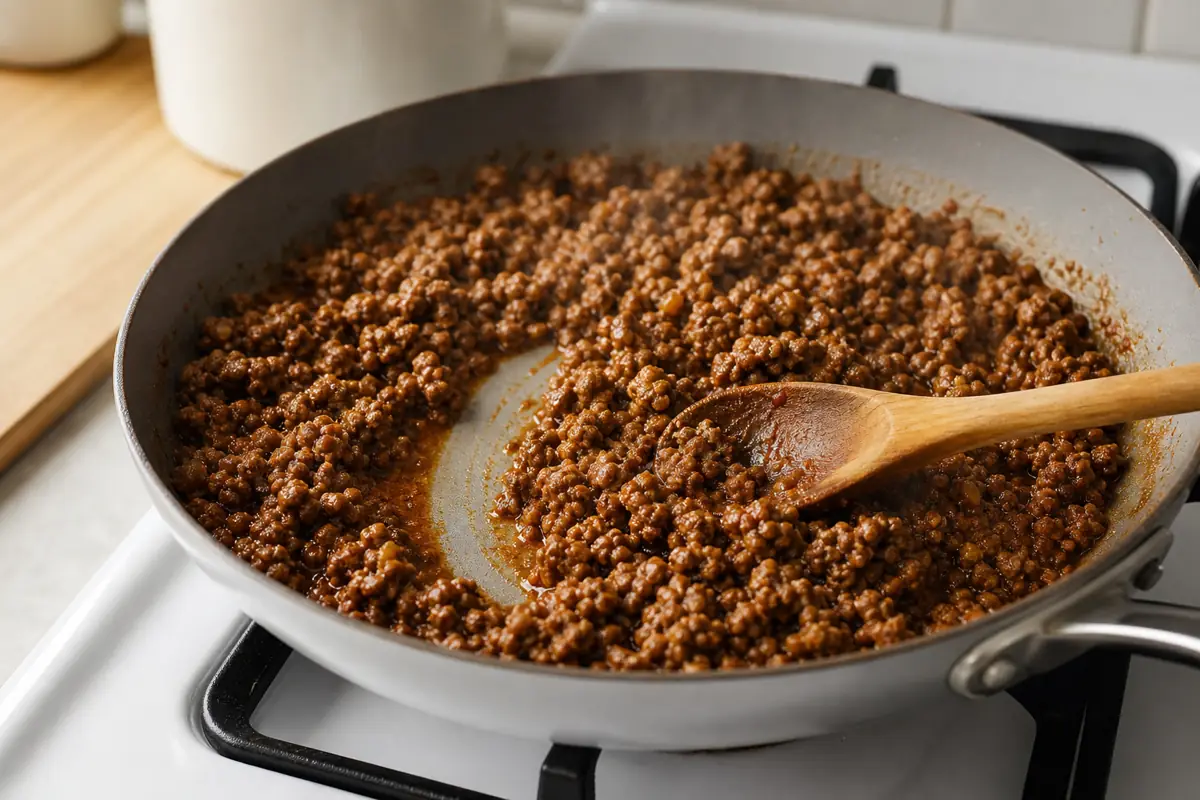
- Start: Liquid pools between pieces
- Middle: Bubbles tighten as water leaves
- Finish: Seasoning clings without a puddle
Brown meat before adding the mix. Browning develops flavor and prevents the spices from sitting in raw meat juices.
Stir the powder through the hot pan for about thirty seconds. Brief heating wakes aroma, but dry powder scorches quickly.
Add liquid as soon as the spices smell fragrant. A narrow pan or very lean filling may need closer to two-thirds cup.
Simmer uncovered for five to eight minutes while stirring. Pan width and burner strength matter more than a rigid timer.
The mixture is ready when a spoon dragged across the pan leaves a clean path for a moment. No watery ring should surround it.
Packet starch can thicken before excess water evaporates. Keep simmering gently so the sauce loses raw starch flavor and coats evenly.
If the pan dries before the filling softens, add liquid one tablespoon at a time. If it stays soupy, use a wider pan and more time.
Can you use taco seasoning on chicken, beans, or vegetables?
Taco seasoning works on chicken, beans, vegetables, fish, potatoes, and rice when the cooking method changes with the food.
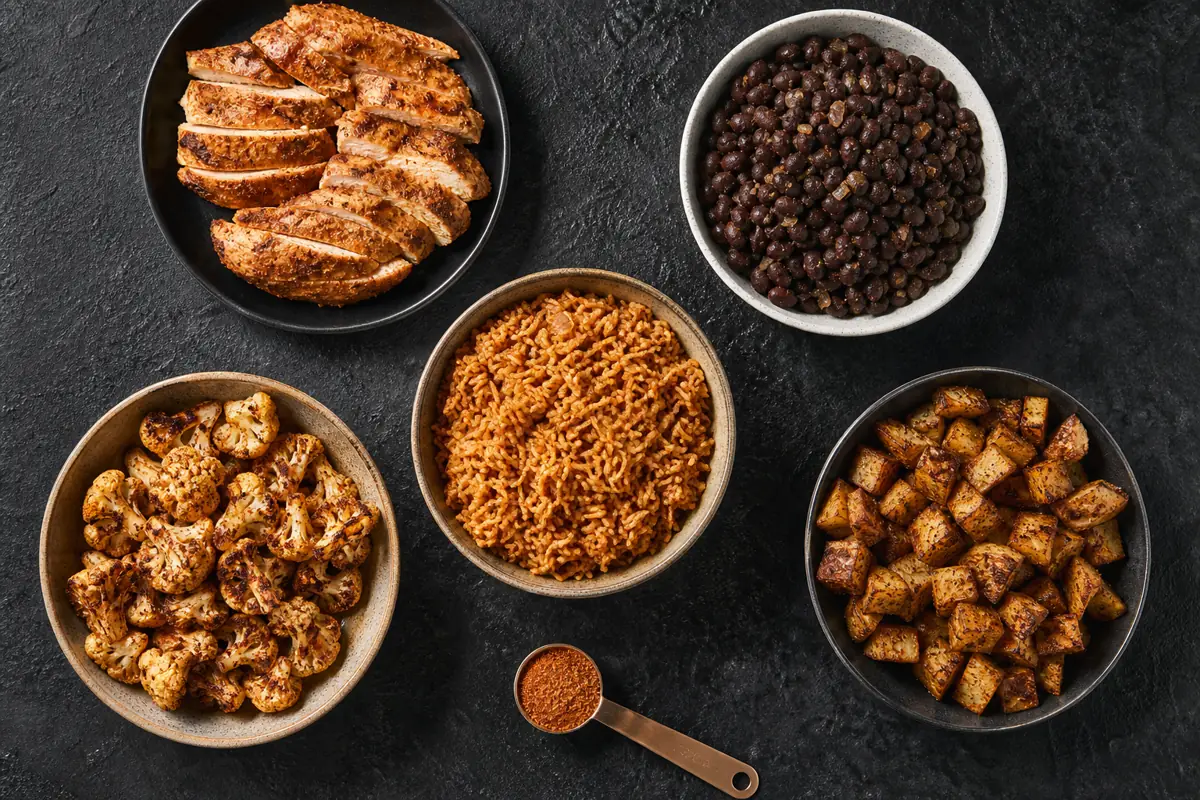
- Oil carrier: Chicken and vegetables
- Liquid carrier: Beans and rice
- Light coating: Fish
For chicken pieces, the blend behaves like a salt-light dry rub when mixed with one tablespoon oil per pound.
Beans need enough liquid to distribute the powder. Add seasoning during the final simmer so cumin does not become muddy through hours of cooking.
Cauliflower, squash, potatoes, and mushrooms take the blend well before roasting. Use oil for adhesion and leave space between pieces.
Fish needs a thin dusting because its surface is delicate and its cooking time is short. Heavy cumin can mask mild fillets.
For rice, stir a modest dose into the cooking liquid and reduce any added salt. Powder sprinkled on finished dry rice will taste chalky.
| Food | Carrier | Timing | Main risk |
|---|---|---|---|
| Chicken | Oil | Before roasting or searing | Scorched powder |
| Beans | Broth | Final simmer | Too much salt |
| Vegetables | Oil | Before roasting | Crowded wet pan |
| Fish | Surface moisture | Just before cooking | Over-seasoning |
| Rice | Cooking liquid | Before covered cooking | Chalky surface powder |
The dry blend does not make every food a taco filling. Fresh salsa, lime, onion, herbs, and texture still determine the finished meal.
How do you reduce salt or replace packet thickener?
Reduce salt by using an unsalted base blend, unsalted liquid, and a final seasoning step after the pan has fully reduced.
Salt-forward blends such as Old Bay seasoning show why the spice jar must be counted in the meal's sodium.
Acid from lime or tomato can brighten a dull filling, but it does not remove sodium. Use it for balance rather than correction by disguise.
For packet-like body, whisk one teaspoon cornstarch into two teaspoons cold water. Stir the slurry into a simmering one-pound batch.
Never add dry cornstarch directly to wet filling because it forms pale lumps. Simmer the slurry briefly until its cloudy look clears.
- Control the base: Store seasoning without salt and add salt to the finished filling.
- Check the liquid: Choose water or unsalted broth when toppings are salty.
- Add body: Use a small cold-water cornstarch slurry only when reduction is insufficient.
- Build flavor: Add lime, tomato, or salsa for brightness after sodium is already correct.
Tomato paste can also add body and savory sweetness. Fry one teaspoon briefly before adding liquid so it loses its raw metallic edge.
What can substitute for taco seasoning, and how should the mix be stored?
The simplest taco seasoning substitute is two parts chili powder plus one part cumin, with paprika, garlic, oregano, and cayenne added when available.
A useful substitute must rebuild separate jobs. Chili powder supplies the base, while cumin restores the recognizable earthy note.
Paprika improves color without much heat, and cayenne restores heat without adding more cumin. Salt the filling separately.
| Available mix | What it keeps | What it misses | Starting use |
|---|---|---|---|
| Chili powder plus cumin | Core pepper and earthiness | Aromatics and herb | 1 1/2 tbsp per lb |
| Chili powder alone | Pepper, color, some aromatics | Clear cumin note | 1 tbsp per lb |
| Paprika, cumin, cayenne | Color, earth, heat | Garlic and oregano | 1 tbsp per lb |
| Adobo seasoning | Garlic, pepper, and savory structure | Usually lacks the same cumin-chile balance | Use half, then add cumin and chile |
Keep the mix airtight, cool, dark, and away from steam. Use a dry spoon and avoid storing the jar beside the stove.
Make only a few months' supply because ground chile and cumin lose aroma after repeated air exposure. Smaller jars leave less empty air.
Replace the blend when it smells mostly dusty or needs twice the old amount. Discard it for moisture, mold, insects, or an abnormal odor.
Whole spices keep aroma longer than powders, but taco seasoning depends on fine, even dispersion through the filling.