
Fresh or Dried Oregano: Which One Does Your Dish Need?
Dried oregano brings sturdy, savory bite to sauce, pizza, and beans, but only when heat and fat draw it out.
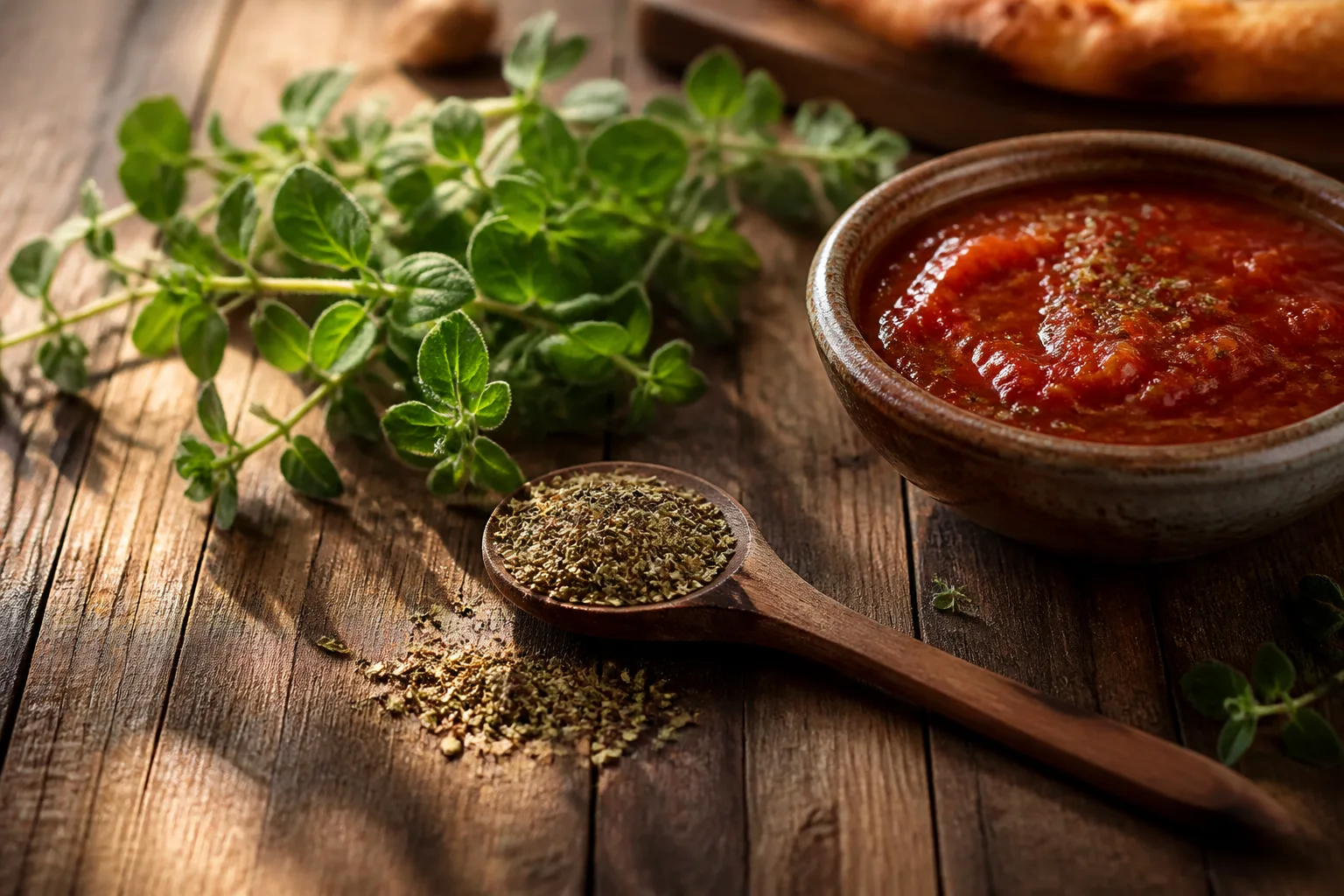
Dried oregano usually beats fresh for sauce, pizza, beans, and rubs, because drying concentrates its savory bite. Mediterranean and Mexican oregano are different plants, so swapping them changes the dish. Add oregano early with fat or liquid so its sharp, slightly bitter edge softens into the food.
Why is dried oregano often better than fresh?
Oregano is a bold, pungent Mediterranean herb, and it breaks a rule most herbs follow. Most herbs fade when dried, but oregano is the exception.
Work out the dried oregano for your recipe
Dried leaves often season a dish better than fresh sprigs, which is the opposite of what most cooks expect from an herb.
Drying concentrates the pungent oils that give oregano its savory bite. A teaspoon of dried oregano can outmuscle a tablespoon of fresh.
Fresh oregano tastes greener and sharper, almost grassy.
It works as a late lift, but it rarely carries a long-simmered sauce the way dried does.
This flips the usual rule. With most herbs the fresh to dried conversion is a downgrade, but oregano loses little and gains staying power.
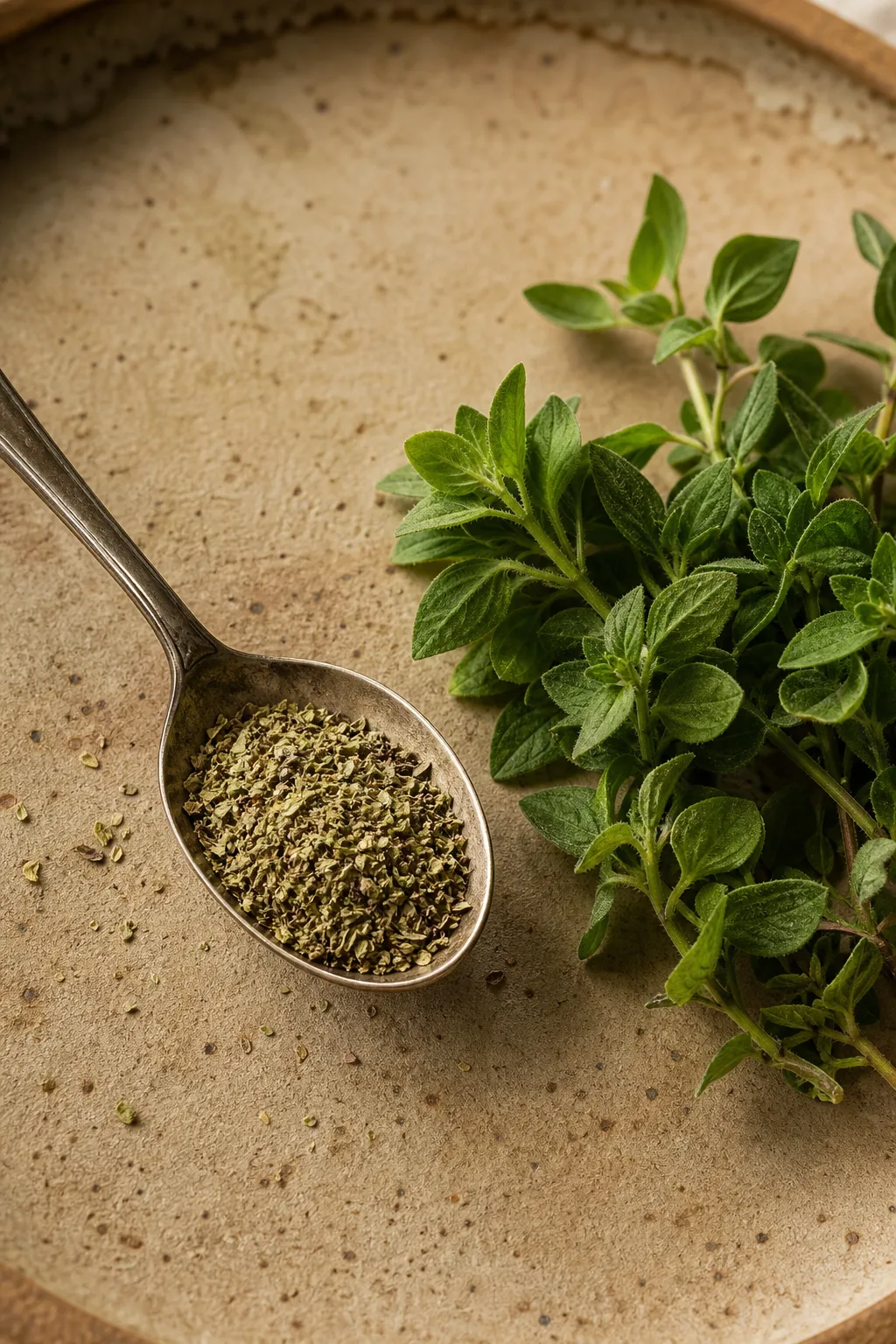
- Dried oregano: Concentrated and sturdy, built for sauce, beans, and rubs.
- Fresh oregano: Green and sharp, best torn over a dish near the end.
- Rough ratio: Use about one part dried for three parts fresh.
For a weeknight tomato sauce, dried oregano is the practical choice.
Keep fresh for a summer salad or a plate you finish with a raw scatter.
The reason oregano dries so well is structural. Its small, sturdy leaves hold aromatic oil tightly, so they survive drying instead of collapsing like tender basil or parsley.
This is also why Italian and Greek kitchens reach for the dried jar by default.
Their classic sauces and roasts were built around dried oregano, not the fresh sprig.
What is the difference between Mediterranean and Mexican oregano?
Two very different plants are sold as oregano. Grabbing the wrong one can pull a dish toward the wrong cuisine.
Mediterranean oregano is the pizza-and-Greek herb, warm and savory with a minty, thyme-like edge. It belongs to the same family as thyme and marjoram.
Mexican oregano is a different species with citrus and mild licorice notes.
It stands up to cumin, chiles, and long-simmered chili.
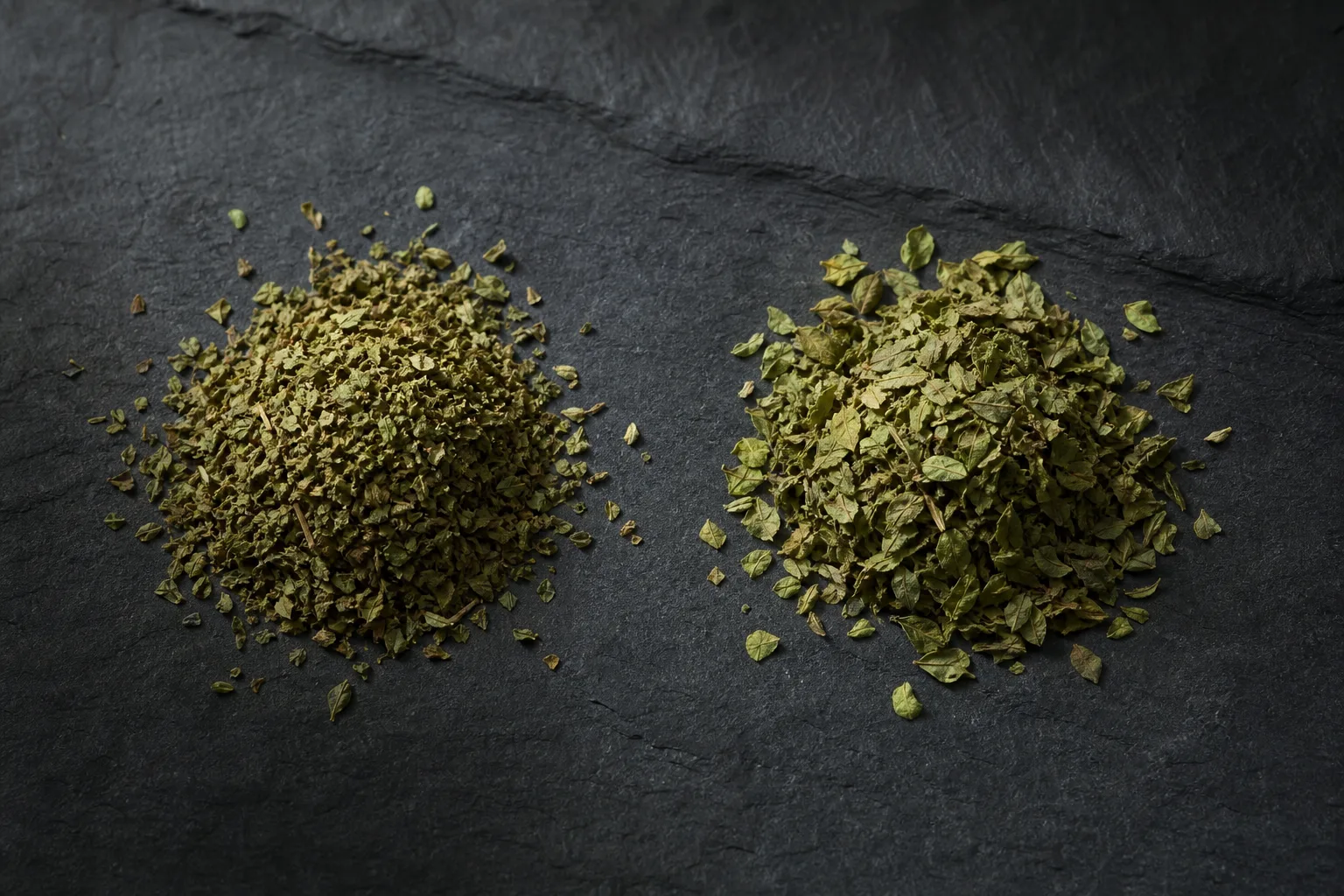
- Mediterranean: Warm, minty, thyme-like. Use for pizza, Greek lamb, and tomato sauce.
- Mexican: Citrus and light licorice. Use for chili, salsa, and bean pots.
- The swap risk: Mexican oregano in a marinara tastes off, and the reverse tastes flat.
If a jar just says oregano, it is almost always Mediterranean. Buy Mexican oregano by that name when a recipe calls for it.
You can tell them apart by smell once you know the cue.
Mediterranean reads warm and herbal, while Mexican has a brighter, lemony lift underneath the savory note.
The distinction matters most in chili and salsa. That citrus lift is part of what makes a pot of Mexican cooking taste right.
When should you add oregano while cooking?
Raw dried oregano tastes harsh and a little bitter.
It needs fat, acid, or simmering time to round out.
Add it early. Stir dried oregano into the base of a tomato sauce with the garlic, and let it cook down for the flavor to spread.
This is the opposite of a delicate herb.
Where you time basil or mint at the end, oregano wants the early, hot part of the cook.
That reverses the usual timing for delicate herbs. Oregano rewards patience in the pot, not a last-second flourish.
Blooming works well too. Rubbing dried oregano into warm oil before the tomatoes go in wakes it up, the same idea behind blooming spices in oil.
In a raw dressing, give it time instead of heat.
Let dried oregano sit in the oil and vinegar for ten minutes so it hydrates before you toss the salad.
Watch the amount, because oregano can take over. A little reads as savory backbone, but too much turns a sauce dusty and medicinal.
Crush dried oregano between your fingers as it goes in.
Breaking the leaves releases more aroma than dropping them in whole.
- Tomato sauce: Add dried oregano with the onion and garlic, not at the end.
- Pizza: Scatter it on before baking so the oven heat carries it into the cheese and sauce.
- Vinaigrette: Steep dried oregano in the oil and acid for ten minutes first.
- Grilled lamb: Rub it into the meat with oil and let it sit before the fire.
How much dried oregano should you use?
Start with one-half teaspoon of dried oregano for four servings when the herb supports tomato, beans, or roasted vegetables. Use a full teaspoon when oregano is meant to lead, as it does in a simple marinara, a Greek-style lamb rub, or a pot of chili.
The right amount depends on the jar as much as the recipe. Newly opened whole leaves can taste twice as forceful as oregano powder that has sat beside the stove for a year, so rub a pinch between your palms and smell it before measuring.
Fresh oregano is not a spoon-for-spoon substitute for dried. One tablespoon of chopped fresh leaves is a useful starting replacement for one teaspoon dried, but fresh brings a greener, more peppery finish instead of the same concentrated savory note.
| Dish | Starting amount for 4 servings | When to add | Adjustment cue |
|---|---|---|---|
| Tomato sauce | 1/2 to 1 teaspoon dried | With onion and garlic | Add more only after 15 minutes of simmering |
| Bean pot or chili | 1 teaspoon dried | After the aromatics, before the liquid | Use Mexican oregano when citrus lift belongs |
| 12-inch pizza | 1/4 to 1/2 teaspoon dried | Crushed over the sauce before baking | Stop when the herb is visible across the pie, not piled |
| Vinaigrette | 1/2 teaspoon dried | Steep in oil and acid for 10 minutes | Thin with more dressing if it tastes dusty |
| Lamb or chicken rub | 1 teaspoon dried | Mix with oil for about 1 pound of meat | Add lemon after cooking if the herb feels heavy |
Ground oregano powder exposes more leaf surface than loosely crumbled oregano. Start with about half as much powder by volume, then taste the cooked food before adding the rest.
Use an early dose to season the dish and a small final pinch only when you also need a sharper aroma.
Too much oregano makes food bitter, dusty, and medicinal. Increase the unseasoned sauce, beans, vegetables, or meat first, then restore salt and acid after the larger batch tastes balanced.
Sugar does not remove the excess herb. It leaves the dish sweet as well as bitter.
Where oregano belongs: pizza, beans, lamb, and chili
Oregano is a backbone herb for bold, savory food. It stands up to tomato, garlic, olive oil, and charred meat without disappearing.
| Dish | Which oregano | How to use it |
|---|---|---|
| Margherita pizza | Mediterranean, dried | Scatter on before baking |
| Greek lamb and salad | Mediterranean, dried or fresh | Rub on meat; sprinkle on salad late |
| Marinara and ragu | Mediterranean, dried | Add early with the aromatics |
| Chili and bean pots | Mexican, dried | Simmer in for citrus depth |
| Salsa roja | Mexican, dried | Bloom briefly with the chiles |
Read the table as a starting point, not a rule.
The key move is matching the oregano type to the cuisine before you worry about the amount.
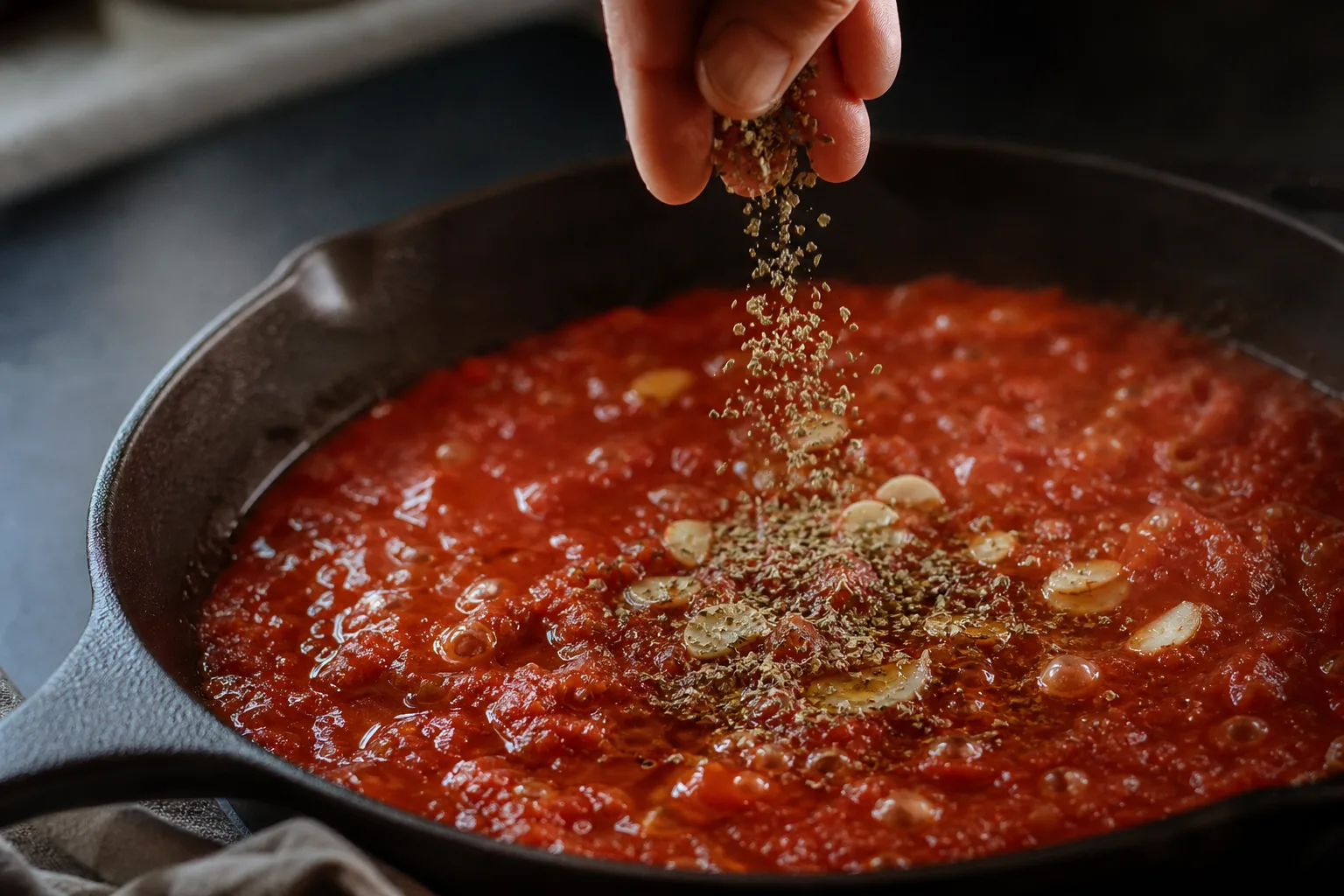
- Pizza and pasta: Mediterranean oregano is the default Italian herb.
- Beans and chili: Mexican oregano adds citrus lift to long-cooked pots.
- Grill and roast: Both types survive high heat that would scorch soft herbs.
It pairs naturally with garlic, lemon, tomato, and lamb. A Greek marinade of oregano, lemon, and olive oil is proof of how little else it needs.
Because it survives long cooking, oregano is easy to layer across a dish.
Add some early for depth, then crumble a fresh pinch on top at the end for aroma.
Oregano also anchors many dried herb blends. It sits at the center of za'atar style mixes and most Italian seasoning.
Keep it away from delicate dishes.
Oregano bulldozes fine fish, egg custards, and subtle cream sauces that need a gentler herb.
Buy oregano for potency, not for looks
Good dried oregano smells sharp and almost peppery through the jar. Weak oregano smells like dry hay and does little for the food.
Greek and Turkish oregano have a strong reputation for potency.
If a label names the origin, that is usually a good sign.
Whole dried leaves hold flavor longer than pre-ground oregano powder. Buy leaves and crush them yourself as you cook.
Oregano sold on the stem, dried in bunches, is often the most aromatic.
Strip the leaves and discard the woody stems before using.
In Greece this on-the-stem oregano is called rigani, and cooks crumble it straight over grilled meat and salads. It is worth seeking out for that reason.
Store the jar away from the stove. The same warmth and light that ruin other dried herbs flatten oregano within a year.
If a spoonful no longer smells sharp, it has gone the way of other spices past their prime.
Replace it rather than adding more.
Fresh oregano and dried oregano need different buying checks. Choose fresh stems with firm green leaves and a peppery smell, with no black patches, yellow edges, or wet decay inside the package.
For dried oregano, the label should name the type when that distinction matters. A jar marked oregano usually means a Mediterranean Origanum species, while a recipe for pozole, chili, or salsa may require a package explicitly marked Mexican oregano.
Leaf form gives you more control than fine powder. Large flakes should still show green or olive color, and rubbing them should release a sharp herbal aroma before they touch the pan.
Crumble a few leaves from on-the-stem Greek oregano before buying when possible, because stems alone do not prove quality and haylike aroma means a weak bunch.
- Fresh bunch: Look for firm green leaves, dry cut ends, and no slimy spots.
- Mediterranean jar: Choose for tomato sauce, pizza, Greek food, and most recipes that simply say oregano.
- Mexican package: Choose for citrusy chile sauces, beans, pozole, and Mexican-style chili.
- Dried leaf: Prefer recognizable flakes over fine powder when you want to judge freshness and control the dose.
Wrap fresh oregano loosely in a barely damp paper towel and refrigerate it in a bag or lidded container. Use it within a few days, before the leaves darken or lose their clean peppery smell.
Freeze extra fresh leaves for cooked dishes rather than salads. Chop them into a small amount of oil, freeze portions, and add a frozen piece to sauce or beans, since thawed leaves lose the texture needed for a fresh garnish.
Keep dried oregano airtight in a cool, dark cabinet and open the jar away from steam. Whole leaves retain aroma better than powder, but the calendar is less useful than the palm test.
Rub a pinch and replace the jar when it smells like paper or hay. Adding twice as much stale oregano only adds dry leaf texture without restoring the missing aroma.
Substitutes that keep the pungency
An oregano substitute has to match its pungency and its ability to hold up in cooking. Soft herbs fade where oregano would stay clear.
Marjoram is the closest stand-in, since it is a milder cousin.
Use a little more, because it lacks oregano's sharp edge.
Thyme is the next best choice for Italian and Greek food. It brings a similar savory backbone, though it leans woodier and less peppery than oregano.
| Cuisine or dish | Closest match | How to adjust |
|---|---|---|
| Italian tomato sauce | Marjoram or thyme | Use a bit more marjoram |
| Greek lamb | Thyme plus a pinch of mint | Keep the amount similar |
| Pizza | Italian seasoning | Already oregano-forward |
| Mexican chili | Cumin plus a little marjoram | Add lime for the citrus note |
For Mexican oregano specifically, no Mediterranean herb copies the citrus note. A pinch of marjoram with lime zest gets you closer than plain oregano.
Dried basil is a weak fallback for oregano and changes the character, so treat it as a last resort.
It works only in Italian dishes where a softer, sweeter herb still fits.
When you are missing both, lean on the whole flavor family. The substitute-by-job approach matters more than finding one perfect leaf.