
Where Should You Buy Spices Online Without Getting Stale Jars?
Choose smaller, clearer, better-packed spices before chasing the cheapest bulk jar.
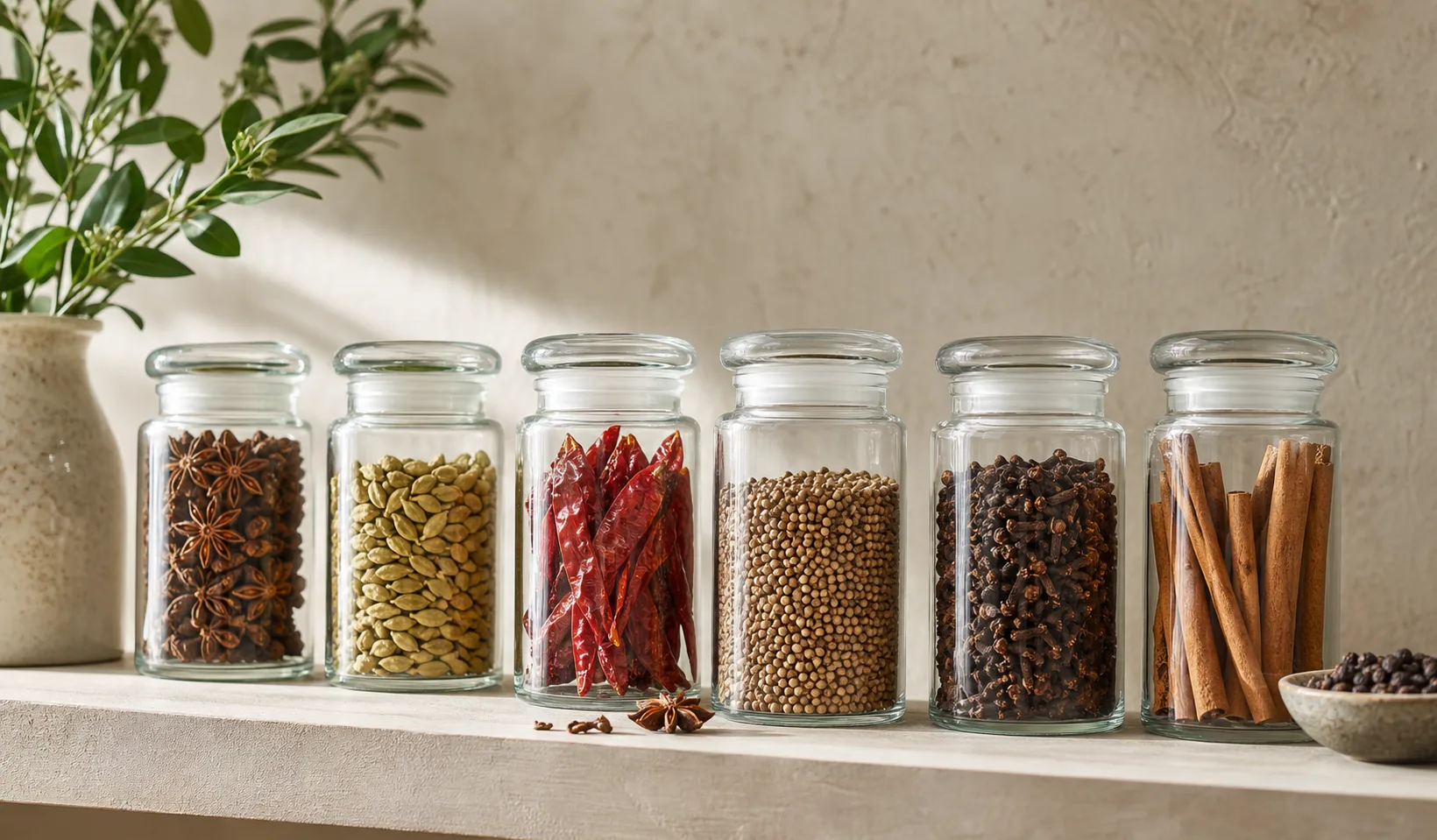
Buy spices online from sellers that identify the spice clearly, protect it from air and light, and give enough date, batch, origin, or quality detail to hold the product accountable. Whole spices are often safer freshness bets, while ground spices need small packs and faster turnover. Avoid implausibly cheap saffron, vanilla, turmeric, paprika, cinnamon, and chile powders with vague labels.
What makes an online spice seller worth trusting
Buying spices online should start with trust signals, not a best-store list. A good seller makes freshness and identity visible.
Spice buying decisions and storage habits belong together because a good jar can still fail in a hot warehouse or huge bag.
| Signal | Good sign | Red flag |
|---|---|---|
| Identity | Specific spice form and ingredient list | Vague premium copy |
| Freshness | Harvest, pack, lot, or best-by detail | No date except marketplace listing |
| Size | Small jars and refills available | Only oversized bulk containers |
| Packaging | Sealed, resealable, light-aware pack | Loose powder or broken seal |
The seller does not need to reveal every farm for every jar. It should reveal enough to show accountability.
If the page only says gourmet, exotic, or premium, keep looking. Those words do not protect dinner.
The freshness test before checkout
Freshness online is a turnover question. Buy the amount your kitchen can use before aroma fades.
Online, the whole-versus-ground choice changes risk because grinding exposes more surface area to oxygen.
- Buy whole: Peppercorns, cumin, coriander, cardamom, cloves, nutmeg, allspice, fennel, and star anise protect aroma better.
- Buy ground small: Turmeric, paprika, ginger, cinnamon powder, garlic powder, onion powder, and blends need fast turnover.
- Skip giant jars: A low price fails when half the container tastes flat by the time you reach it.
- Check refill logic: A reserve pouch can work if your working jar stays small, dry, and clean.
In the dish, whole cumin seed is often a strong online buy because you can smell, toast, and grind it when needed.
Ground spice is not automatically bad. It just asks for better dating, smaller packs, and faster use.
Labels that actually help
A helpful label answers identity, timing, and accountability. It should not make you decode marketing fog.
On an online label, harvest date, pack date, and lot code are useful because they make the product traceable.
| Detail | Why it helps | Where it matters most |
|---|---|---|
| Botanical or common identity | Confirms what plant or form you bought | Cinnamon, vanilla, pepper, saffron |
| Origin or region | Explains style and risk | Paprika, saffron, cardamom, pepper |
| Packed-on date | Marks oxygen exposure after processing | Ground spices and blends |
| Lot or batch code | Supports recall and quality tracking | All online spices |
For high-value orders, vanilla beans need extra label clarity because origin, grade, moisture, and bean count change the purchase.
Best-by dates are quality estimates. They do not prove the spice was vivid when it shipped.
High-risk spice categories
Some spices deserve more caution because value, color, or powder form makes fraud easier. The answer is scrutiny, not panic.
With high-value spices, saffron threads are the obvious example. Very cheap saffron usually means weak, mixed, dyed, or fake material.
| Spice | Why risk rises | Better buying signal |
|---|---|---|
| Saffron | High value and easy dilution | Whole threads, origin, lab or grade detail |
| Turmeric | Color-driven powder | Trusted seller and clear batch detail |
| Paprika and chile powder | Color can hide age or dye | Fresh aroma and clear pepper style |
| Cinnamon | Lead alerts and species confusion | Supplier testing and specific identity |
| Vanilla | High price and moisture variation | Origin, grade, bean count, sealed pack |
Color alone is not proof of quality, so bright ground turmeric should still smell earthy and alive.
If a high-value spice looks too cheap, ask what had to disappear: quality, identity, testing, or freshness.
Shipping and packaging risks
Shipping exposes spices to heat, light, crushing, and time. Packaging has to protect the aroma before your pantry can.
When the order arrives, sealed jars matter more than rescue storage after weeks of air exposure.
- Good packaging: Sealed inner bags, tins, dark pouches, tight lids, and resealable refills reduce exposure.
- Bad arrival: Broken seals, powder dust, wet clumps, insects, mold, or musty odor mean discard or return.
- Summer heat: Do not leave delicate spices or vanilla on a hot porch longer than necessary.
- Transfer plan: Move reserve spices into clean airtight containers when the original pack cannot reseal well.
During shipping and display, paprika color fades with poor storage, so clear bags and sunny shelves are bad signs.
A beautiful pouch still needs a cool, dark home. Packaging buys time, not immortality.
Organic, single-origin, and lab-tested claims
Claims can help, but no claim replaces identity and freshness. Organic does not automatically mean fresher or fraud-proof.
For marketing claims, organic spice labels speak to farming and certification rules. They do not solve stale storage by themselves.
| Claim | Useful when | Limit |
|---|---|---|
| Organic | You care about certified production rules | Does not prove freshness |
| Single-origin | Regional flavor matters | Still needs turnover and storage |
| Lab-tested | Batch results are tied to the product | Vague testing copy is weak |
| Non-irradiated | You prefer that processing choice | Does not guarantee safety or quality |
Use claims as supporting evidence. The strongest pages show form, source, date, packaging, and testing together.
If a seller hides basic information behind a fancy claim, treat the claim as decoration.
What to do when the package arrives
Open the package like an inspection, not a celebration. You are checking food identity and aroma.
A package should not enter your pantry if musty spice odor, visible mold, insects, wet clumps, or a broken seal appears.
| Check | Pass | Fail |
|---|---|---|
| Seal | Intact and clean | Broken, dusty, leaking, or damp |
| Aroma | Clear and ingredient-specific | Dusty, musty, flat, or chemical |
| Label | Matches order and gives traceability | No lot, no origin, wrong form |
| Storage move | Small working jar and sealed reserve | Big open bag beside the stove |
After opening, ground spice shelf life starts feeling short. Label the opening month.
A good online spice purchase ends in a usable pantry system. Otherwise, the fresh jar becomes stale inventory.
How much to buy online
The right amount is the amount you can finish while the aroma still has a clear job. Cheap bulk is not automatically value.
Start with smaller packs for unfamiliar spices. Reorder faster only after the jar proves it belongs in your cooking.
| Spice use | Good buy | Bad buy |
|---|---|---|
| Daily pepper or cumin | Larger whole-spice refill | Tiny jars that run out weekly |
| Occasional paprika | Small ground jar or tin | Large clear bag that sits for a year |
| Expensive saffron | Small verified thread amount | Big bargain pack with vague origin |
| New blend | Trial size | Bulk pouch before you know the flavor |
| Baking vanilla | Clearly labeled beans or extract | Unlabeled pods with no count or origin |
A refill system works when the reserve stays sealed and the working jar stays clean. It fails when both containers sit half open.
When in doubt, buy less and buy sooner. Freshness beats pantry ambition.
When a cheap spice is actually expensive
A cheap spice becomes expensive when you need twice as much, throw half away, or flatten a dish with stale powder.
Price per ounce is only useful after freshness and identity pass. Otherwise, the math rewards the wrong product.
- Weak aroma: You use more spoonfuls and still do not get the flavor you wanted.
- Wrong form: Ground spice saves seconds but may cost flavor in dishes that need whole seeds.
- Huge container: The last half often becomes storage debt instead of food.
- Bad label: Missing origin, date, or lot detail leaves you with no accountability.
- Damaged arrival: Broken seals and moisture force replacement, refunds, or waste.
The best online order should make you cook more confidently the same week it arrives. If it only fills a shelf, it failed.
Treat price as the final comparison, not the first filter.
Which spices deserve extra scrutiny online
Not every spice needs the same level of investigation. High-value, color-driven, and ground products deserve the most scrutiny.
A cheap bag of bay leaves is a different decision from bargain saffron or unlabeled cinnamon. Match the checking effort to the risk.
| Spice category | Why to check harder | What to look for |
|---|---|---|
| Saffron and vanilla | High value invites substitution and weak product | Origin, form, grade, amount, and seller identity |
| Turmeric and paprika | Color can hide age or adulteration | Fresh aroma, clear origin, and batch detail |
| Cinnamon | Species, lead alerts, and powder opacity | Specific identity and seller testing claims |
| Peppercorns and cardamom | Aroma quality varies sharply | Whole form, recent harvest, and intact pods or berries |
| Blends | Many ingredients hide weak components | Ingredient list, salt content, and pack date |
For low-risk daily spices, freshness and turnover may matter more than elaborate origin copy. For expensive spices, vague labels are a warning.
The buyer goal is not paranoia. It is knowing when ordinary shopping rules stop being enough.
- Ask one identity question: Can you tell exactly what plant form or blend you are buying?
- Ask one freshness question: Can you see harvest, pack, lot, or turnover evidence?
- Ask one storage question: Will the package protect aroma until you finish it?
- Ask one use question: Will your household finish this amount before it fades?
If any answer is no, buy a smaller amount or choose a clearer seller.
This checklist also stops overbuying. The best online order should match next month's cooking, not an imaginary pantry future.
For expensive spices, keep the product page or receipt until the first test. That gives you proof if the jar arrives weak or mislabeled.
For everyday spices, reorder from the seller that delivered vivid aroma before. Repeatable quality beats novelty.
If the seller changes packaging, seller name, or sourcing language suddenly, inspect the next order like a new purchase.
Keep one small note on trusted suppliers and dates. It saves you from rebuilding the same research every time.
That note turns a scattered pantry into a repeatable buying system with fewer stale surprises.