
What's Pumpkin Pie Spice, and Is There Pumpkin in It?
A cinnamon-led blend named after a pie, and one ingredient the jar and the recipe disagree about.
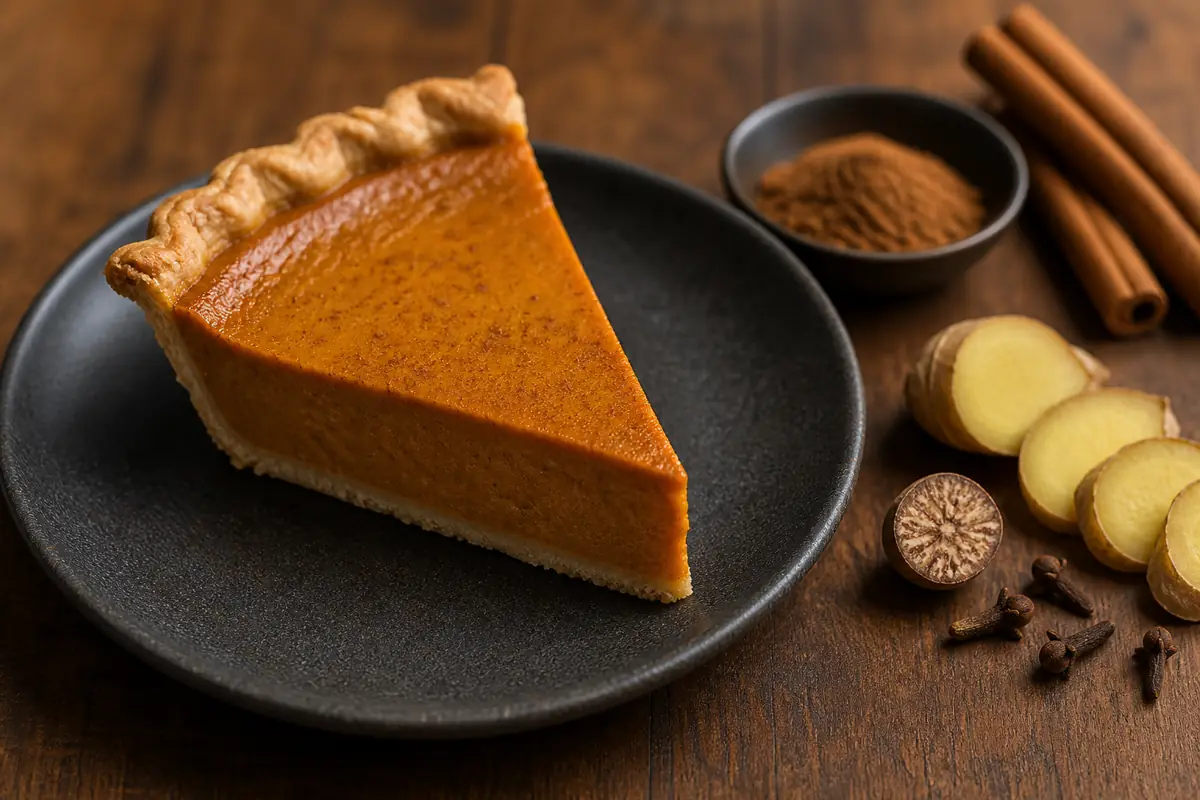
Pumpkin pie spice is a ground mixture of cinnamon, ginger, nutmeg and allspice, usually with a little clove behind them, sold for seasoning autumn baking. There is no pumpkin in it, and on the jar most recipes are imitating there is no clove either.
No pumpkin, and usually four spices
The name describes the pie rather than the contents. There is no pumpkin in the jar and there never has been, in the same way that apple pie spice contains no apple.
What is in it is a ground mixture led by cinnamon, with ginger behind it and smaller amounts of nutmeg and allspice filling out the middle.
- Cinnamon
- 4 parts, and roughly half the blend
- Ginger
- 2 parts, the lift
- Nutmeg
- 1 part, the rounding
- Allspice
- 1 part, the bridge
- Clove
- 1/2 part, or none at all
- Pumpkin
- None, despite the name
Those proportions are a working ratio rather than a standard. No regulation fixes them, brands differ from one another, and the last spice on that list turns out to be the one worth a section of its own.
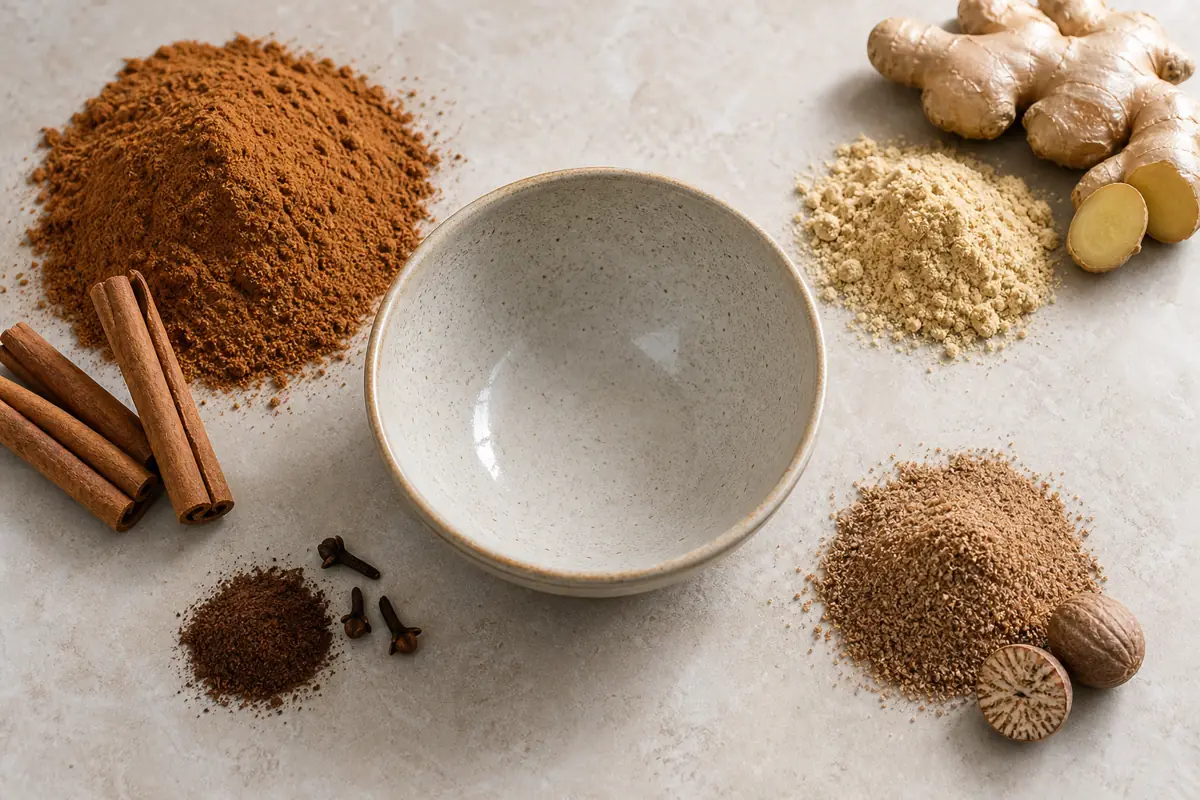
Cinnamon dominating is what makes the blend read as sweet without containing any sugar at all.
The useful consequence of knowing the ratio is that the blend stops being a product and becomes a formula. Anyone with ground cinnamon and three other jars can make it, shift it, or work out in advance what a recipe will taste like without it.
Why the jar and the recipe disagree
Search for a pumpkin pie spice recipe and almost every result includes clove. Pick up the jar those recipes are imitating and clove is not on the label. That is not a small discrepancy, because clove is the most assertive spice in the group by a distance.
The McCormick ingredient list reads cinnamon, ginger, nutmeg, allspice and sulfiting agents. Four spices and a preservative, which is the reference product a great many American recipes were written around.
| Blend | What is in it | What it leans toward | Where it differs |
|---|---|---|---|
| McCormick's jar | Cinnamon, ginger, nutmeg, allspice, sulfiting agents | Sweet and broad, with no sharp edge | No clove at all |
| A typical home recipe | The same four plus clove, usually a half part | Deeper, with a faint medicinal edge | The clove is immediately noticeable |
| Apple pie spice | More cinnamon, less ginger, often no allspice | Sweeter and simpler | Built for fruit rather than custard |
| British mixed spice | Cinnamon, nutmeg, allspice and coriander seed | Rounder, faintly citrus | Coriander, which neither American blend carries |
Ground clove is the dividing line because a half part of it is audible against four parts of cinnamon. Home recipes measure it in fractions for exactly that reason, and the commercial blend sidesteps the problem by leaving it out.
Neither version is wrong.
They are two different blends wearing one name, and a cook who swaps a homemade jar into a recipe written for the bought one will taste the difference in a custard, where there is nothing else to hide behind.
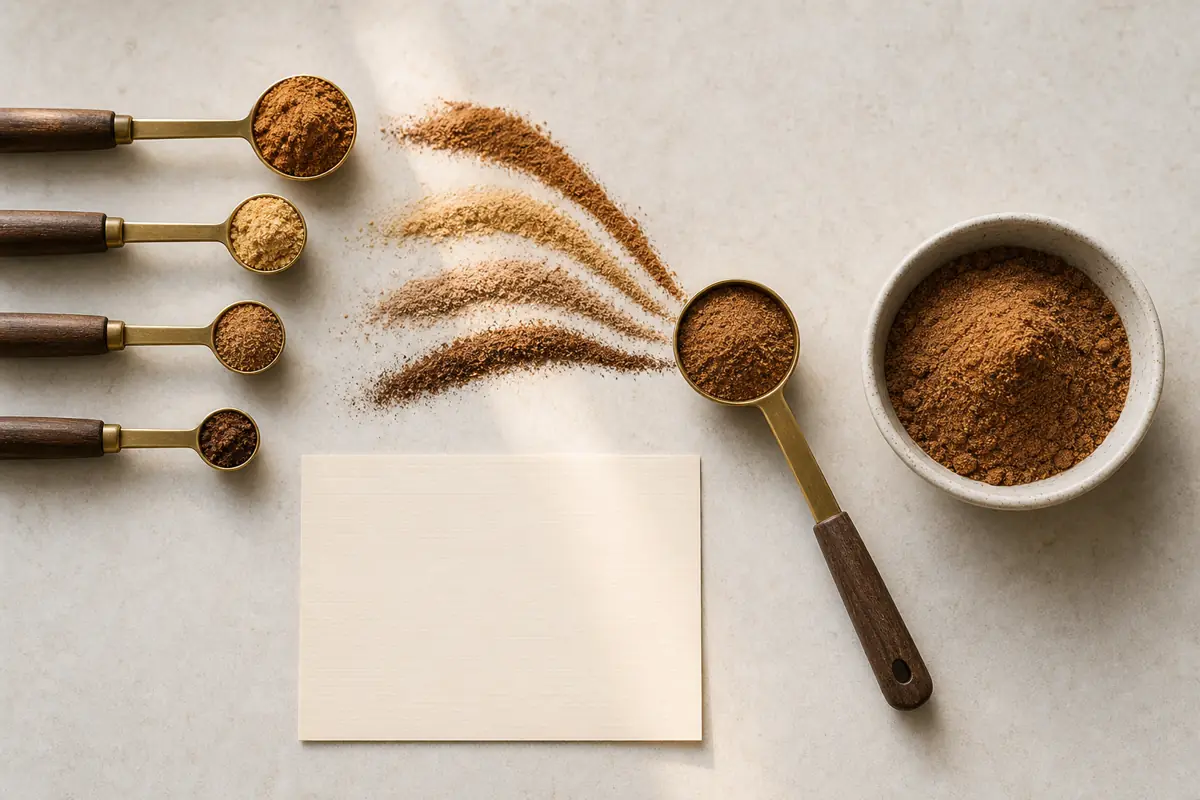
The sulfiting agents are the other thing no recipe reproduces. They sit on the label as a preservative declaration, they are there because a small number of people react to sulfites, and a home blend simply does not contain them. For anyone cooking around that sensitivity, mixing your own is the straightforward answer rather than a hobby.
The same logic applies to apple pie spice, which readers reach for as an equivalent.
What each spice is doing
Cinnamon is what people actually mean when they say pumpkin spice.
At half the blend it sets the character before anything else gets a say, and it carries a sweetness that has nothing to do with sugar. That is why the blend tastes like dessert even on an unsweetened bowl of oats. It is also why using more of the blend to fix a bland pie mostly just makes it taste more of cinnamon.
Ground ginger is the only warm-pungent thing in the mixture, and its job is to stop the whole thing collapsing into sweetness. A batch that tastes flat and cloying is nearly always short of it.
Ground nutmeg works quietly.
It rounds the edges where cinnamon and ginger meet, and it is what a thin homemade version is usually missing without the cook being able to name the fault. Adding more cinnamon in its place makes the problem worse.
Ground allspice is a bridge more than a flavour of its own. It reads as something between the sweet and the pungent ends, which is exactly why a blend without it tastes like two spices rather than four, even when all the other quantities are right.
How much to use, and in what
A 9-inch pumpkin pie takes somewhere between one and a half and two and a half teaspoons, depending on the recipe and how much filling the shell holds. That is the dose the blend is named for, and everything else is scaled against it.
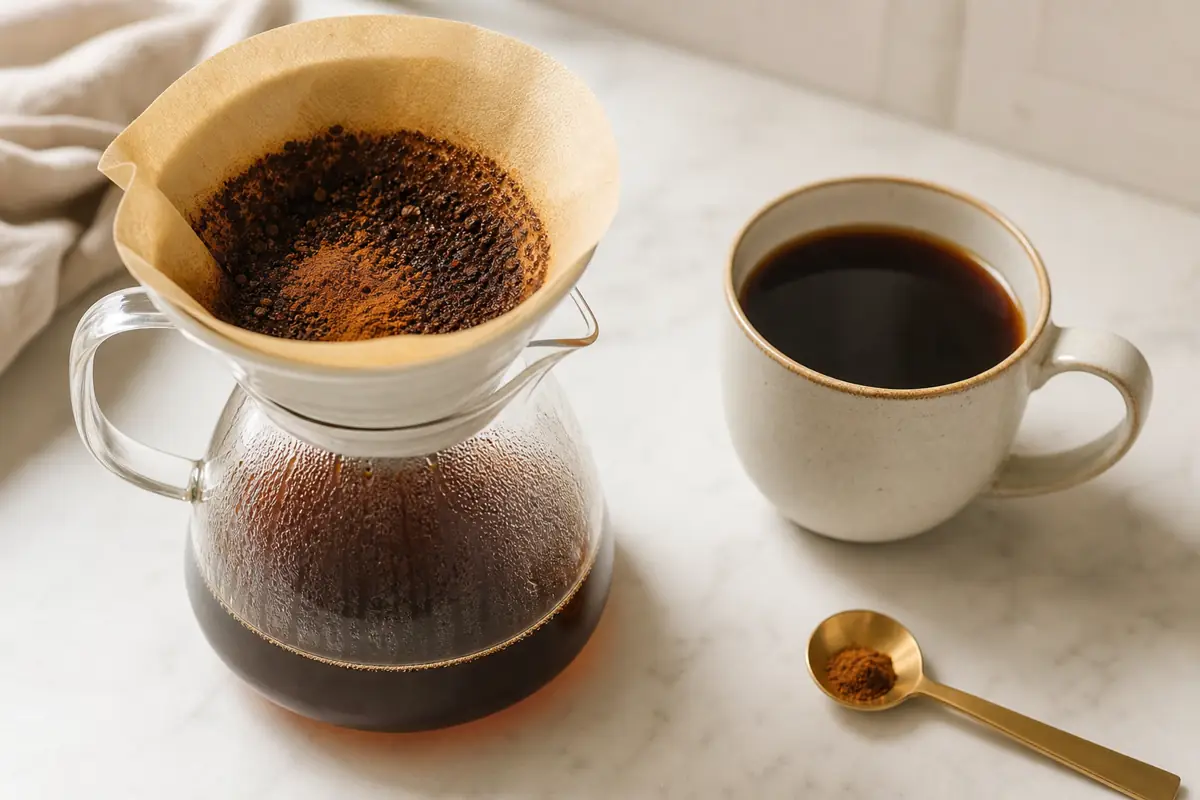
A cup of coffee takes a pinch.
The gap is that wide because a custard is a large volume of mild dairy waiting to be flavoured, while a drink is a small volume of something already strongly flavoured. Putting a baking spoonful in a cup does not make it stronger. It makes it gritty and faintly medicinal, because ground spice does not dissolve.
| Where it goes | Starting amount | Why that amount | When it goes in |
|---|---|---|---|
| A 9-inch pumpkin pie | 1 1/2 to 2 1/2 tsp | A large volume of mild custard to carry it | Whisked into the filling |
| Coffee or a latte | A generous pinch | Small volume, already strongly flavoured | Stirred into the warm milk, not dusted on last |
| Oats, yoghurt and baking | 1 to 2 tsp per batch | Dilution across a batter hides it | With the dry ingredients |
| Roast squash or carrots | 1/2 tsp per 500 g | Working against fat and salt rather than sugar | Tossed with the oil before roasting |
Stirring the pinch into warm milk before it meets the coffee is what keeps it suspended rather than settling as sediment at the bottom of the cup.
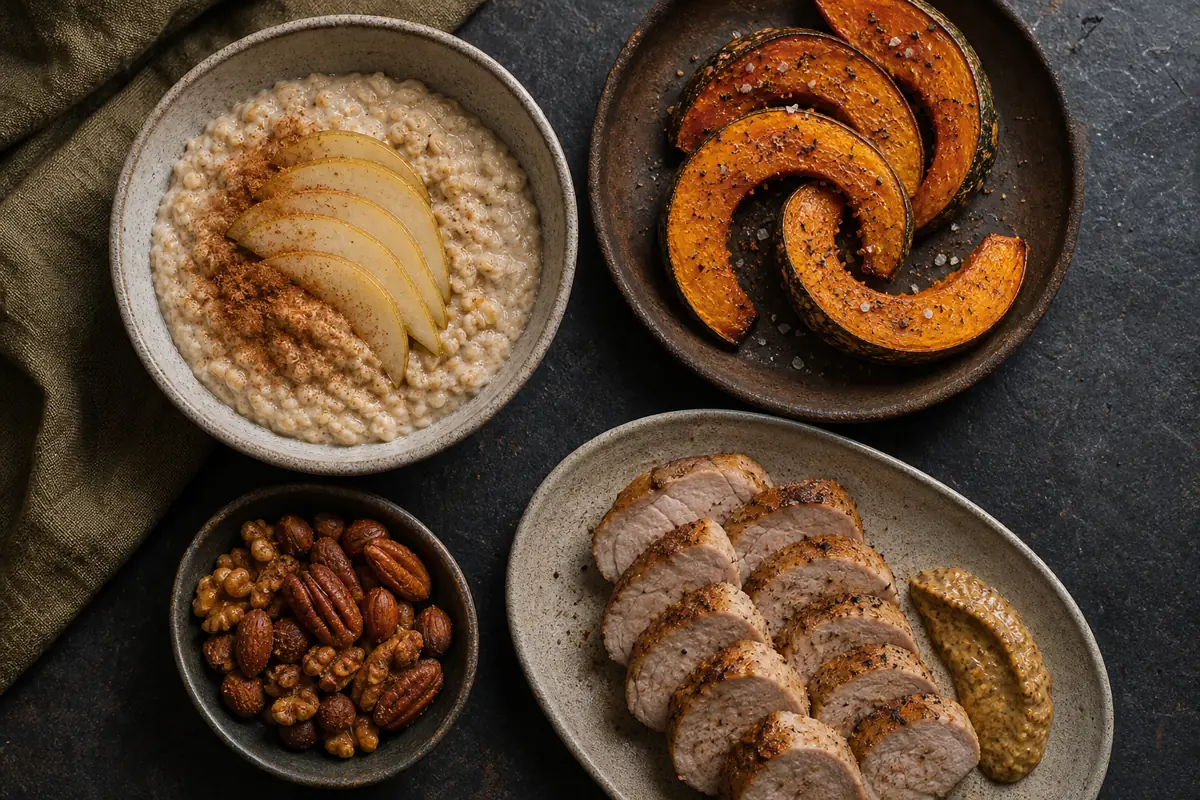
The savoury use is the one most people never try. Tossed with oil onto squash, carrots or parsnips the blend behaves as a warm seasoning rather than a dessert note, because salt and fat pull it in a completely different direction.
Baking sits between the two, and dilution is the thing to watch. A loaf spreads the same spoonful across several times the volume of a pie, so a quantity that tastes correct in a custard will read as almost nothing in a cake. Weighing rather than spooning helps here, and the spoon-to-gram figures are worth having if you bake the same thing often.
Mixing your own, which is also the substitute
Making the blend and substituting for it are the same job. It is four or five spices that most kitchens already keep, so an empty jar is an inconvenience rather than an emergency. That also means there is no reason to buy it again once you know the ratio.
The order matters only for accuracy.
The largest measure goes first so the small ones can be judged against a visible volume rather than guessed at in an empty bowl.
- Start with the cinnamonFour parts, which will look like far too much. It is roughly half the finished blend, and every other measure is read against it.
- Add ginger for liftTwo parts. This is the proportion to raise first if a previous batch tasted flat or oversweet.
- Nutmeg and allspice nextOne part each. Grating the nutmeg fresh at this point is the single biggest advantage a home blend has over a bought one.
- Decide on clove lastA half part, or none at all. Taste the blend without it first, because it cannot be taken back out afterwards.
Leaving the clove out gives something close to the commercial jar and putting it in gives the version the recipes describe. Knowing that the choice exists, and that it is yours, is most of the value in mixing it yourself. Nothing else in the formula is contested.
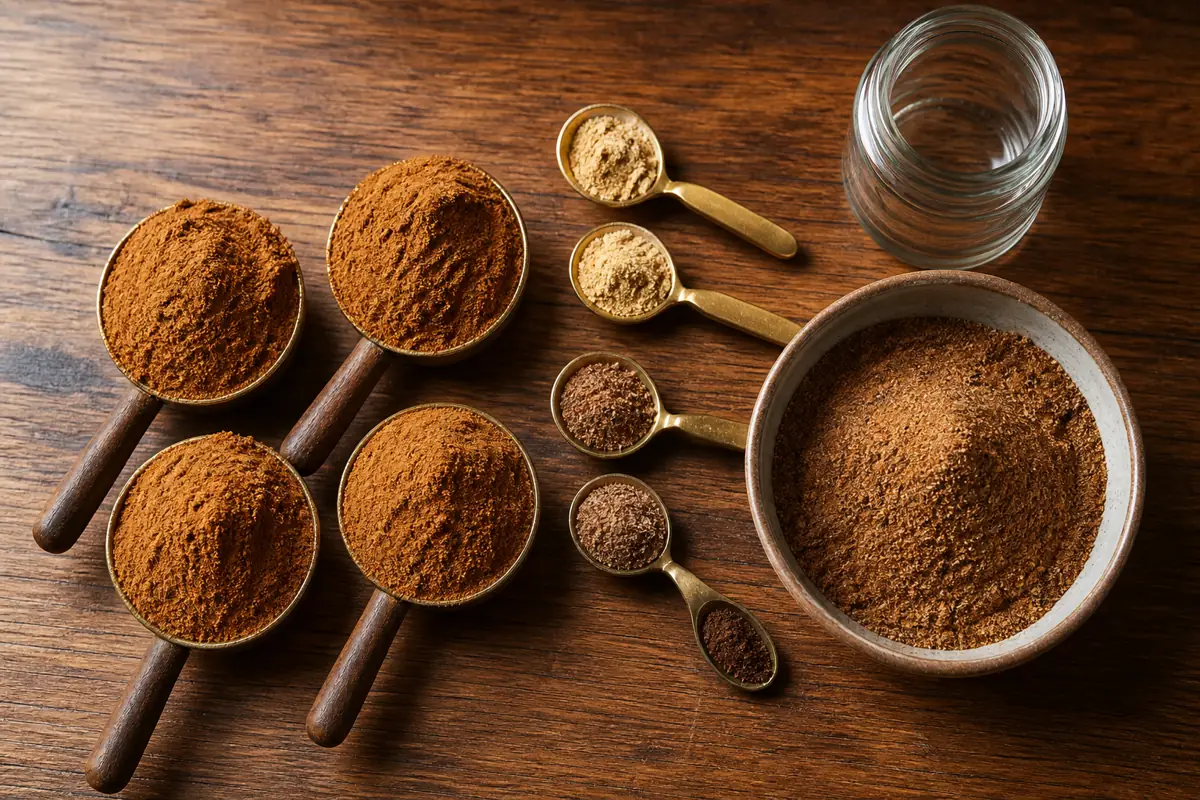
More ginger lightens the blend and more nutmeg deepens it.
Those two levers cover almost every complaint anyone has about a batch, and they are far more useful than adding a sixth spice. With no allspice in the house, a little extra cinnamon and a pinch of clove covers most of its job, while whole nutmeg grated fresh improves any version of the mixture more than the exact proportions do. Ground mace is the closer stand-in for nutmeg itself, if you happen to keep it.
Can it replace cinnamon?
Sometimes, and the honest answer depends on what is being made.
The arithmetic is simple. The blend is about half cinnamon, so a teaspoon of it delivers roughly half a teaspoon of cinnamon plus a quarter teaspoon of everything else.
Whether that matters comes down to how exposed those other spices are. In a busy, strongly flavoured liquid they disappear, and in something pale and simple that was meant to taste of one spice they announce themselves.
That test answers the question better than any rule about sweet against savoury does.
- In a drink, usually yesCoffee, hot chocolate and chai already have enough going on that the extra ginger and nutmeg pass unnoticed, and often improve them.
- In a dough, with careBelow about a teaspoon the difference is small. Above that the clove and allspice start showing up in something meant to taste of cinnamon alone.
- In a savoury dish, noAgainst salt and fat the ginger and allspice read as dessert, which is the one swap that actively misleads.
The reverse swap is the weaker one. Cinnamon alone where the blend was wanted gives a dish that tastes correct and one-dimensional, and it is the ginger people miss without being able to name it.
How long a jar stays worth using
The trouble with a seasonal blend is that the jar sits for eleven months and then gets used in a week. That is a long time for a ground mixture, and considerably longer than it stays balanced.
What happens to an old jar is not that it goes quiet.
It goes out of balance, which is subtler and harder to catch. Ginger fades first and fastest, so a jar a year old reads sweeter and flatter than a new one. Cinnamon holds its aroma longest, which means the jar still smells broadly right at the moment you open it and has already stopped tasting right.
None of this makes an old jar a problem to eat. The pie comes out as a duller version of the one you were expecting. That is a quiet disappointment rather than a failure, and it usually gets blamed on the recipe.
Anyone who bakes with these spices through the year will get more out of keeping them as singles than out of a seasonal jar. The ratio above is what makes that practical, since the blend can be mixed a teaspoon at a time whenever it is actually wanted.
For a single pie once a year the small jar is still the sensible buy, and the single-spice route is there for the years you forget to buy one.