
What Is Mace Spice, and When Should You Use It?
Choose the lacy aril by form, extraction time, color, and the food carrying its aroma.
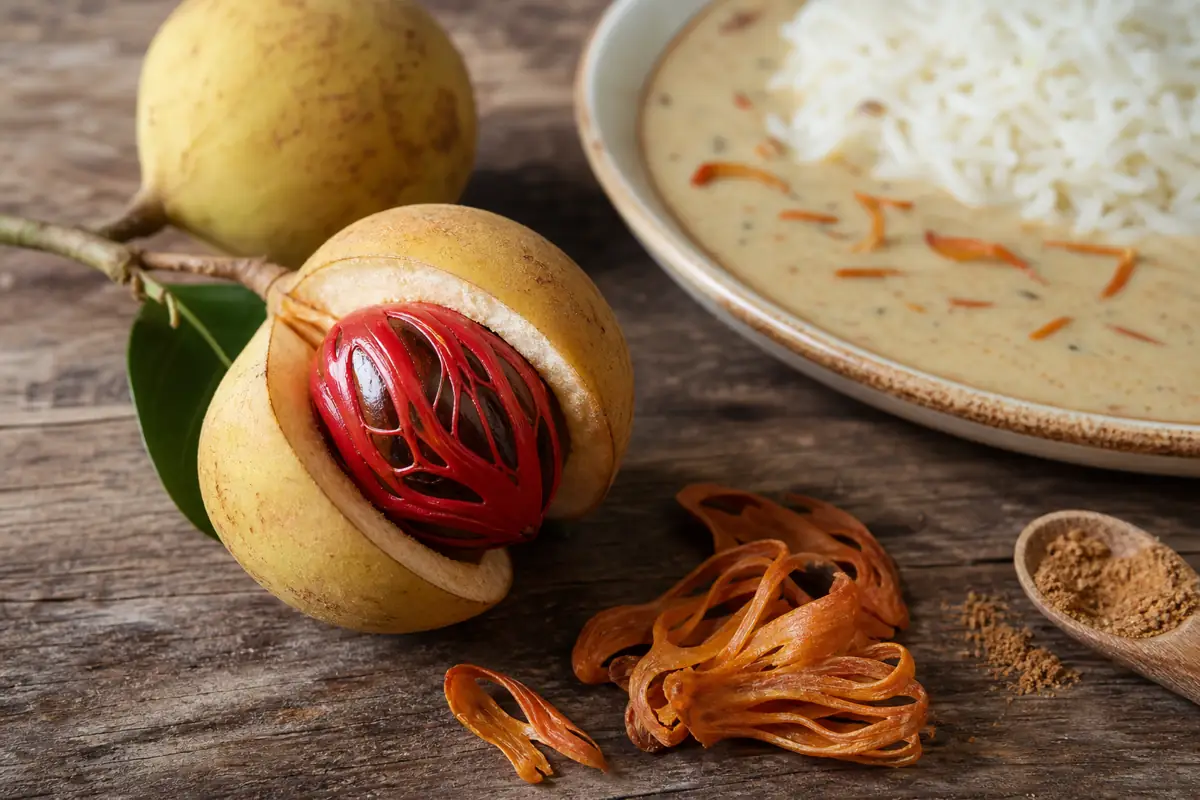
Mace is the dried aril that surrounds the nutmeg seed, with a lighter color and a brighter, more floral-peppery aroma. Infuse whole blades in liquids you can strain, or use small amounts of ground mace where every bite needs seasoning. Start with less than nutmeg and increase only after the spice has warmed through the food.
Mace is the red aril around one nutmeg seed
Mace is the lacy covering around the seed of Myristica fragrans. The brown seed becomes nutmeg, while the outer aril becomes mace.
The aril looks vivid red when the ripe fruit splits. Drying turns it orange, amber, or yellow-brown and makes the lattice brittle.
A dried piece is called a blade, even when it has broken into several curved fragments. Mace is neither a flower nor a spice mixture.
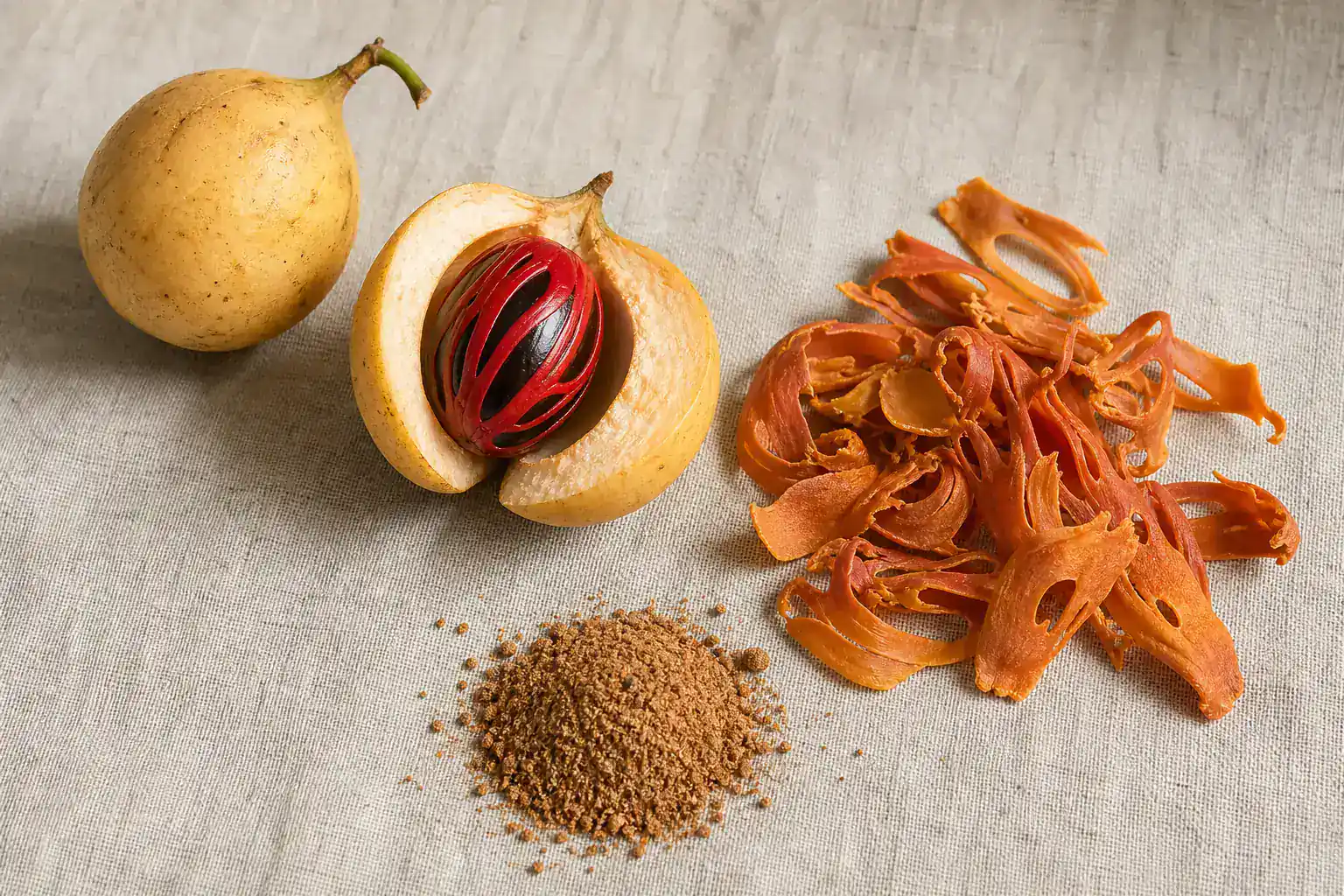
- Fruit: The ripe yellow fruit opens along a seam.
- Aril: The red lattice is removed and dried as mace.
- Seed: The hard kernel beneath the aril becomes nutmeg.
- Blade: Drying creates the orange, brittle form sold whole.
The shared fruit explains the family resemblance, but it does not make the spices identical. The thinner aril gives up aroma faster.
That structure also explains why whole mace does not grate like nutmeg. A blade is better infused, crushed, or milled in a grinder.
Why mace tastes brighter than nutmeg
Mace tastes warm and sweet, yet its first impression is often floral and peppery. Nutmeg usually feels rounder, woodier, and more earthy.
Both spices share volatile compounds, including myristicin and sabinene. Their different tissues and oil balance change which notes reach you first.
Taste a crumb of mace beside freshly grated nutmeg. Mace rises quickly, while nutmeg settles into a longer, heavier finish.
The color matters in pale food. Mace can warm béchamel, fish pie, or potato without leaving the dark flecks of grated nutmeg.
| Decision | Mace | Nutmeg |
|---|---|---|
| First aroma | Floral, peppery, lifted | Sweet, woody, rounded |
| Visible color | Light orange-tan | Brown flecks |
| Whole form | Blade for infusion | Seed for grating |
| Best advantage | Pale sauce and fragrant rice | Custard, greens, squash, baking |
| Main risk | Perfumed sharpness | Heavy, dusty warmth |
Choose mace when the dish needs lift at the top. Choose freshly grated nutmeg when deeper sweetness should remain after cooking.
Neither spice needs to dominate. In a dairy sauce, the right amount should make the milk taste fuller before anyone names the seasoning.
Old ground mace loses that quick lift first. Adding more stale powder creates dust and bitterness instead of restoring the missing aroma.
Whole blades belong in liquids you can strain
Use whole mace in hot liquids that you can strain so extraction has a clear stopping point.
One small blade can season four servings of rice, milk sauce, stock, or poaching liquid, although a large fragment may contain several blade-size portions.
Add the blade while the liquid warms, then taste after ten minutes. Remove it once the floral note appears above the base ingredient.
Basmati rice benefits from a blade placed in the cooking water. It perfumes the steam without scattering brown powder through white grains.
For béchamel, warm mace with the milk before building the sauce. Strain the milk so the finished texture stays smooth and pale.
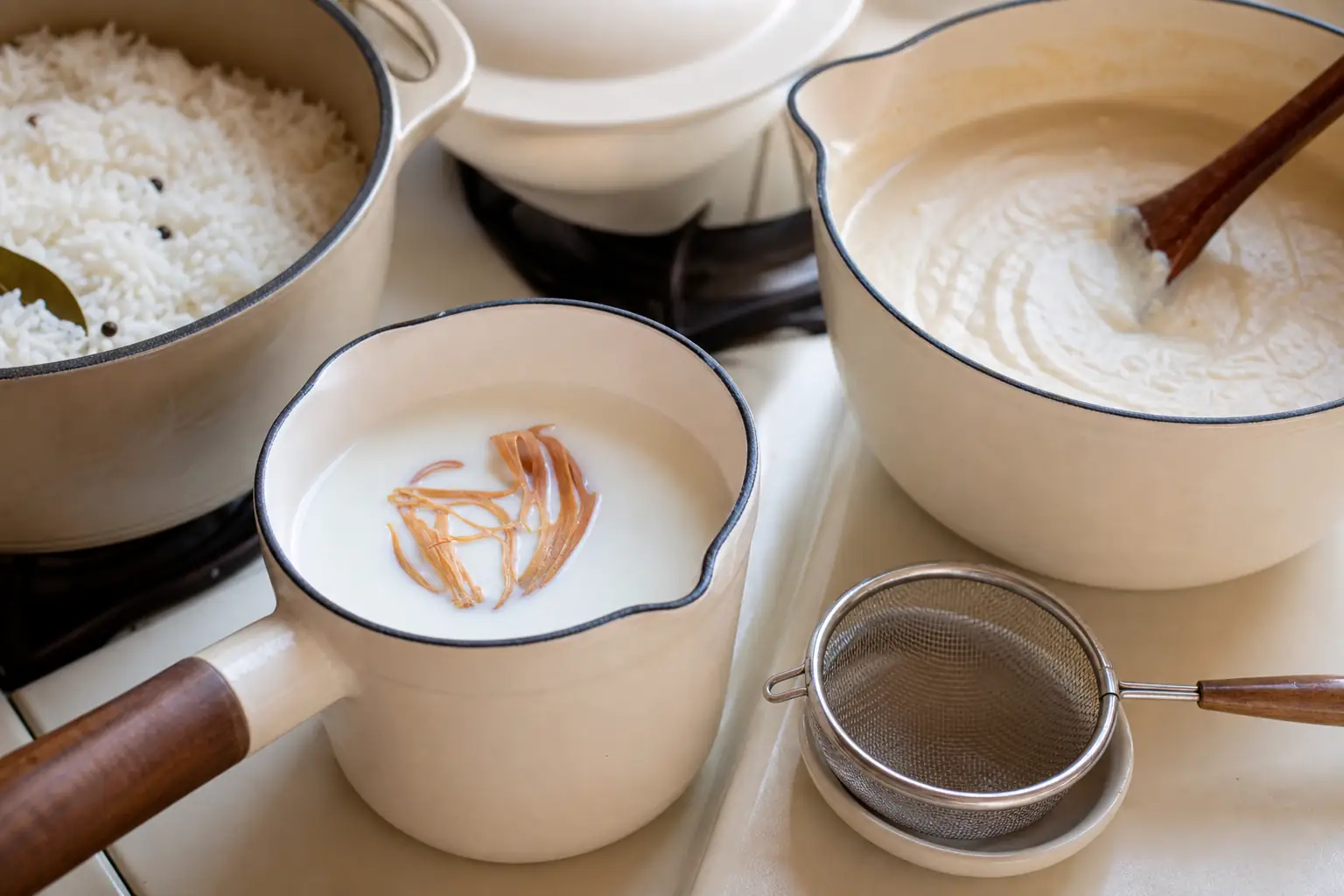
- Rice: Place one small blade in the water and remove it before fluffing.
- Milk: Warm the blade gently, then strain before thickening.
- Stock: Keep it in a spice bag beside peppercorns and bay.
- Pickle: Let the brine cool before judging the final strength.
A spice bag makes removal easier in stock, pickling liquor, or mulled drink. It also prevents fragile shards from hiding in the pot.
Long cooking does not always mean stronger food. Steam carries aroma away, while repeated reduction can leave a woody, bitter edge.
If a sauce becomes too perfumed, remove the blade immediately. Add more unscented sauce base instead of trying to cover it with another spice.
This removable method follows the same control principle as choosing when to add spices. Form determines whether you still have an exit.
Ground mace works where every bite needs a trace
Ground mace belongs in food that should hold the spice throughout. Dough, custard, sausage, kebab, and ground-meat mixtures need even dispersion.
The powder releases quickly because grinding exposes more surface. Add it with dry ingredients or stir it through fat before the wet phase.
In cake or cobbler, mace can sharpen cinnamon and fruit without the dark, earthy weight of nutmeg. It suits apple, pear, and stone fruit.
In sausage, a small amount sits behind pepper, salt, and meat fat. Too much makes the mixture smell like scented soap.
- Custard: Whisk a pinch into sugar before milk so the powder disperses without clumps.
- Baking: Add mace with flour and other dry spices for even distribution.
- Meat mixtures: Blend it into salt and pepper before mixing through the meat.
- Korma: Add a small amount to the aromatic base, then let dairy soften its edge.
- Spice blends: Use mace as a high note in garam masala or quatre épices, not the bulk ingredient.
Freshly milled blades give a clearer aroma than old powder, but the blades are fibrous. Break them first and use a clean electric grinder.
A mortar can crush small fragments, yet it rarely makes a fine powder. Sift coarse fibers if the food needs a completely smooth texture.
Clean the grinder before and after home spice grinding so mace aroma does not transfer into coffee, cumin, or another batch.
A small measure keeps mace above the background
Start ground mace at one eighth teaspoon for four servings. That amount is easier to increase than a perfumed pot is to repair.
Fresh mace may need less than a jar opened last year. Measure by spoon, then confirm by aroma after the food warms.
Fat spreads mace through sausage, cream, and meat sauce. Dairy softens its peppery edge but can also carry the aroma across every bite.
| Food | Starting amount | When to judge |
|---|---|---|
| Four servings white sauce | 1/8 teaspoon | After two minutes in the finished sauce |
| Two cups cooked rice | 1/8 teaspoon or one small blade | After resting five minutes |
| One pound ground meat | 1/4 teaspoon | Cook a small test patty first |
| Eight-inch fruit pie | 1/4 teaspoon | Against the raw filling before baking |
| Four mugs warm drink | One small blade | After ten to fifteen minutes |
A test patty protects an entire sausage batch. Fry one spoonful, cool it briefly, and adjust only after the fat releases the spice.
For a curry or korma, wait until the sauce has reduced. Water loss concentrates the powder, so an early taste can understate the final force.
Mace tastes excessive when floral sharpness sits above salt, acid, and the main ingredient. More chile rarely fixes that imbalance.
Dilute excess mace with unscented base food. Extra dairy, rice, potato, or meat lowers the concentration without creating another competing aroma.
Keep the first addition modest when several warm spices are present. Clove and allspice can amplify mace even when each measure looks small.
Pale sauces and aromatic rice show mace at its best
Mace earns its pantry space in dishes where color and top aroma both matter. Pale sauce is the clearest test of that advantage.
A blade warmed in milk gives béchamel quiet spice without visible specks. The sauce stays suitable for fish pie, cauliflower, or gratin.
In biryani and pulao, mace joins cardamom, cinnamon, clove, and bay-like aromatics. Its floral pepper note travels with the steam.
Mughlai-style korma uses mace around yogurt, cream, nuts, or browned onion. Those rich carriers need a lifted note to avoid tasting heavy.
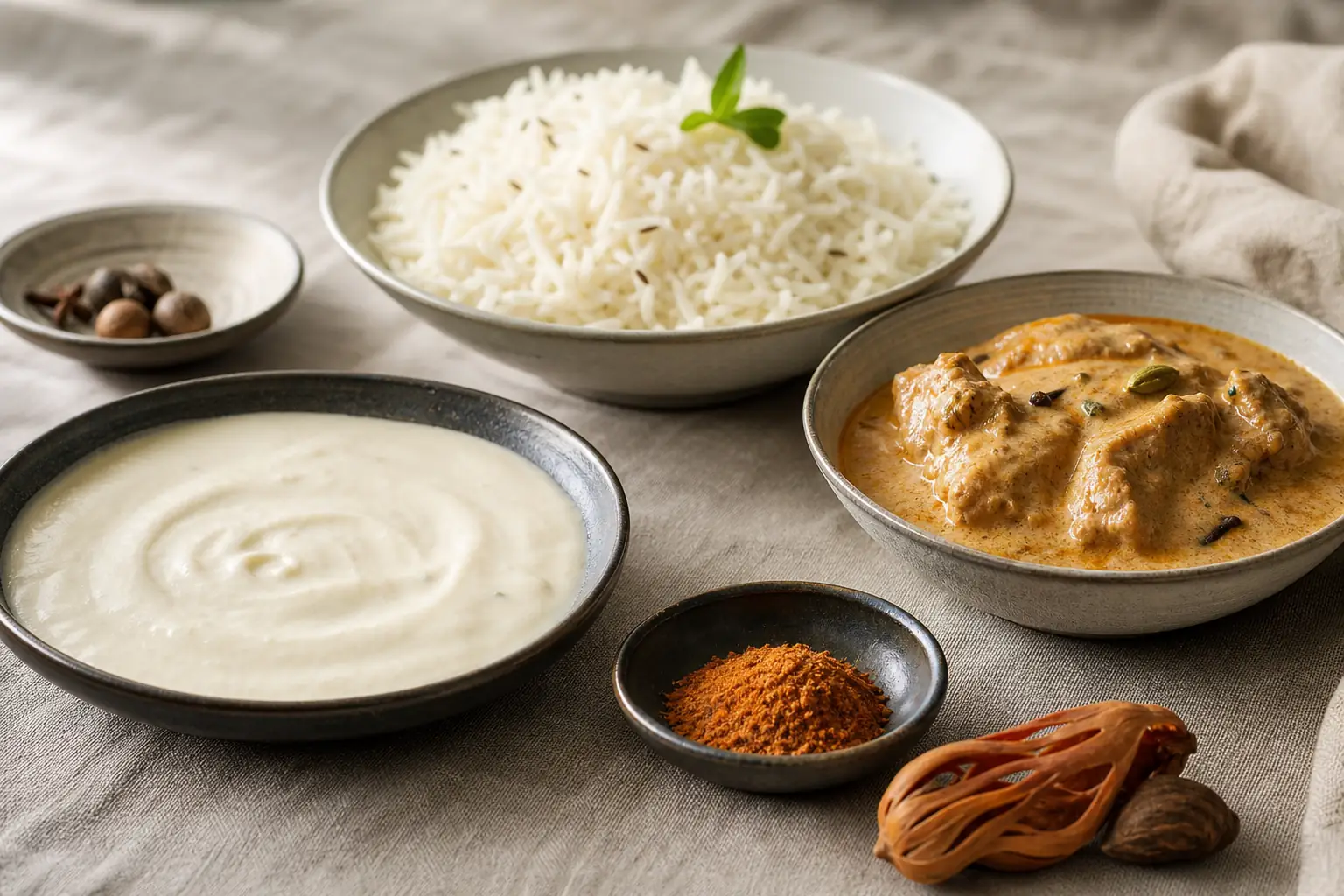
- White sauce: Infuse a blade in milk and strain it before thickening.
- Rice: Let steam distribute aroma from one removable blade.
- Korma: Use a small ground measure behind cardamom and browned onion.
- Potato: Add a pinch after mashing so the aroma stays near the surface.
Mashed potato, creamed spinach, and root-vegetable purée also accept mace. Add it after cooking, when texture and salt are already settled.
Fish and shellfish need restraint because their aroma is delicate. A mace-infused sauce is usually safer than powder rubbed directly onto the flesh.
Sweet food takes another route. Fruit and custard can hold ground mace because sugar rounds the pepper note and baking spreads it evenly.
These uses explain why mace appears inside some garam masala blends. It supplies lift after cumin and coriander build the savory floor.
The practical split is visible. Use a blade when the food should stay smooth, or powder when every bite should carry the spice.
Nutmeg substitutes by family, not by exact force
Nutmeg is the closest mace substitute because both come from the same fruit. Start with half to three quarters of the mace amount.
Fresh nutmeg tastes rounder and leaves darker flecks. That tradeoff matters in white sauce but matters less in brown cake or sausage.
Green cardamom can replace part of mace in rice or cream when floral lift matters. It cannot reproduce mace’s peppery warmth.
| Substitute | Starting ratio | Best use | What changes |
|---|---|---|---|
| Fresh nutmeg | 1/2 to 3/4 amount | Sauce, baking, potato | Darker, rounder, woodier |
| Ground nutmeg | 1/2 amount | Cake and meat mixtures | Less floral and easier to overuse |
| Cardamom | 1/2 amount | Rice, cream, korma | Brighter but less peppery |
| Allspice | 1/3 amount | Dark baking or braise | More clove-led and heavier |
| Cinnamon plus tiny clove | Use by taste | Dark fruit baking | No mace-like floral lift |
Allspice works only where a clove-like turn is welcome. Its eugenol force can pull pale food away from the result mace provides.
The single allspice berry is not a neutral warm-spice mixture. Use it cautiously in dark braises or baking.
Cinnamon and clove can create general warmth, but neither preserves mace’s color advantage. They are poor choices for white sauce or delicate fish.
Sometimes omission is cleaner. A simple sauce seasoned with pepper and bay tastes more coherent than one crowded with several partial substitutes.
Buy intact orange blades before convenience powder
Good mace blades look orange, amber, or yellow-brown rather than grey. Their aroma should rise as soon as you break an edge.
Choose pieces that feel dry and brittle without collapsing into dust. Softness or clumping suggests moisture entered the package.
- Color: Look for orange or amber blades with visible lacy structure, not a uniform dull powder.
- Aroma: Break a small tip. Fresh mace should smell floral, peppery, and recognizably related to nutmeg.
- Package: Buy a sealed packet or jar from a shop with steady spice turnover.
- Quantity: Whole blades are strong. A small packet can season many pots before the aroma fades.
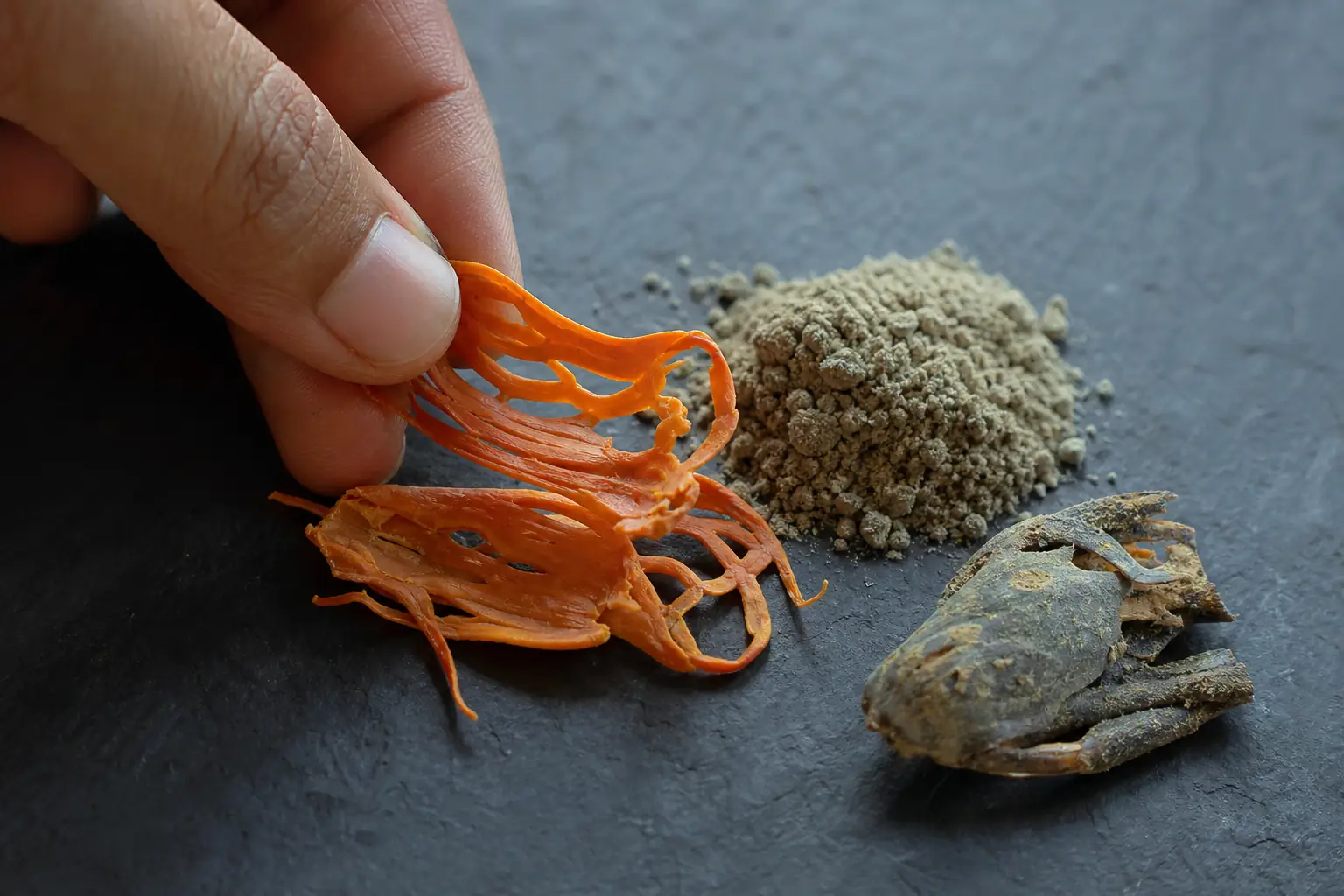
- Fresh blade: The broken edge releases aroma immediately.
- Old blade: Grey color and a weak smell predict little flavor.
- Moisture: Soft pieces or clumps show the package has taken on water.
- Powder: Buy less because exposed surface loses the top notes faster.
Store blades airtight, dark, and away from stove heat. Whole pieces keep their useful aroma longer than pre-ground mace.
Grind only what the next few recipes need. Label the powder with the milling date because its quick top notes fade first.
Use the smell test from checking whether spices are stale. Flat mace will not recover through a larger spoonful.
A specialized spice seller may offer blades from Indonesia or Grenada. Origin adds traceability, but aroma decides whether the package is useful.
Keep mace only if your cooking uses its specific advantage. A fresh nutmeg seed is a better small-pantry choice when recipes rarely demand pale lift.