
Which Mace Substitute Works Best in Your Recipe?
Match mace's light nutmeg warmth without darkening pale sauces or pushing cakes toward clove.
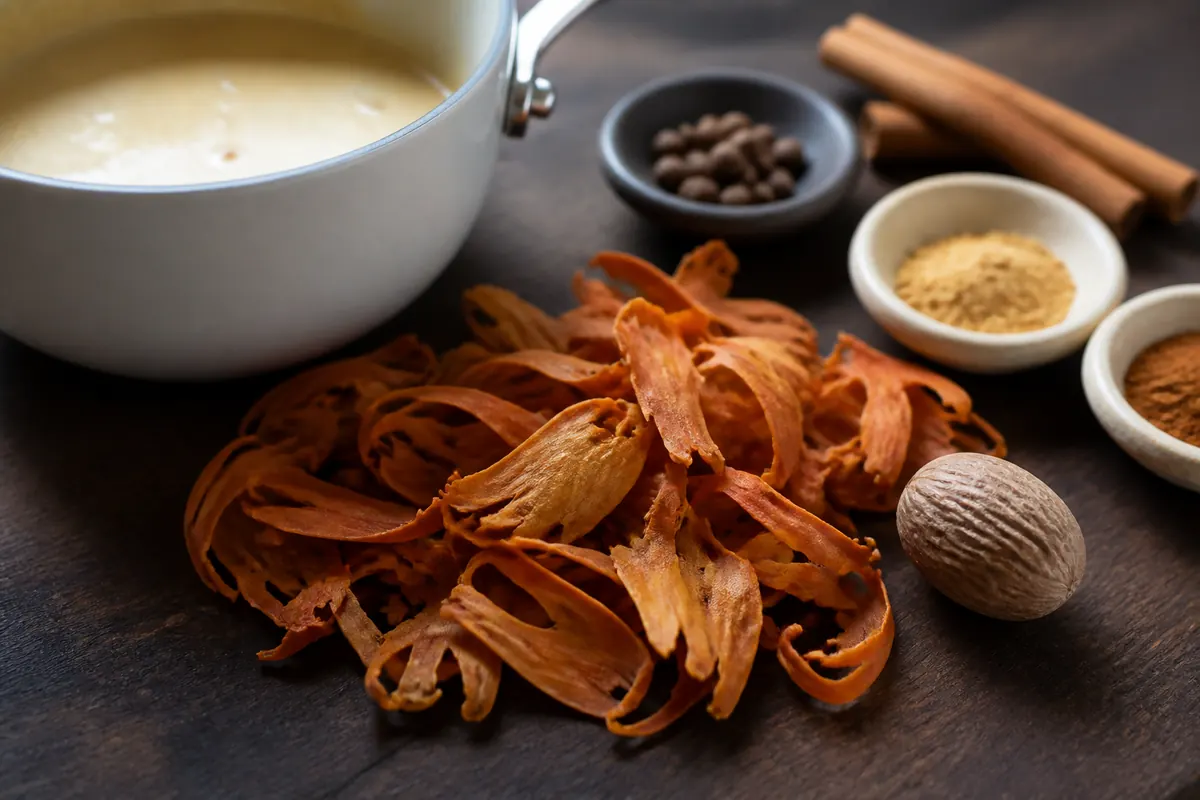
Mace and Nutmeg Come From the Same Fruit but Cook Differently
The best mace substitute is nutmeg, starting with 3/4 teaspoon nutmeg for every teaspoon of ground mace.
Both spices come from the same Myristica fragrans fruit, so nutmeg preserves more of mace's resinous warmth than cinnamon, allspice, or a baking blend can.
Use only 1/2 teaspoon nutmeg at first in a white sauce, potato puree, delicate sausage, or fish dish. Nutmeg tastes denser and sweeter than mace, and a heavy grate can turn a quiet background spice into the first aroma you notice.
Mace is the lacy aril that grows around the nutmeg seed.
Drying changes the fresh red aril to orange, amber, or tan blades, while grinding produces a fine powder that is usually lighter in color than ground nutmeg.
That anatomy explains the close match, but it does not make the two spices identical.
Mace tends to read as lighter, more floral, and gently peppery, while nutmeg brings a rounder sweetness and a darker woody finish.
Ground-spice freshness changes any volume ratio because the aril and seed lose their brightest aroma after grinding. A newly opened nutmeg jar can overpower an old mace jar even when the spoons hold the same volume, so smell both before assuming the recipe needs a stronger replacement.
Commercial mace also varies in grind and color. Fine pale powder disperses almost invisibly through cream, while coarser orange-brown mace leaves visible points and extracts more slowly.
Match the recipe method before judging the substitute by dry color alone.
- Same-fruit warmth
- Nutmeg carries the closest core aroma because the seed and aril develop inside the same fruit.
- Light color
- Mace can season cream sauce, potato, fish, and pale meat without leaving many dark flecks.
- Quiet pepperiness
- The spice should sit behind dairy, meat, or fruit rather than announce clove or cinnamon first.
- Removable form
- A whole mace blade can perfume liquid and then leave the pan, unlike loose ground powder.
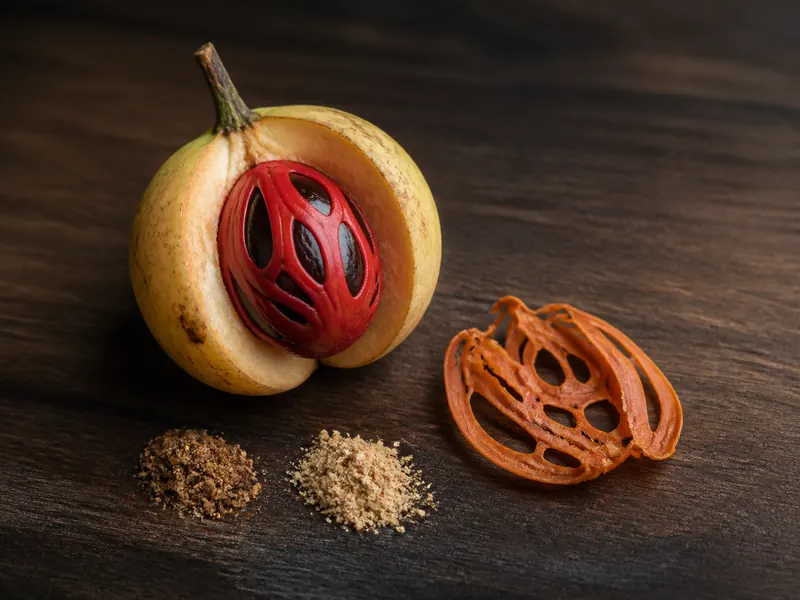
- Orange-red aril: Drying turns this covering into brittle mace blades.
- Dark seed: The kernel becomes the sweeter, heavier nutmeg spice.
- Pale powder: Ground mace usually colors cream and potato dishes less strongly.
Mace often appears in foods where that restraint matters. It can season bechamel, creamed spinach, potato dishes, seafood, forcemeat, sausage, pound cake, doughnuts, custard, and fruit without making each one taste like the same sweet spice blend.
The replacement therefore depends on what surrounds it. Nutmeg works across the widest range, allspice belongs in darker food that can take a clove note, and cinnamon with ginger works only when the recipe already lives in a baking-spice direction.
Choose a Substitute by the Food, Not the Spice Rack
A mace substitute should be chosen by sauce color and dish family before you compare jar labels. One teaspoon of cinnamon may look like one teaspoon of mace, but it will turn a pale meat filling sweeter and woodier while leaving the missing nutmeg-like aroma unresolved.
Use the amounts below as starting points for one teaspoon ground mace. Small amounts matter because these replacements become more obvious after baking, simmering in dairy, or resting overnight in a seasoned meat mixture.
Measure by level spoonfuls rather than packed powder because compression changes how much spice enters the dish. For a recipe written by weight, keep the original weight only with nutmeg and still reserve part of it until a cooked sample proves the intensity.
Carryover matters in custard, cake, and meat filling. Warm spice can seem quiet before baking or chilling, then become clearer as fat redistributes the aroma, so avoid correcting a raw mixture all the way to its finished target.
| Number | Substitute | Starting amount | Best use | Main change |
|---|---|---|---|---|
| 1 | Nutmeg | 3/4 tsp | White sauce, potato, spinach, custard, cake, meat filling | Sweeter and heavier, with darker flecks |
| 2 | Allspice | 1/2 tsp | Dark meat, stewed fruit, rich gravy, dark cake | Stronger clove and pepper character |
| 3 | Cinnamon and ground ginger | 1/2 tsp cinnamon + 1/4 tsp ginger | Pound cake, fruit filling, cookies, enriched bread | Sweeter and sharper, without mace's nutmeg finish |
1. Nutmeg for the Closest Overall Match
Nutmeg covers the greatest number of mace uses because it carries the same-fruit aroma into dairy, vegetables, meat, and baking. Start at 3/4 of the requested mace amount, then drop to 1/2 when the food is pale or lightly seasoned.
Freshly grated nutmeg is especially strong at the moment it leaves the seed.
Grate it onto a measuring spoon instead of directly over the pan, since one extra pass on a microplane can double a tiny intended dose.
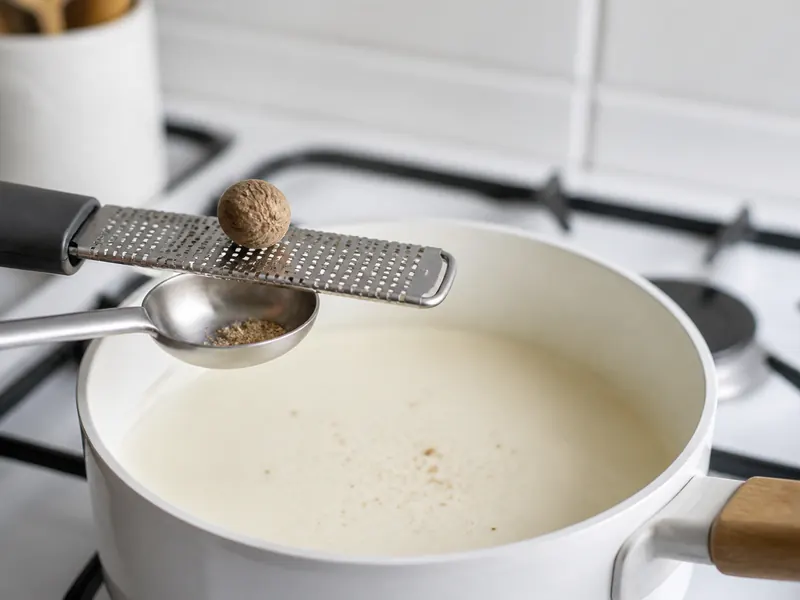
- Microplane: Grating into a spoon gives better control than grating over the pan.
- Pale sauce: Dark specks reveal an excessive nutmeg dose quickly.
- Small measure: Begin below the full mace amount and judge after the sauce warms.
In bechamel, cauliflower puree, mashed potato, or creamed spinach, stir the smaller dose through the finished hot food and wait for the aroma to rise. More nutmeg can be added, but excess cannot be removed without increasing the whole batch.
The same 3/4 measure works more freely in pound cake, custard, bread pudding, and fruit filling because sugar, egg, butter, and flour spread the aroma through a larger base. Nutmeg makes those foods slightly rounder and sweeter than mace would.
Meat mixtures need another kind of caution. Mix the nutmeg into a spoonful of forcemeat, cook that sample fully, and taste it before seasoning the rest, because raw meat and cold fat hide spice intensity.
Whole nutmeg also keeps its aroma much longer than a jar of pre-ground powder. If the ground jar smells dusty or faint, replacing mace with a larger stale dose adds bitterness and brown specks without restoring the missing fragrance.
2. Allspice for Dark Meat and Fruit Dishes
Allspice is useful when nutmeg is unavailable and the recipe can accept a clear clove-like edge. Begin with 1/2 teaspoon ground allspice for one teaspoon mace, since its peppery eugenol character becomes assertive sooner.
Allspice is the dried berry of Pimenta dioica, not a mixture of cinnamon, clove, and nutmeg.
Its name describes the broad impression people find in the berry, which is why it can cover general warm-spice depth without reproducing mace exactly.
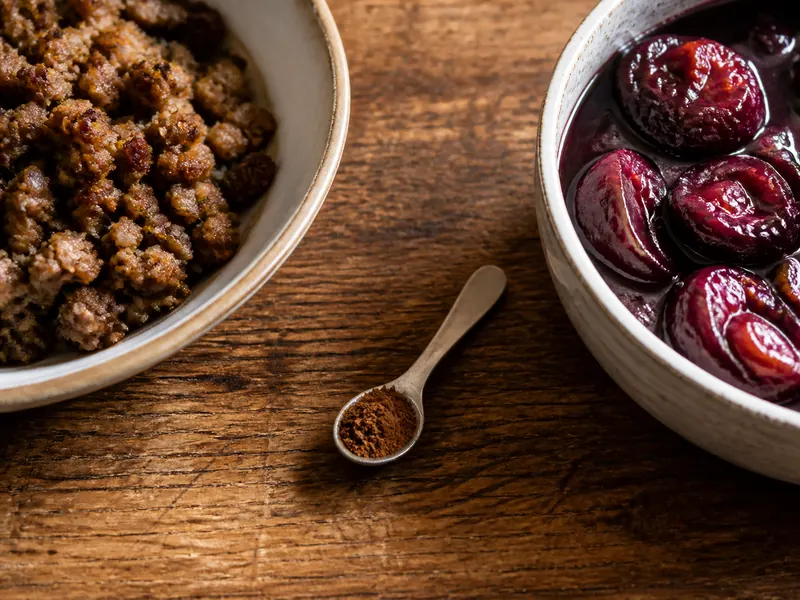
- Half measure: A reduced start keeps the clove note behind the main food.
- Browned filling: Pork and beef provide enough savory depth for the substitute.
- Plum compote: Dark fruit already supports peppery clove character.
Use it in a browned pork filling, beef gravy, stewed plum, fruitcake, gingerbread, or another recipe where dark color and clove warmth already make sense. These foods give the berry's sharper edge somewhere to settle.
Taste allspice only after it has cooked into the dish. Dry powder can seem mild on a spoon, while warm fat and liquid release a much broader aroma.
Raise the amount toward 3/4 teaspoon only if the cooked sample still needs warmth. A full one-for-one swap can make the food taste of allspice rather than preserving the background role mace was meant to play.
3. Cinnamon and Ginger for Spiced Baking
Cinnamon and ground ginger can replace the sweet-spice side of mace in baking, but they do not reproduce its nutmeg-like perfume.
For one teaspoon mace, start with 1/2 teaspoon cinnamon and 1/4 teaspoon ground ginger.
Cinnamon supplies sweet woodiness while ginger adds a brighter, drier warmth.
The unequal measure prevents ginger from making a light cake or fruit filling taste hot and keeps cinnamon from taking over the entire aroma.
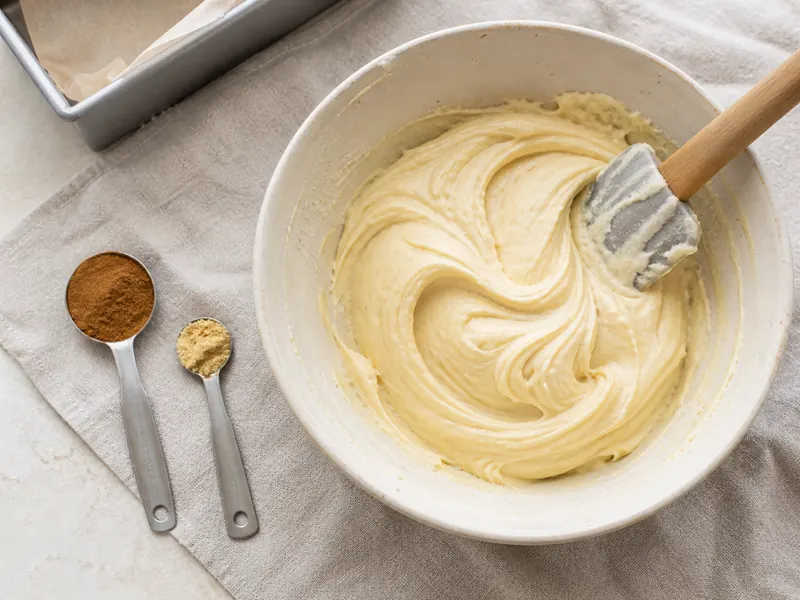
- Larger cinnamon spoon: Sweet woodiness forms the base of the replacement.
- Smaller ginger spoon: Bright warmth keeps the blend from tasting flat.
- Pale batter: The test shows how quickly cinnamon changes color and aroma.
Use the pair in pound cake, cookies, apple or pear filling, enriched bread, and baked custard that already contains another warm spice. Reduce cinnamon elsewhere in the formula if the recipe already calls for it.
Butter and sugar round the sharper replacement while the crumb spreads it evenly.
Apple, pear, plum, and pumpkin can carry cinnamon without losing their identity.
Yeast dough, milk, egg, and butter soften the ginger edge.
Skip the blend because cinnamon changes both color and savory direction.
Choose nutmeg instead unless the recipe deliberately uses sweet baking spices.
Pumpkin pie spice can cover the same baking cases when its label begins with cinnamon and includes nutmeg or ginger. Start with 1/2 teaspoon for each teaspoon mace because clove, allspice, and other ingredients vary by brand.
Do not carry that convenience blend into neutral gravy, sausage, potato, or seafood. The added spices solve a holiday-baking problem and create a new problem in savory food.
A Whole Mace Blade Needs an Infusion Substitute
A whole mace blade perfumes stock, milk, cream, or sauce while remaining easy to remove.
Loose ground nutmeg changes that method because fine particles stay in the liquid and continue contributing dark flecks after the desired aroma is reached.
Use two or three broad nutmeg shavings for one small mace blade, then tie the shavings in a small square of muslin. This is a starting method rather than an exact weight conversion because mace blades vary widely in size and thickness.
A thin broken blade may perfume one cup of milk, while a broad intact blade can season a whole saucepan. Compare the replacement with the blade in front of you, and use fewer nutmeg shavings when the recipe removes mace after only a brief poach.
Hard boiling does not make the comparison more reliable. It reduces the liquid, concentrates both spice and salt, and can make a controlled infusion taste excessive by the time the sauce reaches serving consistency.
- Shave the seedCut two or three broad, thin pieces from a whole nutmeg with a sturdy peeler or fine knife.
- Tie a sachetEnclose the shavings in clean muslin so no fragments escape into the liquid.
- Start gentlyAdd the sachet while milk, stock, or sauce heats below a hard boil.
- Smell before tastingRemove it when the warm nutmeg aroma becomes clear above the main liquid.
- Finish the dishTaste after salt, dairy, or other seasonings are incorporated before deciding on another short infusion.
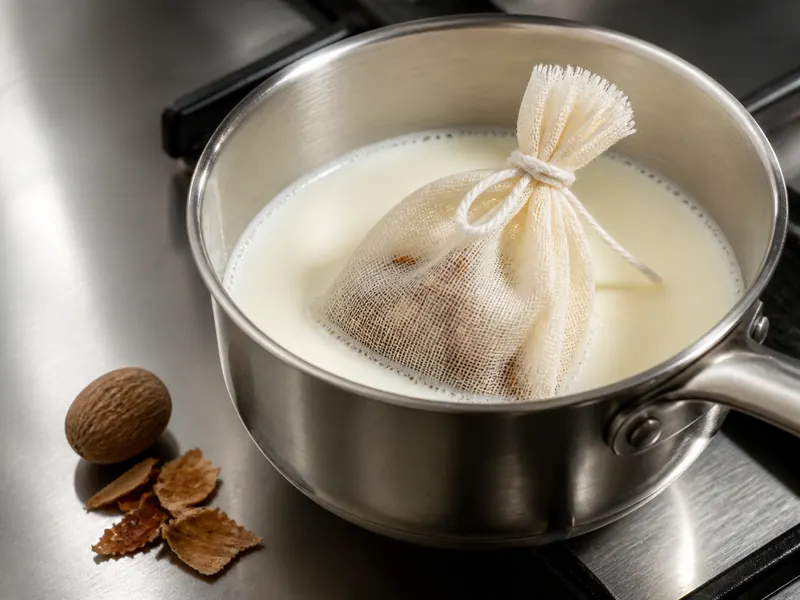
- Whole seed: Broad shavings release aroma more slowly than fine powder.
- Muslin sachet: The bundle keeps fragments out of pale milk or clear stock.
- Gentle heat: A quiet infusion gives better control than a hard boil.
Milk and cream extract warm spice aroma efficiently because their fat carries volatile compounds. Check the infusion early, especially when the liquid will reduce and concentrate later.
For a brown stock or dark gravy where flecks do not matter, a small pinch of ground nutmeg is simpler. Begin with about 1/8 teaspoon in a quart of liquid and add more only after simmering.
A tea infuser can hold coarse nutmeg shavings when muslin is unavailable. Avoid packing fine ground spice into a perforated infuser because the powder can leak and form a dark ring on the surface.
Leave Mace Out When Every Substitute Changes the Dish
Omission is cleaner when mace contributes only a small background note and every available replacement brings a stronger flavor.
A lightly seasoned fish sauce loses less from missing a pinch of mace than it does from an obvious cinnamon or clove taste.
The same judgment applies to sausage and forcemeat. Cinnamon can make the mixture taste sweet, while excess allspice pushes it toward a different regional seasoning profile.
Do not compensate for omitted mace by increasing black pepper automatically. Mace's gentle pepperiness comes with floral and nutmeg-like notes, so extra pepper supplies heat without restoring the missing aroma.
A recipe with several other warm spices may need no correction at all. Cinnamon, ginger, nutmeg, allspice, or clove already present in a cake can keep the intended warmth after a small mace amount disappears.
Check freshness before deciding that mace itself needs replacement. Good ground mace smells sweet, woody, and lightly peppery as soon as the jar opens, while old powder smells like dry cardboard and contributes little even at a larger dose.
Store mace blades or powder tightly closed away from stove heat and direct light. Buy a small amount when you use it only for one seasonal cake or occasional meat mixture, since a fresh small jar gives more useful aroma than a large faded one.
Nutmeg remains the practical first choice for most cooks.
Use less than the mace amount, choose allspice only for food that can absorb clove warmth, reserve cinnamon and ginger for baking, and let delicate savory food go without a substitute when the available jar would change it more than the missing mace.