
What Does Star Anise Taste Like, and How Much Should You Use?
Treat the woody star as an extraction clock for broth, braise, drinks, and five-spice.
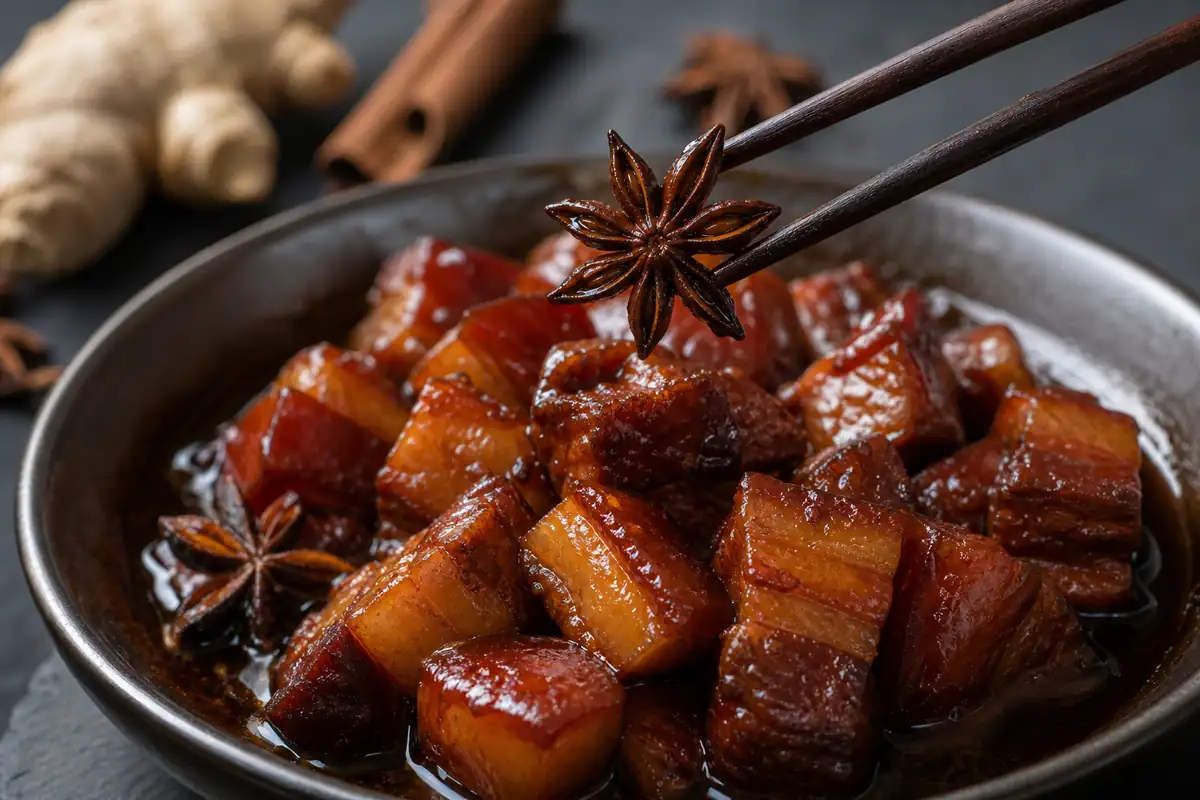
Star anise is the dried fruit of Illicium verum, with a strong sweet aroma created mainly by anethole. Start with one whole pod for four servings and remove it before the licorice-like note dominates, while ground star anise belongs in blends or rubs that need the spice dispersed throughout.
What is star anise, and is it the same as anise seed?
Star anise is the dried fruit of Illicium verum, a tree native to southern China and northern Vietnam. The pod usually forms six to eight points.
Each point holds a glossy seed, but the woody pod carries much of the aroma. Both pod and seed may enter the grinder.
Anise seed comes from an unrelated Apiaceae plant. The two smell similar because both contain anethole, not because they share a botanical family.
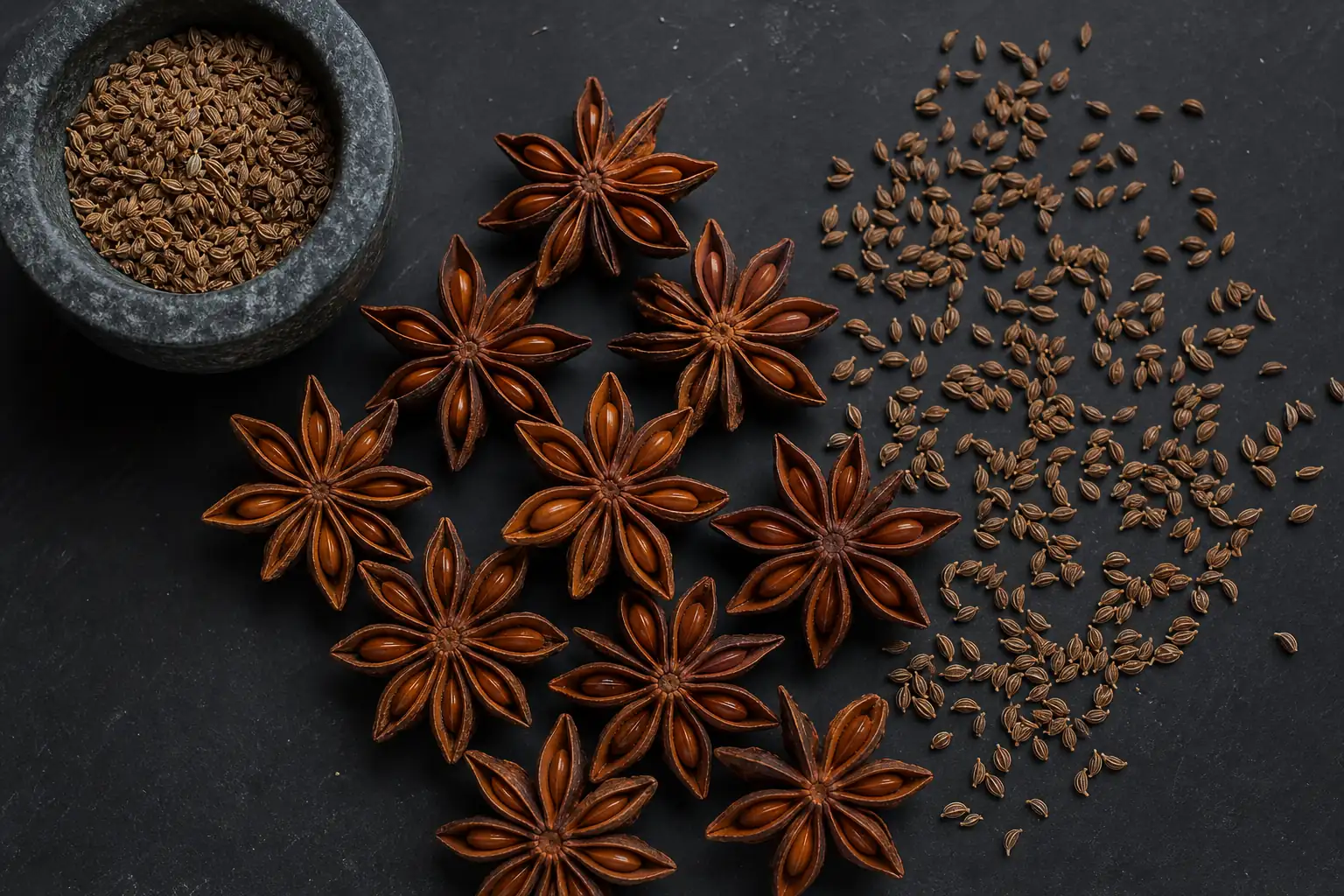
- Star anise: A woody fruit with pointed carpels and enclosed seeds.
- Anise seed: A small ridged fruit from the parsley family.
- Shared note: Anethole creates the familiar sweet licorice-like aroma.
- Cooking difference: Whole stars infuse and leave; seeds are usually crushed or ground.
This distinction matters during substitution. Anise seed is milder by volume and does not provide a removable woody pod for long infusions.
Buy intact stars when possible.
Broken pieces still work, but they make dose and removal harder to judge.
How much star anise should you use?
Start with one whole star for four servings of broth, braise, poaching liquid, or warm drink. Time and temperature decide the final strength.
Hot water pulls anethole and supporting compounds from the pod. This carrier choice changes how sugar, fat, and alcohol amplify its sweetness.
Taste a drink after ten minutes and a broth after thirty.
Remove the star when its note becomes identifiable but still supports the main ingredient.
| Liquid | Starting amount | First taste | Likely stop point |
|---|---|---|---|
| Four mugs cider or wine | 1 pod | 10 minutes | 15 to 20 minutes |
| Four bowls clear broth | 1 pod | 25 minutes | 45 to 60 minutes |
| Four-serving soy braise | 1 pod | 45 minutes | Before final reduction |
| Two cups poaching syrup | 1/2 to 1 pod | 10 minutes | When fruit aroma remains clear |
| Large stockpot | 2 pods | 45 minutes | Before chilling or reducing |
A rolling boil drives aroma into the room and can leave woody bitterness behind.
Use a gentle simmer and keep the vessel partly covered.
Reduction concentrates what remains. Remove star anise before a braising liquid turns into glaze, then judge the sauce at serving thickness.
If the dish tastes medicinal, remove every fragment and dilute with unscented liquid or food.
Extra cinnamon rarely hides excess anethole.
This is a concentration problem, not a missing-spice problem. Increase the base before adding another strong aroma.
Should you use whole or ground star anise?
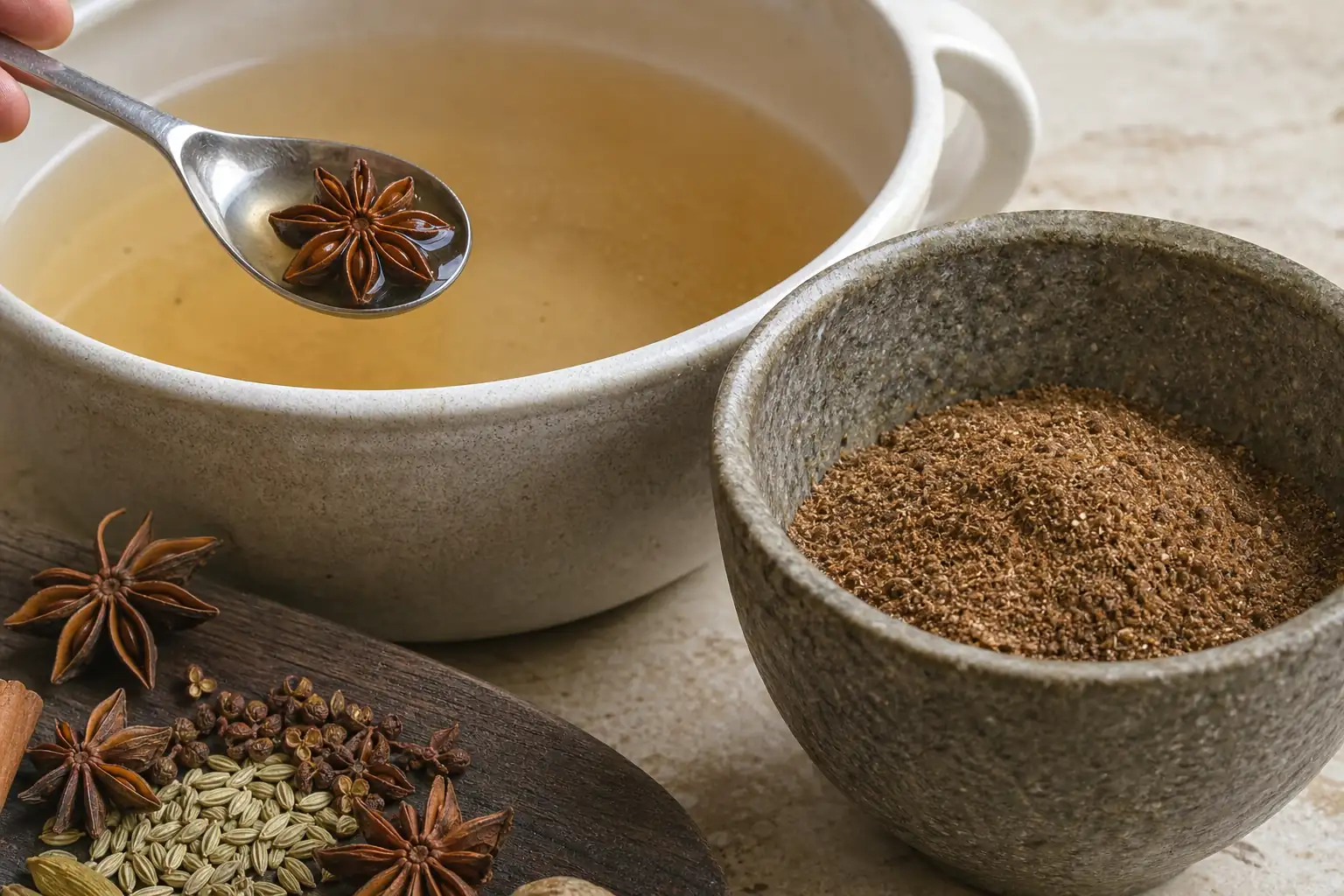
Whole star anise gives you control because it can leave the pot. Powder stays in every spoonful and releases faster.
Use whole pods in broth, braise, pho, mulled drinks, syrups, and poaching liquid.
A spice bag catches broken points.
Use ground star anise in five-spice, dry rubs, gingerbread, and tight marinades. Measure it by pinch because fine powder spreads widely.
| Form | Best jobs | Control point | Main risk |
|---|---|---|---|
| Whole pod | Broth, braise, drink, syrup | Remove during extraction | Hidden broken points |
| Fresh ground | Blend, rub, cake, paste | Measure before mixing | Fast dominance |
| Old ground | No reliable advantage | Smell before use | Dusty sweetness |
- Broth: Tie whole pods in cloth or use a fine strainer.
- Braise: Remove pods before the sauce reduces to a glaze.
- Blend: Grind only the amount needed for the current batch.
- Rub: Mix powder through salt and other spices before touching meat.
Toast whole pods briefly only until fragrant. Darkened points taste bitter, and burnt anethole cannot be repaired through longer simmering.
A clean spice grinder handles the hard pod better than a mortar.
Sift woody fibers before using the powder in smooth food.
How does star anise work in Chinese red cooking?
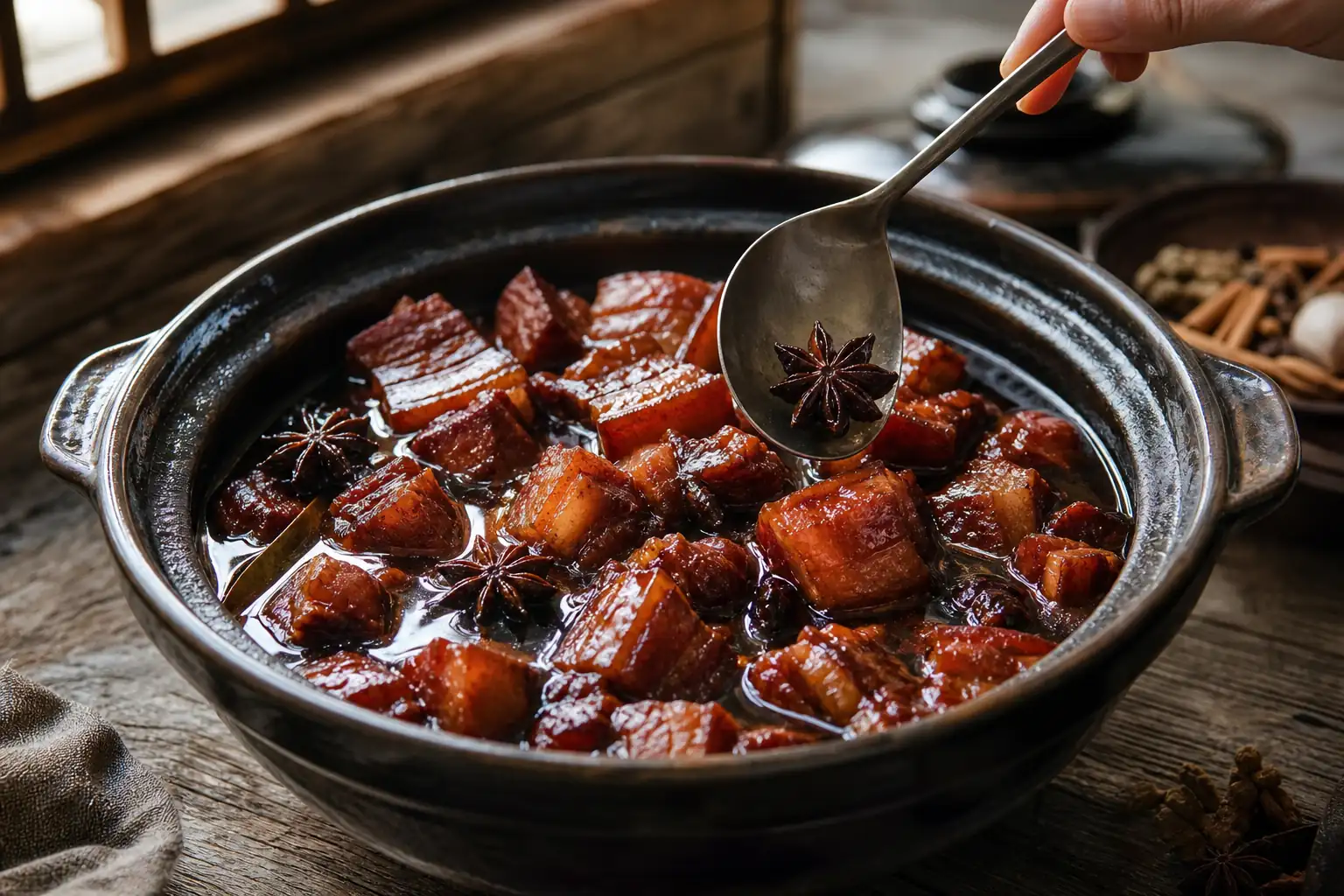
Star anise becomes savory in Chinese red cooking because soy, sugar, fat, and gelatin frame its sweetness. The spice does not work alone.
Pork belly is a strong carrier. Rendered fat spreads aroma, while soy and browned sugar prevent the pod from reading like candy.
Beef shin, duck, and firm tofu can follow the same structure. Each needs enough salt and savory base before the star becomes useful.
Add the pod when braising liquid enters, then remove it before the final uncovered reduction. This keeps the glaze meaty rather than perfumed.
- Salt: Soy sauce keeps sweetness attached to savory food.
- Fat: Pork or duck carries the aroma across the sauce.
- Time: Slow cooking extracts the pod before reduction concentrates it.
- Exit: Remove the star before glazing the meat.
Taste the cooled sauce as well as the hot one. Steam can hide sweetness, while the glaze feels stronger once it rests.
Leftovers may taste more anise-forward after a night.
Remove the pods before chilling so storage does not become a second uncontrolled infusion.
Star anise follows the same spice pairing logic as other strong aromatics. Start with the food’s fat, salt, sweetness, and cooking time.
When should you remove star anise from pho broth?
Pho uses star anise as one part of a broth system, not as the broth’s only identity. Toasting wakes the pod before water extraction.
Warm star anise, cinnamon, cloves, coriander seed, and related aromatics until fragrant.
Stop before any point turns black.
Place the spices in a cloth bag or fine basket. The container keeps the broth clear and makes the extraction easy to stop.
- Toast: Use dry medium heat and move the spices constantly until the first strong aroma appears.
- Contain: Keep pods and fragments together so none hide under bones or onion.
- Simmer: Let the broth move gently instead of boiling away the high notes.
- Taste: Judge star anise beside charred onion, ginger, meat, salt, and fish sauce.
- Remove: Pull the bag when the broth smells complete, even if the stock cooks longer.
Charred onion and ginger give sweetness and roasted depth. They keep the star from carrying the whole aromatic burden.
A clean broth needs restraint. Vietnamese broth aromatics extract early, while fresh herbs arrive at the bowl.
If star anise dominates, remove the bag and add unscented broth.
Do not keep boiling in hope that the flavor will disappear.
What does star anise do in Chinese five-spice?
In Chinese five-spice, ground star anise usually supplies the sweet core. Other ingredients keep that core from becoming flat or medicinal.
Fennel extends the anethole family with a greener tone.
Cinnamon bark gives warmth, while clove adds sharp eugenol power.
Sichuan pepper contributes citrus and a tingling sensation. That contrast stops the blend from tasting like sweet baking spice.
| Ingredient | Job beside star anise | Risk when excessive |
|---|---|---|
| Fennel seed | Extends sweetness with green seed aroma | Makes the blend candy-like |
| Cinnamon or cassia | Adds broad bark warmth | Turns the blend woody |
| Clove | Adds sharp high aroma | Becomes medicinal |
| Sichuan pepper | Adds citrus and tingling contrast | Numbs delicate food |
Use the blend on duck, pork, tofu, mushrooms, or roasted squash where fat or browning can support it.
Lean steamed food exposes imbalance quickly.
A Chinese five-spice ratio must account for fennel, cinnamon, clove, and Sichuan pepper. Star anise should never act alone in that blend.
Smell a purchased blend before using it.
If only star anise is obvious, begin with half the recipe amount and adjust after cooking.
What can you use instead of star anise?
No substitute copies both the aroma and removable form of star anise. Decide whether the dish needs anethole or only warm structure.
Anise seed is the closest aroma match, but it is milder.
Use about twice as much by weight and contain the seeds for clear liquids.
Fennel seed is sweeter, greener, and softer. It works in pork, tomato, and baking when exact star-anise force is unnecessary.
| Substitute | Starting move | Best use | What is missing |
|---|---|---|---|
| Anise seed | Use roughly twice by weight | Broth, drink, baking | Woody depth and easy removal |
| Fennel seed | Use twice by volume | Pork, tomato, bread | Dark sweet intensity |
| Five-spice | Use a small pinch | Rub, braise, roast | Pure anethole focus |
| Cinnamon plus clove | Use very lightly | Mulled drink, dark baking | Licorice-like aroma |
Five-spice can replace star anise in a rub or braise only when its other flavors fit.
It is not suitable for a clean syrup.
Cinnamon and clove replace general warmth, not anethole. Use them when preserving the dish’s spice structure matters more than matching aroma.
A useful spice substitution starts by naming the original job. A familiar flavor name is not enough.
How can you buy safe culinary star anise?
Buy star anise sold for culinary use and labeled Illicium verum.
Japanese star anise is toxic and must not enter food or home tea.
Do not collect wild star-shaped pods or buy an unlabeled decorative bag. Visual identification alone is not a safe species check.
Broken culinary pods remain usable when the package identifies the species and food source.
Perfect star shape is a presentation cue, not proof of identity.
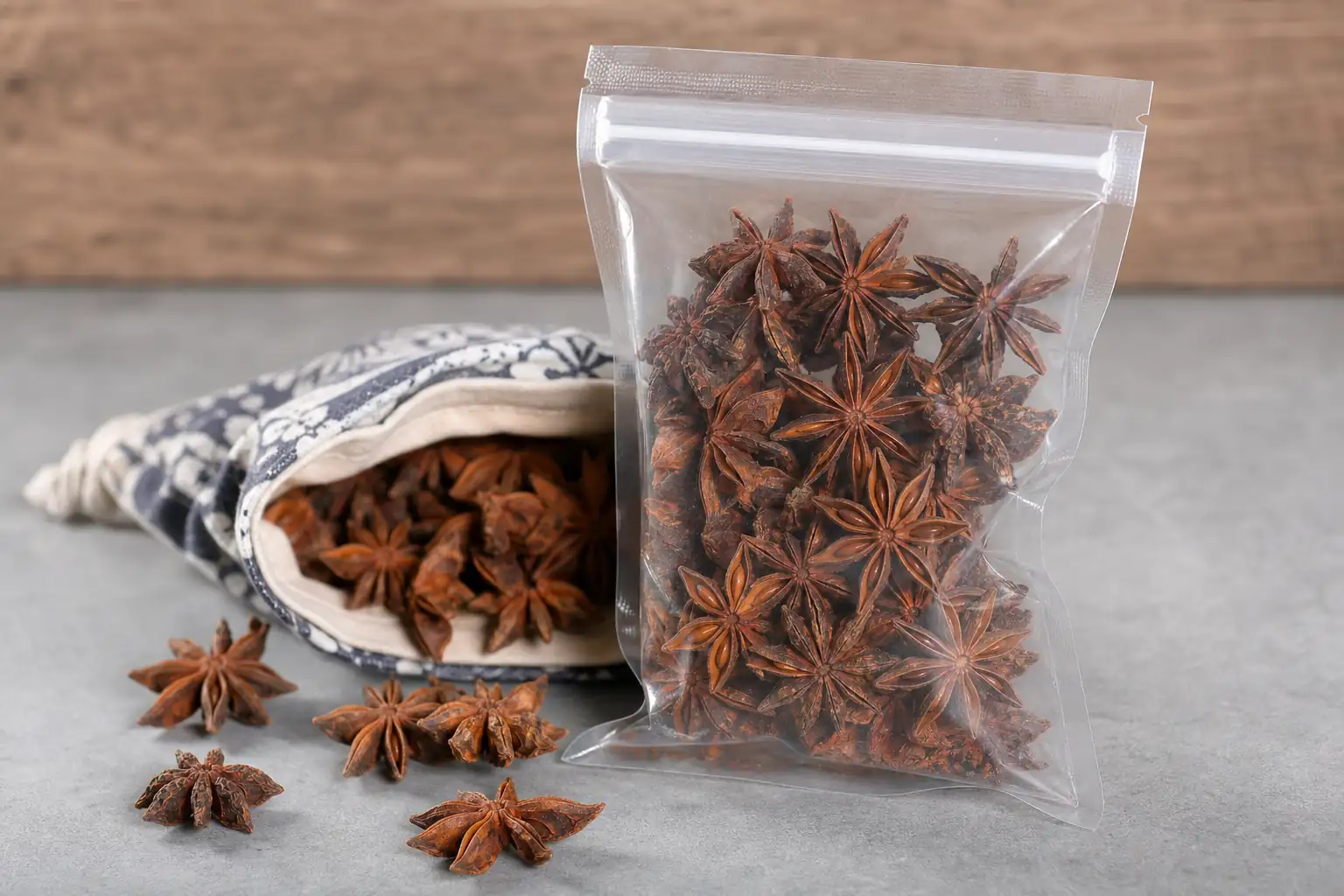
- Name: Look for Chinese star anise or Illicium verum.
- Source: Buy from a food retailer with traceable packaging.
- Condition: Choose intact, rust-brown stars without moisture or mold.
- Aroma: A broken point should smell strongly sweet within seconds.
Whole pods stay useful for about a year when sealed away from light and heat. Ground star anise fades much faster after opening.
Discard pods with visible mold, damp softness, or an unfamiliar chemical odor.
Dry but weak pods are stale rather than useful at a higher dose.
Crack one point before committing it to broth. A strong sweet aroma should appear quickly without mustiness, solvent notes, or damp wood.
Keep the jar away from steam. The same dry spice storage rules protect the brittle pod and its volatile oil.
A small packet is enough for most homes. Buying less preserves control because every pod begins with a predictable aroma.