
Which Herbs and Spices Define Vietnamese Cooking?
Match each herb or spice to broth, grill, salad, dipping sauce, or table garnish.
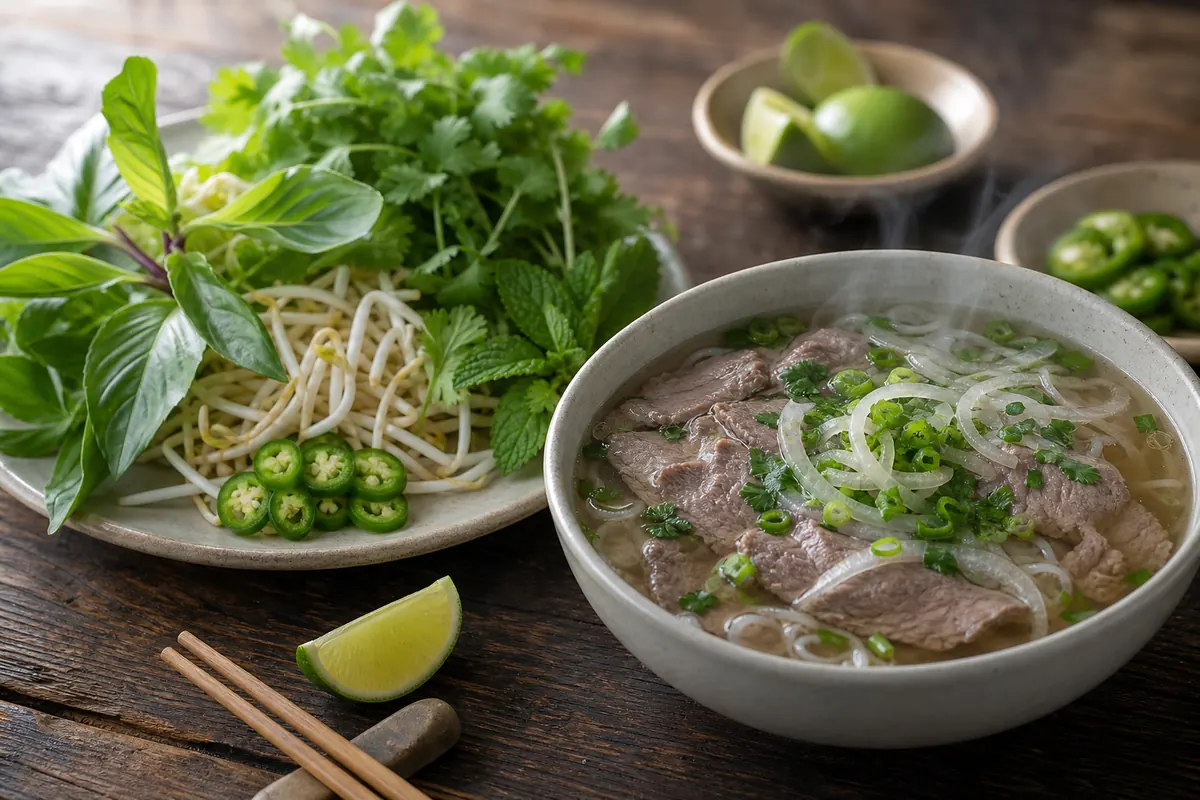
Vietnamese cooking separates fresh leaves from cooked aromatics and whole broth spices, so each ingredient has a different entry time. Buy herbs by appearance and Vietnamese name, then match aromatics and removable pho spices to a planned dish.
Vietnamese flavor gets its lift from fresh leaves
Vietnamese herbs and spices divide into two clear jobs.
Fresh leaves brighten the served dish, while aromatics and whole spices build flavor during cooking.
That split explains the large herb plate beside pho, bún, bánh xèo, or grilled meat. The diner controls the final aroma and texture.
| Flavor job | Typical ingredients | Best moment |
|---|---|---|
| Fresh lift | Thai basil, mint, cilantro, culantro | At the table or just before serving |
| Cooked aromatic base | Lemongrass, shallot, garlic, ginger | Marinade, frying, or simmering |
| Broth structure | Star anise, cinnamon, coriander, black cardamom | Toast, simmer, then remove |
| Sharp seasoning | Fish sauce, lime, chile, vinegar | During balance and at the table |
Fresh cilantro, Thai basil, mint, culantro, perilla, Vietnamese coriander, and rice paddy herb do not taste interchangeable. Their names can also change by region.
Ground spice rarely leads the everyday pantry. Strong powders can blur the clean broth, grilled edges, pickled vegetables, and fresh leaves that keep a meal distinct.
Fish sauce belongs in this system even though it is not a spice. It carries salt and savor so herbs can remain bright instead of doing every job.
Freshness matters more than collecting a long list. Three lively herbs matched to the dish beat ten tired bags in the refrigerator.
Which Vietnamese herbs belong with each dish?
Choose Vietnamese herbs by dish, not by a universal garnish rule.
A leaf that fits pho can dominate a delicate rice-paper roll.
Thai basil brings anise aroma and a sturdy bite. Mint stays cooler, while cilantro adds citrus from tender leaves and stems.
Culantro, called ngò gai, has long saw-edged leaves and a stronger cilantro-like aroma. Slice it thinly for pho and southern soups.
Vietnamese coriander, or rau răm, tastes peppery and lemony. It belongs with salads, duck, eggs, and shellfish rather than every noodle bowl.
| Herb | Best-known job | Use with care |
|---|---|---|
| Thai basil | Pho, noodle soups, grilled meat | Can overpower fresh rolls |
| Mint | Bún, fresh rolls, salads | Turns dark under long heat |
| Cilantro | Broth finish, rice, dipping sauces | Soapy perception varies by diner |
| Culantro | Pho and southern sour soups | Stronger than cilantro |
| Vietnamese coriander | Gỏi salads, duck, shellfish | Peppery bite can lead |
| Rice paddy herb | Canh chua and seafood soup | Hard to replace exactly |
| Perilla | Fresh rolls, grilled foods, soups | Earthy flavor is not plain mint |
Use the stems when they are tender. Cilantro stems and roots carry strong aroma into marinades, while the leaves stay available for finishing.
The distinction between spearmint and peppermint also matters. Spearmint usually fits savory Vietnamese dishes better because it is softer and less cooling.
If a market bundles mixed herbs, separate them before storage. One wet or bruised bunch can shorten the life of everything around it.
Fresh herb substitutions fail by texture before flavor
A Vietnamese herb substitution has two tests.
The replacement must fit the aroma and still behave like a fresh leaf in the bite.
Cilantro can cover part of culantro's flavor, but its soft leaf disappears faster in hot broth. Add it later and use the tender stems.
Sweet basil can replace Thai basil in a mild noodle bowl. It lacks the same anise edge and wilts sooner under broth heat.
Mint cannot copy perilla's earthy, slightly spicy leaf. Combining mint with a small basil leaf gives freshness but still changes the roll.
| Missing herb | Practical fallback | What changes |
|---|---|---|
| Culantro | Cilantro stems and leaves | Softer aroma and texture |
| Thai basil | Sweet basil plus a little mint | Less anise and less heat resistance |
| Vietnamese coriander | Cilantro plus a mild peppery leaf | No exact lemon-pepper bite |
| Rice paddy herb | Cilantro plus cumin-scented support | Sour soup loses its distinct top note |
| Perilla | Mint and basil | Earthy leaf texture disappears |
Do not use dried flakes as a garnish substitute. They season liquid, but they cannot supply crisp stems or cool leaves.
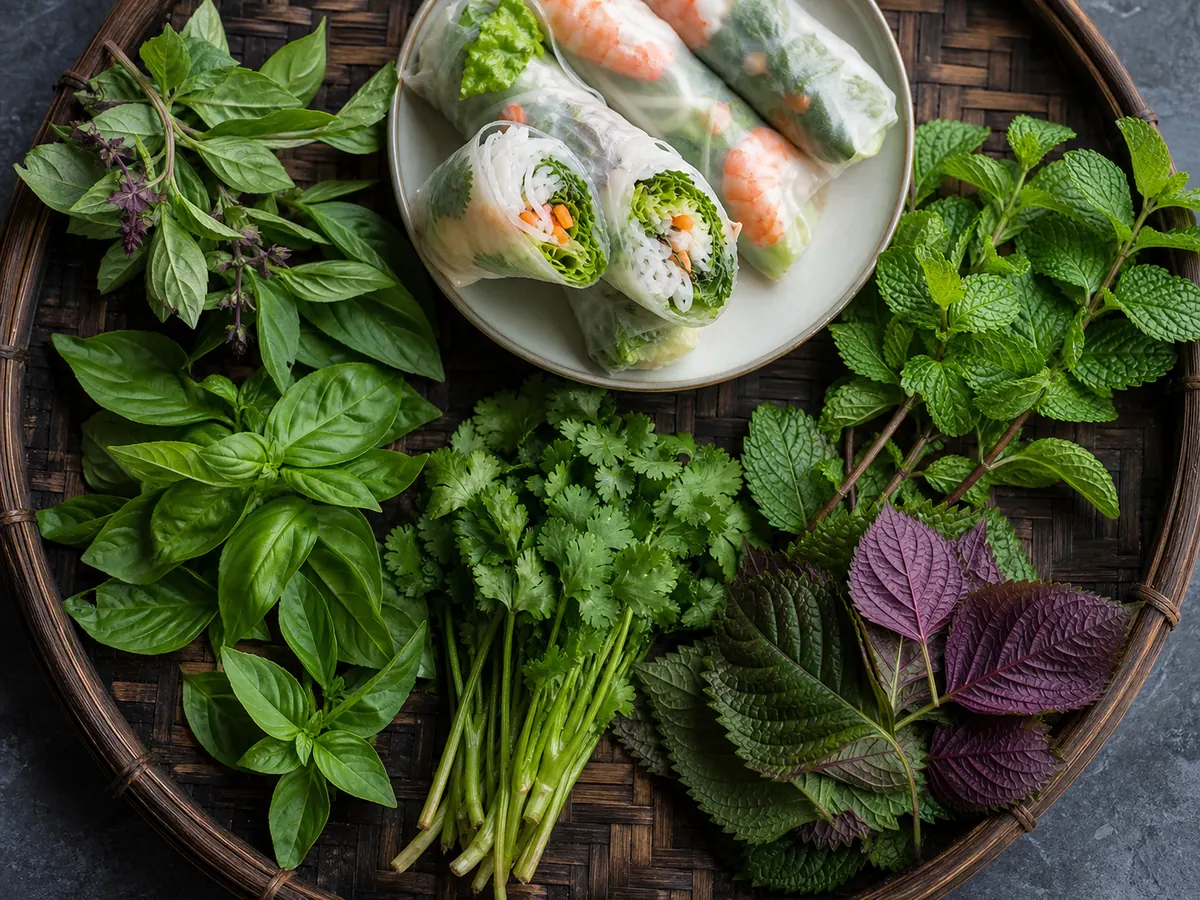
- Aroma: Match anise, citrus, pepper, or mint where possible.
- Texture: Keep crisp leaves for rolls and table garnish.
- Heat: Add fragile substitutes later than sturdy Thai basil.
In fresh rolls, texture carries as much value as aroma. Lettuce, cucumber, and bean sprouts can rebuild crunch when the ideal herb is missing.
In soup, preserve the cooking sequence. Put sturdy stems into the bowl first, then tear fragile leaves over the steam at serving.
A smaller number of correct herbs keeps the dish clearer. The plate does not need a replacement for every unavailable leaf.
Lemongrass, ginger, shallot, and garlic build the cooked base
Lemongrass usually enters Vietnamese food as a bruised stalk, fine mince, or pounded paste.
Each cut controls texture and extraction.
Bruised stalks perfume broth and can be removed. Fine mince belongs in grilled pork, chicken, tofu, and seafood marinades where it cooks into the surface.
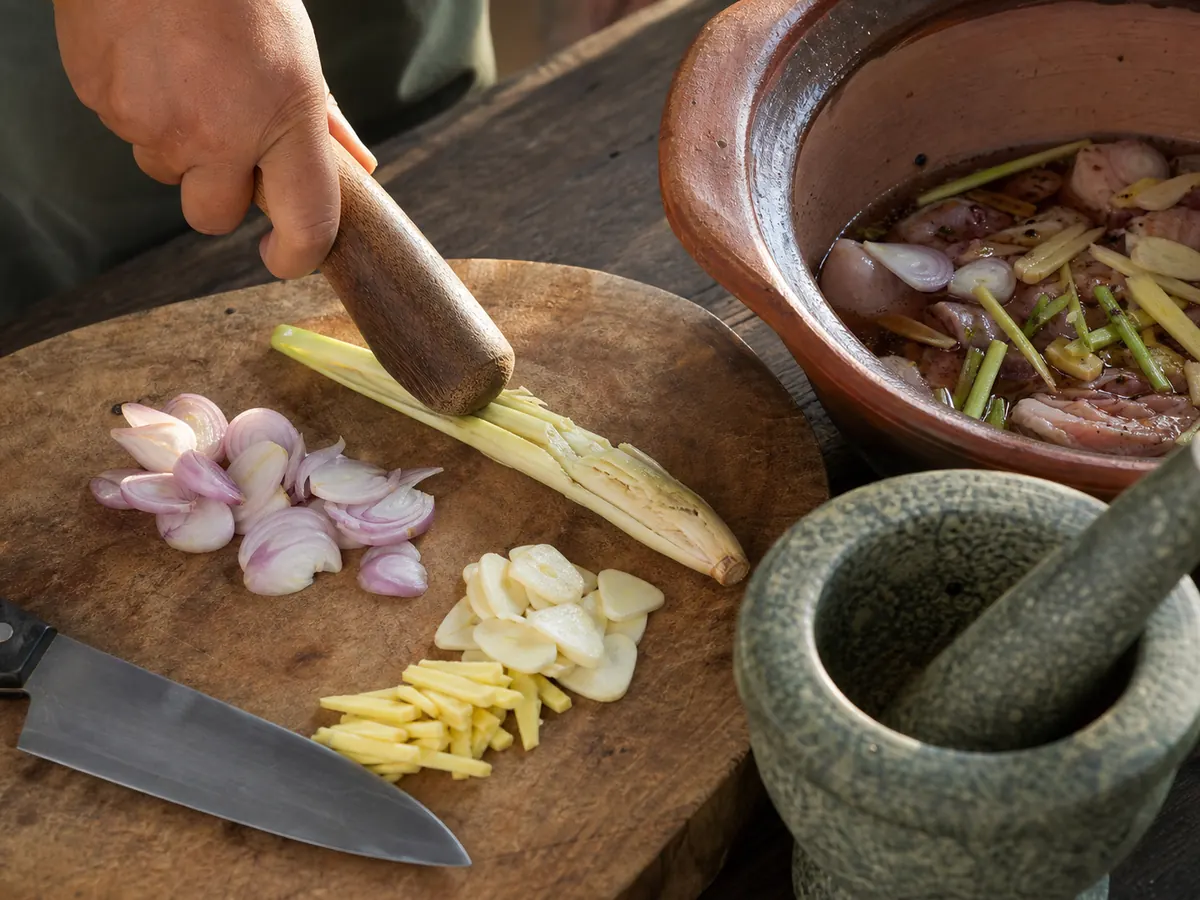
- Stalks: Bruise and remove them from broth.
- Fine mince: Use only the tender pale core for marinades.
- Shallot: Adds sweetness and browning around grilled edges.
- Garlic and ginger: Support meat, fish, soup, and dipping sauces without replacing fresh herbs.
Cut away the dry top and hard root. The pale lower third is tender enough to mince, while the green upper stalk works better bruised.
Shallot brings a softer sweetness than a large onion.
Garlic sharpens marinades, and fresh ginger warms fish, chicken, beef, and broths.
Pound the fibrous ingredient first, then add wet aromatics. This follows the same logic as building a spice paste without leaving hard pieces.
Keep raw lemongrass particles small. Large woody rings remain chewy even after a quick grill.
Why pho spices should stay clear, not taste like five-spice powder
Pho broth uses whole spices for a controlled perfume.
Star anise may lead, while cinnamon bark, coriander, cloves, fennel, and black cardamom provide support.
Recipes vary by region, household, and beef or chicken base. The goal is a clear broth whose meat and charred aromatics remain recognizable.
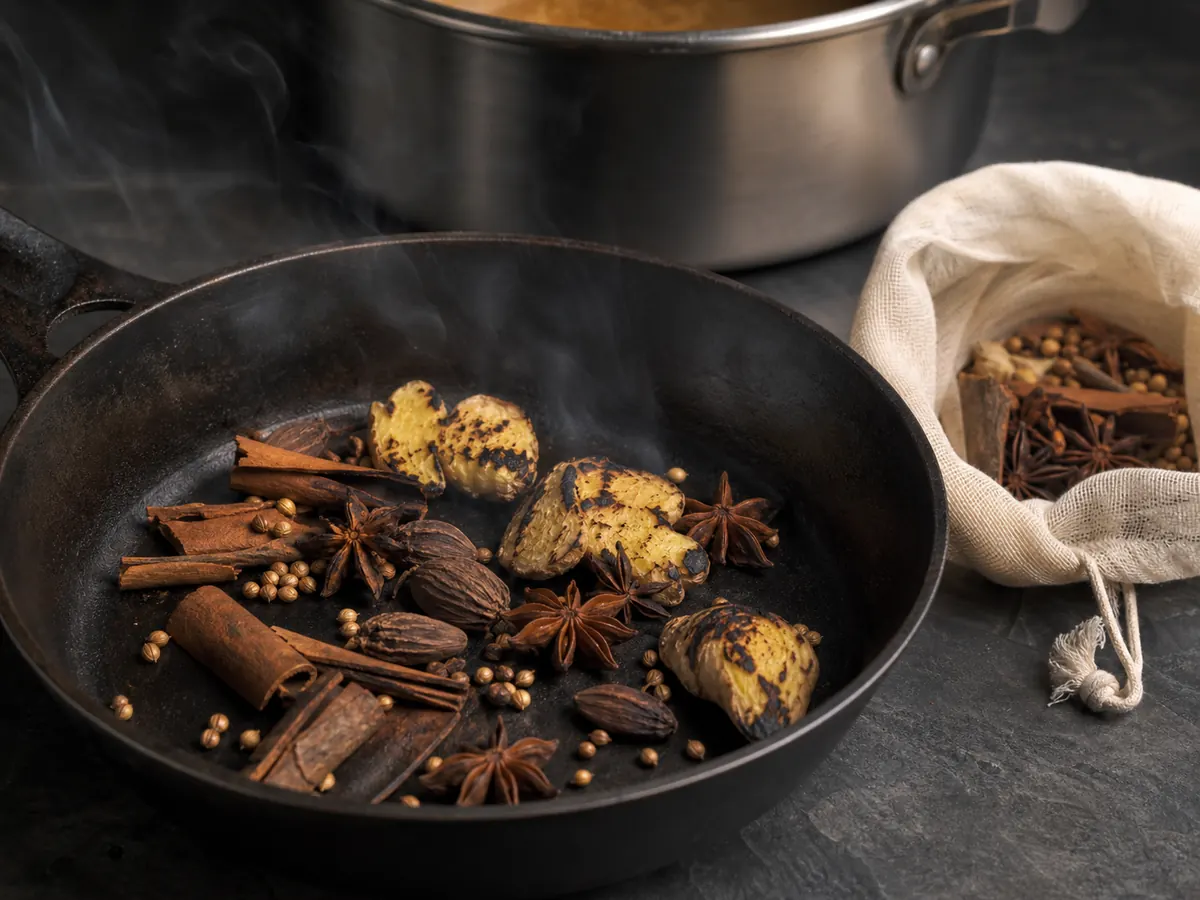
- Toast: Stop when the first strong aroma rises.
- Contain: A spice bag keeps the broth clear.
- Simmer: Gentle heat extracts aroma without rough bitterness.
- Remove: Take the bag out when meat and broth still lead.
Dry-toast whole spices until fragrant, then contain them in cloth or a metal infuser. Remove them before the broth becomes woody or medicinal.
Ground Chinese five spice is not a direct pho shortcut.
It clouds broth and often adds a heavier clove or fennel balance.
Black cardamom adds smoke and camphor in tiny amounts. Green cardamom is floral and sweet, so the two pods should not swap without changing the broth.
Chicken pho usually needs a lighter spice hand than beef pho. Ginger, shallot, coriander, and a restrained warm note can be enough.
Skim and taste the broth before extending the spice time.
Fat carries aroma, so an unskimmed spoon can seem more heavily spiced than the finished bowl.
Salt and fish sauce also change spice perception. A properly seasoned broth may need less star anise than an under-salted test spoon suggests.
Regional kitchens change the herb plate
Vietnamese cooking changes from north to center to south, and the herb plate changes with it.
Climate, produce, and local taste all shape the bowl.
Street vendors also adapt by season and neighborhood. The available bundle may change without changing the dish's core broth or sauce.
Northern dishes often use a more restrained herb and sweetener profile. Southern tables may offer larger herb plates and stronger sweet, sour, and tropical notes.
Central Vietnamese food can bring sharper chile heat, fermented seasonings, and compact portions with precise garnishes. Huế traditions add their own court and street-food histories.
- Northern pho: Often emphasizes clear beef broth, scallion, cilantro, and restrained sweetness.
- Southern pho: Commonly arrives with Thai basil, culantro, bean sprouts, lime, and chile at the table.
- Canh chua: Southern sour soup may use rice paddy herb and culantro with tamarind and fish.
- Central noodle dishes: Chile, lemongrass, fermented shrimp paste, mint, and banana blossom can share the bowl.
Treat these as patterns, not strict borders. Families and restaurants move, adapt, and use what grows or sells nearby.
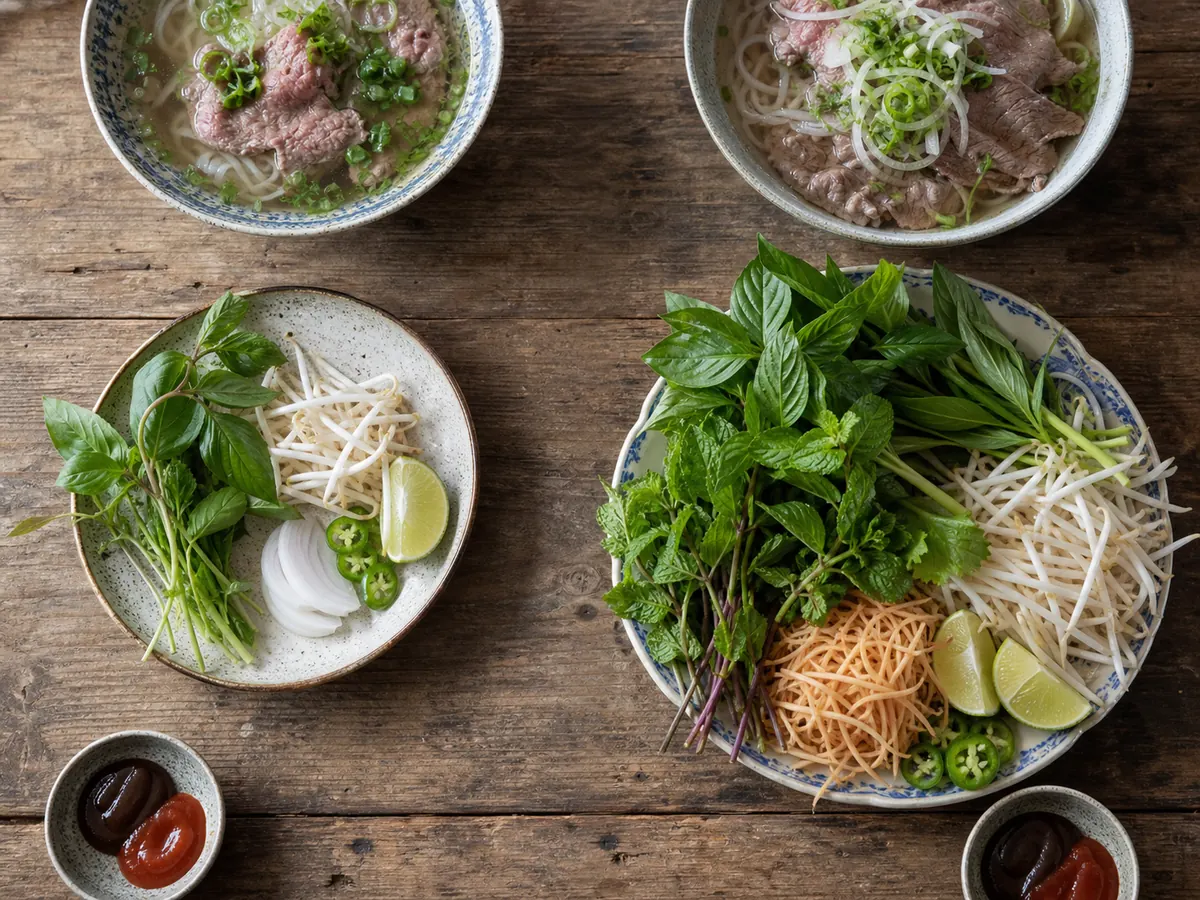
- Northern pattern: A smaller garnish keeps clear broth in front.
- Southern pattern: More herbs, sprouts, lime, and chile invite table adjustment.
- Shared rule: Fresh additions should support the broth rather than hide it.
A useful pantry respects the dish name and regional cue. Calling every herb plate Vietnamese basil misses the real ingredients.
Why does a Vietnamese pantry look so empty?
The short dried-spice list is a design rather than a gap.
Most of the aroma in Vietnamese food arrives from things that were alive that morning. Herbs, lemongrass, ginger, shallot, and chile carry the work a dried masala would carry elsewhere.
That leaves only a handful of dried spices doing real jobs. Star anise, cassia, black cardamom, coriander seed, and clove exist mainly to build a broth.
Outside the broth pot, the dried rack barely opens.
This is why a Vietnamese shopping list looks nothing like an Indian one. You are buying fresh weight instead of jars, and fresh weight has to be used within days.
Plan the shopping around that fact.
Buy herbs in the quantity one meal needs, because a large bag of dried spice will sit unused while the leaves you actually need go soft in the drawer.
Shop by leaf shape and Vietnamese name
English labels vary across Asian markets. Learn the Vietnamese name and inspect the leaf before assuming two bundles match.
Thai basil has purple stems and narrow pointed leaves. Culantro has long serrated blades, while rau răm has narrow leaves with dark markings.
Rice paddy herb has small soft leaves and a lemon-cumin aroma.
Perilla has broad toothed leaves that may show purple coloring underneath.
Choose crisp stems and dry leaf surfaces. Black patches, slime, and condensation signal bruising or cold damage.
- At the shelf: Smell a leaf only when the market allows it. Aroma separates similar green bundles quickly.
- At home: Remove rubber bands, discard damaged leaves, and wrap the dry bunch loosely.
- For one meal: Buy fewer kinds in better condition. Choose by the dishes you will cook this week.
- When unavailable: Replace the job, not the name. Cilantro plus mint may cover freshness, but it will not copy culantro.
Tender herbs lose aroma when frozen and thawed as garnish. Freeze only when the leaves will enter soup, sauce, or a cooked filling.
Dried basil or mint can season a simmer, but they cannot rebuild the raw leaf texture.
Keep substitutions honest about that limit.
Build a small Vietnamese pantry you will actually use
Start with fish sauce, rice vinegar, dried chile, fresh black pepper, garlic, shallot, ginger, and lemongrass. Add fresh herbs for a planned dish.
Whole star anise, cinnamon, coriander, and black cardamom earn space only when broth is on your calendar. Small bags stay fresher than bulk jars.
Store whole broth spices away from steam and light.
The spice shelf-life ranges help decide when aroma has faded.
Crush coriander or pepper only when the recipe needs faster extraction. Keep star anise and cinnamon whole when you need a clean removal point.
| Buy regularly | Buy for a dish | Skip until needed |
|---|---|---|
| Fish sauce, garlic, shallot | Thai basil, mint, culantro | Large herb assortments |
| Black pepper, rice vinegar | Lemongrass, ginger, fresh chile | Bulk ground five spice |
| Dried chile or chile sauce | Whole pho spices | Rare herbs without a recipe |
Keep fish sauce tightly closed and wipe the rim. A clean bottle preserves aroma and prevents the pantry from smelling like a spill.
Freeze trimmed lemongrass when you buy more than one meal needs.
Whole stalk segments hold their purpose better than a jar of stale dried powder.
This compact pantry can produce marinades, dipping sauces, noodle bowls, soup bases, and grilled food. Fresh herbs then give each meal its identity.