
How to Use Lemongrass in Cooking, From Stalk to Paste
Choose the right part of the stalk, then bruise, slice, or mince it for the texture your dish needs.
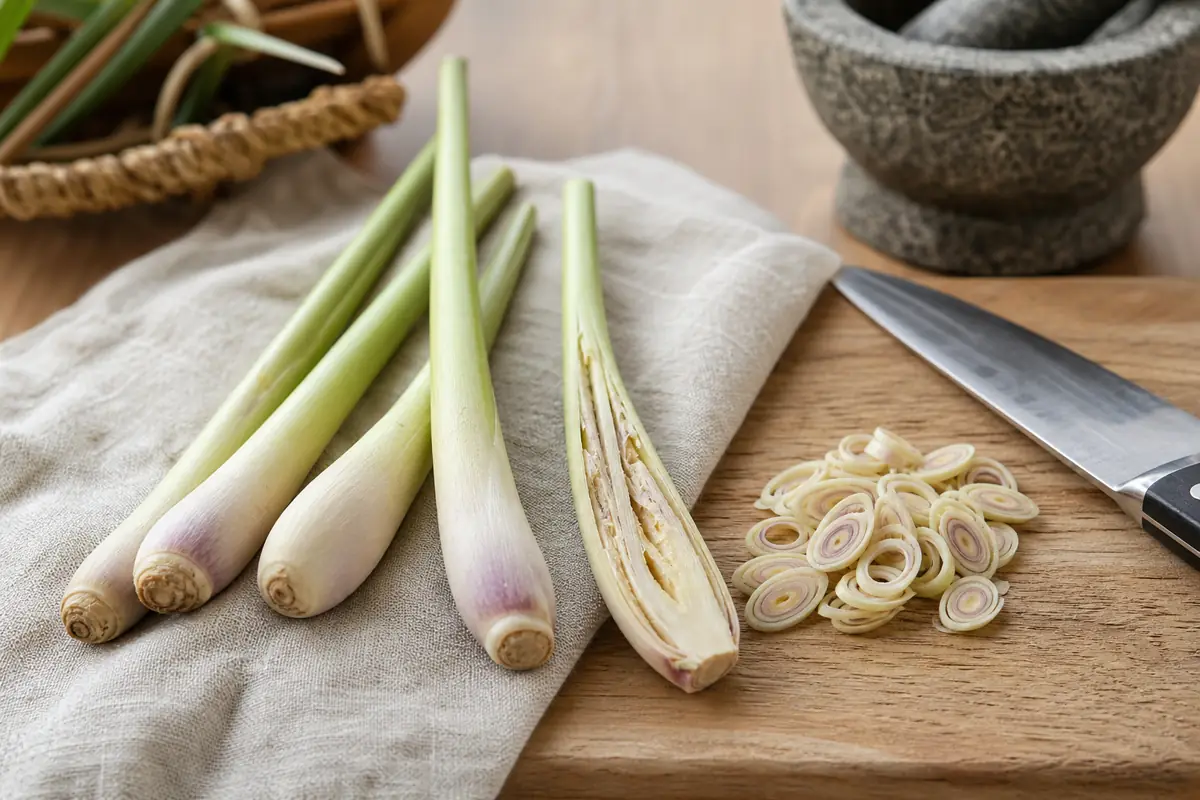
Lemongrass gives food a lemon-like aroma without making it sour. Bruise large pieces when they will perfume liquid and come out later, or slice the tender lower core across the fibers before mincing or pounding it into food.
What does lemongrass taste like?
Lemongrass tastes lemony, green, lightly floral, and gently warm, giving food the aroma of citrus without the sourness of citrus juice, so a broth can read bright while its salt and acid stay right where you set them.
Much of that familiar aroma comes from citral. Cutting the stalk exposes the aromatic compounds, and bruising opens more surface without scattering small fibers through the pot.
The flavor is broader than lemon peel, and a fresh stalk can suggest ginger, green herbs, and a soft floral note once it warms in coconut milk or oil.
That difference shows up at the stove. Lemon juice can sharpen a finished soup, but it cannot stand in for the slow herbal aroma that lemongrass releases while it cooks.
The last decision is whether the aroma belongs in the broth, in each bite, or beside an acid added later.
- Bruised stalk
- Gives a clean background infusion without scattering small fibers through the pot
- Fine mince
- Puts lemongrass into every bite, so the tender core must be cut across its fibers first
- Citrusy but flat
- Add salt or lime after tasting because extra lemongrass raises aroma but never sourness
Which part of lemongrass do you use?
The pale lower part is the easiest section to mince and eat. The firmer green stalk above it can still perfume a liquid, but it stays too fibrous for a pleasant bite.
Start by trimming the dry root end, then peel away the loose papery outer leaves until the stalk underneath feels firm and looks moist rather than brittle.
There is no universal cut line, because stalks vary in size and age. Use texture as the test.
The compact pale core should yield to a sharp knife, while a hollow, dry, or splintering section belongs in the compost.
Do not throw away every sound green section by reflex. Tough upper stalk can flavor stock, curry, rice, or a braise when it stays in a large piece that is easy to fish out.
The leafy top can also scent steaming water or a pot of rice when it is fresh and aromatic, so tie the loose leaves together first to keep them from scattering through the food.
A bruised stalk will not soften like a leek. Even after a long simmer, the fibers stay stiff enough to catch between the teeth.
That is why diners often push aside the visible pieces in a soup. The cook has used the stalk as an infusion, much like a bay leaf, rather than as a vegetable.
Should you bruise, slice, or mince lemongrass?
Bruise lemongrass when the dish needs a removable infusion. Slice or mince it when the herb has to stay in a marinade, paste, relish, or stir-fry.
For an infusion, press the flat side of a heavy knife onto the stalk and strike it firmly with your palm. A rolling pin works too.
The stalk should split in places and release a clear citrus smell while staying in one or two retrievable lengths.
Cut those lengths short enough to fit the pot, add them early to broth, coconut milk, or braising liquid, then taste as it cooks and lift them out before serving.
For anything you will actually eat, work only with the tender lower core. Slice it thinly across the fibers before mincing, since crosswise cuts shorten the long strands that otherwise survive blending and feel like threads.
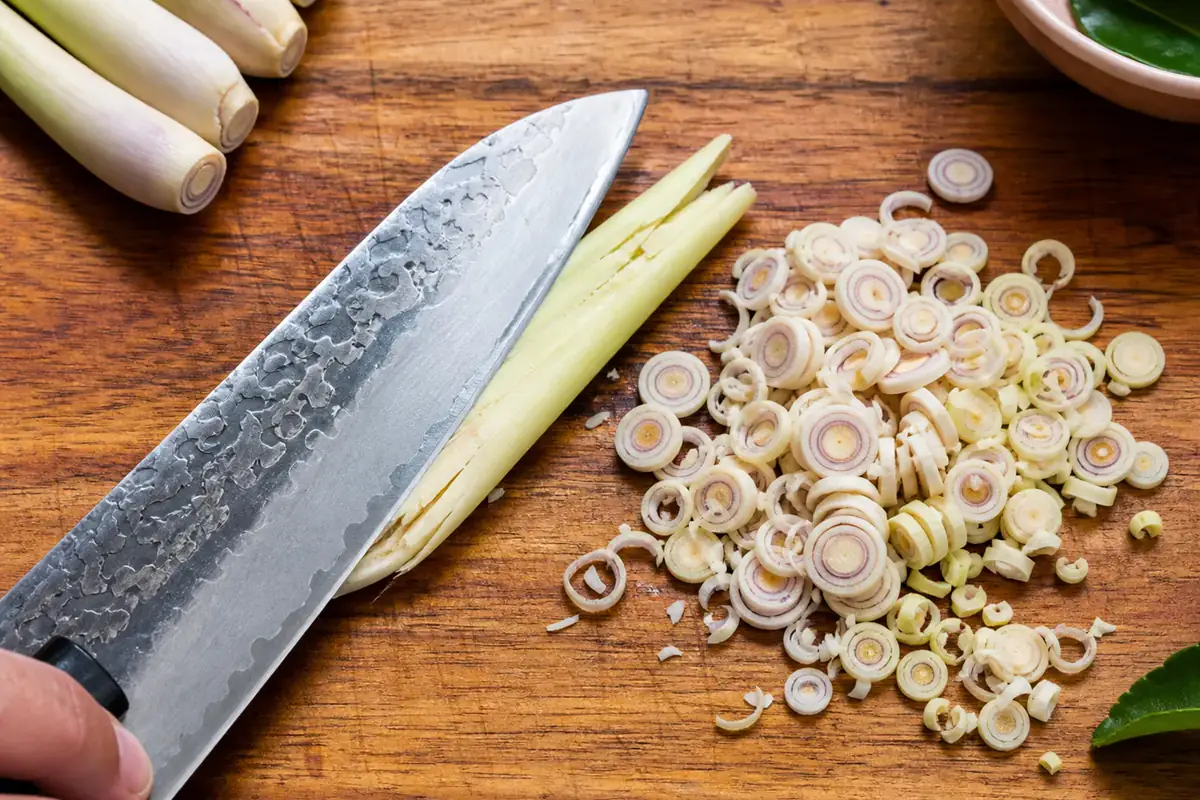
- Bruised length: Split the stalk enough to expose aroma without breaking it into loose fibers.
- Thin rings: Cut across the stalk so the long fibers become shorter.
- Fine mince: Keep chopping until no stiff strands remain between the fingers.
- Pounded paste: Start with small pieces so the mortar can break them down evenly.
A mortar gives excellent control once the rings are already thin. Pound the lemongrass before softer ingredients such as shallot or garlic, which need far less work.
A food processor is faster. Large chunks can spin around the blade and stay ragged, so cut the stalk into small pieces first, scrape the bowl, and process again until the mixture looks even.
For a marinade, a fine grater can work on the tender core, but stop once the stalk turns stringy, because the tougher remainder will not improve under the grater.
Press a pinch of the finished mince between two fingers. If you can pull out visible threads, chop or pound it again before it reaches the food.
How much lemongrass should you use and when should you add it?
One fresh stalk is a useful starting point for a modest pot. Preparation still changes the outcome as much as quantity, since a bruised stalk releases flavor gradually while a fine mince spreads it through every bite.
Use less when lemongrass is one aromatic among several, and use more when the dish is meant to lead with its flavor or when a large volume of liquid will dilute it.
- - Soup or light broth for four: Start with one bruised stalk and taste after 15 to 20 minutes.
- - Coconut curry or braise for four: Start with one or two bruised stalks, depending on the other aromatics.
- - Marinade for 500 grams of protein: Start with one tender lower core, minced or processed very fine.
- - Pounded seasoning paste: Follow the recipe balance, because chile, galangal, garlic, and shallot also need room.
- - Sweet infusion for two cups of liquid: Start with one bruised stalk, steep gently, then strain.
Treat these as starting points, not product conversions. Stalk size, freshness, cut surface, cooking time, and the amount of liquid all change what actually reaches the plate.
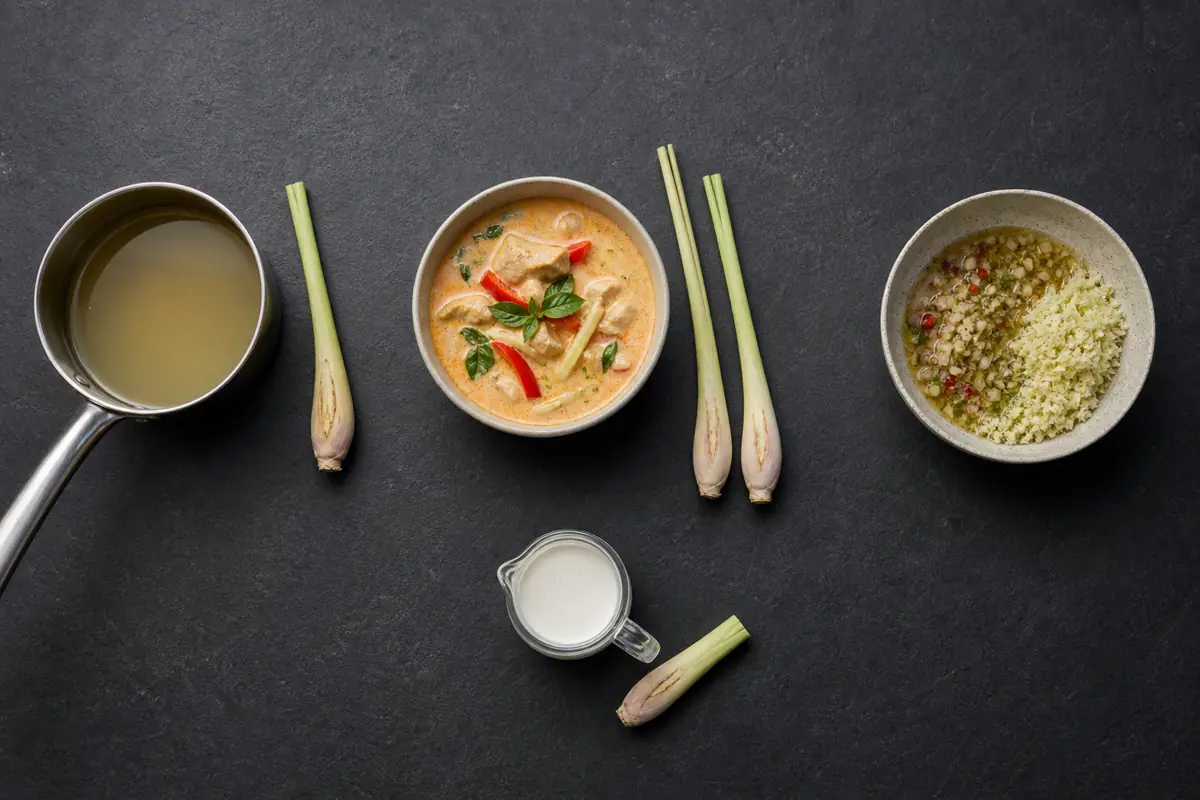
- Light broth: One bruised stalk gives a clear place to begin.
- Rich curry: Taste after the coconut and aromatics have cooked together.
- Marinade: Fine texture matters because the lemongrass stays on the food.
- Sweet liquid: Strain as soon as the aroma is clean and distinct.
Add bruised pieces early enough to infuse, and let minced lemongrass go in with the other aromatics, though very high heat can brown the fine particles before they soften.
Prepared pastes need their package label and a taste test, because salt, sugar, oil, water, and concentration all vary. A fixed spoonful cannot represent every brand.
If the aroma is already strong, remove the large stalks rather than adding ingredients to hide them. A small correction during the simmer is cleaner than a rescue at the table.
What dishes suit each lemongrass preparation?
Let the way a dish is served choose the preparation.
A clear soup can hold large pieces that come out later, while a marinade needs lemongrass fine enough to cling to the food without leaving woody threads.
Bruised lengths suit soups, coconut broths, curries, and braises. They can simmer beside galangal, makrut lime leaves, ginger, or whole spices, then leave the pot before it reaches the table.
Finely minced lemongrass suits grilled chicken, pork, beef, fish, tofu, and mushrooms. It spreads through a wet marinade and browns against the food instead of floating loose in the pan.
Pounded lemongrass belongs in curry pastes and aromatic seasoning pastes, where breaking it down with chile, garlic, shallot, and galangal builds a base you can fry gently before any liquid enters.
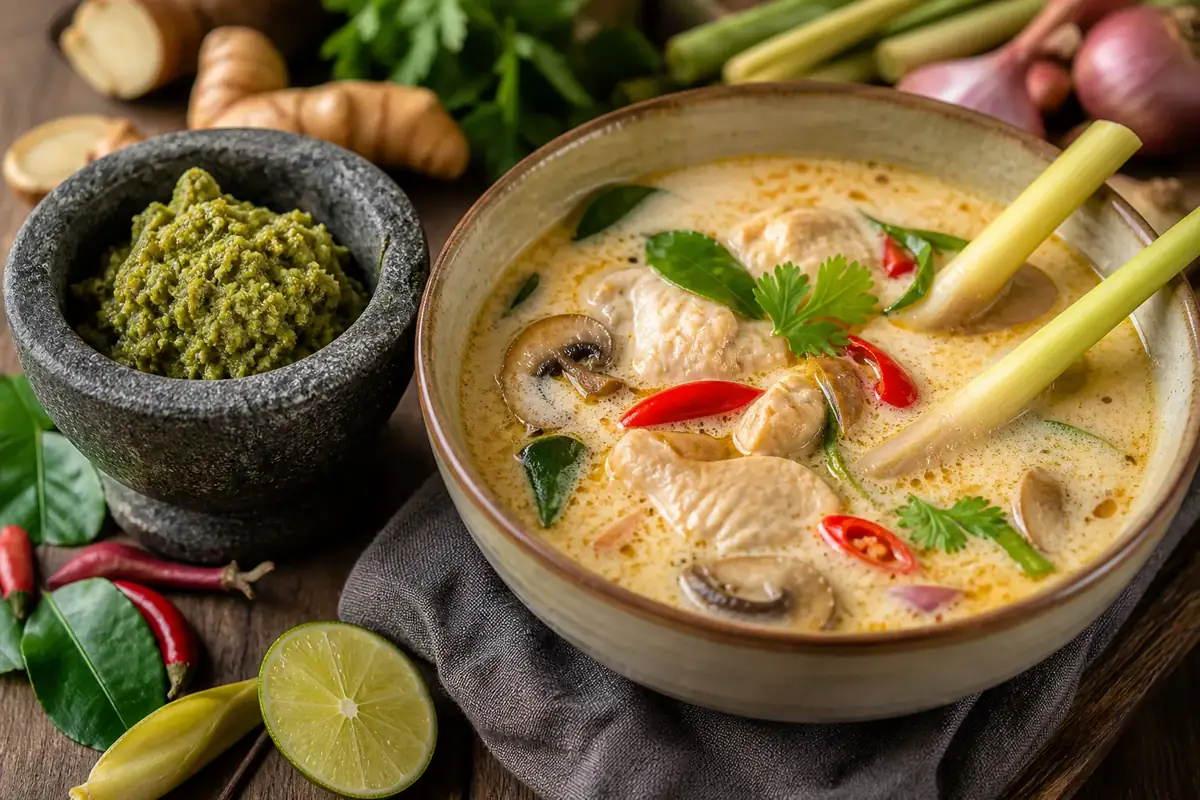
- Broth: Bruise large pieces and remove them before serving.
- Curry paste: Pound thin slices until the fibers blend with the other aromatics.
- Marinade: Use a fine mince that can coat the food evenly.
- Grill: Brush away thick loose pieces that could burn before the center cooks.
A quick stir-fry needs more care. Use a very fine mince, cook it briefly with the aromatics, then add the food before the particles darken.
Rice can take a knotted or bruised green stalk during steaming, so the stalk perfumes the pot without leaving chopped fibers among the grains.
Sweet dishes use the infusion path. Bruised lemongrass can scent cream, coconut milk, syrup, or custard, but strain the liquid before the dessert is finished.
The same herb produces different textures without changing its flavor story. Large pieces carry the aroma, and small pieces become the seasoning.
Regional dishes do not all use lemongrass in the same form, so follow the recipe's cut and timing for a named dish, especially when the herb is part of a carefully balanced paste.
Can dried, frozen, or prepared lemongrass replace fresh stalks?
Frozen lemongrass is usually the closest practical alternative to fresh. Dried pieces, paste, and powder can all work, but each one fits a narrower job.
Fresh stalks give the cook the most control, because a single stalk can be bruised for liquid, minced for eating, or split so the tender and tough sections do different work.
Freezing softens the stalk slightly but keeps a useful citrus aroma. Freeze whole trimmed stalks for broth, or freeze thin rings and fine mince in separate portions for faster cooking.
Dried lemongrass works best in soups, stocks, and other wet dishes, where liquid can rehydrate the pieces and pull out aroma, even though the texture rarely becomes smooth enough for a paste.
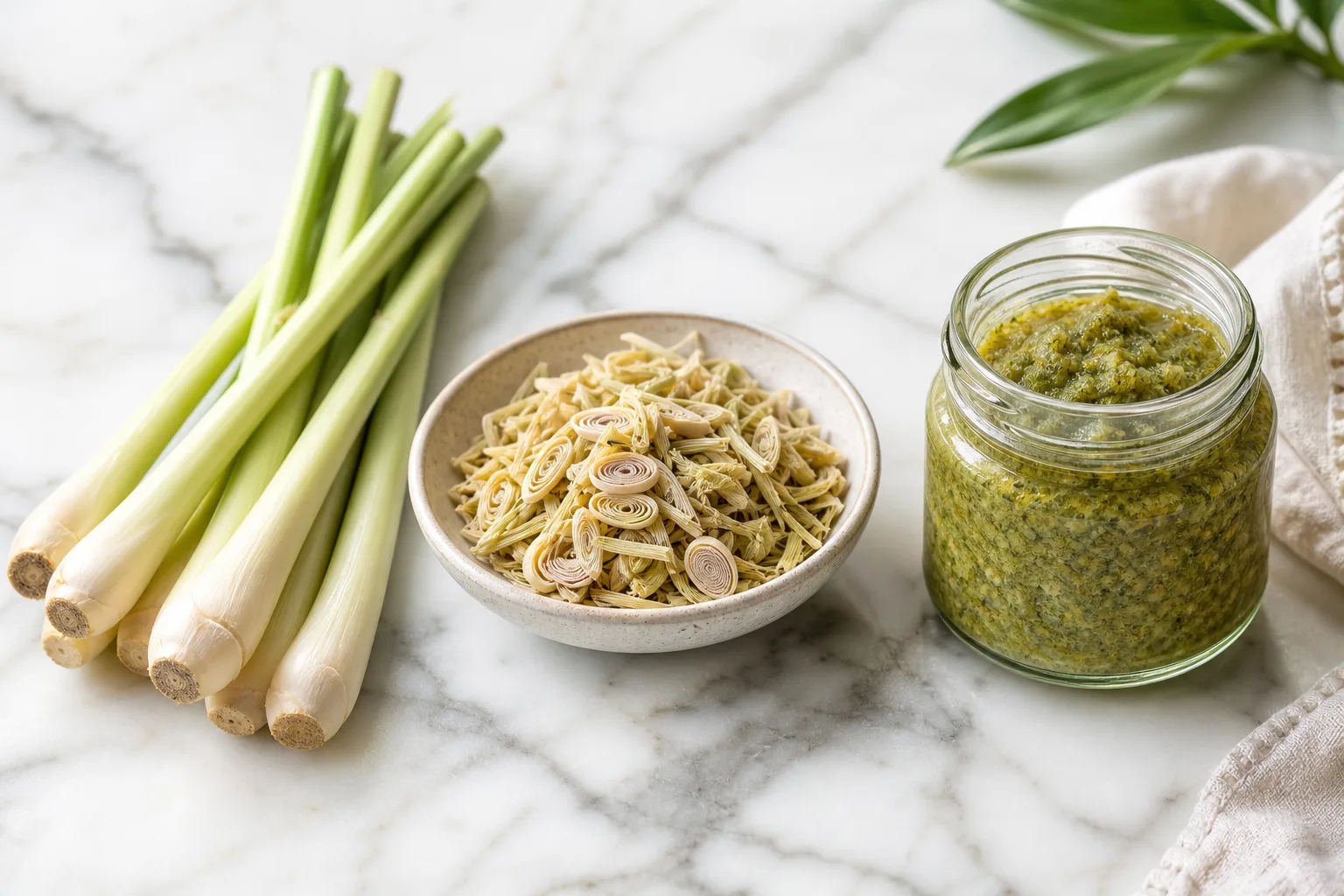
- Fresh stalk: Best control over cut, texture, and infusion.
- Frozen portion: Convenient for broth, paste, or marinade after proper preparation.
- Dried pieces: Give them liquid and plan to strain firm fragments.
- Prepared paste: Check the label for salt, sugar, oil, and concentration.
- Powder: Use carefully because texture and strength vary widely.
Prepared paste suits marinades, curries, and sauces where an even texture helps, though some products carry oil, acid, salt, or sugar that changes more than the lemongrass note alone.
Powder is convenient in a dry seasoning or a quick sauce, yet it cannot behave like a bruised stalk. Start below the package suggestion with an unfamiliar brand, then taste after the powder has hydrated.
| Form | Best use | Main advantage | What to watch |
|---|---|---|---|
| Fresh | Any preparation | Full control over cut and texture | Requires trimming and knife work |
| Frozen | Broth, paste, marinade | Good aroma with less waste | Softer texture after thawing |
| Dried pieces | Soup, stock, tea | Stores easily | Firm pieces need liquid and straining |
| Prepared paste | Marinade, curry, sauce | Fast and evenly distributed | Added salt, sugar, oil, or acid |
| Powder | Dry seasoning, quick sauce | No chopping | Strength and texture vary by brand |
Do not force a universal conversion. Compare the label, smell the product, and decide whether the recipe wants removable aroma or edible seasoning.
What can you use instead of lemongrass?
No substitute copies lemongrass exactly. The best choice keeps the job it was doing and avoids adding a new flavor the dish cannot absorb.
For a removable broth infusion, use strips of lemon zest with a few slices of ginger or galangal, letting the zest supply the citrus aroma while the rhizome supplies the warmth.
Keep the lemon juice out until the end. Juice adds acid and lemongrass does not, so adding it early can turn the whole dish sharper than you intended.
Makrut lime leaf can bring a vivid floral citrus note to a wet dish. It is more perfumed and less grassy than lemongrass, so start with a restrained amount and treat the result as a variation rather than a copy.
For a marinade or paste, lemon zest and finely grated ginger cover part of the flavor direction, though they will not supply the same green aroma or fibrous body.
| Recipe job | Practical replacement | What it preserves | What changes |
|---|---|---|---|
| Removable broth infusion | Lemon zest and sliced ginger | Citrus aroma and warmth | Less green and grassy |
| Coconut curry | Makrut lime leaf and a little ginger | Floral citrus and warmth | More perfumed character |
| Marinade | Lemon zest and grated ginger | Aroma that clings to food | Different texture and sharper top note |
| Sweet infusion | Lemon peel or lemon verbena | Clean citrus fragrance | Less warmth and herbal depth |
| Lemongrass-led dish | Wait for fresh, frozen, or paste | The intended main flavor | No close replacement |
A substitute works best when lemongrass merely supports the dish. When the recipe is built around lemongrass, changing the central aromatic gives you a different dish, even if the result still tastes good.
Replace the function first, then rebalance. Taste salt and acid after the substitute has cooked, because zest, leaves, and prepared products each reveal themselves at a different speed.
How do you choose and store fresh lemongrass?
Choose stalks that feel firm and relatively heavy for their size. The lower section should look pale, plump, and tightly layered rather than hollow, split, or dry all the way through.
A little dryness at the leafy top is normal, but deep browning, brittle layers, a sour smell, or a base that collapses under gentle pressure all point to a stalk past its best.
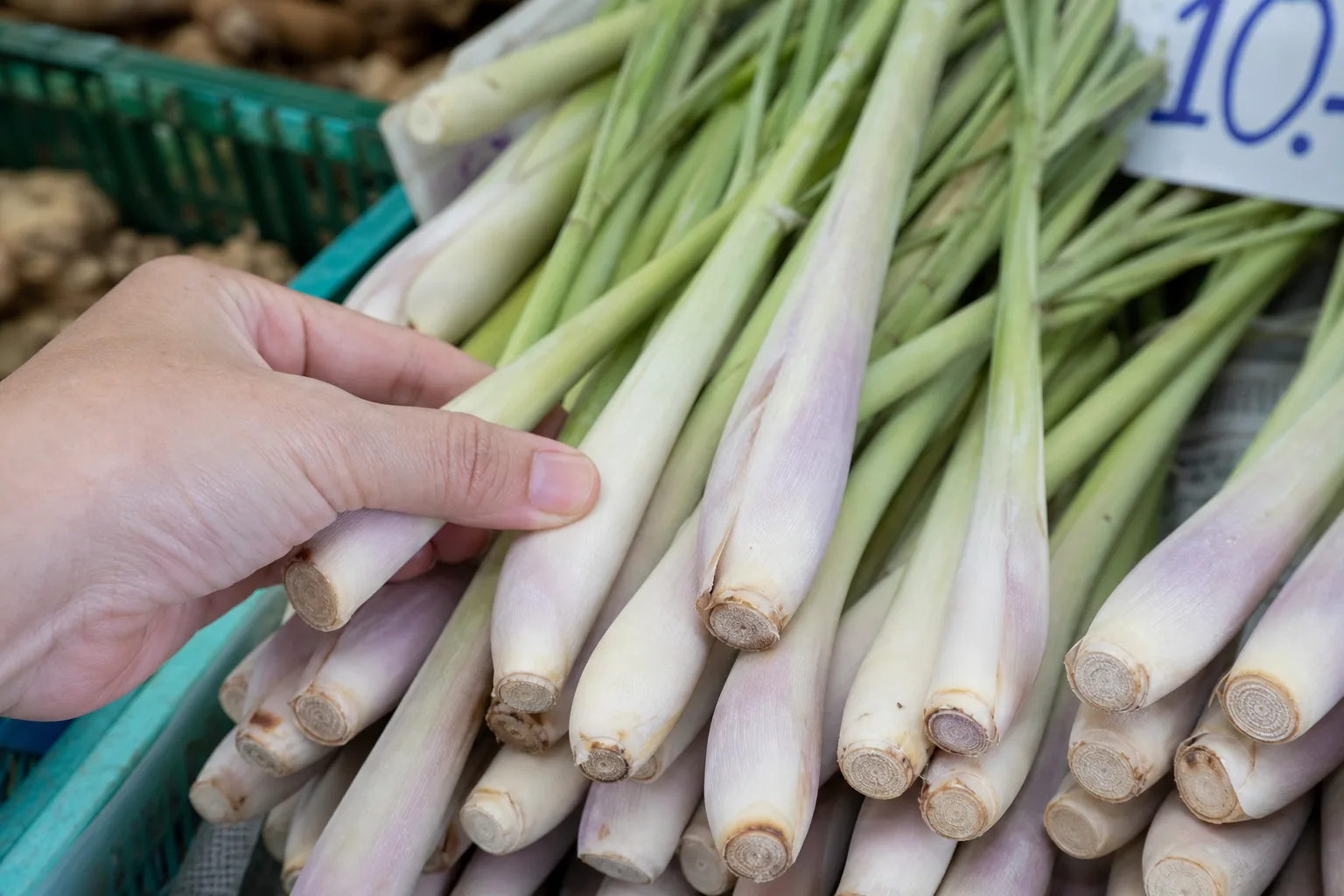
- Firm stalk: The layers stay compact when pressed.
- Pale base: More tender material remains for slicing and mincing.
- Dry damage: Split, hollow, or brittle sections have lost aroma and moisture.
- Storage choice: Refrigerate for near-term use or freeze prepared portions.
Wrap whole unwashed stalks and refrigerate them. They stay useful for roughly a couple of weeks, though starting freshness and refrigerator conditions matter more than any promised date.
Check the cut end before cooking. Peel the dry outer layers, trim any damaged area, then bruise or cut the moist core.
Discard any stalk with mold, slime, or an off fermented smell.
Freeze extra lemongrass while it is still aromatic, using whole trimmed stalks for later infusions and rings, mince, or pounded portions to save time in marinades and pastes.
Freeze prepared lemongrass in recipe-sized amounts on a tray or in a small mold before moving it to a sealed container. That keeps one large frozen block from forcing repeated thawing.
Dried pieces and powder belong in airtight containers away from heat, light, and moisture, and should be replaced once the aroma fades to plain hay or dust.
The most useful storage choice simply follows the next meal. Keep two stalks whole for soup, mince another for a marinade, and freeze the rest before the refrigerator slowly dries them out.