
Bay Leaf Works Best When It Has Time to Infuse
The right leaf gives stocks, beans, sauces, and braises a quiet herbal backbone, but species, dose, and cooking time change the result.
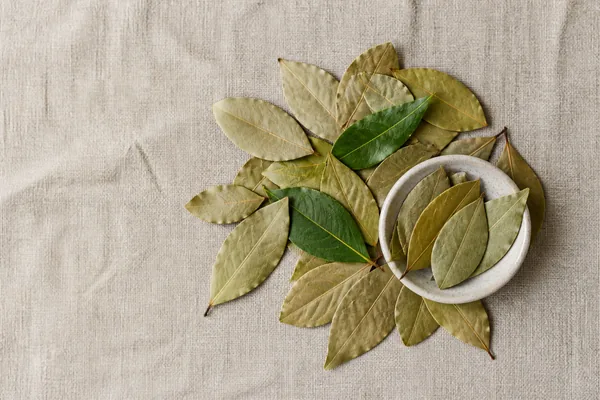
Bay leaf rarely announces itself in the first spoonful. Give a good dried leaf enough time and it adds tea, pine, gentle bitterness, and a cooling lift that makes long-cooked food taste more complete. The practical controls are simple once you know which leaf you have, how much liquid is in the pot, and when the leaf should come out.
What flavor does bay leaf add?
Bay leaf adds a dry, tea-like aroma with hints of eucalyptus, pine, wood, and black pepper. It also contributes a restrained bitterness that can keep sweet onions, carrots, beans, and rich meat from making a long-cooked dish taste heavy.
The common culinary species is Mediterranean bay laurel, or Laurus nobilis. Its leaves contain 1,8-cineole, also called eucalyptol, along with smaller aromatic compounds that create the greener, peppery, and floral parts of the smell.
That cooling cineole note is easy to recognize in a plain infusion. In a finished stock, however, it sits behind browned meat, vegetables, salt, and fat, so the result feels more integrated than obviously minty.
This is why bay leaf is often easier to notice when it is missing. Make two small pans of plain lentils or white sauce, simmer one with a fresh dried leaf for 40 minutes, then taste them side by side after removing the leaf.
The bay-scented batch should seem less blunt and slightly drier at the finish. Tea, pine, and gentle bitterness are better tasting cues than the vague instruction to look for more depth.
Bay needs liquid and time because a whole leaf scattered over food at the end contributes almost nothing, while the same leaf in a moist braise slowly releases aroma into both water and fat.
Do not expect bay to rescue weak stock or replace proper browning, salt, or acid. It supports the base that is already there, and too many leaves can add a woody, medicinal edge instead of balance.
How long should bay leaves cook?
Add whole bay leaves near the start of a stock, bean pot, soup, or braise. A dried Mediterranean leaf usually needs at least 30 minutes in hot liquid before its effect becomes clear, and one to two hours suits the slow dishes where bay does its best work.
Extraction changes over time. The first stage releases the greener, cooling aroma, while a longer simmer pulls out the woody and gently bitter notes that make broth taste structured.
That does not mean longer is always better. Once the food is finished, leaving the leaf in during cooling and storage adds little useful aroma and increases the chance that someone finds the stiff leaf later.
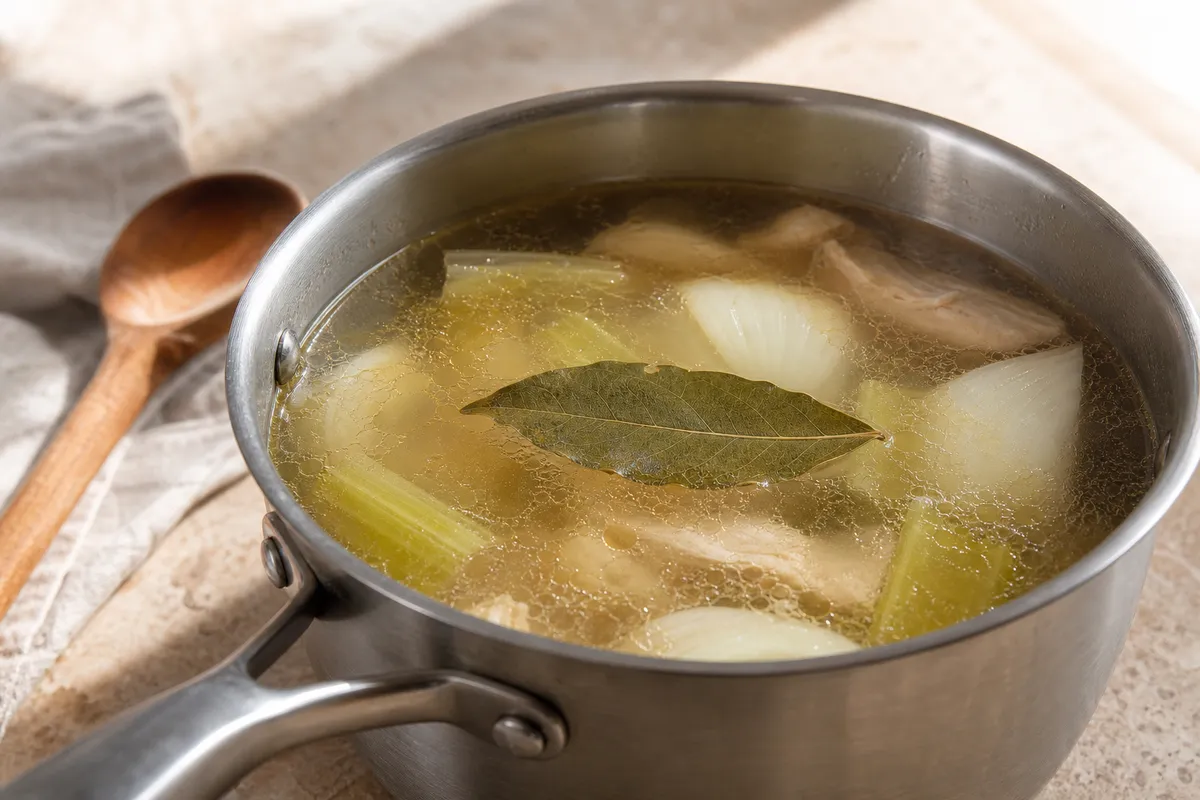
For a quick tomato sauce that cooks for only 15 to 20 minutes, lightly crack a dried leaf once before adding it. The small break exposes more surface without leaving the hard fragments that come from crushing it completely.
A bouquet garni or spice bag gives the same control in a large pot by keeping bay with the other durable aromatics until the liquid tastes balanced.
Ground bay behaves differently because every particle contacts the food at once. Use it only when a recipe specifically calls for it, measure carefully, and avoid substituting a spoonful of powder for one whole leaf.
The useful timing decision is therefore tied to form. Whole leaves suit long extraction and easy removal, while intentionally ground bay suits a shorter cook where its fine texture can disappear into the dish.
How many bay leaves should you use?
For an ordinary soup, sauce, or bean dish, begin with one dried Mediterranean leaf for about 4 cups of liquid. Use two average leaves for a large 6 to 8 quart stockpot, especially when bones, meat, or a large quantity of vegetables will absorb and spread the aroma.
Leaf count alone cannot settle the dose because size, species, age, breakage, liquid volume, and cooking time all change how forcefully the same number reads.
| Dish or vessel | Starting amount | Useful cooking window | What to watch |
|---|---|---|---|
| Sauce or lentils, 2 cups | 1 small dried Mediterranean leaf | 30 to 45 minutes | Crack once for a short sauce |
| Soup or beans, 4 cups | 1 average dried Mediterranean leaf | 45 to 90 minutes | Taste before adding a second |
| Large stockpot, 6 to 8 quarts | 2 average dried Mediterranean leaves | 1 to 3 hours | Remove with the other solids |
| California bay | 1/2 leaf for each Mediterranean leaf | Check after 20 to 30 minutes | Much more pungent and cooling |
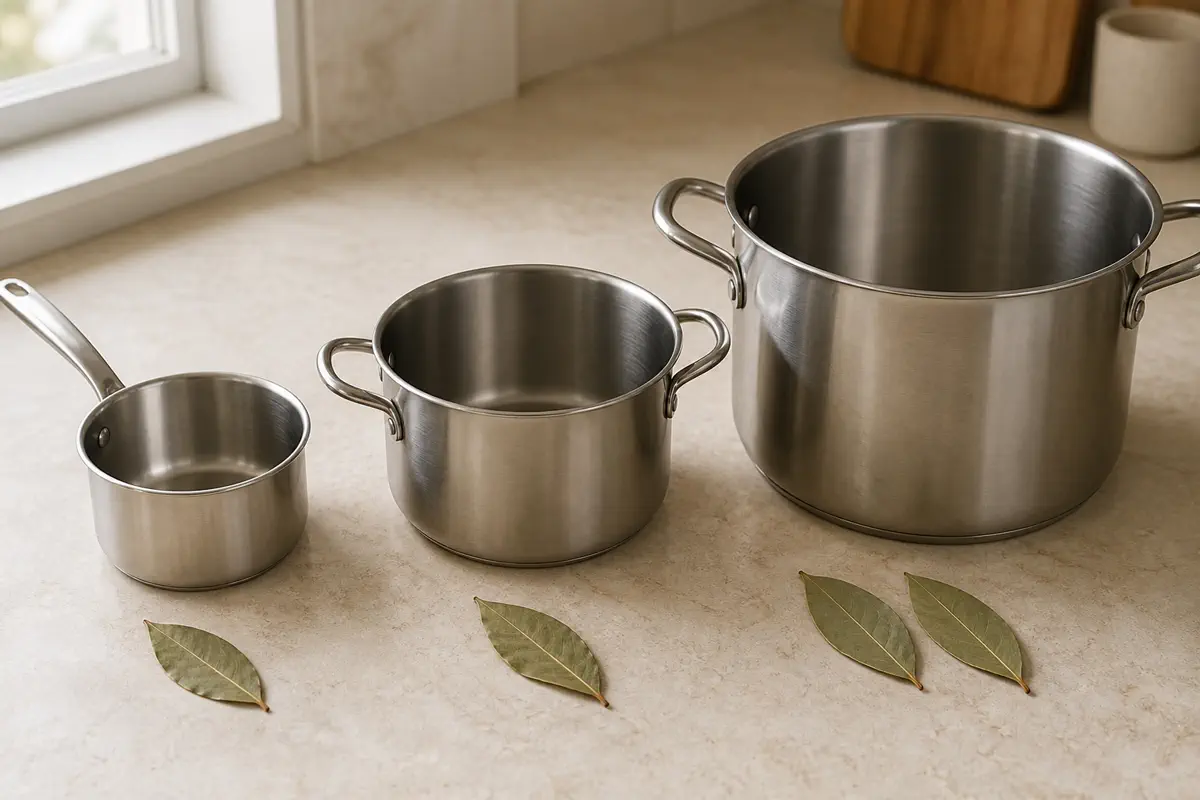
Freshness can make one leaf from a new packet taste stronger than two gray leaves from an old jar. Smell the leaf before it goes in, and start below the recipe amount when the aroma is sharp, green, and immediate.
A broken leaf extracts faster than an intact one. If a packet contains many fragments, place them in an infuser and use a little less by volume than you would with whole leaves.
When bay becomes too strong, remove every piece and dilute the dish with unsalted stock, beans, sauce, or another unseasoned base before correcting salt and acid.
Adding sugar rarely solves the problem. It can hide bitterness in the first taste while leaving the medicinal aroma in the finish.
Are fresh or dried bay leaves better?
Dried Mediterranean bay is the more useful default for most home cooking. Drying softens the sharp green top notes and produces the rounded tea-and-wood character that recipe writers usually mean when they list one bay leaf.
Fresh Mediterranean leaves taste greener, more floral, and more assertive. They can be excellent in custard, rice, fish, or a short braise, but they are not automatically better because they came from a living branch.
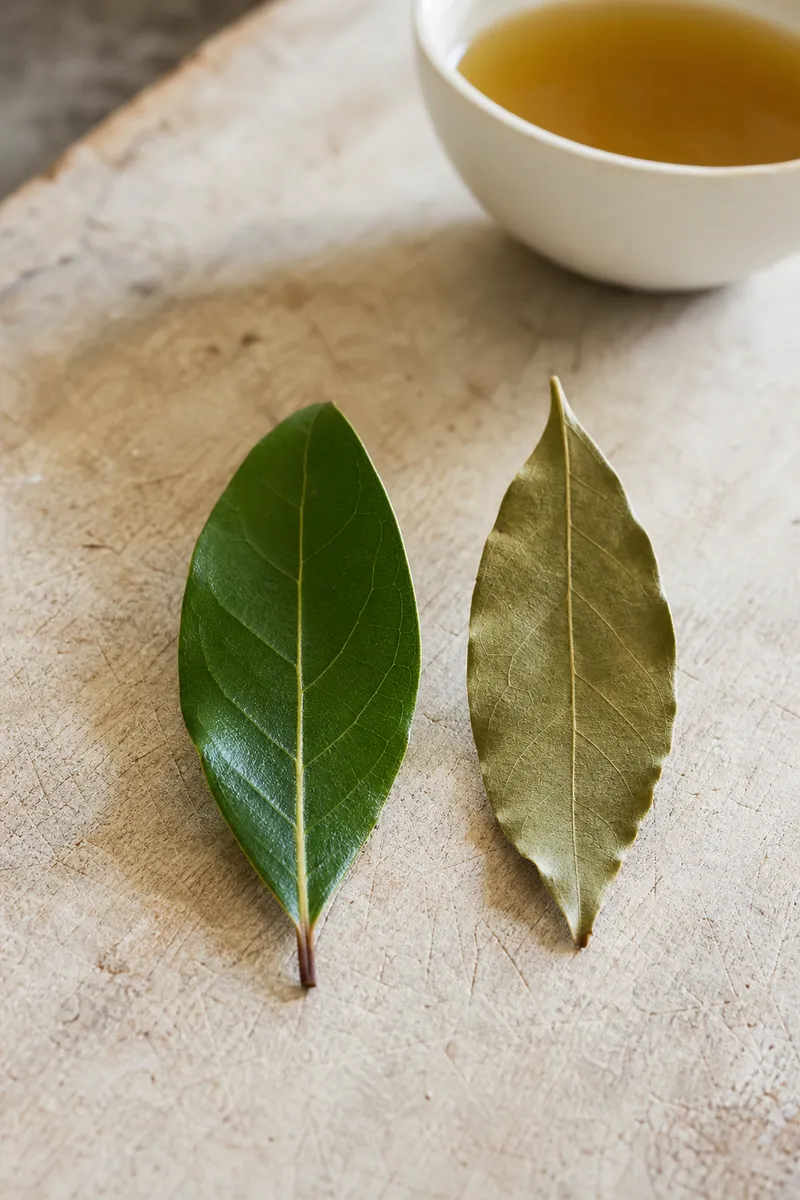
The source matters more than the simple fresh-or-dried label. Fresh leaves in some North American produce sections are California bay, a different and much stronger species, while spice-aisle dried leaves are commonly Mediterranean bay from Turkey.
If you know the fresh leaf is Laurus nobilis, begin with one fresh leaf in place of one dried leaf and taste earlier. Leaf size and growing conditions vary, so a universal conversion would pretend to offer precision the ingredient does not have.
For California bay, start with half a leaf or less because its penetrating eucalyptus character can dominate a small pot before Mediterranean bay becomes obvious.
Dried leaves also give more consistency from week to week. They are easy to count, easy to retrieve, and suited to the long wet cooking methods that make bay worthwhile.
Fresh leaves make sense when you own a correctly identified tree or can buy them with a botanical name. Otherwise, a fragrant packet of whole dried Mediterranean leaves is the safer culinary reference.
Turkish, California, and Indian bay are different ingredients
The name bay leaf covers several aromatic trees, and the leaves do not belong in the same dishes at the same dose. Check the botanical name, origin, vein pattern, and aroma before treating an unfamiliar packet as a direct replacement.
Mediterranean or Turkish bay is Laurus nobilis. The dried leaves are usually oval to lance-shaped with one main central vein, a muted olive color, and a balanced tea, pine, and eucalyptus aroma.
California bay, Umbellularia californica, tends to have narrower, glossier fresh leaves and a pungent menthol-like aroma that can cause a headache when many are crushed.
Indian bay, often sold as tej patta, is Cinnamomum tamala. It commonly shows three strong veins running lengthwise, and its warm cinnamon-like character belongs in biryani, pulao, korma, and regional spice mixtures rather than a French bouquet garni.
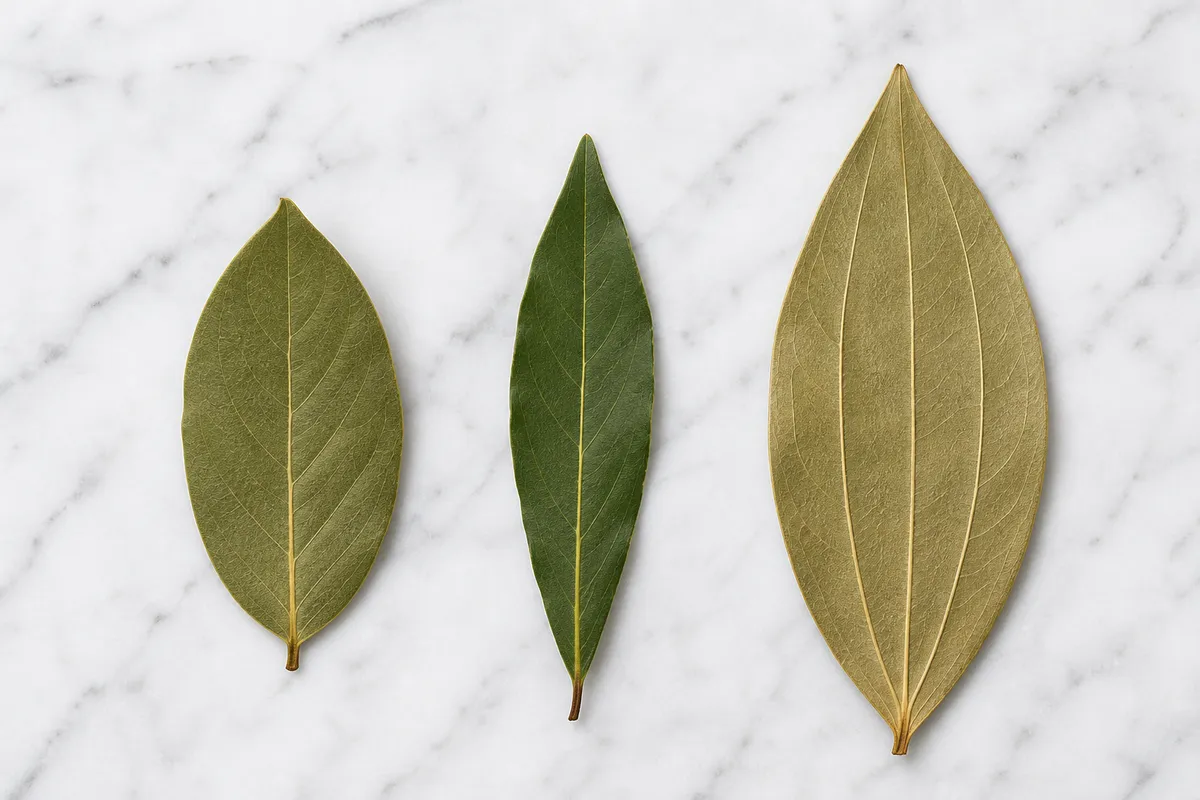
| Market name | Botanical species | Flavor direction | Practical use |
|---|---|---|---|
| Turkish or Mediterranean bay | Laurus nobilis | Tea, pine, eucalyptus, gentle bitterness | Stocks, beans, tomato sauces, braises |
| California bay | Umbellularia californica | Strong menthol, eucalyptus, pepper | Use sparingly in rich long-cooked food |
| Indian bay or tej patta | Cinnamomum tamala | Cinnamon, clove, warm wood | Rice dishes, curries, and South Asian braises |
Mexican bay and Indonesian bay create further regional distinctions. Follow the named cuisine and the package identity rather than assuming that any leathery aromatic leaf will recreate Mediterranean bay.
When the label gives only bay leaves, inspect the origin. Turkey usually signals Laurus nobilis, California points toward Umbellularia, and an Indian package marked tej patta should be treated as its own spice.
This distinction prevents both medicinal soup from an overly strong California leaf and a warm tej patta dish weakened by Mediterranean bay.
Why should you remove bay leaves before serving?
Remove whole bay leaves because they stay stiff, sharp-edged, and abrasive after cooking. Ordinary culinary Laurus nobilis does not become poisonous in the pot, but the softened leaf still does not chew like a tender herb.
A whole leaf can lodge in the mouth or throat, and broken pieces are harder to see in stew or sauce. Count the leaves as they enter the pot so you know how many need to come out.
Ground bay is a separate pantry product milled fine enough to remain in a rub, sausage mixture, or sauce, and it extracts rapidly enough to require a much smaller measured dose.
Do not put a whole cooked leaf into a blender and assume the result equals ground bay. Home blending often leaves needle-like pieces, especially when the liquid does not keep the leaf moving across the blades.
The removal rule is physical and practical. It has nothing to do with a hidden toxin appearing after an hour of simmering.
What can substitute for bay leaf?
No single herb reproduces bay leaf's mix of cooling aroma, tea-like dryness, and gentle bitterness. Choose a substitute by dish, and leave the leaf out when an alternative would pull the food in the wrong direction.
- - For stock or bean soup, use a small thyme sprig and remove it before serving. The result is woodier and less cooling.
- - For tomato sauce, use a small pinch of oregano only when that Mediterranean direction suits the dish.
- - For a rich meat braise, combine a small thyme sprig with two black peppercorns rather than adding a large amount of either.
- - For Indian bay in rice or curry, use a small piece of cinnamon with one clove when those warm notes fit the recipe.
- - For a delicate white sauce or fish dish, omission is often cleaner than a loud substitute.
Fresh curry leaves are not a substitute despite the shared word leaf because their citrusy, savory aroma belongs to South Indian frying and simmering methods.
Basil is also a poor default. Its sweet green aroma fades differently under long heat, so it cannot supply the dry background note that bay brings to a stockpot.
If bay is one of many background aromatics, omission may barely change the dish. When it is part of the central identity, as in a bay-infused custard or a simple white bean pot, wait for the right ingredient instead of building a different flavor by accident.
How can you tell when dried bay leaves are spent?
Snap one leaf and smell the broken edge for tea, eucalyptus, and dry wood because a spent leaf smells like paper, dust, or almost nothing.
Color offers a second clue. Olive green leaves are often livelier than gray-brown ones, although aroma is the final test because drying method and origin also affect appearance.
Buy whole leaves rather than a bag of crumbs. Intact leaves protect their aromatic oils, give you a consistent count, and remain much easier to remove from food.
- - Choose a packet with mostly intact, olive-green leaves and a named origin or species.
- - Keep the leaves airtight, dark, and away from stove steam.
- - Write the opening month on the jar when pantry turnover is slow.
- - Test by snapping rather than trusting the printed date alone.
- - Replace a silent jar instead of doubling the dose and adding more woody material.
A practical quality window is about one to two years for well-stored whole leaves, but storage conditions and starting freshness matter more than the calendar. Heat, light, and repeated exposure to humid air can flatten a packet much sooner.
Do not refrigerate ordinary dried leaves. Condensation during repeated opening can add moisture, while a cupboard away from the oven keeps the product dry and stable.
Fresh leaves need different handling. Wrap them lightly, refrigerate them, and use them while they remain aromatic and free from slime, black patches, or mold.
Keep a small packet of identifiable whole leaves, snap one before cooking, and replace it when the scent no longer arrives without effort.