
What Are Curry Leaves, and Are They in Curry Powder?
Choose fragrant leaves, dry them well, and give them seconds in hot fat.
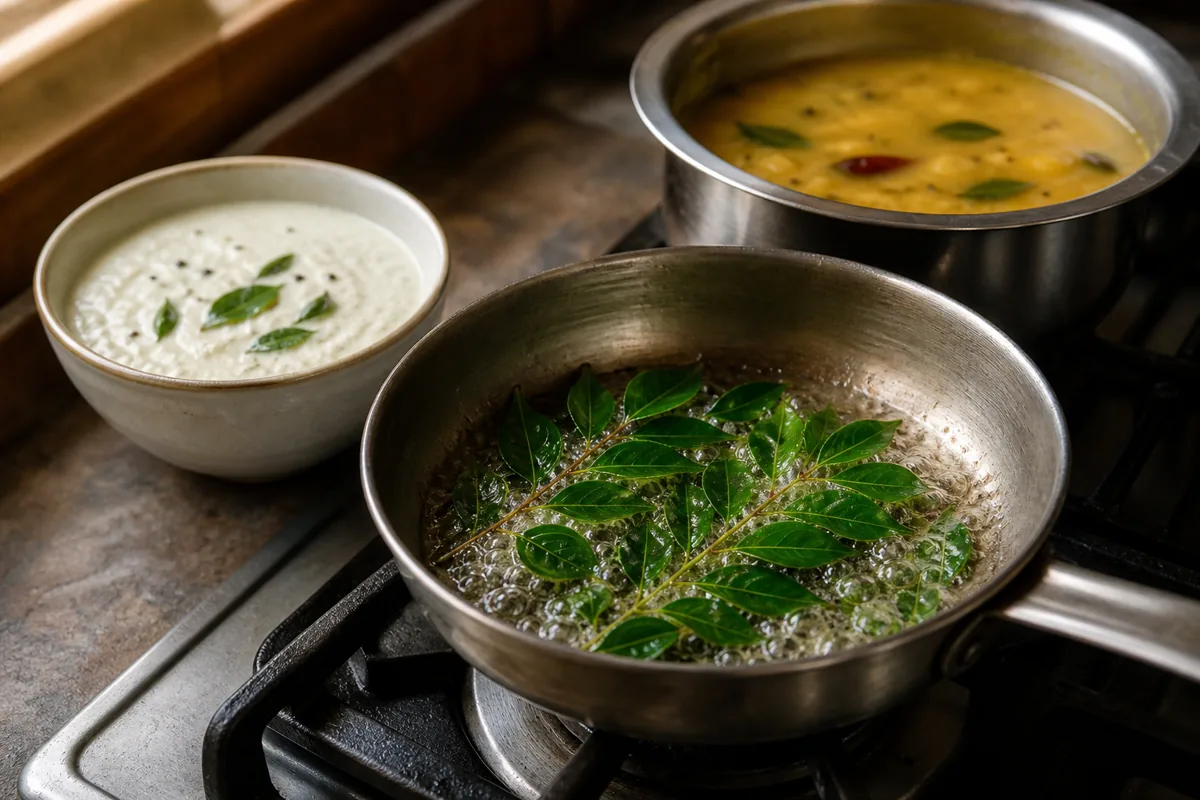
Curry leaves are aromatic leaves used whole, torn, or chopped, rather than the ground spices sold as curry powder. For four servings, start with 8 to 12 fresh or frozen leaves, dry them thoroughly, and fry them briefly in hot fat until glossy, crisp, and fragrant.
What do curry leaves taste like?
Curry leaves taste citrusy, green, lightly bitter, and savory. Once fried, they gain a warm toasted note that can suggest lime peel, lemongrass, and roasted nuts without copying any one of them.
Their aroma matters more than their raw taste.
Fold a fresh leaf before buying or cooking with it.
A good one releases a distinct green-citrus scent. A tired leaf smells mostly grassy even if it still looks green.
Leaf size and freshness make a fixed count imprecise. Start with 8 to 12 medium leaves for four servings, but use fewer very large, intensely fragrant leaves or a few more small, quiet ones.
The rest of the dish changes the useful dose too. A mild pot of rice exposes every leaf, while tomato, roasted spices, or a strongly sour base can absorb the same count without making the curry-leaf aroma obvious.
Let aroma calibrate the count.
Fry the starting amount, smell the fat, and add a second small batch only if the first disappears behind the other ingredients.
Hot fat releases and carries the leaf oils across the food. The same aroma chemistry explains why a fried leaf smells fuller than one dropped straight into water.
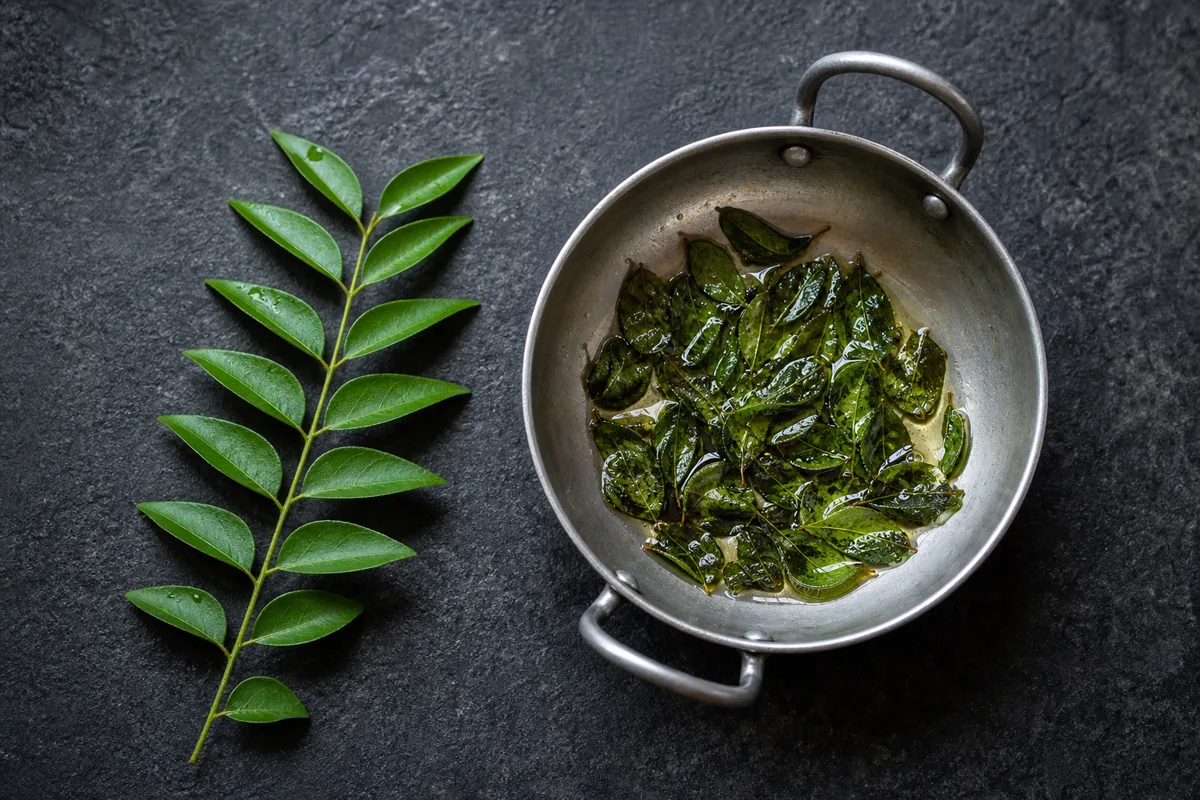
- Fresh leaf: Folding it should release a clear green and citrus aroma.
- Hot oil: The leaf crackles and its aroma spreads through the fat.
- Crisp stage: The leaf darkens slightly but stays green rather than brown.
- Finished food: The aroma supports lentils, coconut, rice, or vegetables.
The firm leaf may stay fibrous in a long simmer, while a brief fry makes it crisp. Taste one fried leaf when learning the ingredient so you know both the aroma and the texture diners will meet.
Do not expect the flavor of a commercial curry blend. Curry leaf contributes one fresh aromatic layer, not the turmeric, coriander, cumin, and chile profile people call curry powder.
Are curry leaves the same as curry powder?
Curry leaves and curry powder share a word, not an ingredient identity.
The leaf grows on the South Asian tree Murraya koenigii, while the powder is a variable blend of ground spices.
Recipes use the leaves fresh, frozen, dried, or ground, though those forms are not equally aromatic. They are usually counted as leaves rather than measured by spoonful.
Curry powder commonly contains turmeric, coriander, cumin, fenugreek, chile, or other spices. Its formula, color, salt, and heat vary by producer.
| Ingredient | Form | Main aroma | Best timing |
|---|---|---|---|
| Curry leaves | Fresh or preserved leaf | Citrusy, green, toasted | Brief fry or wet simmer |
| Curry powder | Ground spice blend | Earthy, warm, sometimes hot | Gentle bloom before liquid |
| Bay leaf | Tough aromatic leaf | Woody and herbal | Long simmer, then remove |
| Makrut lime leaf | Firm citrus leaf | Floral lime peel | Bruise or slice for wet dishes |
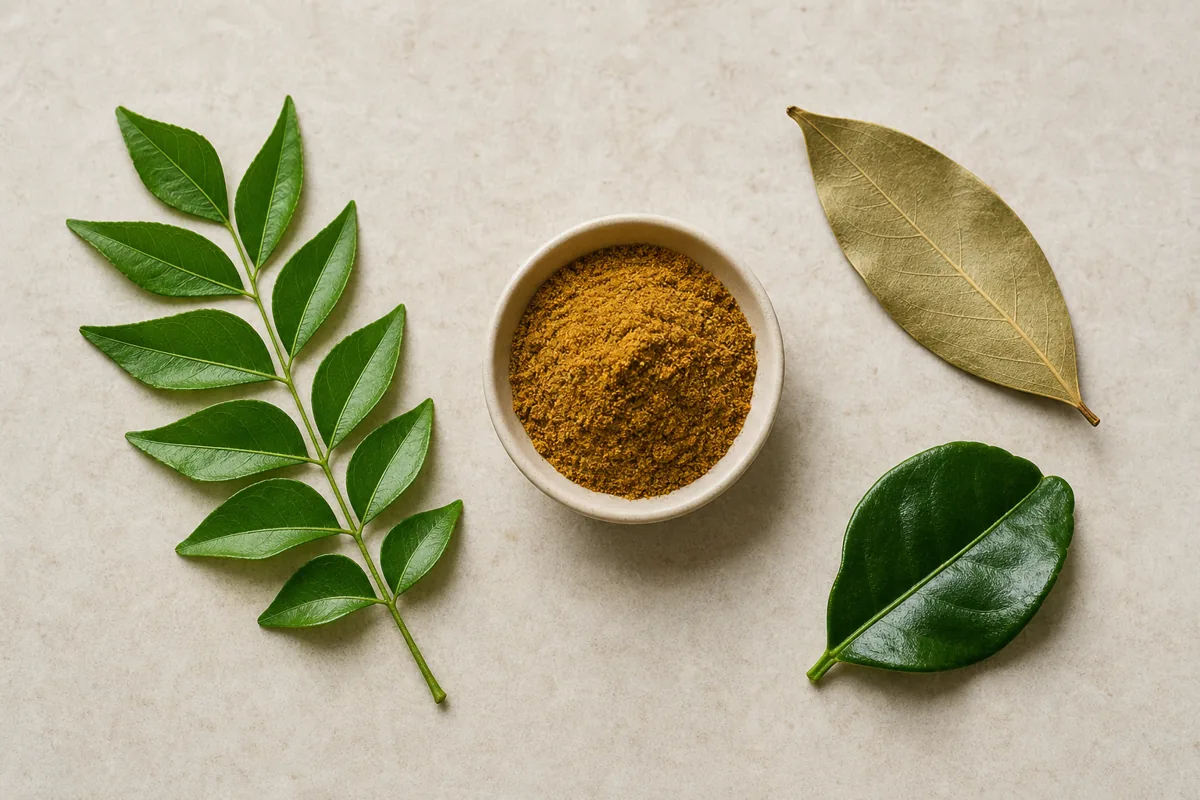
- Curry leaves: Count whole leaves and judge their freshness.
- Curry powder: Measure a ground blend and protect it from scorching.
- Bay leaf: Let the tough leaf infuse slowly and remove it later.
- Recipe wording: Follow the named ingredient instead of the shared word curry.
When a recipe asks for curry leaves, adding curry powder changes the color, heat, and entire spice balance. Omitting the leaves is usually a smaller change than replacing them with curry powder.
Ground curry-leaf powder is different again: it is the leaf dried and milled, not a curry blend. It can season chutney powders, rice mixes, and dry coatings, but it lacks the vivid top notes and crisp texture of fresh leaves.
Why should curry leaves be fried in oil?
Fry curry leaves because fat dissolves their aromatic oils, spreads them through the dish, softens the raw green edge, and can turn the leaf pleasantly crisp.
Wash only when needed, then dry every surface with a towel. Water flashes into steam on contact with hot oil, which is why wet leaves spit so sharply.
Heat one to two tablespoons of oil or ghee until it shimmers without smoking. Lower the leaves close to the pan and hold a lid partly over the opening as they crackle.
- Dry the surface: No visible droplets remain on leaves or stems.
- Ready the next ingredient: The leaf stage lasts only seconds.
- Lower, do not toss: Keep your hand and the leaves close to the oil.
- Watch the color: Stop at glossy green with crisp edges, before brown.
- Cool the pan: Add the waiting food or liquid when the crackle eases.
In a tempering with whole mustard seed, pop the mustard seeds first because they need more time. Add curry leaves next, then wait for the violent splutter to settle before adding turmeric or another fine powder that could scorch.
This is a leaf-specific form of blooming aromatics: the fat carries aroma, while the visible leaf and its moisture demand a splatter shield.
That order is the practical difference between a clean tadka tempering and a pan where the powder burns while wet leaves are still spitting.
Keep the lentils, vegetables, coconut mixture, or other cooling ingredient beside the stove before you begin.
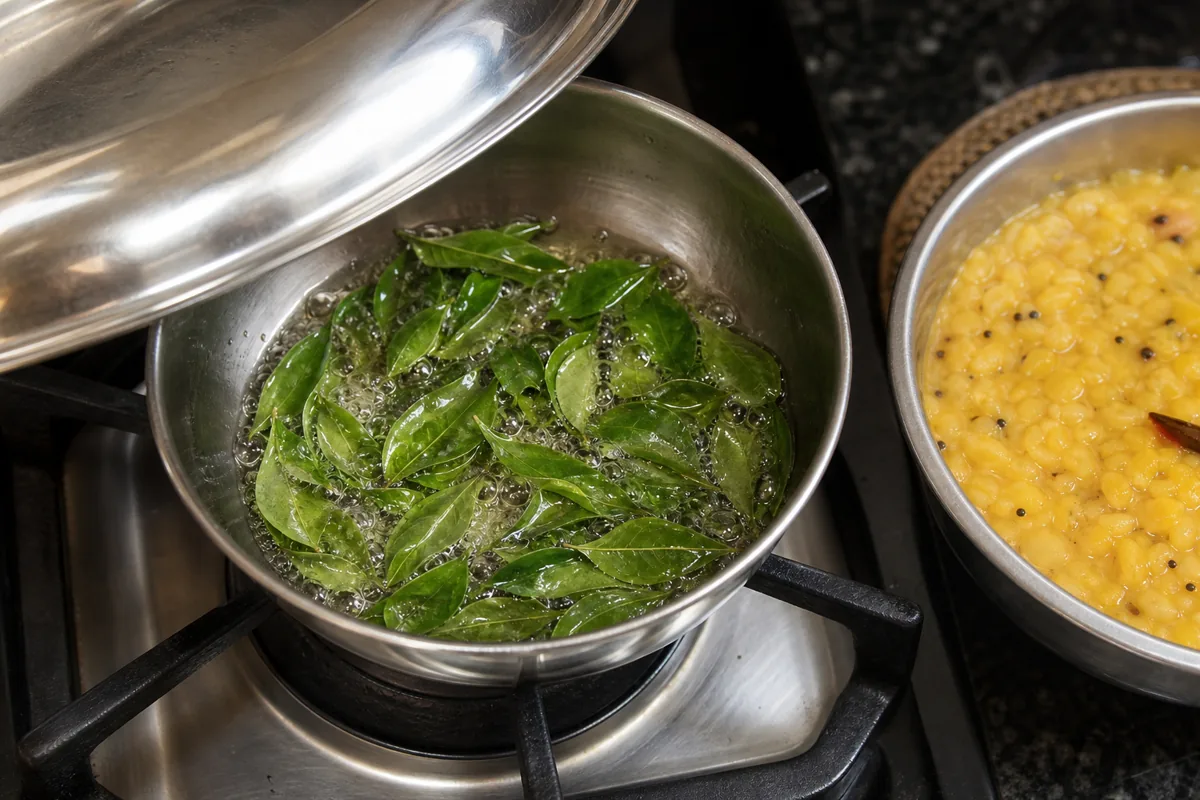
- Low drop: Lower leaves close to the oil instead of tossing them from above.
- Partial cover: A lid blocks splatter without trapping the leaves for long.
- Green and glossy: The useful stage arrives before the leaves turn brown.
- Food ready: Lentils, vegetables, or coconut cool the pan at the right moment.
Brown, brittle leaves have gone too far and may taste bitter. Replace the batch if the oil smells burned instead of citrusy and toasted.
For a wet curry, dal, or stew, the leaves can simmer after their brief fry.
The first contact with fat distributes aroma. The later liquid cooks it into the body of the dish.
Adding the leaves only to the liquid gives a softer background, but it misses the toasted edge and scented surface oil created by the initial fry.
Do you eat curry leaves or remove them?
Curry leaves are edible, but the cut and cooking method decide whether they are pleasant to eat. Crisp fried leaves and finely chopped tender leaves are the easiest forms to enjoy.
A whole leaf simmered in sauce may remain chewy and fibrous.
Diners can move it aside just as they would a tough herb stem.
Use whole leaves when they should perfume seasoned oil or remain visible on dal. Tear or chop them for potato, cabbage, rice, chutney, or a dry mixture where one leathery bite would be distracting.
Grinding the leaves into a wet paste removes the whole-leaf decision, though it changes the presentation and gives the dish a more even green aroma. This works best when coconut, chile, ginger, or another moist ingredient is already going into the same paste.
Stems need a separate decision.
The thin tip of a tender sprig can cook with the leaves. Strip the leaves from the thicker central stem because it stays woody.
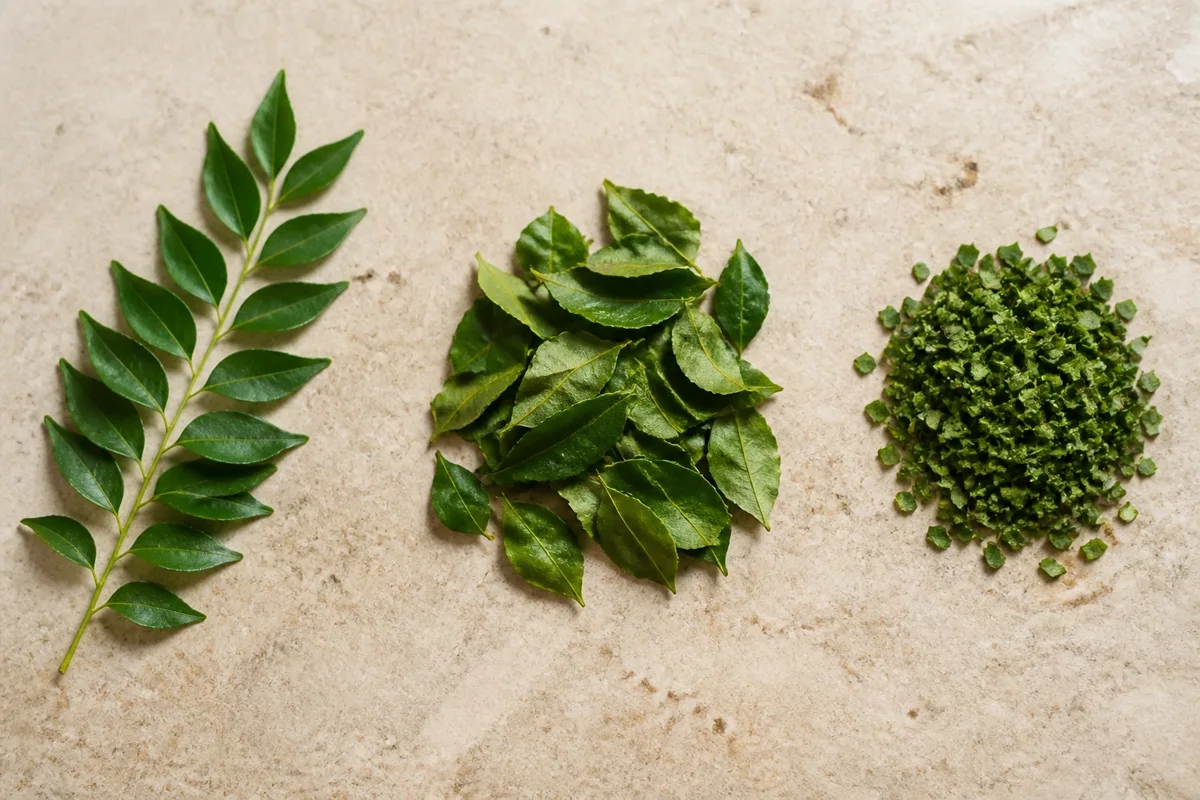
- Whole: Keep the leaf visible for tempering oil or a finishing tadka.
- Torn: Spread aroma through vegetables and rice without tiny green pieces.
- Chopped: Prevent one fibrous bite in chutney, paste, or a dry mixture.
- Stem: Strip away the woody center before cutting the leaves.
Removing every fried leaf before serving also removes crisp texture and some aromatic oil clinging to it.
Test one leaf from the pan before deciding.
Tough does not mean unsafe. A clean, cooked leaf is still edible even when its fibrous texture makes it less enjoyable.
Which dishes use curry leaves?
Curry leaves suit foods with enough fat or moisture to carry their aroma.
Dal, coconut chutney, rice, potatoes, cabbage, seafood, and yogurt-based preparations all give the leaf a clear job.
The timing changes with the dish.
Lentils and beans often receive a finishing tempering, so the scented oil stays vivid at the surface before it is stirred through. Vegetables usually meet the leaves near the beginning, allowing crisp pieces to remain among the food.
Rice can use either approach: fry leaves before adding cooked rice for scattered crisp pieces, or pour a small tempering over the finished grains to keep the aroma near the surface.
Coconut is an especially strong partner because its fat holds the citrus-savory aroma while chile and mustard add contrast. A chutney can take chopped leaves in its body and a second, smaller fried portion on top.
Fry 8 to 10 leaves in finishing fat, then pour the tempering across the pot.
Fry 6 to 8 leaves and spoon them with the seasoned oil over the surface.
Fry 10 to 12 leaves before the vegetables so crisp leaves stay among the pieces.
Temper the leaves with whole spices, then fold the seasoned fat through warm grains.
Start with 5 to 8 leaves so the green aroma does not cover delicate seafood.
For potatoes, cabbage, or rice, add ground turmeric only after the splattering subsides. The dry powder needs a brief warm-fat stage but can burn during the more violent leaf fry.
Seafood benefits from a restrained combination of ginger, black pepper, coconut, and a small leaf count instead of a crowded spice mixture.
The Indian spice pantry changes by region and household. Curry leaves are central to many southern and western dishes, but their presence does not define all Indian cooking.
Choose the leaf by its job, not by the cuisine label.
Use it when a dish needs a green-citrus aroma carried by hot fat, whether the tempering starts the cooking or finishes it.
Are fresh, frozen, and dried curry leaves interchangeable?
Fresh and frozen curry leaves are the best practical choices. Dried leaves are a distant third because freezing preserves more of the volatile oils that make the ingredient recognizable.
Fresh leaves should be glossy, flexible, and strongly scented when bent. Start with 8 to 12 medium leaves for four servings, then adjust for their size and aroma.
Frozen leaves can go from freezer to pan after loose frost is brushed away. Use roughly the fresh-leaf count, expect a softer texture, and shield the pan because ice crystals cause splatter.
Dried leaves often smell like grass or weak tea because their brightest top notes have escaped.
Crumble one before using it. If it releases little aroma, adding a large handful will bring more papery texture than flavor.
Avoid thawing frozen leaves on the counter before frying.
As they soften, they shed water and lose shape. Taking only the needed loose leaves from the freezer gives a cleaner result with less splatter.
Choose the form before adjusting the amount.
Doubling weak dried leaves cannot restore the fresh top notes. Extra frozen leaves can still overpower a mild dish even though their texture is softer.
| Form | Aroma and texture | Starting move | Best use |
|---|---|---|---|
| Fresh | Brightest; firm, then crisp | Fry 8 to 12 medium leaves | Tempering, chutney, vegetables |
| Frozen | Recognizable; softer | Brush away frost, use a similar count | Any cooked dish |
| Dried whole | Weak; brittle | Lightly crush and use about twice as many | Background note in wet food |
| Leaf powder | Muted; disappears into food | Start with a small spoon-tip | Dry mixes, rice powder, chutney powder |
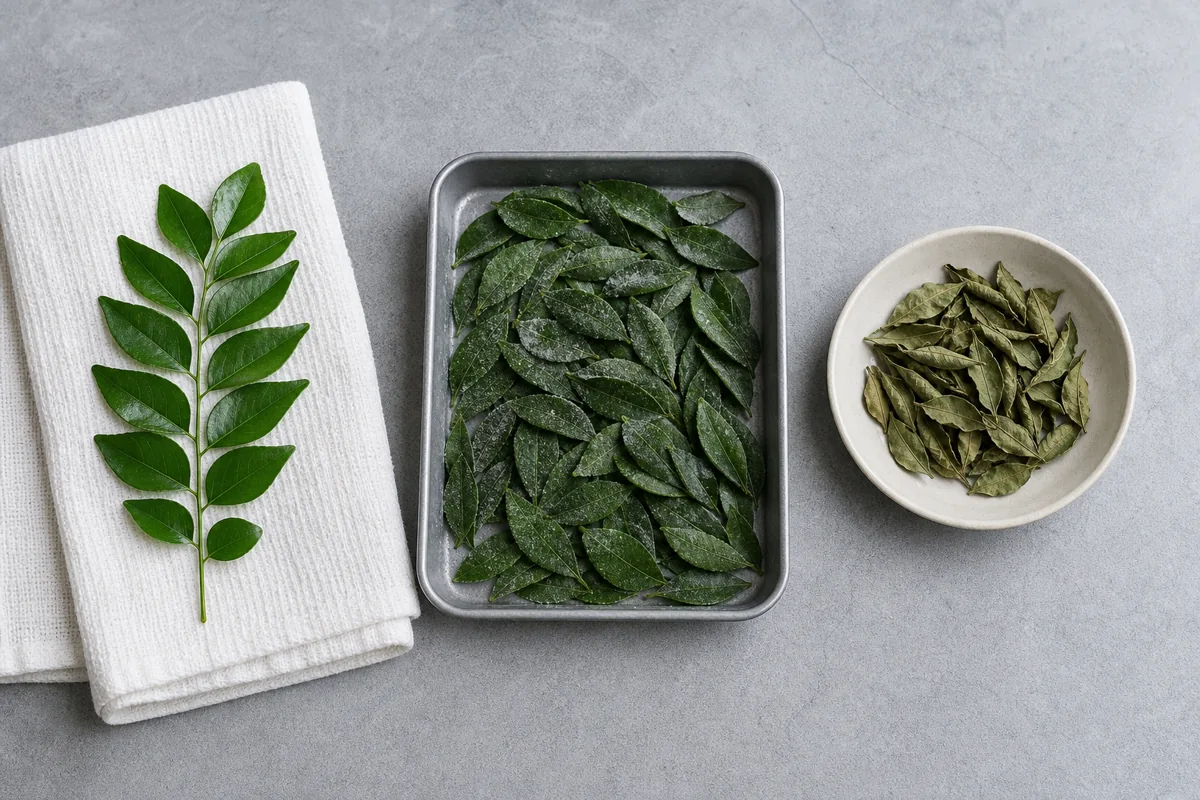
- Fresh: Flexible stems and glossy green leaves signal good quality.
- Frozen: Separated leaves make it easy to take only what the pan needs.
- Dried: Brittle leaves keep shape better than aroma.
- Choice: Buy fresh to use soon or freeze the extra before it yellows.
Curry-leaf powder cannot recreate the crackle, glossy leaves, or fresh top note of a tempering. Use it when a recipe actually wants a dry leaf seasoning, not as a spoon-for-leaf conversion.
If a store offers only dusty dried leaves with almost no scent, omission may taste cleaner. Preserve good fresh leaves in the freezer rather than buying a weak form for convenience.
What can you substitute for curry leaves?
No substitute reproduces the citrus, green, toasted, and savory notes together.
First decide whether the missing job is fresh citrus lift, a whole aromatic leaf, or a crisp fried garnish.
For many dishes, omission is the cleanest answer.
A little lime zest added after cooking supplies a fresh citrus top note, but it cannot survive the same hot-oil treatment. Wet zest dropped into very hot oil can spit and taste bitter.
Makrut lime leaf is more floral and forcefully citrusy, so it moves the dish toward a Southeast Asian profile. Start with half a leaf, finely sliced or bruised, rather than matching the curry-leaf count.
Bay leaf plus a small amount of lime zest can provide slow herbal depth and a fresh finish in a wet dish. Remove the bay leaf before serving, then add zest away from the heat.
| Missing job | Closest move | Starting point | Trade-off |
|---|---|---|---|
| Fresh citrus lift | Lime zest | 1/4 teaspoon after heat | No green or fried-leaf note |
| Citrus leaf in liquid | Makrut lime leaf | 1/2 leaf, bruised or sliced | More floral and intense |
| Slow herbal depth | Bay leaf plus lime zest | 1 bay leaf, then a little zest | Different leaf character |
| Crisp curry-leaf tempering | Omit | Rebalance salt and acid | No close substitute |
The substitute-by-job method protects timing and texture as well as aroma. A substitute that smells related but behaves badly in hot oil creates a new problem.
Never use curry powder as the replacement.
It adds ground spices, yellow color, and possible heat while still missing the fresh leaf aroma.
How should you store fresh curry leaves?
Keep curry leaves dry, cool, and protected from crushing.
Surface moisture makes them blacken and decay faster than ordinary wilting.
Remove damaged leaves and inspect the stems, but wash only before use when possible. If you wash the bunch at once, spread it out and dry every leaf before packing.
For short storage, wrap the dry bunch loosely in paper towel inside a refrigerator container, replace the towel if it becomes damp, and use the most bruised leaves first.
Do not seal a warm or freshly washed bunch while moisture is still evaporating. Condensation trapped inside the container defeats the paper towel and can blacken the tender leaves within the cluster first.
For longer storage, strip dry leaves from the stems and freeze them in one layer before transferring them to a sealed bag or box, which keeps portions separate without thawing the rest.
- Refrigerate: Keep a dry bunch in paper towel inside a container.
- Check: Replace damp paper and remove any slimy leaf immediately.
- Freeze: Strip, dry, and freeze leaves in one layer before packing.
- Portion: Keep leaves loose enough to take only what the pan needs.
- Discard: Throw out moldy, slimy, or sour-smelling leaves.
Follow the broader herb and spice storage guide by limiting heat, light, air, and moisture. Curry leaves also need cold because they are fresh plant material rather than a shelf-stable spice.
A few dry dark edges indicate quality loss, while slime, mold, or a sour smell means decay. Do not rinse a spoiled bunch and return it to storage.
When buying online, favor fast refrigerated shipping and clear photos of green, flexible stems over an impressive advertised leaf count.
Freeze unused leaves while they still smell strong, before their aroma begins to fade. Waiting until they yellow preserves their shape, but very little of the aroma you meant to save.