
Which Curry Leaf Substitute Fits Your Cooking Method?
Match citrus, leafy aroma, and cooking stage without mistaking curry powder for the real leaf.
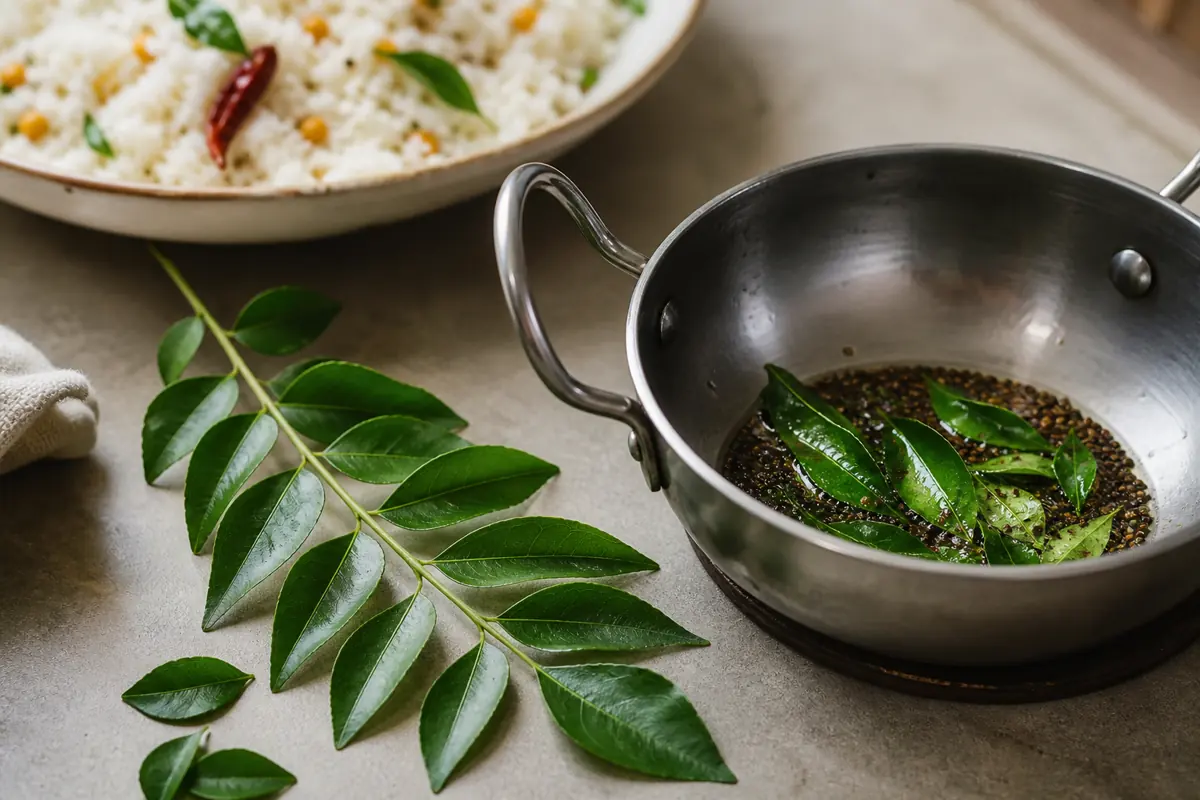
Makrut lime leaf is the best practical substitute for curry leaves in moist cooked dishes, but no replacement reproduces fresh curry leaves crackling in hot oil. Choose by cooking method: use makrut lime leaf for cooked coconut dishes, basil with lime zest for quick curries, bay leaf for long simmers, or cilantro with lime zest for a fresh finish.
Curry Leaves Build Aroma in Hot Fat, Not Curry-Powder Flavor
Curry leaves are the glossy leaves of Murraya koenigii, an aromatic tree in the citrus family.
Their defining kitchen job begins when fresh leaves hit hot fat and release a pungent green, citrus-like aroma.
That opening tempering can shape an entire pot of dal, sambar, coconut curry, or vegetable stir-fry.
The leaf contributes aroma rather than the earthy spice body, yellow color, or heat that cooks associate with curry powder.
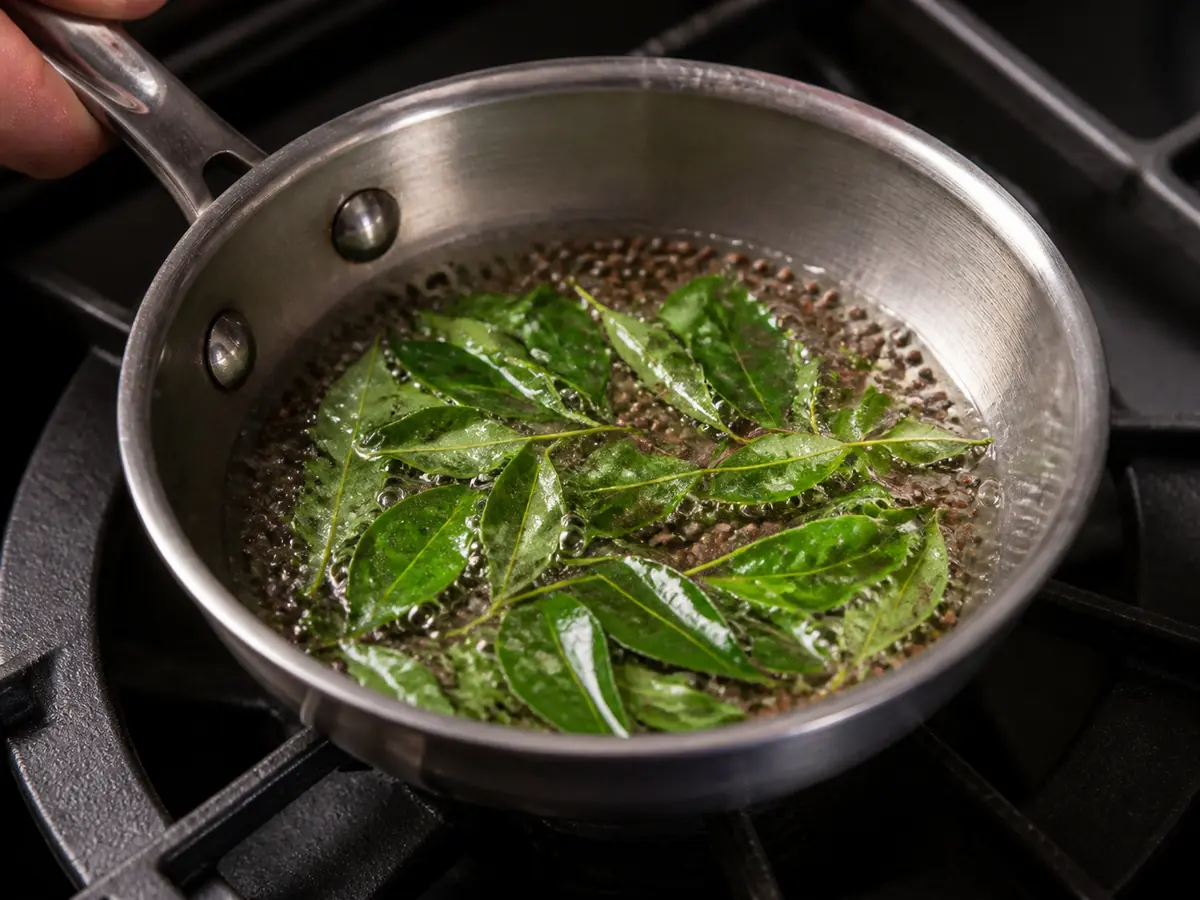
- Dry surface: Pat washed leaves completely dry before they approach hot oil.
- Active oil: Mustard seeds and tiny bubbles show that the fat is hot enough to release aroma.
- Green edges: Brief blistering opens the leaf without scorching it.
- Immediate use: Pour the tempering over the dish while its volatile aroma is strongest.
Fresh and frozen leaves perform that job better than dried leaves because drying strips away much of the aroma. Dried curry leaves are still the same plant, but adding more brittle leaves cannot fully restore the vivid smell of a fresh tempering.
Curry powder solves a different problem. It is a variable ground blend that may contain turmeric, coriander, cumin, fenugreek, chile, and other spices, so adding it can change the color and base flavor while leaving the missing leaf aroma unresolved.
Before choosing anything, identify where the recipe uses its curry leaves.
A leaf dropped into a long simmer has a different job from one fried with mustard seeds or ground into a fresh coconut chutney.
Four Curry Leaf Substitutes Chosen by Cooking Method
No option below is a universal replacement.
Makrut lime leaf comes closest in moist cooked food, while the other choices preserve only the part of the original job that their cooking method exposes.
| Substitute | Starting amount for 8 to 10 curry leaves | Add it when | Best use | Main loss |
|---|---|---|---|---|
| Makrut lime leaf | 1 to 2 leaves | Early in moist cooking | Coconut curry, rice, soup | Nutty savory character |
| Basil and lime zest | 4 small leaves + 1/4 tsp zest | After direct heat | Quick curry, lentils, vegetables | Tempered aroma |
| Bay leaf | 1 leaf | With simmering liquid | Dal, stew, braise | Citrus brightness |
| Cilantro and lime zest | 1 tbsp + 1/4 tsp zest | At serving | Chutney, yogurt sauce, rice | Toasted depth |
These amounts are starting points, not promises of identical flavor.
Judge the finished dish by whether the replacement supports the food, not by whether it makes the missing curry leaf impossible to notice.
1. Makrut Lime Leaves for Cooked Coconut Dishes
Use one makrut lime leaf for every four to six curry leaves in coconut curry, soup, or seasoned rice. Its intense citrus-peel aroma gives moist cooked dishes the nearest practical lift, but it lacks curry leaf's quieter nutty and savory edge.
Tear the leaf once before adding it to liquid so the aromatic surface opens. If you slice it finely, remove the firm central vein because it stays tough even after cooking.
Makrut lime leaf can enter warm oil briefly, but it should not copy a hard curry-leaf tempering. Start with lower heat and move quickly into the wet ingredients because the stronger citrus aroma can become perfumed when concentrated in fat.
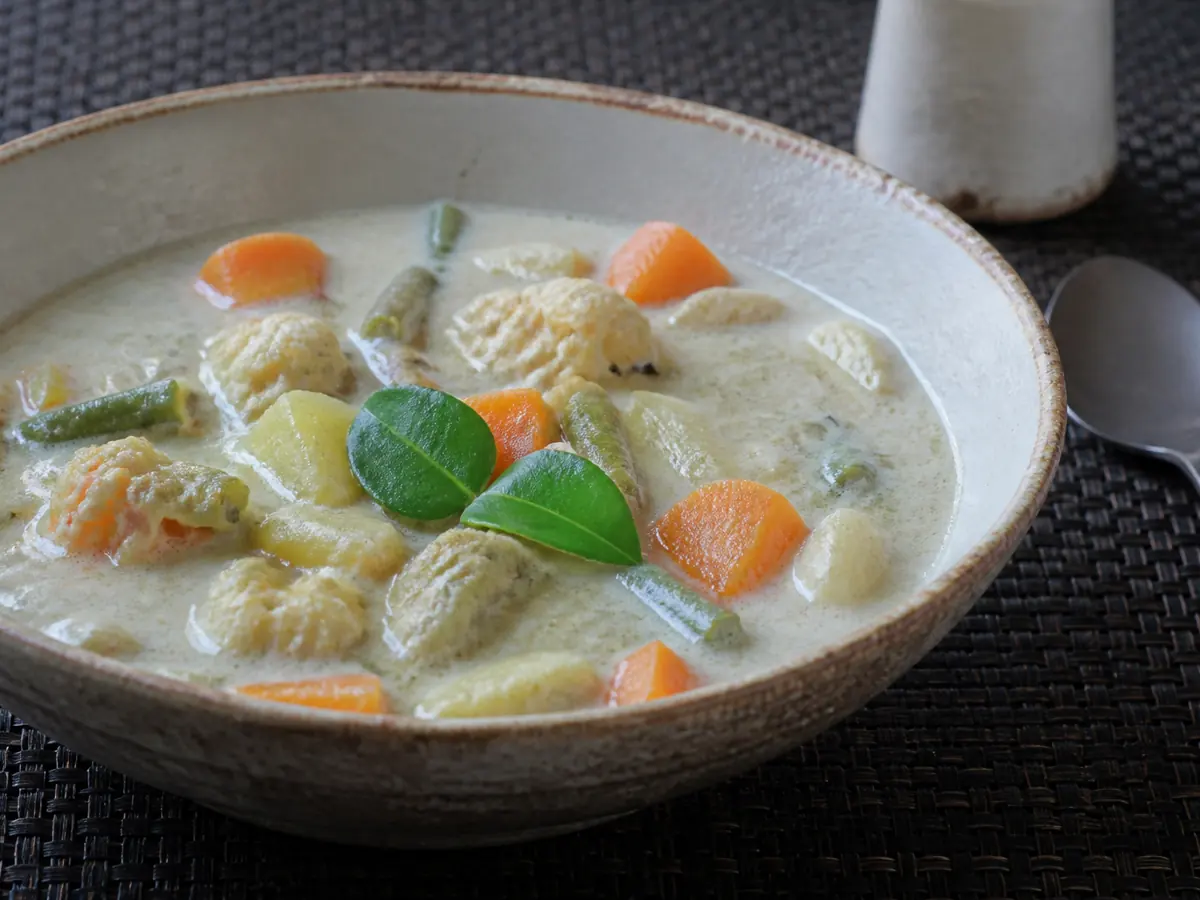
- Double-lobed leaf: The connected leaf shape distinguishes makrut lime from curry leaf.
- Moist curry: Coconut milk distributes the strong citrus aroma through the dish.
- Small amount: One leaf replaces several curry leaves rather than matching their count.
- Tough vein: Remove the center rib when the leaf will remain in the food.
This choice works best when coconut, chile, ginger, or lemongrass already points the dish toward a bright aromatic profile. It is less convincing in a dry mustard-seed tempering where curry leaves would have been the first smell from the pan.
Taste after the liquid has simmered for several minutes.
Remove the makrut leaf when the citrus aroma is already clear because another leaf is harder to correct than a missing one.
2. Basil and Lime Zest for Quick Curries
Combine four small basil leaves with one-quarter teaspoon finely grated lime zest for every eight to ten curry leaves. Basil supplies a soft green aroma while zest supplies concentrated citrus oil without thinning the sauce.
The pair belongs near the end of cooking.
Frying basil in the initial tempering darkens its tender leaves and drives off the fresh note that makes this fallback useful.
Tear the basil after the pan leaves direct heat, then stir in the zest.
That order lets residual heat release aroma without turning the combination bitter or making lime peel dominate the first bite.
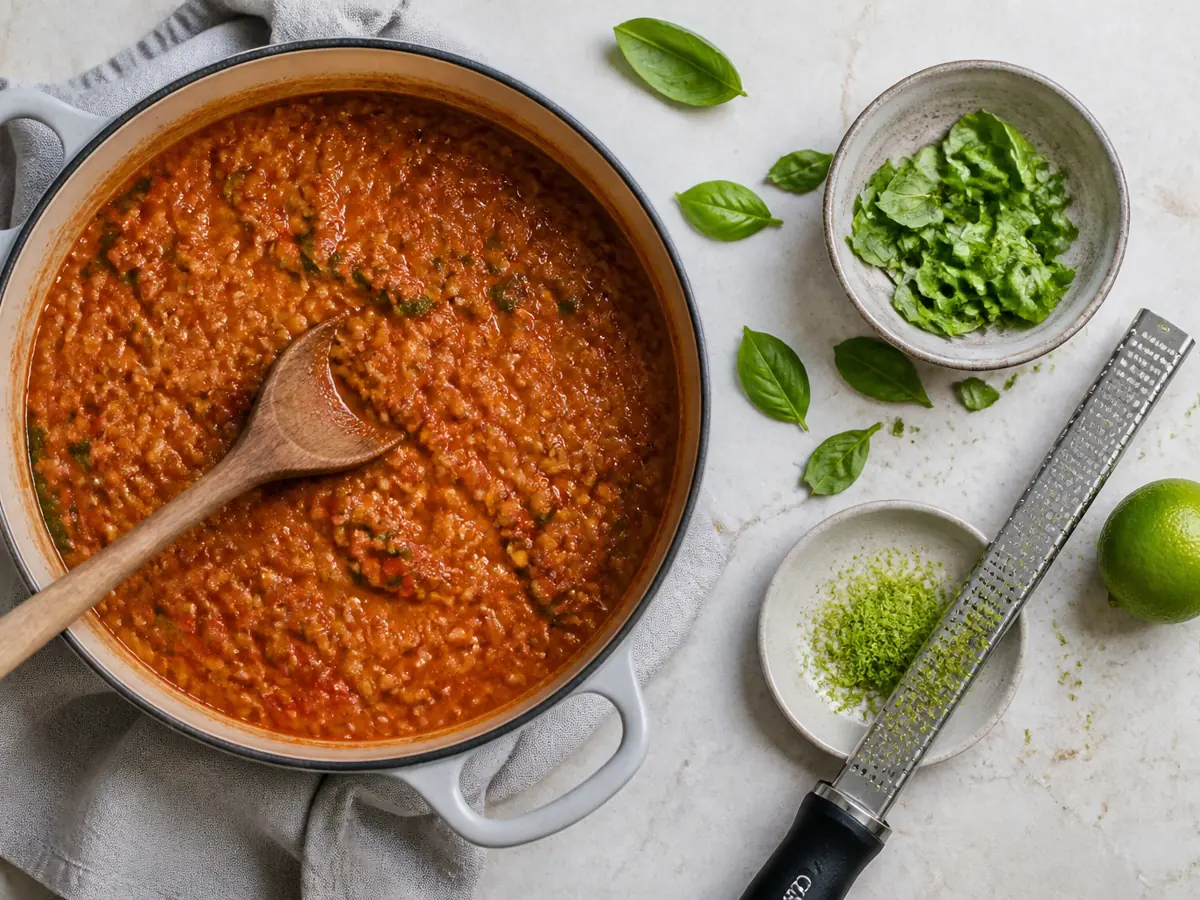
- Off heat: Residual warmth releases basil aroma without frying the leaves.
- Fine zest: Only the colored outer peel belongs in the dish.
- Quick curry: Short cooking leaves room for a fresh green finish.
- Taste first: Existing lime juice may make the extra zest unnecessary.
Use this combination in tomato lentils, a quick chickpea curry, sautéed vegetables, or a sauce that will be served immediately. A long simmer erases its main advantage and leaves little more than generic cooked herb flavor.
This is a reconstruction rather than a botanical match. Stop adding basil once the dish smells freshly herbal because a large handful turns curry-leaf absence into basil flavor.
3. Bay Leaf for Long Simmering
For every eight to ten curry leaves the recipe would have used, add one bay leaf with the liquid to a pot that will simmer for at least 20 minutes, then remove it before serving.
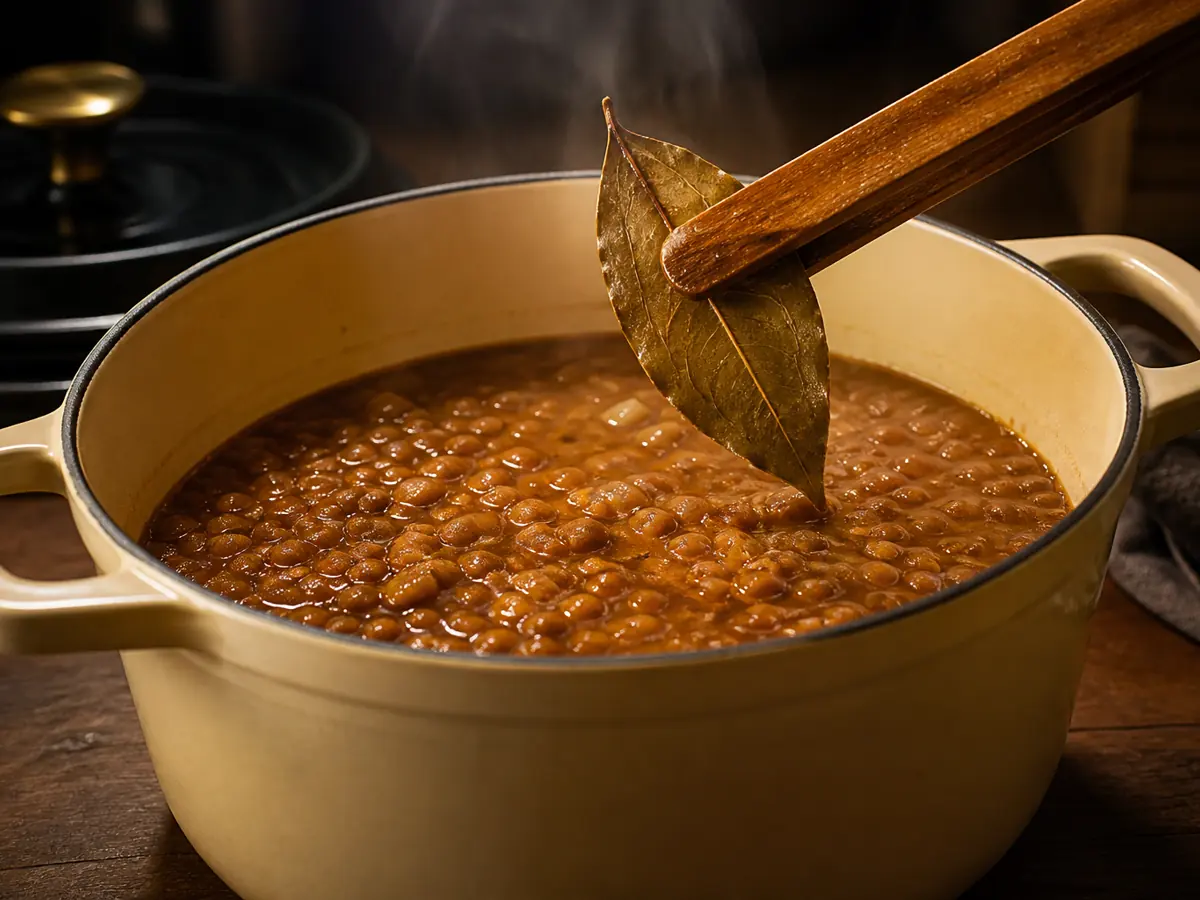
- Deep pot: Sustained liquid contact extracts the bay leaf gradually.
- One whole leaf: Extra leaves add medicinal intensity without restoring citrus.
- Removal cue: Lift out the leathery leaf before serving.
- Long cook: A quick curry does not give bay enough time to contribute.
Bay leaf does not smell like curry leaf, and it should never be sold as the closest match.
Its value is narrower: it keeps a long-cooked dal, stew, braise, or mild gravy from losing every leafy background note.
Do not put it into a quick mustard-seed tempering. A bay leaf releases slowly, so brief contact with hot oil gives you little aroma and a higher chance of a brittle or scorched edge.
The swap also fails in coconut chutney, curry-leaf rice, and fresh garnishes. Those foods expose the missing citrus-green aroma instead of hiding the change inside a long simmer.
Taste the pot before removing the leaf. If the stew already has a clear herbal background, take it out rather than extending the cook solely to make the substitute stronger.
4. Cilantro and Lime Zest for Chutneys and Finishing
For a fresh application, use one tablespoon chopped cilantro plus one-quarter teaspoon lime zest for every eight to ten curry leaves. Cilantro supplies a lively green finish, while zest restores a small citrus cue.
This combination fits coconut chutney, yogurt sauce, rice, or a finished lentil dish that needs lift at the table. It does not survive long cooking and cannot recreate the roasted aroma of leaves fried in oil.
Hold back the zest when the recipe already contains lime juice, tamarind, or another sharp sour ingredient. Zest is aromatic rather than strongly acidic, but too much peel can still make a small bowl taste bitter.
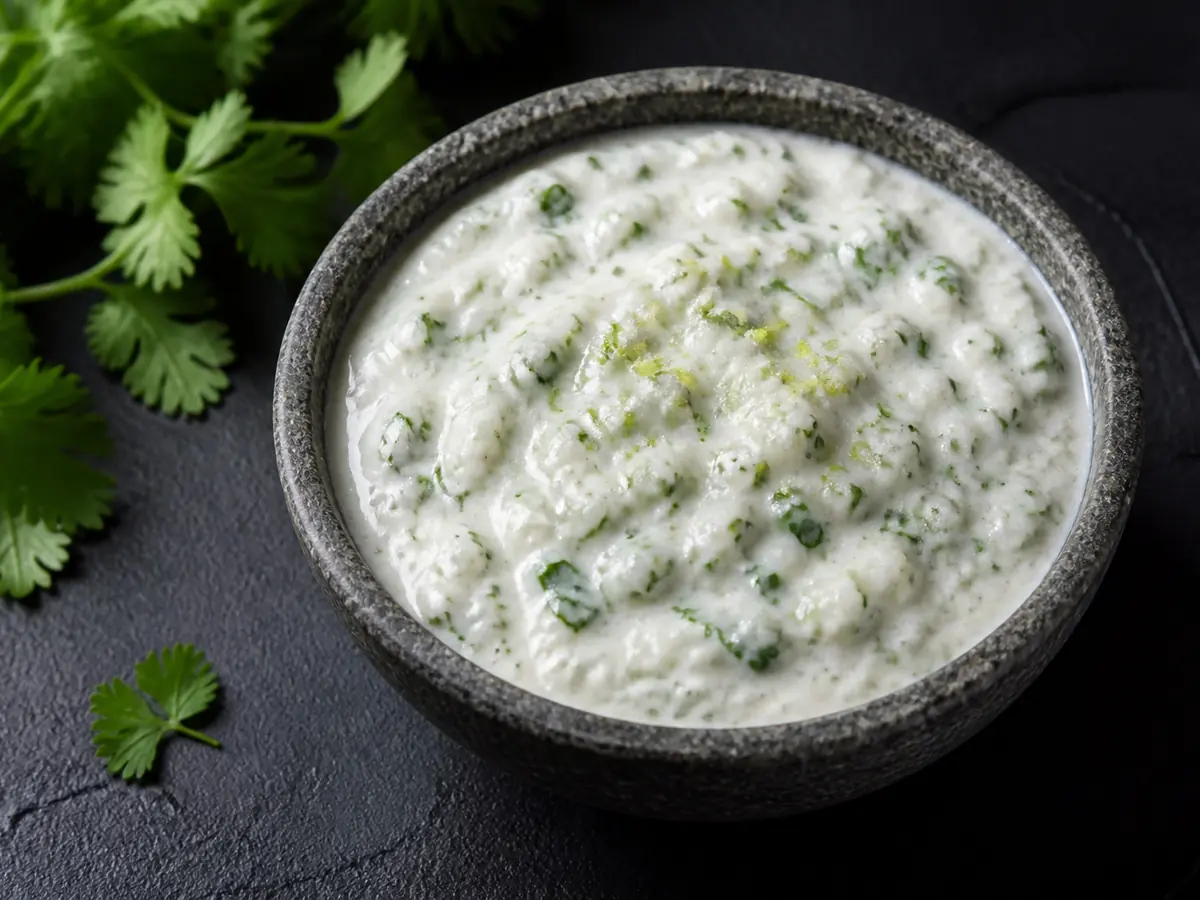
- Chopped cilantro: Small pieces distribute green aroma without becoming a separate salad.
- Cool chutney: No hot oil is present to suggest a tempered flavor.
- Pinch of zest: The citrus peel stays below the herb rather than leading it.
- Serving time: Folding happens just before the bowl reaches the table.
Cilantro also changes the identity of the dish more openly than makrut lime leaf does.
Use it when a fresh green finish already makes sense, and omit it when cilantro would fight the recipe's regional or sensory direction.
A successful fresh substitute does not need to imitate every curry-leaf note. It needs to keep chutney or rice from tasting flat without drawing attention away from coconut, lentils, chile, or toasted seeds.
Match the Replacement to the Moment It Enters the Pan
Changing the ingredient without changing the method is the most common substitution mistake. Curry leaves tolerate a fast burst of hot fat, while basil and cilantro need gentler timing and bay leaf needs sustained contact with liquid.
Dry any whole leaf before it approaches oil. Surface water flashes into steam and spits, so a wet makrut leaf should be patted dry and added cautiously at lower heat.
- Identify the original stage: Decide whether the recipe tempers the leaves, simmers them, grinds them, or adds them fresh.
- Choose for that stage: Use makrut lime leaf in moist cooked food, bay leaf in a long simmer, or a tender herb combination at the finish.
- Start with the lower amount: Strong citrus and dried bay can become dominant faster than missing curry leaf can be corrected.
- Change the heat: Move basil and cilantro off direct heat instead of dropping them into the tempering pan.
- Taste at the right time: Judge bay after simmering, makrut after several minutes in liquid, and fresh herbs just before serving.
If the recipe begins with mustard seeds, chile, and curry leaves in oil, keep the mustard-and-chile tempering and choose whether the missing leaf is tolerable. Adding an unsuitable herb to preserve the visual sequence can damage the flavor more than leaving one ingredient out.
The same restraint applies at the finish. Lime zest can brighten a dish, but it cannot supply the savory aroma that hot curry leaves would have contributed at the beginning.
Frozen Curry Leaves Beat Every Imitation
Frozen curry leaves remain curry leaves, so they preserve the ingredient's identity better than another aromatic plant. Use them at the recipe's original leaf count, add them while still frozen or briefly thawed, and expect a softer texture with much of the characteristic aroma intact.
Dried leaves are more complicated. Indiana University's Biology Greenhouse notes that dried curry leaves have far less flavor than fresh, which explains why doubling a weak dried product may add brittle material without restoring the fresh aroma.
Check the label before treating curry leaf powder or paste as concentrated leaves, because pure powder behaves like dried leaves while paste may add salt, oil, acid, chile, or other seasonings.
Use a pure powder only in moist food where its fine texture can disappear. Start with one teaspoon for eight to ten fresh leaves, simmer it for several minutes, then taste because brand strength varies too much for an exact conversion.
Do not bloom curry leaf powder in very hot oil as if it were whole leaves. Fine particles can scorch before their weak aroma disperses, so stir the powder into the wet base and let it hydrate during a short simmer.
If the recipe has no wet phase, omission will usually preserve the dish's texture better.
Treat a seasoned paste as a prepared flavoring rather than a direct substitute. Add it by the teaspoon, reduce salt or acid elsewhere when the label requires it, and avoid it in clean temperings or chutneys where those added ingredients will be obvious.
Color cannot tell you strength, since a vivid green powder can still smell faint after long storage and should be judged by its aroma before you increase the dose.
| Form | Starting approach | Best stage | Main advantage | Main limit |
|---|---|---|---|---|
| Fresh | Use the recipe's count | Tempering, grinding, finishing | Brightest aroma | Short storage life |
| Frozen | Use the same leaf count | Tempering or moist cooking | Same ingredient, practical storage | Softer texture |
| Dried | Start with about twice the leaves | Long moist cooking | Shelf stable | Much weaker aroma |
| Another plant | Follow the method table above | Method-specific | Available fallback | Different flavor identity |
Treat twice the dried leaf count as a cautious test rather than a fixed conversion. Drying method, age, packaging, and storage create large differences, so smell the opened packet before committing it to the food.
Frozen leaves are also the easiest way to prevent this problem next time.
Freeze clean, thoroughly dried sprigs in a sealed bag, press out excess air, and take only the amount needed for each tempering.
Do not thaw a whole supply repeatedly. Condensation and temperature cycling damage the leaves you return to the freezer, while small flat portions let you remove one recipe's amount at a time.
Some Dishes Should Wait for Actual Curry Leaves
Skip substitution when curry leaf appears in the name or supplies the first aroma of a sparse dish. Curry-leaf rice, curry-leaf chutney, leaf-heavy podi, and a simple mustard-seed tempering have too little cover for another plant to pass unnoticed.
Omission can be the more accurate choice in a busy dal or vegetable curry. The food loses one aromatic layer, but it keeps its existing spice balance instead of acquiring a strong lime, basil, bay, or cilantro direction.
You can still make a good meal after omitting curry leaves, but name the result honestly.
Curry powder does not repair the missing leaf, and a larger substitute dose does not turn another plant into Murraya koenigii.
The best practical decision is often modest: preserve the recipe's heat, salt, acid, and texture, then accept a quieter aroma until actual curry leaves are available.