
Which Kaffir Lime Leaf Substitute Fits Your Dish?
Replace the leaf by aroma, form, and cooking time instead of reaching for lime juice.
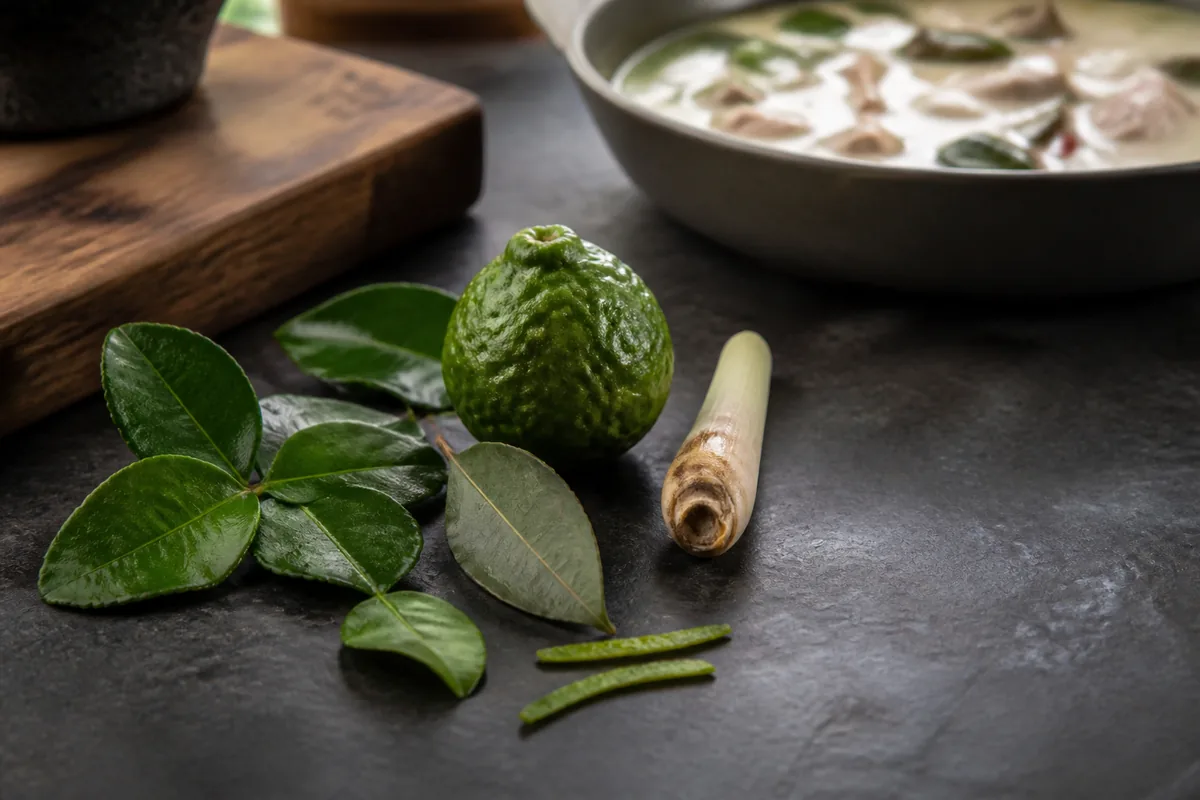
Makrut Lime Leaf Gives Aroma Rather Than Lime Acidity
For two fresh makrut lime leaves, the closest substitute is one-quarter teaspoon finely grated makrut lime zest. When that fruit is unavailable, use one fresh bay leaf with two 2-inch strips of ordinary lime zest in a soup or curry, or pair one bruised 2-inch section of lemongrass with one strip of zest in a long infusion.
Lime juice does a different job. It makes food sour and adds water, while the leaf releases fragrant citrus oil and a green floral note without noticeably lowering the pH of the dish.
Recipes may call the ingredient kaffir lime leaf, makrut lime leaf, or Citrus hystrix leaf. The names refer to the same distinctive double-lobed leaf, and this article uses makrut in the cooking instructions.
- Citrus oil
- The leaf gives a lifted aroma that reaches the nose before it tastes sour.
- Green depth
- A leafy floral note separates it from ordinary lime zest.
- Removable form
- Whole leaves perfume a liquid and can leave the pot before serving.
- Long extraction
- Torn leaves and bruised stalks withstand more heat than fine zest.
- Edible finish
- Very fine leaf shreds can be eaten, but large veins remain tough.
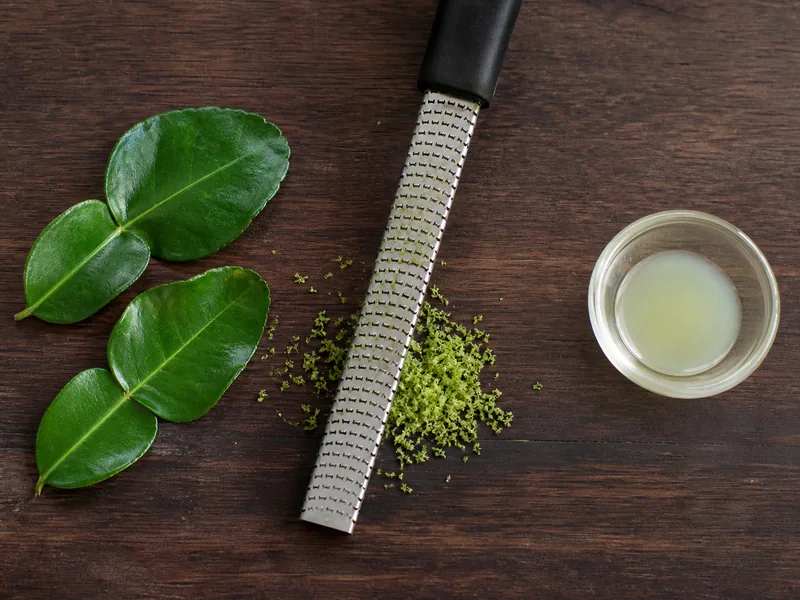
- Double-lobed leaf: Supplies a green floral citrus aroma.
- Colored zest: Carries fragrant oil without much liquid.
- Juice bowl: Adds sourness and water rather than leaf character.
- Fine grater: Releases oil quickly and also exposes bitter pith if pushed too far.
The distinction matters most in coconut milk. Acid can make a curry taste sharper and thinner even when the missing quality was the perfume that rises from the bowl.
Smell the dish before correcting it. If it already tastes bright but lacks aroma, add zest or an aromatic infusion instead of more juice.
Four Replacements for Different Makrut Leaf Jobs
No single pantry ingredient copies the leaf in every form.
Choose the replacement according to whether the recipe needs a paste ingredient, a removable infusion, a long-lasting soup aromatic, or a late citrus finish.
| Replacement | Starting amount | Best use | Main limitation | Timing |
|---|---|---|---|---|
| Makrut lime zest | 1/4 tsp finely grated | Curry paste, coconut curry, fish cakes | Disperses instead of infusing whole | Split between the start and finish |
| Fresh bay leaf plus lime zest | 1 bay leaf plus two 2-inch zest strips | Coconut curry, broth, slow soup | More bay-like and less floral | Infuse bay, add fresh zest near the end |
| Lemongrass plus lime zest | One bruised 2-inch stalk section plus one zest strip | Clear soup, coconut soup, braise | Grassy aroma and tough stalk | Simmer stalk, remove it, finish with zest |
| Lime zest alone | Two 2-inch strips or 1/4 tsp grated | Stir-fry, quick sauce, fish cake | Clean citrus with little green depth | Add during the final minutes |
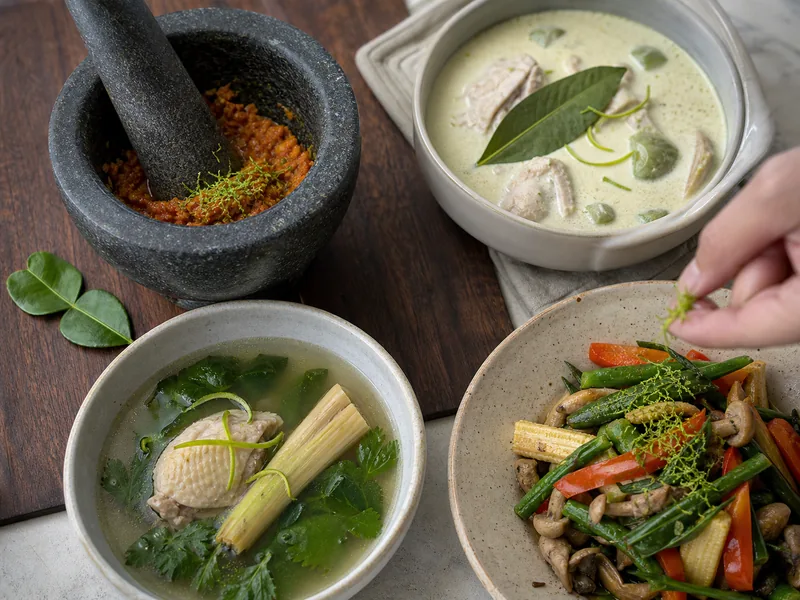
- Makrut zest in mortar: Closest aroma when the fruit is available.
- Bay and zest in curry: Combines a removable leaf with a citrus top note.
- Lemongrass in soup: Holds through a longer simmer.
- Late zest over stir-fry: Gives quick fragrance without long extraction.
1. Makrut Lime Zest
Makrut lime zest gives the closest family resemblance. Grate only the colored surface because the white pith is bitter, then divide the tiny measure so some oil enters the cooking base and some survives near the finish.
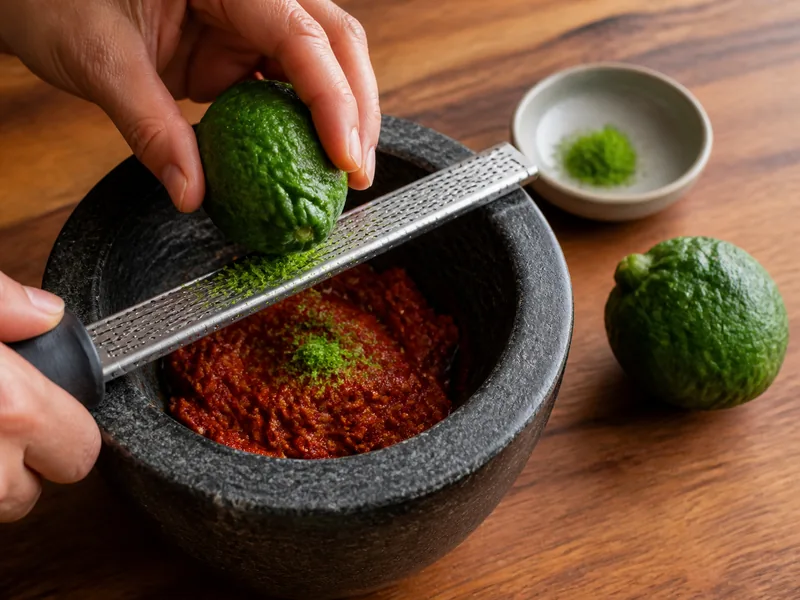
- Green surface only: Stops before the bitter white pith.
- Fine grate: Distributes citrus oil through the curry paste.
- Reserved pinch: Protects some aroma from the longest heat.
- Stone mortar: Shows why zest works better here than a removable whole leaf.
The zest works especially well in curry paste because it can be pounded into garlic, chile, and other aromatics. In a clear broth, it remains suspended instead of behaving like a whole leaf, so use a strip when you want easier removal.
2. Fresh Bay Leaf and Lime Zest
Fresh bay leaf and ordinary lime zest divide the work. The bay supplies a green removable shape, while the zest supplies citrus oil.
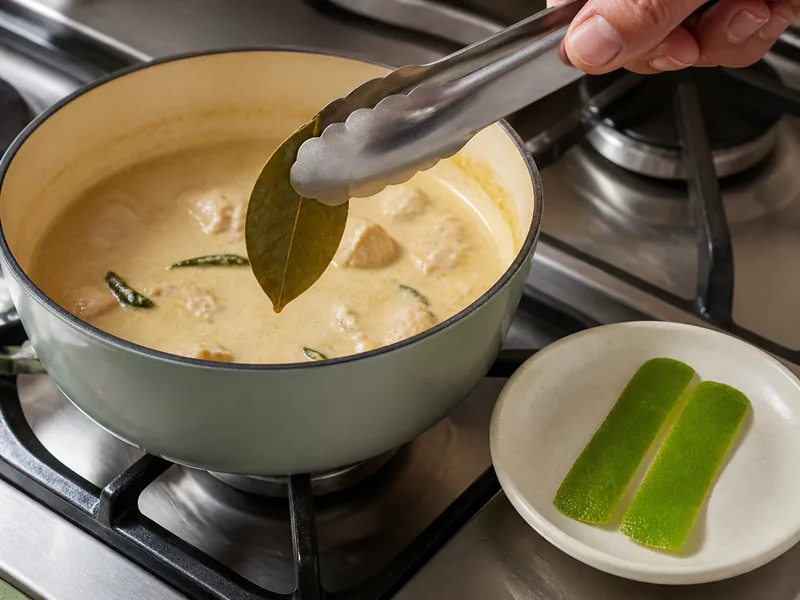
Neither ingredient tastes like the missing leaf by itself. Fresh bay is softer and less woody than a long-stored dried leaf, but it becomes the dominant aroma when left in too long.
Remove the leaf before serving. Add the small zest pinch after the liquid has stopped boiling hard so the top note remains noticeable.
3. Lemongrass and Lime Zest
Lemongrass and lime zest suit a long soup infusion. Bruise the stalk so the inner tissue is exposed, but leave it in a large enough piece to retrieve with tongs.
This pair moves the flavor toward grass and away from the leaf's floral character. It fits broth and coconut soup better than fish cakes or a garnish that diners are expected to chew.
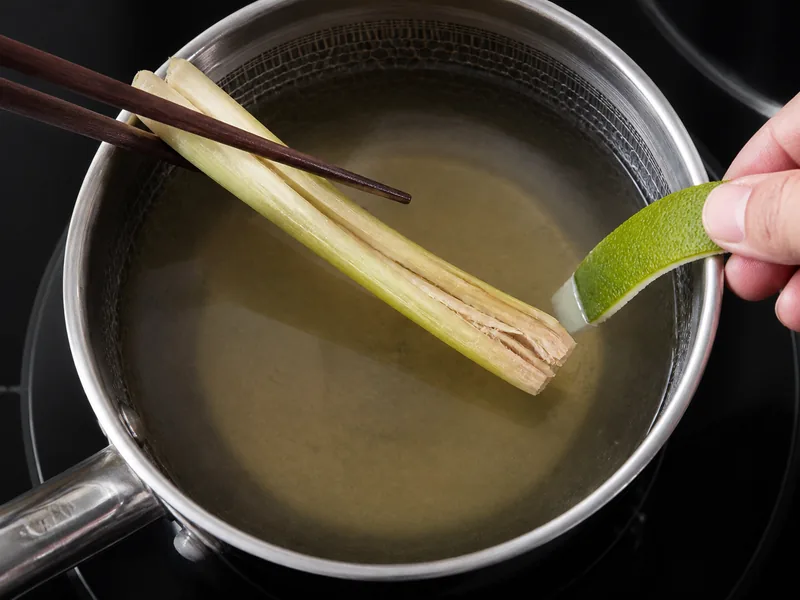
- Bruised center: Opens the stalk without scattering fibrous rings.
- Large section: Remains easy to retrieve before serving.
- Clear broth: Makes the grassy shift easier to judge.
- Late zest: Replaces aroma that a long boil would drive away.
4. Lime Zest Alone
Ordinary lime zest alone is the cleanest fast fallback.
Use two 2-inch strips or one-quarter teaspoon of finely grated zest for the two leaves in the recipe. Use it in stir-fries, quick sauces, and minced mixtures where a removable leaf or stalk would be awkward.
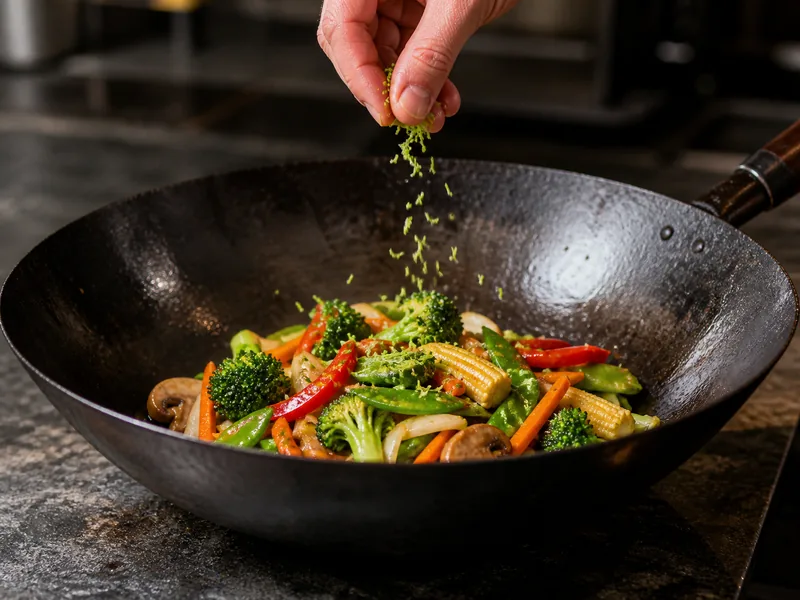
Add most of it during the final minutes because long boiling drives off the brightest aroma. More zest eventually adds bitterness, so stop before the dish tastes like grated rind.
Whole Infusions and Sliced Finishes Need Different Handling
Read the recipe verb before choosing the form. A direction to tear, bruise, simmer, remove, pound, or shred tells you more than the ingredient quantity alone.
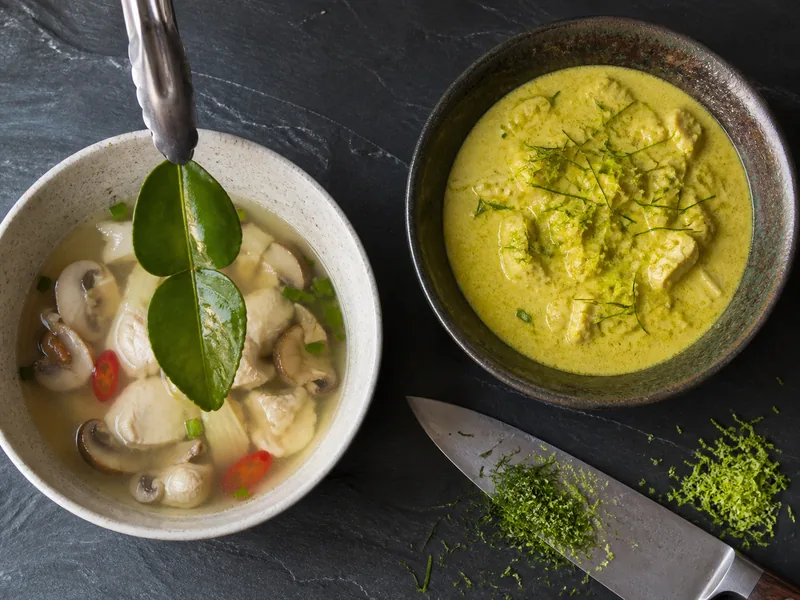
- Whole infusion: Keeps bay leaf or lemongrass easy to retrieve.
- Torn surface: Releases aroma into soup without scattering tough pieces.
- Fine finish: Uses zest or very thin shreds where texture stays pleasant.
- Two tools: Tongs remove the infusion while a knife controls the garnish.
- 1. For whole leaves in soup, use a fresh bay leaf with a wide lime-zest strip or a bruised lemongrass section with zest.
- 2. For curry paste, use finely grated makrut zest and pound it with the other fresh aromatics.
- 3. For very fine edible shreds, use finely grated ordinary lime zest or omit the garnish when texture matters more than a partial aroma match.
- 4. Remove bay leaf, broad zest strips, and lemongrass before serving unless the recipe specifically turns them into a smooth paste.
A central makrut leaf vein stays fibrous even after cooking.
Bay leaf and lemongrass are also unpleasant in large pieces, so an aromatic that smells correct can still fail if diners have to chew it.
Timing changes with surface area. A wide zest strip releases oil slowly and can sit in broth, while finely grated zest exposes much more oil at once and loses its brightness sooner.
For fish cakes or curry paste, distribute a restrained grated dose through the mixture.
For soup, keep the replacement large, removable, and partly protected from the longest boil.
Fresh, Frozen, and Dried Leaves Do Not Have Equal Strength
Check for preserved makrut leaves before rebuilding the flavor from other plants. Frozen leaves usually preserve the original aroma and shape better than dried leaves, and both are more direct matches than ordinary bay or lemongrass.
Use frozen leaves one for one when they still smell bright after thawing. They may be softer and darker than fresh leaves, but they can be torn, simmered, and removed in the same way.
Dried leaves need a more cautious test because age, package seal, and drying method change their strength. Start with one dried leaf for one fresh leaf, crush it lightly, then smell the liquid after several minutes before adding more.
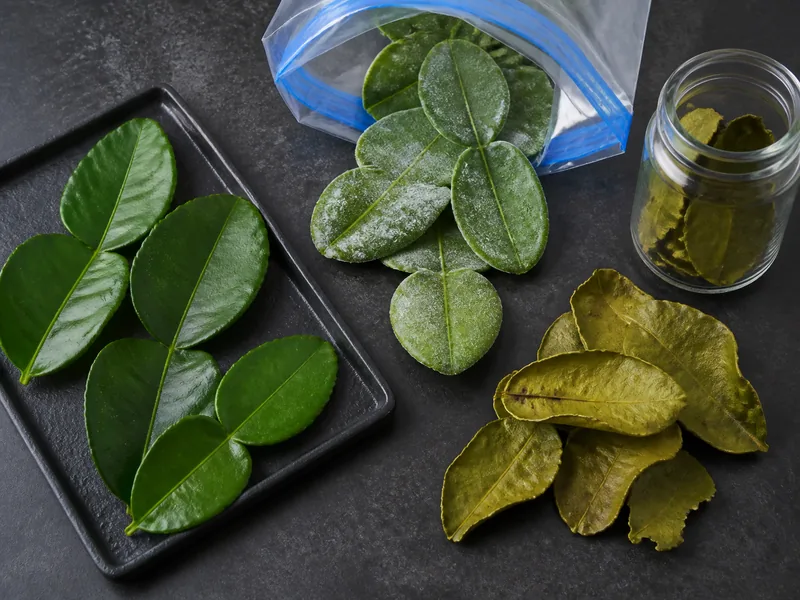
- Fresh leaves: Glossy, supple, and brightest in aroma.
- Frozen leaves: Softer after thawing but still useful as a whole infusion.
- Dried leaves: Curled and brittle with fewer high citrus notes.
- Storage containers: Limit air and odor exposure between uses.
- Choose frozen first when the recipe needs whole leaves or edible fine shreds.
- Choose dried for soup or curry that gives the leaf time to rehydrate.
- Choose a reconstructed substitute when the preserved leaves smell papery or nearly blank.
- Omit the replacement in a delicate dish when bay or lemongrass would become more noticeable than the missing aroma.
- Freeze spare fresh leaves flat so you can remove only the number needed for the next pot.
A substitute is most successful when it leaves the dish balanced, even if the aroma is less exact. In a simple steamed fish or pale broth, omission plus a small late zest pinch can taste cleaner than a woody leaf or an oversized lemongrass dose.
In a curry paste or seasoned coconut curry, other aromatics provide more cover. That is where a measured combination can rebuild enough citrus lift and green depth to keep the dish moving in the intended direction.