
Which Thai Curry Paste Should You Use for Your Curry?
Compare the paste families, check shrimp ingredients, and fry a measured spoonful before adding liquid.
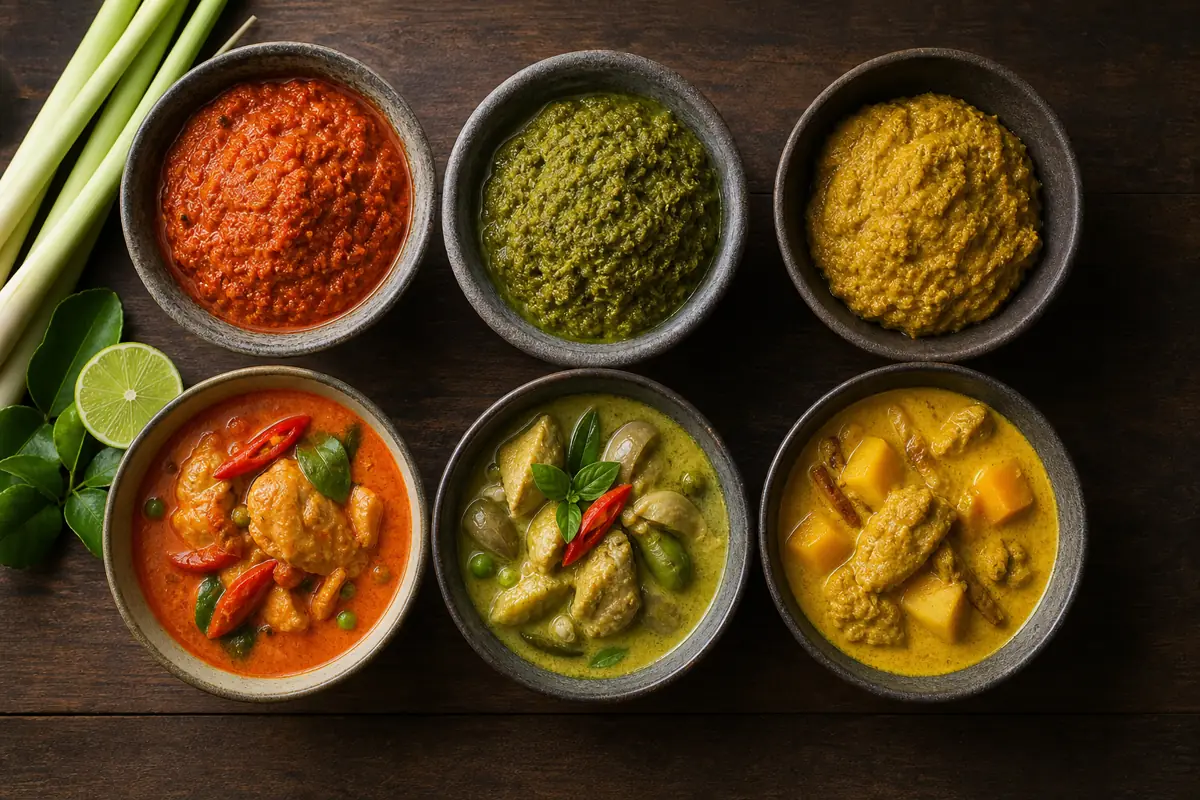
Thai curry paste is a wet pounded mixture of chiles, lemongrass, galangal, makrut lime, shallot, garlic, and savory seasonings. Choose red for dried-chile depth, green for fresh herbal heat, or yellow for turmeric and warm spice, then fry about two tablespoons before adding one can of coconut milk.
What is Thai curry paste made of?
Thai curry paste is a wet pounded mixture of chiles, lemongrass, galangal, makrut lime, shallot, garlic, roots, spices, and savory seasonings.
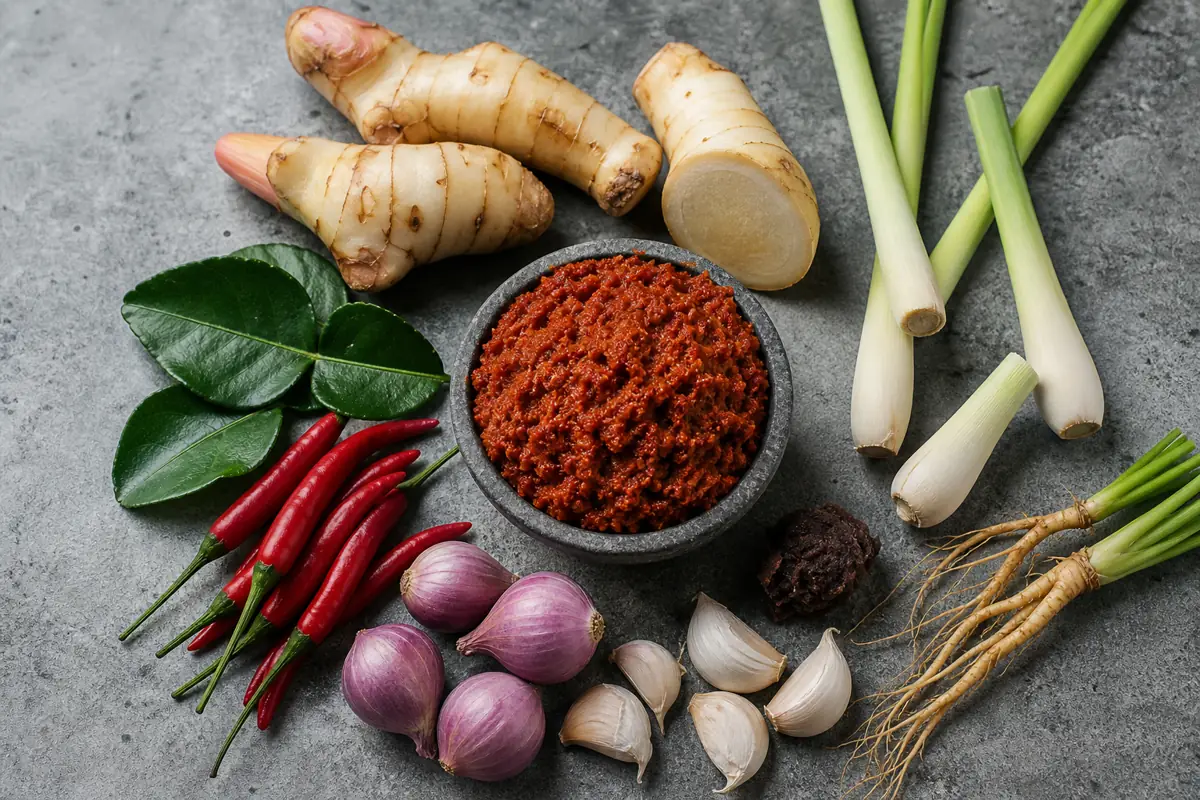
- Heat: Fresh or dried chile
- Citrus: Lemongrass and makrut lime
- Body: Shallot and garlic
- Savoriness: Shrimp paste or alternative
Unlike dry spice blends, this paste carries water and plant fiber. Its fresh aromatics scorch differently from ground spices.
Lemongrass supplies a clean citrus scent, while galangal adds piney bite that ginger cannot copy exactly.
Makrut lime peel or leaves add a sharper floral citrus note. The makrut lime aroma becomes obvious as the paste fries.
Shallot and garlic give moisture, sweetness, and body. Coriander roots or stems can add a green, peppery base when available.
Shrimp paste and salt provide savoriness, while cumin, coriander seed, turmeric, pepper, or warm spices change with the curry family.
Other Asian curry blends may share spices, but the Thai paste remains defined by wet pounded aromatics.
| Layer | Common ingredients | What it changes |
|---|---|---|
| Chile | Fresh green or dried red chiles | Heat, color, fruit |
| Citrus aromatics | Lemongrass, makrut lime | High fragrance |
| Rhizome | Galangal, turmeric | Bite and earthiness |
| Allium | Shallot, garlic | Body and sweetness |
| Fermented seasoning | Shrimp paste | Salt and savoriness |
The wider Thai pantry also uses basil, fish sauce, tamarind, palm sugar, and fresh garnishes outside the paste itself.
What is the difference between red, green, and yellow curry paste?
Red paste centers dried red chiles, green paste centers fresh green chiles and herbs, and yellow paste brings turmeric plus warm seed spices.
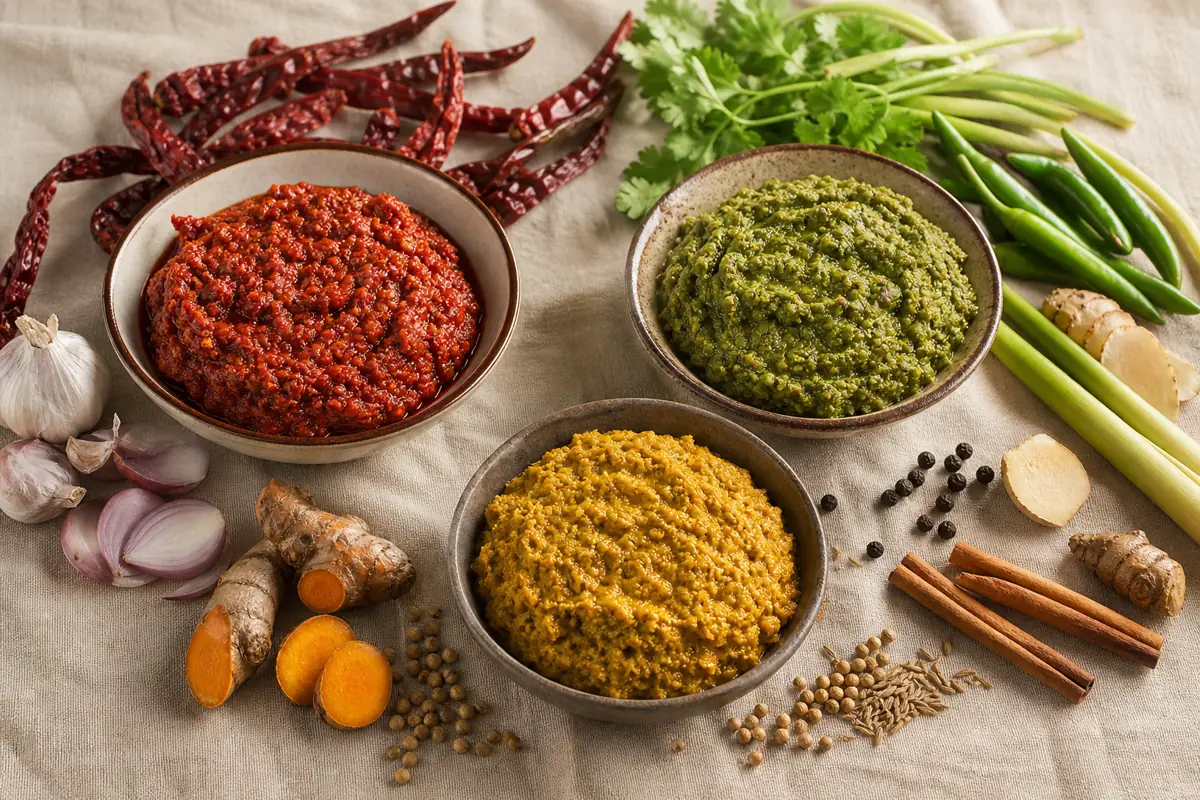
- Red: Dried red chile
- Green: Fresh green chile and herbs
- Yellow: Turmeric and warm spice
Red curry paste tastes deep, savory, and chile-forward. Its dried chiles can bring fruit and moderate heat without tasting smoky.
Green curry paste often tastes fresher and sharper because green chiles, basil, coriander, and lime aromas sit closer to the surface.
Yellow curry paste commonly includes turmeric, cumin, and coriander. Its warm-spice profile can feel rounder with potatoes, chicken, or coconut milk.
All three may share lemongrass, galangal, shallot, garlic, lime, coriander roots, and shrimp paste. Color names do not describe every ingredient.
| Paste | Leads with | Good starting pairings | Main correction |
|---|---|---|---|
| Red | Dried chile and savory depth | Duck, pork, squash, bamboo shoots | Add basil and lime late |
| Green | Fresh chile and green herbs | Chicken, fish balls, eggplant | Balance heat with coconut and sweetness |
| Yellow | Turmeric and warm spices | Chicken, potatoes, onion | Protect from excess sweetness |
Recipes within each family still vary by region and cook. Choose the named curry first, then select a paste designed for that curry.
Which Thai curry paste is hottest?
Green curry paste can be very hot, but no color is reliably hottest because chile variety, quantity, brand, and serving dose all change.
Fresh green bird chiles can create intense quick heat. Their bright color does not mean the paste will be mild.
Red pastes range from gentle dried-chile formulas to very hot versions. Deep red color may come from many mild chiles rather than a hotter pepper.
Yellow paste is often milder, yet the label can still include hot chile. Panang commonly tastes restrained because richness and sweetness soften perception.
| Signal | Useful clue | Why it can mislead |
|---|---|---|
| Chile listed first | Likely chile-forward | Chile variety remains unknown |
| Green color | Fresh chile and herbs | Fresh green chiles can be fierce |
| Deep red | Many dried chiles | Color does not equal capsaicin |
| Serving suggestion | Brand-specific dose | Recipes dilute paste differently |
Fry one teaspoon and taste it with coconut milk before committing the whole jar. Raw paste tastes saltier, sharper, and less integrated.
Does Thai curry paste contain shrimp paste?
Many traditional and commercial Thai curry pastes contain fermented shrimp paste, but vegetarian and vegan formulas replace or omit it.
Shrimp paste may appear as shrimp, fermented shrimp, kapi, crustacean, or a regional label term. It also contributes salt.
Fish sauce is not the same ingredient and may enter the finished curry later. A paste without shrimp can still meet seafood elsewhere in processing.
- Allergy: Read the full label and facility statement for crustacean warnings.
- Vegetarian: Look for an explicit vegetarian or vegan mark rather than judging color.
- Salt: Taste the fried paste before adding fish sauce, soy sauce, or salt.
- Replacement: Miso or fermented soybean can add savoriness but changes the flavor.
A shrimp-free paste is not automatically bland. Mushrooms, fermented soy, salt, and careful frying can build a strong savory base.
How much Thai curry paste should you use, and do you fry it first?
Start with two tablespoons Thai curry paste for one fourteen-ounce can of coconut milk, then adjust for the brand and desired heat.
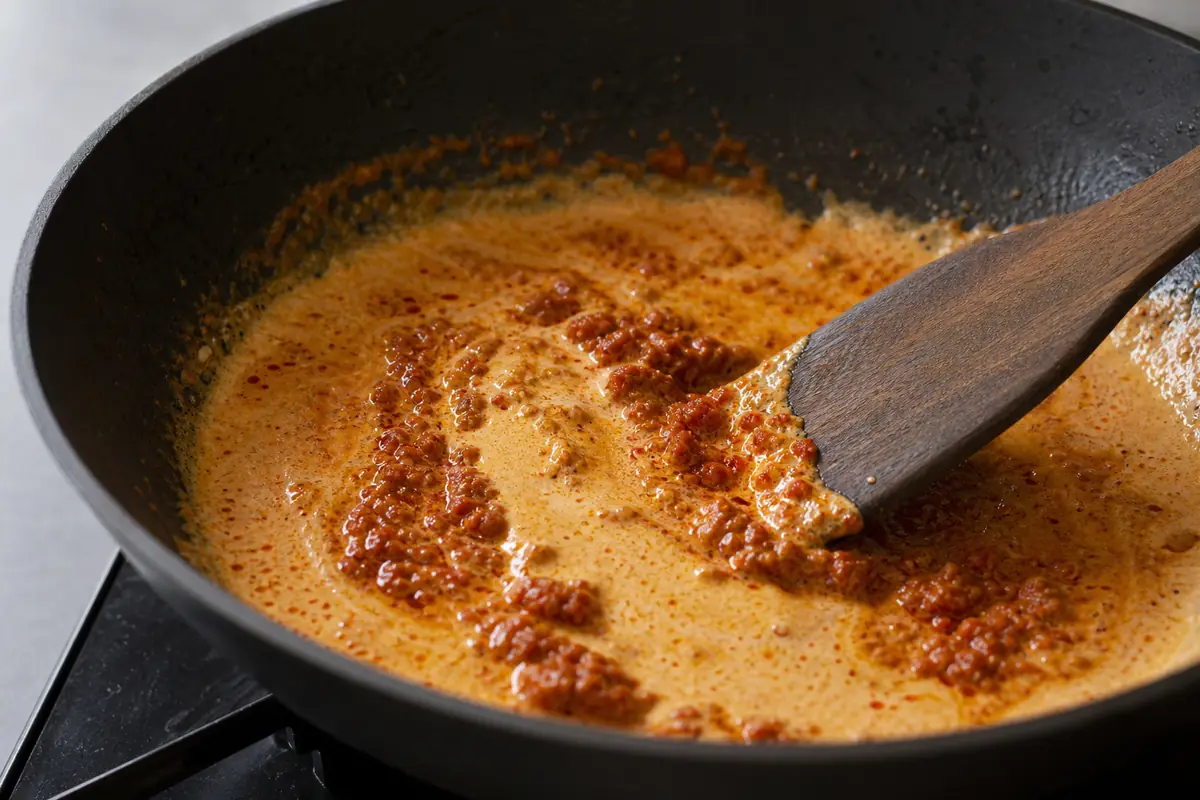
- Start: 2 tbsp paste
- Carrier: Thick coconut cream or oil
- Cue: Strong aroma and small oil beads
Spoon the thick coconut cream from the top of the can into a hot pan. Use one tablespoon neutral oil when the milk is fully emulsified.
Fry the paste for two to four minutes over medium heat while stirring. The raw garlic smell should soften as the color darkens slightly.
Small oil beads and a strong rounded aroma signal readiness. Stop before fibrous lemongrass or garlic catches and turns bitter.
Add the remaining coconut milk gradually, then add protein or vegetables according to their cooking time. A full boil can split delicate coconut milk.
| Situation | Paste start | Liquid | Adjustment |
|---|---|---|---|
| Mild commercial paste | 2 to 3 tbsp | 14 oz coconut milk | Add after tasting |
| Hot salty paste | 1 to 2 tbsp | 14 oz coconut milk | Delay fish sauce |
| Soup-like curry | 2 tbsp | Coconut milk plus broth | Recheck salt after dilution |
| Dry stir-fry | 1 tbsp | Little or no coconut milk | Fry in oil |
Balance only after the paste and coconut integrate. Palm sugar softens edges, fish sauce adds salt, and lime or tamarind supplies acidity.
A thin weak curry usually needs more fried paste, not more raw paste stirred into the finished pot. Fry the extra portion separately first.
How are panang and massaman curry pastes different?
Panang paste usually stays close to red curry paste but produces a thicker, richer curry, while massaman adds pronounced warm spices.
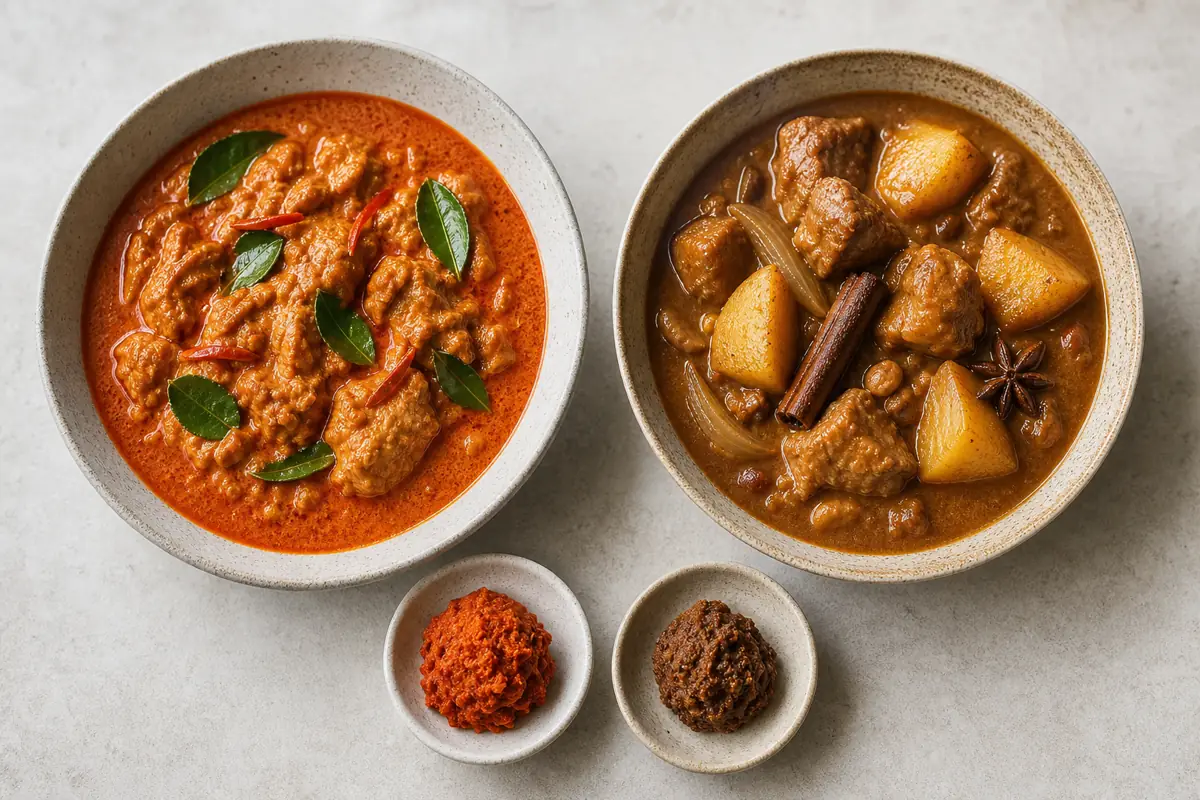
- Panang: Thick red-chile curry
- Massaman: Warm-spiced braise
- Texture cue: Clinging sauce versus looser potato curry
Panang commonly uses dried red chiles, lemongrass, galangal, lime, coriander, cumin, and savory seasoning. Peanuts often thicken the finished curry.
Massaman reflects Persian and South Asian spice influence through cardamom, cinnamon, clove, cumin, coriander, and nutmeg beside Thai aromatics.
The warm-spice layer resembles parts of garam masala, but the paste still depends on chile, lemongrass, galangal, and fermented savoriness.
| Decision | Panang | Massaman |
|---|---|---|
| Sauce | Thick and concentrated | Looser braising sauce |
| Spice focus | Red chile and lime | Cardamom, cinnamon, cumin |
| Common partners | Beef, pork, lime leaves | Beef, chicken, potato, onion |
| Peanut | Often in finished dish | Common in finished dish |
Red curry paste can stand in for panang with adjustments, but it cannot create massaman's warm-spice structure without additional spices.
What else can you cook with Thai curry paste?
Thai curry paste can season stir-fries, soups, marinades, fried rice, noodles, roasted vegetables, fish cakes, and dressings when its dose matches the carrier.
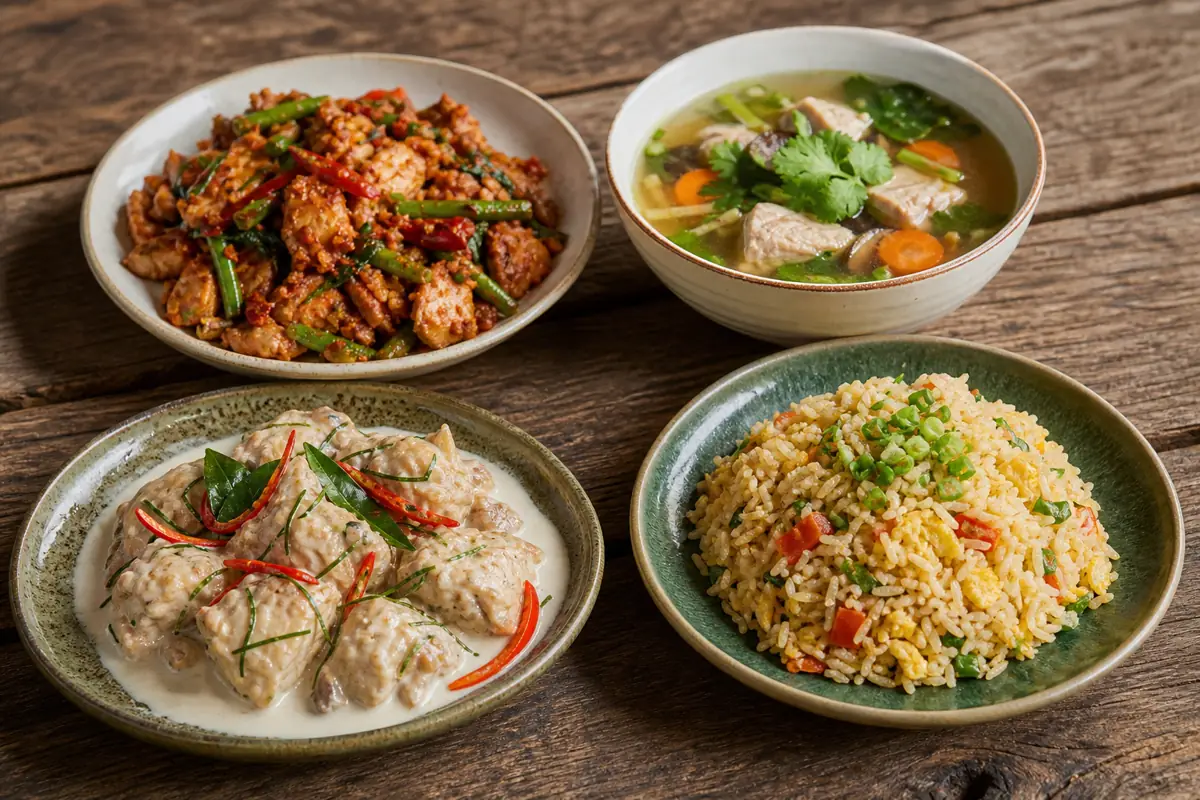
- Oil: Stir-fry
- Broth: Soup
- Wet coating: Marinade
- Dry grains: Fried rice
For stir-fries, fry one tablespoon paste in oil before adding meat and vegetables. Add only enough liquid to glaze the pan.
For soup, fry the paste first, then dilute with broth and optional coconut milk. Taste again because volume lowers heat and salt.
For marinades, mix one tablespoon paste with oil or coconut milk per pound. Check salt before adding fish sauce.
Fried rice needs paste loosened in oil before the cold grains enter. Dropping dense paste onto rice leaves hot salty clumps.
Other chile pastes can teach the same oil-dispersion lesson, but their spice and acid profiles do not make them Thai.
How do you buy, substitute, and store Thai curry paste?
The closest substitute is another Thai curry paste adjusted for chile, herbs, and warm spices rather than curry powder used alone.
Red paste can replace panang when lime peel and optional peanut join the finished curry. Green and red can swap only when the flavor change is acceptable.
To build a quick fallback, combine chile, lemongrass, galangal or ginger, lime peel, shallot, garlic, coriander, cumin, and savory seasoning.
| Fallback | Keeps | Misses | Best use |
|---|---|---|---|
| Another Thai paste | Wet aromatics and chile | Family-specific balance | Flexible curry |
| Curry powder plus fresh aromatics | Warm seed spices | Pounded chile structure | Yellow-style emergency |
| Harissa paste plus lemongrass and lime | Wet chile and garlic | Galangal and Thai savoriness | Nontraditional quick sauce |
When buying, choose a paste whose named chile and aromatics match the curry. Compare shrimp paste, salt, sugar, oil, and preservatives across labels.
Buy a container you can finish or portion soon after opening. A large tub saves money only when unused paste reaches the freezer promptly.
Refrigerate opened paste in a clean airtight container and use a dry spoon. Follow the package date because preservatives and salt vary.
- Small jar: Press the surface flat and close it promptly.
- Large tub: Freeze tablespoon portions before repeated air exposure dulls the herbs.
- Frozen paste: Fry it from frozen or thaw one portion in the refrigerator.
- Discard: Remove paste with mold, gas, leaking packaging, or an abnormal odor.
Frozen paste keeps its cooking power better than a jar opened weekly. Citrus and green-herb notes still soften, so add fresh lime or basil later.