
Which Thai Spices and Aromatics Belong in Each Dish?
Choose the right roots, stalks, leaves, chiles, herbs, and sauces for curries, soups, salads, stir-fries, and grills.
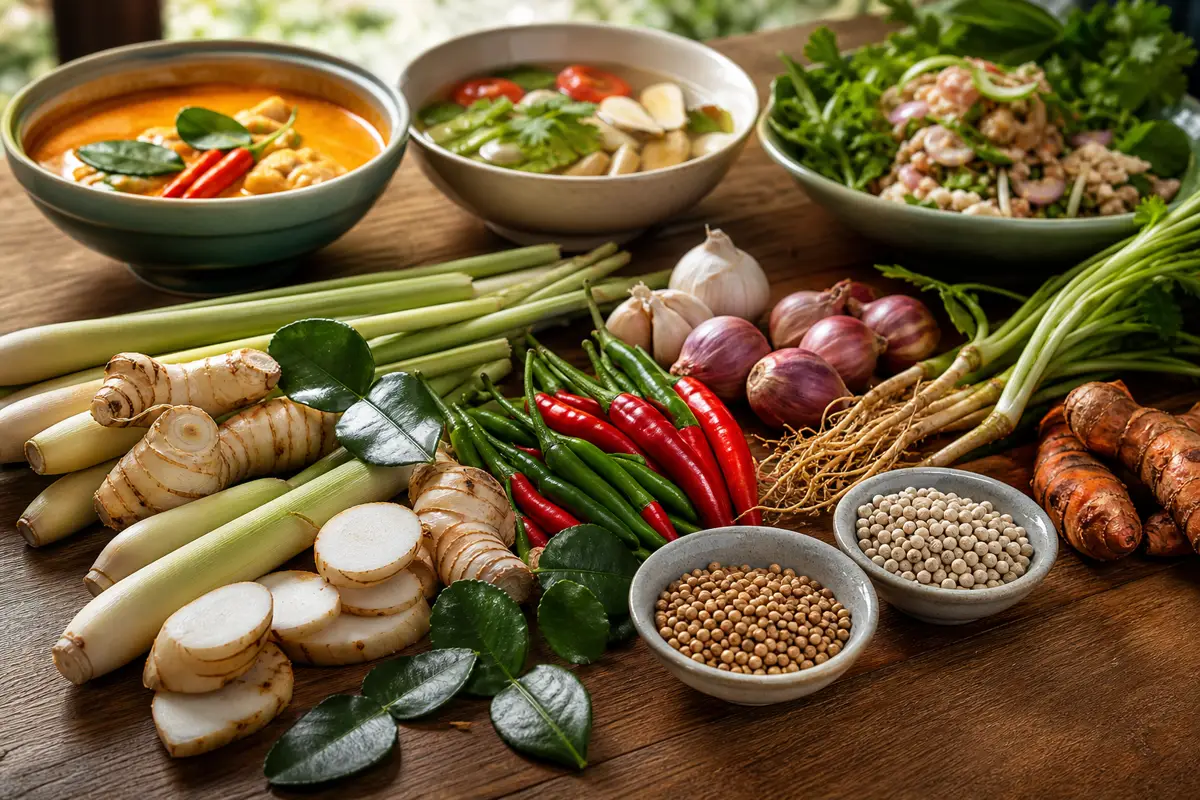
A useful Thai pantry starts with lemongrass, galangal, makrut lime leaves, chiles, garlic, shallots, coriander roots, and herbs. Dry coriander, cumin, pepper, and turmeric have targeted roles. Fish sauce, lime, tamarind, and palm sugar finish the salty, sour, and sweet balance that spice alone cannot supply.
What spices are commonly used in Thai food?
Common Thai aromatics include lemongrass, galangal, makrut lime leaves, chiles, garlic, shallots, and coriander roots. White pepper, coriander seed, cumin, and turmeric provide dry support.
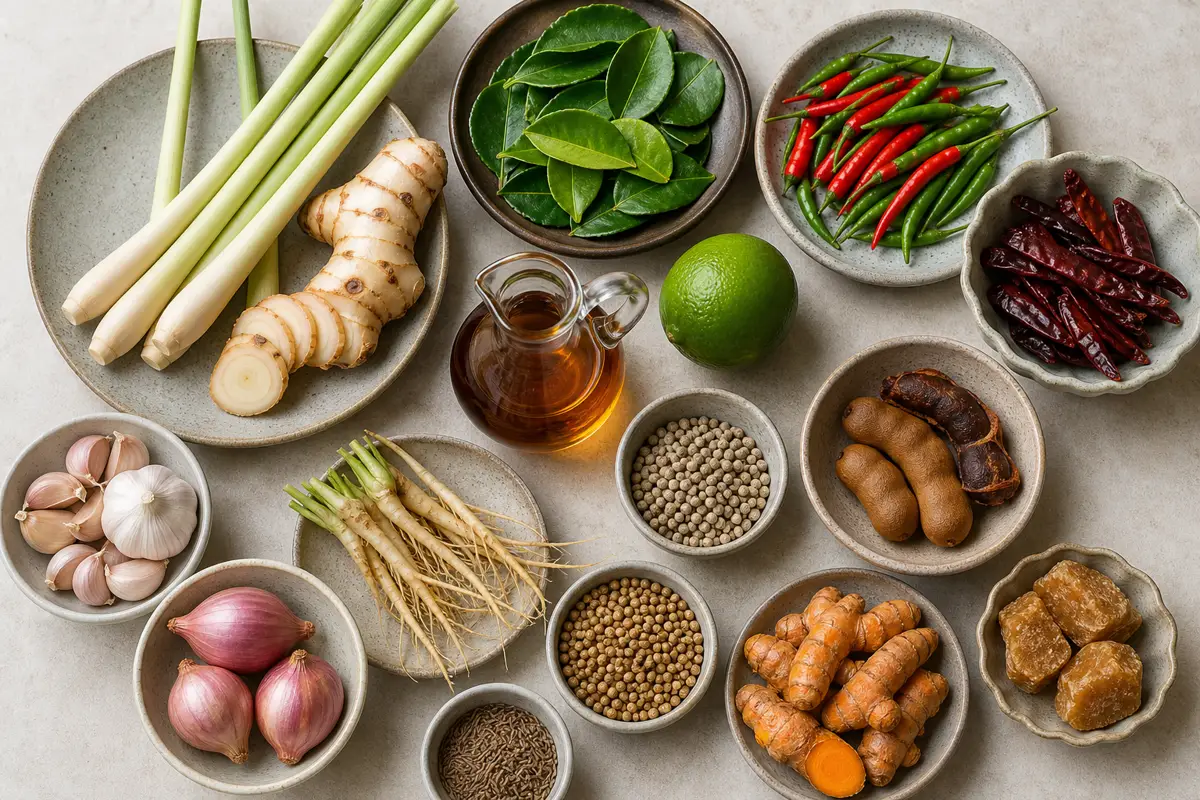
- Fresh base: Roots, stalks, leaves
- Dry support: Seeds and pepper
- Finish: Sauce, acid, sugar
Fresh lemongrass gives a green citrus aroma without the sharp acid of lime juice. Fresh galangal adds a piney, peppery root note that stays recognizable in coconut milk and broth.
Makrut lime leaves bring an intense floral citrus aroma. Fresh chiles provide grassy heat, while dried chiles contribute deeper fruit and color.
Garlic, shallot, and coriander root form a savory aromatic base. Cilantro leaves, Thai basil, holy basil, and mint are herbs, but they often supply the last aroma a dish needs.
Dry coriander seed and whole cumin seed appear strongly in some curry pastes, especially warm-spiced varieties.
White pepper seasons clear soups, marinades, and the classic garlic-coriander-root paste. Ground turmeric adds yellow color and earthy warmth to selected curries.
Fish sauce, shrimp paste, lime, tamarind, and palm sugar are not spices. They still belong in the pantry because they determine whether the aromatics taste balanced or merely loud.
| Family | Examples | Main use |
|---|---|---|
| Fresh aromatics | Lemongrass, galangal, lime leaf | Curry and soup bases |
| Heat | Fresh and dried chiles | Heat, fruit, color |
| Savory base | Garlic, shallot, coriander root | Pastes, marinades, stir-fries |
| Dry spice | Coriander, cumin, pepper, turmeric | Selected curries and grills |
| Herbs | Thai basil, holy basil, cilantro, mint | Late aroma |
| Seasonings | Fish sauce, lime, tamarind, palm sugar | Final balance |
Are Thai spices mostly fresh or dried?
Many defining Thai flavors come from fresh roots, stalks, leaves, chiles, and herbs, but dried forms are useful when the dish expects their concentrated character.
Fresh lemongrass and galangal release bright oils when sliced, bruised, or pounded. Dried pieces can flavor a long broth, but they do not rebuild the juicy texture of a fresh paste.
Makrut lime leaves freeze exceptionally well and keep more aroma than most dried leaves. Tear frozen leaves directly into hot liquid without thawing.
Dried red chiles are not a poor version of fresh green chiles. Drying creates a different fruit, color, and depth that suits red curry and roasted chile relishes.
Coriander seed, cumin, white pepper, and turmeric are often used dry because roasting and grinding distribute them through pastes and marinades. Whole seed stays fresh longer than powder.
| Ingredient | Best form | Acceptable backup |
|---|---|---|
| Lemongrass | Fresh tender core | Frozen sliced stalk |
| Galangal | Fresh or frozen slices | Dried for broth only |
| Makrut lime leaf | Fresh or frozen | Dried in long liquid cooking |
| Chile | Fresh or dried by recipe | Frozen fresh chile |
| Coriander and cumin | Whole dry seed | Freshly ground powder |
Prepared paste is another preservation form. The guide to spice paste texture explains how water and oil change its behavior.
A jar saves pounding time, but its label may add salt, oil, shrimp paste, or preservatives that change the amount needed.
Is galangal the same as ginger?
Galangal is not the same as ginger. Galangal tastes piney, citrusy, and peppery, while ginger is juicier, warmer, and more familiar in sweet cooking.
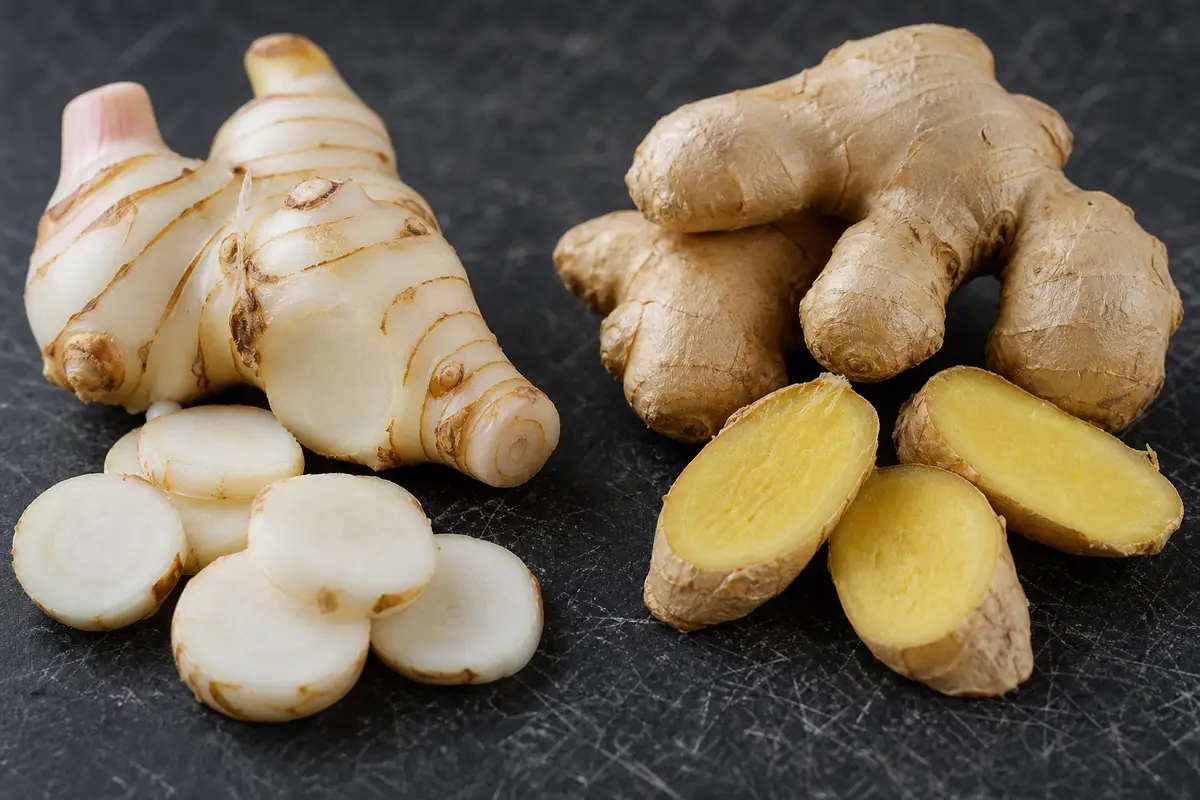
- Galangal: Piney and firm
- Ginger: Warm and juicy
- Swap: Useful but not equal
Young galangal can be cut into thin edible pieces. Mature galangal is fibrous, so slice it for infusion, pound it into paste, or remove large pieces before serving.
Ginger can keep a soup pleasant when galangal is unavailable, but it shifts tom kha away from its defining root aroma. Add lime zest or a bruised lemongrass piece for extra citrus lift.
Do not increase ginger until it tastes as strong as galangal. Excess ginger creates heat without recreating the pine-like note.
For curry paste, frozen galangal is a closer choice than dried powder. Slice it across the fiber before pounding so the paste does not contain hard threads.
How do you use lemongrass and makrut lime leaves?
Use the tender lower core of lemongrass in pastes and finely sliced dishes, while bruised whole stalks can infuse soup and be removed. Tear makrut lime leaves for liquid dishes or slice them into very fine threads for edible garnish.
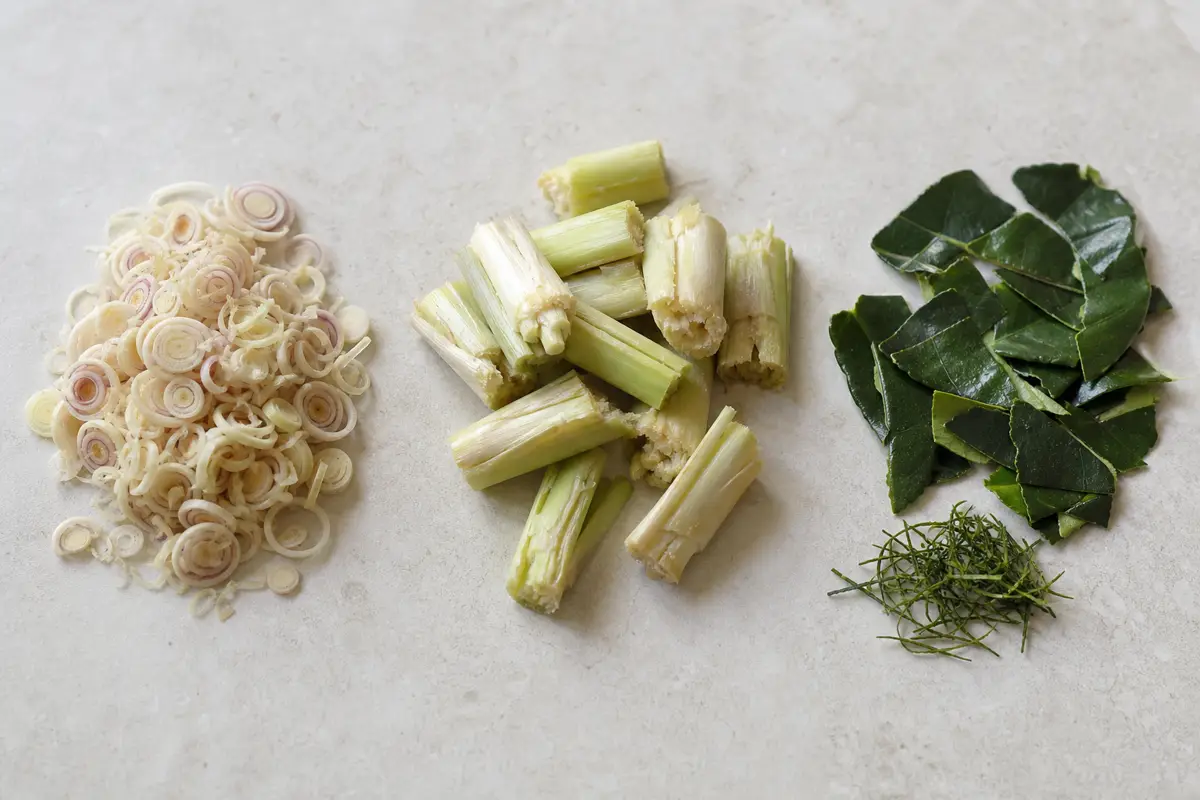
- Paste: Tender core, thin slices
- Soup: Bruised stalk, torn leaf
- Garnish: Fine leaf threads
Trim the dry top and root end of lemongrass, then peel tough outer layers. Pound the pale core before mincing so its fibers break down.
For tom yum or another broth, bruise larger lemongrass sections with the side of a knife. Diners commonly leave the woody pieces in the bowl rather than chewing them.
Tear makrut lime leaves to expose their fragrant oil. Remove the firm center rib before cutting a leaf into edible threads.
- For paste: Slice the tender lemongrass core across the fiber before pounding.
- For soup: Bruise stalk sections and tear leaves, then treat them as infusion pieces.
- For curry: Tear leaves into coconut liquid and add a few fresh threads near the end.
- For salad: Use only extremely fine tender slices or leaf threads.
Lime zest can mimic part of the leaf's citrus aroma, but lime juice adds acid as well. Add juice during final balancing, not as a direct early replacement for the leaf.
Is Thai curry paste the same as Thai seasoning?
Thai curry paste is not a complete Thai seasoning. It supplies pounded chiles and aromatics, while fish sauce, palm sugar, herbs, and acid usually remain separate decisions.
A paste may contain lemongrass, galangal, makrut lime peel, shallot, garlic, coriander root, dry spices, and shrimp paste. Its salt and chile strength vary by brand.
The guide to Thai curry paste compares red, green, yellow, panang, and massaman types. This pantry guide covers what happens outside that bowl.
Fry paste gently in coconut cream or oil until the raw aroma softens. Add liquid before the fine aromatics scorch.
| Stage | Typical ingredients | Decision |
|---|---|---|
| Aromatic base | Curry paste | Type and heat |
| Liquid | Coconut milk or stock | Richness and concentration |
| Salt and savor | Fish sauce | Add after paste salt is known |
| Sweetness | Palm sugar | Round bitterness and heat |
| Finish | Basil, lime leaf, lime | Restore fresh aroma and acid |
Taste after the curry simmers because reduction concentrates salt and heat. A larger spoonful of paste cannot fix missing sourness or sweetness.
How do Thai cooks balance sweet, sour, salty, and spicy flavors?
Thai flavor balance does not mean equal parts sweet, sour, salty, and spicy. The dish chooses which quality leads, then the others keep it clear and appetizing.
Fish sauce adds salt plus fermented savor. Lime gives bright fresh acid, while tamarind provides a darker cooked sourness for pad Thai, sour curries, and dipping sauces.
Palm sugar softens sharp acid and chile without making every dish sweet. White sugar works in a pinch, but it lacks the light caramel note.
Chiles vary greatly, so adjust them separately from color. Small chiles are often hot, but size and color still do not predict an exact heat level.
| Problem | Try first | Wait before adding more |
|---|---|---|
| Flat and dull | Fish sauce in drops | Salt appears after stirring |
| Heavy or sweet | Lime or tamarind | Acid sharpens as food cools |
| Harshly sour | Palm sugar in small pinches | Sugar dissolves slowly |
| Too hot | More unsalted food or coconut milk | Heat does not vanish instantly |
| Aroma faded | Fresh herb or lime leaf | Late additions stay vivid |
Correct one quality at a time and stir fully. Adding fish sauce, lime, sugar, and chile together hides which change helped.
Taste again at serving temperature. A chilled salad needs stronger seasoning than a warm spoonful, while a reduced curry may become saltier as it rests.
Which Thai spices go with different dishes?
Choose Thai spices by dish. Curry needs pounded aromatics, soup needs infusion pieces, salad needs fresh herbs, and stir-fry needs fast aromatics.
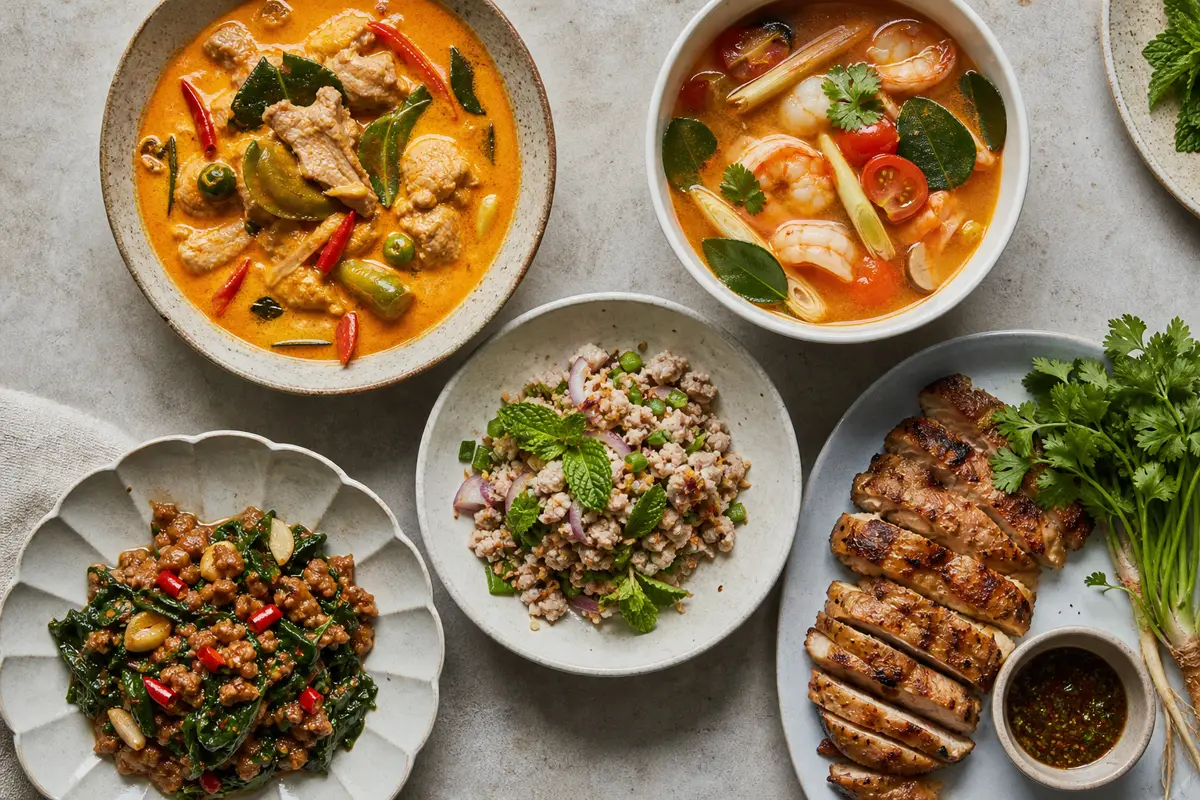
- Curry: Pounded paste
- Soup: Bruised infusion
- Salad: Fresh and toasted
Tom yum uses bruised lemongrass, galangal slices, torn makrut lime leaves, chiles, and lime. Tom kha keeps similar aromatics but carries them in coconut milk.
Larb often uses toasted rice powder, dried chile, shallot, mint, lime, and fish sauce. The toasted rice thickens lightly and brings a nutty aroma.
Pad kra pao depends on garlic, chile, and holy basil. Sweet Thai basil has an anise-like character and creates a different dish when substituted.
Grilled chicken can use coriander root, garlic, white pepper, fish sauce, and a little sugar. Crushing the roots into paste helps the marinade cling.
| Dish family | Core aromatics | Late finish |
|---|---|---|
| Coconut curry | Paste, lime leaf | Basil, fish sauce |
| Hot-sour soup | Lemongrass, galangal, lime leaf | Lime, cilantro |
| Larb or salad | Shallot, toasted rice, chile | Mint, lime |
| Basil stir-fry | Garlic, chile | Holy basil |
| Grilled food | Coriander root, garlic, pepper | Dipping sauce |
What can substitute for Thai spices, and how should they be stored?
Thai spice substitutes work best when they replace one effect rather than pretending to be identical. Ginger can provide root warmth, and lime zest can provide citrus oil, but neither fully copies galangal or makrut lime leaf.
For missing lemongrass, combine a strip of lemon zest with a little fresh ginger in soup. Remove the zest before serving and add lime juice only when the dish needs acid.
Regular basil can provide fresh herbal aroma when Thai basil is unavailable. Add a tiny pinch of anise seed only if the dish depends on Thai basil's licorice note.
| Missing | Use | Main difference |
|---|---|---|
| Galangal | Ginger plus lime zest | Warmer, less piney |
| Makrut lime leaf | Lime zest | Less floral, no leaf infusion |
| Lemongrass | Lemon zest plus ginger | Less green and stalk-like |
| Palm sugar | Light brown sugar | Stronger molasses note |
| Thai basil | Basil plus tiny anise pinch | Softer aroma |
Freeze clean, dry galangal slices, lemongrass sections, and makrut lime leaves in separate airtight bags. Portioning them first prevents repeated thawing.
Wrap tender herbs lightly and refrigerate them away from crushing cold. Store dry seed, pepper, and turmeric airtight, dark, and away from stove steam.
Discard fresh aromatics with slime, mold, or a fermented odor. Replace dry spice that smells flat after crushing, following the same heat, light, air, and moisture rules as proper spice storage.