
What Is White Pepper, and How Is It Different From Black?
The same pepper vine produces a paler seed with its own aroma, timing, and best dishes.
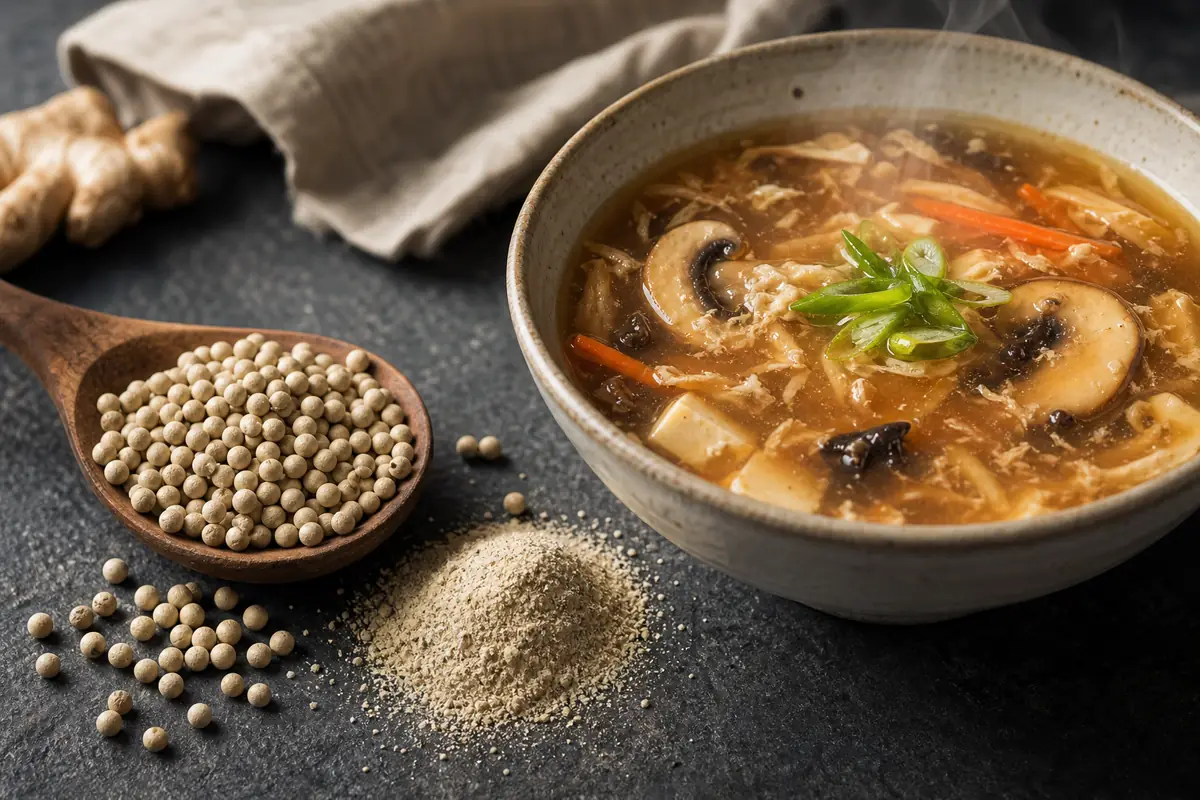
White pepper is the seed of ripe Piper nigrum fruit after the outer skin is soaked off. It gives direct pepper heat with less of black pepper's bright outer-layer aroma, and some batches carry an earthy fermented note. Use it for flavor in hot and sour soup, congee, stir-fries, pork, and seafood, or for clean appearance in pale sauces and potatoes, and start small because fine white pepper spreads quickly.
What is white pepper, and how is it made?
White pepper is the pale inner seed of ripe Piper nigrum fruit. It comes from the same climbing vine as black pepper.
Producers usually harvest berries after they ripen red or yellow. Black pepper is commonly made from less-ripe berries dried with their outer layer intact.
For white pepper, ripe berries soak in water until the soft outer fruit can be rubbed away.
This controlled softening is often called retting.
The cleaned seeds are washed and dried until pale cream or tan. They are not black peppercorns bleached white, and good examples keep natural color variation.
Water quality, soaking time, microbial activity, and drying all affect the finished aroma. That processing explains why two origins may smell quite different.
| Stage | White pepper | Black pepper |
|---|---|---|
| Harvest | Usually ripe berries | Usually green or nearly ripe berries |
| Outer layer | Soaked and removed | Dried around the seed |
| Color | Cream to pale tan | Dark brown to black |
| Main aroma | Seed heat, earthy fermented notes | Woody, citrusy, resinous notes |
| Visual effect | Blends into pale food | Leaves visible dark flecks |
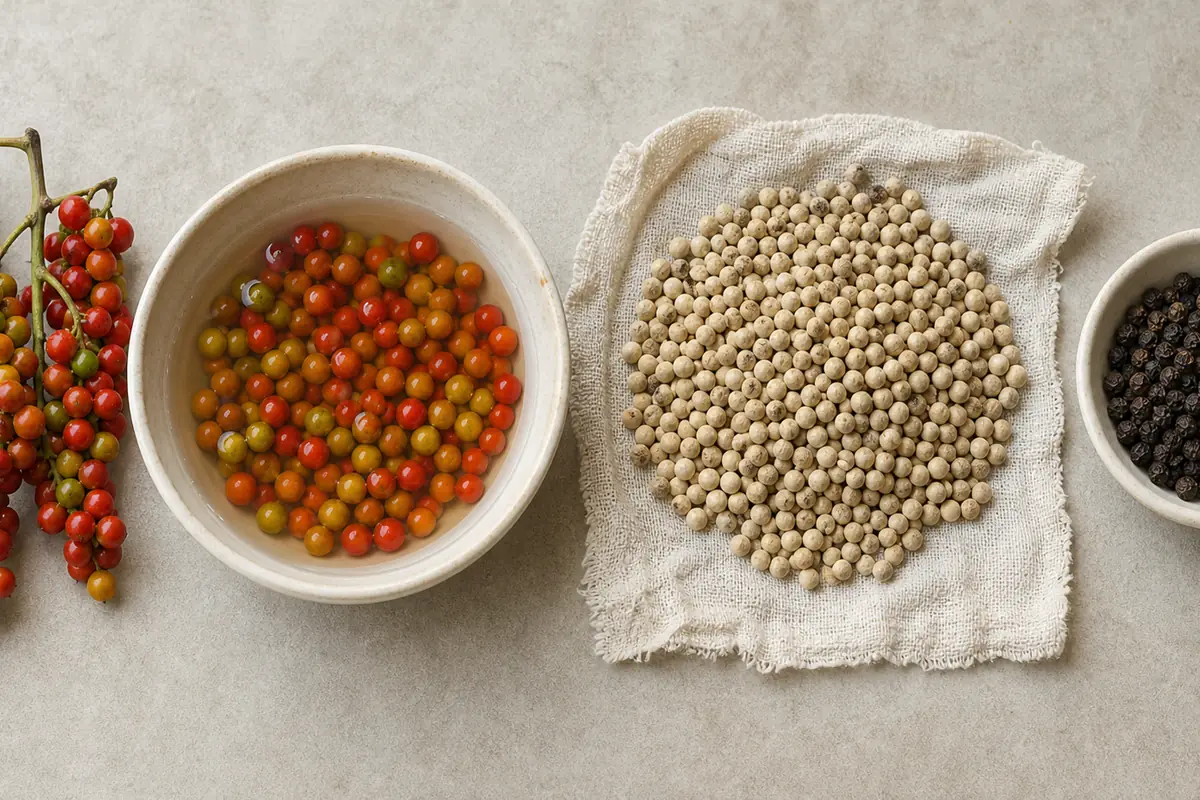
- Ripe berries supply the seed used for white pepper.
- Soaking loosens the fruit layer around the seed.
- Drying fixes the pale color and concentrates aroma.
Whole peppercorns preserve aroma better than powder because less surface is exposed.
The same physical rule explains the value of whole versus ground spices.
Choose white pepper because its processing and flavor fit the dish. Hiding dark specks is useful, but it is only one part of the decision.
What does white pepper taste like?
White pepper tastes sharply peppery with direct warmth and less bright peel aroma than black pepper. Many styles also smell earthy, musky, or lightly fermented.
The heat comes from piperine in the seed, so it builds on the tongue and lingers.
It does not flash through the nose like mustard.
Removing the outer fruit changes the aromatic balance. Black pepper often brings pine, citrus, wood, or floral notes that white pepper carries more quietly.
Soaking can add savory fermented aromas. A clean earthy scent can deepen soup, while a very strong animal or moldy odor may dominate delicate sauce.
Origin and processing matter more than color alone.
Some peppercorns taste clean and dry, while others are intentionally funky and better suited to bold food.
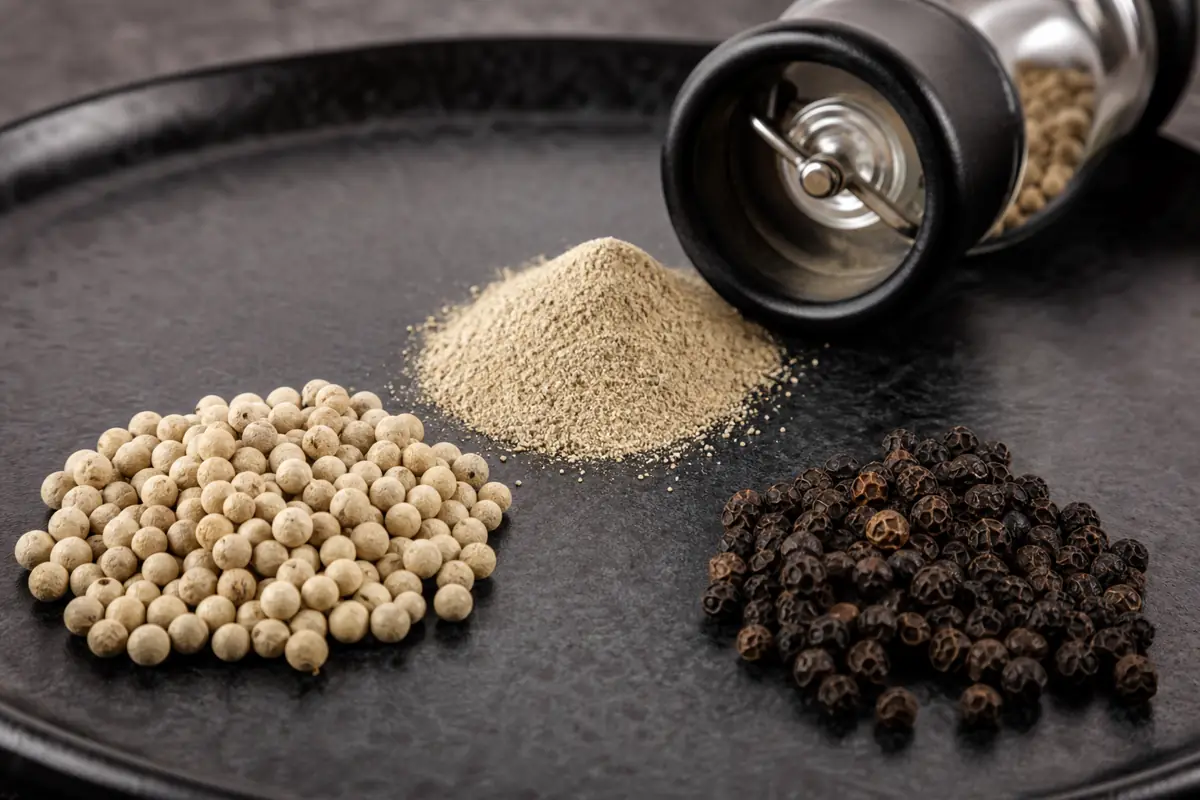
- Whole peppercorns should smell dry, peppery, and deliberate.
- Fresh powder carries more aroma than an old open jar.
- Black pepper adds darker outer-layer aromas and visible flecks.
Crush one peppercorn and smell it before cooking. Then taste a tiny pinch in plain broth or rice so salt and fat do not hide it.
Musty does not automatically mean spoiled, but damp clumps or a rotten odor are warning signs. Characteristic fermentation should still smell like food.
White pepper belongs among hot and pungent spices, yet its slow seed heat differs from chile heat.
That difference changes portion and pairing.
Is white pepper milder than black pepper?
White pepper is not reliably milder than black pepper. Equal spoonfuls may feel cleaner, sharper, or even stronger depending on freshness, grind, and origin.
Both contain piperine-rich seed. Black pepper keeps the dried fruit layer, which contributes aromas that can make its heat seem broader and more complex.
Fine white pepper powder spreads across more of the tongue than coarse cracked black pepper.
That wider contact can make a small amount feel surprisingly assertive.
| Question | White pepper | Black pepper |
|---|---|---|
| Heat | Direct, even, lingering | Warm, often broader |
| Aroma | Earthy, fermented, seed-forward | Woody, citrusy, resinous |
| Appearance | Disappears in pale food | Visible dark flecks |
| Best fit | Soups, congee, pale sauces, pork | Steaks, salads, roasts, finishing |
Freshness can reverse any simple comparison. Newly ground white pepper may outshine stale black pepper, while old white powder may add dust without useful aroma.
Test the recipe with half its suggested amount when your jar is new. You can add more after the powder disperses, but you cannot remove it.
Why do some recipes call for white pepper?
Recipes call for white pepper for three different reasons: pale appearance, a specific earthy aroma, or direct heat without black pepper's brighter fragrance.
French-style cream sauce, potato purée, and light soup may use it to avoid dark flecks. Here a clean mild batch usually suits the visual goal.
Chinese and Southeast Asian dishes often use white pepper for flavor rather than camouflage. Its earthy warmth is recognizable in hot and sour soup and congee.
It also seasons pork, shrimp, fish, dumpling fillings, and stir-fries.
The aroma works with ginger, scallion, sesame oil, soy, and rice wine.
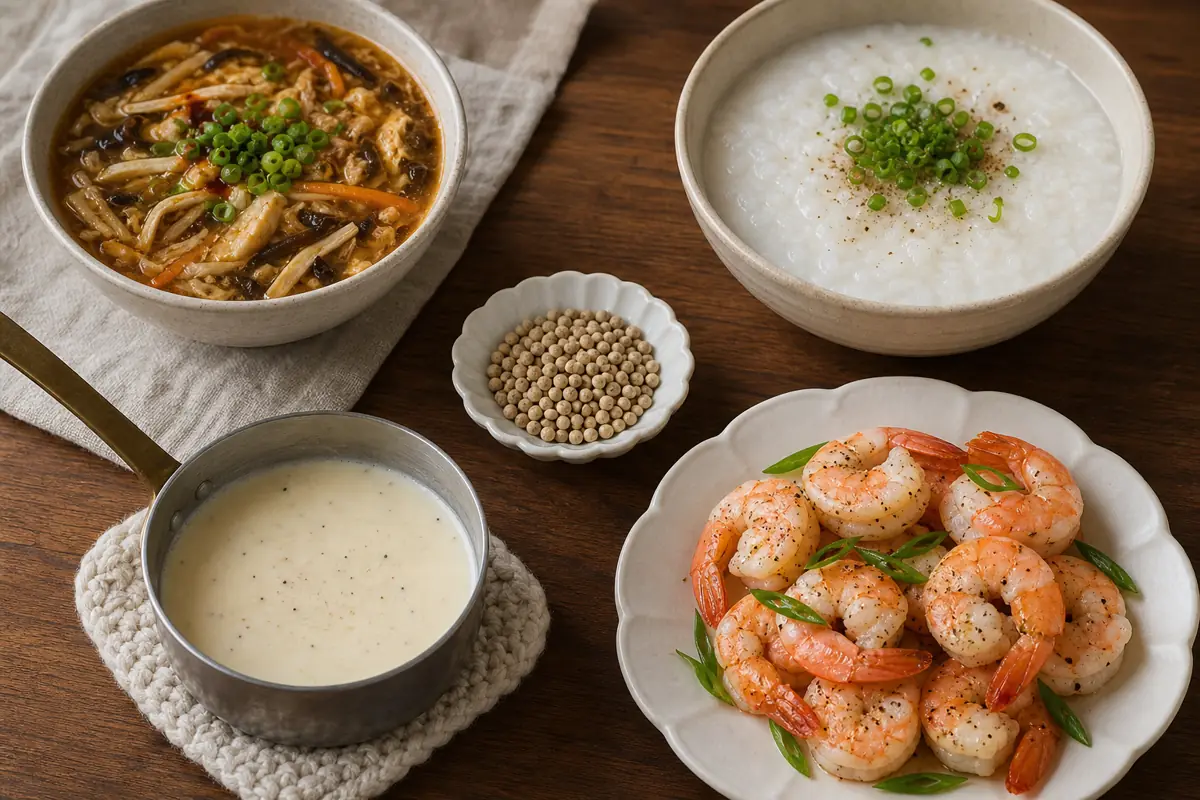
- Pale sauce uses white pepper without dark specks.
- Hot and sour soup needs its direct aromatic warmth.
- Pork and seafood take a small amount in marinades or fillings.
- For appearance: béchamel, cream soup, mashed potato, and pale gravy.
- For tradition and flavor: congee, hot and sour soup, dumpling filling, and stir-fry.
- For clean heat: shrimp, white fish, pork, tofu, and egg dishes.
- For finishing: clear broth and noodles where a fine dose should disappear evenly.
Do not swap automatically just because the food is pale. A rustic potato dish may benefit more from visible fresh black pepper and its woody aroma.
Ask what the pepper is doing before changing it. Appearance is easy to replace, but a familiar soup aroma may depend on white pepper itself.
When should you add white pepper?
Add white pepper near the end when you want its fresh earthy aroma.
Add part earlier when the goal is a softer background warmth throughout a soup.
Long simmering smooths the sharp edge but also drives off volatile aroma. A final pinch restores the top note without making the whole pot harsh.
In stir-fries, mix a measured amount into the sauce or marinade so it disperses. Loose fine powder can scorch on a very hot dry wok.
In cream sauce or potato, stir it through the moist food before judging.
A dusty patch tastes much stronger than the same amount spread evenly.
Freshly grind whole peppercorns when possible. A fine spice grinding pass gives even warmth, while coarse pieces create sudden hot bites.
Taste after salt and acid are balanced because both change perceived heat. Use specific flavor corrections before blaming pepper for a flat dish.
How much white pepper should you use?
Start with one eighth teaspoon per cup of pale sauce or four servings of potatoes.
Fine fresh powder can spread farther than its small volume suggests.
For four servings of soup, start around one quarter teaspoon. Hot and sour soup may take more because vinegar, chile, and broth can support it.
Use roughly one quarter teaspoon per pound of pork, shrimp, fish, or tofu in a marinade. Strong fermented pepper may need less.
| Food | Starting white pepper | When to adjust |
|---|---|---|
| 1 cup pale sauce | 1/8 teaspoon | After simmering and salting |
| 4 servings soup | 1/4 teaspoon | Near the end |
| 1 pound meat or seafood | 1/4 teaspoon | After the marinade is mixed |
| 4 servings potatoes | 1/8 teaspoon | After butter and dairy |
These are starting points, not fixed laws.
Grind size, batch age, and the strength of other ingredients change the useful dose.
Wait until the pepper is fully dispersed before adding more. Repeated pinches added too quickly are the common path to a dusty, throat-catching finish.
Can black pepper substitute for white pepper?
Black pepper can substitute for white pepper when visible specks and a woodier aroma are acceptable. Start with about three quarters of the stated amount.
In pale sauce, finely grind black pepper so the flecks are small.
The dish will look different, but the pepper warmth will still be useful.
In hot and sour soup or congee, black pepper supplies heat but changes the signature aroma. Add it late and taste before increasing the dose.
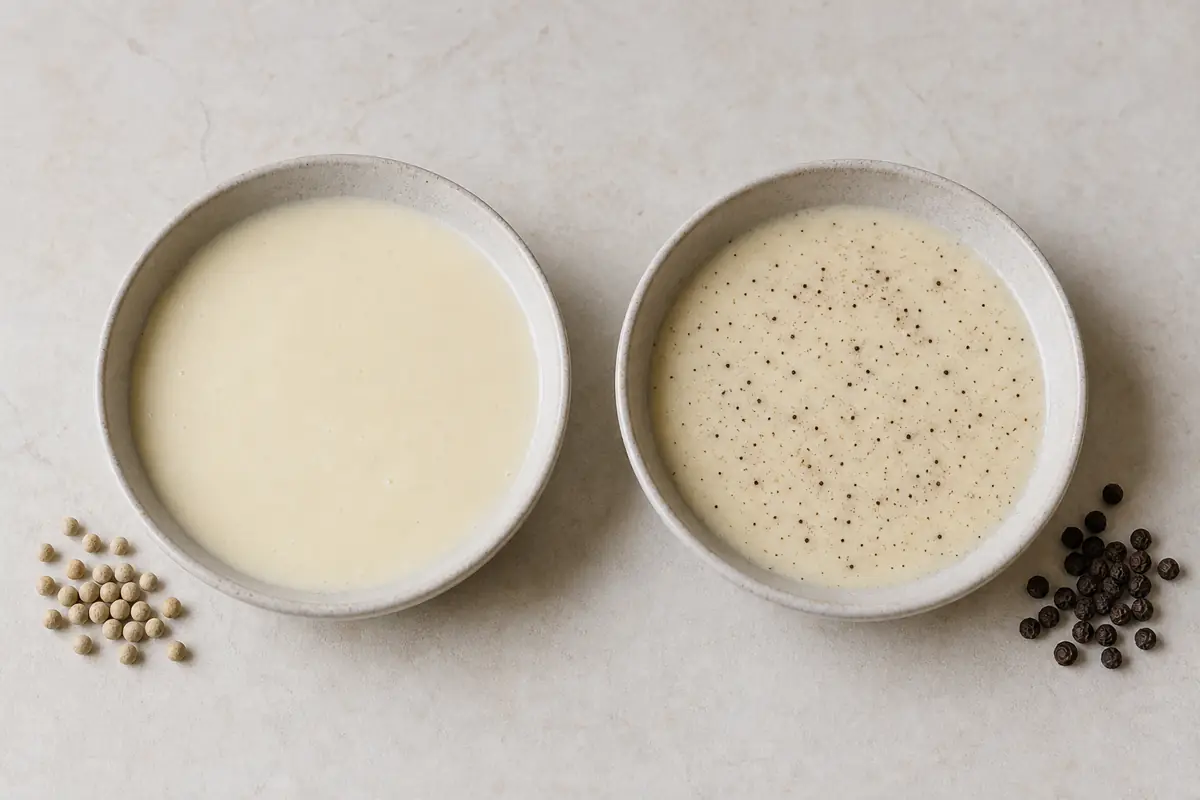
- White pepper disappears visually and tastes more earthy.
- Black pepper leaves flecks and adds brighter outer-layer aroma.
- A smaller starting dose protects a delicate sauce.
Hot mustard can supply nasal pungency, and fresh ginger can add warm brightness. Neither reproduces white pepper's slow piperine heat or fermented aroma.
Choose substitutes by the job using the spice substitution guide.
Heat, color, aroma, and texture may point to different answers.
If you added too much white pepper, increase the unseasoned base. More broth, potato, rice, dairy, or tofu lowers concentration without creating a new imbalance.
Fat can soften the impression in creamy food, but sugar rarely fixes pepper excess. It often leaves the dish both sweet and harsh.
Which white pepper origins are worth knowing?
The origin printed on the tin changes the aroma more than the grind does.
Muntok white pepper comes from Bangka Island in Indonesia and is the one most kitchens meet. It carries the sharpest fermented edge, which is exactly the note people mean when they call white pepper barnyardy.
Sarawak white pepper from Malaysia is cleaner and rounder. It suits pale sauces where you want pepper heat without a fermented top note fighting the cream.
Penja white pepper from Cameroon is the specialist choice and carries a protected origin.
It reads floral and far less aggressive, and it is priced accordingly.
Buy the origin that matches the dish rather than the cheapest tin. A hot and sour soup can absorb the Muntok funk easily, while a delicate white sauce usually cannot.
| Origin | Aroma | Where it fits |
|---|---|---|
| Muntok, Indonesia | Sharpest fermented edge | Hot and sour soup, congee, robust braises |
| Sarawak, Malaysia | Cleaner and rounder | Cream sauces, potato puree, delicate fish |
| Penja, Cameroon | Floral, least aggressive | Finishing, where the pepper should be noticed |
How do you buy and store white pepper?
Buy whole white peppercorns in a small quantity when possible. They should be dry, pale cream to tan, and free from damp clumps or insect damage.
Smell before committing to a large bag. Decide whether its clean, earthy, or strongly fermented profile matches the dishes you cook most.
A grinder gives better aroma control than old fine powder. If convenience matters, buy ground pepper from a shop with steady turnover and a clear pack date.
Use the same practical checks from reading spice labels: identity, origin when stated, grind, pack date, and unnecessary additives.
- Buy: small amounts with a dry peppery aroma you actually enjoy.
- Store: seal in an opaque airtight jar away from heat, steam, and sunlight.
- Grind: make only enough for near-term cooking when the aroma matters.
- Replace: discard damp, moldy, insect-damaged, or rotten-smelling pepper.
Keep the jar away from the stove and never shake it over steaming food. Moisture entering the container speeds clumping and aroma loss.
The broader spice storage guide explains container and cabinet choices. White pepper especially rewards a tight lid because its aroma divides opinion.
Replace ground pepper when it adds dusty heat without a clear aroma. A printed date helps, but your nose gives the final quality decision.