
Which White Pepper Substitute Preserves Color and Heat?
Choose between invisible seasoning, earthy pepper aroma, and a different kind of heat.
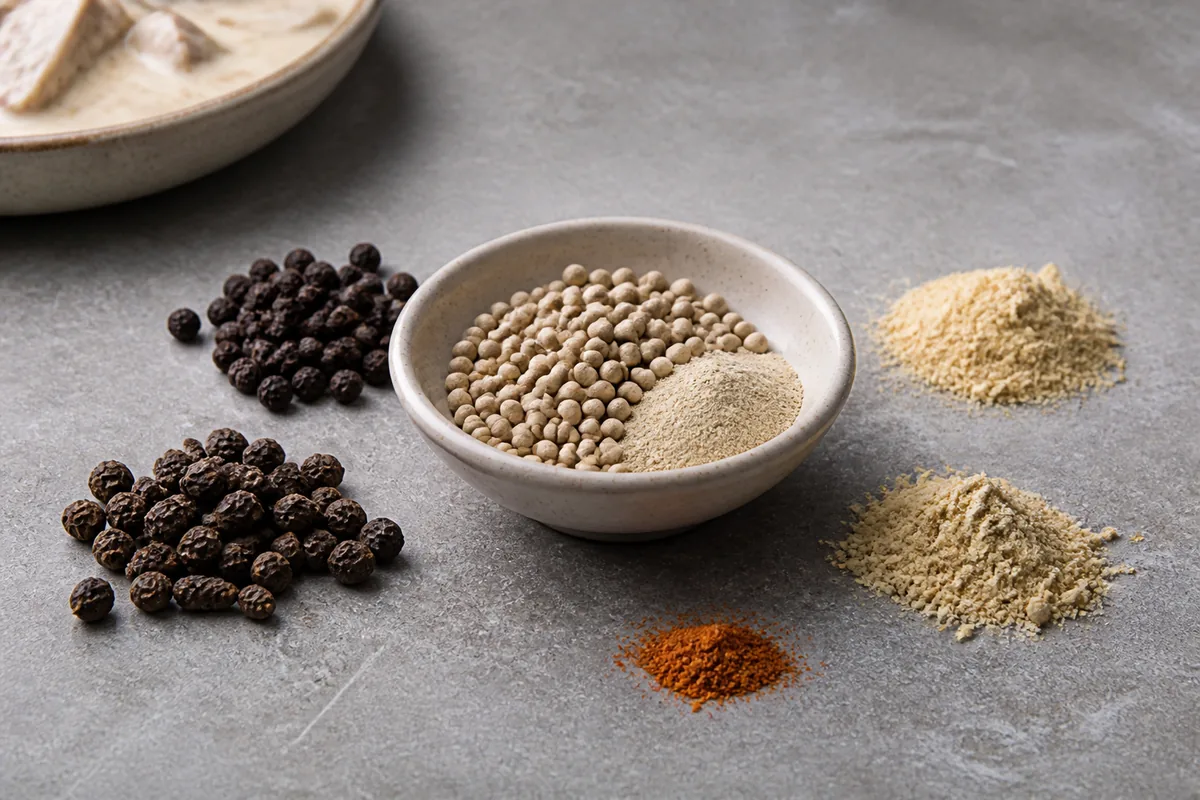
Black pepper is the closest white pepper substitute when visible specks are acceptable. Start with 3/4 teaspoon black pepper per teaspoon of white pepper, while pale sauces may need mustard powder or ground ginger and hot-and-sour soup needs a late aroma check.
5 White Pepper Substitutes by What the Dish Must Preserve
White pepper and black pepper come from the same plant, but removing the berry's outer layer creates a pale seed that disappears into cream sauce or mashed potato while retaining a distinct earthy aroma.
When dark flecks will not matter, start with 3/4 teaspoon black pepper for each teaspoon of white pepper and move toward equal volume only after its fruitier, woodier aroma has settled into the dish.
The other options replace one function at a time. Grains of paradise stays peppery but adds citrus, mustard powder gives pale nasal heat, ground ginger brings pale warmth, and cayenne supplies concentrated burn with visible red color.
| Number | Substitute | Starting ratio for 1 tsp white pepper | Best use | Visible change |
|---|---|---|---|---|
| 1 | Black pepper | 3/4 tsp | Stews, meat, marinades, dark sauces | Black flecks |
| 2 | Grains of paradise | 3/4 tsp freshly ground | Meat, vegetables, creamy soups | Tan flecks |
| 3 | Mustard powder | 1/2 tsp | Pale sauces, potato, dressings | Faint yellow cast |
| 4 | Ground ginger | 1/2 tsp | Chinese-style soups, marinades, vegetables | Usually stays pale |
| 5 | Cayenne | 1/8 tsp | Dark soup, braise, meat seasoning | Red or orange tint |
Treat every ratio as a cooked starting point because a teaspoon dispersed through a braise behaves differently from the same amount dusted over finished potatoes.
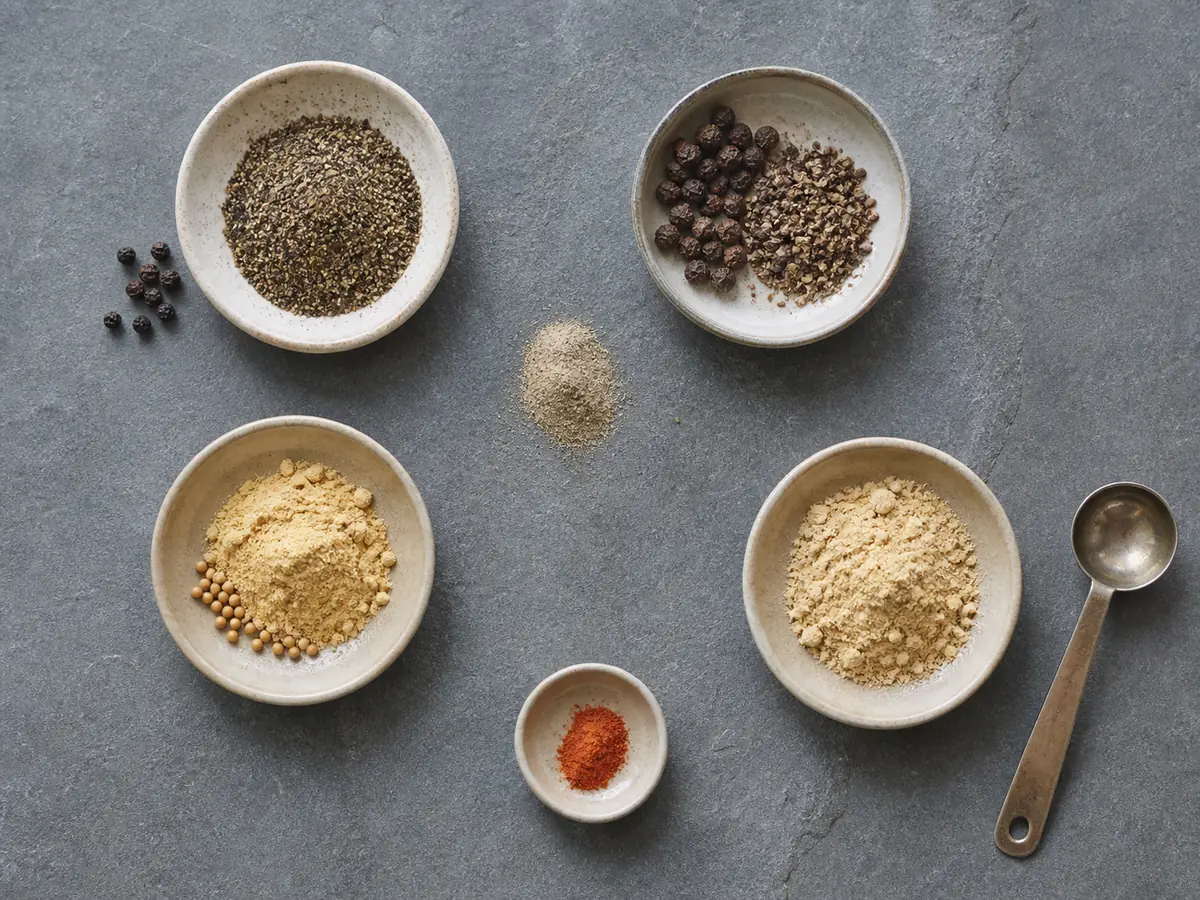
- Black pepper: Closest general replacement with visible flecks.
- Grains of paradise: Peppery warmth with citrus lift.
- Mustard and ginger: Pale options with different aromas.
- Cayenne: Concentrated heat with red color.
1. Black Pepper
Use 3/4 teaspoon ground black pepper for each teaspoon of white pepper in stews, braises, marinades, meat mixtures, and darker sauces. Both come from Piper nigrum, so black pepper supplies the closest familiar bite.
- Starting ratio
- 3/4 teaspoon per 1 teaspoon white pepper
- Best for
- stews, braises, marinades, meat mixtures, and dark sauces
- Main tradeoff
- black flecks with fruitier and woodier aroma
- Adjust
- move toward 1:1 only when the cooked dish can carry the louder aroma
The aroma and color contributed by black pepper's retained berry skin can disappear in brown gravy but remain obvious on a white plate of mashed potato.
Grind black pepper finely for even seasoning because large fragments create sharp individual bites and make the substitution look more deliberate than it tastes.
Black pepper cannot preserve a spotless pale surface.
If the recipe specified white pepper for hot-and-sour soup or another dish where its earthy aroma is recognizable, black pepper makes a good soup but a different one. Add it late and judge the finished broth before matching the full original quantity.
2. Grains of Paradise
Start with 3/4 teaspoon freshly ground grains of paradise for each teaspoon of white pepper. It gives a clean peppery warmth with citrus and cardamom-like lift, which works well in meat, vegetables, grains, creamy soup, and butter sauces.
- Starting ratio
- 3/4 teaspoon freshly ground per 1 teaspoon white pepper
- Best for
- meat, vegetables, grains, creamy soups, and finishing
- Main tradeoff
- citrus-cardamom lift and visible tan flecks
- Adjust
- grind just before use and stop before the floral aroma leads
Fresh grinding matters because the bright top notes fade faster than the dry warmth. Crush only the amount you need, then mix it through the dish instead of leaving coarse seeds on a pale surface.
This option fits food that can welcome aromatic lift. It is less convincing in a recipe where white pepper's fermented earthiness is the signature rather than background heat.
3. Mustard Powder
Use 1/2 teaspoon mustard powder for each teaspoon of white pepper in cream sauce, mashed potato, cheese sauce, dressing, or a seasoned meat mixture. Mustard gives a nose-level pungency that can wake up pale food without black specks.
- Starting ratio
- 1/2 teaspoon per 1 teaspoon white pepper
- Best for
- cream sauce, mashed potato, dressing, cheese sauce, and meat mixtures
- Main tradeoff
- mustard aroma and a faint yellow cast
- Adjust
- disperse it in liquid or fat before deciding whether the dish needs more
Dry mustard needs moisture to reveal its pungency, which can feel sharper than pepper even when the dish is not chile-hot.
Whisk it into the sauce rather than sprinkling powder onto finished food. A dry pocket tastes bitter and mustard-like, while even dispersion makes the lower starting ratio easier to judge.
Mustard powder can shift an ivory sauce toward cream-yellow. That change is subtle in cheese sauce and more visible in a classical white sauce.
Do not use it when mustard is already a named flavor elsewhere in the recipe unless you reduce that other source.
4. Ground Ginger
Start with 1/2 teaspoon ground ginger for each teaspoon of white pepper in Chinese-style soup, vegetable dishes, marinades, or pale sauces. The powder stays visually discreet and brings warm aromatic lift, but it lacks peppercorn bite.
- Starting ratio
- 1/2 teaspoon per 1 teaspoon white pepper
- Best for
- Chinese-style soups, vegetables, marinades, and pale sauces
- Main tradeoff
- sweeter warm aroma without Piper nigrum bite
- Adjust
- combine with black pepper only when dark flecks are acceptable
Ground ginger can reinforce broth aromatics or a meat marinade without creating a red tint, but it belongs only in food that already welcomes its recognizable aroma.
Do not keep adding it to chase pepper heat. Extra ginger turns sweet, dusty, and increasingly recognizable while the missing white-pepper aroma remains missing.
5. Cayenne
Use only 1/8 teaspoon cayenne for each teaspoon of white pepper, then taste after the powder has dispersed. Cayenne works in dark soup, braise, meat seasoning, or a sauce where direct chile heat and red color are acceptable.
- Starting ratio
- 1/8 teaspoon per 1 teaspoon white pepper
- Best for
- dark soups, braises, meat seasoning, and strongly flavored sauces
- Main tradeoff
- capsaicin burn with red or orange color and no peppercorn aroma
- Adjust
- increase by small pinches only after the complete dish is tasted
The heat arrives differently from white pepper and can linger longer on the tongue. Vinegar and serving temperature may make that burn feel more prominent than it did in the pan.
Cayenne is a directional replacement, not a finishing equivalent. Keep it out of pristine bechamel, pale potato, and any recipe where the white appearance is part of the presentation.
Pale Sauces Turn Color Into a Flavor Decision
Because white pepper seasons bechamel, veloute, cream soup, pale gravy, and mashed potato without black specks, replacing it begins with a visual decision before flavor is considered.
Black pepper is still the closest taste family when appearance is flexible. Use a fine grind and add it while whisking so the dark particles spread rather than gathering in visible clusters.
Mustard powder and ground ginger keep the surface cleaner, but neither is neutral. Mustard can yellow an ivory sauce, while ginger stays pale and introduces a sweeter aroma that becomes clearer as the dish cools.
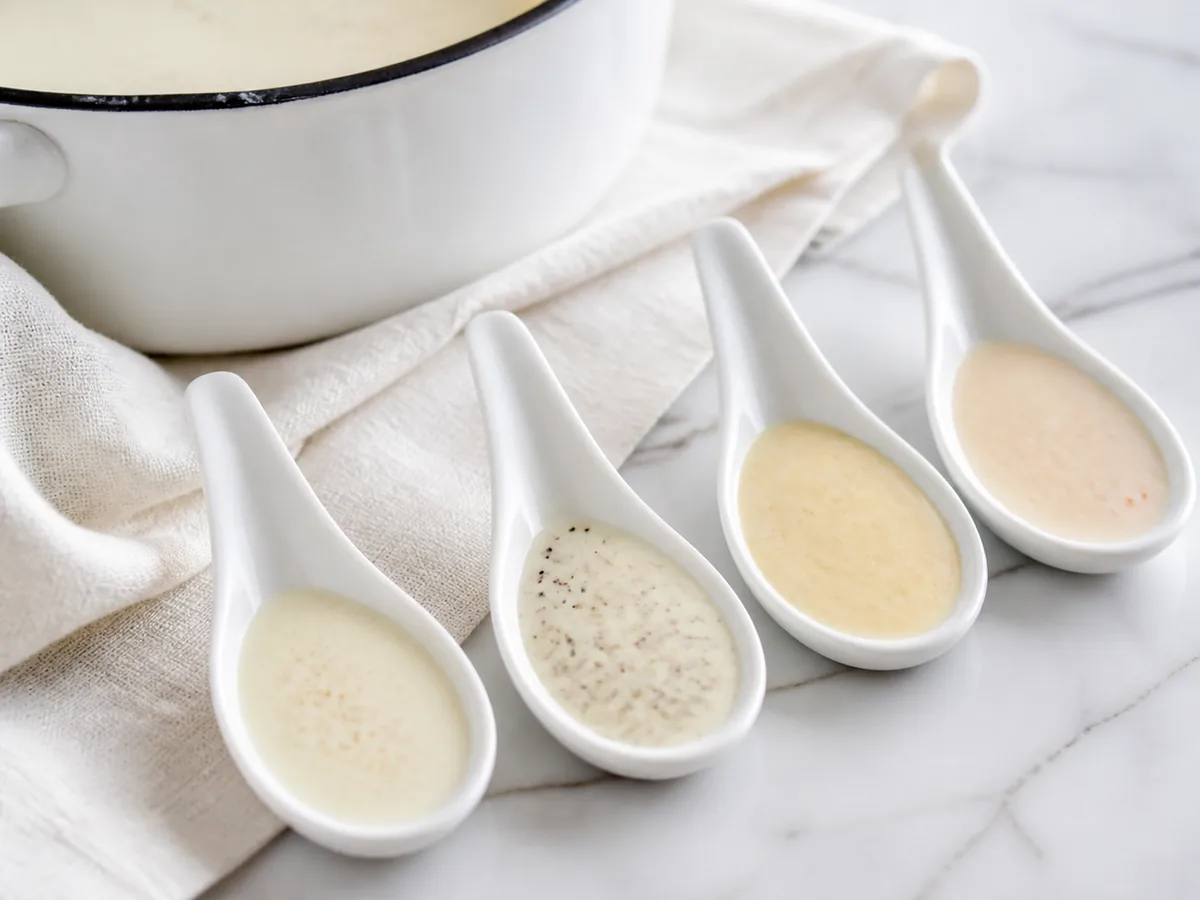
- White pepper: Pale seasoning with minimal contrast.
- Black pepper: Dark particles stay visible.
- Mustard powder: Adds a cream-yellow cast.
- Cayenne: Creates a pink or orange tint.
Choose ground ginger only when the sauce can carry warmth, or use finely ground black pepper and accept specks.
Mustard powder can work at half volume when a faint yellow cast fits the butter and dairy.
Grains of paradise adds aromatic lift, though tan particles remain visible in a smooth puree.
Black pepper is usually the least disruptive choice once browned meat and pan juices enter the sauce.
Fat and starch hold aroma, so a warm spoonful may seem milder than the same sauce on the plate. Let a test spoon cool briefly before increasing mustard or ginger.
Color cannot be corrected with another seasoning once the particles or tint are in the pan. Decide whether an immaculate appearance actually matters before rejecting the closest-tasting option.
Hot-and-Sour Soup Needs Late Earthy Heat
In hot-and-sour soup, cayenne alone makes the bowl hotter without rebuilding the earthy white-pepper aroma that rises above mushroom, broth, vinegar, and chile.
Black pepper is the closest practical choice when the soup is already dark enough to hide flecks. Ground ginger can support the warm aromatic side, but it should not be increased until it becomes the leading taste.
Add most of the substitute after the broth has simmered and the vinegar has been adjusted. Late seasoning preserves more aroma and lets you judge how acid changes the perceived heat.
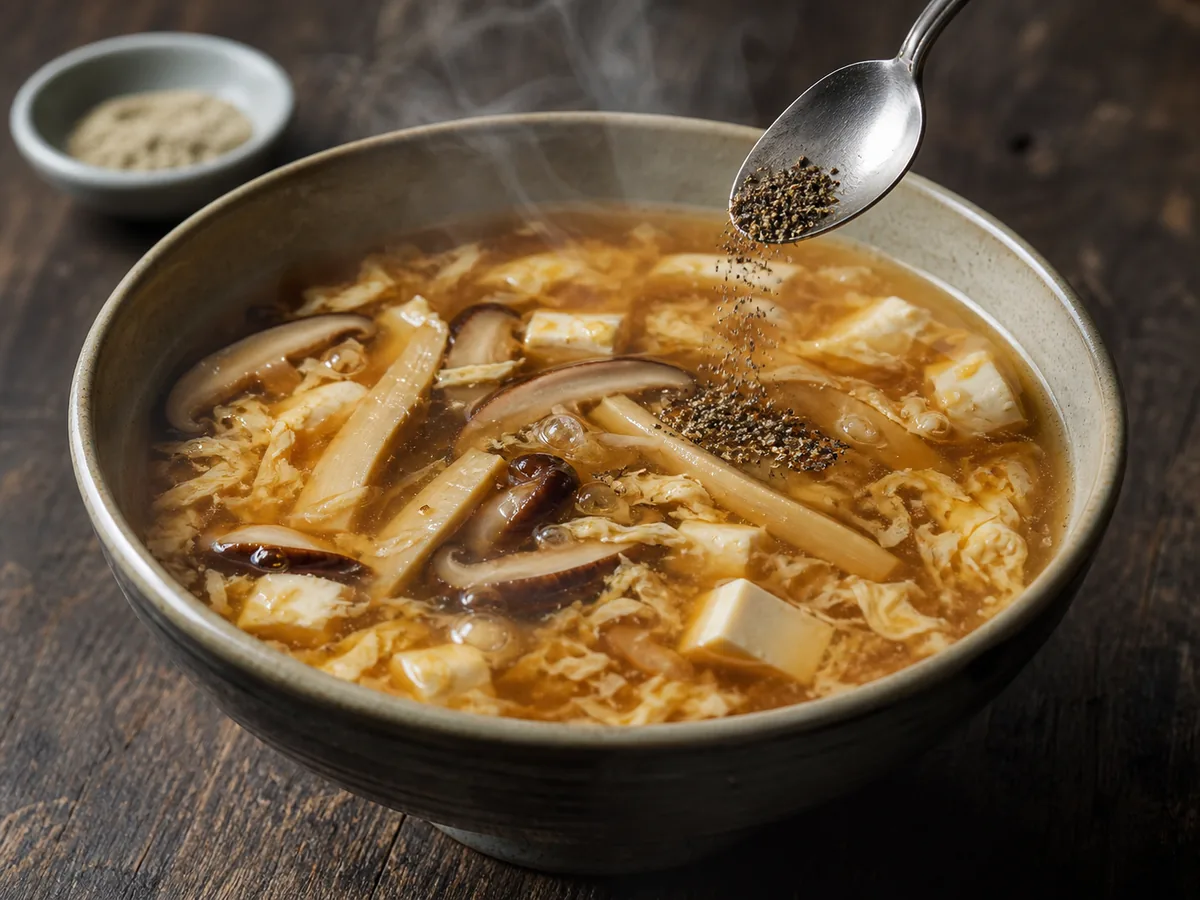
- Broth first: Balance salt and main aromatics.
- Acid next: Let vinegar settle into the soup.
- Pepper late: Preserve volatile aroma.
- Final taste: Include tofu, mushroom, and egg in the spoon.
- Season the broth with salt and its main aromatics before adding the pepper replacement.
- Add vinegar and any chile called for by the recipe, then simmer briefly so the sharp edges combine.
- Stir in half of the planned black pepper or ground ginger near the end.
- Taste a spoonful with the solids because mushroom, tofu, egg, and meat soften the broth's heat differently.
- Add the remaining substitute only if the soup needs more aroma or warmth, not merely more burn.
Grains of paradise can work in a flexible broth, although its citrus-cardamom lift changes the traditional direction. Grind it finely so fragments do not interrupt the soft texture of egg ribbons or tofu.
Cayenne belongs only in the chile part of the seasoning. If the soup needs both heat and pepper aroma, use a tiny cayenne pinch beside black pepper rather than multiplying cayenne alone.
Meat Mixtures Can Carry a Darker, Louder Substitute
Sausage, meatballs, dumpling filling, marinades, and braised meat can usually carry black pepper because protein, fat, browning, garlic, and soy or stock make its flecks and woody aroma less intrusive.
Mix a finely ground substitute through the full batch before cooking a small test portion. Surface seasoning can exaggerate cayenne or grains of paradise, while even distribution reveals whether the meat needs heat, aroma, or salt.
- Sausage and meatballs: Use black pepper at three-quarter volume, then cook a small patty before increasing it.
- Dumpling filling: Ground ginger can support existing ginger, but black pepper is closer when the filling needs pepper bite.
- Marinade: Grains of paradise suits citrus, garlic, and herbs when its floral lift will not fight the cuisine.
- Braise: Black pepper tolerates long cooking, while a small late addition restores aroma that simmering softened.
- Cured or emulsified meat: Follow the tested recipe when pepper amount affects a traditional flavor or production standard.
Mustard powder changes more than pungency in a wet meat mixture. It absorbs liquid, reinforces mustard aroma, and may be welcome in sausage while feeling misplaced in a delicate dumpling filling.
Cayenne distributes unevenly when it lands in one damp patch. Blend it first with the other dry seasonings, then stop at the conservative ratio until a cooked sample proves that more heat is useful.
Whole Peppercorns Need a Crackable Substitute
A recipe calling for whole white peppercorns may need slow extraction, easy removal, or coarse texture, jobs that an equal spoon of ground substitute cannot perform.
Whole black peppercorns are the closest choice for stock, brine, or a sachet when their dark color is acceptable. Use equal count or weight as a starting point and leave them intact when the liquid must stay easy to strain.
Grains of paradise works better when a coarse seasoning or crust can welcome its citrus-cardamom lift. Crack it just before use so the exposed interior releases aroma without becoming a fine powder that scorches quickly.
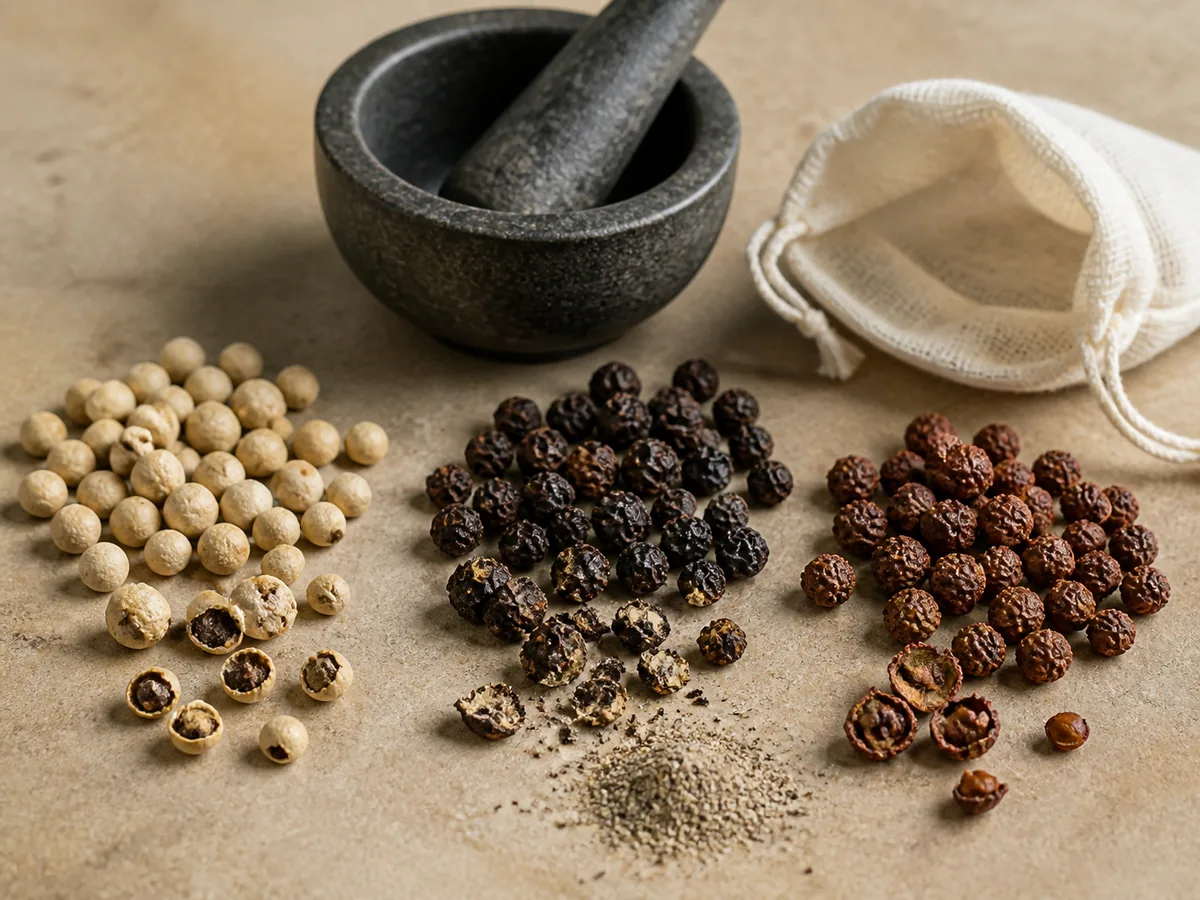
- Whole black pepper: Best for a removable sachet.
- Cracked pepper: Faster extraction and visible texture.
- Grains of paradise: Brighter aroma for coarse seasoning.
- Ground powder: Fast release with no easy removal.
- Identify whether the original peppercorns were meant to remain whole, be cracked, or be ground before measuring a replacement.
- Use whole black peppercorns at equal count or weight for a removable stock, brine, or spice sachet.
- Use grains of paradise at three-quarter volume when a coarse rub or meat mixture can carry its brighter aroma.
- Crack the substitute with one or two controlled presses instead of grinding until dusty.
- Taste an infused liquid before service and strain the whole spices when the aroma is strong enough.
Powder releases flavor faster and clouds pale stock or pickling liquid. If ground spice is the only option, contain it in a fine filter or accept that the appearance and extraction rate will change.
Particle size also changes the eating experience. A coarse fragment can feel deliberate on meat, while the same fragment becomes an unpleasant surprise in smooth soup or mashed potato.
Correct the Replacement Before Adding More Heat
Before reaching for another spice, identify whether the replacement created dark flecks, mustard aroma and color, ginger sweetness, or direct lingering cayenne burn.
The most reliable repair for excess pungency is more of the original unseasoned base. Add plain sauce, potato, broth, or meat mixture in a measured amount, then restore salt only after the concentration falls.
Dilute the food if the bite is harsh; visible flecks cannot be removed from a smooth sauce.
Extend the base and keep cooking briefly so raw mustard aroma softens before retasting.
Add savory base rather than cayenne, which creates a second problem without removing sweetness.
Dilute with unsalted base and add fat only when the original dish already contains dairy, oil, or coconut milk.
Rest a creamy sauce or mashed potato for a minute before judging it again. Steam carries aroma upward, and the first smell above a hot pan can exaggerate a correction that tastes balanced on the plate.
Stop once the food tastes coherent with its own ingredients. A successful replacement does not need to imitate every feature of white pepper when the recipe only needed one of them.