
Black Pepper Substitutes by Pungency and Cooking Job
Choose a replacement by pepper bite, floral heat, numbness, color, or allergy needs.
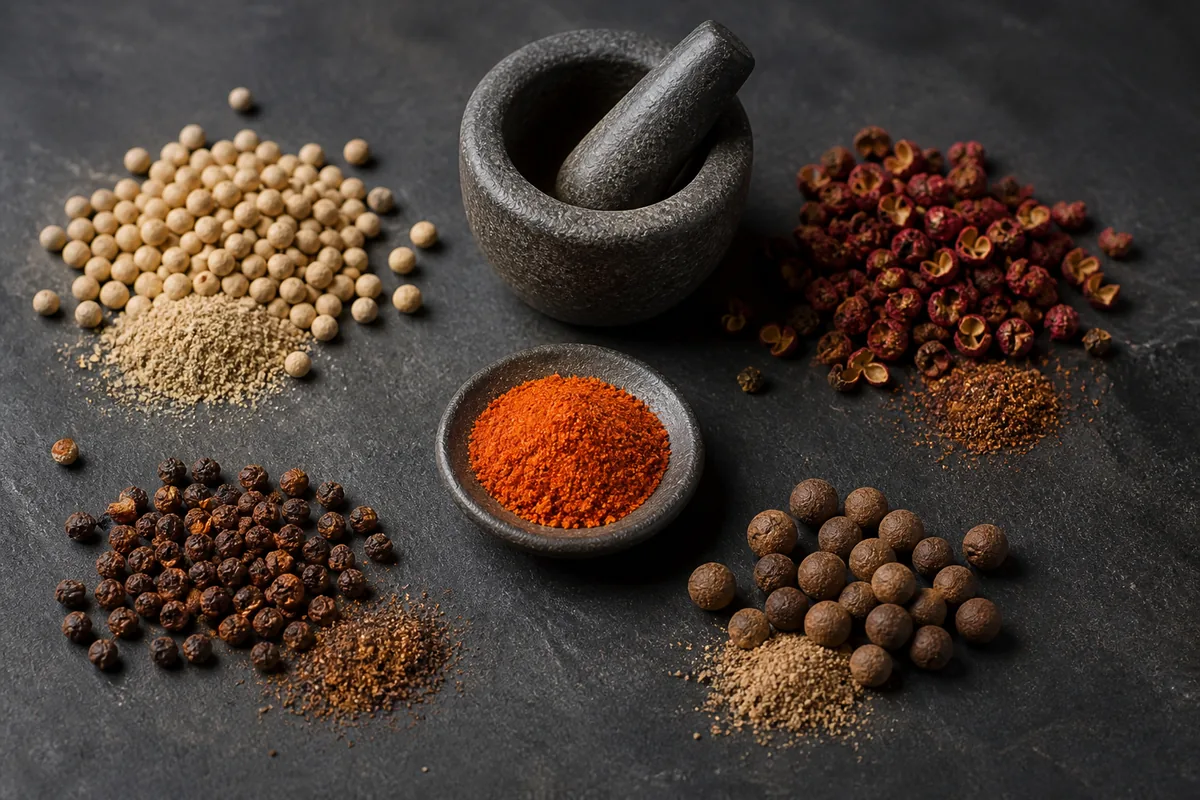
White pepper is the closest black pepper substitute and works at a 1:1 ratio for most cooking. Choose grains of paradise for floral pepperiness, Sichuan pepper for numbing citrus, or a carefully reduced chile when a botanically different sensation is acceptable.
5 Black Pepper Substitutes by Kind of Pungency
White pepper is the closest general substitute for black pepper because it comes from the same plant and provides familiar peppercorn pungency.
Choose whole peppercorns when possible because grinding immediately before cooking makes the one-to-one comparison more reliable than using an old pale powder. It also disappears into pale sauces, although its aroma can seem earthier or more fermented.
The other choices replace only part of black pepper's job. Grains of paradise bring floral peppery heat, Sichuan peppercorn creates citrus and numbness, cayenne supplies chile burn, and allspice belongs in warm braises rather than at the table grinder.
| Number | Substitute | Starting ratio | Best use |
|---|---|---|---|
| 1 | White pepper | 1:1 | Pale sauce, soup, general seasoning |
| 2 | Grains of paradise | 1:1 freshly ground | Meat, vegetables, grains, finishing |
| 3 | Sichuan peppercorn | 1/2 tsp per 1 tsp black pepper | Stir-fry, noodles, aromatic rubs |
| 4 | Cayenne | 1/8 tsp per 1 tsp black pepper | Soup, stew, sauce |
| 5 | Allspice | 1/4 tsp per 1 tsp black pepper | Braise, meat seasoning, warm sauce |
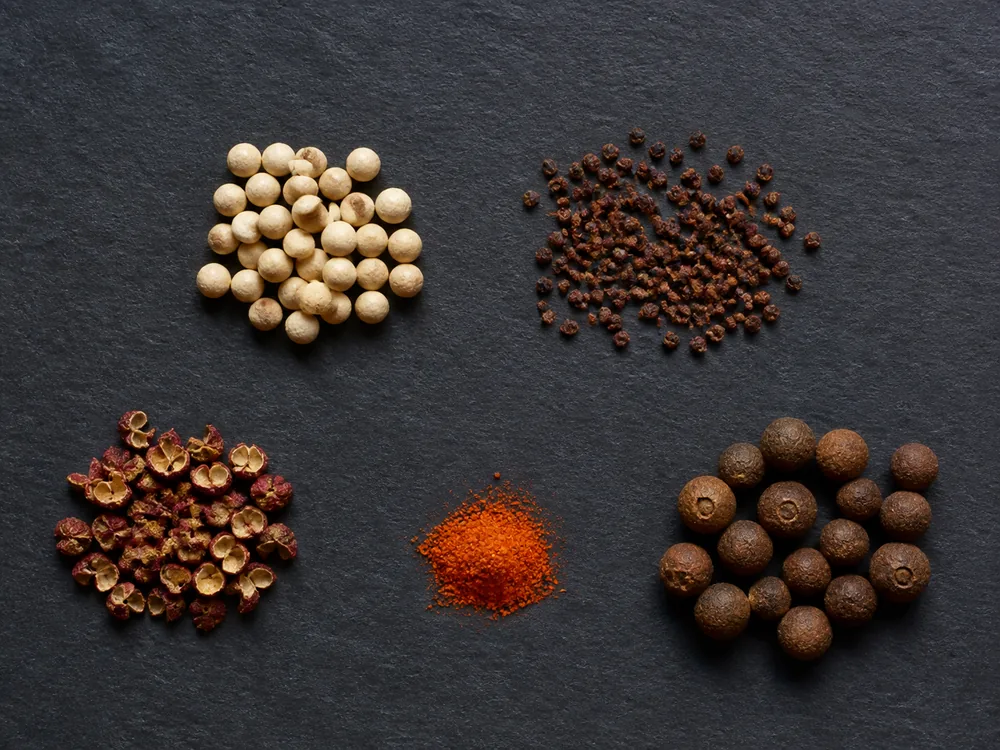
- White pepper: Closest same-plant flavor.
- Grains of paradise: Floral pepperiness with citrus.
- Sichuan peppercorn: Numbing rather than biting.
- Cayenne and allspice: Directional choices for cooked food.
1. White Pepper
Use white pepper at a 1:1 ratio by volume.
- Starting ratio
- 1:1 by volume
- Best for
- pale sauces, soups, and general seasoning
- Main tradeoff
- earthier aroma
- Adjust
- not an allergy-safe substitute for black pepper
For table seasoning, begin with three quarters of the expected amount because diners notice its earthier aroma more clearly when it lands after cooking. Add it at the same stage as black pepper, but taste before the final addition because some ground white pepper tastes more earthy or forceful than the black pepper it replaces.
In a clear broth, white pepper solves the color problem but can still announce itself through aroma, so season the whole pot gradually rather than judging a concentrated spoonful. Whole white peppercorns can also be cracked for a coarse seasoning.
Buy or grind only what smells clean. A stale or poorly stored powder can develop a musty aroma that cream and butter make more obvious rather than hiding.
White pepper does not solve a black-pepper allergy. Both are forms of Piper nigrum, so the different color and processing do not make them botanically separate.
Removing the outer layer changes white pepper color and aroma without making it a different pepper species.
2. Grains of Paradise
Use freshly ground grains of paradise at a 1:1 starting ratio. Their peppery heat arrives with floral, citrus, and cardamom-like notes that work well on roasted vegetables, meat, grains, and rich legumes.
- Starting ratio
- 1:1 freshly ground
- Best for
- meat, vegetables, grains, and finishing
- Main tradeoff
- floral citrus edge
- Adjust
- reduce when the dish is delicately flavored
A mortar gives more control than a high-speed grinder when the recipe needs coarse pieces that cling to a crust. A coarse grind can replace part of the texture in a pepper crust, while a fine grind disperses through sauces and grain dishes.
Use a medium grind in grain bowls and roasted vegetables because very fine grains of paradise release their floral aroma quickly and can dominate before the diner reaches the rest of the seasoning. Reduce the amount in eggs, mild fish, or a simple cream sauce where floral aroma would become the main event.
Do not assume the common word pepper establishes allergy safety. The plant is different, but personal reactions and cross-contact still require label and professional checks.
Crush grains of paradise shortly before use because their floral top notes fade after grinding.
3. Sichuan Peppercorn
Start with 1/2 teaspoon Sichuan peppercorn for each teaspoon of black pepper. Toast the husks gently until aromatic, remove any hard black seeds if present, and grind only the amount needed.
- Starting ratio
- 1/2 teaspoon per 1 teaspoon black pepper
- Best for
- stir-fries, noodles, and aromatic rubs
- Main tradeoff
- citrus aroma and numbing sensation
- Adjust
- not suitable when clean pepper bite is essential
Sichuan peppercorn creates citrus aroma and a tingling numb sensation rather than black pepper's dry bite.
Remove hard interior seeds and woody stems before grinding because they add grit without contributing the aromatic husk the cook wants. It belongs in stir-fries, noodle sauces, chile oils, and aromatic rubs where that mouthfeel supports the dish.
Use it cautiously in cream sauces, table seasoning, and a simple pepper crust. The numbness can change how salt, acid, and chile are perceived, so adding more to chase familiar pepper heat moves the dish farther away.
If the first half measure is too gentle, increase in small pinches after the food is mixed. Whole husks concentrated on one bite can feel much stronger than the same amount ground evenly.
Numbing husks change how salt and chile register, so a larger dose does not move the dish closer to black pepper.
4. Cayenne
Use 1/8 teaspoon cayenne for each teaspoon of black pepper in soup, stew, braise, or sauce.
- Starting ratio
- 1/8 teaspoon per 1 teaspoon black pepper
- Best for
- soups, stews, and sauces
- Main tradeoff
- direct chile heat without pepper aroma
- Adjust
- do not use for a pepper crust or table finishing
Add it before the final simmer so the powder disperses completely, then wait until the liquid stops bubbling before deciding whether the heat needs another small pinch. It is a poor choice for steak au poivre, cacio e pepe, or any food named for its peppercorn character.
Do not increase cayenne to equal the missing spoon volume. The food will become hotter without becoming more peppery.
Disperse cayenne in liquid or fat before it reaches the full dish because a fine powder cannot provide cracked pepper texture. Use it only when another aromatic already carries the seasoning and black pepper supplied quiet background heat.
Capsaicin lingers on the lips and tongue instead of producing peppercorn aroma and dry throat warmth.
5. Allspice
Use 1/4 teaspoon ground allspice for each teaspoon of black pepper. Choose it for braised meat, meatballs, dark gravy, bean stew, and other savory food that can carry clove-like warmth.
- Starting ratio
- 1/4 teaspoon per 1 teaspoon black pepper
- Best for
- braises, meat seasoning, and warm sauces
- Main tradeoff
- clove and cinnamon-like warmth
- Adjust
- avoid in light savory dishes where sweetness reads clearly
In a meatball or braise mixture, distribute the quarter measure through the other dry seasonings first because one concentrated pocket can taste more like clove than a black-pepper replacement.
Freshly ground berries are especially assertive, so a scant quarter teaspoon can be enough in a small pan sauce or two-serving braise. It can fill an aromatic gap in a long-cooked dish, but it cannot reproduce the clean finishing bite of freshly cracked black pepper.
Avoid allspice in a pale sauce, salad, or simple egg dish unless that warm character is already part of the plan. Adding more makes the food taste festive or spiced rather than peppery.
Allspice contributes sweet woody aroma with mild pepperiness, so the measured quarter spoon is a ceiling for simple savory food rather than an amount to scale by color.
Its clove-like warmth becomes dominant quickly, which is why the quarter-teaspoon ceiling matters.
White Sauces Need Heat Without Dark Specks
White pepper is the direct answer when appearance is the reason black pepper must be replaced.
Strain the sauce only for lumps from the base, since straining after seasoning removes visible particles but cannot remove dispersed pepper aroma. Its pale particles disappear into béchamel, cream soup, mashed potato, and light gravy without sacrificing peppercorn pungency.
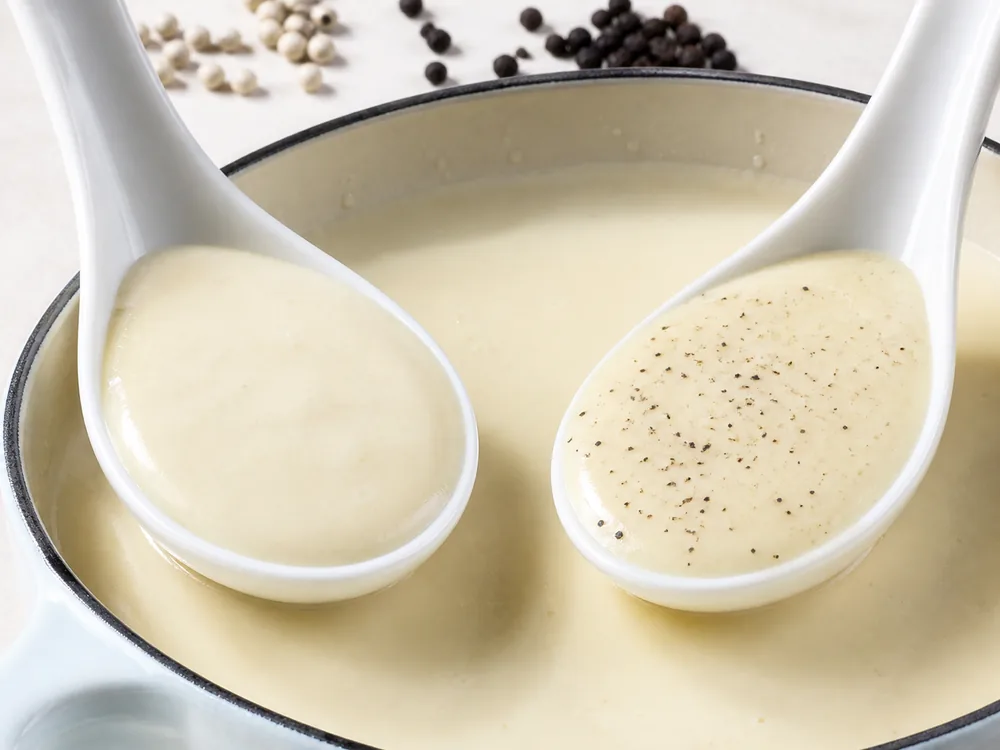
- Appearance: White pepper blends into a pale sauce.
- Aroma: Freshly ground product tastes cleaner.
- Timing: Add most during cooking and reserve a small final adjustment.
- Limit: Same-plant processing does not solve allergy concerns.
Add three quarters of the expected amount during cooking, then taste near serving. Cream and butter hold aroma, so a sauce that seemed mild at first can present white pepper more clearly after it rests.
Grains of paradise can season a pale sauce, but visible tan flecks and floral citrus make it a stylistic choice. Cayenne should be reserved for a sauce that can tolerate a slight color shift and direct chile heat.
A Pepper Crust Needs Size as Well as Heat
A pepper crust is a physical coating, so powder-only alternatives cannot complete the job.
Measure whole spices before crushing because a spoon of coarse pieces contains more air than the same spoon ground fine, which makes post-grinding volume comparisons misleading.
Drying the food surface first helps coarse seed pieces adhere through searing without requiring a thick paste that changes browning. Cracked white peppercorns and grains of paradise are the useful choices because both can form irregular particles that adhere to a moist surface.
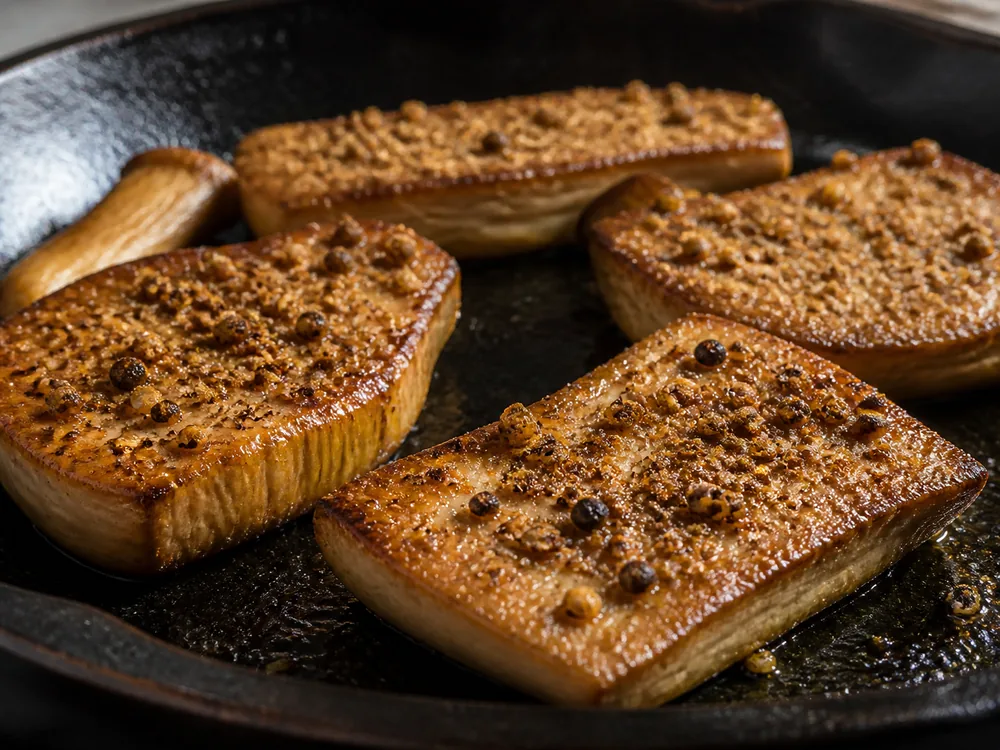
- Crush: Aim for coarse irregular pieces, not flour.
- Press: Dry the food surface, then press the spice firmly.
- Sear: Use enough fat to contact the crust without washing it away.
- Rest: Judge aroma after the surface heat settles.
- Crush whole white peppercorns or grains of paradise in short controlled strokes.
- Sift away excessive fine dust that could scorch first.
- Season the food with salt separately so the substitute ratio stays clear.
- Press the coarse spice onto a dry surface immediately before cooking.
- Watch the crust color and stop before the aromatic pieces turn black.
Grains of paradise create a more floral crust, while white pepper stays closer to the expected flavor. A half-and-half mixture can soften the earthiness of white pepper without losing the coarse structure.
Pepper Allergy Rules Out More Than Black Pepper
White pepper, green peppercorns, and black pepper all come from Piper nigrum.
Pink peppercorn is also a separate plant, but its name alone still cannot establish that a packaged blend is free from black pepper or shared-equipment contact. A different color, harvest point, or processing method does not make one of them a safe substitute for an allergy to that plant.
| Ingredient | Relationship to black pepper | Safety action |
|---|---|---|
| White pepper | Same species | Do not use as an automatic allergy substitute |
| Grains of paradise | Different plant | Verify personal clearance and cross-contact |
| Sichuan peppercorn | Different plant | Verify personal clearance and package label |
| Cayenne | Chile pepper, different plant | Check product and personal allergy history |
| Allspice | Different plant | Check product and personal allergy history |
Spice blends, restaurant grinders, and shared mills can contain or contact black pepper even when the named substitute is different. Use a sealed single-ingredient product and clean equipment only when the person with the allergy has already confirmed that ingredient is acceptable.
Correct Numbness, Floral Heat, or Chile Burn
First identify the sensation that became too strong.
Serve a small cooled spoonful before making the correction because hot steam amplifies aroma and can make a balanced pepper substitute seem harsher directly over the pan.
Wait for a hot bite to cool before correcting it because temperature can make chile burn and aromatic pungency feel more immediate. Sichuan peppercorn creates numbness, grains of paradise creates floral heat, and cayenne creates chile burn, so another pinch of a different spice rarely restores black pepper balance.
Add more unseasoned base and restore salt only after the tingle subsides.
Extend the savory base and reinforce its existing onion, herb, or browned notes.
Dilute with the original unsalted liquid or solids before adjusting acid.
Reduce an allspice-heavy portion with a fresh spice-free portion.
Retaste at serving temperature and stop when the dish is balanced on its own. The correction does not need to recreate black pepper if the substitute now supports the food without drawing attention to itself.