
What Is Sichuan Peppercorn, and Why Does It Buzz?
Separate the fragrant husk from the gritty seed, then choose red, green, whole, ground, or oil.
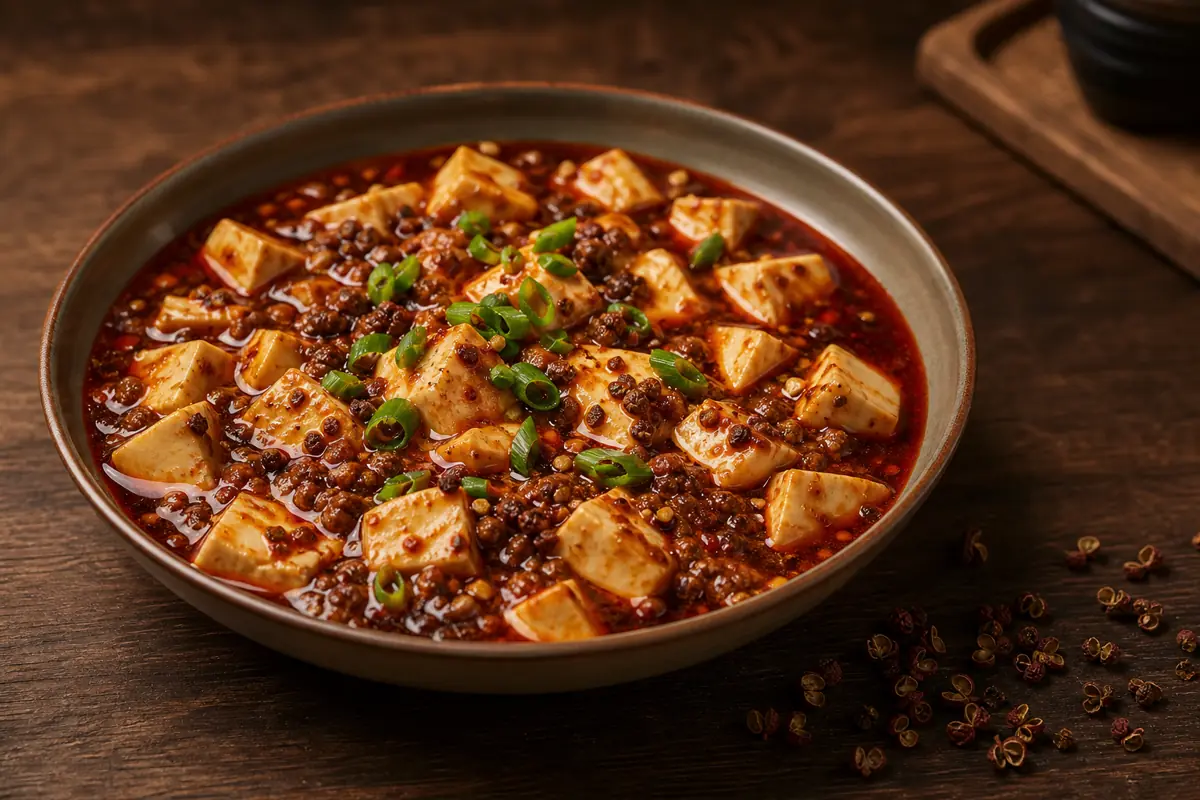
Sichuan peppercorn is the dried husk of a Zanthoxylum fruit, not a true peppercorn or chile. Hydroxy-alpha-sanshool creates a tingling numbness called ma, while red husks taste warmer and green husks smell brighter. Remove hard black seeds, toast gently, cool before grinding, and start with about one teaspoon of whole husks for four servings.
What is Sichuan peppercorn, and which part do you eat?
Sichuan peppercorn is the dried fruit husk of several Zanthoxylum plants. It is not related to true black pepper, and it does not belong to the chile family.
The useful spice is the open red, brown-red, or green husk that once surrounded a seed. That hollow husk carries the citrus aroma and most of the numbing sensation.
The shiny black seed inside is hard, nearly flavorless, and unpleasant to grind. A few seeds are normal in a package, but a seed-heavy lot creates grit and wastes weight.
Pick out black seeds, twigs, and sharp stems before toasting.
A quick pass over a pale plate makes the dark debris easier to see.
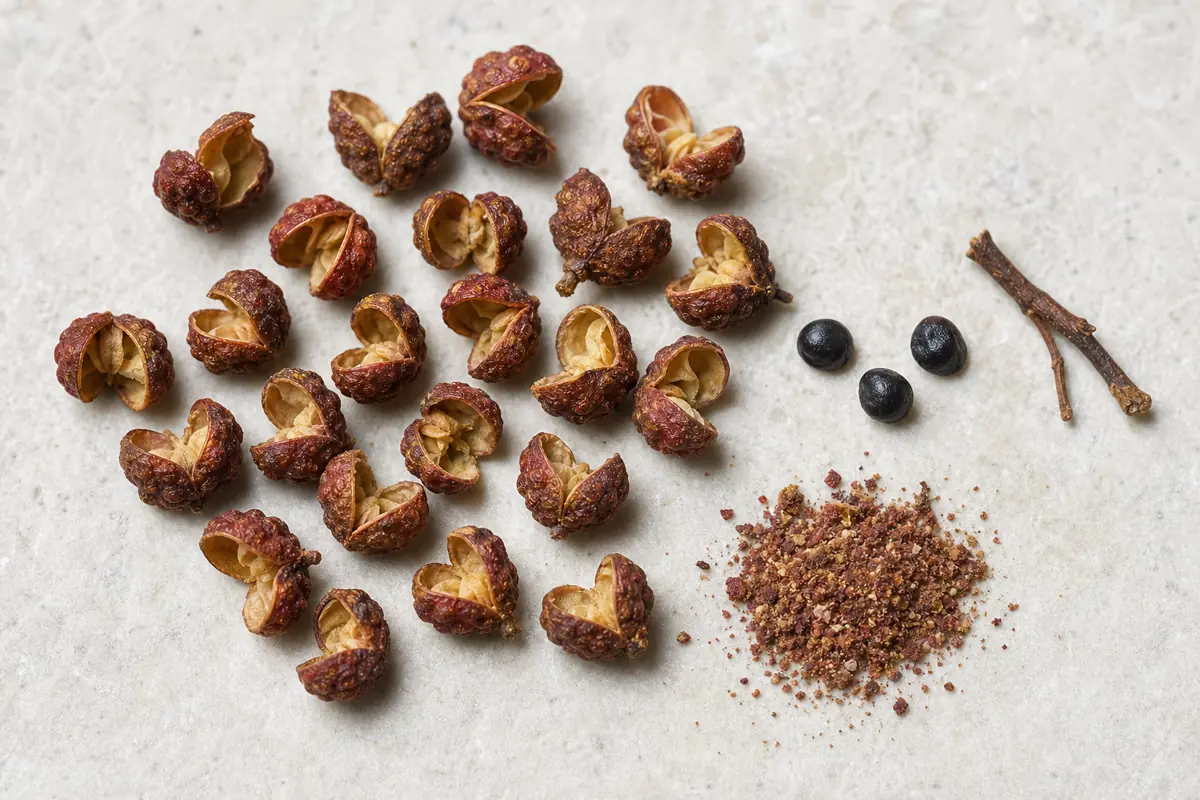
- Keep: Open reddish husks
- Remove: Hard black seeds
- Also remove: Woody stems and grit
| Piece | Appearance | Flavor value | Action |
|---|---|---|---|
| Open husk | Split shell with rough outer surface | Citrus aroma and numbness | Keep |
| Black inner seed | Hard, smooth, and shiny | Very little useful aroma | Remove |
| Stem or twig | Thin brown stick | Woody and sharp | Remove |
| Closed husk | Rounder pod holding a seed | Some aroma with likely grit | Open and sort |
Whole husks suit oil infusions and braises because they can be removed. Clean toasted husks suit grinding because the powder distributes without leaving a hard bite.
Packages may say Sichuan, Szechuan, Chinese prickly ash, huajiao, or flower pepper.
Color and species vary, but open fragrant husks remain the buying goal.
Why does Sichuan peppercorn make your mouth numb?
Sichuan peppercorn makes your lips and tongue tingle because hydroxy-alpha-sanshool stimulates touch-sensing pathways. The feeling can resemble a light vibration or gentle electrical buzz.
This numbing sensation is called ma. It differs from la, the burning heat that capsaicin in chiles produces.
A dish can therefore be strongly numbing without being very hot, or very hot without much numbness. Mala cooking combines the two controls rather than treating them as one ingredient.
The husks also taste citrusy, floral, and lightly resinous. That aroma reaches the nose before the tactile effect builds across the mouth.
Fresh peppercorn can smell lively while producing a moderate tingle, and another batch may numb strongly with less aroma. Origin, species, harvest, and storage all change the balance.
A controlled tingle is expected in food seasoned with Sichuan peppercorn.
Stop eating and seek appropriate help if swelling, breathing trouble, hives, or another allergy sign appears.
Why did Sichuan peppercorn taste so weak in older recipes?
The supply was interrupted, and that interruption marked a whole generation of cookbooks.
The United States banned imports from 1968 to 2005, because the plant belongs to the citrus family and was treated as a citrus canker risk. When imports resumed, the condition attached was heat treatment.
Heating the husks enough to kill the pathogen also drives off the volatile compounds that carry the citrus aroma.
That history explains a great deal of confused writing. Recipes from those decades describe Sichuan peppercorn as mildly numbing and barely aromatic, which was an accurate description of the product people could actually buy.
What reaches you now is a different ingredient.
If an older recipe asks for a large amount to produce a faint tingle, treat the quantity with suspicion. Start lower and taste before you commit the rest.
Red or green Sichuan peppercorn: which should you choose?
Choose red Sichuan peppercorn for warm citrus, light woodiness, and a rounded numbing effect. It is the common default when a recipe simply calls for Sichuan peppercorn.
Red husks work well with beef, pork, tofu, mushrooms, chile bean paste, dry-fried vegetables, braises, and red chile oil. Their deeper aroma holds up beside browned or fermented flavors.
Choose green Sichuan peppercorn for a brighter lime-like, floral, and grassy aroma with a sharper tingle. It can taste more piercing even when the overall dish is lighter.
Green husks suit fish, chicken, fresh vegetables, cold dishes, clear broths, and green peppercorn oil.
Heavy roasting hides the freshness that makes them distinct.
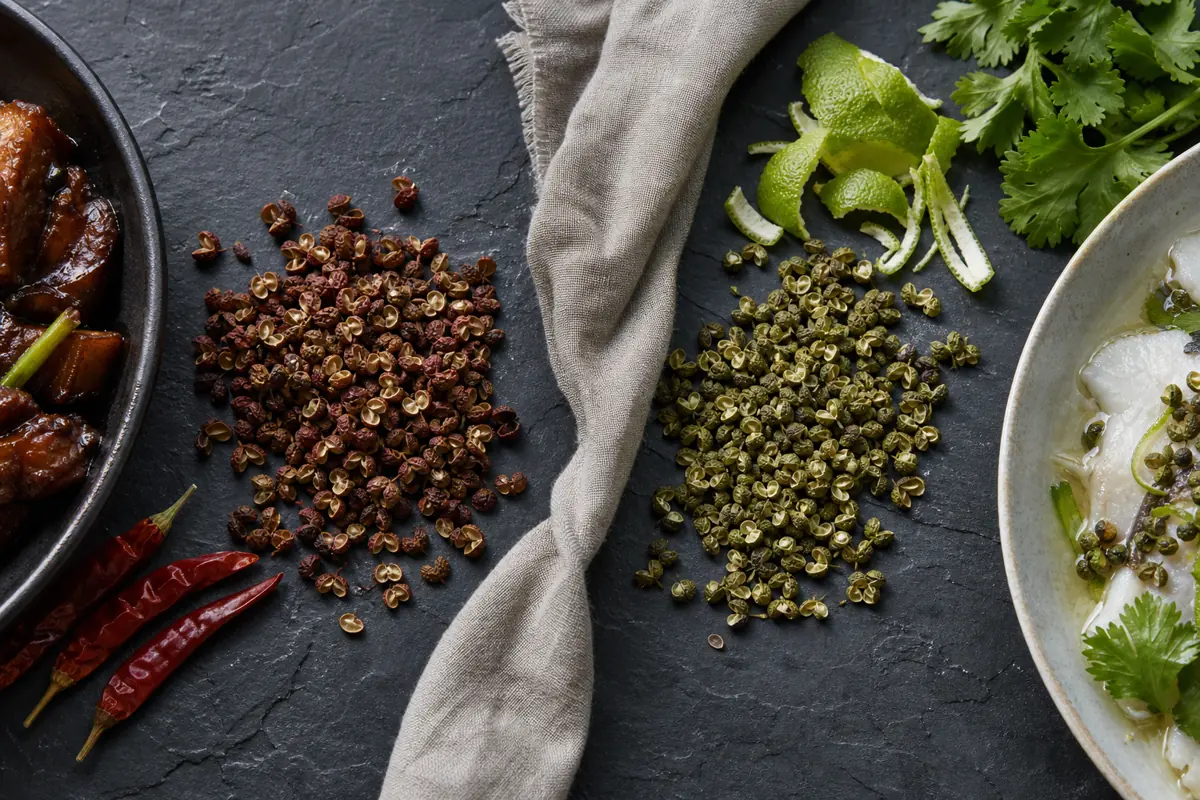
- Red aroma: Warm, woody, citrusy
- Green aroma: Fresh and lime-like
- Choose by dish: Deep braise or bright finish
| Choice | Aroma | Numbing style | Best with |
|---|---|---|---|
| Red huajiao | Warm citrus and wood | Rounded and lasting | Tofu, beef, braises, chile-rich dishes |
| Green qing huajiao | Lime, flowers, and green herbs | Sharp and bright | Fish, chicken, cold dishes, clear broths |
| Mixed red and green | Warm base with fresh top notes | Layered | Oil, noodles, and modern stir-fries |
Mixing the colors can give a warm red base and a green citrus lift. Begin with more red than green because a vivid green lot can redirect the whole aroma.
Color alone does not guarantee quality. Dull brown-red husks or gray-green husks with little smell are poor choices regardless of the variety name.
How do you clean, toast, and grind Sichuan peppercorn?
Clean Sichuan peppercorn before it reaches the pan.
Spread the husks on a plate and remove shiny black seeds, stems, stones, and dark debris.
Use the dry spice toasting method over low to medium heat, then add one thin layer. Stir until the citrus aroma rises, usually within two minutes.
Do not wait for obvious browning because red and green husks hide small color changes.
Smoke, blackened edges, or a harsh resin smell mean the pan is too hot.
Pour the toasted husks onto a cool plate immediately. Leaving them in the hot pan keeps cooking the delicate oils after the burner is off.
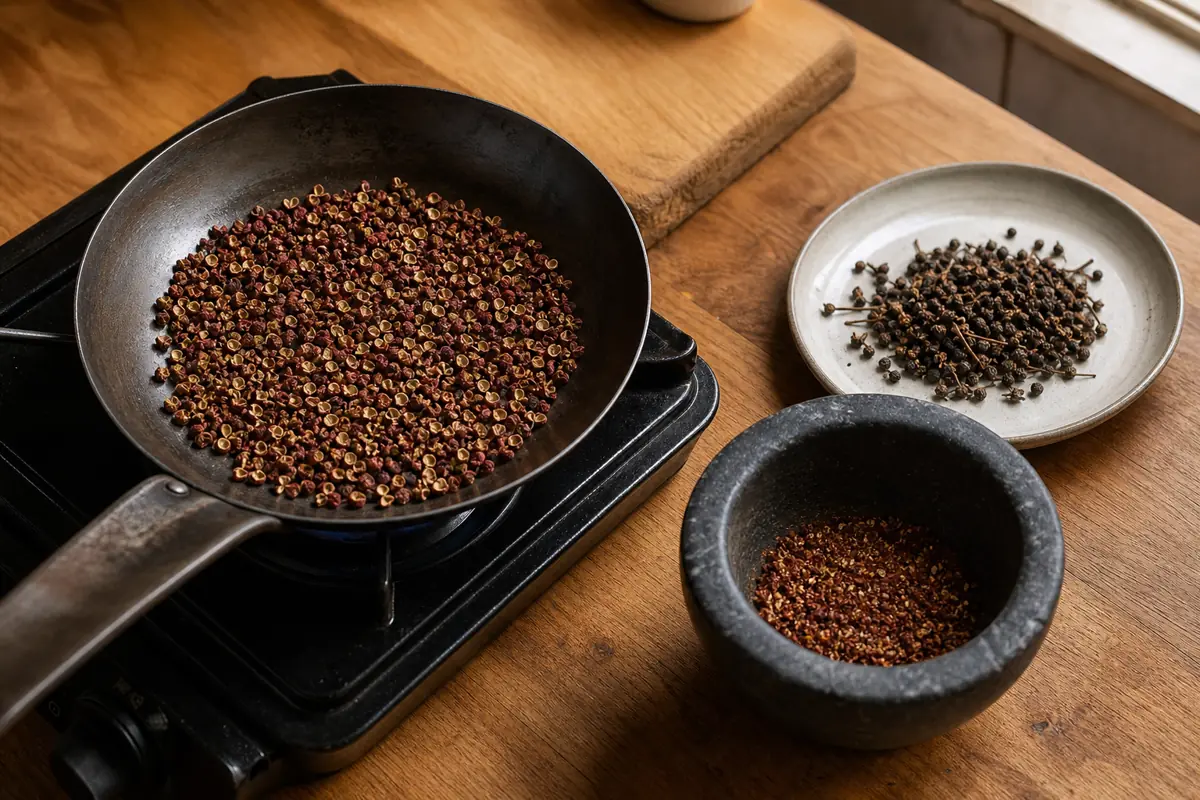
- Sort: Remove seeds, stems, and grit
- Toast: Use low heat until fragrant
- Grind: Cool before crushing
- Sort: Remove black seeds, stems, and grit on a pale plate.
- Toast: Use one layer over low to medium heat until fragrant.
- Cool: Move the husks away from the skillet before grinding.
- Grind: Pulse briefly or use a mortar for the needed texture.
- Sift: Remove coarse woody pieces when the powder must feel smooth.
Follow the home spice grinding method only after the husks cool. Warm husks can smear aromatic oil and form uneven clumps.
The whole versus ground choice changes texture and aroma life.
Fine powder suits finishing, while a coarse crush suits an infusion that will be strained.
Sift powder for sauces or delicate food when sandiness would be obvious. Coarse particles often come from seed fragments or woody stems that sorting missed.
Discard scorched peppercorn instead of mixing it with a fresh batch. Burned resin and lost citrus cannot be corrected with more chile or sugar.
How much Sichuan peppercorn should you use?
Start with one level teaspoon measurement of whole Sichuan peppercorn husks for four servings. That amount leaves room for chile, salt, and fermented ingredients.
For toasted ground peppercorn, begin with one-half teaspoon across four servings. Powder reaches more of every bite than whole husks floating in oil.
Peppercorn oil varies widely in strength, so begin with one-half teaspoon in a finished dish.
Stir, wait through several bites, then add more if needed.
| Form | Four-serving start | Best use | Adjustment cue |
|---|---|---|---|
| Whole husks | 1 teaspoon | Infuse oil or braising liquid | Remove before serving if texture bothers you |
| Toasted powder | 1/2 teaspoon | Finish tofu, noodles, or vegetables | Add in small pinches |
| Peppercorn oil | 1/2 teaspoon | Cold dishes or final seasoning | Check the product strength |
| Pepper salt blend | 1 teaspoon blend | Fried food or table finish | Account for its salt |
Numbness builds across repeated bites, so the first taste can understate the final effect. Wait before doubling a batch.
If the dish becomes tiring to eat, increase the unseasoned base or serve it with plain rice, noodles, broth, or vegetables.
More chile will not hide excessive numbness.
When should you add whole, ground, or infused Sichuan peppercorn?
Add whole Sichuan peppercorn early when oil or broth needs time to capture its aroma.
Remove the husks before serving when a sudden gritty bite would distract from the food.
For a stir-fry, use brief oil blooming for 20 to 30 seconds, then strain the husks or move them aside.
Add the main ingredients before the citrus smell darkens.
The broader spice timing rule favors toasted ground peppercorn near the end. Long simmering drives off aroma while the tactile effect remains.
Mapo tofu often uses some peppercorn during cooking and another pinch on the surface. The first amount seasons the sauce, while the second keeps aroma near the diner.
Peppercorn oil is useful in cold noodles, dressed chicken, dumpling sauce, and finished soup because it spreads without dry grit.
Add it after the strongest heat.
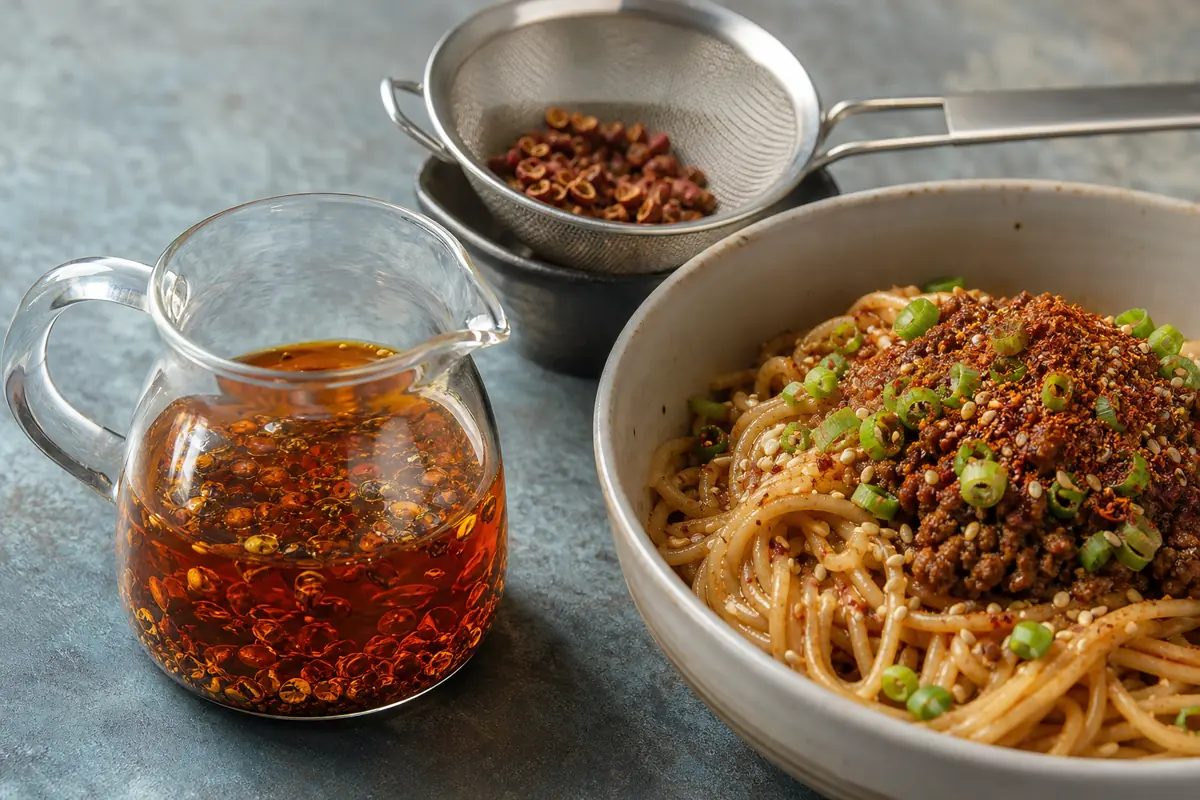
- Whole husks: Infuse oil or broth
- Strained oil: Carries aroma without grit
- Freshly ground: Add near the finish
Red peppercorn stands up to beef, mushrooms, fermented bean paste, and chile.
Green peppercorn stays clearer with fish, chicken, cucumber, herbs, and light broths.
- Early whole husks: Build an infusion, then remove the texture.
- Late ground husks: Keep citrus aroma close to the finished bite.
- Finishing oil: Spread numbness through cold or delicate food.
- Split addition: Use a small cooked dose plus a smaller aromatic finish.
Leaving a few whole husks in a rustic stir-fry is traditional in some dishes, but biting one can overwhelm a mouthful. Choose that texture intentionally.
What can substitute for Sichuan peppercorn?
No common substitute exactly recreates the citrus aroma and tactile numbness of Sichuan peppercorn. A substitution by function rebuilds the most important part.
Japanese sansho is the closest culinary option because it comes from a related Zanthoxylum plant. It tastes bright and citrusy, with its own clean tingling effect.
For aroma without numbness, combine black pepper with crushed coriander seed and fresh lemon zest.
Use half the recipe amount first because black pepper brings sharper heat.
| Need | Substitute | Starting swap | Main difference |
|---|---|---|---|
| Closest tingling spice | Japanese sansho | Use half, then adjust | Brighter and often more intense |
| Citrus and pepper aroma | Black pepper plus coriander | Half the total amount | No numbing sensation |
| Fresh citrus lift | Coriander plus lemon zest | Half coriander plus a small zest pinch | Softer and not resinous |
| Texture-free finish | Citrus-pepper oil | Add drop by drop | Aromatic only unless made with Zanthoxylum |
Omit the spice when numbness defines the dish and a substitute would make a false promise. A chile-forward meal can still taste good, but it will not be mala.
How can you tell if Sichuan peppercorn is fresh?
Apply practical online spice buying checks to Sichuan peppercorn. Fresh husks have vivid color and a strong citrus smell when crushed.
Look for many open husks and relatively few black seeds or stems. Large clean shells give you more aromatic material for the price.
- Color: Choose lively red-brown or green husks instead of dull gray lots.
- Open shells: Split husks indicate fewer trapped hard seeds.
- Citrus smell: Crush one husk and expect lemon, flowers, or warm peel.
- Low debris: Reject packages dominated by stems, dust, and black seeds.
Good dry spice storage keeps whole husks airtight, dark, and cool.
Use a small working jar and protect the reserve from stove heat.
Ground peppercorn loses citrus aroma much faster than whole husks.
Grind small batches and replace powder when it smells woody rather than bright.
Freezing a sealed bulk supply can slow aroma loss. Let the closed container warm before opening so moisture does not collect on the cold spice.
Discard peppercorn with mold, insects, damp clumps, or a rancid smell. Toasting can release existing aroma, but it cannot create freshness.