
Which Japanese Seasonings Belong in Each Kind of Dish?
Choose the right foundation, cooking seasoning, and table accent for soup, noodles, rice, grilled food, and pickles.
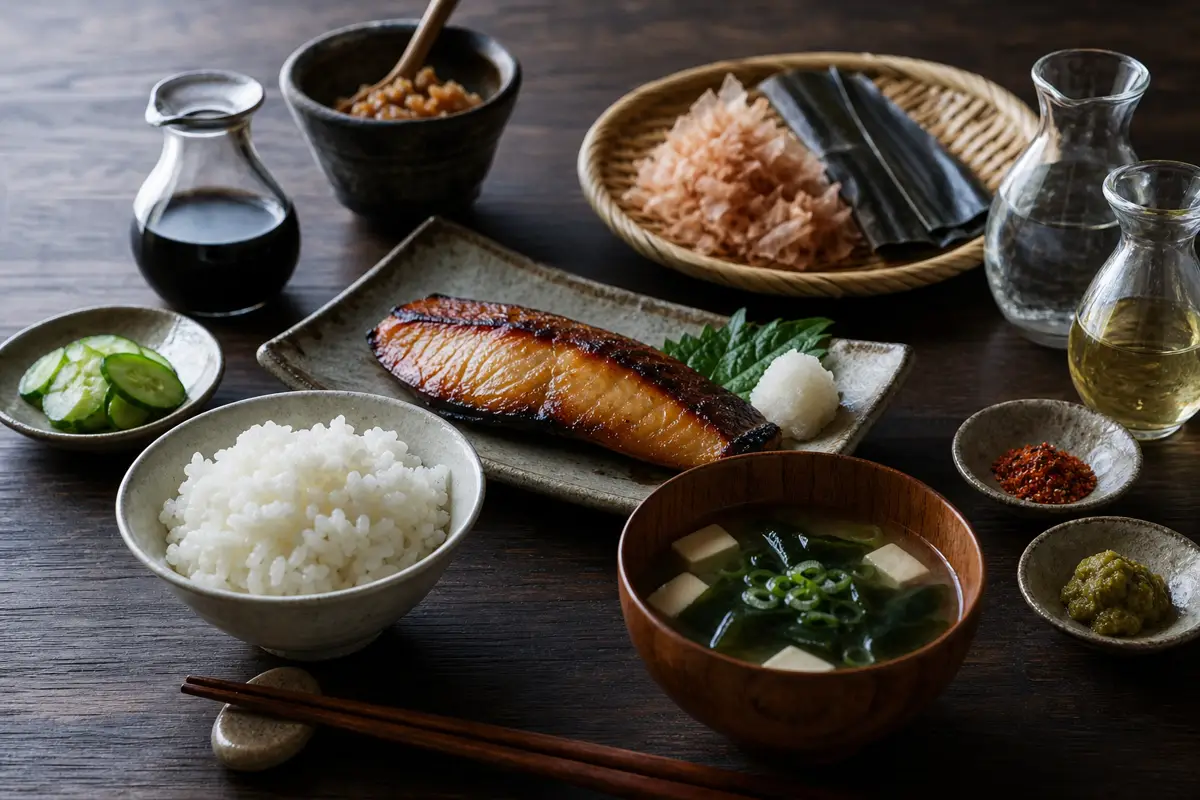
Start with soy sauce, miso, dashi ingredients, mirin, rice vinegar, sake, sugar, and salt. Add sesame, shichimi, sansho, yuzu kosho, or furikake only when their specific finish suits the dish. Taste after reduction because fermented seasonings can concentrate quickly.
What are the essential Japanese seasonings?
Essential Japanese seasonings include soy sauce, miso, dashi, mirin, sake, rice vinegar, sugar, and salt. Sesame, shichimi, sansho, yuzu kosho, and furikake add narrower finishing effects.
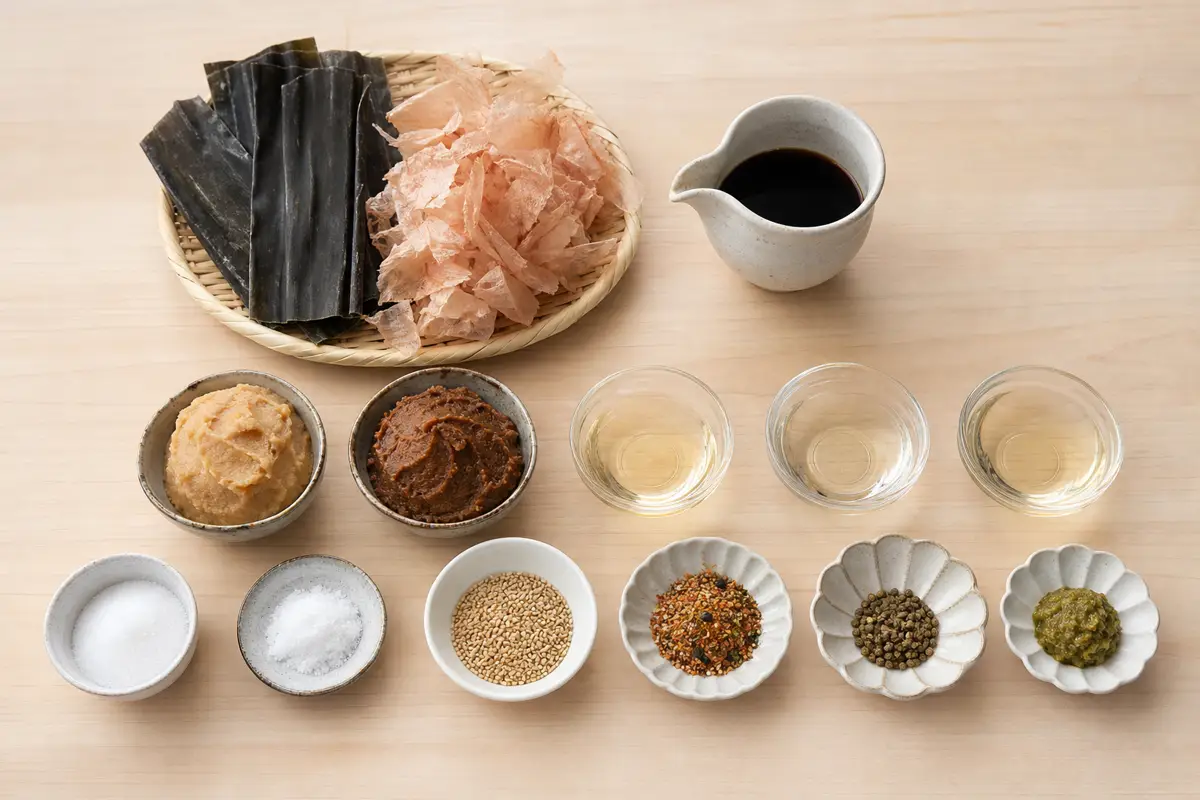
- Foundation: Dashi
- Salt and fermentation: Soy sauce, miso
- Finish: Sesame and chile accents
Japanese soy sauce adds salt, aroma, color, and fermented savor. Light-color usukuchi is often saltier than its pale appearance suggests.
Miso supplies salt and a thicker fermented body. White miso is usually sweeter and milder, while red or long-aged miso tastes stronger and saltier.
Dashi supplies the stock beneath soup, simmered food, noodles, and sauces. Kombu brings glutamate, while dried bonito flakes contribute inosinate and a smoky fish aroma.
Mirin adds sweetness, gloss, and alcohol to cooking. Rice vinegar adds acid, so it belongs in sushi rice, sunomono, pickles, and dressings rather than replacing mirin.
Ground white pepper appears in ramen, gyoza fillings, fried rice, and Chinese-influenced Japanese dishes. Its earthy heat stays quieter than a chile blend.
Ground turmeric belongs in many Japanese curry powders, not in the five washoku foundations. It brings yellow color and earthy bitterness to that specific dish family.
| Need | Seasoning | Common uses |
|---|---|---|
| Stock | Dashi | Soup, noodles, simmered food |
| Salt and aroma | Soy sauce | Sauces, marinades, dipping |
| Fermented body | Miso | Soup, glaze, dressing |
| Sweet gloss | Mirin | Teriyaki, simmered food |
| Acid | Rice vinegar | Sushi rice, pickles |
| Finishing heat | Shichimi, sansho, yuzu kosho | Noodles, grilled food, hot pot |
What are the five basic Japanese seasonings?
The Japanese sa-shi-su-se-so mnemonic names sugar, salt, vinegar, soy sauce, and miso. It is a practical form of seasoning in stages, though no single order fits every recipe.
Sugar enters early when it must dissolve and penetrate firm ingredients. Salt follows because it draws moisture and can slow later flavor absorption.
Vinegar often enters after long heating because its aroma fades with boiling. A recipe may still cook some vinegar early when it needs softer acidity.
Soy sauce and miso appear later to protect their fermented aroma. Soy sauce may still be split between a simmering dose and a small finishing dose.
| Sound | Seasoning | Why this position helps |
|---|---|---|
| Sa | Sugar | Needs time to dissolve and enter food |
| Shi | Salt | Controls moisture and concentration |
| Su | Vinegar | Late use preserves sharper acid |
| Se | Soy sauce | Late use protects fermented aroma |
| So | Miso | Gentle finishing protects aroma |
Follow the recipe before the mnemonic. A teriyaki glaze, quick pickle, miso marinade, and clear soup each need a different sequence.
How are soy sauce, miso, and dashi different?
Soy sauce is a salty fermented liquid, miso is a salty fermented paste, and dashi is a stock. They can work together, but they do not replace one another.
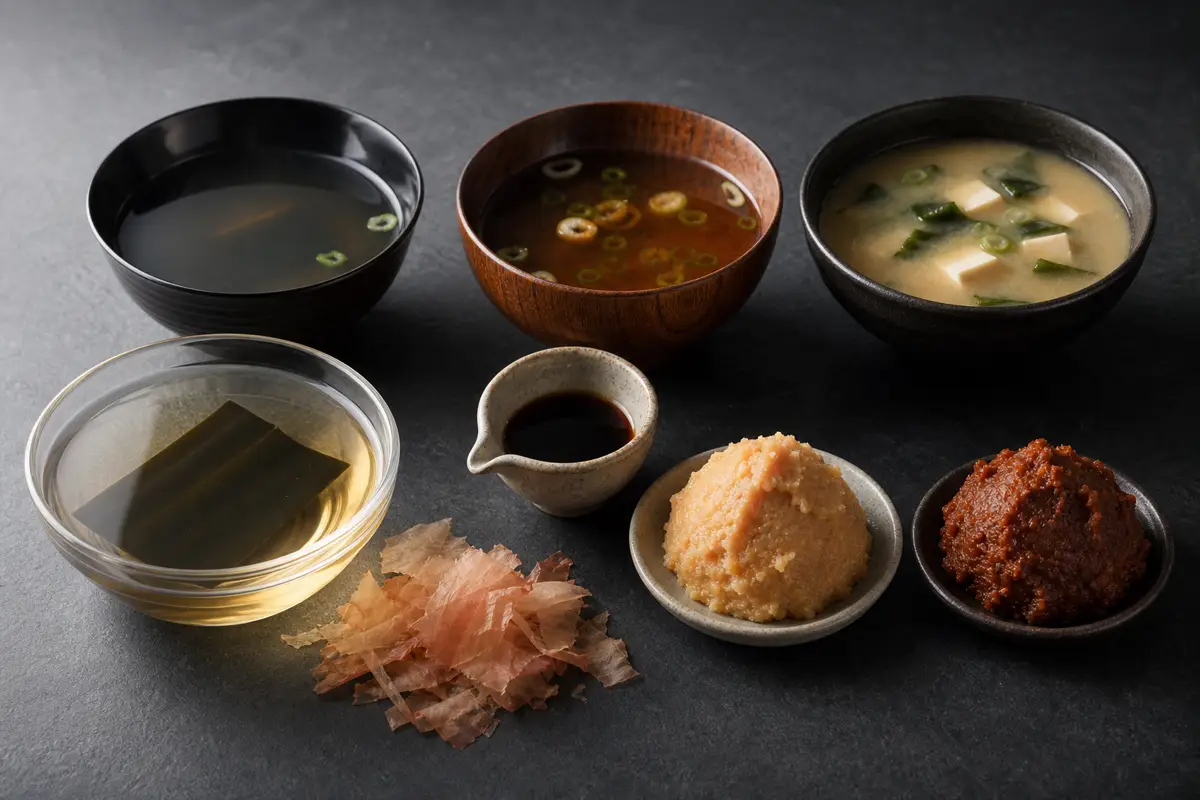
- Dashi: Stock
- Soy sauce: Salty liquid
- Miso: Fermented paste
Kombu dashi can be plant-based. Awase dashi commonly combines kombu with katsuobushi, so it contains fish even when the finished broth looks clear.
Soy sauce disperses immediately and darkens food. Koikuchi is a common all-purpose style, while tamari often tastes fuller and may contain little or no wheat depending on the label.
Miso varies with grain, soybean share, koji, salt, and aging. Its paste thickens broth and clings to glazes in a way soy sauce cannot.
| If the dish needs | Use | Watch |
|---|---|---|
| More stock character | Dashi | Fish in bonito-based versions |
| Clean salty seasoning | Soy sauce | Color and wheat label |
| Fermented body | Miso | Salt and hard boiling |
| All three | Dashi plus a measured fermented seasoning | Taste before adding salt |
Build broth with dashi, then choose soy sauce or miso according to the dish. Taste after one full stir before adding more.
Adding all three heavily can hide the ingredients and push sodium too high.
Is mirin the same as rice vinegar?
Mirin is not the same as rice vinegar. Mirin is a sweet rice seasoning used for cooking, while rice vinegar is acidic and used for seasoning rice, pickles, salads, and sauces.
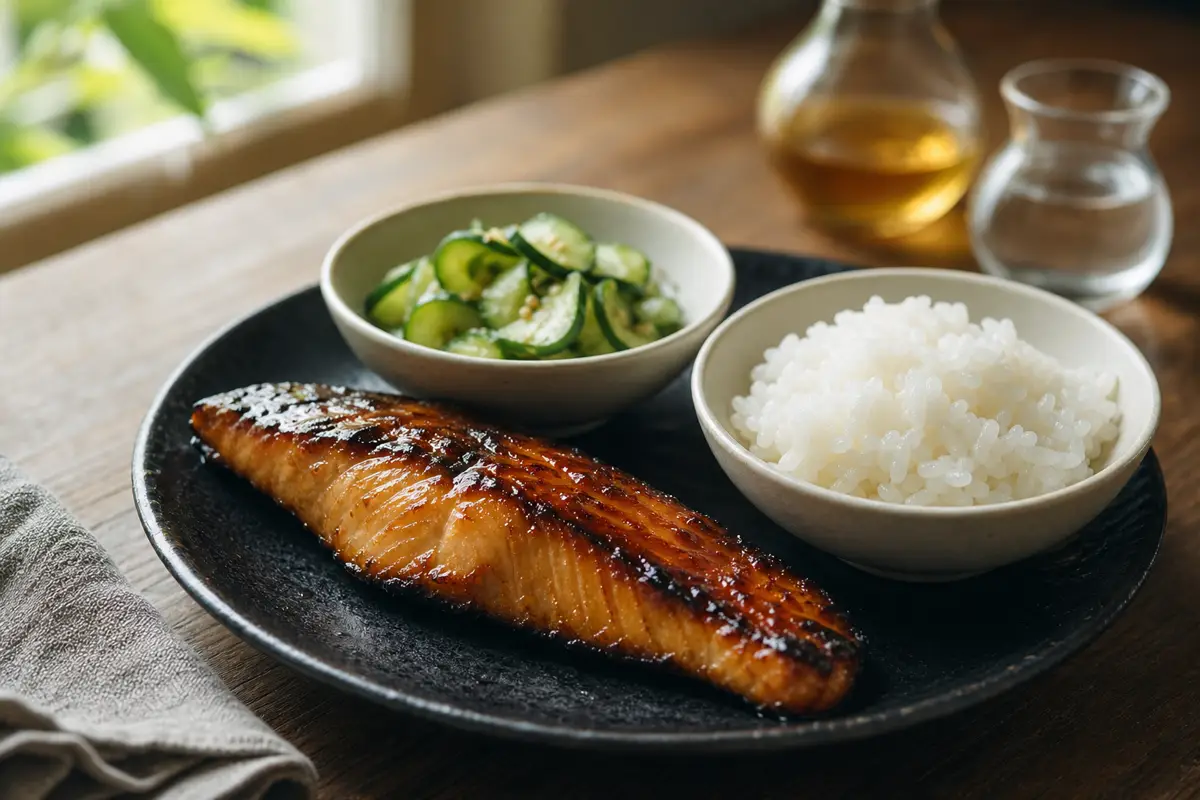
- Mirin: Sweetness and gloss
- Rice vinegar: Acidity
- Swap: Not one for one
Hon mirin contains alcohol and develops a rounded sweetness during cooking. Mirin-style products may contain syrup, salt, or less alcohol, so check the label.
Rice vinegar should taste softer than many Western vinegars, but it is still an acid. Replacing mirin with it can turn a glaze sharply sour.
For a mirin substitute, combine sake with a small measured amount of sugar. For rice vinegar, use another mild vinegar and reduce the amount before tasting.
Add mirin early enough for alcohol to cook and sugar to integrate. Add a final portion of vinegar late when the dish needs a bright edge.
When should miso be added to soup?
Add miso near the end of soup cooking after the main ingredients are tender. Lower the heat before dissolving it, then avoid a hard rolling boil.
Place miso in a ladle, add warm broth, and whisk it smooth with chopsticks or a small whisk. Return the diluted mixture to the pot.
- Cook the broth first: Finish vegetables, tofu, mushrooms, or clams before miso enters.
- Lower the heat: Keep the soup below a hard boil.
- Dissolve separately: Thin miso with broth so no salty lumps remain.
- Taste before salting: Miso type and amount change the final sodium.
Brief gentle reheating is fine. Repeated boiling flattens the fresh fermented aroma and can make the soup taste harsher.
Different miso types require different amounts. Start with less red miso than mild white miso, then taste after it disperses.
For a mixed miso soup, dissolve the stronger paste first and adjust with the milder paste. This gives more control than adding a large spoonful at once.
What are shichimi, sansho, and yuzu kosho used for?
Shichimi, sansho, and yuzu kosho are finishing accents with different kinds of heat. Shichimi is a dry blend, sansho is a citrusy prickling pepper, and yuzu kosho is a salty fermented chile-citrus paste.
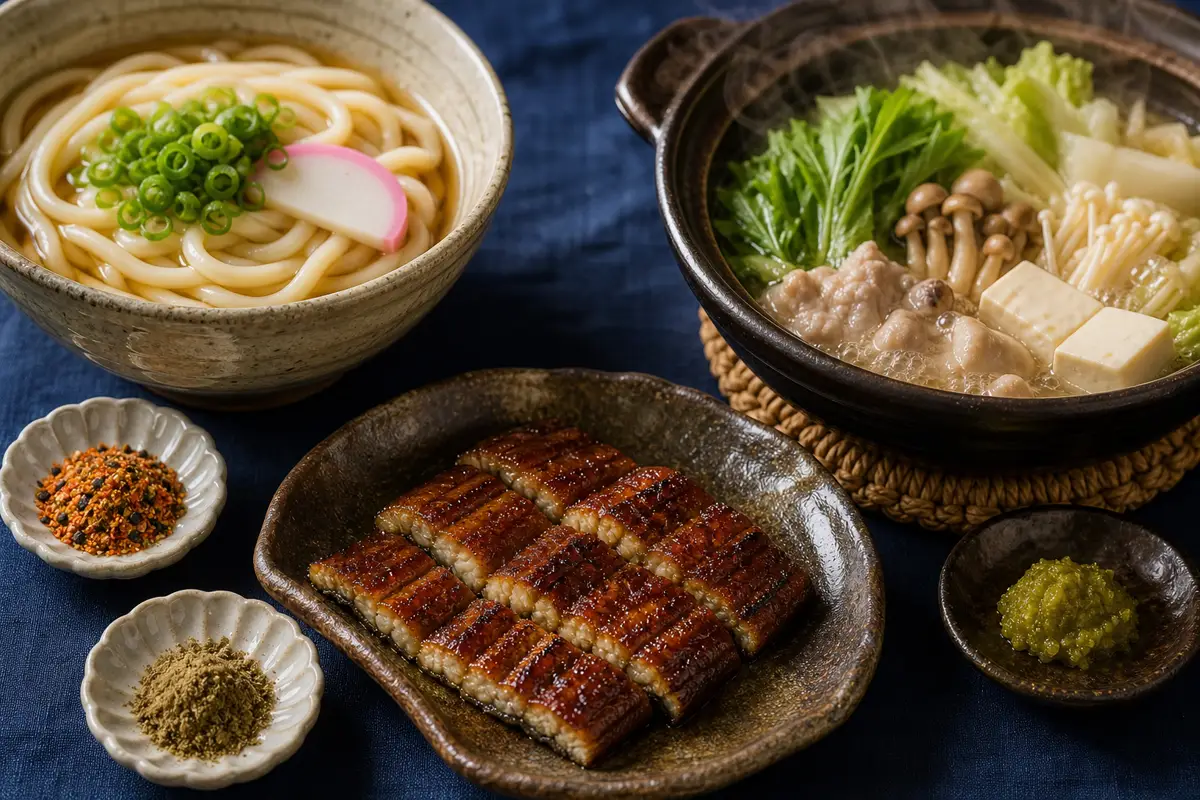
- Shichimi: Dry blended heat
- Sansho: Citrusy prickle
- Yuzu kosho: Salty chile paste
Use shichimi togarashi on udon, soba, donburi, grilled food, and soup. Its blend of ground chile, citrus peel, sesame, and seed varies by maker.
Plain dried chile flakes supply heat but miss shichimi's citrus, sesame, and seed aromas. Choose them only when heat is the sole missing quality.
Sansho is classic with rich grilled eel and can sharpen fatty meat. Unlike Sichuan pepper husks, Japanese sansho leans toward green citrus and belongs in a much smaller finishing dose.
Add sansho late because its high aroma fades with long heat. A fresh pinch should smell citrusy before its prickling effect becomes obvious.
Yuzu kosho is concentrated and salty. Dissolve a small dab into ponzu, broth, or dressing, or place it beside grilled meat and hot pot.
| Accent | Flavor | Good starting uses |
|---|---|---|
| Shichimi | Chile, citrus, sesame, seeds | Noodles, rice bowls, soup |
| Sansho | Green citrus and prickle | Eel, chicken, rich food |
| Yuzu kosho | Salty fermented chile and citrus | Hot pot, grilled food, dressing |
| Furikake | Sesame, seaweed, variable savor | Plain rice, eggs, vegetables |
Fresh black pepper suits yoshoku dishes such as pasta, steak, and cream sauces. It gives a sharper aroma than sansho and lacks the prickling finish.
Keep the dedicated accents at the table when diners want different heat. Stirring them all into the pot erases their separate aromas and prevents individual adjustment.
Which Japanese seasonings contain common allergens or high sodium?
Japanese seasoning labels may list soy, wheat, sesame, fish, or shellfish, and many fermented sauces are high in sodium. The exact risk depends on the product, not the cuisine name.
Standard soy sauce commonly contains soybeans and wheat. Tamari is sometimes wheat-free, but only the package label can confirm a suitable product.
Miso contains soy and may include barley or other grains. Dashi can contain bonito fish, dried sardine, or shellfish even when the stock is clear.
Furikake and shichimi may contain sesame. Furikake can also include fish, egg, milk, or shellfish ingredients depending on the flavor.
| Seasoning | Common checks | Why |
|---|---|---|
| Soy sauce | Soy, wheat, sodium | Fermented grain and salt |
| Miso | Soy, barley or other grain, sodium | Formula varies |
| Dashi products | Fish, shellfish, sodium | Stock base may be powdered |
| Furikake | Sesame, fish, egg, milk, shellfish | Many flavored versions |
| Shichimi | Sesame, product cross-contact | Blend varies |
Anyone with a diagnosed food allergy should follow medical advice and the current package label. Do not rely on color, a restaurant dish name, or an older package.
What can substitute for Japanese seasonings, and how should they be stored?
Japanese seasoning substitutes work best when they replace one function at a time. Rebuild stock, salt, sweetness, acid, or finishing heat rather than using one dark sauce for everything.
Use a mild homemade vegetable or mushroom stock when dashi is unavailable, but expect a different aroma. Kombu alone can give a clean plant-based dashi.
For mirin, use sake plus a little sugar. For rice vinegar, use a mild vinegar and start with less because acidity varies.
Fresh ginger root can add warmth to a dipping sauce, but it cannot reproduce yuzu kosho's fermented chile, citrus peel, and salt.
| Missing | Use | Limit |
|---|---|---|
| Dashi | Kombu or mild mushroom stock | No bonito aroma |
| Mirin | Sake plus sugar | Less rounded sweetness |
| Rice vinegar | Mild vinegar | Different sharpness |
| Soy sauce | Tamari if label suits need | Darker and fuller |
| Yuzu kosho | Chile paste plus citrus zest | No fermented yuzu character |
Refrigerate opened miso, mirin-style products, yuzu kosho, and many liquid sauces according to the label. Use clean dry utensils so moisture and crumbs do not enter.
Keep dry shichimi, sansho, sesame, and furikake airtight, cool, and dark. The main spice storage rules protect their volatile citrus and chile aromas.
Furikake containing fish, egg, or other rich ingredients may have stricter label directions. Follow the package after opening rather than treating every dry topping alike.
Replace a finishing seasoning when its aroma has faded badly. The spice label guide can help with ingredients, dates, and storage directions.