
What Is Shichimi Togarashi and How Do You Use It?
Choose a jar by its visible balance, start with a pinch, and protect citrus peel and seeds from high heat.
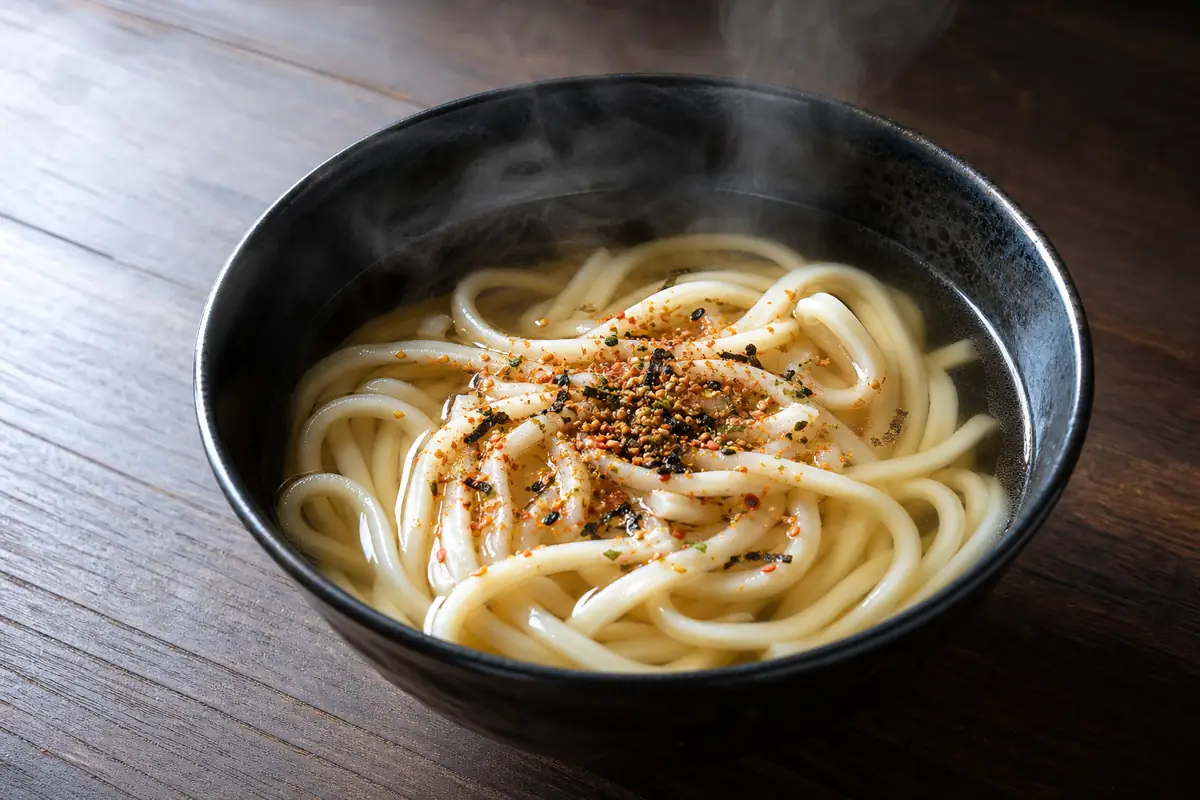
Shichimi togarashi is a Japanese seven-flavor seasoning built around chile with citrus peel, sansho, seeds, seaweed, and other regional ingredients. Formulas vary. Start with one pinch and add it near serving so citrus stays bright and seeds do not burn.
What is shichimi togarashi made of?
Shichimi togarashi is a Japanese seven-flavor blend that usually combines red chile, citrus peel, sansho, sesame, seaweed, ginger, and another seed or aromatic.
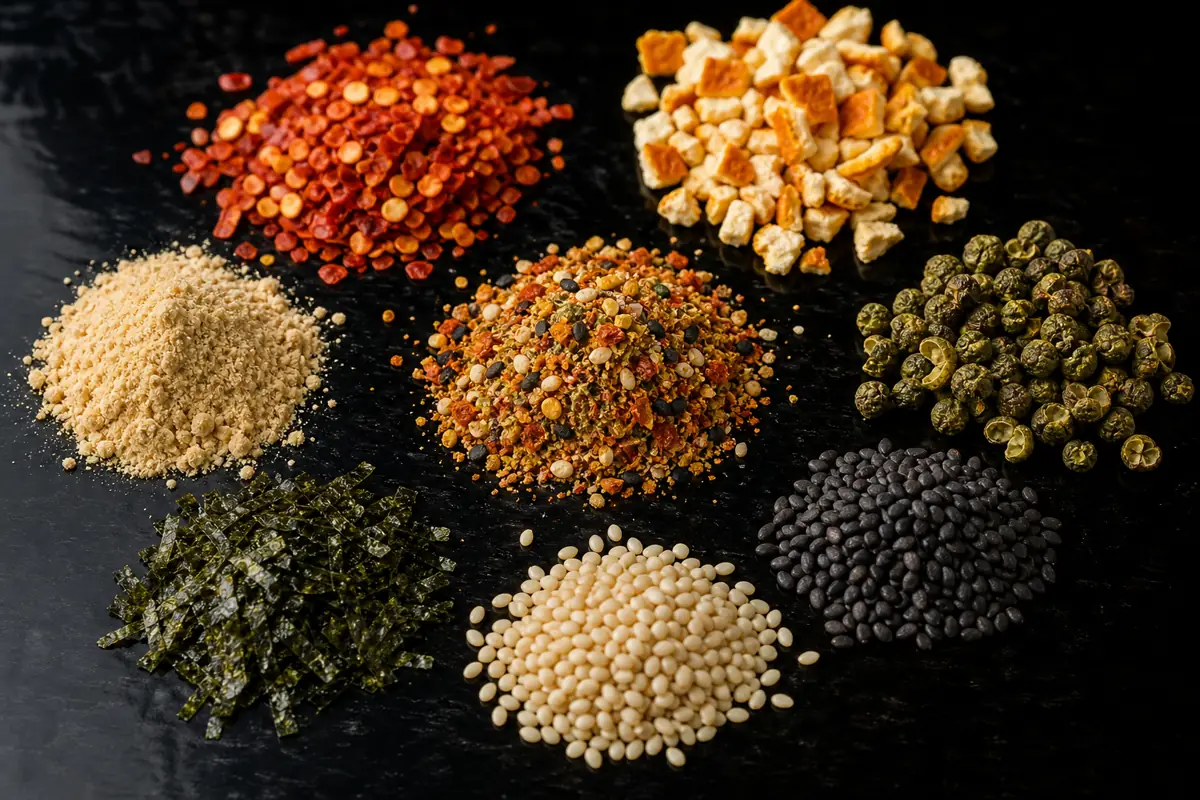
- Heat: Red chile
- Aroma: Citrus peel and sansho
- Texture: Seeds and seaweed
Shichimi refers to seven flavors, while togarashi refers to chile pepper. The name describes a blended seasoning rather than one fixed national formula.
Red chile supplies color and direct heat. Some blends use flakes, while finer powder spreads more quickly through broth.
Dried orange, mandarin, or yuzu peel contributes aroma that reaches the nose before the chile burns. The exact citrus changes by maker and region.
Sansho adds a bright citrusy aroma and a tingling sensation. It is related to Sichuan pepper but has its own Japanese flavor.
Black or white sesame and seeds such as hemp or poppy add nutty texture. Nori or aonori contributes a faint marine savoriness.
Ground ginger supplies warm lift in many formulas. Other blends may include shiso, rapeseed, or a different seventh ingredient.
| Ingredient family | Main job | Common variation |
|---|---|---|
| Red chile | Heat and color | Flake size and chile share |
| Citrus peel | Bright aroma | Orange, mandarin, or yuzu |
| Sansho | Citrusy tingle | Amount and grind |
| Sesame or other seeds | Nutty texture | Black, white, hemp, or poppy |
| Seaweed | Savory marine note | Nori or aonori |
| Ginger or shiso | Warm or herbal lift | Regional formula |
What does shichimi taste like, and how spicy is it?
Shichimi tastes hot, citrusy, nutty, lightly savory, and sometimes tingling, but the order and intensity change with each formula.
Chile creates a familiar warm burn. A jar with red pepper first on the label and few visible seeds usually feels hotter.
Sansho tingle is different from chile heat. It can feel sparkling or briefly numbing while bringing its own green citrus aroma.
Citrus peel lifts steam from noodles and soup. Old peel loses fragrance even when the red chile still looks strong.
Sesame softens the texture and adds toasted nuttiness. Seaweed adds savoriness without turning the blend into a salty seasoning by itself.
A coarse blend releases flavors in separate bursts, while a fine one makes heat more immediate. Stir a settled jar before comparing doses.
| Visible cue | Likely sensation | What it is not |
|---|---|---|
| Red chile powder | Direct lingering heat | Sansho tingle |
| Green sansho flecks | Citrusy tingle | Pure chile burn |
| Orange peel pieces | High bright aroma | Sweetness |
| Sesame seeds | Nutty crunch | Extra heat |
| Dark seaweed | Savory finish | A full furikake blend |
There is no useful single heat number for every shichimi. Test one pinch in warm broth or rice before seasoning the full bowl.
What is the difference between shichimi and ichimi togarashi?
Ichimi togarashi is ground red chile, while shichimi togarashi combines chile with six additional flavor and texture elements.
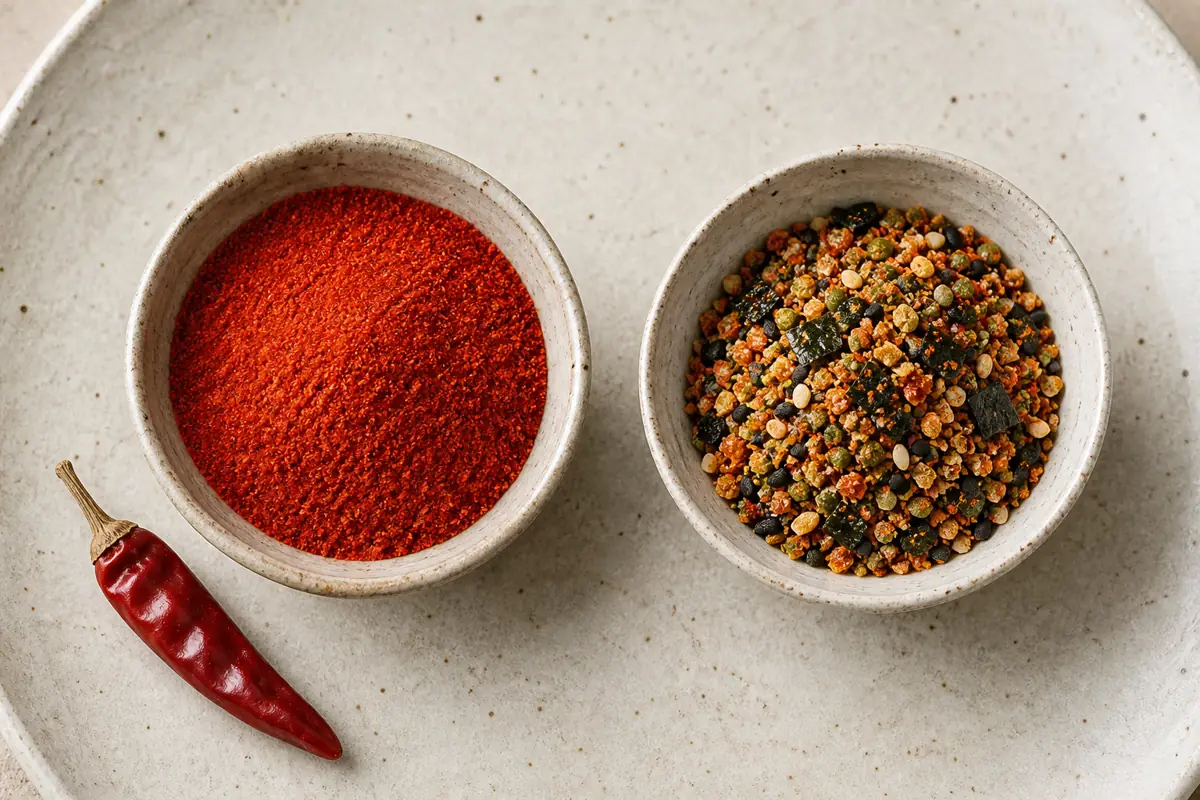
- Ichimi: One chile ingredient
- Shichimi: Seven flavor elements
- Visual check: Uniform red powder or coarse multicolored blend
Ichimi gives clean predictable heat without sesame, seaweed, citrus, or sansho. It suits a dish that already has enough aroma and texture.
Shichimi changes more than heat. One pinch can add citrus fragrance, a sansho tingle, sesame crunch, and dark seaweed flecks.
Plain chile flakes act more like ichimi than shichimi. They cannot provide the missing citrus and seed layer.
Furikake is commonly designed for rice and may contain more seaweed, sesame, salt, sugar, fish, or other savory additions. Shichimi remains chile-centered.
Chinese five-spice centers aromatic spices such as star anise, fennel, cinnamon, clove, and Sichuan pepper. It is not Japanese seven spice.
| Seasoning | Core | Texture | Best when |
|---|---|---|---|
| Ichimi togarashi | One red chile | Fine or flaky | Only heat is needed |
| Shichimi togarashi | Chile plus six flavor elements | Mixed seeds, peel, and powder | Heat, citrus, tingle, and texture are welcome |
| Furikake | Seaweed, sesame, and savory additions | Flaky and granular | Rice needs a fuller savory topping |
| Chinese five-spice | Sweet-warm aromatic spices | Fine powder | A Chinese aromatic profile is intended |
How do you choose a shichimi blend?
Choose shichimi by deciding whether you want more chile heat, citrus aroma, sansho tingle, seed texture, or seaweed savoriness.
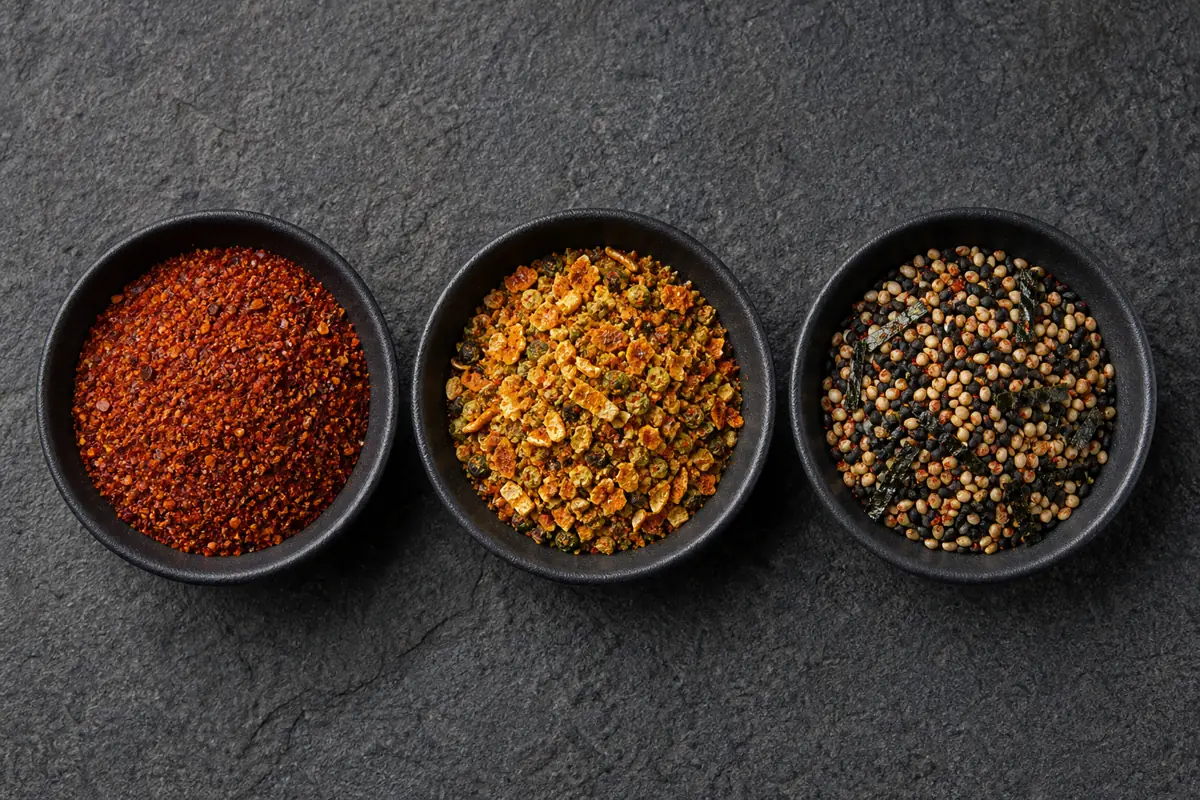
- Red: More direct chile
- Orange and green: More peel and sansho
- Black and white seeds: More texture
Read the ingredient order when the label provides one. Early chile suggests more heat, while early sesame can make the blend milder and nuttier.
Look through a clear jar or the opened packet. Bright peel pieces and distinct green sansho flecks promise more aromatic contrast than uniform red dust.
A seed-heavy blend adds crunch to noodles and grilled food but settles in thin broth. Shake or stir before measuring so the last serving is not all powder.
Sesame is a major allergen. Read every label rather than assuming that seven-flavor variation removes it.
Kyoto-style blends may emphasize aroma and regional ingredients, while other makers lead with chile. Neither choice is automatically better for every dish.
| Goal | Look for | Use on |
|---|---|---|
| More heat | Chile first and fewer large seeds | Rich noodles and grilled meat |
| More citrus | Visible peel high on label | Udon, fish, vegetables |
| More tingle | Sansho listed clearly | Noodles, tofu, grilled food |
| More texture | Sesame, hemp, or poppy seed | Rice, eggs, roasted vegetables |
| Sesame-free | Explicit ingredient confirmation | Any suitable dish |
Smell a newly opened jar if possible. Citrus and sansho should rise before the powder smells only dry and peppery.
How much shichimi should you use, and when should you add it?
Start with one small pinch of shichimi per bowl and add more after tasting the food with broth, sauce, or oil.
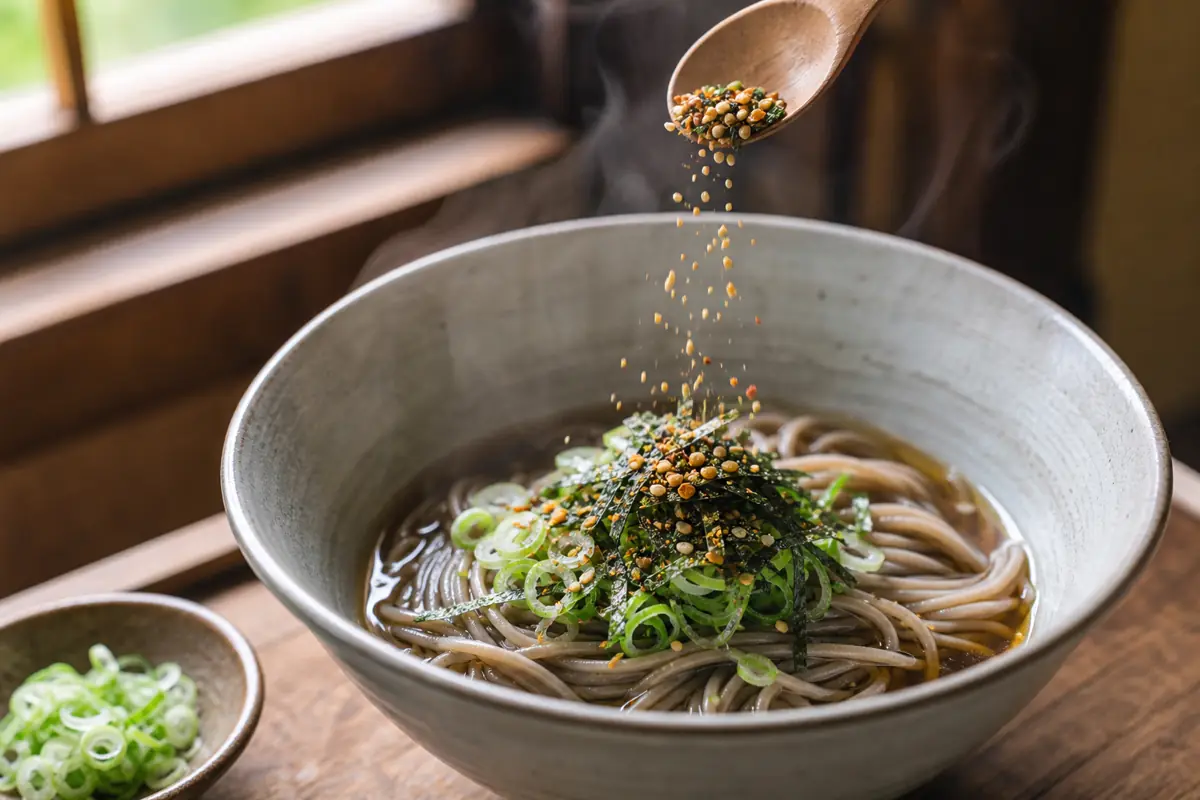
- Amount: One small pinch first
- Timing: After the hottest cooking step
- Retaste: Add more only after tasting broth and garnish
Add it near the end or at the table. Late timing protects volatile citrus and sansho aroma from long heat.
Soup disperses fine chile quickly, so a pinch can taste hotter after stirring. Seeds may remain on the surface and reach individual spoonfuls.
On grilled meat or fish, season normally before cooking and reserve shichimi for the finish. Direct flame can burn peel, sesame, and seaweed.
Oil carries the aroma across noodles, tofu, and vegetables. Mix a pinch into a spoonful of sauce rather than pouring from the jar over one spot.
- Noodles and soup: Add one pinch after serving, stir, and taste.
- Grilled food: Finish after the surface leaves the hottest heat.
- Rice and eggs: Sprinkle immediately before eating.
- Roasted vegetables: Toss with oil first, then add shichimi after roasting.
A large dose does not simply add more citrus. Chile and bitter burned peel can grow faster than the most fragile aromas.
What foods go with shichimi togarashi?
Shichimi works on udon, soba, ramen, soups, rice, eggs, grilled meat, fish, tofu, mushrooms, squash, and simple snacks.
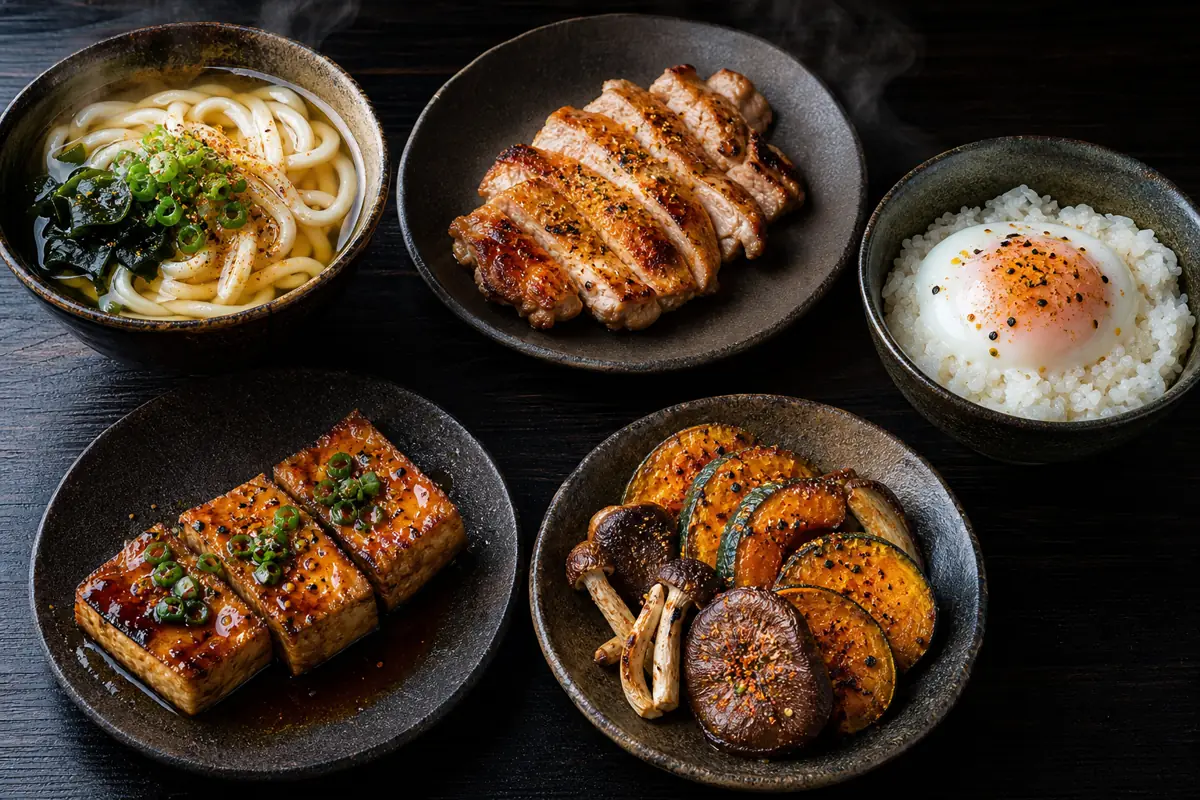
- Broth: Noodles
- Fat: Chicken and egg
- Sauce or oil: Tofu and vegetables
Noodle broth makes the blend easy to explore because chile disperses while citrus rises with steam. Add the seasoning after the bowl reaches the table.
Rice and eggs provide a mild background that exposes sansho and sesame clearly. A small soy or miso component helps seeds cling.
Fatty pork, chicken skin, and oily fish support chile and citrus. Finish after grilling so the seeds remain nutty instead of bitter.
Tofu needs moisture or fat for adhesion. Brush with sauce or sesame oil before adding a measured pinch.
Mushrooms, squash, eggplant, and cabbage take shichimi well after roasting. Their browned edges support seaweed and sesame.
| Food | Best timing | What carries it | Main cue |
|---|---|---|---|
| Noodles or soup | At the table | Broth | Chile and citrus |
| Rice or eggs | Just before eating | Moisture or sauce | Sansho and sesame |
| Meat or fish | After grilling | Rendered fat | Heat and peel |
| Tofu | After sauce | Oil or glaze | Seeds and seaweed |
| Roasted vegetables | After roasting | Surface oil | Citrus and crunch |
Popcorn and roasted nuts can take a fine pinch mixed with salt. Check the blend for sesame before serving it to others.
Can you make shichimi at home?
You can make a useful shichimi-style blend at home when you preserve heat, citrus, sansho, seeds, seaweed, and warm aromatic roles.
Start with two teaspoons coarse red chile and one teaspoon completely dried orange or yuzu peel. Fresh peel carries water and shortens storage.
Add one teaspoon black sesame, one-half teaspoon white sesame, and one-half teaspoon crushed sansho. Keep the grind coarse enough to show separate parts.
Add one-half teaspoon crumbled nori and one-quarter teaspoon ground ginger. A small poppy or hemp seed share can complete the seventh element.
- Heat: Two teaspoons coarse red chile.
- Citrus: One teaspoon fully dried peel.
- Tingle: One-half teaspoon crushed sansho.
- Texture: Black and white sesame plus another seed.
- Savoriness and warmth: Crumbled nori and ground ginger.
If sansho is unavailable, black pepper adds bite but not the same citrusy tingle. Treat the result as a practical substitute rather than an exact match.
Mix a small batch and test it on warm rice. Increase only one element at a time so chile does not hide a citrus or seed problem.
What can substitute for shichimi, and how should it be stored?
The best quick substitute combines red chile flakes, dried citrus peel, sesame seeds, and a small pinch of sansho when available.
Ichimi or cayenne supplies heat alone. Add citrus zest only at serving because fresh zest makes a stored dry mixture damp.
Furikake can supply sesame and seaweed but may also add salt, sugar, fish, or other flavors. Combine it with chile only after reading the label.
Chinese five-spice is not a close substitute because star anise and cinnamon move the dish toward a different aromatic profile.
| Option | Keeps | Misses | Best use |
|---|---|---|---|
| Chile, dried peel, sesame, sansho | Heat, citrus, texture, tingle | Seaweed unless added | Most dishes |
| Ichimi or cayenne | Heat | Citrus, seeds, seaweed, tingle | Already aromatic dishes |
| Furikake plus chile | Seeds, seaweed, heat | Formula-dependent citrus and sansho | Rice and eggs |
Follow dry spice storage and keep shichimi airtight, dark, cool, and dry. Heat and air weaken citrus before chile color disappears.
Use a dry spoon and avoid shaking over steam. Moisture softens seaweed and seeds, causes clumps, and encourages spoilage.
Replace a blend that smells flat and dusty. Discard it if mold, insects, moisture, or an abnormal odor appears.