
What Are Grains of Paradise, and What Do They Taste Like?
Crack these West African seeds fresh to keep their citrus aroma above the slow peppery heat.
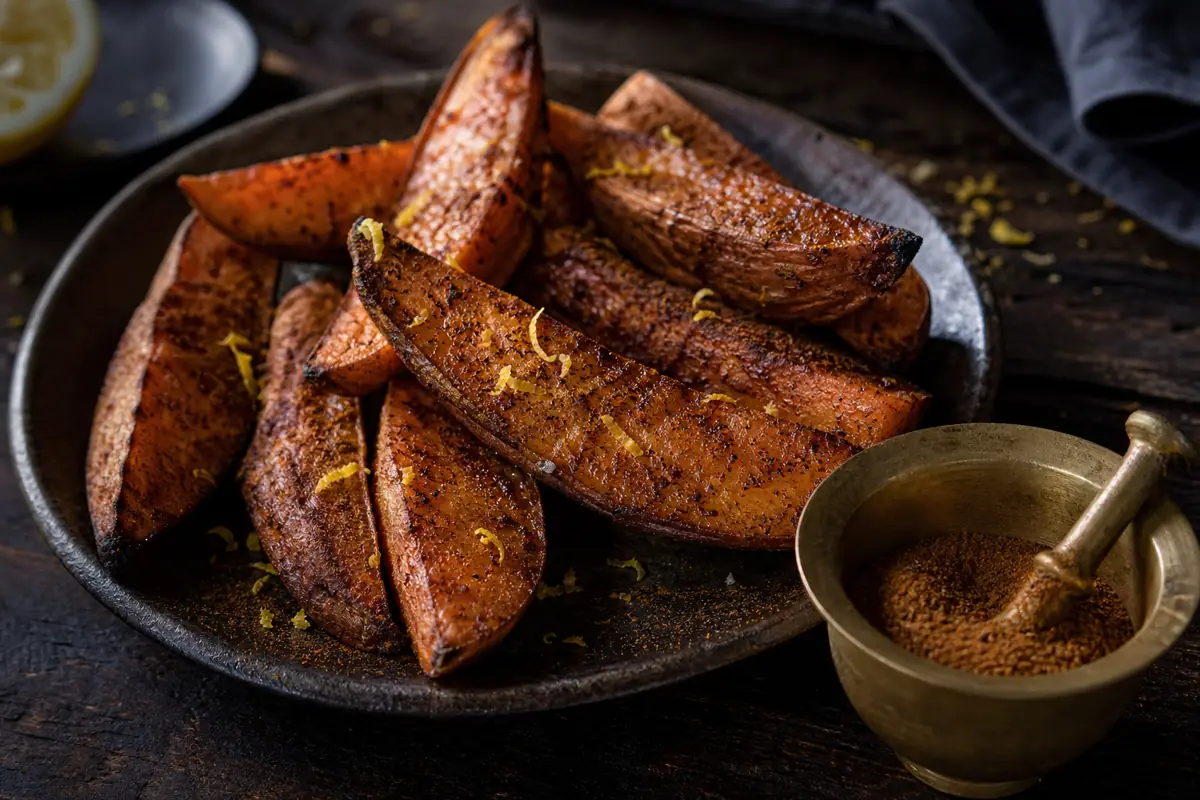
Grains of paradise are West African seeds from the ginger family, not true peppercorns. Freshly cracked seed tastes peppery with citrus and cardamom-like lift, so add some early for warmth and some late when you want the brighter aroma to survive.
What are grains of paradise?
Grains of paradise are the small reddish-brown seeds of Aframomum melegueta, a plant native to the humid forest region of West Africa.
The plant belongs to the ginger family, which explains why the seed can suggest ginger and cardamom even though people often call it melegueta pepper.
It is not a peppercorn from Piper nigrum. The seed gives heat, but its citrus and floral aroma make it more than a pale copy of black pepper.
Dried pods hold many hard seeds. Most cooks buy loose whole seeds because they are easier to measure, crack, and keep fresh.
The names Guinea grains, melegueta pepper, and grains of paradise may appear on packages. The botanical name is the most reliable identity check.
West African cooks have used the spice in soups, stews, drinks, and seasoning mixtures. European cooks also valued it as a pepper-like spice during the medieval trade.
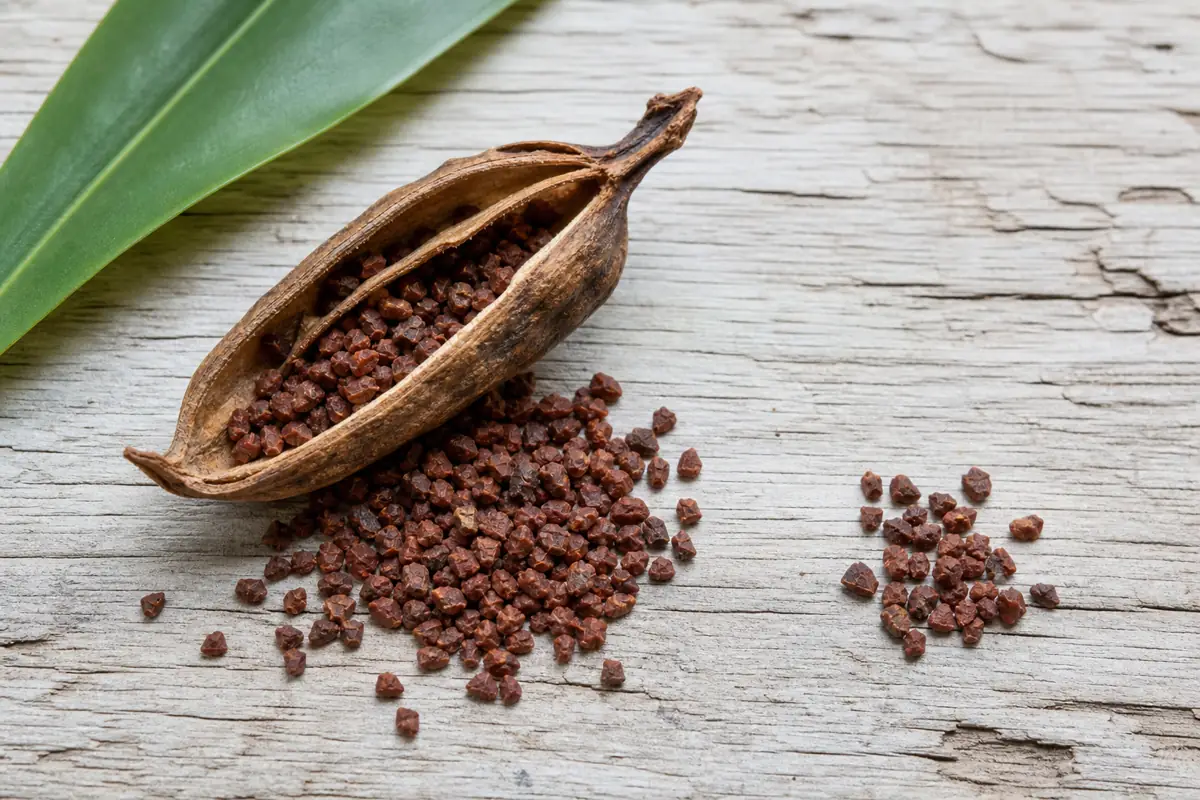
- The seeds are small, hard, and reddish brown.
- Their aroma combines citrus peel, warm spice, and pepper.
- Whole seed protects that aroma better than old powder.
Buy the spice for its two-part flavor rather than its unusual name. A fresh seed should smell bright before its heat becomes obvious.
What do grains of paradise taste like?
Grains of paradise first smell of citrus peel and warm flowers, then develop a dry peppery heat that lingers at the back of the mouth.
The bright note can suggest lemon zest, ginger, and green cardamom, but the seed is less sweet and more peppery than cardamom.
Its heat arrives more slowly than a sharp burst of freshly ground black pepper. That delay makes the spice feel warming rather than immediately biting.
Pungent compounds including paradols help create the warmth, while smaller aromatic compounds supply the top notes that disappear during long cooking.
A normal dose should leave citrus lift around the food, not a hard medicinal burn. Too much seed tastes woody and can finish bitter.
| Spice | First impression | Heat | Best reason to choose it |
|---|---|---|---|
| Grains of paradise | Citrus peel and floral spice | Dry warmth that builds | Pepper heat plus aromatic lift |
| Black pepper | Pine, fruit, and earth | Faster direct bite | Bold pepper structure |
| Green cardamom | Sweet eucalyptus and lemon | Little pepper heat | Floral sweet aroma |
| Ground ginger | Warm lemon and root | Rounded tongue heat | Warmth in wet or sweet food |
Fat rounds the heat and carries the citrus aroma through roasted vegetables or meat. Acid sharpens the top note, especially in fish, tomato, or fruit dishes.
Crack two seeds and smell them before measuring a new jar. If the scent is mostly dust and wood, the spice will need replacing rather than a larger dose.
Should you grind or toast grains of paradise?
Keep grains of paradise whole until cooking, then crack or grind only the amount you need.
A mortar and pestle gives a useful coarse crack for roasts, stews, and finishing. A clean pepper mill works when the seeds fit its grinding mechanism.
Use a finer grind for sauces, baking, and spice mixtures where hard fragments would feel rough. Sift the powder if a smooth texture matters.
The grinding method changes release speed. Fine powder gives up aroma quickly, while coarse pieces keep opening as you chew.
A very brief dry toast can deepen the warm note, but stop as soon as the seeds smell brighter. Dark roasting removes the citrus character you paid for.
Use medium-low heat and move the pan constantly. The small seeds heat quickly and can jump from fragrant to bitter before their color changes much.
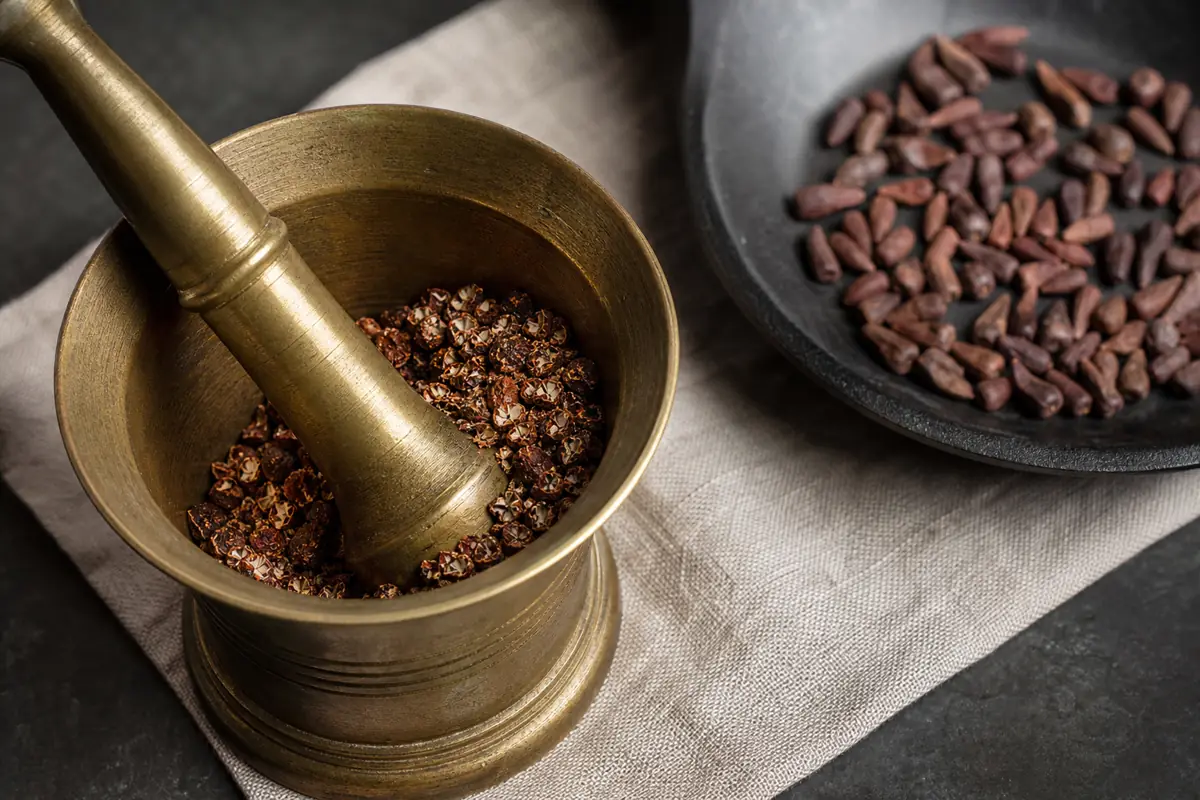
- Crack for roasts, stews, and table finishing.
- Grind fine for smooth sauces and baking.
- Toast only until the first strong aroma rises.
- For a crust: Crack the seeds coarsely so the spice stays distinct on meat or roots.
- For a sauce: Grind finely and whisk into fat or liquid so no hard fragments remain.
- For a blend: Grind with coriander or whole cumin seed just before mixing to keep the citrus note alive.
- For a finish: Skip toasting and crack a small pinch directly over the served food.
Do not toast by habit. The whole-spice toasting decision should serve the dish, and a fresh finishing grind often shows this seed better.
When should you add grains of paradise?
Add grains of paradise early when you want a blended peppery base, and add them late when the citrus and floral notes should stay clear.
Long simmering softens the high aroma but leaves a steady dry warmth. That works in tomato, peanut, bean, and meat stews.
Late grinding suits grilled fish, roasted roots, fruit, and creamy sauces because the food keeps the fresh lemon-cardamom edge.
A split spice addition gives the fullest picture. Cook part into the base, then crack a smaller amount over the finished dish.
| Dish | Best timing | Result |
|---|---|---|
| Long stew | Small early dose plus a late pinch | Integrated warmth with a fresh top note |
| Roasted vegetables | Mix some into oil, finish after roasting | Peppery crust and citrus lift |
| Fish or seafood | Add near the end | Aroma stays bright and does not bury sweetness |
| Bread or cake | Fine grind in the batter | Even warmth without hard fragments |
| Table seasoning | Crack at serving | Strongest citrus and delayed heat |
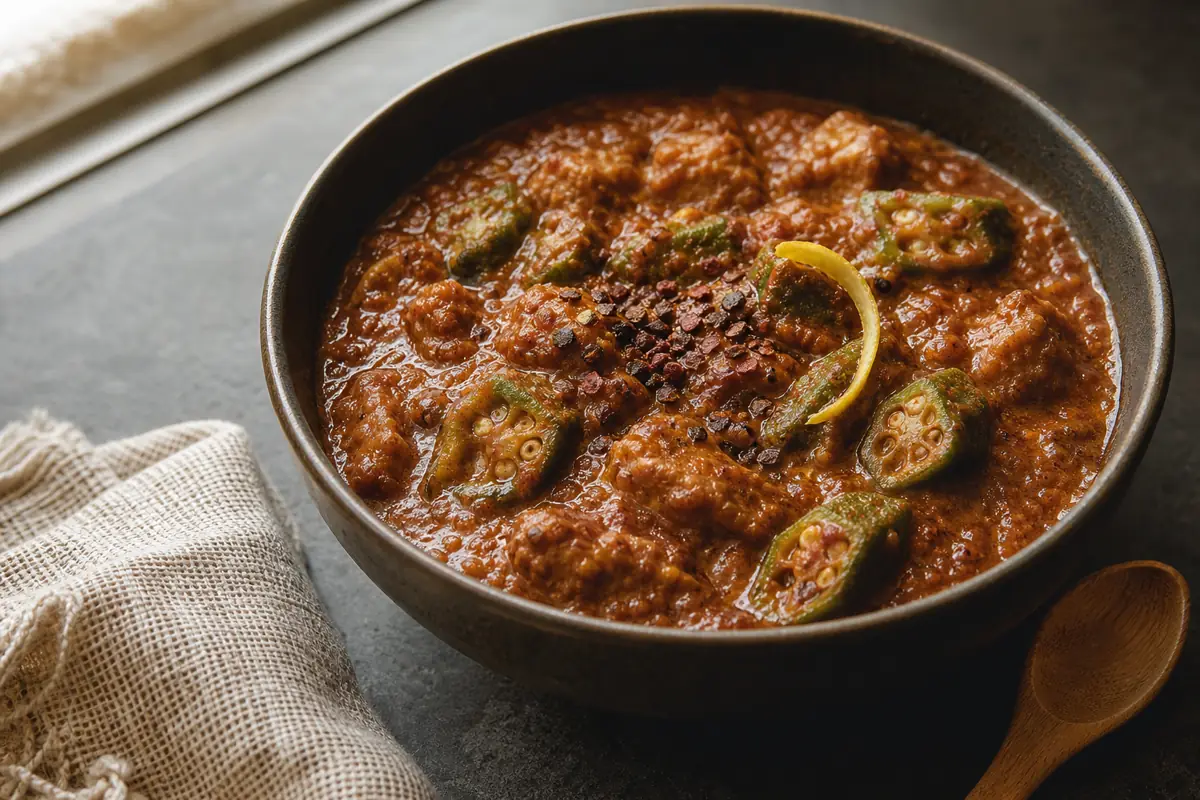
- Early spice melts into the sauce.
- Late spice keeps a distinct aromatic edge.
- A split dose prevents both flatness and harshness.
In a wet dish, stir fine powder into fat or sauce so it does not float in dry clumps. On a dry surface, press coarse cracks into oil before roasting.
If a finished dish tastes hot but not aromatic, do not add a full second dose. Crack two or three fresh seeds over a test serving first.
What foods go with grains of paradise?
Grains of paradise fit foods that can use both pepper warmth and a clean citrus edge.
Tomato, peanut, okra, beans, and slow-cooked meat give the spice enough body to carry an early dose without losing balance.
Fish and shellfish benefit from the late citrus note. Use a light hand so the delayed heat does not cover their sweetness.
Sweet potatoes, carrots, squash, and parsnips turn the dry warmth into a useful contrast with caramelized sugars.
Lamb, duck, and pork can take a coarse crust, especially when orange, lemon, honey, or browned onion repeats the spice's bright side.
- Stews: Build warmth into tomato, peanut, okra, bean, or meat bases and refresh the aroma at serving.
- Roasted roots: Mix cracked seed with oil and salt so the spice adheres during browning.
- Seafood: Grind it late with citrus zest for lift that stays above the fish.
- Fruit and baking: Pair a fine grind with apple, pear, ginger, honey, or brown sugar in small amounts.
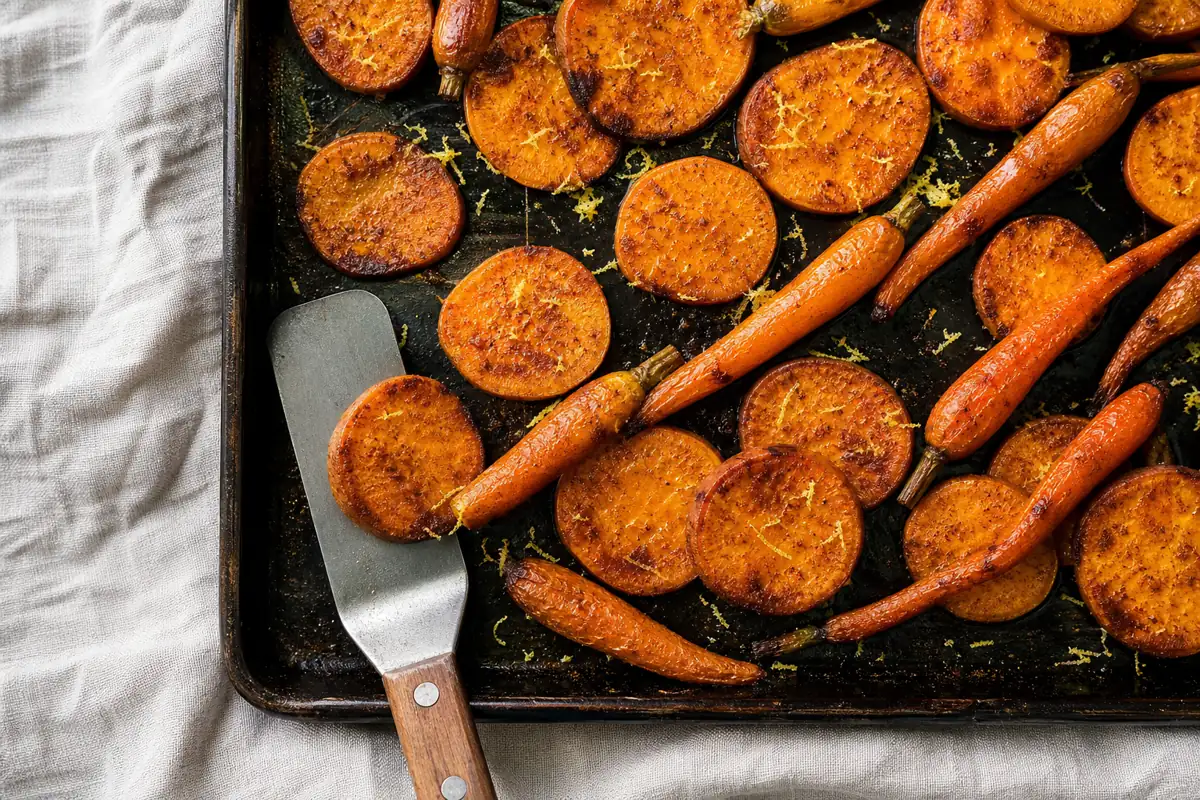
- Sweetness softens the delayed heat.
- A late crack keeps the citrus edge clear.
- Fine seasoning spreads warmth across the browned surface.
The seed also appears in some beers and spiced drinks. In a beverage, strain coarse material and keep the dose low because extraction continues in liquid.
It can add a peppery-floral edge to ras el hanout, but it should not be used as proof that every jar contains the same formula.
For a first test, season roasted sweet potato or carrot. The food is forgiving, and its sweetness makes both the citrus note and the slow heat easy to notice.
Are grains of paradise the same as alligator pepper?
Grains of paradise and alligator pepper are related African spices, but the names do not reliably identify the same plant.
Both come from species in the Aframomum group, and market names can overlap across countries and sellers.
Alligator pepper is often sold as a whole papery pod filled with many seeds. Grains of paradise commonly appear as loose Aframomum melegueta seed.
Flavor can also differ by species and origin. One product may taste sharper, more resinous, or more cardamom-like than another.
Check the botanical name when a recipe or purchase depends on identity. Do not assume that Guinea pepper, alligator pepper, and melegueta pepper are universal synonyms.
Where do grains of paradise turn up outside the kitchen?
The spice survived in drinks long after European cooks forgot it.
Brewers used it as a warming, bittering botanical before hops became the standard, and a few Belgian and craft styles still add it for that peppery lift.
Gin is where most people now meet it without knowing. It appears in the botanical bill of several London dry gins, where its resinous warmth fills the gap between juniper and citrus peel.
That drinks history explains what you taste in food. The seed was valued for aroma and warmth rather than raw pungency, which is why it seasons a dish differently from black pepper.
Try a few crushed grains in a mulled drink or a cocktail syrup.
The warmth carries through sugar and alcohol better than ground pepper, which turns dusty once it sits in liquid.
What can replace grains of paradise?
No single substitute copies both the citrus aroma and delayed pepper heat of grains of paradise.
Black pepper provides the heat base, but it needs a bright partner. Add a very small amount of cardamom, coriander, or ginger according to the dish.
For savory food, combine 3 parts freshly ground black pepper with 1 part lightly crushed coriander seed. Coriander supplies citrus without making the dish sweet.
For fruit, baking, or a fragrant sauce, use black pepper with a much smaller pinch of cardamom. Too much cardamom turns the substitute perfumed.
Ground ginger spice supplies rounded warmth but not the same pepper bite. Use it with black pepper rather than alone.
| Dish | Useful starting blend | Main tradeoff |
|---|---|---|
| Stew or braise | 3 parts black pepper, 1 part coriander | Brighter up front, less delayed heat |
| Roasted meat or roots | Black pepper with lemon zest | Fresh citrus without cardamom warmth |
| Fruit or baking | Black pepper with a tiny pinch of cardamom | Sweeter and more floral |
| Spiced drink | Black pepper, ginger, and coriander | Warmer and less delicate |
Start with less substitute than the recipe's grains of paradise, then taste. Mixed spices can become louder than the seed they replace.
If the original dish uses only a pinch, plain black pepper is often acceptable. The loss will be aromatic nuance rather than structure.
How do you buy, dose, and store grains of paradise?
Buy whole grains of paradise from a shop with steady turnover, and look for clean reddish-brown seeds rather than pale dusty fragments.
Crush one seed if possible. Fresh seed should release pepper, citrus peel, and warm spice within seconds.
For four servings, start with about 1/4 teaspoon freshly ground seed, then adjust after the heat has had time to arrive.
Use less in delicate fish or cream and more in a large stew, fatty roast, or pot of grains. The correct amount follows food volume and cooking time.
Store the whole seeds airtight, dark, dry, and away from stove heat. The same whole-spice advantage protects their fragile top aroma.
| Problem | Likely cause | Correction |
|---|---|---|
| Dish is hot but flat | Seed cooked too long | Add two freshly cracked seeds to a test serving |
| Flavor tastes perfumed | Too much cardamom-like aroma | Extend the base and add acid or salt carefully |
| Crust tastes bitter | Seeds were toasted too dark | Scrape heavy fragments and restart the seasoning |
| Powder feels gritty | Grind was too coarse for a smooth sauce | Strain or simmer, then grind finer next time |
| Jar smells woody | Seed is stale | Replace it rather than doubling the dose |
A heavy dose can be corrected only by increasing the unsalted food around it. Sweetness may soften perception, but it does not remove the pepper compounds.
Label the jar with its purchase date and keep it whole. This is a spice where five fresh cracks often contribute more than a spoonful of old powder.