
What Replaces Grains of Paradise Without Losing Citrus Heat?
Build the missing flavor with a pepper majority and a smaller coriander, cardamom, ginger, or allspice share.
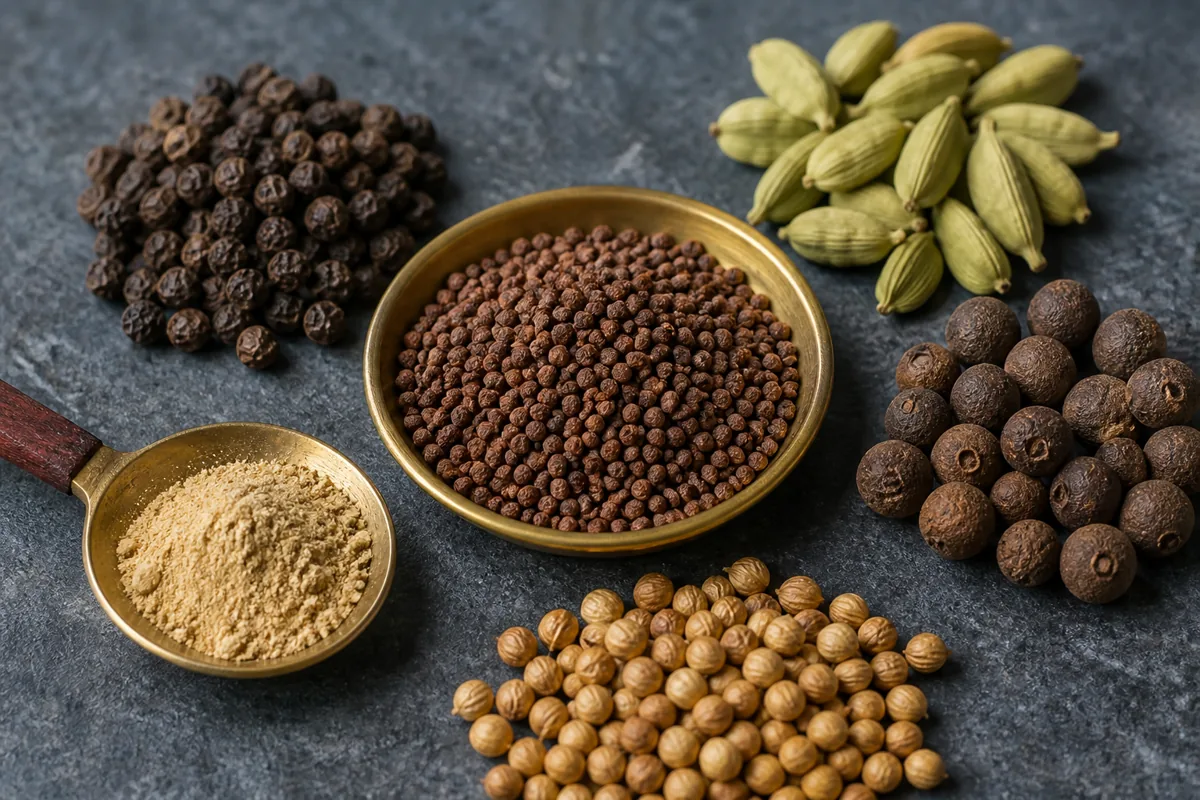
Mix 3 parts freshly ground black pepper with 1 part coriander, then use 3/4 teaspoon of that blend for each teaspoon grains of paradise. Change the aromatic partner for pale sauces, baking, drinks, or fruit rather than treating every peppercorn as equivalent.
5 Grains of Paradise Substitutes That Rebuild Both Notes
The closest substitute for grains of paradise is 3 parts freshly ground black pepper mixed with 1 part lightly crushed coriander seed.
Pepper supplies the direct heat while coriander restores part of the citrus aroma that plain pepper leaves behind.
Use less of each blend than the recipe's original measure on the first pass. Two spices expose more aromatic surface than one whole seed, and their heat usually arrives earlier than the slow warmth of grains of paradise.
| Number | Substitute | Use per 1 tsp grains of paradise | Best use |
|---|---|---|---|
| 1 | Black pepper and coriander | 3/4 tsp of a 3:1 blend | Stew, meat, roots |
| 2 | Black pepper and cardamom | 1/2 to 3/4 tsp of a 4:1 blend | Fruit, baking, lamb |
| 3 | White pepper and coriander | 3/4 tsp of a 3:1 blend | Fish, cream, pale soup |
| 4 | Black pepper and ground ginger | 1/2 tsp of a 2:1 blend | Braise, drink, warm bake |
| 5 | Black pepper and allspice | 1/2 tsp of a 4:1 blend | Pork, squash, fruit |
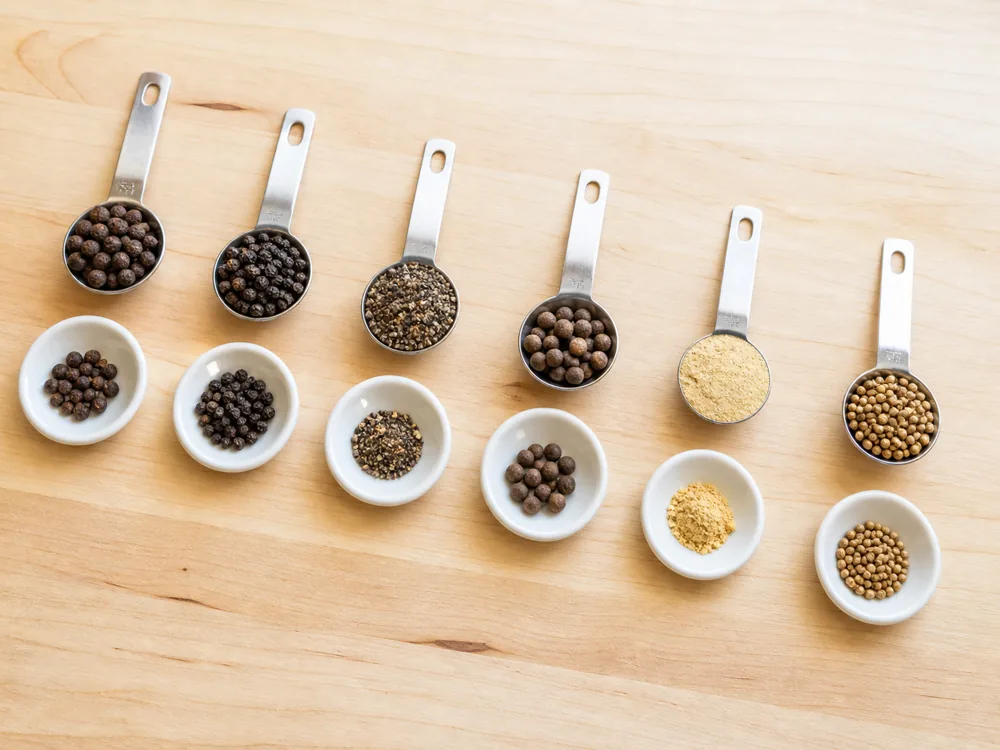
- Three to one: Black pepper with coriander for savory food.
- Four to one: Black pepper with cardamom for floral lift.
- Pale option: White pepper with coriander for light sauces.
- Warm options: Ginger or allspice for braises and baking.
1. Black Pepper and Coriander
Mix 3 parts freshly ground black pepper with 1 part lightly crushed coriander seed. Use 3/4 teaspoon of the blend for every 1 teaspoon grains of paradise.
This is the strongest savory replacement because black pepper provides a clear pepper structure and coriander contributes lemony floral aroma without sweetness. It suits tomato stew, lamb, pork, roasted roots, beans, and savory grains.
Crack both spices close to cooking and add most of the blend during cooking. Reserve a small pinch for the end when the dish needs the brighter aroma that long heat removes.
Do not use a coarse coriander grind in a smooth sauce or delicate fish dish.
The hard fragments feel larger than grains of paradise and can turn a good flavor match into an unpleasant texture.
2. Black Pepper and Green Cardamom
Mix 4 parts freshly ground black pepper with 1 part finely ground green cardamom. Use 1/2 to 3/4 teaspoon of the blend for every 1 teaspoon grains of paradise.
Cardamom supplies lemon, flowers, and a cooling high aroma above pepper's bite. This combination fits pear, apple, sweet bread, lamb, fragrant rice, and a sauce that can accept a recognizable floral edge.
Grind cardamom seeds from the pod rather than crushing the whole green shell into the blend. Add the lower measure first because fresh cardamom expands rapidly in warm fat and steam.
Stop when cardamom becomes easier to name than pepper.
Increasing black pepper after that point adds heat but does not remove the eucalyptus-like perfume already distributed through the food.
3. White Pepper and Coriander
Mix 3 parts finely ground white pepper with 1 part coriander and use 3/4 teaspoon blend per 1 teaspoon grains of paradise. Grind the coriander fine when the mixture is going into cream, broth, or a smooth fish sauce.
White pepper keeps pale food visually clean and gives a warmer, earthier pungency than black pepper. Coriander restores a brighter citrus note, though the overall aroma remains less floral than grains of paradise.
Use the blend in seafood, cream sauce, pale soup, mashed roots, or a light braise. Whisk it into moisture rather than dusting it over the plate because white pepper can smell musty when its powder sits raw on the surface.
Do not choose this formula for a coarse meat crust or food that needs visible cracked spice.
White pepper disappears well, but it cannot provide the same dark pepper fragments or fresh pine aroma as black pepper.
4. Black Pepper and Ground Ginger
Mix 2 parts black pepper with 1 part ground ginger and use 1/2 teaspoon blend per 1 teaspoon grains of paradise. Add it to wet cooking or a dry baking mix rather than leaving the ginger powder loose on finished food.
Ginger supplies rounded root warmth and a mild lemon direction, while black pepper supplies the sharper bite. The formula works in braised meat, spiced drinks, fruit compote, ginger-adjacent baking, and a sauce that has time to hydrate powder.
Use less in a dry rub because ginger powder can scorch on exposed high heat. In a drink, strain coarse pepper or grind both components fine enough that grit does not collect in the last sip.
This blend lacks the clean citrus top note of fresh grains of paradise.
Do not compensate with a large quantity of lemon zest because fresh peel can dominate a cooked dish and bring bitterness from its white pith.
5. Black Pepper and Allspice
Mix 4 parts black pepper with 1 part ground allspice and use 1/2 teaspoon blend for every 1 teaspoon grains of paradise. This lower dose protects the food from allspice's clove-like concentration.
Choose it for pork, duck, squash, sweet potato, fruit, and a dark stew where warm sweetness already makes sense. Allspice rounds pepper with cinnamon and nutmeg impressions but contributes little citrus.
Add the blend early enough for allspice to settle into fat or liquid. A small fresh crack of black pepper at serving can restore lift after long cooking without increasing the sweet component.
Avoid this substitute in delicate seafood, a pale sauce, or a recipe that depends on citrus clarity.
Allspice creates a darker warm-spice direction that can feel heavy beside light food.
Match the Blend to Meat, Seafood, Vegetables, or Baking
Fatty meat and browned roots can carry the 3:1 black pepper and coriander blend because fat rounds the faster pepper hit. Coriander also repeats the bright edge that carrots, squash, citrus glaze, and browned onion naturally support.
Fish and cream need a finer, quieter formula. White pepper and coriander preserve pale color and avoid large dark fragments, though the blend should enter liquid early enough to lose its raw musty edge.
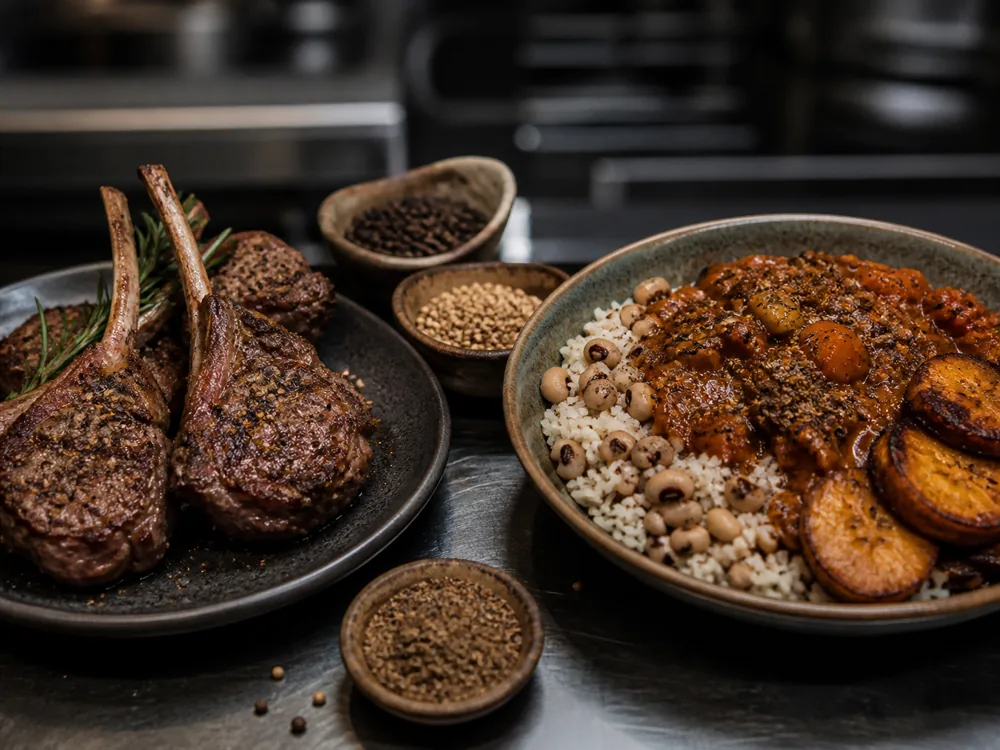
- Roasted roots: Black pepper and coriander.
- Fish or cream: White pepper and fine coriander.
- Meat stew: Black pepper with coriander or allspice.
- Fruit and baking: Black pepper with cardamom or ginger.
| Dish | First choice | Why | Avoid |
|---|---|---|---|
| Stew or braise | Black pepper and coriander | Pepper base plus citrus lift | Heavy cardamom |
| Roasted roots | Black pepper and coriander | Matches sweetness and browning | Fine dusty finish |
| Fish or cream | White pepper and coriander | Pale and finely dispersed | Coarse fragments |
| Fruit or cake | Black pepper and cardamom | Floral lift over sweetness | Full pepper ratio |
| Spiced drink | Black pepper and ginger | Warm and strainable | Coarse unstrained spice |
Baking needs the smallest pepper dose because dry heat distributes pungency through every bite. Start at the lower edge of the cardamom or ginger formula and bake a spoonful of batter before seasoning the entire bowl.
In a Moroccan-style dish, do not assume ras el hanout will replace grains of paradise cleanly.
A full blend brings cumin, cinnamon, and other notes that may duplicate the recipe before it supplies the missing pepper-citrus effect.
Fresh Grinding Changes How Much Substitute You Need
Freshly cracked pepper, coriander, and cardamom are stronger than old preground jars. The substitute ratio therefore begins below the missing spice volume and should be judged after its aroma reaches warm food.
Use a coarse crack for a roast or stew where individual spice bursts suit the texture. Grind fine for sauce, baking, and drinks where hard fragments would remain distracting.
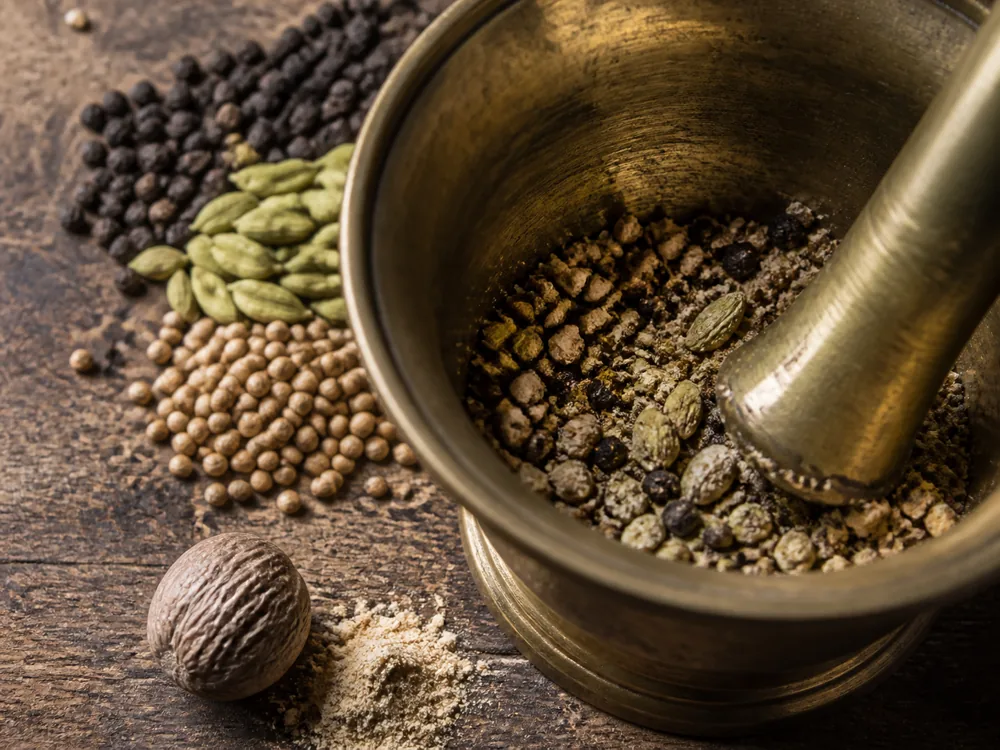
- Coarse crack: Roasts, stews, and crusts.
- Fine grind: Sauce, baking, and drinks.
- Fresh cardamom: Use a smaller share than stale powder.
- Woody aroma: Replace the jar instead of increasing the dose.
Toast only when the dish needs a deeper warm base.
Coriander can take a brief dry warming, but cardamom loses its high floral note and fine ginger powder can burn before pepper shows a useful change.
- Crack the measured amount immediately before cooking.
- Keep cardamom at one fifth of its blend.
- Use fine powder only where moisture can distribute it.
- Reserve a small fresh portion for late aroma in long-cooked food.
- Replace stale spice instead of compensating with volume.
When a newly ground blend tastes stronger than expected, reduce the next batch rather than pre-grinding a large jar. Mixed substitutes fade at different speeds and lose their planned balance during storage.
These five numbered substitutes are starting points for freshly ground spice, not fixed amounts for every jar. Grind only the portion you need, mix it into a spoonful of the food, and wait until the aroma has spread through fat or warm liquid before increasing it.
A lean white fish exposes black pepper quickly, while a fatty sausage or bean stew can absorb more of the same blend.
Reduce the first dose by another quarter when the dish is delicate, served cold, or finished with raw spice. Increase only after tasting the cooked food because fresh cardamom and pepper can become sharper during grinding.
A Two-Part Blend Can Become Louder Than the Original
Fast black pepper heat is the most common excess because grains of paradise normally build more slowly. Extend the unseasoned food or sauce before adding sweetness, acid, or another aromatic spice.
If cardamom dominates, dilution is the only clean correction.
Extra pepper creates a hotter perfumed dish, and cinnamon or clove pushes it farther into sweet-spice territory.
Allspice persists through long cooking, while coriander can feel hard when crushed too coarsely. Strain a smooth sauce if possible, or leave the fragments in a removable spice bag during the next batch.
- Too peppery: Increase the unsalted base and allow the heat to spread.
- Too floral: Dilute cardamom rather than adding another spice.
- Too sweet-spiced: Stop allspice and correct the next-batch ratio.
- Too gritty: Strain the sauce or grind finer next time.
- Too flat: Add a small fresh crack at serving, not more stale powder.
Correct one component at a time because the formulas are intentionally uneven. Treating the blend as one mystery powder removes the advantage of knowing exactly what created the fault.
A Pinch Can Often Be Omitted
Omit grains of paradise when the recipe uses only a background pinch and already contains pepper, ginger, coriander, or cardamom. The food may lose aromatic nuance without losing texture, preservation, or cooking structure.
Use a substitute when the spice seasons a visible crust, defines the pepper note, or supports a West African preparation where its citrus warmth matters. Plain black pepper can cover background heat, but it should not be presented as the same flavor.
Do not fill the empty space with chile.
Capsaicin creates lasting mouth burn rather than aromatic nasal warmth, so even a small chile addition changes the way the entire dish feels.