
Galangal Substitutes for Soup and Curry Paste
Use frozen galangal first, then match ginger, lime leaf, or lemongrass to the original cut.
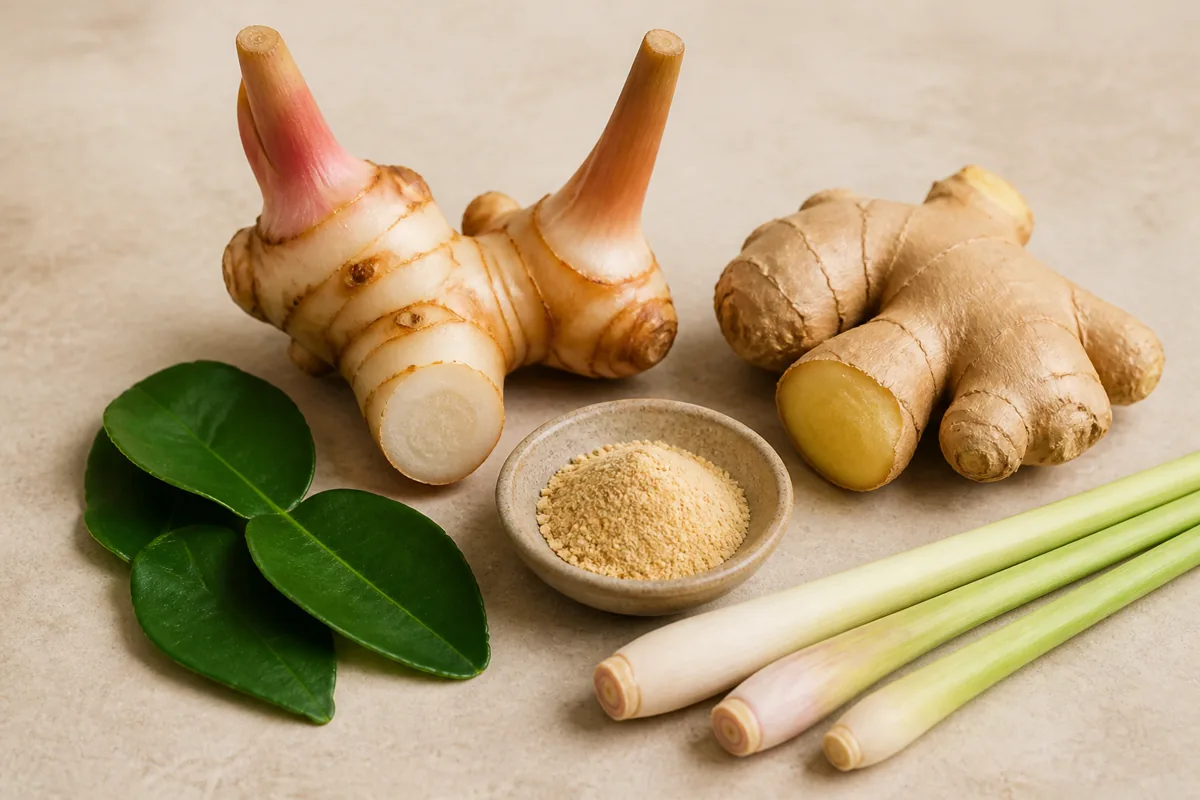
Frozen galangal is the closest substitute and works at a 1:1 ratio. Without it, use young ginger with one controlled citrus aromatic, then choose the combination by whether the recipe infuses slices or keeps a pounded paste.
5 Best Galangal Substitutes by Form
Frozen galangal is the closest substitute for fresh galangal because freezing softens the rhizome without replacing its piney citrus aroma with ginger heat.
When no galangal form is available, combine young ginger with one controlled citrus aromatic rather than piling several spices into the dish.
The starting ratios below assume the recipe calls for 1 tablespoon of minced fresh galangal or about five thin coins in a four-serving dish.
Smell concentrated products before measuring because old powder may be weak while a newly opened frozen pack can be vivid. These five numbered replacements cover the distinct forms a cook can actually measure.
| Number | Substitute | Starting ratio | Best use |
|---|---|---|---|
| 1 | Frozen galangal | 1:1 by volume or weight | Soup, curry paste, braise |
| 2 | Galangal powder | 1/2 tsp per 1 tbsp fresh | Sauce, dry blend, curry |
| 3 | Young ginger and makrut lime leaf | 2 tsp ginger plus 1 small leaf | Tom yum, tom kha, broth |
| 4 | Young ginger and lemongrass | 2 tsp ginger plus 1 tsp tender lemongrass | Curry paste, braise |
| 5 | Young ginger | 2 tsp per 1 tbsp fresh | Flexible stir-fry or soup |
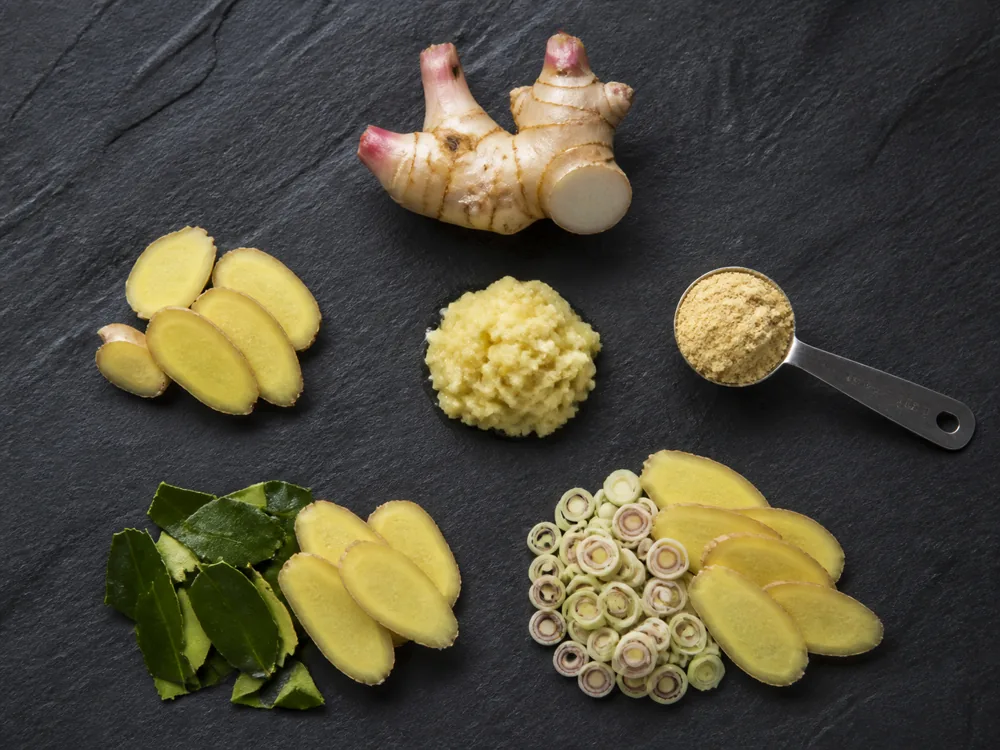
- Frozen galangal: Closest aroma and the same cutting options.
- Powder: Concentrated and texture-free, but flatter.
- Ginger plus leaf: Removable citrus aroma for broth.
- Ginger plus stalk: A poundable combination for curry paste.
1. Frozen Galangal
Use frozen galangal at a 1:1 ratio by volume or weight. Replace five fresh coins with five frozen coins, or 1 tablespoon fresh mince with 1 tablespoon frozen mince.
Slice the rhizome while it is still partly frozen because the firm piece is easier to control under a sharp knife. Add it at the original stage, whether the recipe infuses coins in broth or pounds small pieces into curry paste.
Freezing damages some cell structure, so thawed galangal feels softer and releases liquid sooner. The aroma remains much closer to fresh galangal than ginger, powder, or dried spice can provide.
Discard a package that smells mostly of freezer air or has dried white patches across every cut surface.
A 1:1 measure cannot restore aroma that disappeared during poor storage.
2. Galangal Powder
Start with 1/2 teaspoon galangal powder for every 1 tablespoon minced fresh galangal. Let the powder hydrate in sauce or warm liquid before deciding whether another small pinch is necessary.
Whisk it into coconut milk, broth, oil, or a wet curry base so dry pockets do not reach the plate. Powder works especially well when the original galangal was supposed to disappear into the food rather than remain as visible coins.
The dry form tastes warmer and flatter, with less of the cool pine and fresh citrus that lifts a broth. It also adds no fibrous body, which can be an advantage in a smooth sauce and a clear loss in a coarse curry paste.
Do not scatter powder into a hot dry pan or use it as removable soup aromatic.
Its fine particles can scorch, cloud the broth, and continue tasting dusty after the large aromatics would have been lifted out.
3. Young Ginger and Makrut Lime Leaf
For 1 tablespoon minced galangal in a four-serving soup, use 2 teaspoons minced young ginger plus 1 small makrut lime leaf. Tear the leaf once to expose its aromatic oils, then remove it before serving.
Young ginger supplies juicy heat and enough rhizome body to begin the replacement. The leaf supplies a high citrus aroma that sits above the broth, but it cannot create galangal's dry pine character.
Add ginger when the original galangal would enter the pot. Add the leaf with the other removable aromatics and taste the broth after several minutes of gentle simmering rather than increasing the dose immediately.
One leaf is a limit as well as a ratio.
Measuring makrut lime leaf by the spoonful of missing galangal can make the soup smell perfumed and taste bitter around the torn edges.
4. Young Ginger and Lemongrass
Use 2 teaspoons minced young ginger plus 1 teaspoon finely minced tender lemongrass for every 1 tablespoon minced galangal. This combination belongs in curry paste, moist braises, and sauces where both aromatics can be cut or pounded very fine.
Trim away the dry green outer layers and use the pale lower core of the stalk. Slice it thinly across the fibers before pounding so the finished paste does not leave woody threads in the sauce.
Ginger brings warmth while lemongrass brings a clean lemon aroma.
Together they create a brighter, softer result than galangal, with less peppery resin and more recognizable citrus.
Do not use coarse outer lemongrass as a permanent curry-paste ingredient. It is suitable when bruised and removed from broth, but it stays unpleasantly fibrous when a blender merely chops it into short strands.
5. Young Ginger
Use 2 teaspoons minced young ginger for every 1 tablespoon minced galangal. Choose a firm, pale piece and scrape a fresh cut before measuring so the substitute brings clean heat rather than old refrigerator flavor.
Ginger alone is the cleanest compromise in a flexible stir-fry, vegetable curry, or broth where another citrus aromatic would complicate the seasoning. Add it at the original stage but watch it closely in hot oil because fine ginger can brown faster than firm galangal.
The result will be juicier, hotter at first, and less piney. Long simmering softens ginger's bite, so an early addition works better for background warmth than for the cool aromatic edge galangal normally provides.
Do not use ginger alone when galangal names or defines the dish.
A ginger-led version may still taste good, but increasing the amount only makes it more gingery rather than bringing the missing resinous aroma back.
Tom Kha and Tom Yum Need Removable Aromatics
Galangal coins in tom kha and tom yum perfume the broth while staying firm enough to leave visible or remove at the table. A substitute for that job must release aroma into liquid without becoming a pile of grated pulp.
Use young ginger coins when you want visible rhizome pieces, or minced ginger when you plan to strain the broth. One torn makrut lime leaf can supply the high citrus note, while a bruised section of lemongrass can contribute a softer lemon aroma.
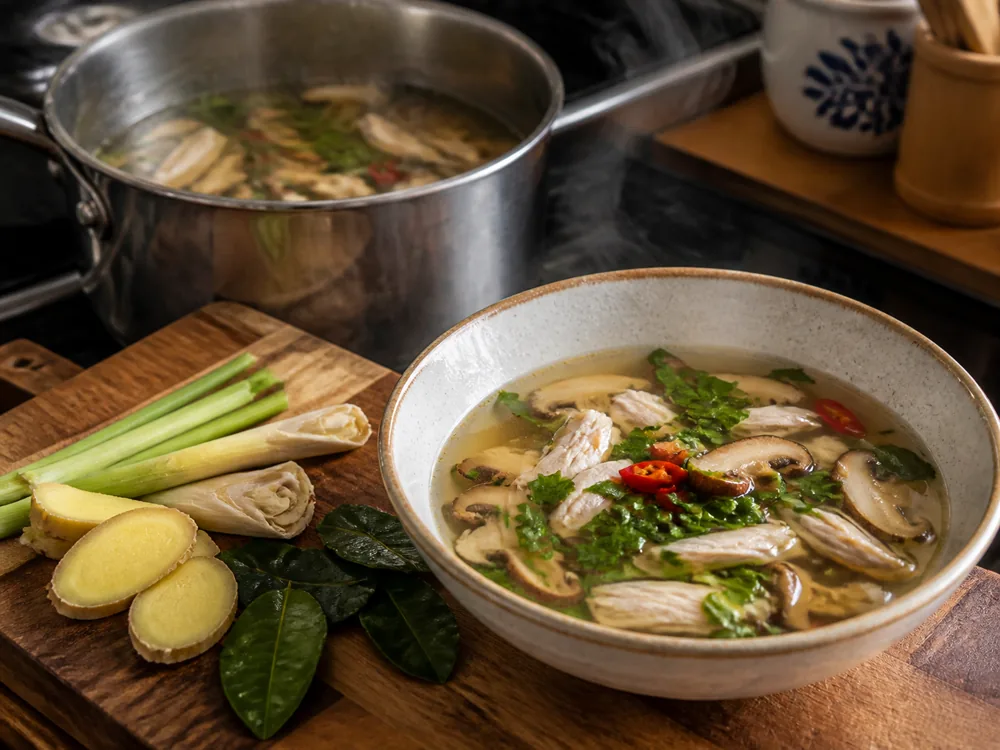
- Ginger coins: Supply rhizome warmth and visible structure.
- Makrut lime leaf: Tear once and remove after infusion.
- Lemongrass: Bruise the stalk rather than shredding the tough layers.
- Taste the broth: Judge extraction before adding another aromatic.
Keep the broth at a gentle simmer after the aromatics enter. Aggressive boiling drives off the brightest notes and breaks tender ginger into pieces that are harder to separate from the soup.
If the recipe is called tom kha, galangal is part of the dish's identity rather than an optional background spice.
Serve the substitute version as a practical variation and buy frozen galangal next time when the original aroma matters.
Curry Paste Needs a Permanent Aromatic
Curry paste keeps the galangal instead of lifting it out, so texture becomes the first test. Young ginger and the tender lemongrass core can be minced and pounded smooth enough to stay in the sauce.
Slice both ingredients across the grain before they enter the mortar. Salt or another coarse ingredient in the paste can help abrade the fibers, but it cannot rescue thick outer lemongrass layers.
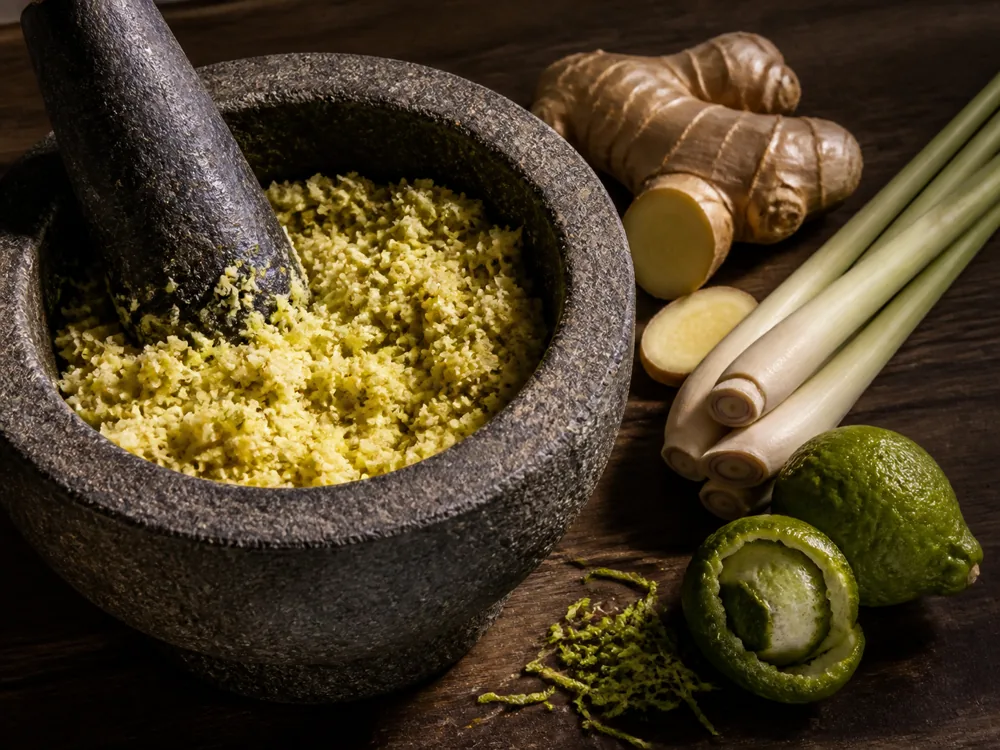
- Young ginger: Softer than galangal and easy to pound.
- Tender lemongrass: Use only the pale inner core.
- Powder option: Hydrates smoothly but loses fresh texture.
- Finished test: Rub a pinch between two fingers and check for hard strands.
Pound the lemongrass first because it is the tougher part of the replacement, then add ginger. Stop only when a pinch smears rather than separating into obvious threads.
- Cut across the fibers before pounding.
- Use the pale lemongrass core, not dry outer leaves.
- Add powder to a wet ingredient rather than a dry mortar.
- Reduce the paste amount if ginger heat begins to dominate.
- Keep the original chile and garlic amounts unchanged for the first test.
The compound replacement is brighter than galangal, so do not add extra lime zest merely because the original aroma still feels different.
More citrus moves the paste farther from pine and can make the finished curry taste like cleaning peel.
Powder and Fresh Aromatics Change the Sauce Differently
Galangal powder replaces aroma without adding water, fiber, or visible pieces. Fresh ginger and lemongrass add moisture and pulp, which can loosen a small curry paste or roughen a smooth sauce.
| Form | Moisture | Texture | Timing |
|---|---|---|---|
| Frozen galangal | Similar to fresh | Softened fibers | Original stage |
| Galangal powder | None until hydrated | Disappears when mixed | Into wet base |
| Ginger and leaf | Ginger juice plus removable leaf | Mince or coins | Early infusion |
| Ginger and lemongrass | Fresh juice and fibers | Must be pounded fine | Paste-making stage |
When powder enters coconut milk or broth, whisk before the liquid boils. A short hydration period reveals its real strength and prevents the cook from doubling a powder that only needed time to disperse.
Fresh alternatives may require a few extra minutes of frying to remove raw moisture from curry paste.
Keep the heat moderate because fine ginger and lemongrass can catch on the pan before the wetter paste around them cooks out.
Adjust one variable after the swap.
If the sauce is loose, reduce it gently. Give dusty powder moisture and time.
If fresh ginger dominates, extend the unseasoned base rather than adding another aromatic.
Some Galangal Dishes Should Wait for Galangal
Postpone the recipe when galangal is the named central aroma and no galangal form is available. Tom kha, a galangal-forward curry paste, or a simple broth built to display the rhizome will expose every compromise.
Flexible stir-fries, mixed vegetable curries, and braises tolerate ginger-led alternatives more easily because several aromatics share the work. In those dishes the substitute changes one layer rather than renaming the whole result.
Frozen galangal is usually a better purchase than a complicated pantry mixture.
It keeps the same ingredient identity, accepts the same cuts, and avoids turning one missing rhizome into three new competing flavors.
Omission can also be cleaner than an oversized substitute. A small background amount may disappear without harm, while too much ginger, lime leaf, or lemongrass can redirect the entire pot.