
Tadka Tempering: Hear the Spices Tell You When to Pour
Set every ingredient beside the stove, follow the burn-speed order, and move the fragrant fat without delay.
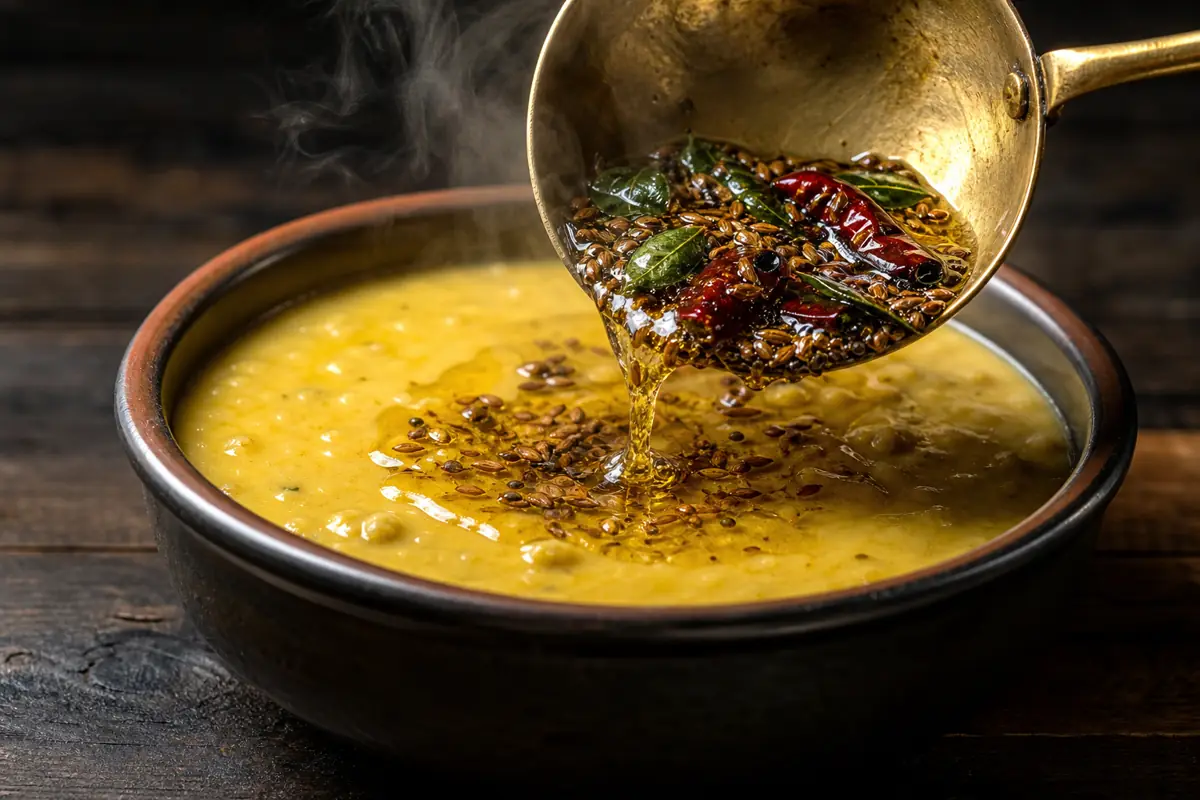
Tadka is the Indian technique of frying spices and aromatics briefly in hot ghee or oil, then using the fragrant fat at a dish's beginning or finish. Add ingredients from slowest to fastest: sturdy seeds, smaller seeds, leaves and chiles, aromatics, then ground spices before pouring immediately.
What is tadka, and what does tempering do?
Tadka is a rapid Indian cooking technique that fries spices and aromatics in hot fat, then carries their flavor into or over a dish.
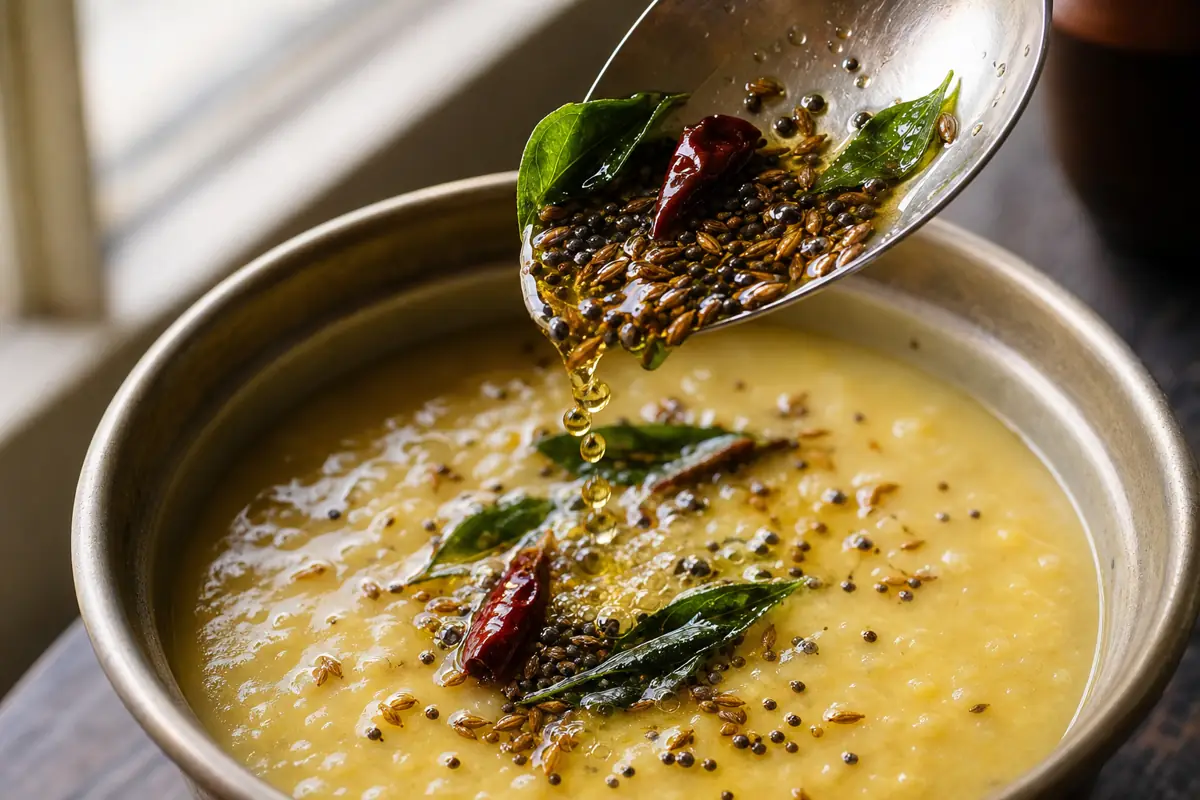
- Sound: Final crackle
- Action: Pour immediately
- Result: Aromatic surface and crisp spice
Names such as tarka, chaunk, baghaar, phoron, and tempering vary by language and region. The shared action is brief frying followed by immediate use.
The purpose is to move fresh spice aroma through fat while preserving the pop, crackle, and toasted texture of the ingredients.
Hot fat extracts oil-soluble aroma and coats the tongue, while seeds and leaves add toasted texture. The same chemistry drives blooming spices in oil-based cooking.
Tadka adds something simmered spices cannot: fresh surface aroma. Pouring it over dal keeps fragrant oil and crisp seeds concentrated at the top.
A beginning tadka becomes the base for onions, vegetables, rice, or lentils. A finishing tadka remains brighter because it receives little further cooking.
The technique moves in seconds, not leisurely minutes. Measure everything first because the hot pan will not pause while you search for a jar.
What fat and pan should you use for tadka?
Use ghee for nutty dairy aroma, neutral oil for a clean background, or a regionally appropriate oil that suits the finished dish.
Ghee tolerates high heat and carries cumin, mustard, and warm spices clearly. Its milk solids have already been removed, so it burns later than butter.
Neutral sunflower, peanut, avocado, or rice-bran oil keeps the spice profile forward. Check allergies before using peanut oil.
Mustard oil contributes its own pungency and may require label-specific handling. Use only products sold for culinary use in your market.
| Fat | Flavor | Heat behavior | Good fit |
|---|---|---|---|
| Ghee | Nutty and rich | High-heat friendly | Dal, khichdi, vegetables |
| Neutral oil | Clean | Varies by oil | Yogurt dishes, everyday vegetables |
| Coconut oil | Distinct coconut | Moderate to high | Southern coastal dishes |
| Mustard oil | Sharp and pungent | Needs proper heating | Regional lentils and vegetables |
A small heavy pan or tadka ladle gives depth for popping seeds and a controlled lip for pouring. Avoid an oversized skillet.
One to two tablespoons fat usually seasons four portions. Too little scorches the spices, and too much leaves a greasy layer that overwhelms the dish.
What spices and aromatics go into tadka?
Tadka may include mustard, cumin, fennel, fenugreek, nigella, dried chile, curry leaves, asafoetida, garlic, ginger, onion, and ground spices.
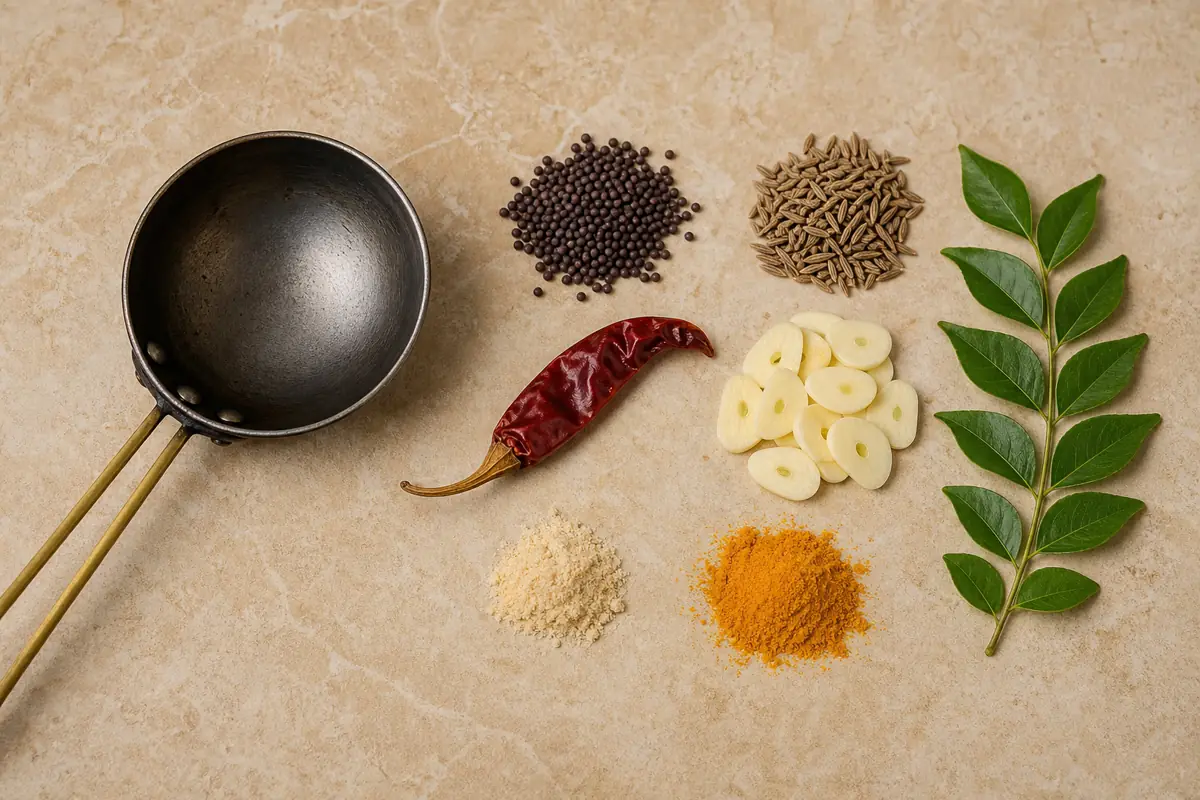
- Pop: Mustard seeds
- Darken: Cumin and fennel
- Crackle: Leaves and chiles
- Color: Garlic and powders
Whole mustard seeds announce readiness by popping. Cumin bubbles, darkens slightly, and smells toasted but should not turn black.
Fennel brings sweetness, fenugreek brings bitterness when heavy, and nigella adds onion-like savoriness. Choose seeds for the dish rather than combining everything.
Dry curry leaves crackle fiercely and perfume the fat. Wet leaves can spit hot oil beyond the pan.
Dried chiles add toasted fruit and heat, while fresh green chiles add water and a sharper aroma. Split whole chiles carefully to limit bursts.
Garlic, ginger, and sliced shallot need enough time to color but burn after seeds. Fine turmeric or chile powder belongs at the very end.
A tiny pinch of asafoetida in hot fat loses its harsh raw smell quickly. Strong compounds make restraint essential.
Dry toasting spices develops aroma without fat, but it does not create the pourable flavored oil that defines tadka.
In what order do you add tadka ingredients?
Add tadka ingredients from slowest to fastest: large sturdy seeds, smaller seeds, dried chiles and leaves, fresh aromatics, then ground powders.
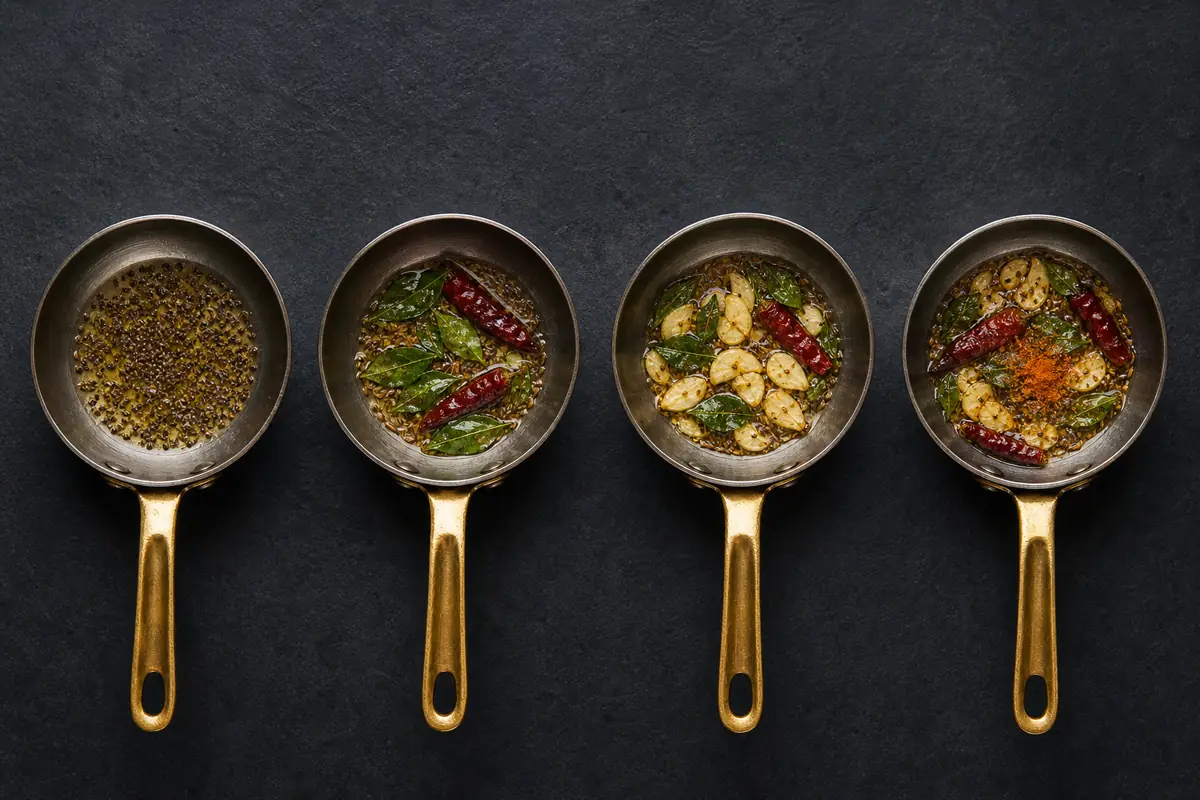
- 1: Sturdy seeds
- 2: Leaves and dried chile
- 3: Fresh aromatics
- 4: Ground spice, then pour
Place the destination dish beside the stove and measure every ingredient. Dry the leaves, chiles, spoon, and pan before heating fat.
Add black mustard seeds first when using them. Wait for active popping, then add cumin or smaller seeds that brown more quickly.
Add dried chiles and curry leaves after the seeds become active. Shield your face and keep a lid nearby because leaves can spit.
Add sliced garlic, ginger, or shallot next. Stir until pale gold rather than waiting for deep brown edges.
Lower the heat or lift the pan before adding turmeric, ground chile, or asafoetida. Powders can burn before you finish stirring.
- Prepare: Measure and dry every ingredient before heating the pan.
- Start: Wait for sturdy seeds to pop or bubble before adding faster seeds.
- Build: Add dry leaves, chiles, and sliced aromatics by their burn speed.
- Finish: Add fine powders off lower heat and pour at once.
Use the sound and color of each ingredient rather than a fixed total time. A small ladle moves faster than a heavy skillet.
How hot should the oil be for tadka?
The fat should shimmer and make one test seed sizzle promptly, but it should not smoke before the first ingredient enters.
Cold fat leaves seeds sitting quietly and tasting greasy. Raise the heat gradually instead of dumping more ingredients into an inactive pan.
Ready fat creates bubbles around cumin and makes mustard pop within seconds. The fat remains clear and mobile rather than smoking.
Smoking fat is too hot for a controlled sequence. Remove the pan from heat and let it cool before testing again.
| Pan cue | Meaning | Action |
|---|---|---|
| Seed sits quietly | Too cool | Wait and retest |
| Fine steady bubbles | Ready for cumin or fennel | Continue watching color |
| Mustard pops actively | Ready for next stage | Add faster ingredients |
| Fat smokes | Too hot | Remove from burner and cool |
| Seeds turn black | Burned | Discard fat and restart |
Residual heat continues cooking after the burner is lowered. Lift the pan when adding powders so the metal does not scorch them.
A thermometer cannot provide one universal target because fats, pans, seeds, and ingredient moisture differ. Sensory cues respond to the pan you have.
Do you add tadka at the beginning or the end?
Add tadka at the beginning for an integrated flavor base or at the end for brighter aroma, crisp texture, and a dramatic seasoned surface.
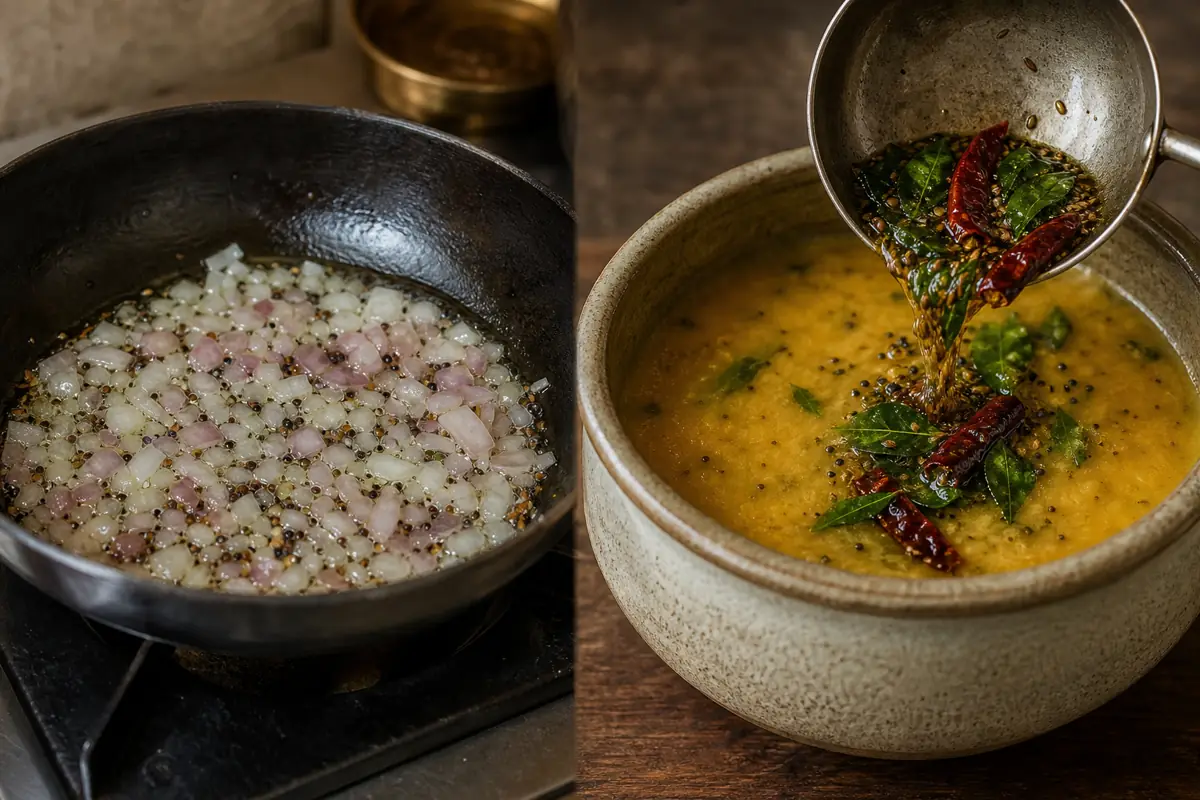
- Beginning: Integrated base
- End: Bright surface aroma
- Both: Use when the dish needs depth and a fresh finish
Beginning tadka seasons onions, tomatoes, rice, lentils, or vegetables as they cook. Later moisture softens the fried texture and spreads aroma.
Finishing tadka is poured over cooked dal, yogurt, soup, or vegetables. The hot fat blooms on contact and remains concentrated near the surface.
The broader question of when spices enter cooking depends on whether aroma needs integration or a fresh finish.
Some dishes use both placements: a simple seed base early and a chile-garlic finish late. This layered spice timing keeps the two jobs distinct.
| Goal | Placement | Result | Good examples |
|---|---|---|---|
| Season the whole dish | Beginning | Integrated mellow aroma | Rice, dry vegetables, curry base |
| Create a fresh top note | End | Bright aroma and crisp spice | Dal, raita, soup |
| Build two flavor levels | Both | Mellow base plus sharp finish | Special dal or khichdi |
Cover a finished dish briefly after pouring only when the recipe calls for trapping aroma. Long covering softens every crisp ingredient.
What dishes can you finish with tadka?
Tadka can finish dal, sambar, khichdi, raita, kadhi, vegetable dishes, rice, soups, chutneys, and mashed legumes.
Creamy dal welcomes cumin, garlic, dried chile, and ghee because the hot fat cuts across its soft, mild surface.
Cool raita needs a smaller neutral-oil tadka. Mustard, cumin, curry leaves, or chile should cool briefly before meeting yogurt.
Khichdi and rice carry ghee well, but a restrained dose protects their gentle grain flavor. Pour across the surface rather than one spot.
Southern lentil and vegetable dishes may use mustard, curry leaves, dried chile, and asafoetida. Regional formulas change with the dish.
| Dish | Useful fat | Possible combination | Main caution |
|---|---|---|---|
| Dal | Ghee or neutral oil | Cumin, garlic, dried chile | Do not oversalt |
| Raita | Neutral oil | Mustard, cumin, curry leaves | Cool briefly |
| Khichdi | Ghee | Cumin, asafoetida, chile | Keep dose light |
| Vegetables | Oil | Mustard, cumin, curry leaves | Avoid wet leaves |
| Soup | Ghee or oil | Garlic, pepper, cumin | Pour just before serving |
Start with one tablespoon fat for four portions and increase only when the surface can carry it. The dish should not develop an oil pool.
How do you prevent or fix burned tadka?
Prevent burned tadka by preparing first, drying wet ingredients, controlling the burner, and removing the pan as soon as fast ingredients color.
If seeds race toward dark brown, lift the pan and add a little room-temperature oil. The added fat lowers the temperature without adding water.
If garlic is only golden at the edges, pour immediately. Black garlic, black seeds, or acrid smoke indicate a bitter batch.
Never pour water into an overheated tadka pan because it can spit violently. Move the pan, lower heat, or add safe dry fat.
- Too quiet: Return the pan to heat and wait before adding the next ingredient.
- Too fast: Lift the pan and add a small amount of room-temperature oil.
- Powder added: Stir once off heat and pour immediately.
- Black or acrid: Discard the fat, wash the pan, and restart.
Burned oil cannot be repaired with sugar, acid, or more spice. The flavor-balancing tools work only after bitter burned fat is removed.
A failed tablespoon of spices costs less than an entire pot of dal. Restarting is the correct repair when bitterness has entered the fat.