
Thai Basil Substitutes for Curry, Pho, and Wok Dishes
Match anise aroma, leaf structure, and timing to the dish instead of swapping by name.
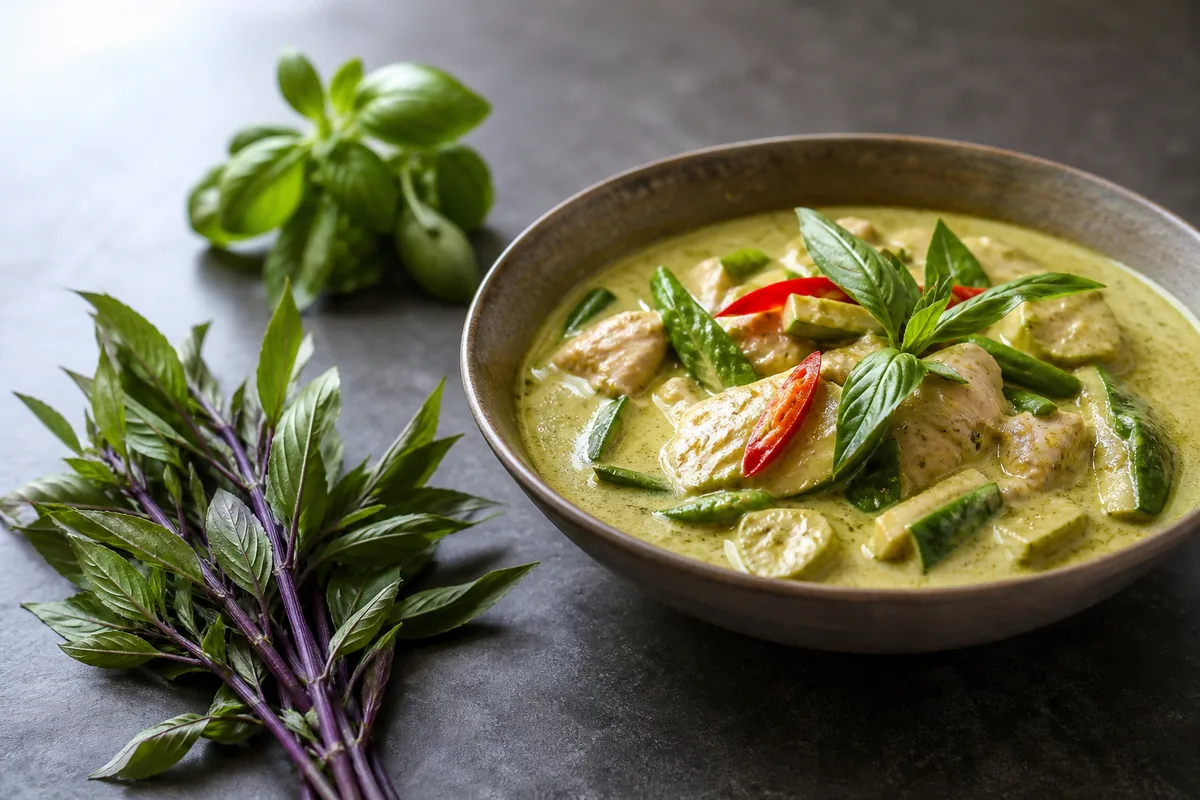
Thai Basil Is More Than a Licorice-Flavored Leaf
Sweet basil is the best broad Thai basil substitute when you can change the timing.
Use the same volume of fresh leaves, then supply missing anise only if the dish needs it.
That simple swap has a limit. Thai basil has narrow, relatively sturdy leaves, purple stems, a peppery edge, and an aroma that recalls anise and clove.
Ordinary sweet basil brings softer leaves and a rounder floral sweetness. It wilts quickly, so a cup added during a simmer can disappear before the food reaches the table.
- Anise aroma
- Coconut curry and aromatic broth expose this part most clearly.
- Peppery lift
- Garlic-chile stir-fries can absorb a sharper herb better than a mild soup.
- Leaf structure
- Pho garnish and fresh rolls need a leaf that keeps some shape.
- Heat tolerance
- A wok or simmer punishes tender substitutes that enter too early.
Thai basil is also different from holy basil.
Thai basil is commonly called horapha in Thai, while holy basil is kaphrao, the rougher and more pungent herb traditionally used in pad kaphrao.
The distinction changes the decision. Holy basil can be an excellent high-heat replacement, but it moves the dish toward clove and pepper rather than Thai basil's sweeter anise note.
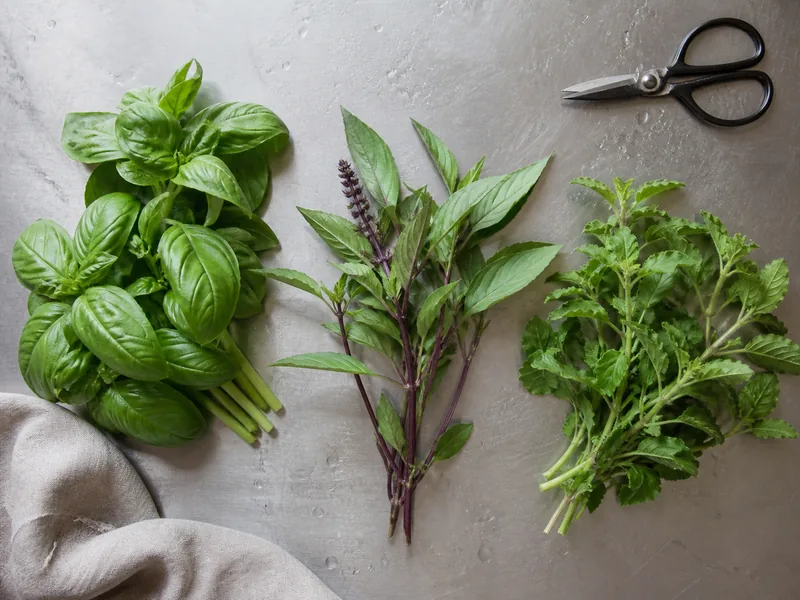
- Sweet basil: Broad, soft leaves on green stems.
- Thai basil: Narrow pointed leaves on purple stems.
- Holy basil: Rougher, lightly toothed leaves with a matte surface.
Bon Appetit's interviews with Thai chefs describe Thai basil as sturdy enough to retain structure and flavor during cooking. The same chefs recommend sweet basil with mint only as an emergency answer, which is a useful reminder that basil-family resemblance does not make the leaves interchangeable.
Five Thai Basil Substitutes for Different Jobs
No option below copies every property of Thai basil. The practical choice matches the feature the recipe exposes and accepts a known difference somewhere else.
| Number | Substitute | Starting amount | Best use | Main difference |
|---|---|---|---|---|
| 1 | Sweet basil with fennel seed | 1 cup basil plus 1/4 teaspoon crushed fennel | Coconut curry, saucy noodles | Softer leaves and a separate fennel note |
| 2 | Holy basil | 1 cup fresh leaves | Garlic-chile stir-fries | More clove, pepper, and pungency |
| 3 | Sweet basil with mint | 3/4 cup basil plus 1/4 cup spearmint | Pho, fresh rolls, salads | Cooler aroma and weak heat tolerance |
| 4 | Tarragon with sweet basil | 3/4 cup basil plus 1/4 cup tarragon | Green curry, coconut sauce | Focused anise that can turn medicinal |
| 5 | Dried basil with star anise | 1 tablespoon basil plus 1 small star-anise point | Broth and long-cooked sauce | No fresh leaf body |
1. Sweet Basil with Fennel Seed
Sweet basil plus fennel seed is the most useful cooked-food compromise when Thai basil's anise note matters.
Start with one cup sweet basil and one quarter teaspoon lightly crushed fennel seed for each cup of Thai basil.
Split the addition into two stages. Bloom the fennel in the sauce so its aroma disperses through fat and liquid, then turn off the heat before folding in the basil.
This method suits coconut curry because the sauce carries the fennel note while the tender leaves remain visible. It also works in saucy noodles where basil is folded through after the pan stops sizzling.
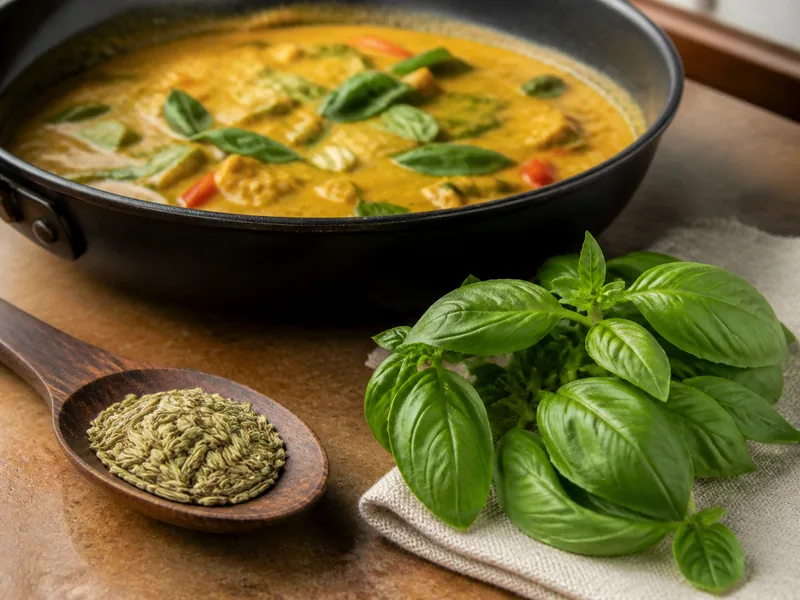
- Seed first: Crushed fennel disperses through the sauce.
- Leaf last: Broad sweet basil stays green and aromatic.
- Visible limit: The blend still has softer leaves than Thai basil.
Do not scatter fennel seed over a raw herb plate. Its hard texture and concentrated sweetness stand apart from the leaves instead of rebuilding their aroma.
2. Holy Basil
Use holy basil at the same fresh volume when a wok dish can absorb its peppery, clove-like force. Its rougher leaves stand up to a final toss with garlic, chile, and meat better than tender supermarket basil.
The aroma is less sweet and less anise-led than Thai basil.
Reduce other clove-heavy seasoning first, then taste after the leaves wilt.
Add holy basil during the final wok toss, while the pan still has enough heat to soften the leaves. Keeping it on high heat for several minutes drives away the fresh aroma and darkens the greens.
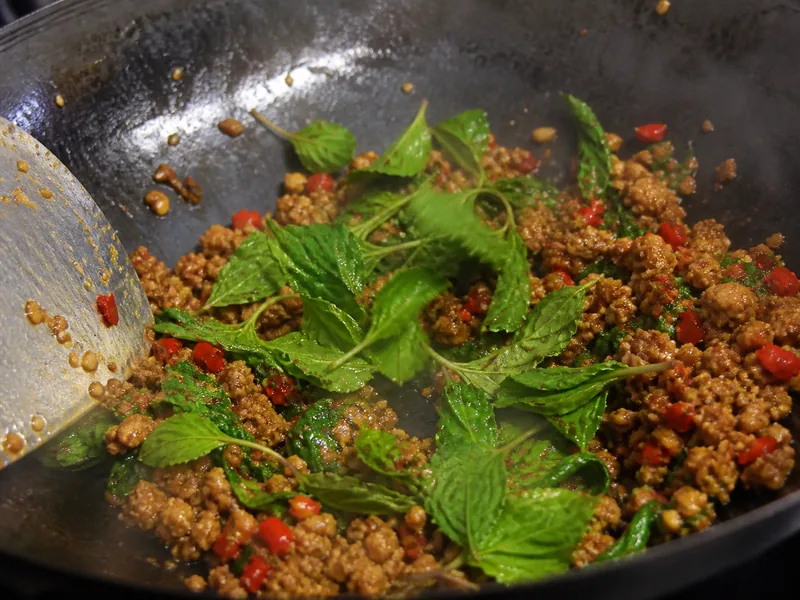
- Rough leaf: Holy basil keeps more structure than sweet basil.
- Final toss: Residual pan heat softens the leaves quickly.
- Stop cue: Pull the wok when leaves remain green in patches.
3. Sweet Basil with Mint
A blend of three parts sweet basil to one part spearmint works best where the herbs stay raw. It gives pho, fresh rolls, and cold noodles a cool lift without asking mint to survive a simmer.
Keep basil visually and aromatically dominant. Equal parts make menthol the first impression, which changes a fragrant herb plate into a mint garnish.
Tear both herbs shortly before serving because cut edges darken and lose aroma.
In pho, put the blend on the side so each diner can add leaves to individual spoonfuls instead of cooking the whole portion in hot broth.
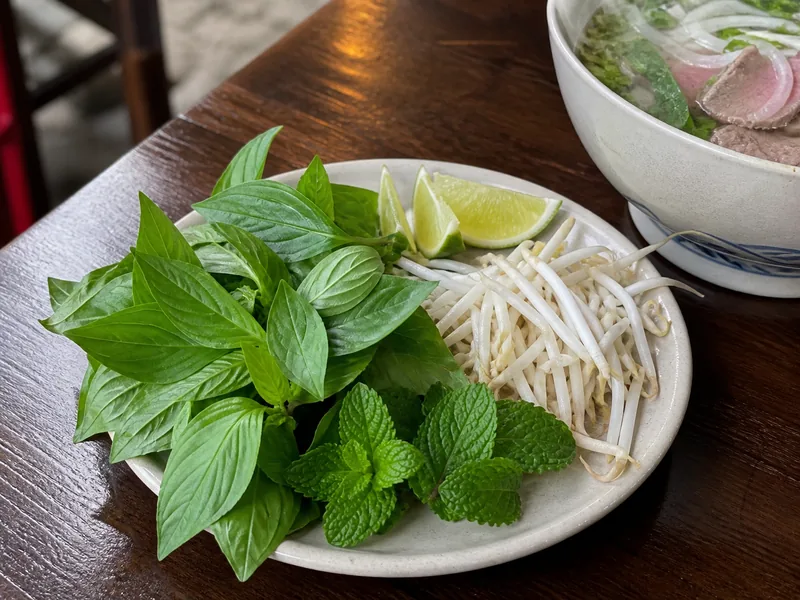
- Broad leaves: Sweet basil supplies most of the volume.
- Crinkled leaves: Spearmint stays visibly secondary.
- Raw service: Bean sprouts and lime confirm this is a table garnish.
Mint cannot supply Thai basil's peppery warmth or firm chew. This is a fresh-service solution, not a substitute for curry that simmers with the leaves.
4. Tarragon with Sweet Basil
Tarragon restores a more direct anise note than mint, but it needs dilution.
Start with three parts sweet basil to one part fresh tarragon and use the blend late in green curry or a coconut sauce.
The tarragon aroma is narrower and more persistent. If you can identify it before you smell basil, stop adding it because another handful will push the sauce toward a medicinal finish.
This blend works where coconut milk, chile, and aromatics surround the herb.
A raw pile of tarragon in fresh rolls exposes its tougher leaf and makes the substitution obvious.
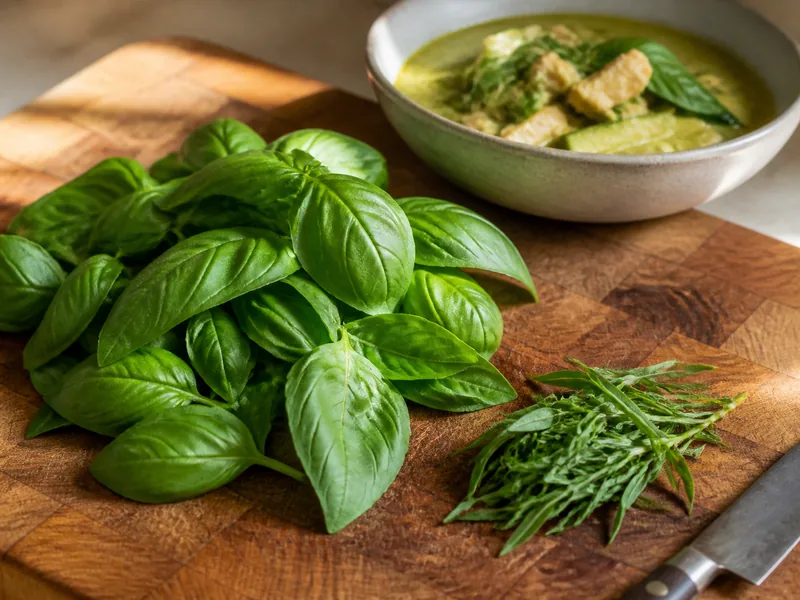
- Three parts: Broad sweet basil carries the green volume.
- One part: Slender tarragon supplies focused anise.
- Late use: The curry waits behind the measured blend.
Dried tarragon is more concentrated and less leafy. If that is the only form available, begin with a pinch in the sauce and still use fresh sweet basil for the visible finish.
5. Dried Basil with Star Anise
Dried basil and a small piece of star anise can rescue broth when no fresh herb is available. For a recipe calling for one cup of Thai basil, begin with one tablespoon dried basil and one point broken from a star-anise pod.
Steep the star-anise point for three to five minutes, then lift it out. A whole pod left through the simmer can make the broth taste of licorice candy and cannot be corrected with more dried basil.
Add dried basil early enough to hydrate. It contributes a muted herbal base, but it cannot become a fresh garnish or reproduce the chew of a Thai basil leaf.
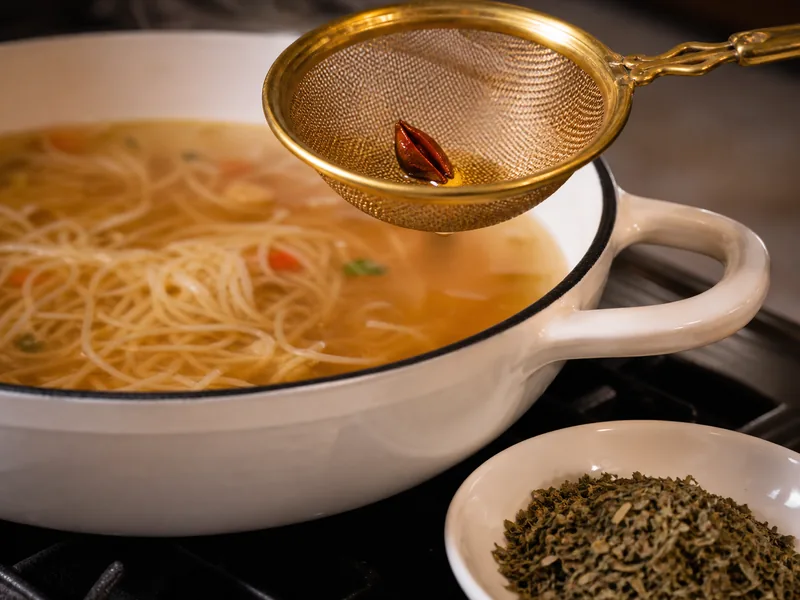
- One point: A broken segment gives a controlled anise dose.
- Three to five minutes: Brief extraction protects the broth.
- Dried leaves: Basil hydrates in liquid but cannot replace fresh texture.
This fallback is strongest in clear soup, braised sauce, or broth that will be strained.
Leave it out of fresh rolls and salads, where both the dry flakes and star-anise flavor remain exposed.
Curry, Wok Dishes, Pho, and Fresh Rolls Expose Different Flaws
Coconut curry forgives a blended substitute because fat spreads aroma across every spoonful.
Sweet basil with fennel or diluted tarragon works here, provided the seeds cook first and the leaves enter late.
A fast wok dish asks for a sturdier leaf and a sharper finish. Holy basil handles that environment, especially with garlic and chile, while sweet basil should enter only after the burner is off.
Pho tests a different quality. The leaves are torn at the table and meet hot broth for seconds, so freshness and leaf texture matter more than long heat tolerance.
Sweet basil with fennel seed replaces a distributed anise note without simmering tender leaves.
Holy basil supplies structure and pungency during the last toss.
Sweet basil with a little mint keeps the garnish fresh and controllable.
Sweet basil alone is safer when mint or tarragon would dominate raw leaves.
Dried basil with one removable star-anise point works when leaf texture is irrelevant.
Fresh rolls expose every leaf edge and every strong aroma.
Use sweet basil alone at equal volume when a cool mint note does not belong, then accept that the roll will be milder.
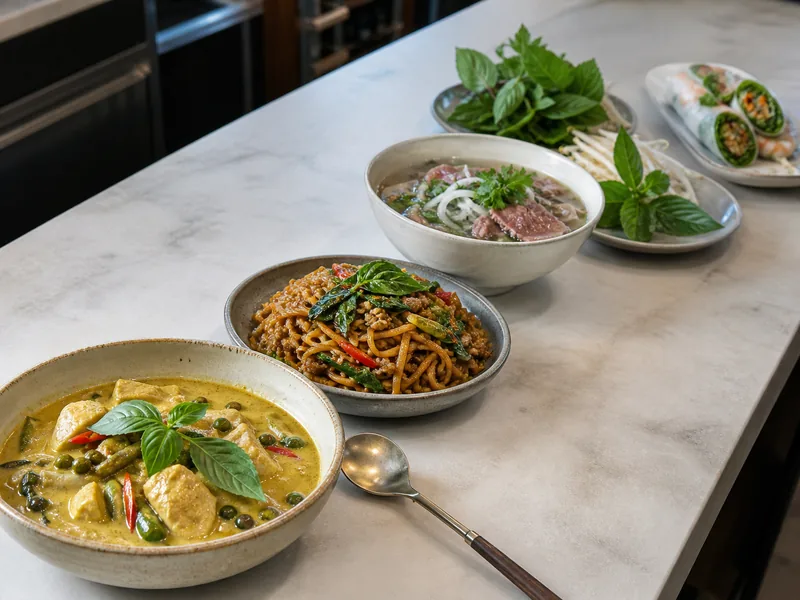
- Curry: Fat distributes a blended anise note.
- Wok: High heat rewards a sturdier leaf.
- Pho and rolls: Raw service exposes aroma and texture.
A recipe called Thai basil sauce leaves nowhere for the difference to hide. The herb supplies the body as well as the dominant aroma, so a blended replacement produces a different sauce even when the noodles around it still taste good.
The dish name can also settle the question. Pad kaphrao calls for holy basil, so finding holy basil is a correction rather than a substitute for that specific stir-fry.
Change the Timing When the Replacement Is More Delicate
Thai basil can tolerate more heat than sweet basil, mint, or tarragon. Keeping the original timing after changing the leaf often causes more damage than the flavor difference itself.
- 1Extract fennel seed or a removable star-anise point in hot liquid or fat.
- 2Add dried basil while enough liquid and cooking time remain for it to hydrate.
- 3Toss holy basil through a wok during the final moments of active heat.
- 4Turn off the burner before folding in sweet basil or the sweet-basil and tarragon blend.
- 5Keep mint blends raw and tear them immediately before serving.
Use the leaf condition as your cue.
Sweet basil should soften and turn glossy while retaining patches of green, not collapse into dark threads.
A simmering pot can stay above the temperature that tender herbs tolerate even after the burner is off. Wait for violent bubbling to settle before adding a delicate blend, especially when the sauce is thick and holds heat.
Taste after the herb has had contact with the food, not while it is still sitting on top. Fennel and star anise need time to spread, while mint announces itself immediately.
If the first dose is weak, increase only the missing property. Add basil for leafy volume, a few fennel seeds for anise, or a little holy basil for peppery force instead of repeating the whole blend.
Some Dishes Are Better Without a Forced Basil Swap
Omit the herb when every available replacement would become the loudest wrong flavor.
A mild curry without garnish is easier to correct at the table than one dominated by star anise or tarragon.
Thai-basil-forward sauces, raw herb salads, and dishes built around whole fresh leaves deserve the real ingredient when possible.
Their structure exposes the leaf rather than hiding it among several aromatics.
For a small finishing handful, ordinary sweet basil is usually preferable to a complex pantry formula. Add it off heat, serve promptly, and let the food taste slightly gentler rather than chasing an exact copy.
If Thai basil is the reason you chose the recipe, sourcing it is part of the method. Asian grocers often sell bunches with narrow leaves and purple stems, which gives you a quick visual check before you buy.