
What Is Horseradish, and Why Does Its Heat Hit the Nose?
Keep the root cold, grate it with ventilation, and choose your vinegar timing before the heat fades.
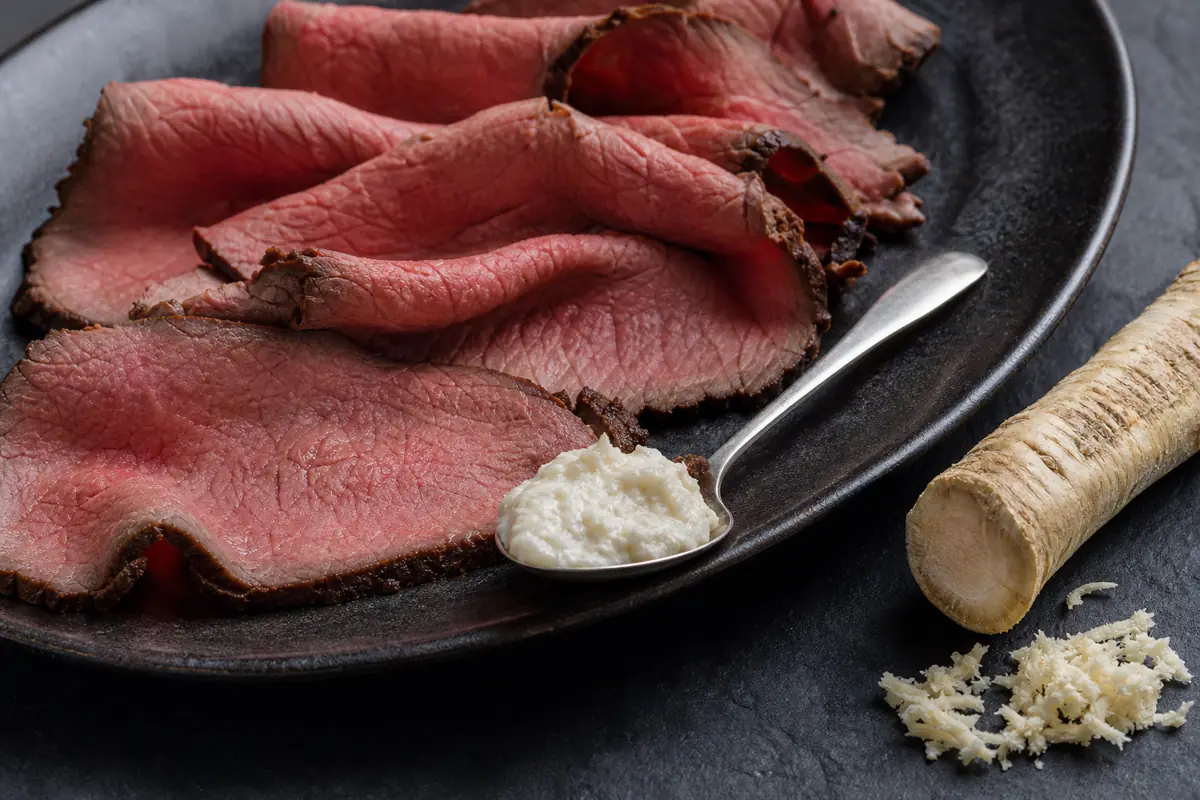
Horseradish becomes pungent only after cutting or grating damages the root. Add vinegar immediately for a milder result or wait about 2 to 3 minutes for stronger heat, then refrigerate the finished mixture because air and warmth quickly weaken it.
What is horseradish, and why is it spicy?
Horseradish is the large white root of Armoracia rusticana, a member of the same plant family as mustard, cabbage, and wasabi.
An intact root has little aroma. The sharp smell begins only after a knife, grater, or processor breaks its cells.
Cell damage brings the compound sinigrin together with an enzyme called myrosinase. Their reaction forms volatile allyl isothiocyanate, often called mustard oil.
That vapor rises through the nose and fades quickly, which is why horseradish feels different from the tongue burn caused by chile capsaicin.
The same family of pungent compounds appears in mustard seed, but root moisture, enzyme activity, acid, and preparation change the exact result.
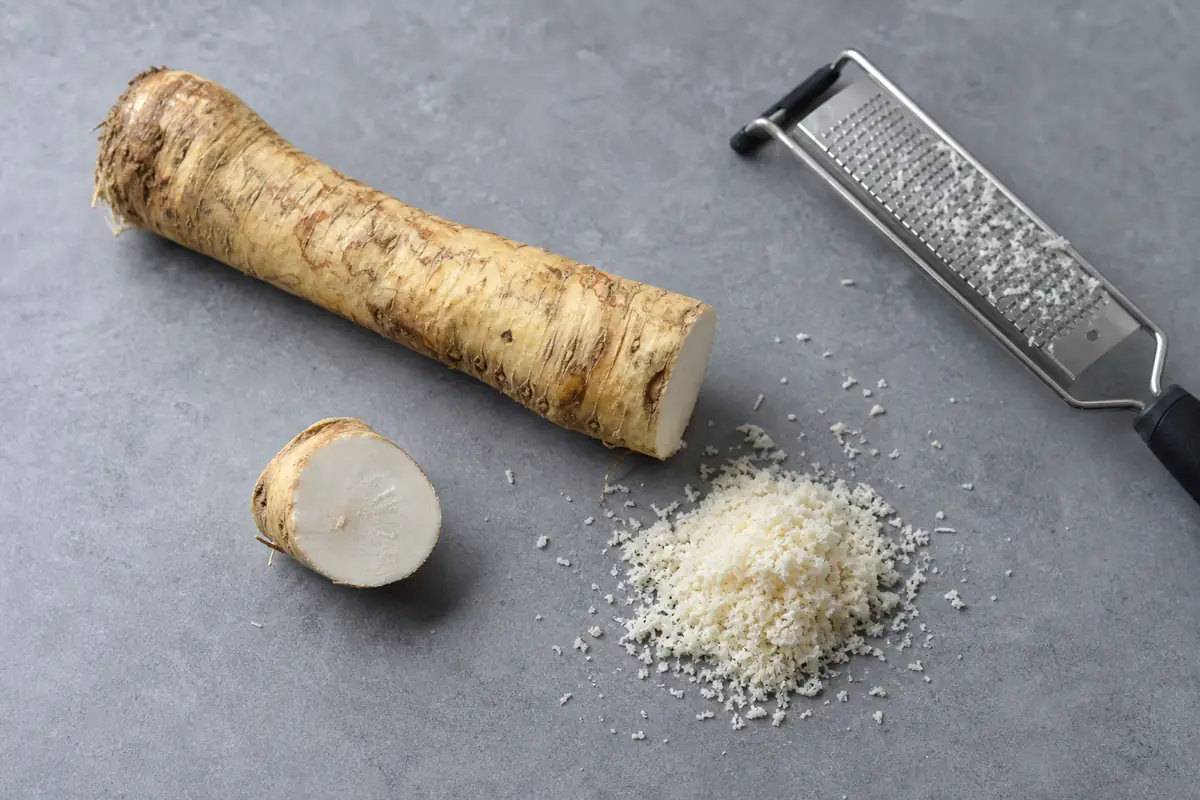
- Whole root protects the compounds inside intact cells.
- Grating increases the exposed surface and speeds the reaction.
- Vinegar and heat later slow or stop the pungency.
| Ingredient | Main heat | Where you feel it | What weakens it |
|---|---|---|---|
| Horseradish | Volatile isothiocyanate | Nose and upper throat | Air, heat, and time |
| Mustard | Related isothiocyanates | Nose and tongue | Heat and acid timing |
| Chile | Capsaicin | Mouth and lips | Dilution and fat, not air |
| Black pepper | Piperine | Tongue and throat | Long storage after grinding |
Cooking drives off much of the volatile heat. Add horseradish late when you want bite, or early when you want a milder earthy background.
How do you prepare fresh horseradish safely?
Prepare fresh horseradish near an open window or strong exhaust fan because the grated root releases irritating vapor.
Keep your face away from the processor bowl when opening it. People with strong respiratory sensitivity should avoid handling a large batch.
Choose a firm, pale root without soft spots, dark mold, or a shriveled surface. Wash off soil before peeling.
Peel only the amount you plan to process, then cut it into small cubes. Cold root stays firmer and keeps its pungency better than warm root.
Pulse the cubes with a food processor or blender. Add only enough cold water to keep the blades moving and create an even coarse paste.
Too much water dilutes the flavor and leaves a loose product that separates in the jar. Add liquid by teaspoons rather than pouring freely.
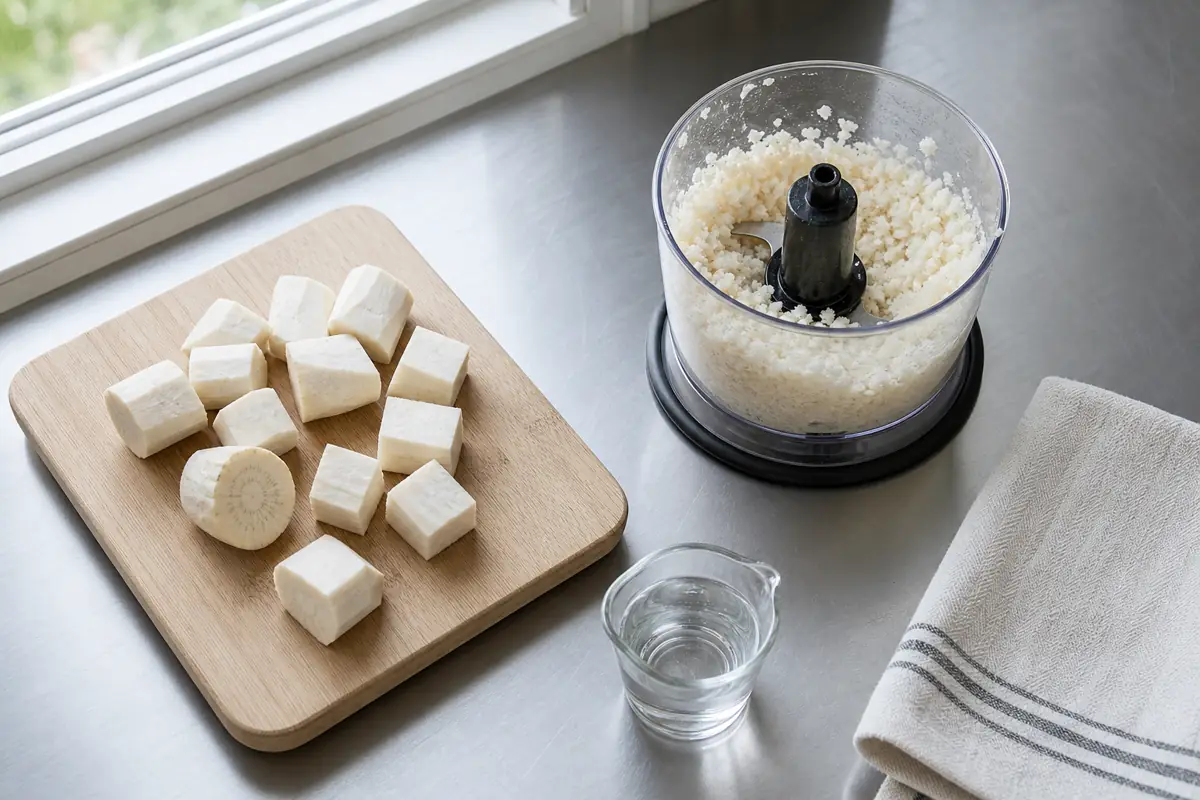
- Trim dark or woody areas before processing.
- Use just enough cold water for blade movement.
- Open the bowl away from your eyes and nose.
- Wash and peel: Remove soil and the tough outer skin, then trim any discolored core.
- Chill and cube: Work with cold root and pieces small enough for the processor to catch evenly.
- Ventilate: Run an exhaust fan or open a window before the root is grated.
- Process briefly: Stop when the texture is fine and even, before friction warms the mixture.
Do not touch your eyes while working. Wash the processor, knife, board, and hands soon after the vinegar has stabilized the batch.
When should you add vinegar to horseradish?
Add vinegar immediately after grinding for milder horseradish, or wait about 2 to 3 minutes before adding it for a stronger batch.
Acid slows the enzyme reaction and fixes the heat near its current level. The waiting period lets more allyl isothiocyanate form first.
Do not wait indefinitely. Extended exposure to air weakens the fresh aroma and can let the grated root discolor and turn bitter.
A practical starting ratio is 2 to 3 teaspoons of white vinegar for each cup of processed root. Add about 1/2 teaspoon salt, then adjust after chilling.
White vinegar keeps the color pale, while cider vinegar can darken the mixture and add fruit flavor. Use 5 percent acidity when following tested preservation guidance.
| Wait after grinding | Likely result | Good use |
|---|---|---|
| No wait | Milder and brighter | Cream sauce, eggs, and dressings |
| About 1 minute | Medium pungency | Fish, potatoes, and sandwiches |
| About 2 to 3 minutes | Stronger nasal heat | Roast beef and bold sauces |
| Too long | Fading aroma, browning, bitterness | Discard if the flavor turns unpleasant |
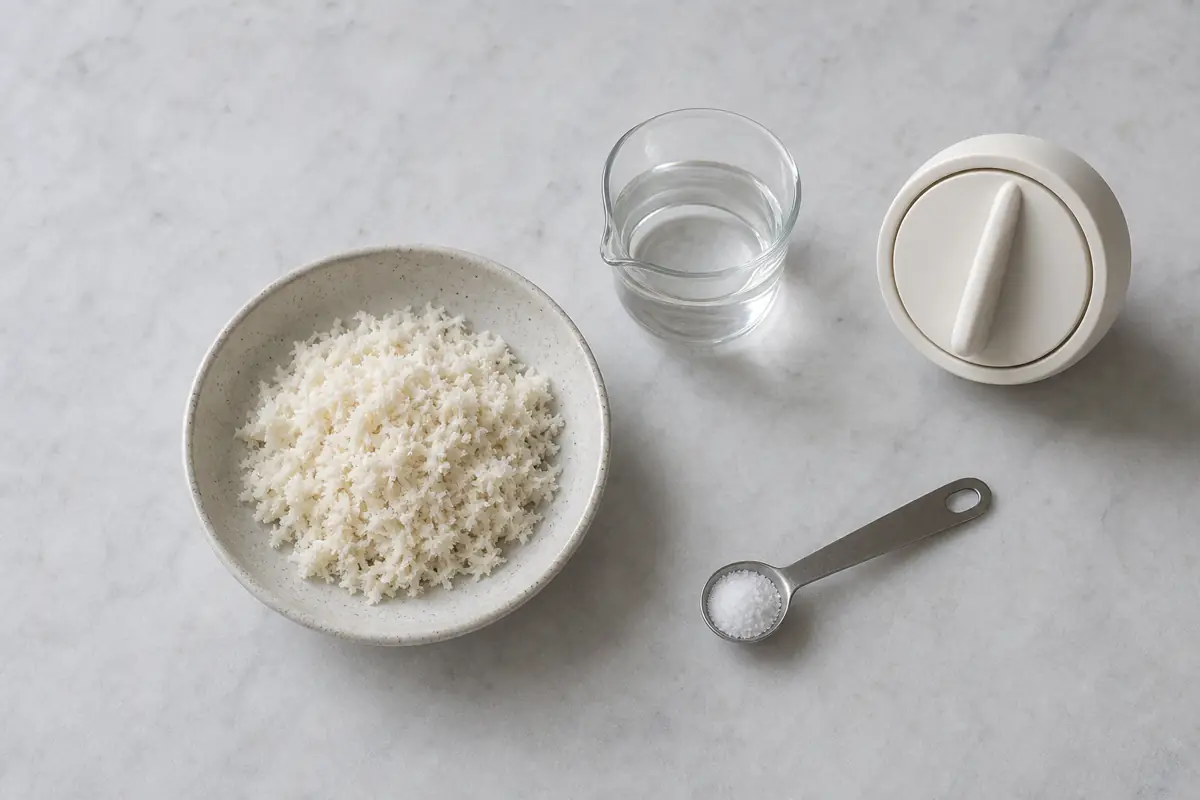
- Decide mild or hot before you start grinding.
- Measure vinegar so every batch can be repeated.
- Refrigerate as soon as acid and salt are mixed through.
Root age, temperature, and fineness change the reaction, so test a teaspoon before processing a large amount. Record the wait that suits your household.
If you overshoot the heat, extra vinegar cannot reverse what already formed. Blend the finished horseradish into a larger sauce or unsalted base.
What is the difference between prepared and creamed horseradish?
Prepared horseradish usually means grated root stabilized with vinegar and salt, while horseradish sauce contains a creamy or fatty base.
A jar of prepared horseradish should be white to cream with visible fine root texture. It is the concentrated product most recipes mean when they give tablespoons.
Creamed horseradish combines the prepared root with sour cream, cream, mayonnaise, or another smooth base. It tastes milder spoon for spoon.
Cocktail sauce blends prepared horseradish with tomato, acid, and often paprika seasoning or hot sauce.
| Product | Typical contents | Relative strength | Best use |
|---|---|---|---|
| Fresh root | Whole raw horseradish | Variable and potentially strongest | Home preparation and grating |
| Prepared horseradish | Grated root, vinegar, salt | Strong | Recipes, sauces, and condiments |
| Creamed horseradish | Prepared root plus dairy or mayonnaise | Mild to medium | Roast beef and sandwiches |
| Cocktail sauce | Prepared root, tomato, acid, seasoning | Medium with sweetness | Shrimp and fried seafood |
Check sugar, salt, oil, and dairy before substituting one jar for another. A sweet creamy sauce cannot replace concentrated prepared root one for one.
When a recipe asks for horseradish without more detail, the surrounding ingredients help. A sauce base usually expects prepared root, not an already diluted cream.
Taste the product before adding salt or acid. Commercial jars range from clean and sharp to sweet, watery, or heavily seasoned.
How do you make horseradish sauce that stays balanced?
Start with 1 tablespoon prepared horseradish for every 1/2 cup of sour cream, crème fraîche, yogurt, or mayonnaise.
Sour cream gives a familiar tangy sauce, while crème fraîche tastes richer and yogurt gives a lighter, sharper finish.
Drain watery prepared horseradish before mixing. Excess liquid thins the sauce and makes the heat seem uneven from spoon to spoon.
Stir the sauce, chill it for 15 to 30 minutes, then taste again. The root spreads through the fat and often seems stronger after resting.
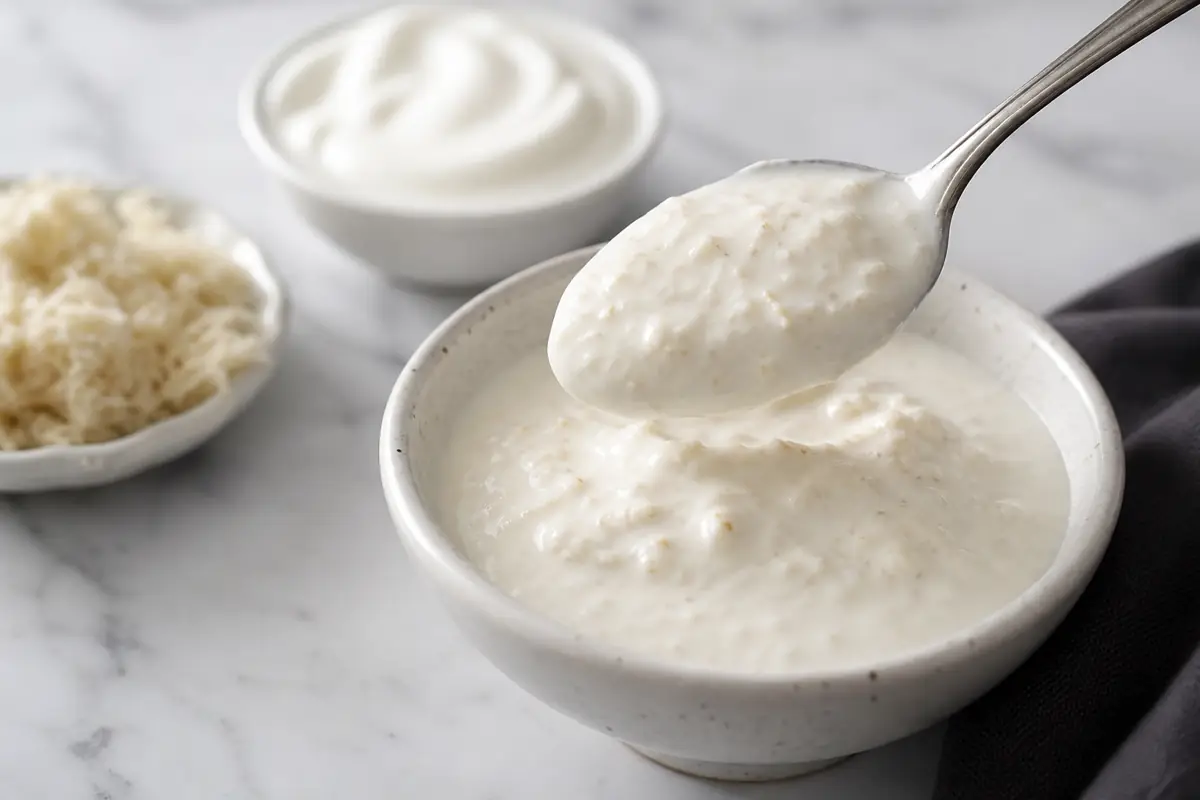
- Drain excess vinegar before mixing.
- Rest the sauce before adding more horseradish.
- Adjust salt and acid only after the heat is clear.
Add salt after resting because prepared horseradish may already contain it. A small squeeze of lemon can brighten a heavy dairy base.
- Too hot: Add more unseasoned dairy or mayonnaise, then recheck salt.
- Too mild: Add prepared horseradish by teaspoons and wait several minutes between tastes.
- Too thin: Drain the root better or thicken with more base rather than extra salt.
- Too heavy: Add lemon juice or mild vinegar in small measured amounts.
The best flavor correction changes one variable at a time. Do not add root, acid, and salt together when you cannot tell what the sauce lacks.
What foods go with horseradish?
Horseradish follows clear food pairing logic. Rich, sweet, earthy, or briny foods benefit from fast aromatic contrast rather than lasting chile burn.
Roast beef is the classic match because cold cream and volatile root cut through fat. Freshly ground black pepper can add slower warmth underneath.
Smoked fish, poached salmon, shrimp, and crab benefit from a smaller amount because horseradish lifts briny sweetness without adding red-chile flavor.
Beets and horseradish make chrain, where the root checks the beet's sweetness and the beet softens its sharpness.
Potatoes, parsnips, and celery root carry horseradish well in mashes, gratins, and soups. Add some near the end so the heat survives.
- Rich meat: Serve a cold cream sauce with beef, pork, or sausages to cut surface fat.
- Fish and shellfish: Use prepared root in cocktail sauce, crème fraîche, or a lemon dressing.
- Earthy vegetables: Fold it into beet relish, potato mash, or roasted root dressing.
- Eggs and sandwiches: Mix a small amount into mayonnaise, deviled egg filling, or mustard spread.
Vinaigrettes can hold a teaspoon of prepared root, especially with apple, cabbage, or roast vegetables. Shake again before serving because root solids settle.
Long boiling makes horseradish milder. For soup or sauce, cook part into the base and stir a fresh spoonful in after the pan leaves high heat.
What can you substitute for horseradish?
The closest horseradish substitute depends on whether the recipe needs nasal heat, grated texture, or a creamy condiment.
Most imitation wasabi paste already contains horseradish and mustard, so it supplies similar heat with green color and extra seasoning.
Hot mustard gives related pungency in a smooth form. It works in sauces and dressings but changes color, acidity, and texture.
Fresh radish adds crisp bite with much less heat. Grate it, salt lightly, and drain it when texture matters more than strength.
| Use | Best substitute | Starting amount | Tradeoff |
|---|---|---|---|
| Cold sauce | Imitation wasabi paste | Start with half as much | Green color and possible sweetness |
| Mustard dressing | Hot prepared mustard | Use about equal volume | Smoother texture and mustard flavor |
| Grated relish | Daikon or red radish | Use more, then drain | Far less nasal heat |
| Cooked sauce | Mustard powder mixed with water | Start with one-quarter as much | Can turn bitter if overcooked |
Authentic fresh wasabi is more delicate and expensive, so do not use it merely to recreate a strong supermarket horseradish bite.
Use the ingredient job to set the amount. A garnish needs less precision than a sauce built around the root.
How do you buy, store, and fix horseradish?
Buy a firm heavy root with pale skin and no mold, soft patches, deep cracks, or badly shriveled ends.
Wrap unwashed root to limit moisture loss and keep it in the refrigerator. Peel only what you need so the remaining surface stays protected.
Prepared horseradish should look white to cream, not gray-brown. Keep it tightly sealed and cold as soon as vinegar and salt are mixed in.
Freeze small prepared portions when you have more fresh root than you can use. Freezing softens texture but preserves more pungency than warm storage.
| Problem | Likely cause | Best move |
|---|---|---|
| Fresh mix is too hot | Longer wait before vinegar | Dilute into dairy, mayonnaise, beet, or more root base |
| Fresh mix is weak | Old root, warm processing, or immediate acid | Use a fresher root and choose a longer wait next batch |
| Sauce is watery | Too much processing water or undrained jar | Drain solids and add more creamy base |
| Jar is brown and bitter | Oxidation and age | Discard and replace |
| Cooked dish lost heat | Volatile compound boiled away | Add a small fresh spoonful off heat |
Use the smell test before every jar. Fresh prepared horseradish should release a clean sharp vapor, not a dull fermented or rotten odor.
General ingredient storage matters more here because oxygen and warmth attack the exact volatile compound you want.
Do not rescue a brown bitter jar with sugar or more vinegar. Those additions can mask the edge but cannot restore fresh pungency.