
Is Your Wasabi Real, and Does the Difference Matter?
Read the ingredients, choose fresh aroma or lasting heat, and grate only what you can serve now.
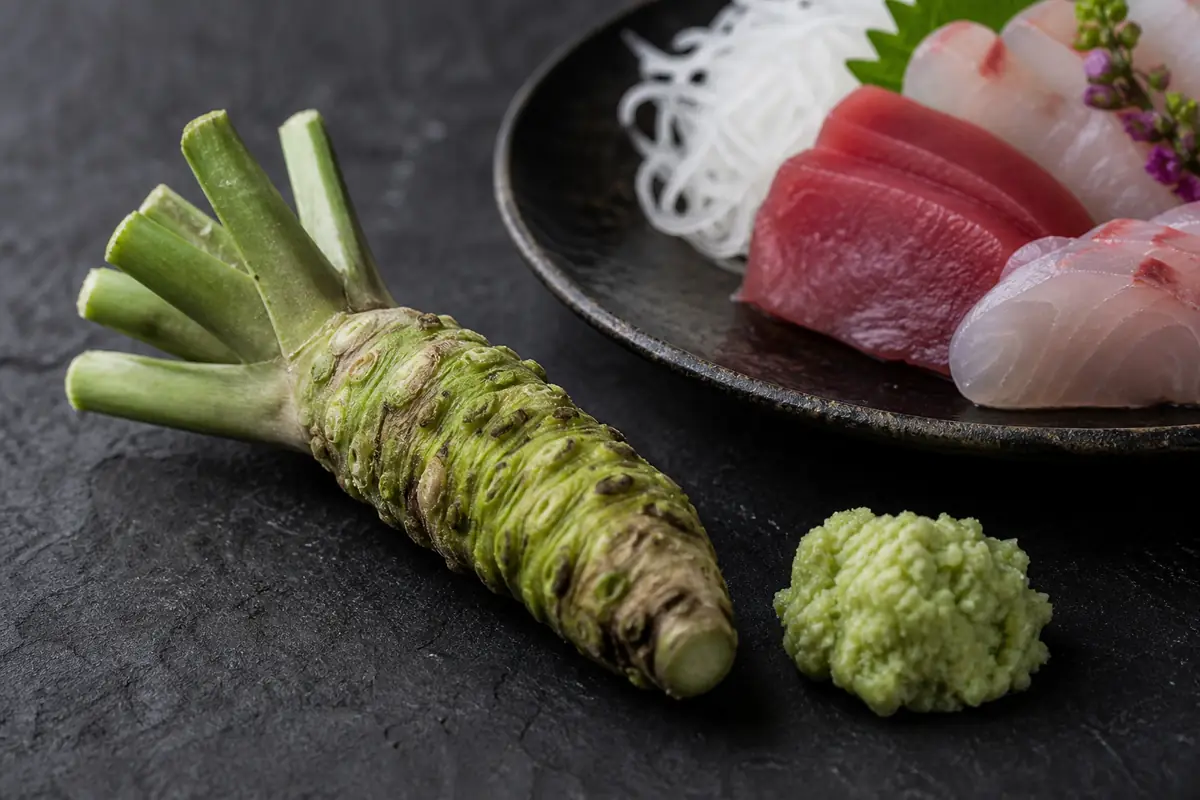
Real wasabi is a pale green paste grated from the rhizome of Eutrema japonicum. Many tubes, powders, and restaurant portions use horseradish, mustard, and green color instead, giving harder heat that lasts longer than fresh wasabi's sweet, herbal aroma.
What is wasabi made of?
Real wasabi is made by finely grating the knobby rhizome of Eutrema japonicum, a cool-growing plant in the cabbage and mustard family.
The rhizome is an underground stem, not a true root. Its pale green flesh becomes a fine moist paste when rubbed against a very fine grating surface.
Many green pastes sold as wasabi use prepared horseradish, mustard, starch, oil, salt, and coloring as the main ingredients.
Some products contain real wasabi with horseradish, while others contain none. The ingredient order and any stated percentage tell you more than the front label.
The substitution is practical because horseradish and wasabi belong to the same plant family and create similar volatile nasal heat.
Mustard powder can strengthen that effect. The pungency is closer to freshly activated mustard than to the lasting mouth burn of chile.
| Form | Likely base | Flavor behavior | Best reason to choose it |
|---|---|---|---|
| Fresh grated wasabi | Eutrema japonicum rhizome | Sweet-herbal aroma and brief heat | Delicate food served immediately |
| Wasabi tube | Real wasabi, horseradish, or a blend | Convenient and more stable | Everyday sauces and sushi at home |
| Wasabi powder | Often horseradish and mustard | Dry until mixed, then strongly pungent | Shelf stability and adjustable paste |
| Restaurant green paste | Often horseradish, mustard, and color | Direct, strong, and familiar | Low-cost consistent heat |
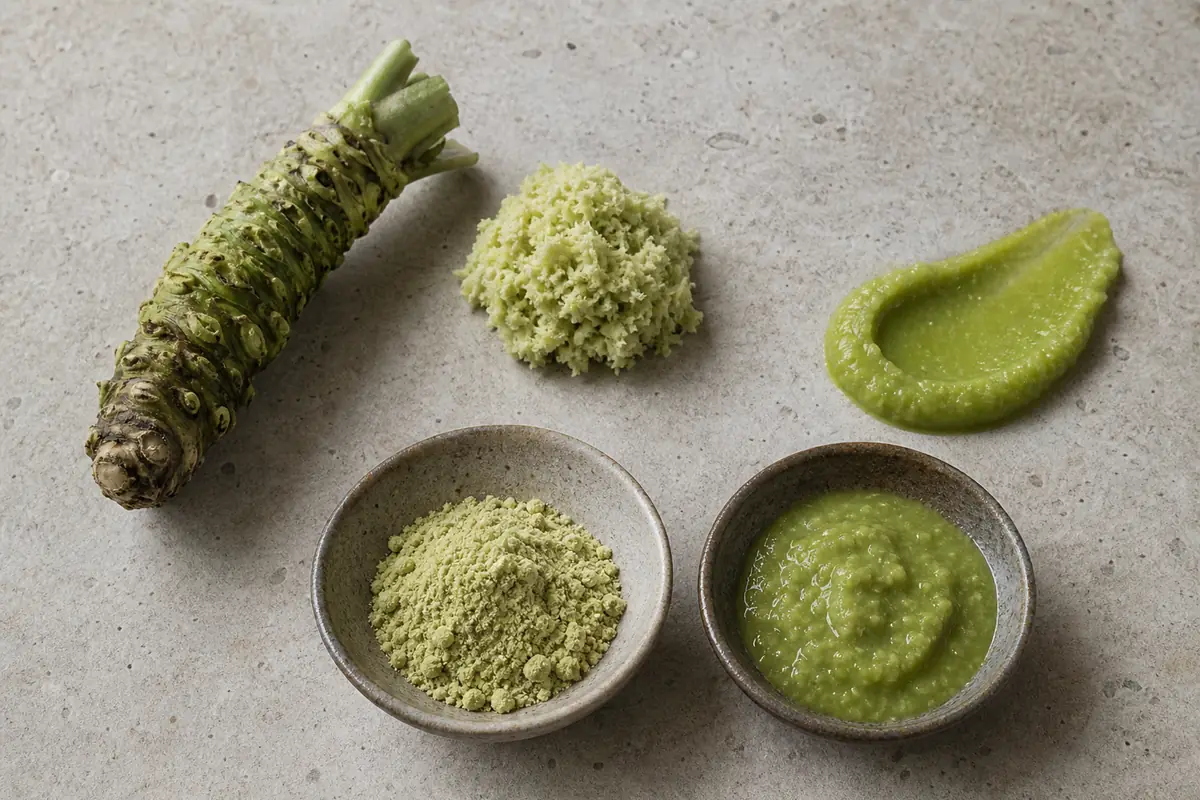
- Fresh grated paste is pale and finely fibrous.
- Tube paste may blend real wasabi with horseradish.
- Powder creates heat only after water is added.
Imitation paste can still be a useful condiment when its label is clear. The important choice is delicate fresh aroma versus stronger, cheaper, more stable heat.
What does real wasabi taste like?
Real wasabi tastes fresh, green, lightly sweet, and herbal before a clean vapor heat rises through the nose.
The heat appears quickly but fades sooner than most horseradish-based paste. A mild sweetness and vegetable aroma remain after the sharpest moment.
Fresh paste should feel fine and moist, not gummy or neon. Small plant fibers are normal because the rhizome is grated rather than blended with starch.
Imitation wasabi usually hits harder and lasts longer. Mustard and horseradish can taste bitter when the portion is large or the paste has dried at the surface.
Both create volatile pungency, so neither behaves like capsaicin heat. Drinking water is less useful than simply waiting for the vapor to pass.
Their shared nasal effect places both among hot and pungent spices. Fresh wasabi brings more herbal sweetness, while imitation paste delivers a harder and longer finish.
| Quality | Fresh wasabi | Common imitation paste |
|---|---|---|
| Aroma | Green, sweet, herbal | Mustardy and root-sharp |
| Color | Muted pale green | Often brighter green |
| Texture | Fine, moist, lightly fibrous | Smooth, dense, or gummy |
| Heat | Rounded rise and short finish | Harder hit and longer finish |
| Best food | Delicate fish and simple noodles | Rich rolls, sauces, snacks, and mixing |
Taste a rice-grain amount by itself before combining it with soy sauce or food. A large mound hides the aroma behind heat.
Color alone proves nothing. Spinach, coloring, or other ingredients can make a horseradish paste greener than fresh rhizome.
How can you tell if wasabi is real?
Read the ingredient list first and look for wasabi, Japanese wasabi, or Eutrema japonicum near the beginning.
Horseradish may appear as horseradish, Western horseradish, or a regional equivalent. Mustard, starch, oil, and color signal a formulated paste.
A product can contain both plants, so avoid an all-or-nothing judgment. Use a stated percentage when the package provides one.
Fresh rhizome costs far more than a typical tube and usually comes through a specialty seller. A very cheap bright green mound is unlikely to be freshly grated rhizome.
At a restaurant, ask whether the paste is grated fresh or prepared from a tube or powder. A direct answer is more useful than a claim of authenticity.
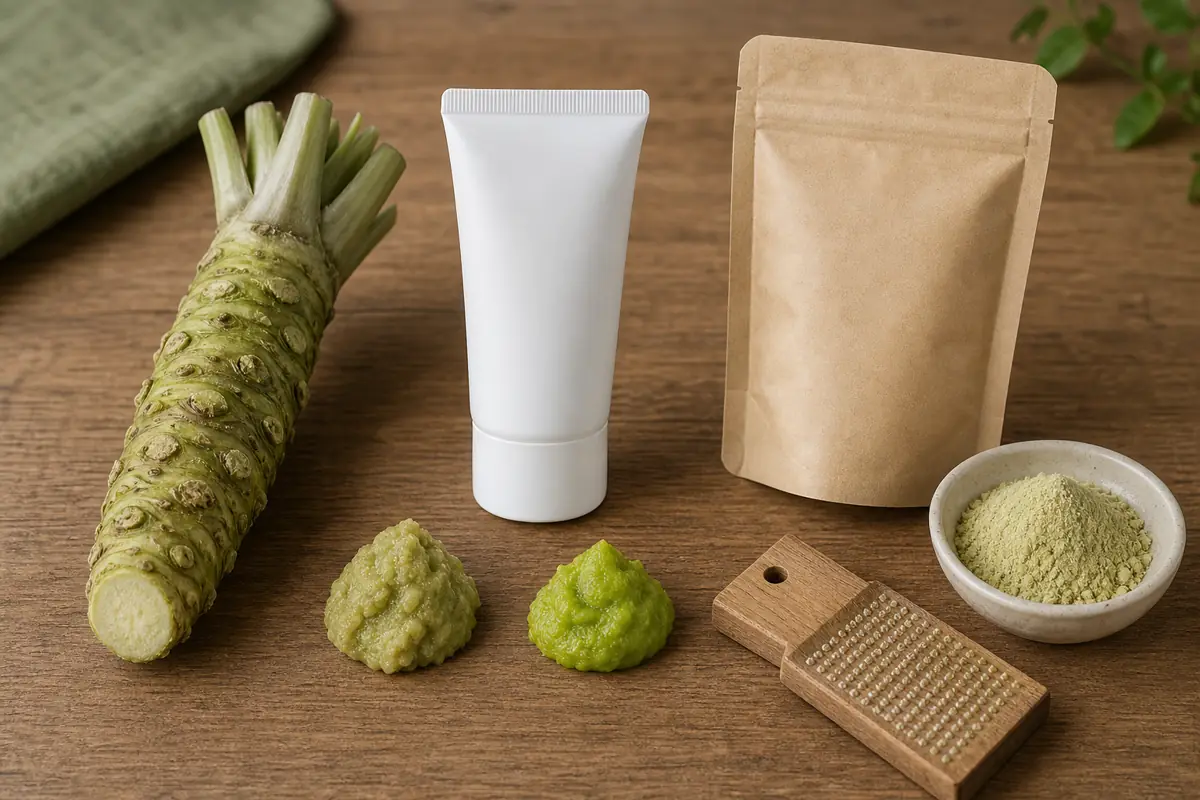
- Look for wasabi or Eutrema japonicum.
- See whether horseradish appears first.
- Check any stated real-wasabi percentage.
- Match price and form to a perishable crop.
- Ask whether the portion was grated to order.
- Plant: Real wasabi should appear by common or botanical name in the ingredients.
- Order: The first ingredient usually makes up more of the product than later ingredients.
- Percentage: Use a declared percentage when available instead of guessing from color.
- Texture: Fresh paste is fine and lightly fibrous, while starch-based paste can look dense and glossy.
Japanese packaging may distinguish hon-wasabi from Western horseradish, but terminology and thresholds vary by market. Keep reading the full ingredients.
A blended tube can be the sensible purchase when you want stable heat for dressings. Fresh rhizome is worth paying for only when its brief aroma can stay central.
Why is real wasabi expensive?
Real wasabi is expensive because the plant grows slowly, needs cool controlled conditions, and produces a perishable rhizome with limited supply.
Traditional water-grown systems require clean flowing water and careful temperature management. Soil cultivation also demands shade, moisture, and disease control.
The crop can take well over a year to reach useful size. Losses during that period make each marketable rhizome more costly.
After harvest, the rhizome must stay cold and moist without rotting. Air freight and short storage add costs that dried horseradish powder avoids.
The price explains why stable imitation became normal. It does not mean every dish needs the expensive form to taste good.
How do you grate fresh wasabi?
Wash fresh wasabi, trim the leaf end and dark spots, then grate only the cut surface you plan to serve.
Peel minimally because usable flesh sits close to the surface. A clean vegetable brush often removes enough outer roughness.
A traditional sharkskin grater creates a very fine paste, while a fine metal or ceramic grater works for home cooking.
Rub the cut end in small circles with gentle pressure. The goal is a creamy paste, not long shreds like fresh ginger.
The grating surface ruptures many cells at once, allowing pungent compounds and green aroma to form and mingle.
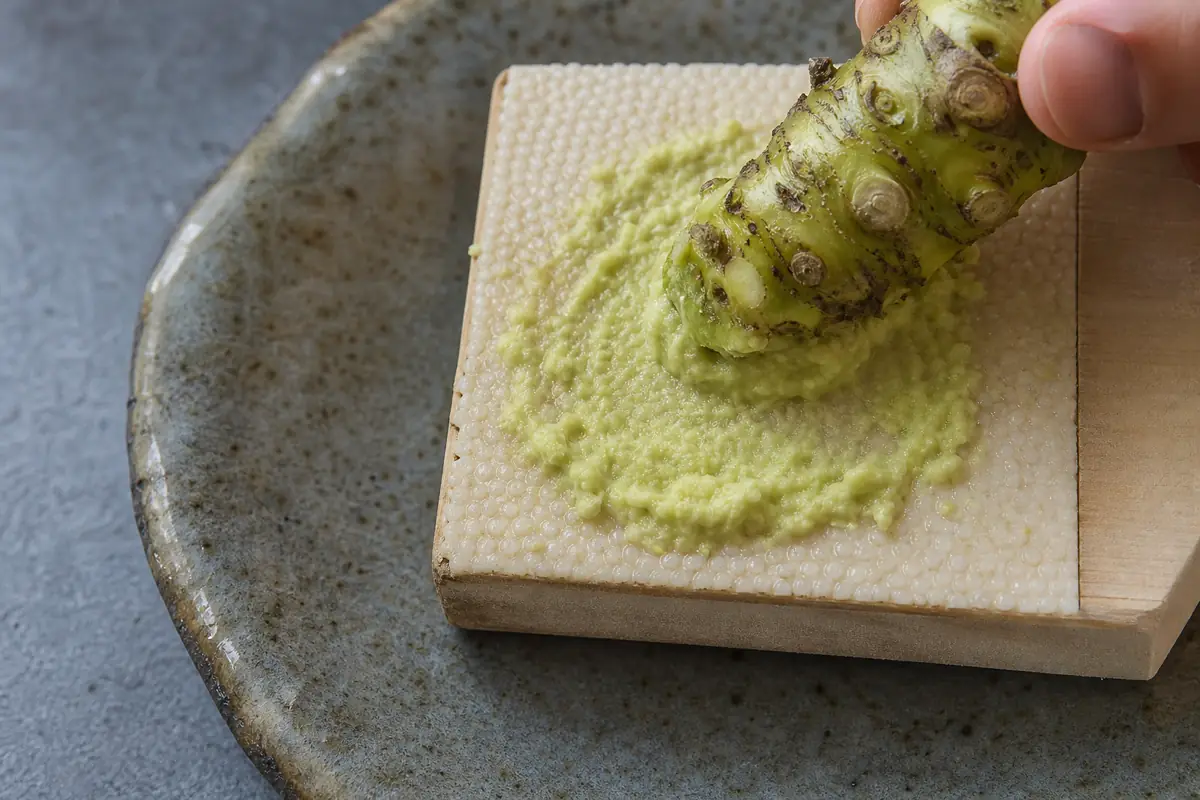
- Keep the cut face flat against the grater.
- Use small circles and light steady pressure.
- Gather the paste into a small mound after grating.
Let the small mound rest for about a minute so the aroma develops, then serve it promptly. Do not prepare a large plate in advance.
- Wash: Clean soil from crevices and dry the rhizome before grating.
- Trim: Remove only damaged or dark tissue so usable flesh is not wasted.
- Grate: Use a very fine surface and circular movement to form a paste.
- Portion: Make a small amount, rest it briefly, and bring it straight to the table.
Rinse and dry the grater after service. Old paste trapped in its texture loses aroma and can discolor the next batch.
Why does wasabi burn your nose and then vanish?
Wasabi heat travels upward rather than downward, and it leaves almost as fast as it arrives.
The burn comes from allyl isothiocyanate, a volatile compound released when grating ruptures the cells. Because it evaporates, the vapour reaches your nasal passages instead of settling on the tongue.
Capsaicin behaves in the opposite way. It dissolves in oil, binds to receptors in the mouth, and stays there long after you swallow.
That difference has a practical use.
A wasabi overdose corrects itself within a minute or two, so wait it out instead of drinking anything or reaching for more rice.
It also explains why grating to order matters so much. The compound that makes wasabi sharp begins leaving the plate from the moment you grate it.
How long does fresh wasabi stay flavorful?
Fresh wasabi begins losing its finest aroma within minutes, with a noticeable decline often reported around 10 to 15 minutes after grating.
The paste does not become unsafe on that schedule. It becomes flatter, less sweet, and less clearly different from other pungent condiments.
A thin smear fades faster than a compact mound because more surface touches air. Keep the portion gathered until it is served.
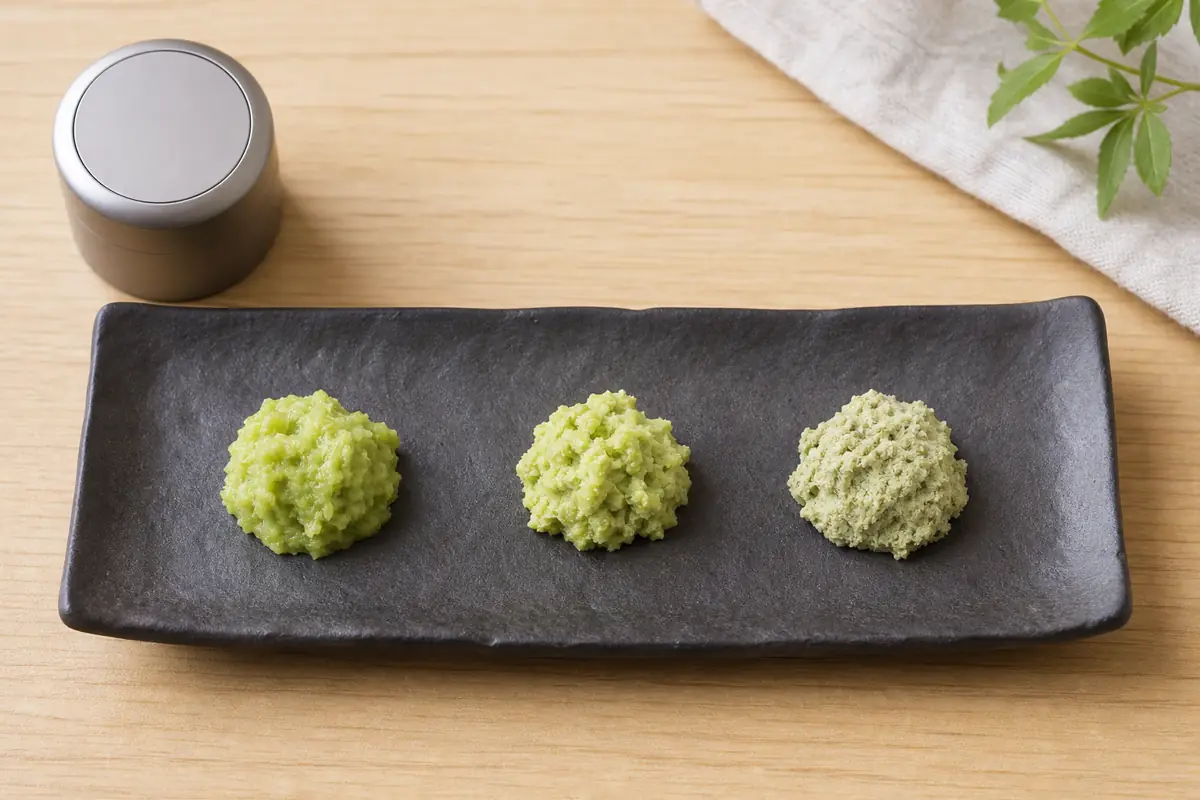
- The first minutes hold the clearest green aroma.
- A brief rest lets the pungency develop.
- After the aroma fades, grate a new portion rather than adding more old paste.
Covering can slow surface drying but cannot stop the chemistry.
Refrigerating an already grated mound does not restore its original lift.
Keep the ungrated rhizome cold and grate another small amount when diners are ready. This protects both quality and an expensive ingredient.
Do not mix faded fresh paste with a large new portion and expect the old aroma to return. Serve the new paste separately and discard dried residue.
How do you use wasabi besides sushi?
Use fresh wasabi where its brief green aroma can meet simple food.
Choose stable tube or powder paste when the condiment will be mixed or held.
With sushi or sashimi, use a small portion so the fish remains clear. Placement varies by dish and cook, so avoid rigid rules about mixing with soy.
Soba dipping sauce can carry fresh wasabi when the paste is added at the table.
Its aroma works well with cool noodles and dashi.
Grilled fish, roast beef, and steak can take a small fresh mound after cooking. High pan heat would drive off the exact aroma you bought.
Tube paste works in mayonnaise, potato salad, deviled eggs, dressings, and compound butter because those uses need stable distribution more than fragile top notes.
- Fresh rhizome: Pair with sashimi, simple sushi, soba, grilled fish, or seared beef and serve at once.
- Tube paste: Mix into mayonnaise, dressings, sandwiches, potatoes, and creamy sauces.
- Powder paste: Mix in small batches for coatings, snacks, and recipes that need adjustable strength.
- High-heat food: Add wasabi after cooking or stir it into a warm sauce off the burner.
When a mixed sauce tastes harsh, use measured flavor corrections. More mayonnaise or dairy reduces concentration, while extra sugar can make the sauce cloying.
Choose the form by the dish rather than by prestige. Fresh rhizome disappears in a strongly seasoned roll, while prepared paste can give that food the clear heat it needs.
What can substitute for wasabi, and how should it be stored?
For wasabi's nasal heat, mix prepared horseradish with a smaller amount of hot mustard, then add green color only if appearance matters.
Start with about 2 parts horseradish to 1 part hot mustard and use half the recipe's wasabi amount. Adjust after the heat develops.
Prepared horseradish alone works when the dish already contains mustard or when pale color is acceptable. Hot mustard alone is smoother and more mustard-forward.
| Form | Best substitute or use | Storage move | Replacement cue |
|---|---|---|---|
| Fresh rhizome | No exact substitute for aroma | Wrap with a lightly damp towel and refrigerate | Soft, slimy, or rotten-smelling tissue |
| Fresh grated paste | Grate a new portion | Serve now rather than storing | Flat aroma or dry surface |
| Tube paste | Horseradish-mustard blend | Refrigerate and follow package date | Separation, off odor, or weak heat |
| Wasabi powder | Mustard powder plus horseradish powder | Keep airtight and dry | Clumps, stale smell, or weak activation |
Keep fresh rhizome cold with light moisture, not sealed in standing water. Refresh the damp wrapping and inspect the surface regularly.
Tube and powder formulas vary, so follow the maker's storage instructions. General spice storage cannot override a refrigerated product label.
Store powder like other ground spice products, away from humidity and steam. Mix only the portion you need.
If a substitute seems too harsh, dilute the sauce base rather than adding random sweetener. A substitute-by-job decision protects texture and color as well as heat.
Replace a weak tube or powder instead of doubling it repeatedly. More stale paste adds salt, starch, and color before it restores clean pungency.