
Wasabi Substitutes That Work for Sushi and Sauces
Match wasabi's sharp heat to the form and moisture your dish can carry.
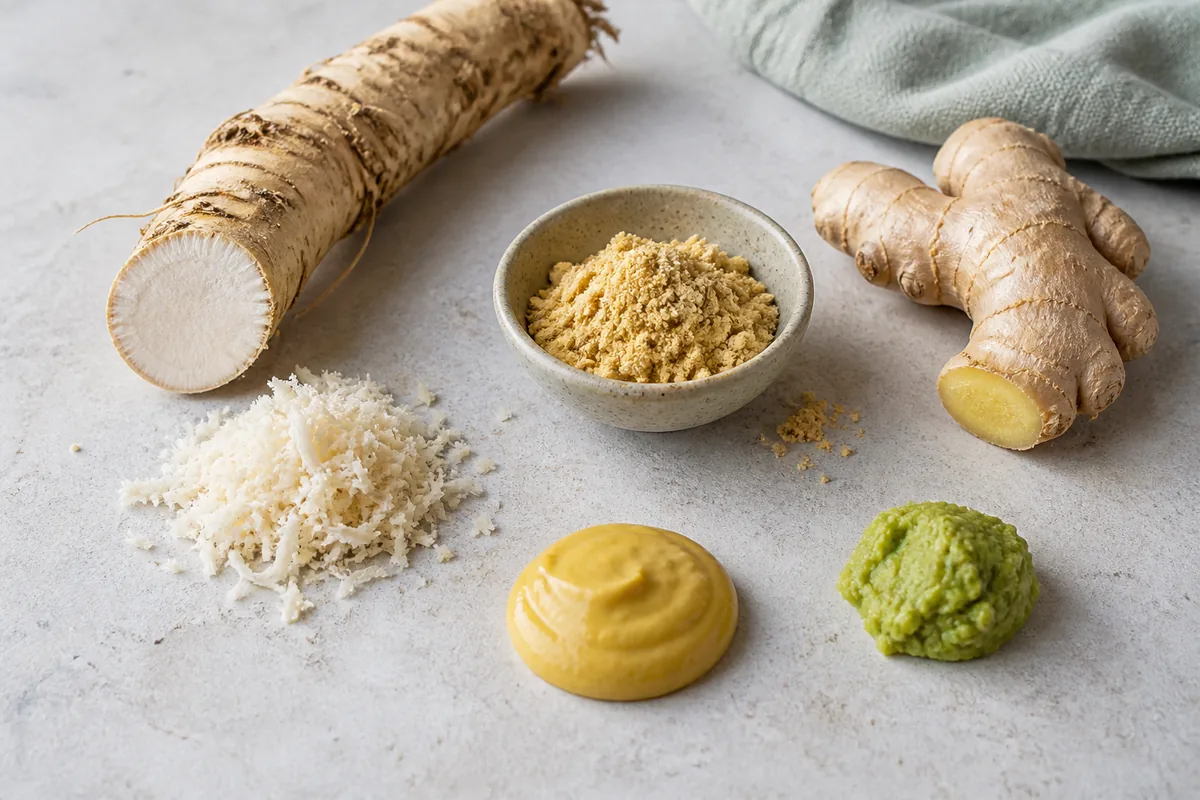
Prepared horseradish is the most practical wasabi substitute. Start with 3/4 teaspoon for each teaspoon of wasabi paste, then choose a cleaner fresh root or a controlled mustard paste when vinegar and moisture would show.
5 Wasabi Substitutes by Heat and Form
Prepared horseradish is the closest widely available replacement for wasabi paste.
A chilled jar can seem gentler than the same condiment after it warms on the plate, so make the final heat judgment at the temperature diners will experience. Its sharp heat reaches the nose in a similar way, although jarred products often add vinegar, salt, and enough liquid to change a delicate dish.
Fresh grated horseradish gives a cleaner result when texture matters. Mustard powder can build a firm paste, while ginger belongs only in dressings and cooked sauces where warm aromatic heat is more useful than a close copy.
| Number | Substitute | Starting ratio | Best use |
|---|---|---|---|
| 1 | Prepared horseradish | 3/4 to 1 tsp per 1 tsp wasabi paste | Dips, mayonnaise, cooked sauces |
| 2 | Fresh grated horseradish | 1:1 by volume | Sushi-style paste, raw sauces |
| 3 | Horseradish and mustard powder | 3/4 tsp plus 1/4 tsp per 1 tsp wasabi | Firm spreads and dips |
| 4 | Mustard powder paste | Mix 1:1 with cold water, then use about 1:1 | Dressings and mayonnaise |
| 5 | Fresh ginger | 1/2 tsp per 1 tsp wasabi | Glazes, dressings, cooked sauces |
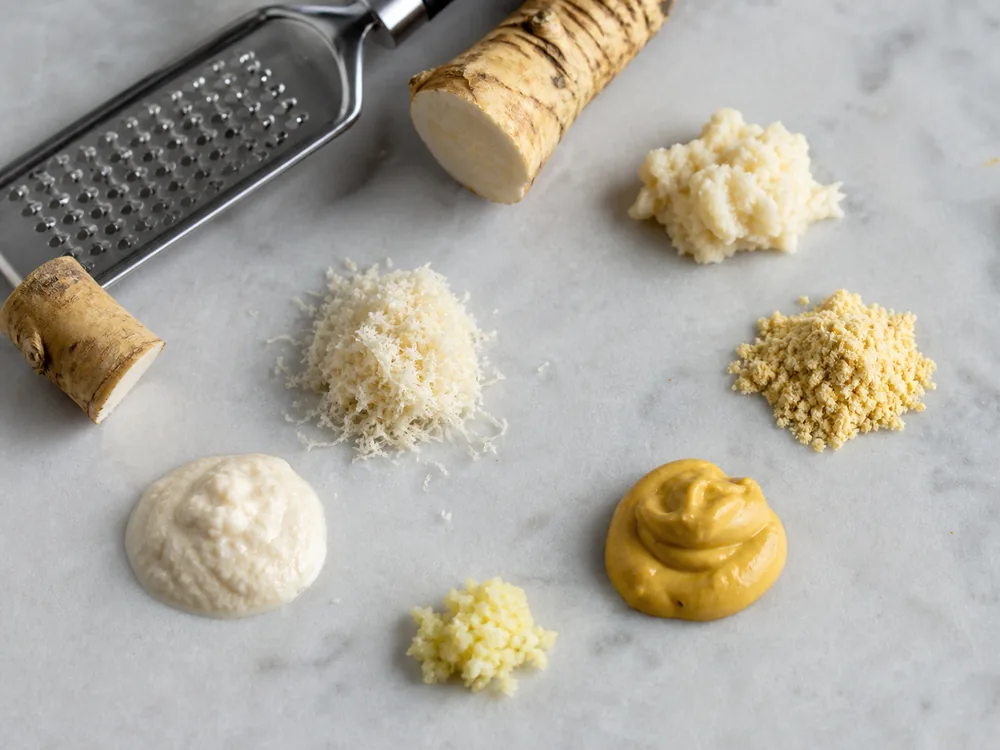
- Prepared root: Closest convenient nasal heat.
- Fresh root: Cleaner flavor and firmer texture.
- Mustard paste: Controllable thickness after hydration.
- Ginger: A directional choice for sauces, not sushi.
1. Prepared Horseradish
Use 3/4 teaspoon prepared horseradish for each teaspoon of wasabi paste, then increase to a full teaspoon if the product is mild.
- Starting ratio
- 3/4 to 1 teaspoon per 1 teaspoon wasabi paste
- Best for
- dips, mayonnaise, and cooked sauces
- Main tradeoff
- extra vinegar and moisture
- Adjust
- avoid a watery product beside sushi
For a larger batch, preserve the same three-to-four relationship and reserve the final quarter until the full sauce is mixed rather than scaling a last-minute guess. Drain obvious surface liquid before measuring when the recipe needs a firm dab rather than a loose sauce.
In a warm pan sauce, remove the pan from direct heat before the final portion goes in so the substitute keeps a sharper finish instead of disappearing into the background. It also works in a soy dipping mixture, although you may need less vinegar or citrus elsewhere in the recipe.
Read the ingredient label before seasoning because some jars contain salt, sugar, oil, or cream. A product with a long seasoned ingredient list should be treated as a condiment rather than plain grated root.
Do not judge the heat from the first smell alone. Stir the measured amount into the full base, wait a minute, and taste before adding the reserved quarter teaspoon.
A drained teaspoon and an undrained teaspoon are not equivalent in a firm paste served beside sushi.
2. Fresh Grated Horseradish
Use fresh grated horseradish at a 1:1 ratio by volume. Grate it finely just before serving so the pieces can form a compact paste and the sharp aroma has not faded during storage.
- Starting ratio
- 1:1 by volume
- Best for
- sushi-style paste and raw sauces
- Main tradeoff
- sharper and more lingering
- Adjust
- reduce if the root is freshly grated and forceful
Peel only the section you intend to grate because the exposed cut surface dries faster and produces a coarser, less fragrant paste. This makes it the best practical choice beside sushi or sashimi when genuine fresh wasabi is unavailable.
Grate one teaspoon, compare its aroma with the prepared paste you normally use, and scale from that small test rather than assuming every root has equal strength. Begin with a smaller dab on the plate and let each person add more rather than mixing a large amount into seasoned rice.
Fresh root avoids the vinegar and extra water found in many prepared products.
3. Horseradish and Mustard Powder
Combine 3/4 teaspoon prepared horseradish with 1/4 teaspoon mustard powder for each teaspoon of wasabi paste. Mix the powder into the wet condiment completely, then rest the blend for several minutes before judging its strength.
- Starting ratio
- 3/4 teaspoon prepared horseradish plus 1/4 teaspoon mustard powder per 1 teaspoon wasabi paste
- Best for
- firm dips and sandwich spreads
- Main tradeoff
- more mustard bitterness
- Adjust
- do not add dry powder directly to a finished thin sauce
When a spread already contains mustard, use plain horseradish first because the compound substitute can double the seed bitterness already present. Mustard powder firms the mixture and adds a fast sharp edge that helps a mild jarred product feel more direct.
When the recipe already contains prepared mustard, omit the extra powder and use plain horseradish because doubling the same seed flavor can obscure the root pungency. It can become bitter if dry mustard is increased repeatedly, so correct a weak mixture with a little more horseradish before adding more powder.
Do not scatter dry mustard into a finished thin sauce. Small lumps hydrate unevenly and create isolated bitter spots.
The horseradish supplies root pungency and moisture while hydrated mustard supplies the faster sharp edge.
4. Mustard Powder Paste
Mix equal volumes mustard powder and cold water, rest the paste briefly, then use about 1 teaspoon prepared paste for each teaspoon of wasabi. Make only the amount you need because its sharpness changes after mixing.
- Starting ratio
- mix equal volumes powder and cold water, then use about 1:1
- Best for
- dressings and mayonnaise
- Main tradeoff
- mustardy rather than root-like
- Adjust
- rest before judging heat
A neutral oil-and-egg mayonnaise gives the paste more room than a strongly seasoned bottled dressing, which may already contain mustard and acid. It gives a firm texture without the vinegar of prepared horseradish, although its bitterness and seed character remain distinct.
Whisk the paste into a small portion of the sauce first. Once smooth, return that concentrated portion to the full batch so no dry pockets remain.
A sauce served cold should be seasoned after chilling, while a sauce served warm should receive its final adjustment after the cooking heat has fallen. Add the paste late for a stronger finish, or early when the dish needs background warmth rather than an obvious wasabi-like hit.
Long heating softens the sharpest effect of hydrated mustard.
5. Fresh Ginger
Use 1/2 teaspoon finely grated fresh ginger for each teaspoon of wasabi. Add it to a dressing, glaze, noodle sauce, or cooked seafood sauce where citrus-like warmth can replace the practical role of pungency.
- Starting ratio
- 1/2 teaspoon grated ginger per 1 teaspoon wasabi
- Best for
- dressings, glazes, and cooked sauces
- Main tradeoff
- warm citrus heat without nasal punch
- Adjust
- not suitable when the dish is defined by wasabi
Pair ginger with an existing citrus ingredient only when the recipe already calls for it, since added zest can turn a practical backup into a new dominant flavor. Its juicy fibers, lemony aroma, and lasting warmth redirect the dish, which can still be useful when mustard and horseradish would clash with the other ingredients.
Press or mince the ginger very fine when the sauce must stay smooth. For a thin dressing, squeeze the grated pulp and use the juice so strands do not collect at the bottom.
Ginger produces warm aromatic heat rather than the quick nasal sharpness expected from wasabi.
Sushi and Sashimi Expose Vinegar and Texture
Plain rice and raw fish leave little room for a seasoned substitute to hide.
Seasoned sushi rice also carries sugar and vinegar, which can make another acidic condiment taste sharper even when its root heat is moderate. Vinegary prepared horseradish can taste pickled, and a watery paste can run into soy sauce before the diner controls the amount.
Fresh grated horseradish is the cleanest available option for this setting. Form it into a small firm mound and serve less than you think each person will need because the root may be stronger than the wasabi paste the recipe assumes.
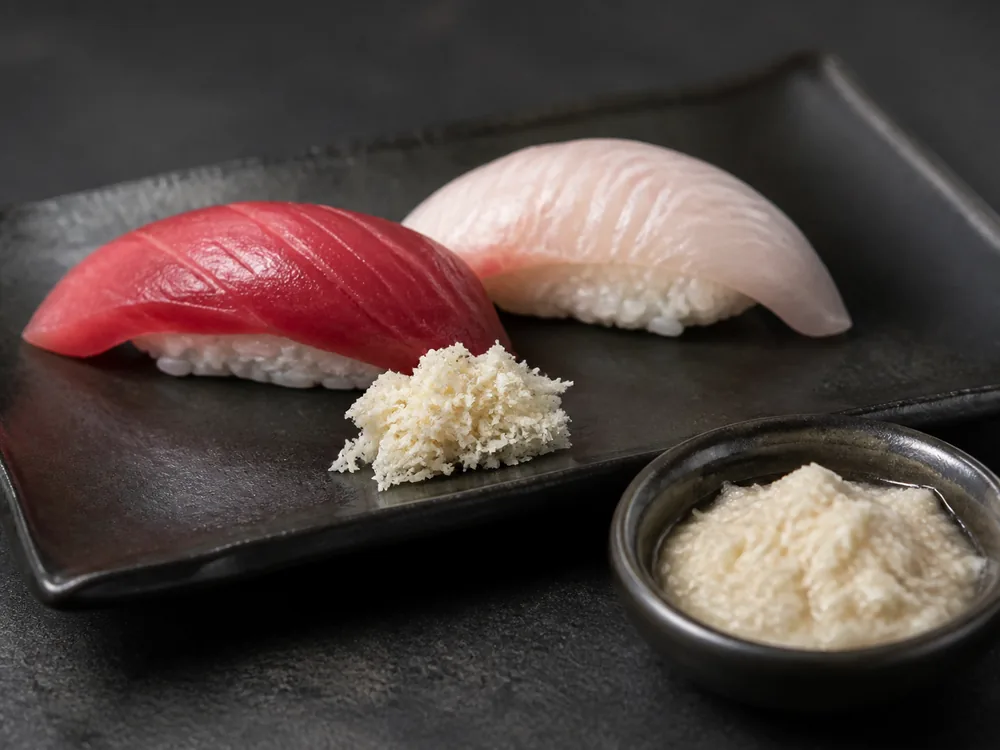
- Firm texture: Use finely grated fresh root.
- Vinegar check: Taste prepared horseradish before adding soy sauce.
- Small portion: Let diners increase the amount themselves.
- Color: Do not add dye merely to imitate commercial paste.
Mustard paste can work in a mixed dipping sauce when fresh root is unavailable. Keep it separate from the fish at first because its seed bitterness is more obvious in direct contact with a mild slice.
Dressings and Mayonnaise Can Carry More Moisture
An emulsion can absorb a wetter substitute more easily than sushi rice can.
Measure the wet condiment before thinning the emulsion because a spoonful of extra water is easier to add than to remove. Prepared horseradish spreads through mayonnaise, yogurt, or oil and vinegar, while the fat softens the first burst of pungency.
Hold back 1 teaspoon of the recipe liquid for every tablespoon of wet substitute you add.
For a small two-serving batch, use a quarter-teaspoon measure for the final adjustment because a full teaspoon changes both heat and consistency too quickly. Return only enough liquid to reach the intended pour or spoon consistency after the flavor is balanced.
Prepared horseradish blends smoothly and its vinegar often fits.
Mustard paste helps emulsify but may require less added acid.
Ginger tolerates cooking and provides warm aromatic heat.
Horseradish plus a small amount of mustard keeps the body firm.
Taste the unseasoned base, the substitute by itself, and the mixed sauce in that order. This reveals whether extra salt or acid came from the jar rather than from your original recipe.
If the sauce becomes thin, add more of its original thick base. Extra powder can restore thickness, but it also changes flavor and may make the sauce bitter.
Cold Water Controls Mustard Heat
Mustard powder needs complete hydration before its texture and pungency can be judged.
A narrow bowl keeps a teaspoon batch deep enough to mix cleanly, while a broad plate encourages water to spread away from dry powder. Begin with equal measured volumes of powder and cold water, then stir until no pale dry streaks remain.
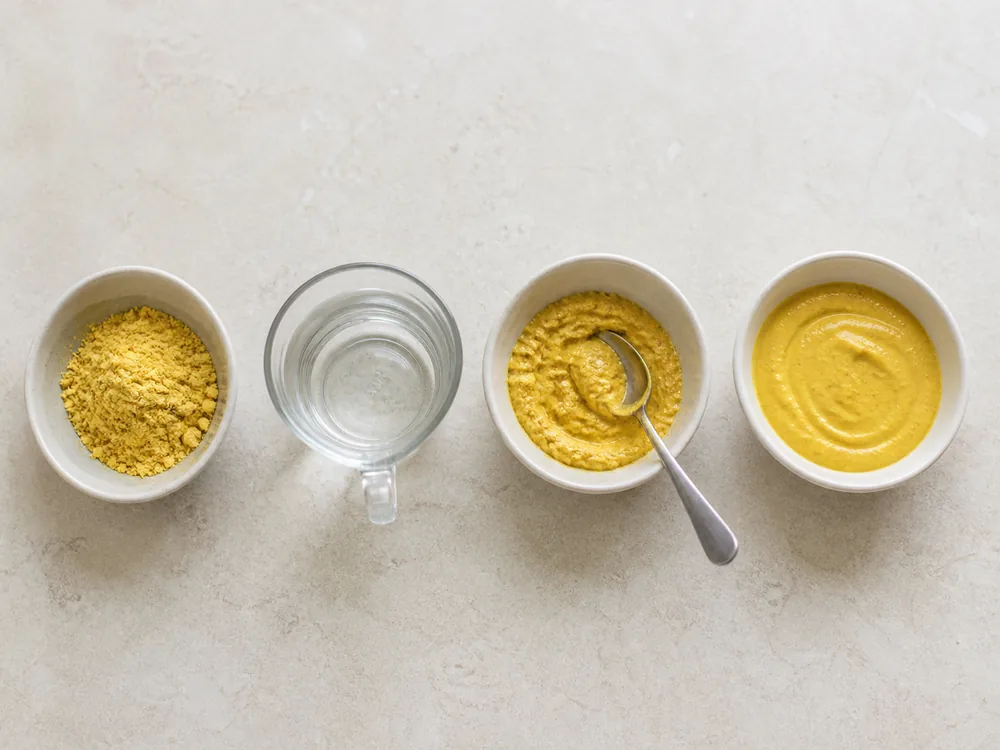
- Measure: Use equal volumes powder and cold water.
- Mix: Press out every dry pocket.
- Rest: Let the sharpness develop before tasting.
- Apply: Add the paste to a small portion of the sauce first.
- Measure the mustard powder into a small bowl.
- Add the same volume of cold water.
- Stir and press until the paste looks completely smooth.
- Rest for several minutes, then smell and taste a tiny amount.
- Fold the measured paste into the recipe and retaste before heating.
Warm liquid can produce a softer result, which may be useful in a cooked sauce but disappointing in a cold dip.
If the sauce will be reheated, hold a small portion of fresh paste aside and stir it in after the pan leaves direct heat. Use the water temperature and addition time as controls instead of doubling the powder immediately.
A Wasabi Allergy Changes the Substitute List
Wasabi, horseradish, and mustard are related plants, so they should not be treated as automatic alternatives for someone with a known allergy. Culinary similarity does not establish medical safety.
Commercial wasabi pastes can also combine horseradish, mustard, coloring, and other ingredients under one product name. Read the full label every time because a familiar brand can change its formulation.
Ginger is botanically different, but that fact does not make every ginger product safe for every person. A plain dish with the optional condiment served separately is the cleanest decision when the ingredient history is unclear.