
Horseradish Substitutes for Sharp Sauces and Dips
Replace both sharp heat and physical form, then correct the acid in prepared condiments.
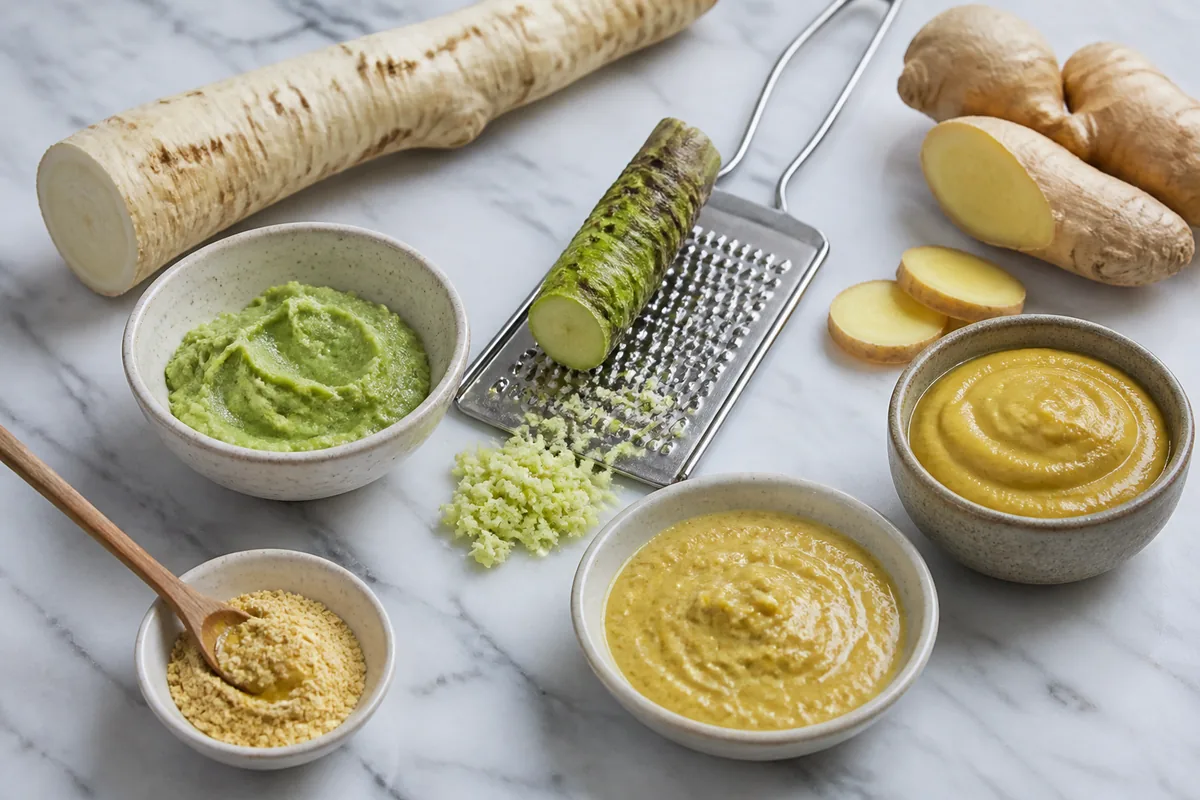
Prepared wasabi is the fastest substitute for prepared horseradish and starts at a 1:1 ratio. Fresh grated wasabi fits fresh-root uses, while mustard paste and ginger belong in sauces where their different body and aroma can be managed.
5 Horseradish Substitutes for Root, Sauce, and Powder
Prepared wasabi is the most practical replacement for prepared horseradish because it supplies a similar fast, nose-clearing pungency in a spoonable form.
Compare drained spoonfuls when one product has visible liquid, otherwise the ratio measures brine and sauce as if they were root solids. Labels matter because many commercial wasabi products already contain horseradish, mustard, oil, vinegar, or coloring.
Fresh grated wasabi is the closer form for fresh root, but its delicate character and price make it wasteful in some long-cooked dishes. Mustard powder and prepared hot mustard solve sauce problems, while ginger is a directional backup for glazes and dressings.
| Number | Substitute | Starting ratio | Best use |
|---|---|---|---|
| 1 | Prepared wasabi | 1:1 for prepared horseradish | Roast sauce, dip, sandwich spread |
| 2 | Fresh grated wasabi | 1:1 for fresh grated horseradish | Raw sauce, finishing |
| 3 | Mustard powder paste | 3/4 to 1 tsp per 1 tsp horseradish | Cream sauce, dressing, glaze |
| 4 | Prepared hot mustard | 1:1 for prepared horseradish | Meat sauce, sandwich, dip |
| 5 | Fresh ginger | 1/2 tsp per 1 tsp horseradish | Dressing, glaze, cooked sauce |
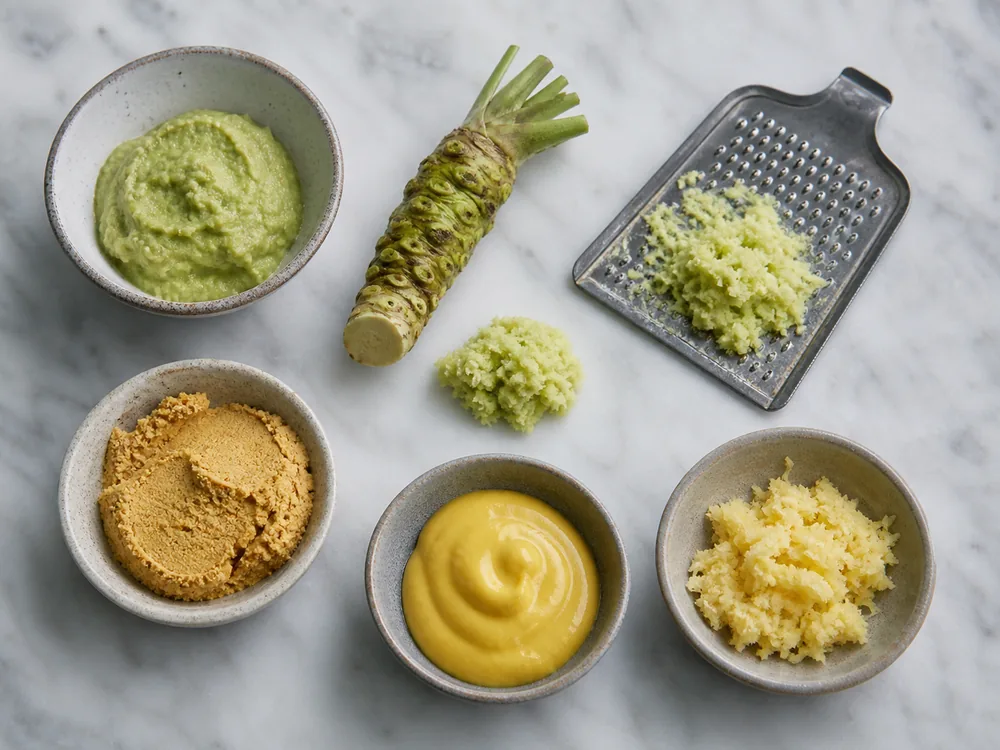
- Prepared wasabi: Fast convenient sauce replacement.
- Fresh wasabi: Clean grated form for raw use.
- Mustard paste: Controllable thickness after mixing.
- Ginger: Warm aromatic backup for flexible sauces.
1. Prepared Wasabi
Use prepared wasabi at a 1:1 ratio for prepared horseradish.
- Starting ratio
- 1:1 for prepared horseradish
- Best for
- roast sauces, dips, and sandwich spreads
- Main tradeoff
- greener and sometimes more concentrated
- Adjust
- check labels because many products already contain horseradish and mustard
For a four-serving cream sauce, reserve the final teaspoon until the base has chilled because cold fat can soften the first impression of heat. Mix half the amount into the sauce first, then add the rest after tasting because commercial pastes range from mild and creamy to sharp and concentrated.
When the prepared wasabi is much thicker than the horseradish named in the recipe, loosen the completed sauce with its original liquid rather than thinning the paste before its heat is measured. Its color may remain visible in a pale cream base, so use an undyed or lightly colored product when appearance matters.
Read the full label before adjusting vinegar, salt, or sugar. A product built partly from horseradish may be a close culinary match, but it can also bring the same ingredient someone intended to avoid.
Do not add more paste merely to replace the grated-root bulk missing from a sauce. Restore body with the sauce's original base, such as sour cream or mayonnaise, rather than making the mixture excessively pungent.
Prepared wasabi often arrives pre-seasoned, so taste the sauce before restoring salt or acid.
2. Fresh Grated Wasabi
Use freshly grated wasabi at a 1:1 ratio for freshly grated horseradish. Grate it finely near serving time and fold it into an uncooked sauce or place a controlled amount beside the food.
- Starting ratio
- 1:1 for freshly grated horseradish
- Best for
- raw sauces and finishing
- Main tradeoff
- cleaner, more delicate, and expensive
- Adjust
- do not bury genuine fresh wasabi in a heavily cooked dish
Use the same packed or loose measuring style for both roots because a fluffy teaspoon of long shreds contains less root than a compact teaspoon of fine paste.
A fine circular grating motion produces a paste more suitable for sauce than long linear strokes that leave obvious shreds. It fits raw seafood sauce, a delicate dressing, or a special roast accompaniment where its aroma will remain visible rather than disappearing into long cooking.
Do not spend fresh wasabi on a heavily reduced braise or sauce that cooks for a long time. Mustard or prepared paste is more practical when heating will soften the sharpest aroma.
Fresh wasabi belongs near service because extended heat erases the delicate aroma that justifies choosing it.
3. Mustard Powder Paste
Mix equal volumes mustard powder and cold water, rest until the paste develops, then use 3/4 to 1 teaspoon of paste for each teaspoon of horseradish. Start at the lower end in a cold sauce because mustard bitterness is easier to detect there.
- Starting ratio
- mix equal parts powder and cold water, then use 3/4 to 1 teaspoon per 1 teaspoon horseradish
- Best for
- cream sauces, dressings, and glazes
- Main tradeoff
- mustardy bitterness without root texture
- Adjust
- rest the paste before deciding it is too mild
For a glaze that will boil, add most of the paste early for seasoning and reserve a smaller fresh portion for the final minute if the dish needs a noticeable sharp edge.
White or yellow mustard powder keeps the color closer to classic horseradish sauce than a dark whole-grain condiment would. It supplies sharpness and thickness but lacks the juicy root fibers of freshly grated horseradish.
Whisk the paste into a small portion of the wet base before returning it to the full recipe. This prevents dry lumps and makes it easier to judge how much liquid the sauce can still accept.
Add late for stronger pungency or earlier for a softer cooked background. Repeated heating reduces the immediate sharp effect, so final tasting should happen near serving.
Hydrated mustard paste adds body as well as pungency, which matters when grated root supplied solids.
4. Prepared Hot Mustard
Use prepared hot mustard at a 1:1 ratio for prepared horseradish. Choose it for sandwiches, roast meat sauces, dips, and dressings where mustard flavor already fits the surrounding ingredients.
- Starting ratio
- 1:1 for prepared horseradish
- Best for
- sandwiches, meat sauces, and dips
- Main tradeoff
- extra vinegar, salt, and mustard flavor
- Adjust
- reduce other acid before adding more
Taste it with the sauce base before adding recipe salt because acidity and sweetness can change how much salt the finished condiment appears to need.
The texture is smooth rather than fibrous, which makes it easy to distribute. A cream sauce that relied on grated root for body may need more sour cream, yogurt, or mayonnaise after the swap.
Do not choose a sweet mild mustard merely because the jar is available. It adds condiment volume without replacing the sharp pungency horseradish was meant to supply.
Sweet prepared mustard adds volume without replacing horseradish sharpness, so reject it before adjusting the ratio.
5. Fresh Ginger
Use 1/2 teaspoon finely grated ginger for each teaspoon of horseradish. It works in vinaigrette, glaze, stir-fry sauce, and cooked seafood sauce where warm citrus aroma can take the dish in a useful direction.
- Starting ratio
- 1/2 teaspoon grated ginger per 1 teaspoon horseradish
- Best for
- dressings, glazes, and cooked sauces
- Main tradeoff
- warm citrus heat rather than nasal pungency
- Adjust
- not suitable for classic horseradish sauce identity
Keep the half-volume limit in a dressing and use ginger juice when possible, since a larger amount of pulp changes both texture and the aromatic identity of the sauce.
A ginger backup works best when the sauce already contains soy, citrus, sesame, or another ingredient that welcomes its warm aromatic direction. Its heat feels warmer and lasts differently, so it should support the sauce rather than be increased until the spoon volume matches.
Squeeze grated ginger for juice when a thin smooth dressing cannot carry fibers. Leave the fine pulp in a glaze or cooked sauce where it can soften and distribute.
Do not use ginger for a classic creamy horseradish sauce when that recognizable root flavor is central. Serve a differently named ginger sauce or wait for a closer ingredient.
Ginger juice preserves a smooth dressing, while pulp belongs in glazes that can carry visible fibers.
Prime Rib Sauce Needs Body as Well as Heat
Fresh grated horseradish contributes small solid fibers as well as pungency.
If a smooth substitute makes the sauce feel empty, use more of the original dairy or mayonnaise base for body and keep the pungent ingredient at its measured ratio.
A spoon dragged through the finished sauce should leave a brief clean path, which is a more useful body test than comparing color. Replacing it with a concentrated smooth paste can leave a cream sauce thinner in body even when the heat tastes correct.
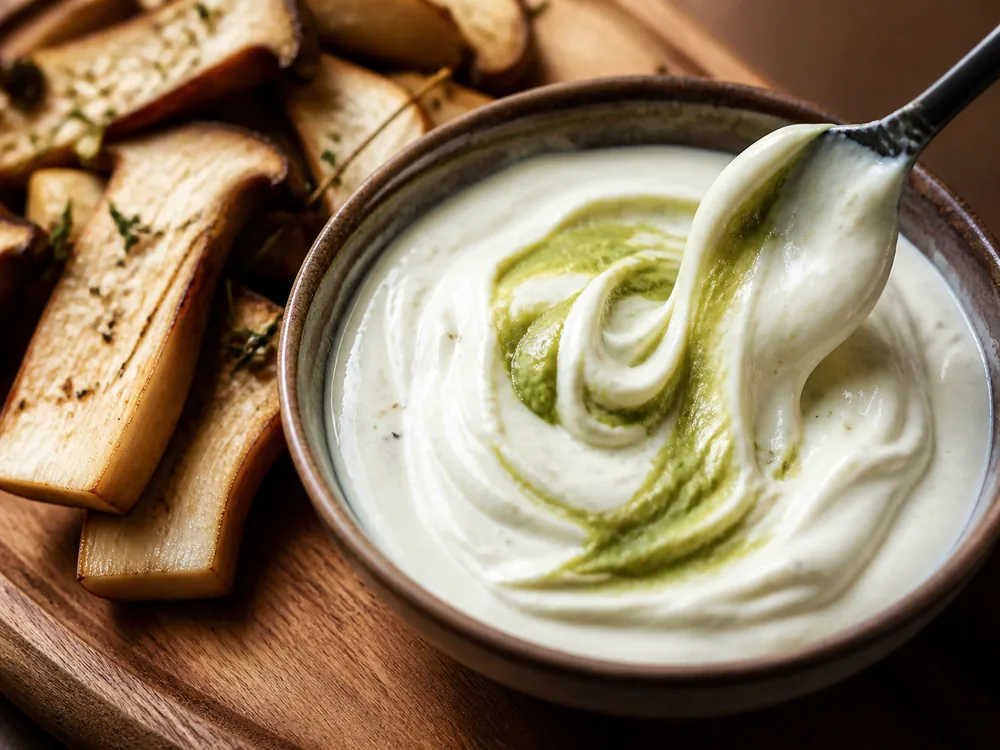
- Base: Sour cream or thick yogurt restores spoonable body.
- Paste: Add half the expected amount before final tasting.
- Acid: Hold back lemon or vinegar when the condiment already contains it.
- Serving test: The sauce should cling to a slice rather than run off.
- Measure the dairy or mayonnaise base before adding the substitute.
- Fold in half the prepared wasabi or mustard and mix completely.
- Rest briefly so the fat and cold temperature settle the first heat impression.
- Add the remaining substitute only if the sauce needs more pungency.
- Adjust salt and acid last, then check whether the sauce clings to a spoon.
If the sauce becomes loose, increase the original thick base. More mustard powder can thicken it, but that correction also raises bitterness and changes the flavor ratio.
Serve a small amount beside the roast rather than coating every slice. Diners can control a concentrated alternative more easily when the sauce remains optional.
Cocktail Sauce Can Tolerate More Acid
Tomato cocktail sauce already contains acid and sweetness, so prepared wasabi or hot mustard can fit more easily than they do in a plain cream sauce.
Taste the prepared condiment with the same tomato base before adding lemon because tomato brands differ in both sweetness and acidity. The main risk is stacking vinegar from the condiment with lemon and bottled chile sauce.
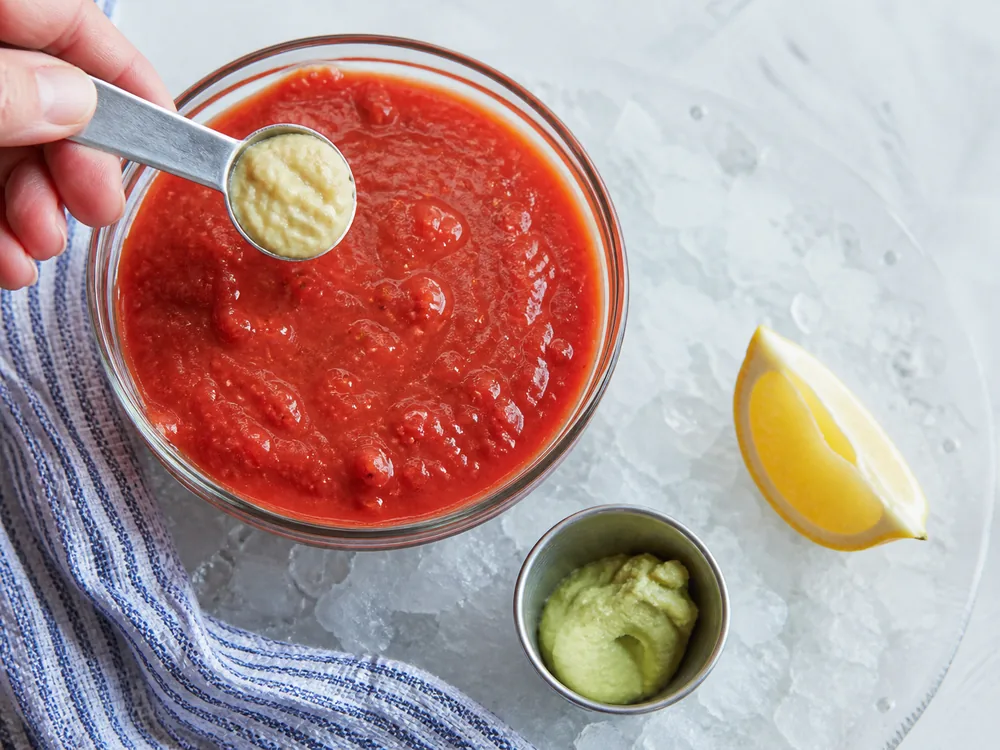
- Prepared wasabi: Start 1:1 and check its salt and vinegar.
- Hot mustard: Smooth and easy to distribute.
- Lemon: Add after the substitute, not before.
- Chill: Retaste at serving temperature.
| Substitute | Hold back first | Restore after tasting |
|---|---|---|
| Prepared wasabi | Part of the lemon and salt | Brightness only if needed |
| Prepared hot mustard | Part of the lemon or vinegar | Acid and sweetness in small amounts |
| Mustard powder paste | A little recipe liquid | Liquid only if the sauce is too thick |
| Fresh ginger | Nothing unless using juice | Lemon if the sauce lacks brightness |
Mix the substitute into the tomato base completely before adding seafood or garnish. Chill the sauce briefly, then judge whether it needs more sharpness or only more lemon aroma.
Heat Fades After Grating and Mixing
Fresh roots release pungency when their cells are cut or grated, and the impression changes as the prepared ingredient sits.
Prepare a small reserve separately when service will be delayed, then fold it into only the portion being served instead of repeatedly strengthening the whole bowl.
Cover a prepared fresh-root sauce tightly during a short wait so its aroma stays in the bowl rather than perfuming the refrigerator. Make a fresh-root substitute close to serving so the aroma is judged in the same window the diner experiences it.
- Grate fresh wasabi shortly before the sauce is served.
- Mix mustard powder with cold water and let it develop before judging.
- Keep prepared condiments covered while the rest of the meal is finished.
- Add pungent paste late when a cooked sauce needs a clear final edge.
- Taste the complete sauce at serving temperature.
Long heating softens the sharpest character of mustard and root pastes. An early addition is useful for background seasoning, while a small late addition gives a clearer nose-level pungency.
Do not repair normal fading with a large final spoonful before tasting the full serving. A concentrated cool dab can feel much stronger than the same amount dispersed in a hot pan.
Mustard and Wasabi Are Not Allergy-Safe Defaults
Horseradish, wasabi, and mustard are related plants, and commercial pastes may combine more than one of them.
A restaurant squeeze bottle is especially difficult to verify because the visible color cannot reveal which roots, powders, or shared utensils were used. A close culinary function does not make a related ingredient safe for someone with an allergy.
Ginger is botanically different, but no ingredient should be promised as universally safe. When the allergy history or label is unclear, leave the pungent sauce off the plate and offer sealed ingredients for the affected person to review.