
Mustard Seed Substitutes Chosen by the Recipe's Job
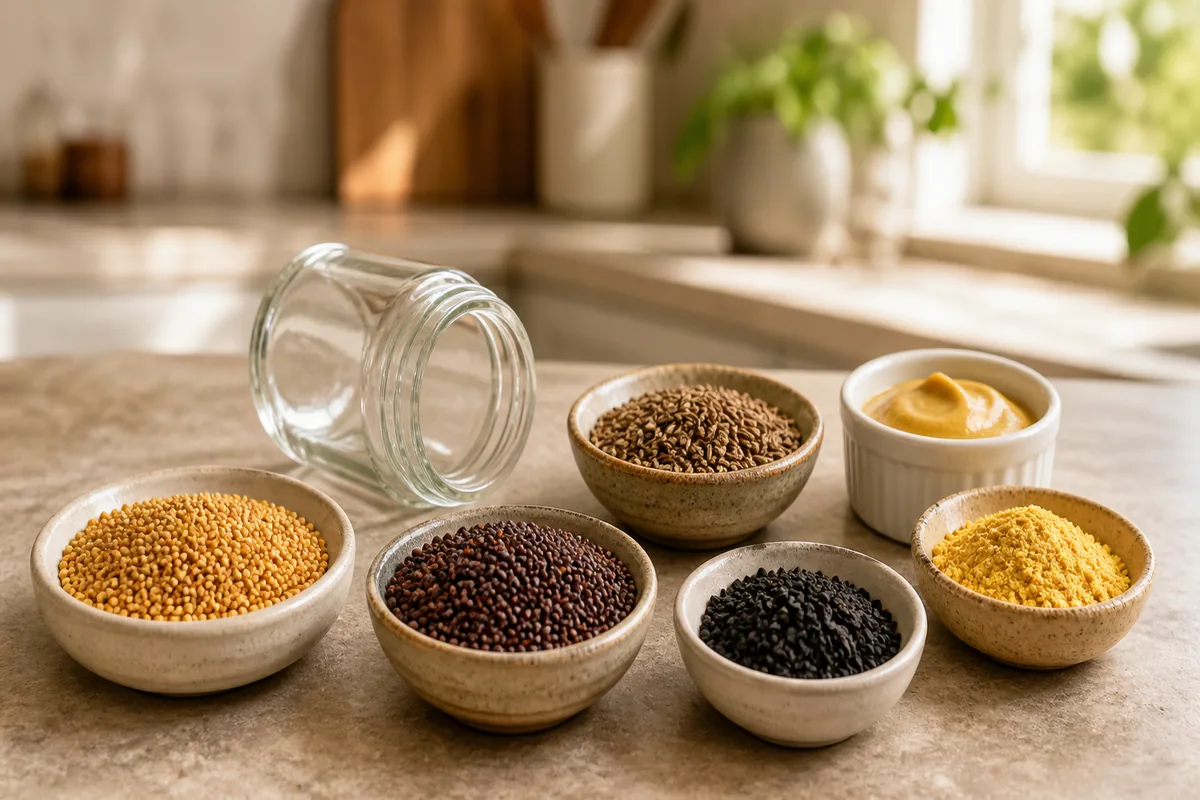
Use another color of mustard seed as the closest overall substitute, usually at the same volume. When no mustard seed is available, choose by the recipe's job. Cumin or nigella can replace a whole seed in hot oil, coriander or dill seed can redirect a pickle brine, and mustard powder or prepared mustard can supply mustard flavor in rubs, sauces, and dressings.
7 Best Mustard Seed Substitutes
Another mustard seed variety gives the closest result, but it is not always the best fit for the recipe in front of you. A tempering needs a dry seed that tolerates hot oil, while a dressing can accept powder or a wet condiment.
Use the ratios below as first measurements because seed size, freshness, grind, brand, and the other ingredients in the dish all affect the final strength.
| Number | Substitute | Starting ratio | Best use |
|---|---|---|---|
| 1 | Another mustard seed variety | 1:1 by volume | Tempering, pickles, sausage, visible seed texture |
| 2 | Mustard powder | 1/2 teaspoon per 1 teaspoon seed | Dry rubs, sauces, soups, dressings |
| 3 | Prepared mustard | 1 1/2 teaspoons per 1 teaspoon seed | Dressings, mayonnaise, barbecue sauce, pan sauce |
| 4 | Cumin seed | 1:1 by volume | Tempering, lentils, vegetables, savory rice |
| 5 | Nigella seed | 1:1 by volume | Tempering, flatbreads, potatoes, lentils |
| 6 | Coriander seed | 1:1 by volume | Cucumber, carrot, onion, mixed pickles |
| 7 | Dill seed | 1:1 by volume | Cucumber, bean, and refrigerator pickles |
1. Another Mustard Seed Variety
Yellow, brown, and black mustard seeds are the closest substitutes for one another because they keep the whole-seed texture and tolerate the same cooking methods. They can pop in oil, sit in brine, season sausage, or remain visible in a crust.
Use a 1:1 ratio by volume when changing from one color to another. If you are replacing mild yellow seed with brown or black seed in a dish where pungency matters, begin with three quarters of the amount and add the final quarter only after tasting.
Add the replacement at the original stage, with whole seeds going early into a tempering or directly into brine while crushed seed releases flavor faster in a rub or filling.
Brown and black seeds usually taste hotter and more assertive than yellow seeds. Yellow seed can replace either one at full volume, but the result will usually be milder.
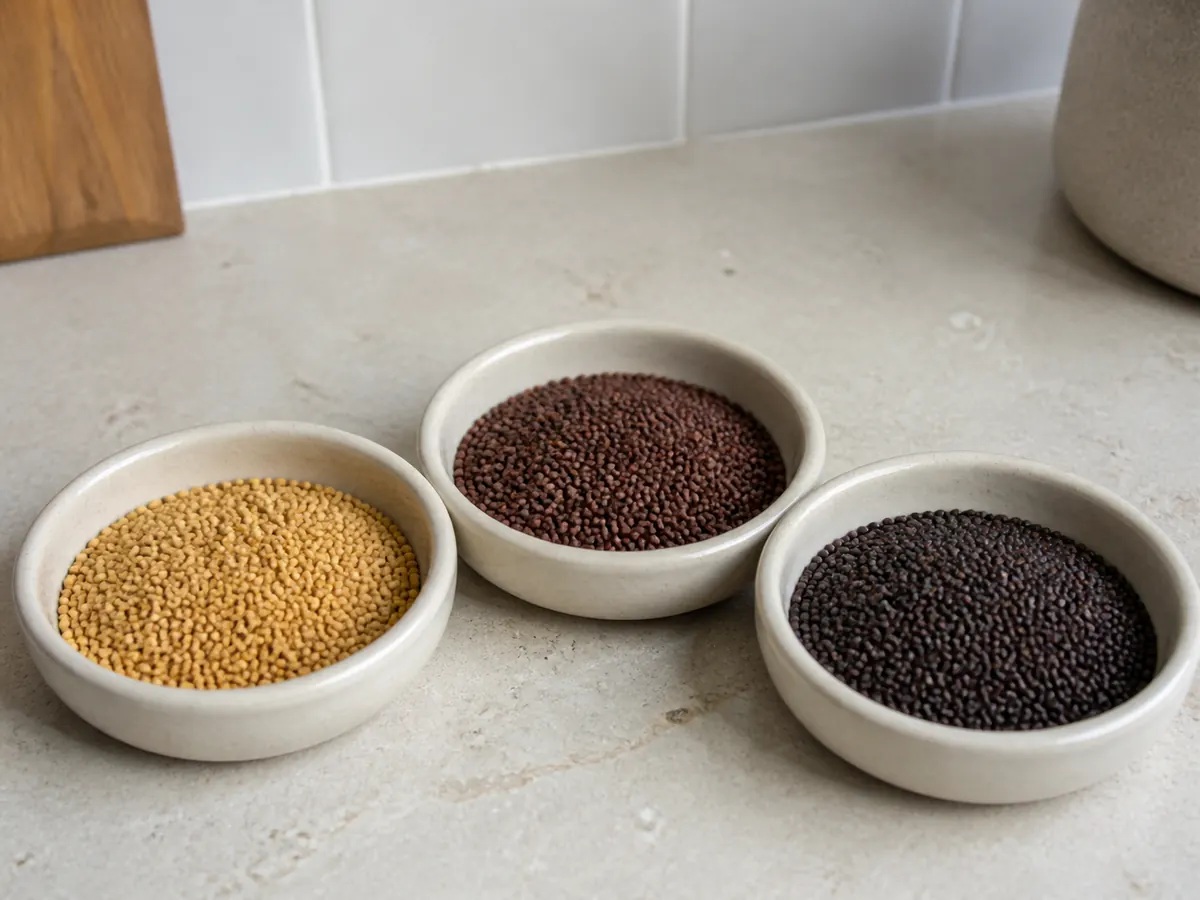
- Yellow seed: Pale color and the mildest starting point.
- Brown seed: Smaller and usually more pungent.
- Black seed: Darkest color and the strongest direction.
- Equal measure: Compare color before reducing a hotter variety.
This is the best substitute when the recipe depends on mustard flavor and seed texture together. It is not an option for someone who must avoid mustard because of an allergy.
2. Mustard Powder
Mustard powder replaces pungency without visible texture or crunch, and its even distribution makes a smaller volume feel stronger across the finished food.
Start with 1/2 teaspoon of mustard powder for every 1 teaspoon of whole mustard seed. For 1 tablespoon of seed, begin with 1 1/2 teaspoons of powder.
Add the powder directly to a dry rub so the surface stays dry. In a sauce, soup, or dressing, whisk it into the liquid or mix it with a little cool water before adding it.
A brief rest in cool water develops sharpness, while heat, acid, and cooking time soften it enough that you should taste the powder in the finished medium before increasing it.
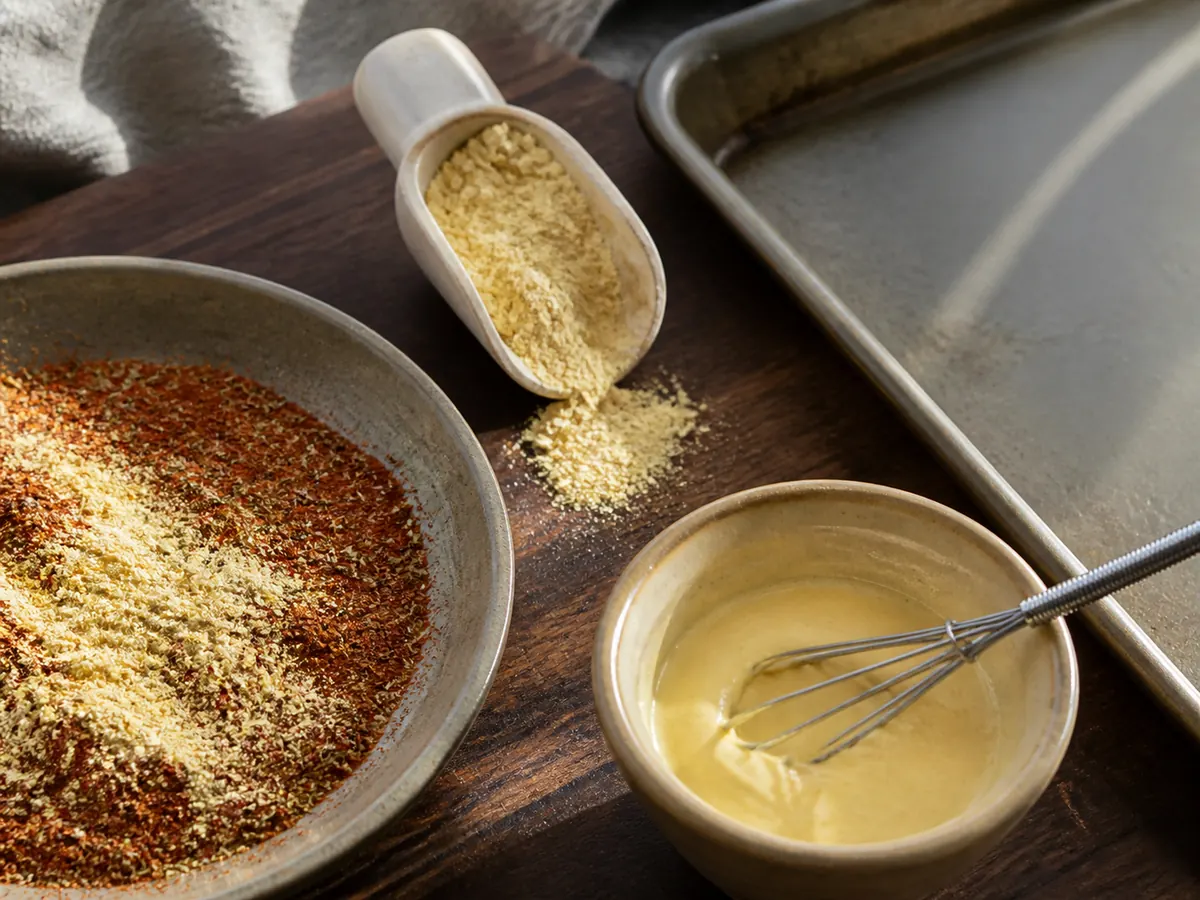
- Half volume: Powder spreads more evenly than whole seed.
- Dry rub: Fine particles coat the surface without extra moisture.
- Cool water: Hydration develops sharpness before cooking.
- Fine texture: Keep powder out of a hot-oil seed tempering step.
Powder works well in barbecue rubs, cheese sauce, salad dressing, soup, and sausage seasoning. Do not pour it into a hot-oil tempering step because the fine particles can scorch before they disperse.
3. Prepared Mustard
Prepared mustard is the practical wet substitute for dressings, mayonnaise, pan sauces, barbecue sauce, potato salad, and refrigerator relish. It supplies mustard flavor and body, but it also changes the recipe's water, vinegar, salt, and sometimes sugar.
Start with 1 1/2 teaspoons of prepared mustard per 1 teaspoon whole seed, 3/4 teaspoon per 1/2 teaspoon seed, or 1 1/2 tablespoons per 1 tablespoon seed.
Whisk prepared mustard into a cold dressing before adding all the oil. In a hot sauce, stir it in after liquid has lowered the pan temperature so the fresh aroma remains clearer.
Dijon-style mustard gives a smooth sharp result, while yellow prepared mustard tastes milder and more vinegary. Whole-grain mustard is the better choice when the food still needs visible seeds or a lightly granular bite.
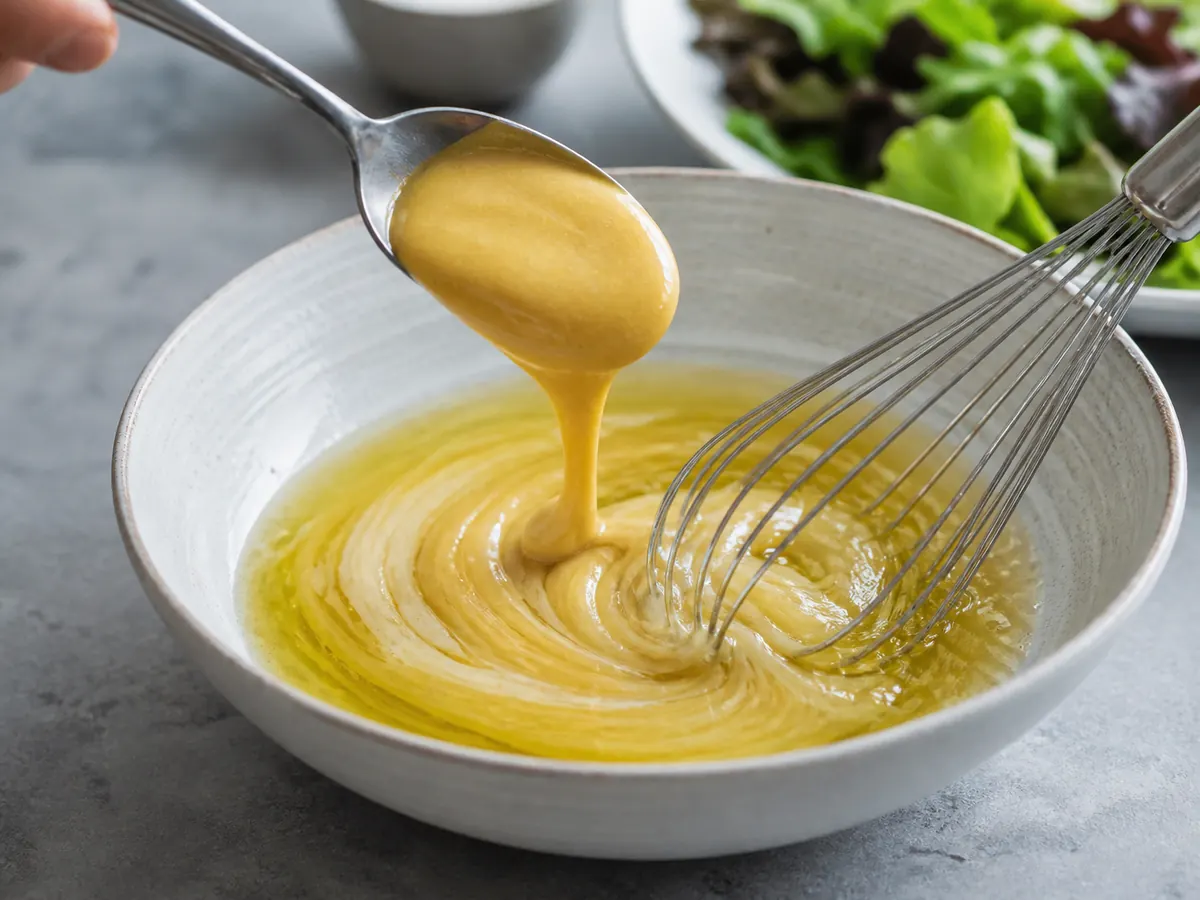
- Measured spoonful: Start with the planned wet conversion.
- Visible emulsion: Mustard helps oil and vinegar combine.
- Cold mixture: Add it away from the hottest cooking stage.
- Recipe balance: Recheck salt, acid, and water after whisking.
Prepared mustard cannot replace dry seed in hot oil because its water can spit on contact and its extra liquid can turn a dry rub into paste.
Do not alter a tested canning formula with this conversion. Prepared mustard can flavor a refrigerator pickle or a finished relish, but it changes too many variables to stand in for whole seed by volume in a preservation recipe.
4. Cumin Seed
Cumin seed is a strong non-mustard choice when the missing seed was meant to toast in oil. It keeps a whole-seed shape and develops an earthy roasted aroma, but it does not reproduce mustard's clean nasal pungency.
Use cumin seed at a 1:1 ratio by volume, replacing one teaspoon with one teaspoon or one tablespoon with one tablespoon.
Add cumin to the hot fat at the original tempering stage. Watch for slight darkening and a roasted aroma instead of waiting for the popping sound that mustard seed may produce.
Cumin fits lentils, beans, savory rice, potatoes, cabbage, and vegetable dishes that can support earthy warmth. It also makes sense when cumin already appears elsewhere in the seasoning profile.
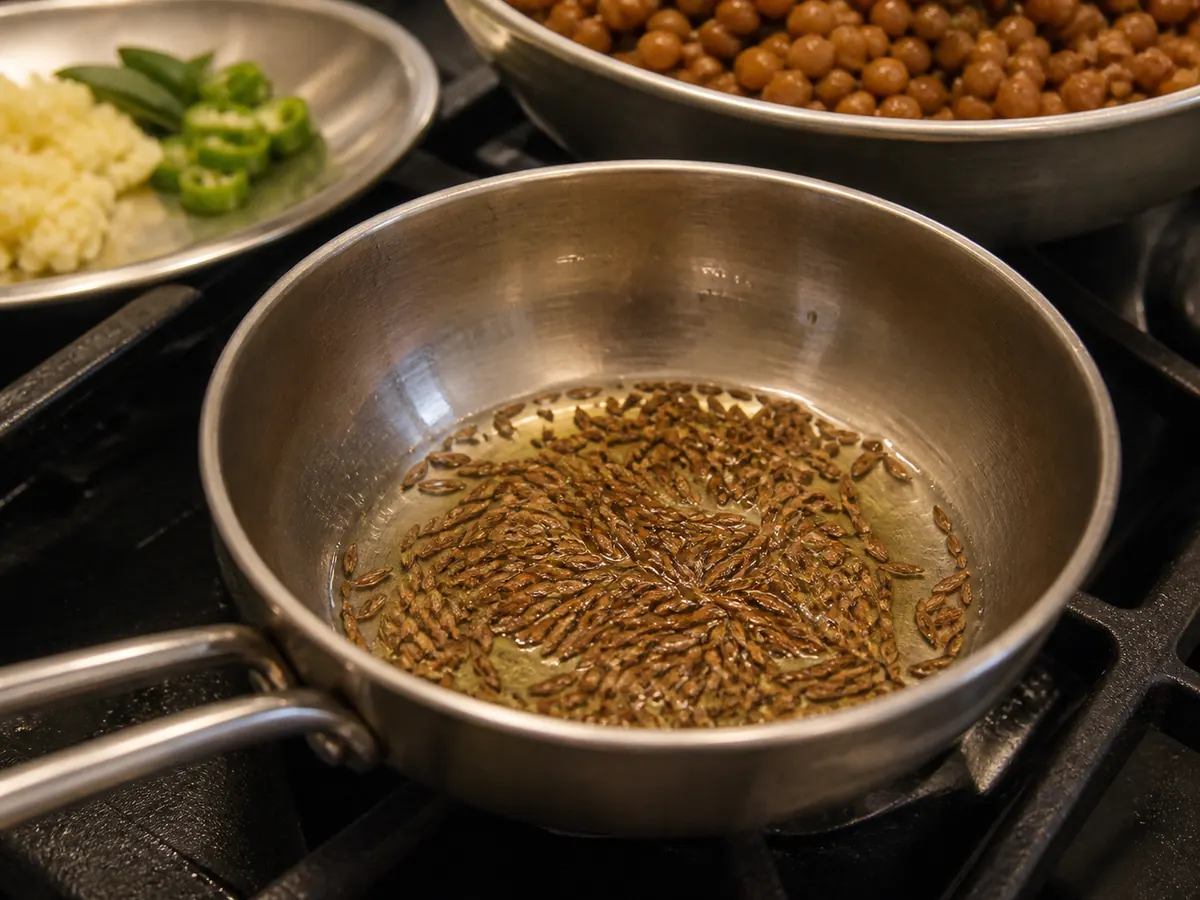
- Thin oil layer: Every seed contacts the hot fat.
- Slight darkening: Color changes before the seeds burn.
- Roasted aroma: Smell replaces popping as the readiness cue.
- Next ingredient: Add it promptly to stop further browning.
Do not use cumin as a flavor copy in a mustard-forward pickle, creamy mustard sauce, or mustard-led sausage, and add the next ingredient as soon as the seed smells roasted because blackened cumin makes the entire fat bitter.
5. Nigella Seed
Nigella seed works when the recipe needs a small dry seed for hot oil, bread, potatoes, lentils, or vegetables. Its flavor is oniony, oregano-like, and lightly bitter rather than mustardy.
Use nigella seed at a 1:1 ratio by volume. Begin with one teaspoon nigella for one teaspoon mustard seed when its distinct flavor already suits the dish.
Give nigella only brief contact with hot oil because its black surface hides browning, or add it at the original whole-seed stage in bread and dry toppings.
Nigella is especially useful in South Asian and Middle Eastern flavor directions, as well as on flatbreads and roasted vegetables. Its angular seeds keep visible texture without adding moisture.
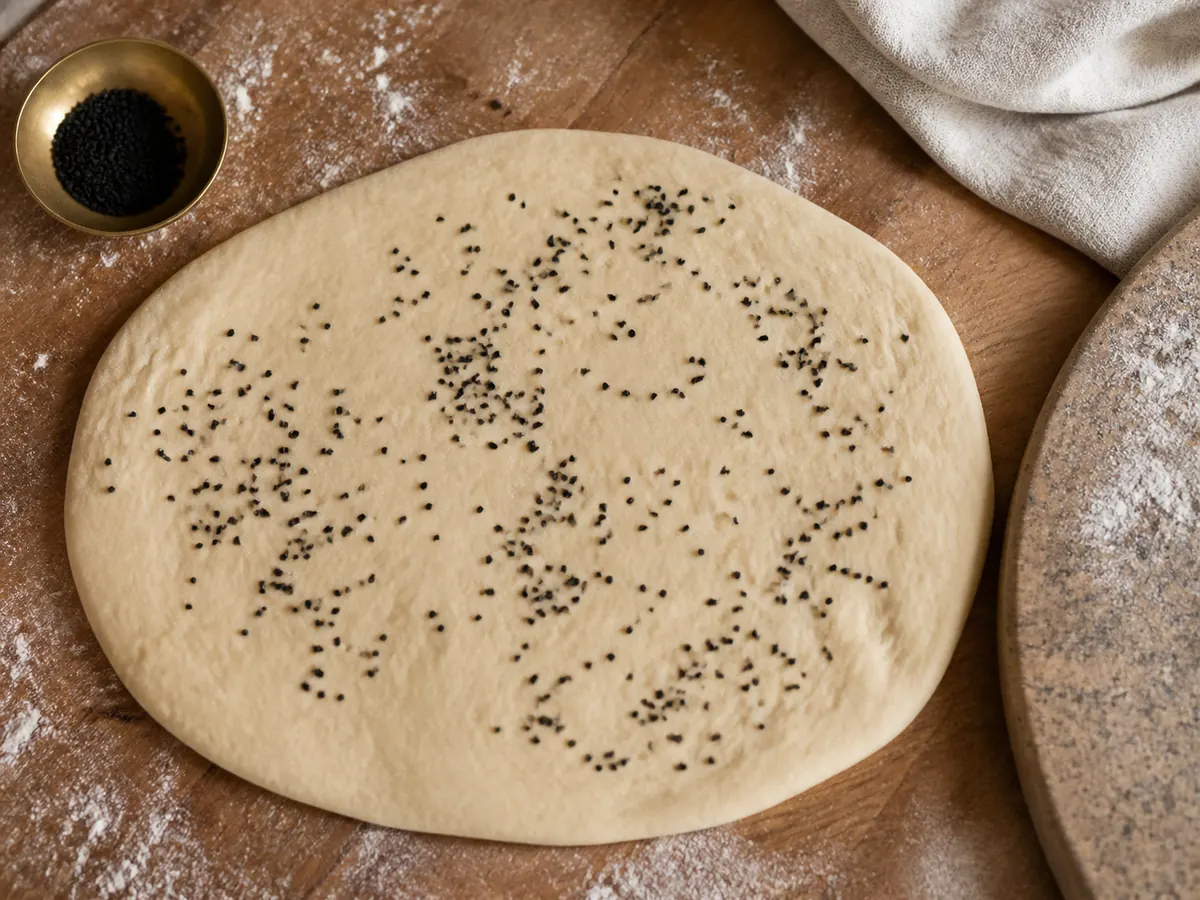
- Black seed: The angular shape remains visible after baking.
- Pale dough: Strong contrast makes distribution easy to judge.
- Dry surface: Nigella does not turn the topping into paste.
- Flavor boundary: Use it only where oniony bitterness belongs.
Avoid this substitution when the dish is delicate or when an oniony bitter note would be distracting. Nigella does not replace mustard pungency in vinaigrette, mustard sauce, or a mustard-led pickle.
6. Coriander Seed
Coriander seed is the easiest non-mustard pivot for cucumber, carrot, onion, and mixed vegetable pickles because it remains intact in brine while bringing citrusy floral aroma.
Use coriander seed at a 1:1 ratio by volume. Replace one teaspoon of mustard seed with one teaspoon of coriander seed for a clearly different but balanced pickle direction.
Leave the seed whole when a clear brine and neat appearance matter. Crack it once for faster extraction, especially when the pickles will be eaten soon.
Lightly crack large coriander seeds when their harder texture would be uncomfortable, stopping before the spice becomes powder.
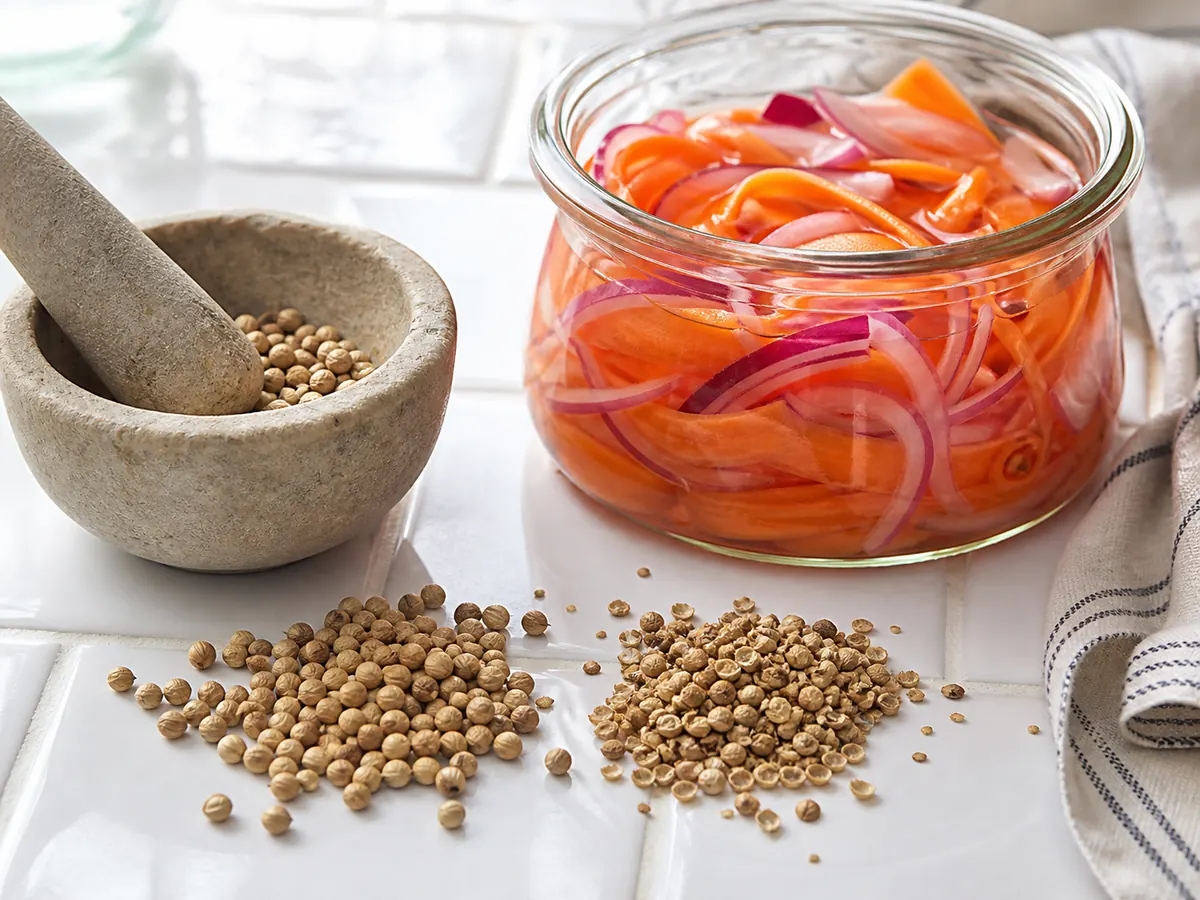
- Whole seed: Slower release and a neater brine.
- One crack: More exposed surface for short resting time.
- Coarse pieces: Stop before the seed becomes powder.
- Bright vegetables: Citrus aroma suits carrot and red onion.
Coriander can also toast in oil when a dish accepts its brighter aroma. It is not a direct mustard-flavor replacement for dry rubs, emulsified sauces, or dressings.
7. Dill Seed
Dill seed suits cucumber pickles, bean pickles, refrigerator pickles, and brines that benefit from a familiar dill aroma. The whole seeds preserve visible texture, but they move the recipe toward warm, lightly anise-like pickle flavor rather than mustard heat.
Use dill seed at a 1:1 ratio by volume, replacing 1 teaspoon mustard seed with 1 teaspoon dill seed or 1 tablespoon with 1 tablespoon.
Add dill seed whole at the original brining stage so it can hydrate and release flavor gradually. Leave it intact when clear brine matters because crushing speeds extraction and can cloud the liquid.
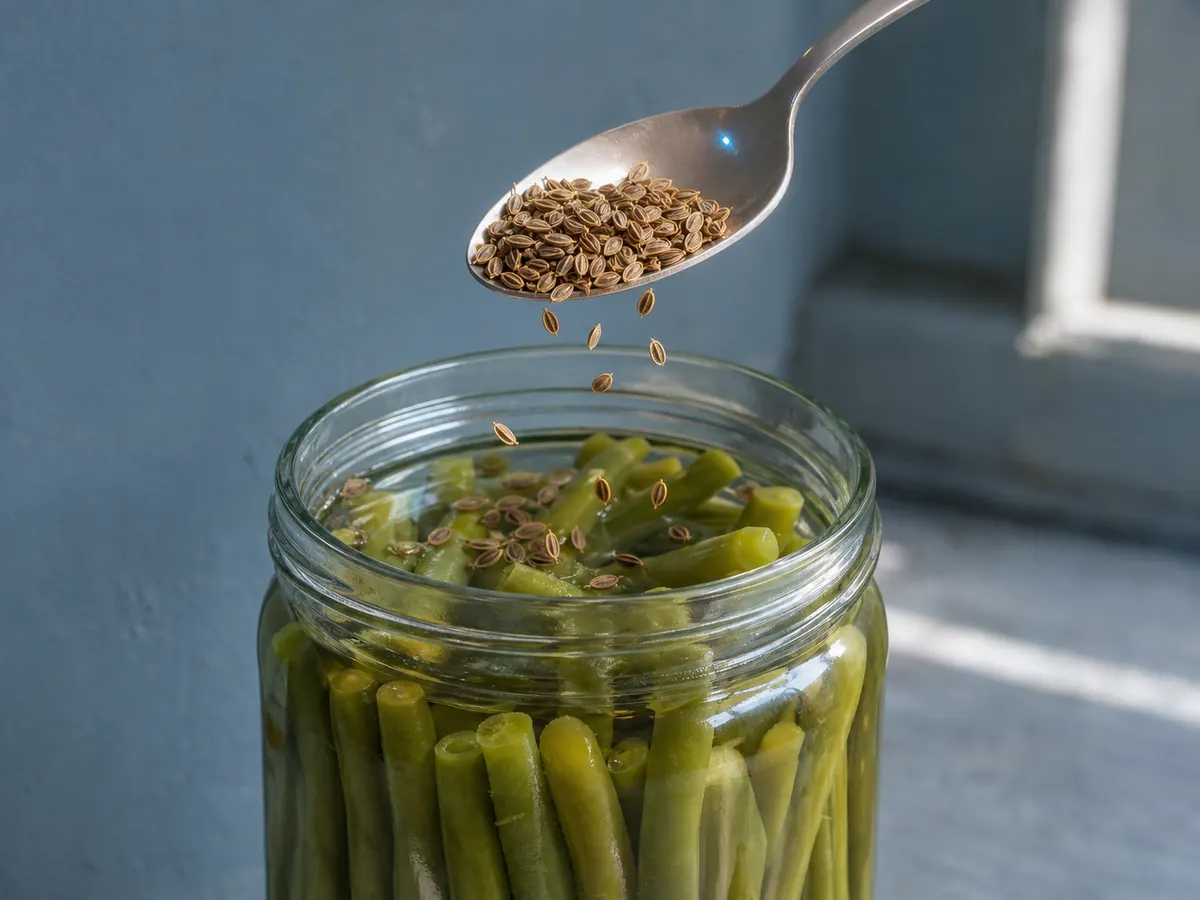
- Intact seed: The flat oval form remains recognizable.
- Clear brine: Whole seeds avoid unnecessary clouding.
- Green beans: Dill supplies a coherent refrigerator-pickle direction.
- Gradual release: Wait for extraction before increasing the dose.
This substitute works best when dill already belongs with the vegetable or brine. It gives cucumber and green bean pickles a coherent flavor direction without pretending to reproduce mustard pungency.
Do not use dill seed for hot-oil tempering, mustard-forward sausage, dry rubs, or emulsified mustard sauces because its flavor and cooking behavior solve a different job.
Match the Substitute to the Recipe Method
The numbered list identifies the options, while the recipe method determines which one can perform the missing job. A correct ratio cannot rescue a wet condiment dropped into hot fat or a powder used where the cook expects crunchy seeds.
| Recipe method | First choice | Alternate choice | Starting ratio |
|---|---|---|---|
| Hot-oil tempering | Another mustard variety | Cumin or nigella | 1:1 by volume |
| Pickles and brines | Another mustard variety | Coriander or dill | 1:1 by volume |
| Dry rub | Mustard powder | Omit if mustard is minor | 1/2 powder for 1 seed |
| Sauce or dressing | Prepared mustard | Mustard powder | 1 1/2 prepared or 1/2 powder for 1 seed |
| Visible seed texture | Another mustard variety | Whole-grain mustard | 1:1 seed or 1 1/2 prepared for 1 seed |
Match form before chasing flavor because whole substitutes preserve texture, powder preserves a dry surface, and prepared mustard belongs in food that can accept liquid and acid.
Hot-Oil Substitutes Need Different Readiness Cues
Another mustard variety follows the original cooking cue most closely. It may pop and turn nutty in hot fat, so keep the next ingredient ready and use a lid or splatter screen when the method calls for it.
Add the next ingredient when cumin darkens slightly and smells roasted because it does not need to pop and waiting for that cue can burn it.
Nigella becomes fragrant quickly without a dramatic color change. Keep its contact brief and judge it by aroma rather than sound.
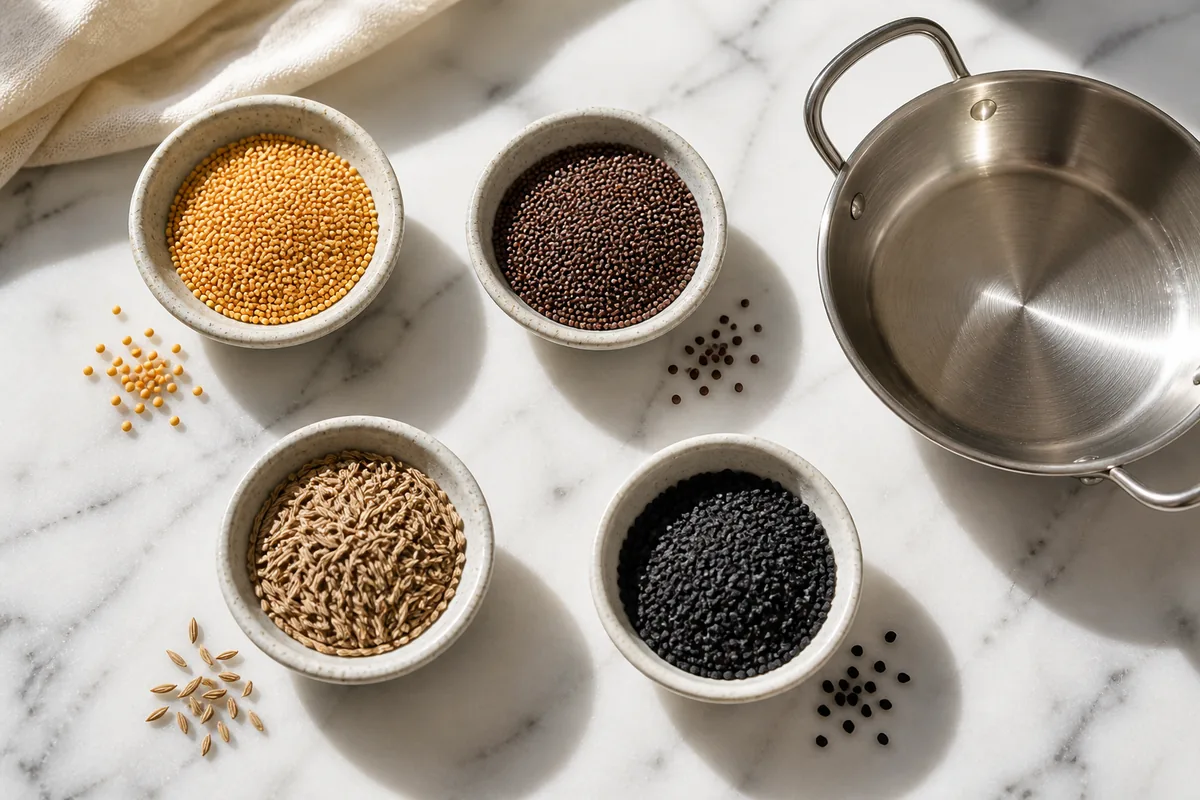
- Mustard seed: Watch and listen for popping.
- Cumin seed: Watch for slight darkening and smell for roasted earthiness.
- Nigella seed: Keep contact brief because its black surface hides color change.
- Dry forms only: Keep powder and prepared mustard out of the tempering pan.
Lightly cracked coriander can also enter hot oil when a bright citrus result suits the dish better than earthy warmth or mustard pungency.
Powder belongs in a rub or a liquid mixture, not loose in the hottest fat. Its fine surface area makes scorching faster and harder to reverse.
Pickles and Brines Can Change Flavor Direction
Another mustard color at 1:1 keeps the pickle closest to the original, while coriander at 1:1 brightens the brine and dill seed at 1:1 moves it toward a familiar dill-pickle aroma.
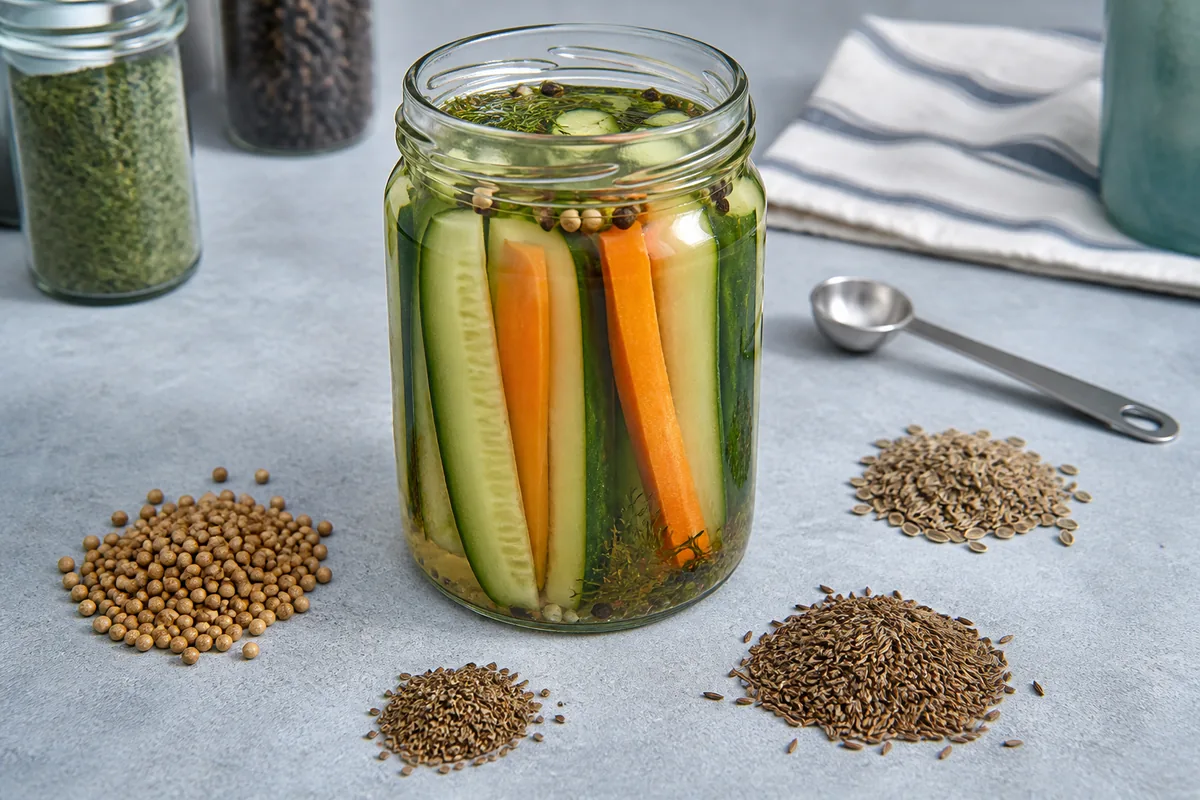
- Coriander seed: Choose a bright citrus direction at 1:1.
- Dill seed: Reinforce familiar cucumber-pickle aroma at 1:1.
Dill seed can move a cucumber or bean pickle toward a familiar dill profile. This choice creates a new flavor direction rather than a mustard copy.
Aromatic seeds season a pickle without controlling preservation safety, so keep the tested vinegar, water, salt, processing method, and container instructions unchanged.
Prepared mustard is reasonable in a quick refrigerator pickle or finished relish when cloudiness is acceptable. It should not replace whole seed by volume in a tested canning formula.
Crack coriander only for faster extraction, leave dill seed whole, and reserve clouding powder for relish or another preparation that does not need visible seed texture.
Powder and Prepared Mustard Change Moisture as Well as Flavor
Powder is the better choice when the surface must remain dry. Its 1:2 conversion keeps rubs, crusts, and dry seasoning blends from becoming sticky.
Prepared mustard works at a 1.5:1 starting ratio when the recipe can accept water and acid, but its extra body requires another check of salt, vinegar, and sweetness.
Whole-grain mustard sits between those forms. It brings liquid and acid like prepared mustard while preserving some seed texture in potato salad, pan sauce, sausage filling, or dressing.
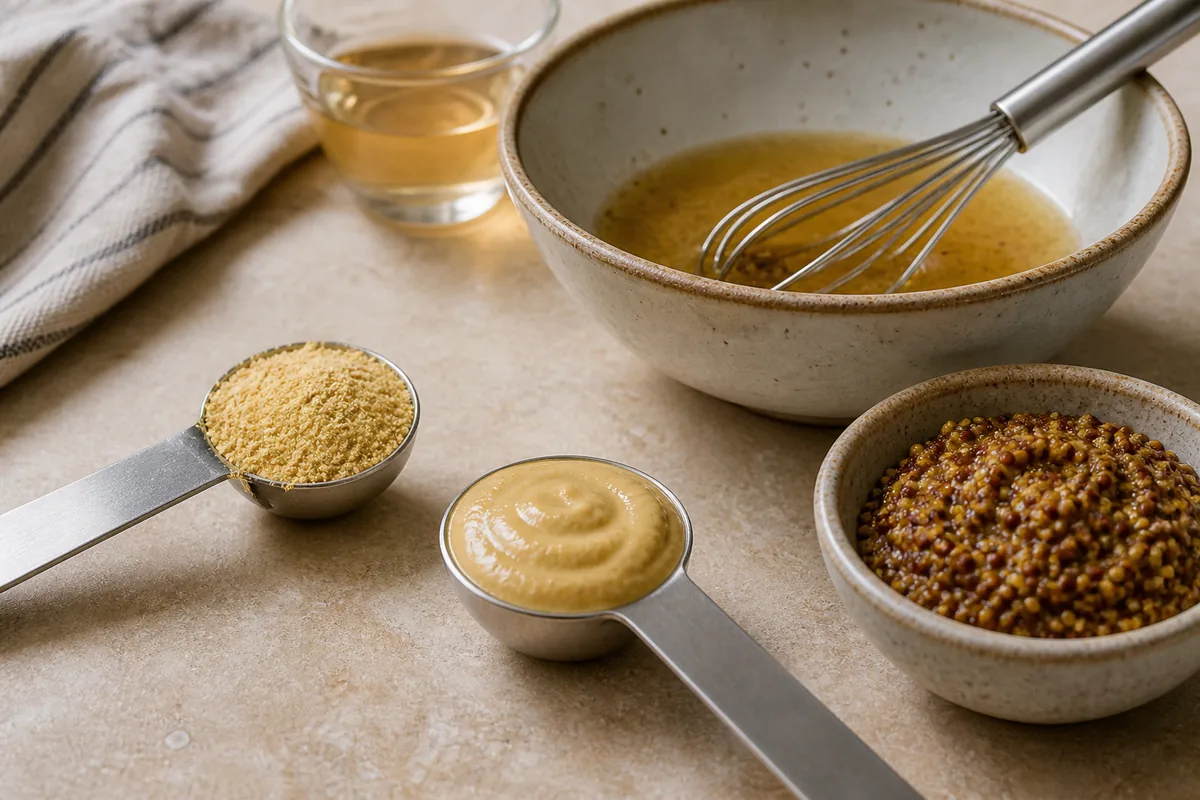
- Powder: Start with half the whole-seed volume.
- Smooth prepared mustard: Recheck acid, salt, and liquid.
- Whole-grain mustard: Choose it when visible texture still matters.
- Hot oil: None of these forms replaces a dry seed tempering step.
Read the ingredient label because wine, sweetener, spices, color, or stabilizers can matter in a delicate sauce and any allergen-aware meal.
The three forms are not interchangeable during cooking. Powder disperses, smooth mustard emulsifies, and whole-grain mustard leaves a granular bite.
Sometimes Omission Is Safer Than a Forced Substitute
Skip a minor seed garnish when every option would pull the dish toward dill, cumin, or nigella that does not belong.
Omission works poorly when mustard defines the preparation. A mustard pickle, mustard-forward sausage, or five-seed blend changes identity when the seed disappears.
Panch phoron loses its whole-seed balance when extra cumin replaces mustard and duplicates a note already present.
A recipe suggestion cannot establish that another seed or condiment is safe for a person with mustard allergy. Packaged horseradish, wasabi-style paste, dressings, sauces, and spice blends may contain mustard even when the front label emphasizes another ingredient.
Adjust the Dish After the Substitute Goes In
Taste only after whole seeds have heated or soaked, powder has dispersed, and prepared mustard has been fully whisked through the liquid.
If prepared mustard makes a dressing too sharp, add oil or another unsalted base before adding sweetness. Reduce another liquid when it makes a sauce too loose.
Give dusty mustard powder time to hydrate and do not add another spoon until the first amount has dispersed through salted food.
If cumin, nigella, coriander, or dill seed dominates, increase the unseasoned food instead of chasing it with more spices. Dilution is usually cleaner than stacking a second substitute into a sauce or filling.
- Too hot: Add more unseasoned base, fat, or liquid that already belongs in the recipe.
- Too acidic: Rebalance vinegar or citrus before adding sugar.
- Too wet: Reduce another liquid or choose powder for the next batch.
- Too bitter: Check for burnt seeds and remake the tempering fat when necessary.
- Too weak: Let whole seeds bloom or soak before increasing the amount.
- Wrong direction: Stop adding substitutes and let the dish become a coherent variation.
Change one variable, wait, and taste again so the substitute solves the missing job without creating a second problem.