
How Does Spice Solubility Decide What Goes in the Pan First?
Use fat, water, acid, and timing by the compound you want to release, not by habit.
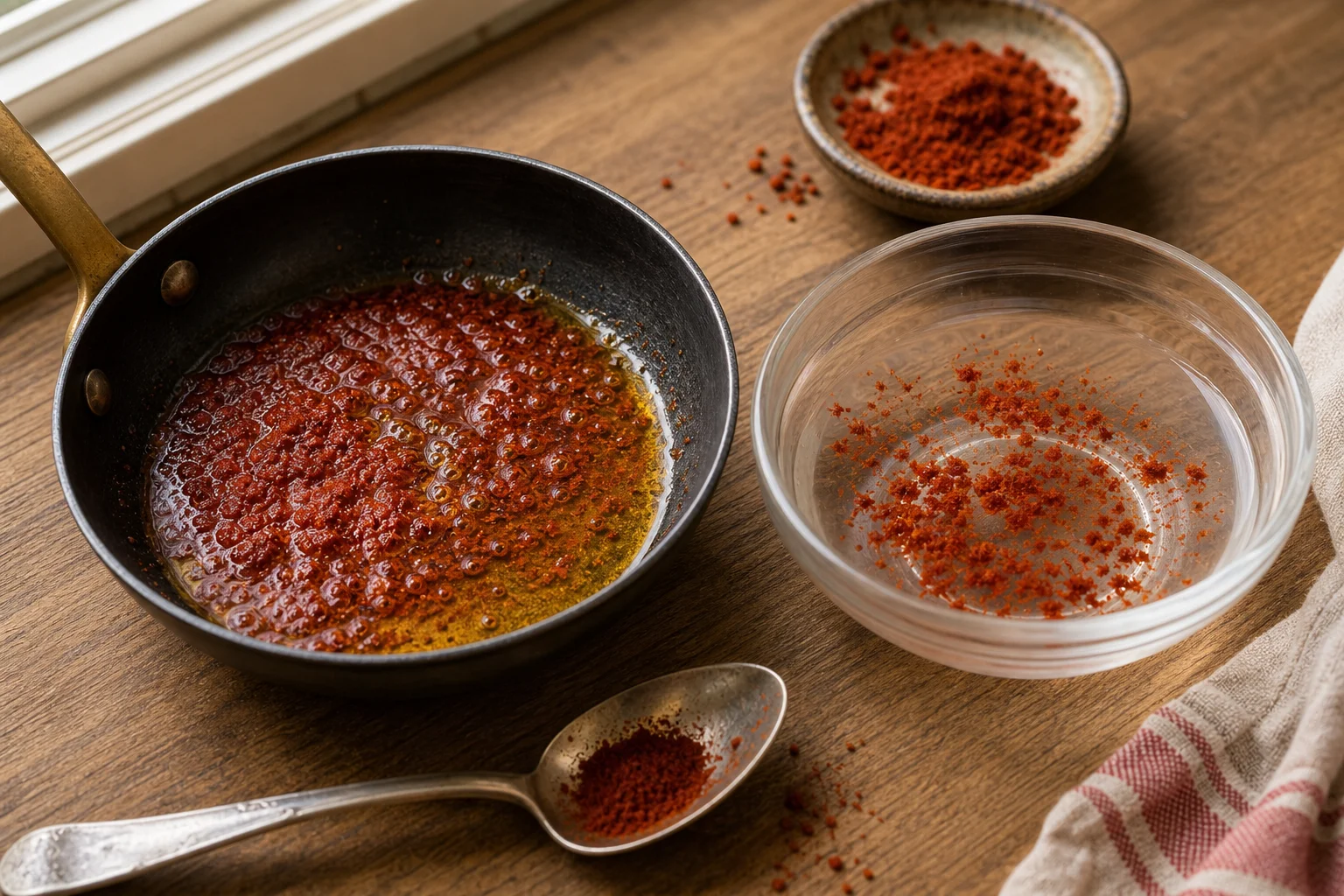
Fat-soluble flavors release better into oil or butter, while water-soluble flavors release into water, broth, vinegar, or other wet ingredients. Many spices contain both kinds of compounds, so the best cooking order often uses hot fat first, then liquid. This is why blooming turmeric, cumin, paprika, or cayenne changes flavor more than stirring them into water.
What does fat-soluble versus water-soluble mean in cooking?
Fat-soluble flavor moves into oil, butter, ghee, cream, or rendered fat. Water-soluble flavor moves into water, broth, vinegar, or juice.
Most spices are not one or the other. They carry several compounds, and each one releases best under different conditions.
The useful cooking question is which flavor you want first. Aroma often needs fat, while color or softening may need liquid.
Powders also need wetting. A dry particle floating in broth can taste raw even when the pot has simmered.
Aroma, color, heat, and bitterness can separate in the pan. One spoonful may need more than one carrier.
This is why a recipe can toast a spice, bloom it in oil, and still simmer it. Each step extracts a different part.
That is why blooming spices in oil can make the same measured spoon taste fuller.
The practical question is not chemistry trivia. It is whether the pan gives the spice the carrier it needs.
Browned onions add sweetness through browning reactions, while oil bloom releases spice aroma.
That difference matters in a curry base. Brown onions build sweetness, but oil contact wakes the ground spices.
It also matters in soup. Adding more powder cannot fix flavor if the first spoon never dispersed.
This is why a roux, curry paste, or tomato paste stage can help. Thick bases hold spice particles before liquid floods the pan.
A watery pot can still taste good, but it often needs a separate fat step. Soup is not exempt from solubility.
Why oil blooming changes spice flavor
Hot fat wets spice particles, carries aroma, and spreads flavor through the dish before water enters.
The oil layer acts like a flavor courier. It coats onion, meat, beans, rice, or vegetables before broth dilutes the pan.
This is why a small amount of bloomed spice can taste bigger than a larger amount stirred straight into soup.
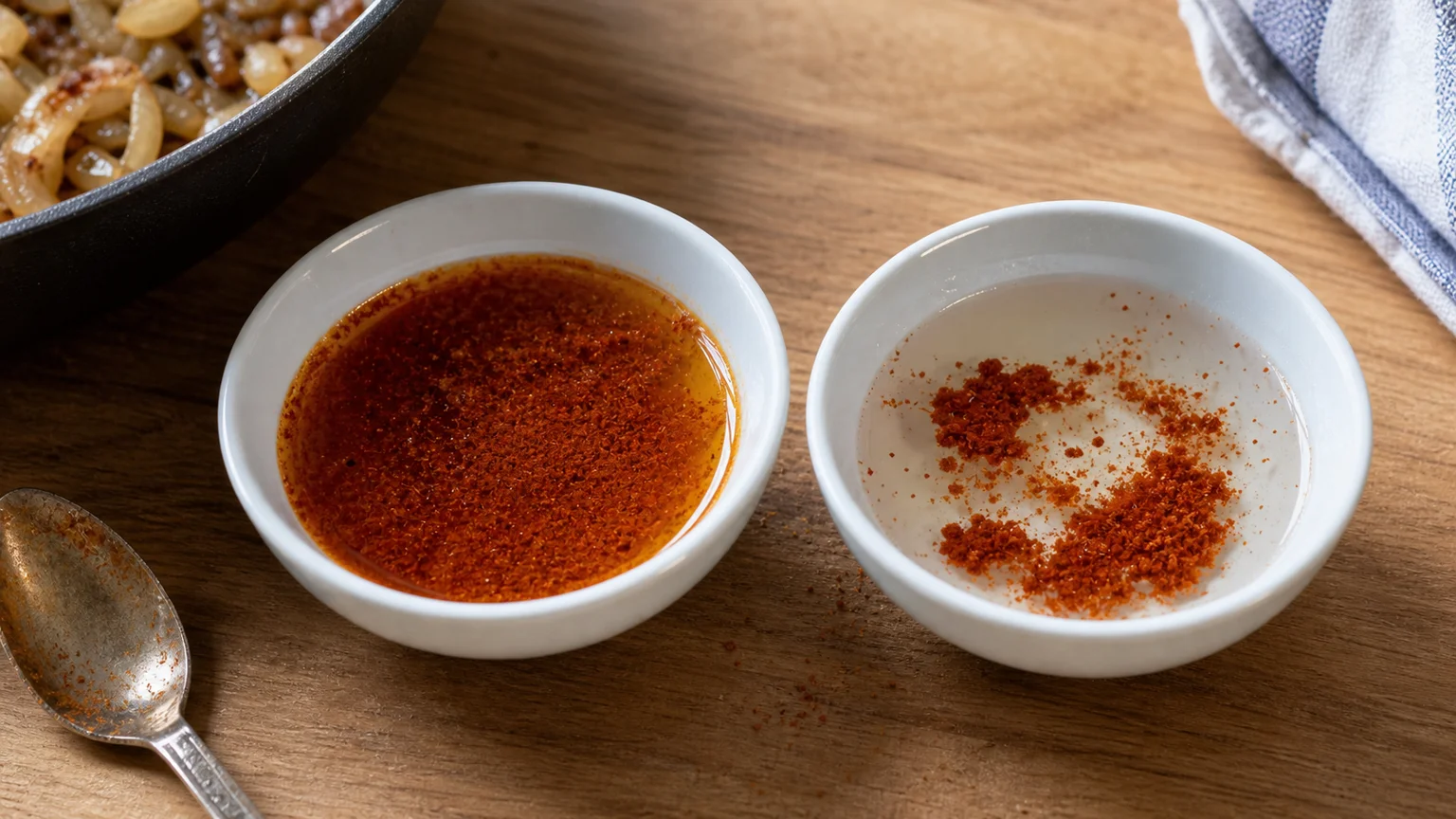
- Oil side: Color and aroma spread evenly because fat coats the particles.
- Water side: Powder floats, clumps, or tastes raw until heat and fat help.
- Pan order matters: Add liquid after the aroma opens, not before.
- Heat still has limits: Burnt powder tastes bitter even if it released well.
| Ingredient | Best first carrier | Cooking consequence |
|---|---|---|
| Cumin | Oil or dry toast then oil | Earthy aroma gets rounder |
| Turmeric | Oil or ghee | Color spreads and dustiness drops |
| Saffron | Warm water or broth | Threads release color without frying |
| Paprika | Gentle oil | Color blooms, but high heat burns it |
This rule explains many curry bases, chili oils, tadka, and sofrito-style starts. Fat carries the first wave of flavor.
Cooks often read that wave by smell. Raw powder smells dusty, then hot fat makes it smell round and specific.
The window is short for fine powders.
Paprika, chile powder, and turmeric can move from fragrant to bitter in seconds.
Aromatics protect that window. Onion, tomato paste, garlic, or ginger can lower pan heat and give the spice something to coat.
If the pan looks dry, add a spoon of oil before the powder. Dry powder on hot metal burns quickly.
Which spices should not hit hot oil first?
Some ingredients give their best flavor to water, steam, or gentle liquid.
Frying them first can waste aroma or add bitterness.
In the dish, saffron is the clearest example. Warm water or broth pulls color and aroma from threads more safely than frying.
Dried whole chiles are another mixed case. Toasting wakes aroma, but soaking lets tough skin and flesh blend smooth.
Fresh herbs have a different problem.
Heat and long oil contact can flatten green aroma before the dish reaches the table.
- Saffron threads: Bloom in warm water, milk, or broth before adding to rice or stew.
- Dried chiles for sauce: Toast lightly, then soak so the flesh softens before blending.
- Tea spices: Simmer or steep when the drink needs water extraction.
- Fresh herbs: Add late when volatile green aroma matters more than oil color.
The point is sequence. A dried chile may need both dry toast and water before it becomes a smooth sauce.
Acid changes the decision too. Vinegar can brighten a sauce after extraction, but early acid can harden beans and slow softening.
Alcohol can carry some aromas as well, but most home spice cooking depends on fat and water.
Wine helps a sauce, but it is not a bloom step.
Treat acid as a finishing and balancing tool unless the recipe proves otherwise. It changes taste more than extraction in most spice work.
For tea spices, water is not a compromise. Simmering pulls cinnamon, clove, ginger, and cardamom into the drink.
How do fat, water, acid, and alcohol change the same spice?
The same spice can behave differently in four carriers.
Fat spreads aroma, water softens particles, acid sharpens taste, and alcohol lifts some volatiles.
Paprika in oil tastes round and red. Paprika in plain water can look colorful while still tasting dusty.
Cumin in oil gives earthy depth. Cumin in broth needs time, salt, and fat nearby before it stops tasting raw.
Saffron breaks the pattern because warm liquid does the useful work.
Frying threads wastes the delicate top note.
Alcohol matters most in sauces where wine or spirits already belong. It is not a reason to splash liquor into every spice base.
| Carrier | What it draws out | Reach for it when |
|---|---|---|
| Fat | Color and the fat-soluble aroma | The flavor has to travel through the whole dish |
| Water | Softens particles, extracts slowly | A broth, tea, or long simmer carries the dish |
| Acid | Sharpens perception rather than extracting | The base is built and the finish needs lift |
| Alcohol | Lifts some volatiles quickly | Wine or spirits already belong in the sauce |
Acid usually comes after extraction. Lime, vinegar, or tamarind can brighten a curry once fat and water have done their jobs.
Use this carrier map as a repair tool.
If the flavor tastes dusty, change contact before increasing the spoon size.
The map also explains finishing oils. A little chile oil on soup tastes clearer than more dry powder stirred in late.
It explains herb garnishes too. Fresh cilantro, mint, and parsley often belong after heat because their best aroma is volatile.
A tomato curry shows the order clearly.
Toasted aromatics and ground spices need fat first, then tomato can bring water and acid without trapping raw powder.
In the dish, cumin seed can tolerate a hotter early stage than paprika or turmeric powder. Form matters as much as the spice name.
Use the same logic when scaling recipes. A wider pan may need more oil surface, not just a larger spoon of powder.
No single carrier wins every time.
Good spice cooking often uses fat first, water second, and acid last.
How to choose the right pan order
Start by asking what the spice must do. Color, aroma, heat, and texture do not need the same path.
| Cooking goal | Best order | Why it works |
|---|---|---|
| Build curry base | Oil, aromatics, ground spices, liquid | Fat releases aroma before dilution |
| Make chile sauce | Toast, soak, blend, simmer | Water softens skin and flesh |
| Season soup | Bloom powder in fat, then add broth | Avoids raw spice floating on top |
| Finish herb sauce | Chop fresh, add off heat | Keeps green aroma alive |
If the spice tastes flat, do not only add more. Check whether it ever touched fat, heat, salt, or enough time.
If the spice tastes bitter, the carrier may be right but the heat was wrong.
Lower heat fixes more dishes than extra liquid.
If the spice tastes raw, the carrier may be right but the timing was too short. Give it a brief fat stage or simmer.
For layered flavor, use oil first for base notes, simmer for integration, then finish with a small fresh spice or herb cue.
That sequence prevents a common mistake. The dish gets base aroma without losing every bright note to a long simmer.
For a quick repair, bloom a fresh pinch in oil and stir it into the finished pot. That works better than dumping dry spice on top.
For a planned dish, choose the carrier before measuring. Good order lets you use less spice and get clearer flavor.
This is also why recipe order matters. The ingredient list tells you what to use, but the pan order tells you what releases.
What happens when there is no heat at all?
A vinaigrette, a yogurt dip, and a rub sitting on cold meat all break the usual rule, because nothing in them is going to bloom.
Cold fat still dissolves the fat-soluble compounds, only slowly. Whisk paprika into oil an hour ahead and the color moves, while the same whisk thirty seconds before serving does almost nothing.
Time replaces temperature here.
That is why a cold dip tastes different the next day, and why recipes for herb dressings so often tell you to let them rest.
Ground spices in cold water face the opposite problem. Water pulls very little out of them, so the powder stays suspended and reads as grit on the tongue.
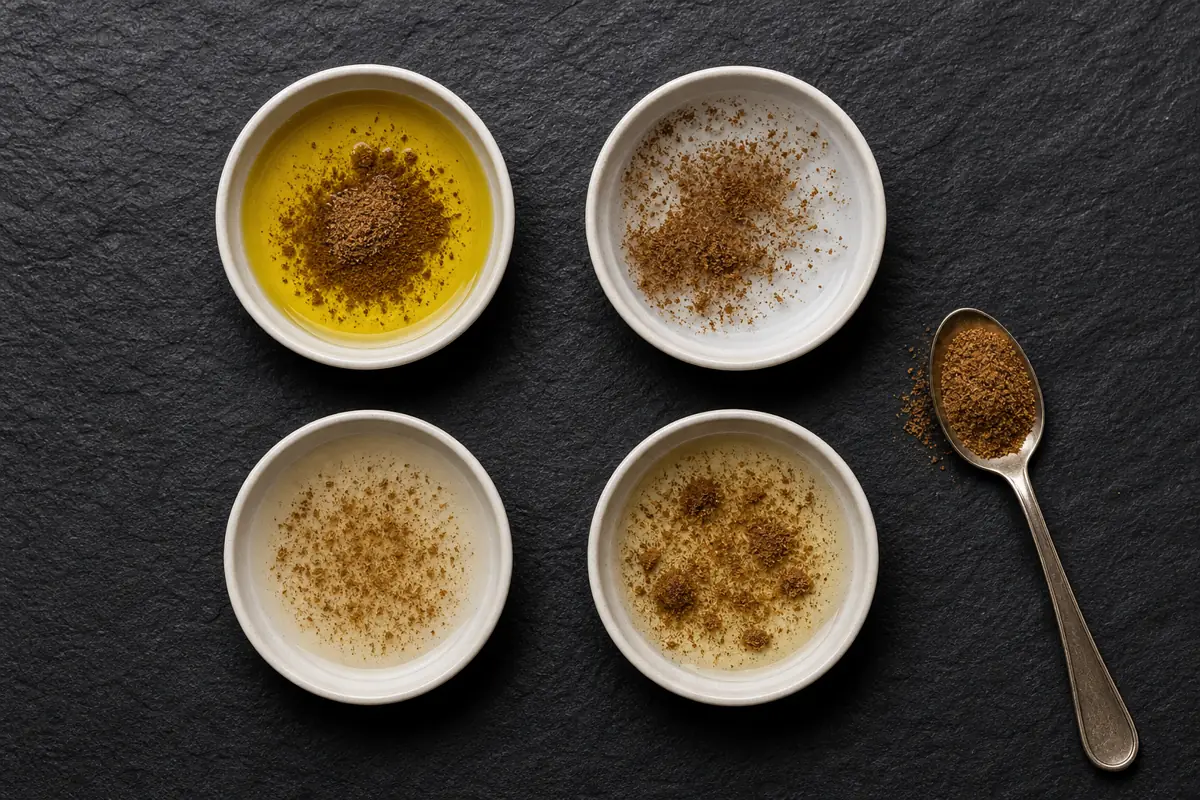
- Cold oil: Starts wetting fat-soluble compounds, but needs resting time to spread them.
- Cold water: Leaves much of the powder suspended, so texture stays rough.
- Vinegar: Sharpens the finished taste but does not replace first contact with fat.
- Wine: Carries some volatile aroma only when it already belongs in the recipe.
The fix is to build a paste first. Mix the spice into oil, mustard, or tahini before any vinegar or water joins, so the fat gets first contact.
Whole spices are close to useless cold. Without heat or a long steep, a coriander seed in a dressing is texture rather than flavor.
Common solubility mistakes that make spices taste flat
Flat spice flavor usually starts when dry powder enters a watery pot and never gets a chance to open.
The second mistake is using fierce heat to compensate. High heat burns powder faster than it extracts better flavor.
The third mistake is adding fresh herbs too early. Their bright aroma can vanish before the main dish is done.
- Adding powder to cold broth: Bloom the spice in fat or paste before adding liquid.
- Skipping salt: Salt helps aroma read as food, not dust.
- Burning paprika: Use gentle oil and add liquid as soon as the color deepens.
- Over-boiling delicate aroma: Add finishing spices or herbs after the heat drops.
Use the smallest upstream fix.
Change carrier or order before increasing the spice amount.
If a finished soup tastes dull, bloom a little fresh spice in oil and stir it in. Then wait before adding more.
If a sauce tastes bitter, stop extracting and dilute with body. Tomato, onion, stock, cream, or beans can soften the edge.
If a curry tastes dusty, the powder may have missed fat contact.
Next time, bloom before the main liquid goes in.
If a stew tastes flat after an hour, make a small spice oil separately. Stir it in like a seasoning correction.
If a dish tastes sharp after vinegar, wait before adding more spice. Acid can make hidden bitterness feel louder.