
Italian Seasoning: What Belongs in the Blend?
Build a balanced salt-free blend, then match its dose and timing to the food in front of you.
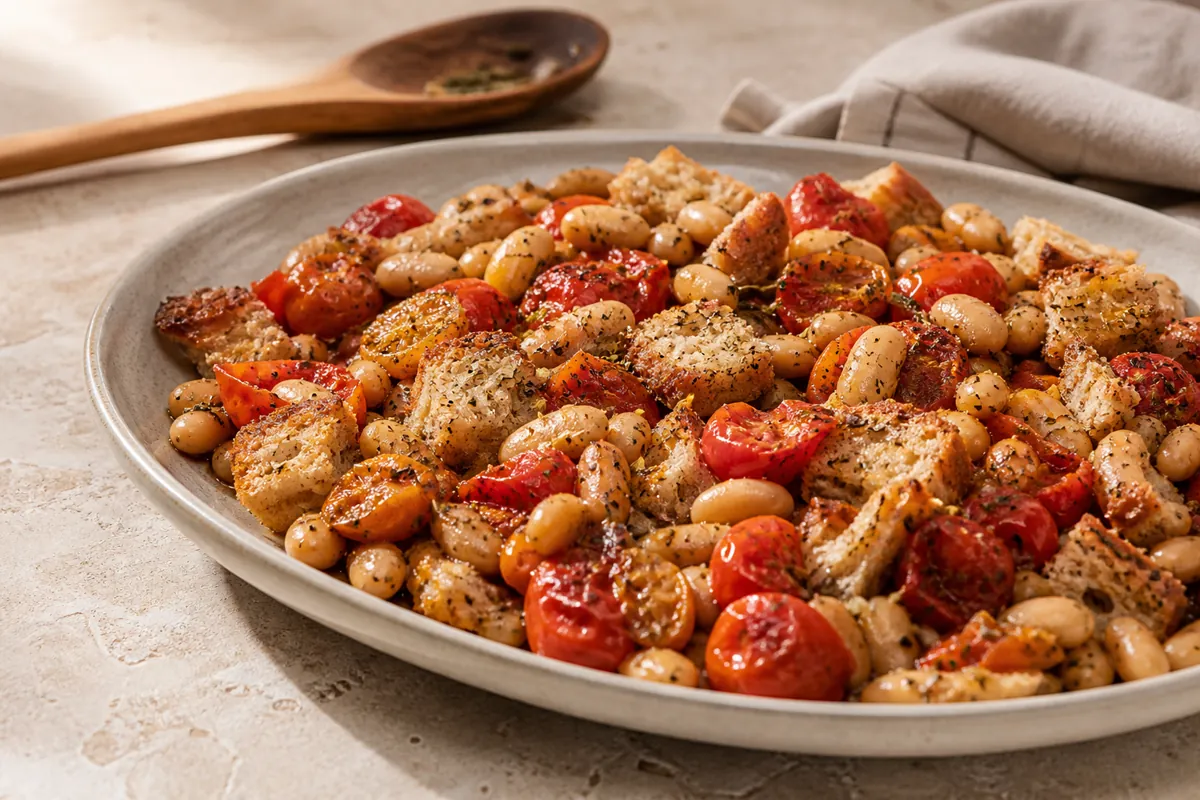
Italian seasoning is a dried herb blend usually built from oregano, basil, thyme, rosemary, and marjoram. Crush coarse leaves, start with one teaspoon for four servings, and add it early enough to hydrate without letting it scorch.
What is in Italian seasoning, and is it actually Italian?
Italian seasoning is a North American dried-herb blend inspired by herbs used across Italian and Mediterranean cooking.
Most jars combine oregano, basil, thyme, rosemary, and marjoram. The exact proportions change because no protected formula controls the name.
The mixture is uncommon as a single pantry product in Italy, where cooks often choose herbs for a particular regional dish.
Oregano and basil usually form the broad base. Thyme, marjoram, and rosemary add sharper notes that keep the mix from tasting flat.
Some brands add parsley, sage, savory, fennel seed, or red pepper flakes. Those additions change which foods the jar suits.
Garlic powder and onion powder turn a plain herb blend into a broader seasoning. They can brown or burn before the leaves soften.
Salt is another important boundary.
A salted formula cannot follow the same dose as a salt-free jar without changing the whole dish.
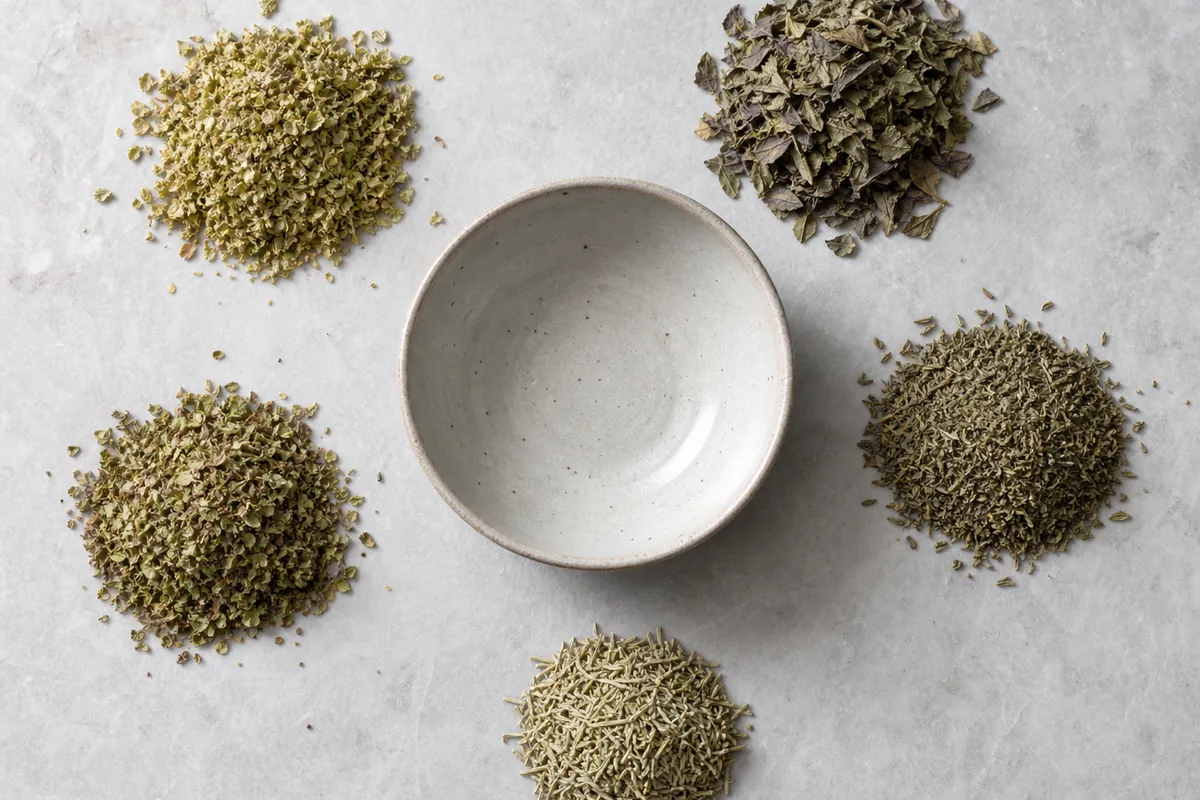
- Oregano and basil provide the largest share.
- Thyme and marjoram fill the middle.
- Rosemary stays smaller and more finely crushed.
| Label ingredient | What it changes | Best response |
|---|---|---|
| Five dried herbs | Plain, flexible herb base | Salt the food separately |
| Garlic or onion | Stronger savory flavor and faster browning | Use lower heat around exposed flakes |
| Red pepper | Adds chile heat | Reduce other hot ingredients |
| Salt | Seasons and flavors at once | Measure before adding more salt |
A useful jar should smell like several herbs at once. One loud rosemary or oregano note signals an unbalanced formula for general use.
Which herb should lead the blend?
Oregano should provide the earthy, peppery backbone in most Italian seasoning. Its slight bitterness holds up in tomato, beans, and browned meat.
Dried basil softens that edge with a sweet, lightly anise-like aroma. It is gentler than fresh leaves and works best as support.
Thyme bridges the two through dry mint, lemon, and earth. Its small leaves distribute more evenly than rosemary needles.
Marjoram tastes sweeter and less forceful than oregano.
It rounds the blend without making it taste sugary or floral.
Rosemary needles contribute pine and resin, but their long shape releases concentrated bursts. A small share can flavor every bite after crushing.
Too much oregano makes the mix harsh. Extra basil and marjoram soften it, while thyme adds body without more bitterness.
A woody blend needs less rosemary rather than more of every other herb. Dilution can make an already large batch stale before you finish it.
| Herb | Main contribution | Excess tastes like | Useful adjustment |
|---|---|---|---|
| Oregano | Earthy, peppery, bitter | Harsh and medicinal | Add basil or marjoram |
| Basil | Sweet, green, lightly anise-like | Soft and vague | Add oregano or thyme |
| Thyme | Dry mint, lemon, earth | Dusty | Use fresher leaves |
| Marjoram | Sweet, floral, gentle | Too delicate | Add oregano |
| Rosemary | Pine and resin | Woody and dominant | Reduce and crush it |
The goal is not equal strength.
The blend should taste connected, with no single leaf announcing itself in every mouthful.
Which herbs in the blend actually survive drying?
The ingredient list and the flavor rarely match, and drying is the reason.
Oregano, thyme, rosemary, marjoram, and savory hold their aroma well once dried. Their oils sit in tough, resinous leaves that tolerate water loss.
Basil and parsley do not.
Both lose most of their volatile aroma during drying, which is why dried basil smells closer to hay than to the fresh leaf.
So a blend listing basil high on the label still tastes oregano-led. The basil is present by weight and largely absent by flavor.
That is worth knowing before you blame the jar. A blend that seems unbalanced is usually one whose fragile ingredients died in the dryer, and a handful of fresh basil at the end fixes what more dried seasoning cannot.
How do you make Italian seasoning at home?
A balanced small batch starts with two parts dried oregano and two parts dried basil. These herbs create the familiar base.
Add one part dried thyme and one part dried marjoram. Finish with one-half part crushed dried rosemary.
For a practical batch, use two tablespoons each oregano and basil, one tablespoon each thyme and marjoram, and two teaspoons rosemary.
Rub the rosemary and thyme between clean palms before measuring. Smaller pieces distribute better and feel less needle-like on food.
Stir the herbs in a wide bowl instead of shaking a full jar. Dense rosemary can otherwise settle below lighter basil flakes.
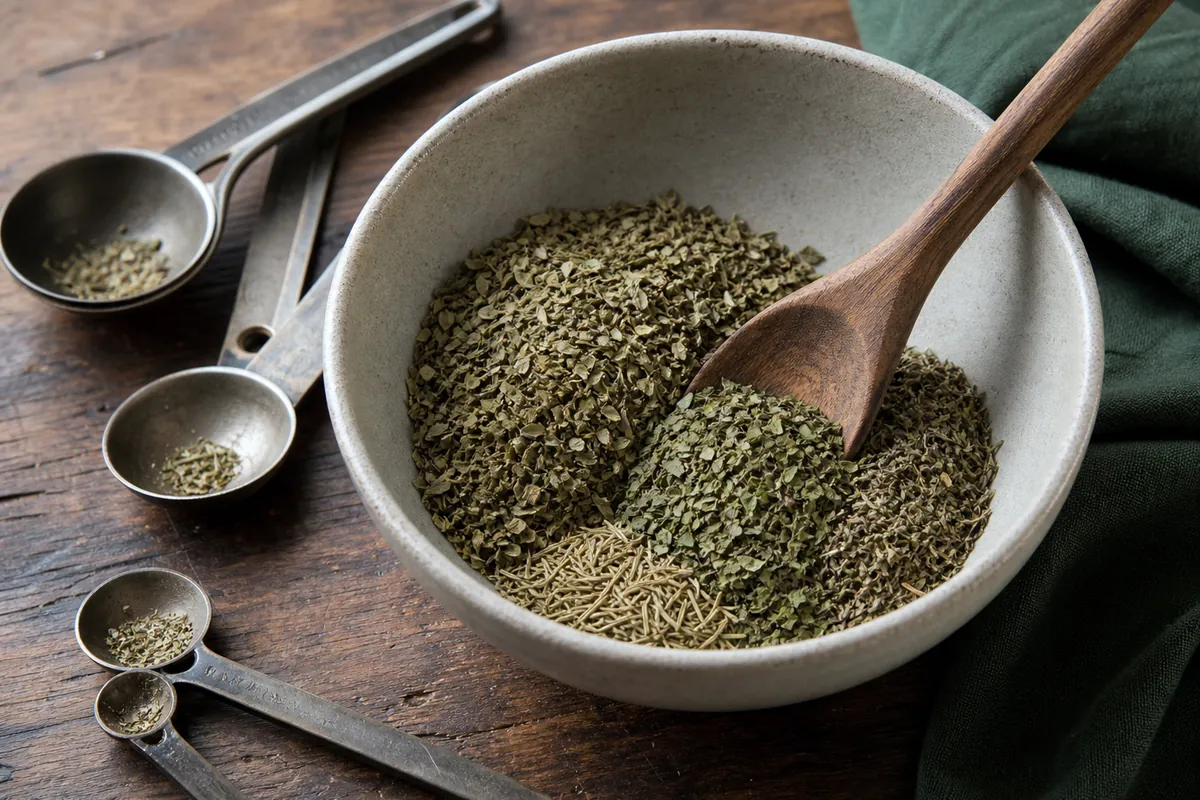
- Oregano and basil lead the volume.
- Thyme and marjoram support the center.
- A wooden spoon distributes the heavier rosemary pieces.
Let the mixture rest overnight, then smell a crushed pinch.
The closed jar allows the different aromas to mingle before testing.
- More tomato focus: Increase oregano by one teaspoon, then retest before changing another herb.
- Softer poultry blend: Increase thyme and marjoram while keeping rosemary at the measured amount.
- For bread: Add a little fennel seed or chile only to the portion you plan to use.
- Keep it flexible: Leave salt, garlic, and onion outside the base jar so each dish controls them.
Test the batch in warm olive oil with a piece of bread. Dry tasting exaggerates bitterness and hides how the herbs behave with fat.
Make only what you can use in several months. A smaller fresh batch gives clearer flavor than a large jar built for convenience.
When should you add Italian seasoning during cooking?
Dried Italian seasoning needs moisture and time to soften.
Add it early in sauces, soups, beans, and braises that simmer gently.
Briefly blooming herbs in oil helps release aroma, but the leaves should not sit alone over high heat. Thirty seconds is often enough.
For tomato sauce, stir the blend into softened aromatics before adding tomatoes. The incoming liquid stops the herbs from scorching.
For soup or beans, add most of the dose with the liquid.
The best spice timing leaves room to retaste after hydration.
Roasted vegetables need oil so the herbs cling and stay protected. Fine basil flakes burn on a dry sheet pan before potatoes brown.
A quick skillet dish offers less hydration time. Crush the blend finely and add a splash of stock, wine, or tomato soon afterward.
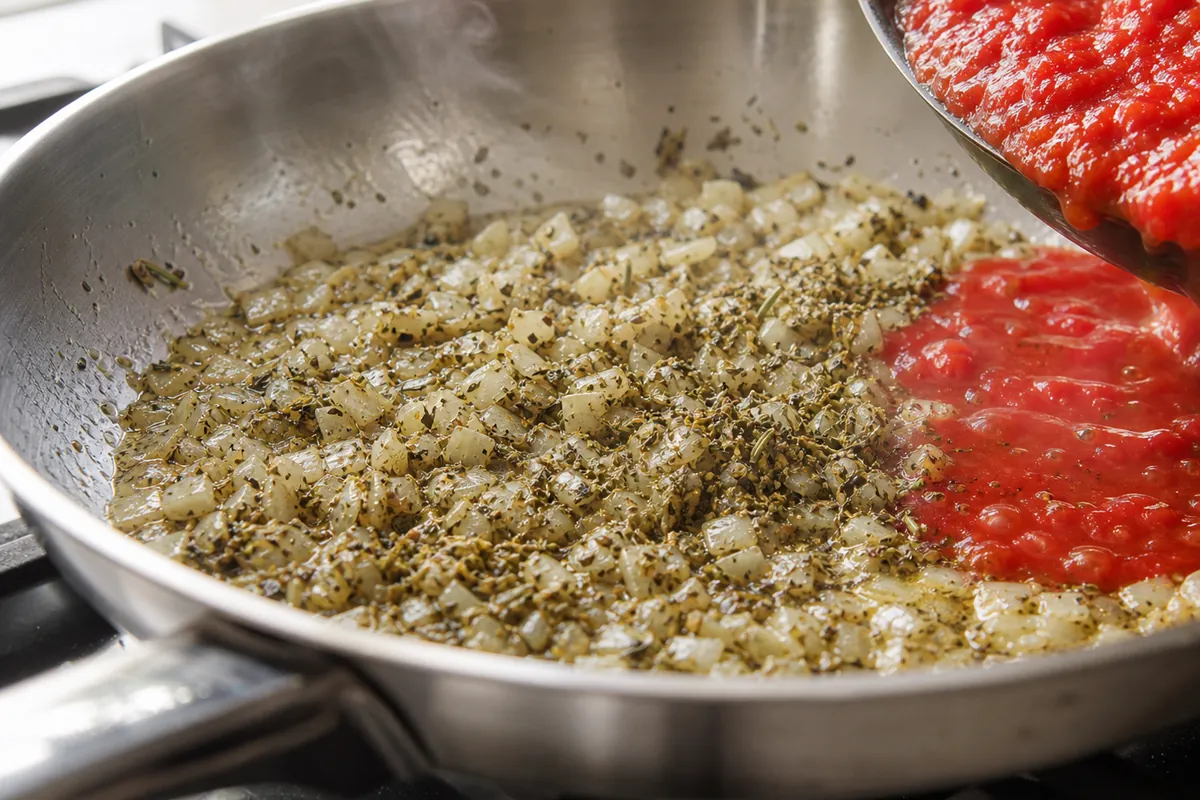
- Onions are soft before the herbs enter.
- The dried leaves remain green-brown rather than black.
- Tomato follows within seconds, not several minutes.
Cold dressing needs at least ten minutes of rest.
Vinegar and oil soften edges slowly compared with a simmering sauce.
| Dish | When to add | Why | Watch for |
|---|---|---|---|
| Sauce or soup | With the main liquid | Leaves hydrate during simmering | Flat aroma after a very long cook |
| Beans or braise | Early | Herbs spread through the cooking liquid | Salt from packaged blends |
| Roasted vegetables | Before roasting with oil | Oil protects and distributes flakes | Burnt herbs on bare metal |
| Vinaigrette | 10 to 20 minutes before serving | Acid softens the dry leaves | Coarse rosemary needles |
Black, brittle flakes taste bitter and cannot be revived. Remove loose burnt herbs and rebuild aroma with a smaller fresh pinch.
How much Italian seasoning should you use?
Start with one teaspoon of salt-free Italian seasoning for four servings. Hydrate it before deciding whether the dish needs more.
A quart of tomato sauce can handle one to two teaspoons because liquid distributes the herbs and acidity needs aromatic support.
One pound of potatoes or vegetables usually needs one teaspoon. Coat the pieces with oil before adding the herbs.
For one pound of chicken, start with two teaspoons mixed into oil, garlic, and salt. Skin and exposed surface hold more herbs.
One cup of vinaigrette needs only one-half to one teaspoon. Cold oil preserves strong rosemary and oregano notes.
| Food | Starting amount | Retaste after |
|---|---|---|
| 4 servings soup | 1 teaspoon | 10 minutes of simmering |
| 1 quart tomato sauce | 1 to 2 teaspoons | 20 minutes of simmering |
| 1 pound vegetables | 1 teaspoon | Roasting and final salting |
| 1 pound chicken | 2 teaspoons | Cooking and resting |
| 1 cup vinaigrette | 1/2 to 1 teaspoon | 15 minutes of hydration |
Ground powder tastes stronger per spoon than coarse leaves because it spreads over more surface. The finished grind size should reduce the first dose.
Measure salted blends by their sodium role first. More herbs should come from a salt-free mix when the food is already seasoned.
What can you cook with Italian seasoning beyond pasta sauce?
White beans suit Italian seasoning because their mild starch carries oregano and rosemary while broth softens every leaf.
Chicken thighs, pork, and meatballs accept the full blend. Fat supports rosemary, while browning tempers the herbs' dry edges.
Potatoes, zucchini, mushrooms, and eggplant work well when oil coats them evenly. Add lemon after roasting for a brighter finish.
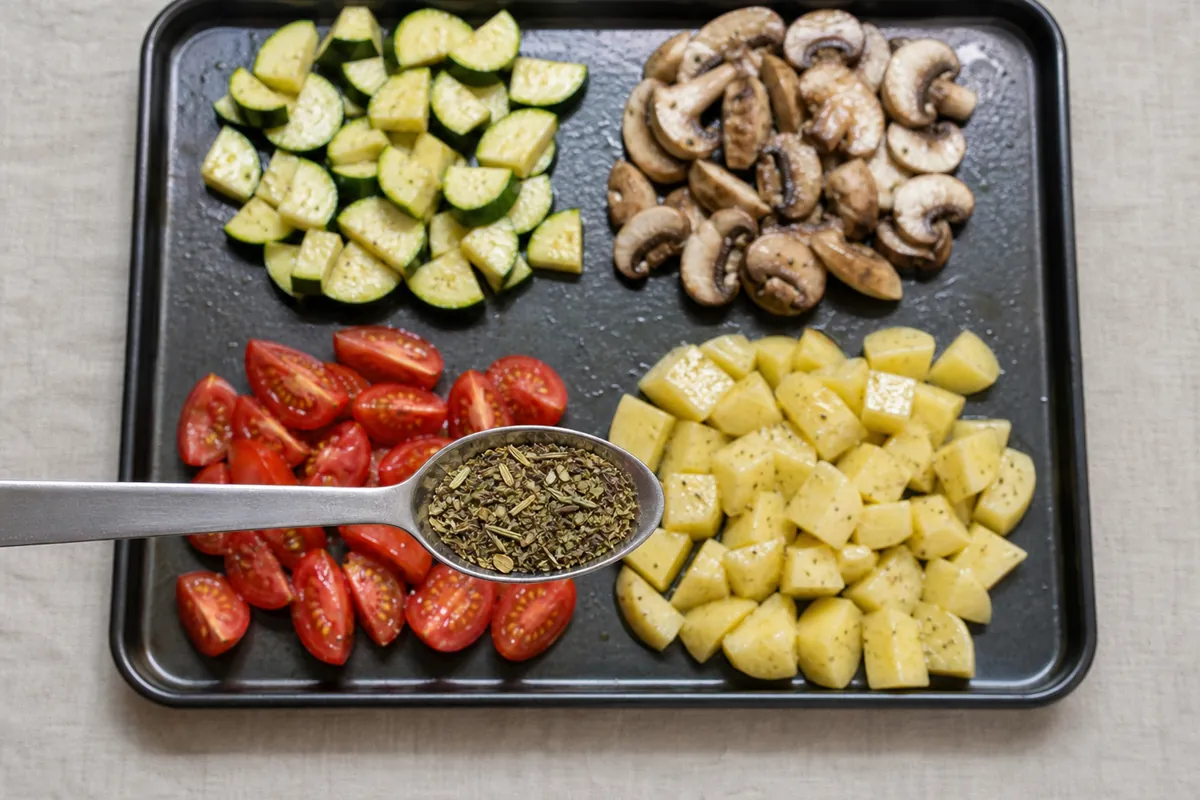
- Oil helps the leaves cling before roasting.
- A level spoon makes the dose repeatable.
- Salt remains a separate adjustment.
Focaccia and savory biscuits benefit from the mixture in the dough or topping.
Crush rosemary finely so slices do not carry tough needles.
Tomato, white bean, and lentil soups can take the herbs early. Cream soups usually need a smaller amount to avoid a dusty finish.
- Sheet-pan vegetables: Coat with oil, add one teaspoon per pound, and keep loose flakes off bare metal.
- Bean pot: Add the blend with broth so oregano and thyme spread through the cooking liquid.
- Bread dough: Crush every coarse leaf before kneading or pressing it into the oiled surface.
- Vinaigrette: Whisk the herbs with vinegar first, then rest before adding tender salad leaves.
Delicate fish, fresh pesto, and simple butter sauces often taste clearer with one chosen herb. Five dried herbs can blur their clean flavors.
The blend also struggles when a dish depends on fresh basil aroma.
Dried basil cannot recreate tender leaves added at serving time.
What can substitute for Italian seasoning?
The best quick substitute combines equal amounts dried oregano and basil, plus half as much thyme. This covers earth, sweetness, and structure.
Oregano alone can season tomato sauce or pizza, but it will taste sharper and less rounded. Start with half the requested blend amount.
Herbes de Provence works in chicken, beans, and roasted vegetables. It often tastes woodier and may contain savory or lavender.
Fresh herbs are a different tool because they add water and lose aroma with long heat.
Add them later and use a larger volume.
| Substitute | Ratio | Best for | Main difference |
|---|---|---|---|
| Oregano, basil, thyme | 1:1 | Sauce, soup, roast | Missing rosemary and marjoram |
| Dried oregano | 1/2 amount | Tomato and pizza | Sharper and more bitter |
| Herbes de Provence | 1:1 | Chicken, beans, vegetables | Woodier and sometimes floral |
| Fresh mixed herbs | About 3 times the volume | Finishing and quick sauces | More moisture and gentler concentration |
Do not replace the blend with garlic powder alone. Garlic supplies savoriness but none of the leafy aroma that the recipe expects.
How do you buy and store Italian seasoning?
Choose a label that names each herb and keeps salt separate unless you specifically want a complete seasoning.
The mixture should show recognizable green and brown leaves with few pale stems. Heavy dust suggests old or overground material.
Crush a pinch before buying from bulk bins. Fresh herbs release oregano, pine, mint, and sweetness within seconds.
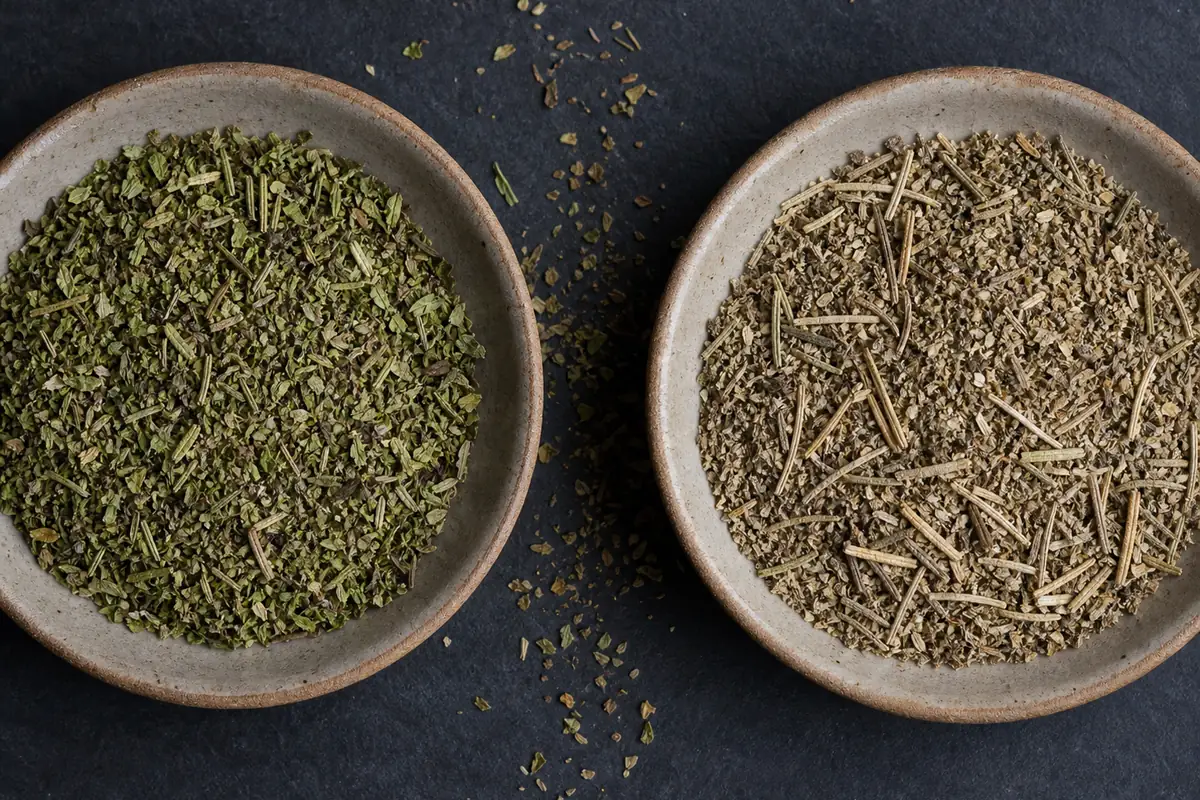
- Fresh-looking leaves keep muted natural green color.
- Long woody stems dilute useful flavor.
- Dust loses aroma faster than intact flakes.
Use the same ground spice storage rules for this jar. Keep it airtight, dark, cool, and away from steam.
- Buy small: A modest jar turns over before the lightest basil and marjoram notes disappear.
- Date it: Mark the opening month so a weak jar does not become the assumed flavor standard.
- Crush-test it: Replace the blend when a rubbed pinch smells mainly dusty or like one stale herb.
- Keep it dry: Shake into your palm instead of holding the open jar over a steaming pot.
A faded blend is not usually dangerous when dry and clean, but adding more creates woody texture without restoring missing aroma.
Discard the jar if moisture forms, clumps stay damp, or the contents smell musty. Freshness loss and spoilage are separate problems.