
Herbes de Provence: Does Lavender Belong in the Blend?
Use the four-herb French benchmark to read labels, control floral notes, and season food at the right time.
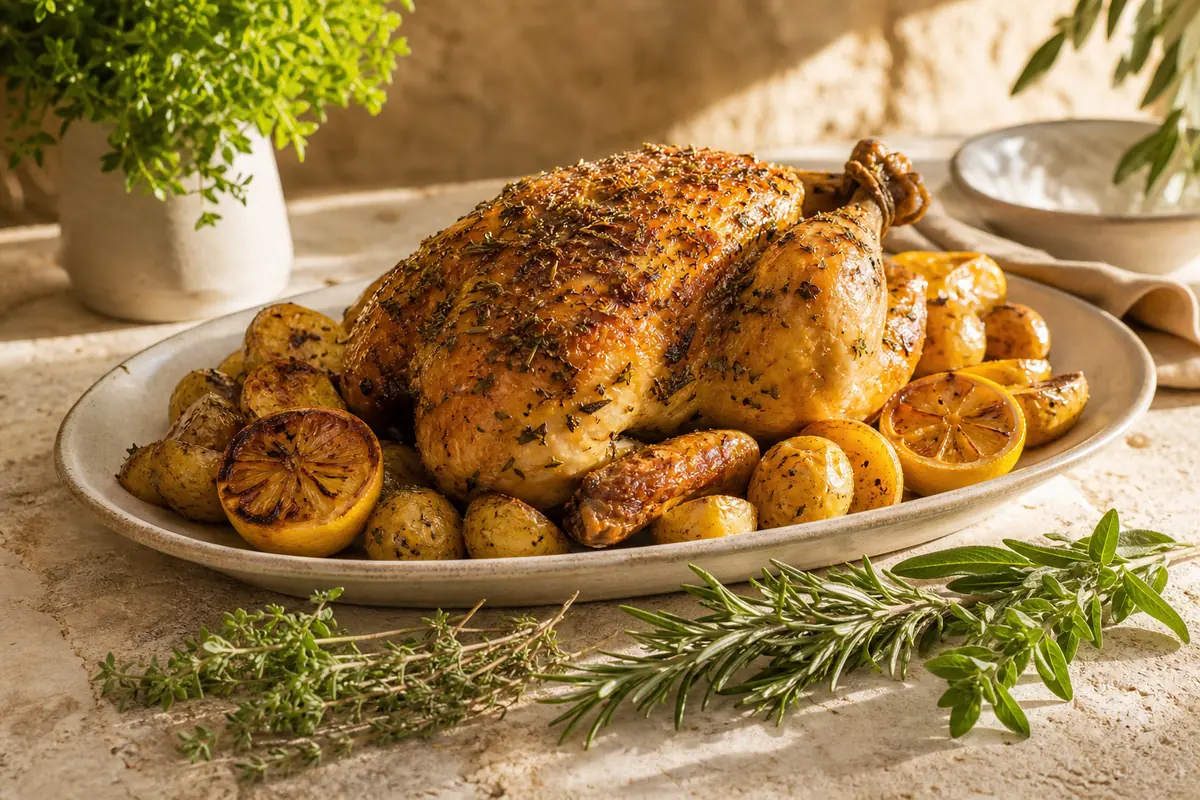
Herbes de Provence is a dried herb blend commonly built around thyme, rosemary, savory, and oregano, while lavender is optional. Start with one teaspoon for four servings, crush coarse leaves, and add the blend early enough to hydrate without direct flame.
What herbs are in Herbes de Provence?
A jar labeled Herbes de Provence contains dried herbs associated with southeastern French cooking, but ordinary commercial formulas are not all identical.
The French Label Rouge specification provides a useful benchmark. It fixes the mix at thyme, rosemary, savory, and oregano.
That certified formula uses 19 percent dried thyme. Thyme gives a dry minty note that fills the space between stronger herbs.
Rosemary, savory, and oregano each make up 27 percent. The equal share keeps any one of those assertive herbs from taking over.
Woody rosemary leaves bring pine and resin. Large needles make the blend feel coarse, so crushing them before cooking improves distribution.
Savory tastes peppery and slightly minty. It gives the mixture a sharper middle note without requiring chile or much black pepper.
Dried oregano adds an earthy, slightly bitter edge. It helps the blend stand up to tomatoes, browned meat, and olive oil.
| Herb | Certified share | Main flavor | What excess tastes like |
|---|---|---|---|
| Thyme | 19% | Dry, minty, earthy | Dusty and medicinal |
| Rosemary | 27% | Pine, resin, citrus | Woody and bitter |
| Savory | 27% | Peppery, minty | Sharp and austere |
| Oregano | 27% | Earthy, warm, bitter | Harsh and dominant |
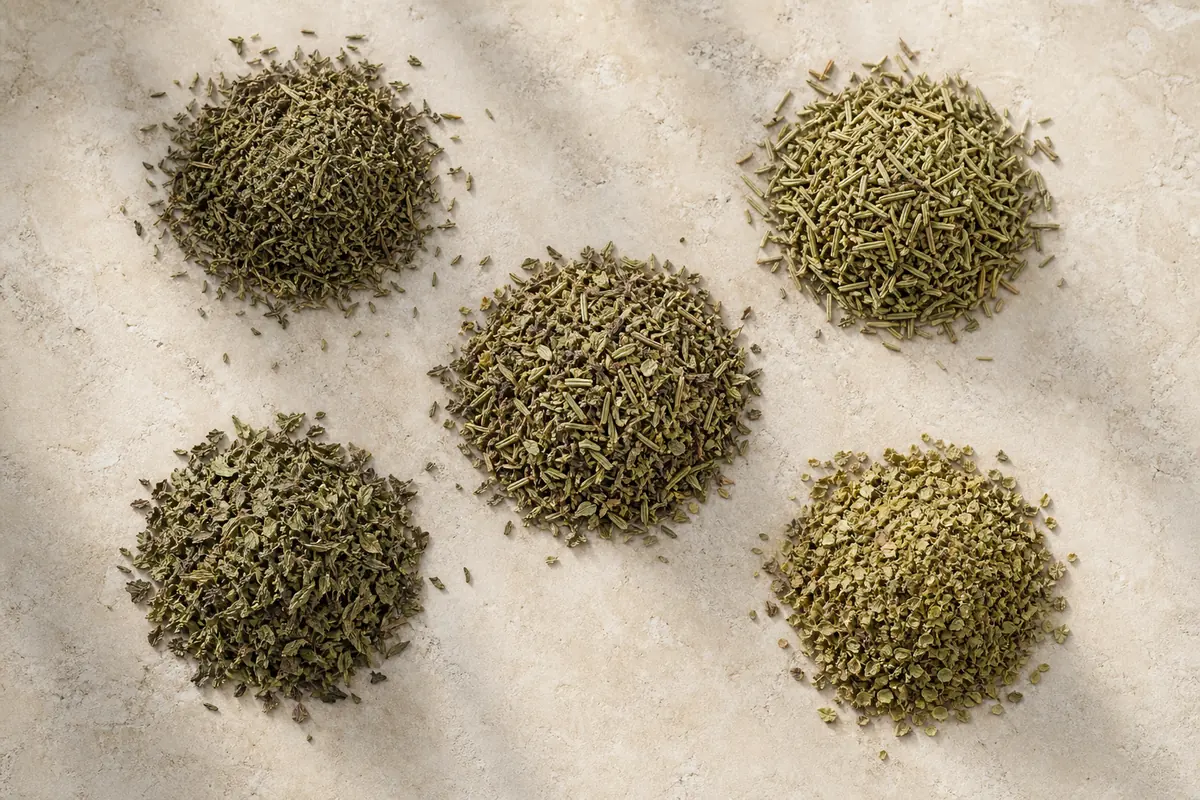
- Thyme provides the fine leafy base.
- Rosemary adds the largest visible needles and a pine note.
- Savory and oregano supply peppery and earthy depth.
Other jars may include marjoram, basil, bay, fennel, or tarragon. Treat those as formula choices rather than proof that one blend is wrong.
Does Herbes de Provence need lavender?
Whether lavender belongs in Herbes de Provence depends on the dish. The certified French formula contains none, while many international blends include it.
Lavender changes the mixture more than its small volume suggests. The buds add a floral, cooling, and sometimes camphor-like aroma.
Choose a lavender-free jar for tomato sauces, beans, stews, or everyday roasting. The four core herbs fit those foods without adding perfume.
A restrained lavender blend can suit lamb, roast chicken, honeyed carrots, or goat cheese. Richness and browning keep the floral note grounded.
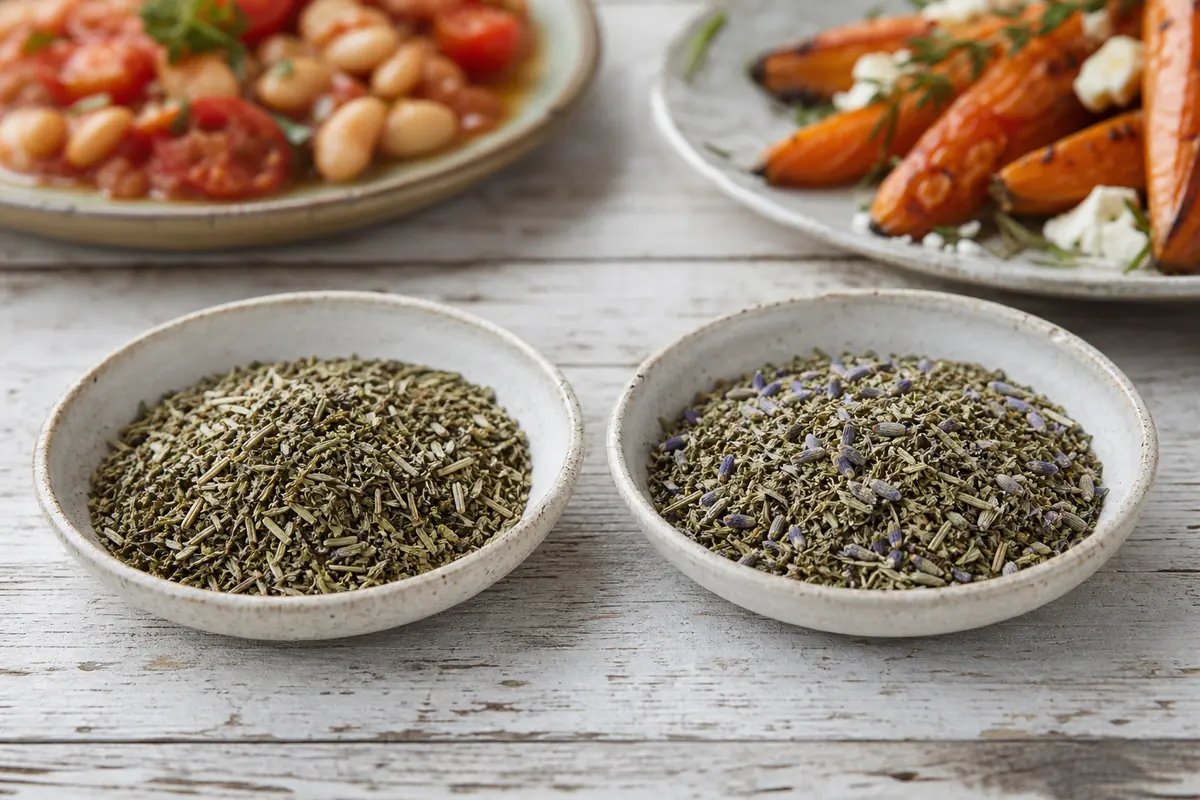
- The lavender-free bowl shows thyme, rosemary, savory, and oregano.
- The floral bowl uses only a small share of visible buds.
- Food and cooking method should decide which version fits.
| Blend style | Best fit | Main risk | Useful correction |
|---|---|---|---|
| No lavender | Tomato, beans, soups, most vegetables | Can taste woody if rosemary is coarse | Crush before measuring |
| Light lavender | Chicken, lamb, carrots, goat cheese | Floral note may grow during cooking | Start with less blend |
| Lavender-forward | A deliberate floral glaze or rub | Soap or perfume impression | Cut with plain thyme and oregano |
Use only lavender sold for culinary use. Decorative flowers may be treated for display and can carry a much harsher aroma.
Smell the jar before buying when possible. Lavender should sit behind the woody herbs, not erase thyme, savory, and oregano.
What does Herbes de Provence taste like?
Expect dry, woody, peppery, and gently minty flavors, with pine from rosemary and earth from oregano.
Thyme links those stronger notes because it carries both mint and earth. Savory adds a pepper sensation without true chile heat.
A blend with basil or marjoram tastes softer and sweeter. Fennel makes it more licorice-like, while bay adds a deeper leafy bitterness.
Lavender should register as a light floral accent. If the dry jar smells like soap before cooking, it will probably dominate the food.
Grind changes flavor delivery. Fine particles season quickly, while long rosemary needles release uneven bursts and remain noticeable on the tongue.
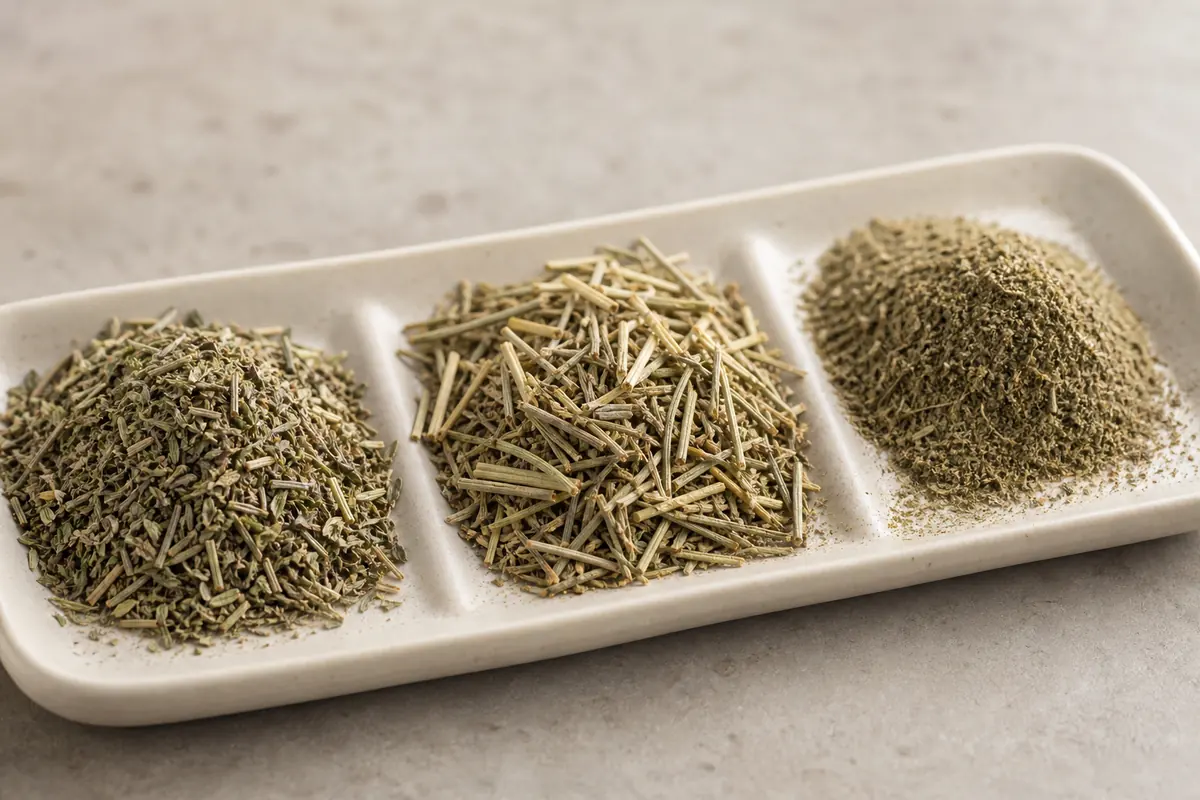
- Fine thyme should remain visible among larger rosemary pieces.
- Long stems dilute flavor and create an unpleasant bite.
- Excess powder loses aroma faster and coats food unevenly.
- Look: Seek recognizable green-brown leaves with few pale stems.
- Smell: Crush a pinch and expect thyme, pine, pepper, and earth.
- Check: Read the label for lavender, fennel, salt, or garlic before buying.
- Avoid: Skip jars that smell mainly dusty or show moisture clumps.
The aroma depends on volatile compounds that fade after grinding and air exposure. The broader flavor chemistry explains why crushing wakes a quiet jar.
How do you use Herbes de Provence?
Use Herbes de Provence where dried herbs have moisture, fat, and enough cooking time to soften. Roasts, braises, soups, and vegetables suit it well.
For chicken, mix the blend with oil and salt before rubbing the skin. Oil spreads the fine leaves and helps them cling.
For lamb, crush the mixture with garlic and black pepper. A lavender version works only when the floral note remains restrained.
For fish, use a lighter hand and shorter cooking time. Choose a lavender-free formula when the fish has a delicate sweet flavor.
For potatoes, zucchini, eggplant, or tomatoes, toss the blend with oil before roasting. Dry herbs scattered on top burn more easily.
Beans, lentils, and tomato sauce hydrate the leaves during simmering. Add the mixture early so rosemary softens and oregano loses its raw edge.
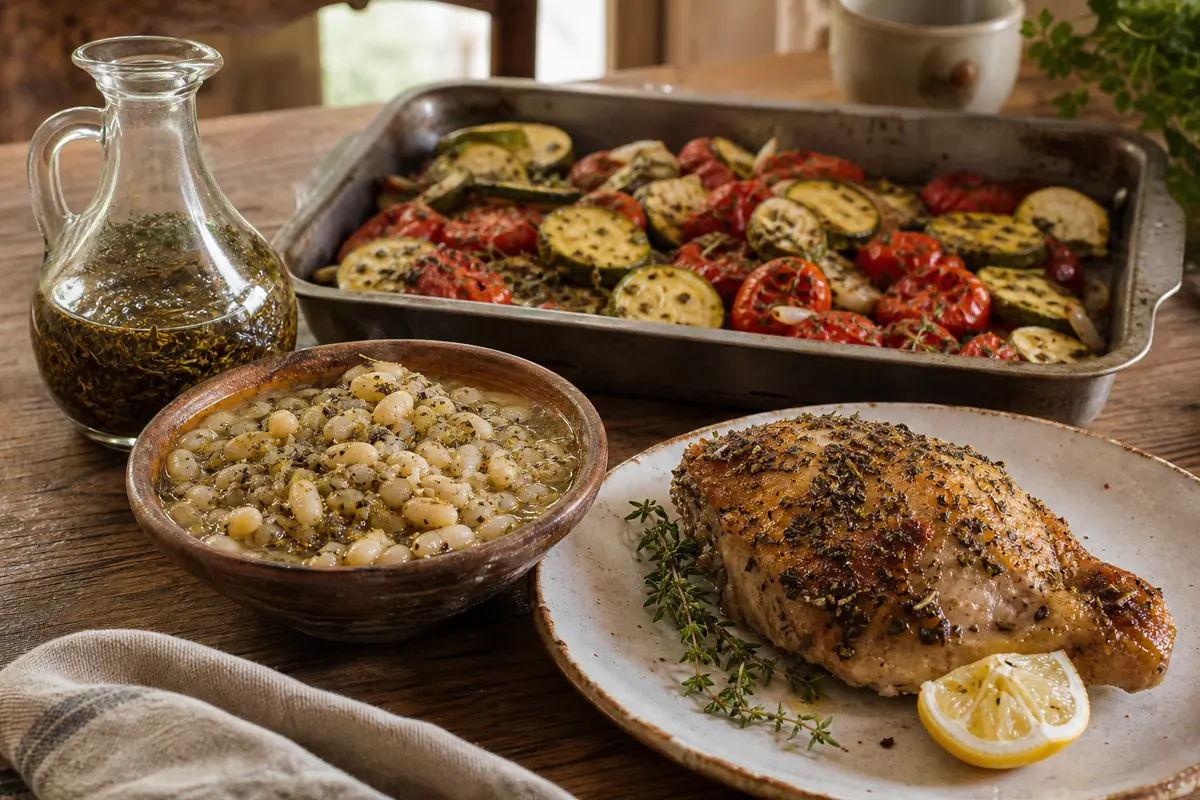
- Rub chicken with an oiled mixture before roasting.
- Stir the blend into beans or tomato sauce near the start.
- Hydrate a small amount before adding it to a cold dressing.
| Food | Application | Timing | Watch for |
|---|---|---|---|
| Chicken or lamb | Mix with oil, salt, and garlic | Before roasting | Herbs scorching on exposed edges |
| Fish | Use a thin oil coating | Shortly before cooking | Rosemary covering delicate flesh |
| Root vegetables | Toss thoroughly with oil | Before roasting | Dry leaves on the pan |
| Beans or stew | Stir into the liquid | Early in simmering | Adding so much that broth tastes dusty |
| Vinaigrette | Hydrate in vinegar first | Ten minutes before serving | Coarse leaves staying hard |
A cold dressing needs a different approach. Hydrate the herbs in vinegar, then whisk in oil using the same logic as flavor and fat.
How much should you use, and when should it go in?
Start with one teaspoon of Herbes de Provence for four servings. Strong rosemary or lavender may require less, while an old jar may seem weak.
Crush coarse blends between your fingers before measuring. This shortens rosemary needles and distributes savory and oregano more evenly.
For roasting, mix the herbs with oil before they touch the food. Add them at the start under moderate oven heat.
For grilling, keep the herbs beneath a thin oil film and away from direct flame. Charred rosemary and oregano taste bitter.
For soup, stew, or sauce, add the blend during the early simmer. Twenty minutes of moisture usually softens dried leaves.
For vinaigrette, cheese, or a finishing sprinkle, hydrate the blend first. Dry rosemary added at the table stays needle-like.
| Method | Starting amount | When to add | Adjustment cue |
|---|---|---|---|
| Roast, 4 servings | 1 teaspoon | Mix with oil before roasting | Add less when lavender is clear |
| Stew, 4 servings | 1 teaspoon | Early in the simmer | Taste after leaves soften |
| Grill, 1 pound food | 3/4 teaspoon | In an oiled rub | Keep away from open flame |
| Vinaigrette, 1/2 cup | 1/4 teaspoon | Hydrate in vinegar first | Strain if leaves remain coarse |
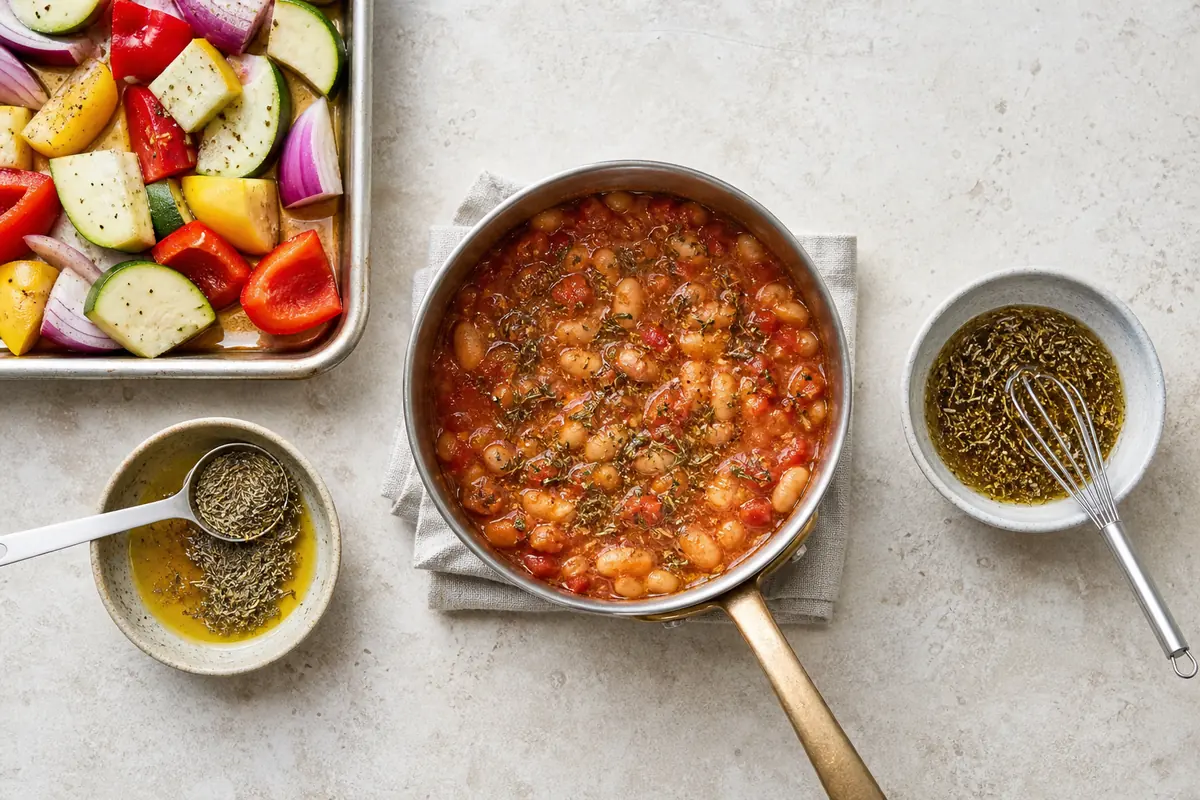
- One teaspoon is a cautious four-serving start.
- Dried leaves should soften before the food reaches the table.
- Direct flame and dry pan contact create bitter char.
Add more only after the blend has hydrated and warmed. The seasoning layers should build around the food instead of hiding it.
Fresh herbs behave differently because they contain water and brighter aromas. Use the fresh and dried conversion as a starting point, then taste.
Is Herbes de Provence the same as Italian seasoning?
The two mixtures overlap, but Herbes de Provence is not the same as Italian seasoning. Both often contain thyme, rosemary, and oregano.
Savory is the clearest marker in the French benchmark. It supplies a peppery note that many Italian seasoning formulas lack.
Italian seasoning commonly emphasizes basil and oregano. Some products also include parsley, garlic, sage, or chile, which move the flavor further away.
Lavender creates an obvious boundary when it appears. An Italian blend without floral herbs cannot copy that version without a deliberate addition.
| Feature | Herbes de Provence | Italian seasoning | Cooking effect |
|---|---|---|---|
| Common overlap | Thyme, rosemary, oregano | Thyme, rosemary, oregano | Both suit tomato and roasted food |
| Typical marker | Savory | Basil | Peppery versus sweet leafy emphasis |
| Possible extras | Lavender, fennel, tarragon | Parsley, garlic, sage, chile | Labels can change the swap |
| Best fit | French-style roasts, braises, beans | Pasta sauce, pizza, Italian-American dishes | Use follows the actual formula |
You can swap them in a forgiving stew or vegetable roast when their labels look similar. Begin with equal volume and correct after tasting.
Do not make that swap in a lavender-led rub or a basil-led sauce. The missing signature herb will be noticeable.
What can you substitute for Herbes de Provence?
Which substitutes work best depends on what the dish needs. A dry mixture of thyme, rosemary, savory, and oregano preserves the core structure.
For four teaspoons, combine one teaspoon each of rosemary, savory, and oregano with three-quarters teaspoon thyme. Round the thyme up when simple measuring matters.
When savory is unavailable, use thyme plus a small pinch of ground black pepper. Pepper replaces the bite, not savory's minty aroma.
Italian seasoning can replace the blend in tomato, beans, or roasted vegetables. Add extra rosemary when the substitute is led by basil.
| Substitute | Keeps | Misses or changes | Best use |
|---|---|---|---|
| Thyme, rosemary, savory, oregano | Core structure | Only the original ratio | Any recipe |
| Thyme, rosemary, oregano, black pepper | Woody herbs and peppery bite | Savory's mint note | Roasts and stews |
| Italian seasoning | Thyme, rosemary, oregano | Often adds basil and lacks savory | Tomato, beans, vegetables |
| Fresh thyme, rosemary, oregano | Bright herb family | Different moisture and timing | Short cooking and finishing |
Fresh herbs can replace the dry blend, but use about three times as much by volume. Add tender leaves later so their aroma survives.
Fresh rosemary still needs restraint because its needles are powerful. Chop it finely while leaving thyme and oregano slightly larger.
Do not add lavender merely to make a substitute seem complete. Use a tiny culinary-grade pinch only when the original dish needs a floral note.
How do you keep the blend fragrant?
Keep Herbes de Provence airtight, dry, and away from heat and direct light. Dried leafy herbs lose aroma faster after crushing.
Store the jar in a cabinet rather than above the stove. Repeated heat warms the leaves, while cooking steam causes clumps.
Pour the amount you need into your palm or a small dish. Shaking the open jar over a steaming pot introduces moisture.
- Close tightly: Air exposure carries away the most delicate aromas.
- Keep dark: A cabinet protects color and flavor better than a sunny rack.
- Keep dry: Use a clean spoon and never season directly above steam.
- Crush and smell: Replace the blend when a rubbed pinch stays quiet.
Buy a modest amount that you can finish while it still smells vivid. A large bargain bag often becomes expensive flavorless filler.
The same dried herb storage rules apply to homemade mixtures. Label the blend with its mixing date and lavender choice.