
Marjoram: Everything You Know About Oregano, Reversed
Why it goes in at the end, why dried is a downgrade, and what wild marjoram really is.
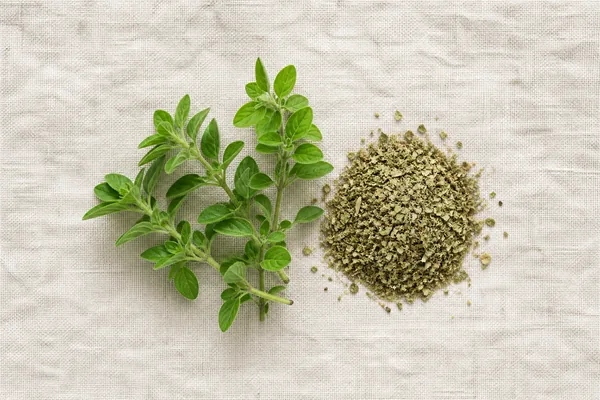
Marjoram is oregano's gentler relative and almost every habit you have with oregano runs backwards with it. Oregano is often better dried and survives a long simmer. Marjoram is better fresh and belongs at the end of the cooking rather than the start.
Marjoram is where oregano's rules stop
Marjoram and oregano are close relatives from the same genus, which is exactly why cooks get caught out.
Work out the dried marjoram for your dish
Oregano is one of the rare herbs that improves with drying and holds up to an hour in a sauce. That is the reputation the whole family carries.
Marjoram does neither. It is sweeter, softer and far more fragile, and it loses most of what it has to both drying and heat.
A cook who treats marjoram as mild oregano puts it in at the start of a braise and wonders why it disappeared. Reversing that one habit is most of what this herb asks of you.
The two herbs share a family, but they ask for opposite handling.
| Oregano | Marjoram | |
|---|---|---|
| Flavor | Pungent, peppery, assertive | Sweet, floral, gentle |
| Dried | Often better than fresh | Loses a great deal |
| When it goes in | Early, it survives a simmer | At the end, off the heat |
| Classic home | Southern Italy, Greece, Mexico | Central Europe, Provence |
What marjoram tastes like and why heat erases it
Marjoram tastes sweet first, followed by light pine, faint citrus and a floral note that oregano does not have.
The pepperiness that defines oregano is almost absent. Marjoram never bites, which is why it suits eggs, mushrooms and buttered vegetables that oregano would trample.
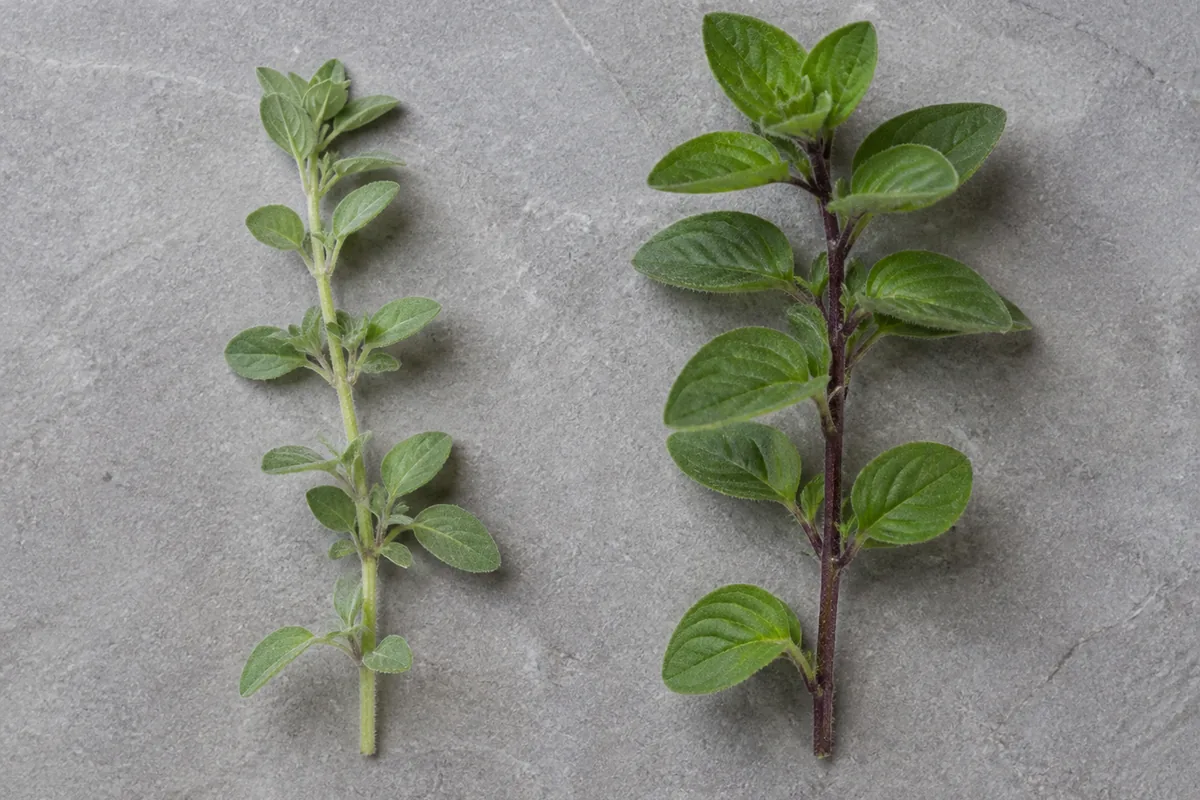
- Marjoram: Small rounded grey-green leaves, slender pale stem.
- Oregano: Slightly larger, darker, on a sturdier reddish stem.
- Rub a leaf: Marjoram smells sweet and floral, oregano sharp and peppery.
A mild bitterness arrives at the end of a mouthful. That slight edge stops the sweetness from cloying in rich food.
The aroma fades quickly because the leaf is tender and its fragrant compounds escape with steam. A long simmer removes the floral and citrus notes first, leaving little that reads clearly as marjoram.
Fat slows that loss better than watery liquid. Butter and meat fat hold the aroma close to the food while steam carries it away from soup or sauce.
Fresh, dried, wild, and knotted marjoram are not interchangeable
Fresh marjoram carries the sweetness and floral lift that make the herb distinct. Drying takes those top notes first and leaves something closer to a weak, slightly dusty oregano.
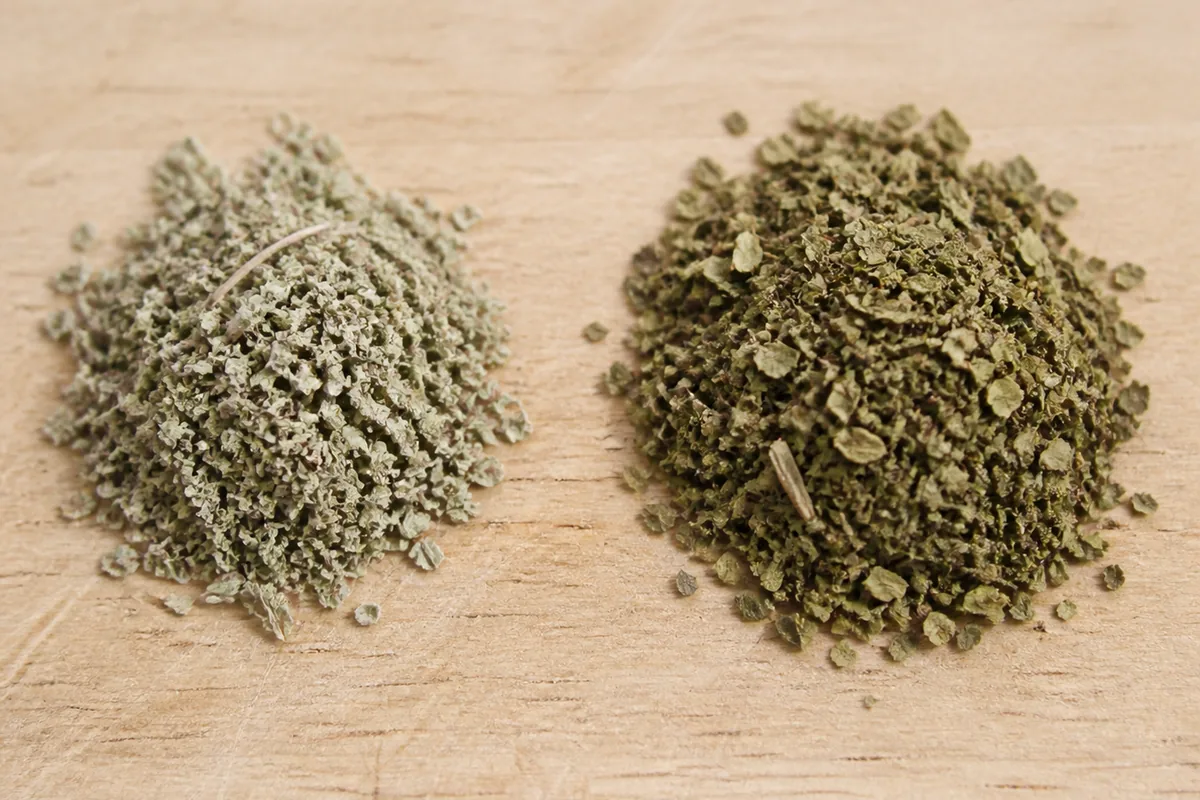
- Dried oregano: Holds color and pungency, often preferred to fresh.
- Dried marjoram: Pale and much quieter, useful but not the same herb.
- If buying dried: Get it recently and use it within months, not years.
Dried marjoram still has a real job in fatty, long-cooked Central European food. It seasons sausage and potatoes in the background where fresh leaf would bring unwanted water or lose its aroma during storage.
On plant labels and seed packets, marjoram proper appears as Origanum majorana, sweet marjoram or knotted marjoram.
Wild marjoram is a common name for Origanum vulgare, which is oregano. A seed packet marked wild marjoram will give you an oregano plant.
Pot marjoram is Origanum onites, a hardier species with a flavor between sweet marjoram and oregano. Buy by the botanical name when the label provides one, or compare the smell when it does not.
Knotted marjoram gets its name from the tight rounded bud clusters that form before flowering. The leaf tastes sweetest at that stage, before the plant puts more energy into flowers and seed.
The Middle Eastern herb called za'atar adds one more name to check. It is usually Origanum syriacum, although commercial za'atar blends may use marjoram, oregano or thyme when the traditional herb is unavailable.
Where marjoram belongs, from Provence to Central Europe
Marjoram has two strong culinary homes, and each shows a different side of the herb.
Central European cooks use it with pork, liver, potato, cabbage, goose fat and white beans. Polish, German, Czech and Hungarian dishes rely on dried marjoram more heavily than Mediterranean cooking does.
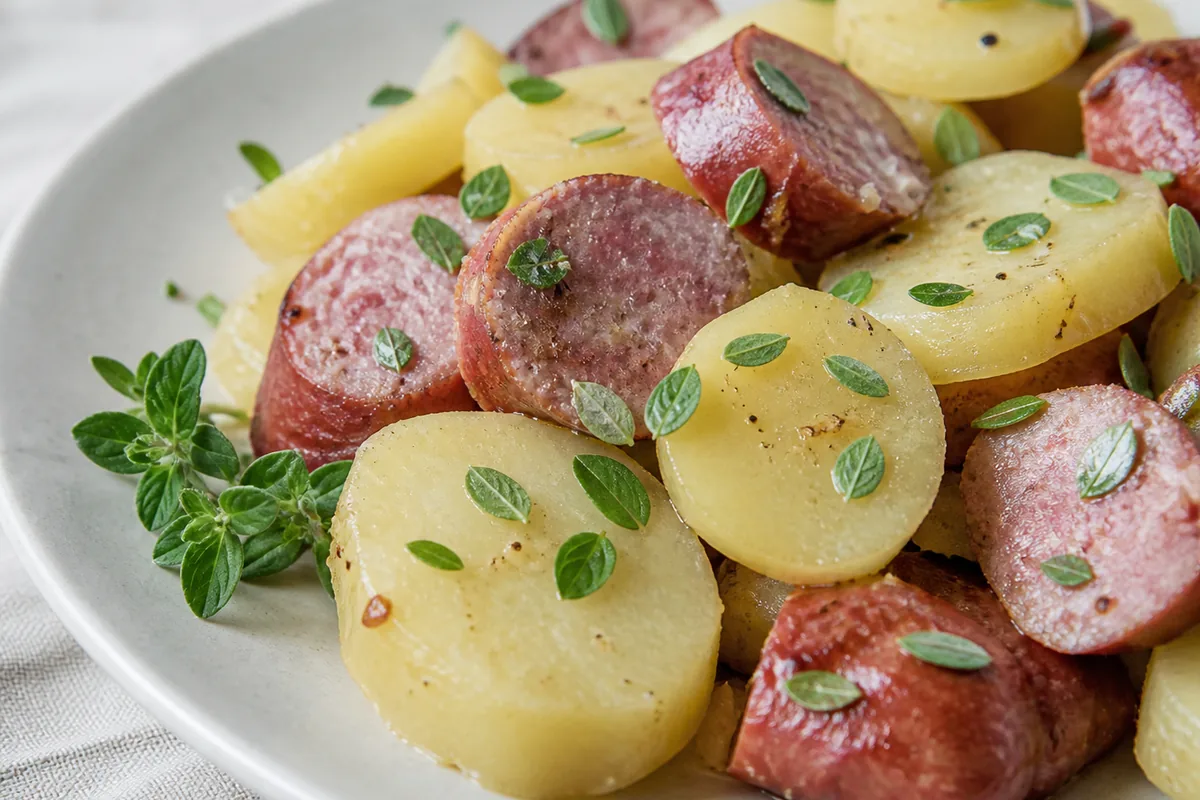
- Classic pairing: Pork, liver, potato and cabbage.
- Background seasoning: Dried marjoram works in sausage and slow-cooked dishes.
- Fresh aroma: Scatter fresh leaves on hot food after the heat is off.
In Provence, marjoram appears with thyme, savory and rosemary in herb mixtures. Its sweetness softens those woody, resinous leaves instead of competing with them.
The same gentle character suits eggs, mushrooms, carrots, lamb and buttered beans. It works best where the cook wants herbal freshness without oregano's peppery bite.
Why sausage is marjoram's strongest use case
Sausage uses marjoram as a defining seasoning rather than a faint garnish.
Liver sausage, Polish kielbasa, white sausage and many blood sausages use dried marjoram to cut through their richness.
A starting dose of 0.5 to 1 gram per kilogram makes the filling taste distinctly herbal instead of merely fatty and leaves room to adjust the next batch.
Pork, liver and goose fat can flatten the palate. Marjoram cuts through that richness with sweetness and light pine without adding acid or chile heat.
Dried leaf is correct here for practical reasons. Fresh marjoram brings water into a mixture where moisture control matters, and its floral character would not survive curing anyway.
The dried herb keeps enough aroma to work through mixing, cooking and storage. That combination explains why marjoram became a staple in Central European charcuterie rather than just another finishing herb.
When to add marjoram and how much to use
Add fresh marjoram off the heat or scatter it over the finished plate. This timing preserves the aroma that a simmer would carry away.
For a slow dish, add half early for a quiet background note and the other half at the end for the floral top note. A dried herb rub on meat is the exception because fat and the forming crust protect some of its aroma during roasting.
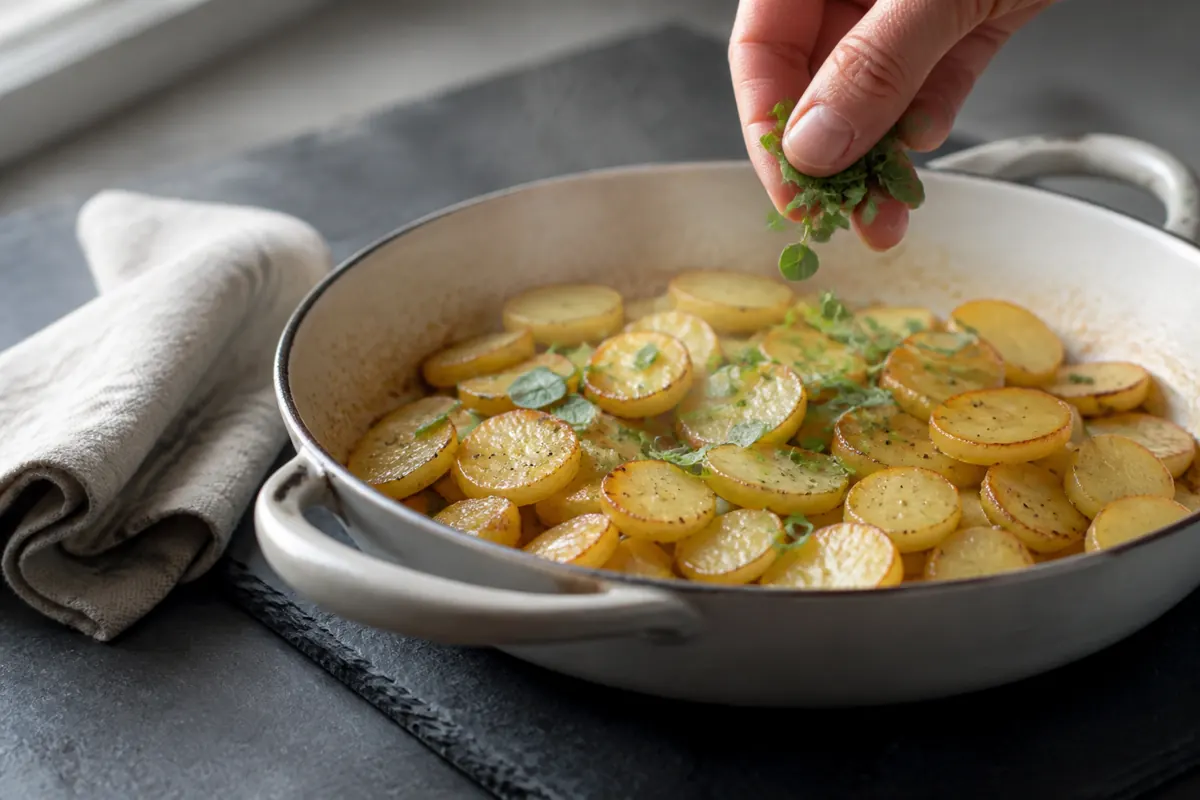
- Pan off the burner: Residual warmth releases the aroma without simmering it away.
- Fresh leaves last: Scatter or fold them in just before serving.
- Slow dishes: Add a small early dose for background and save the rest for the finish.
A tablespoon of chopped fresh marjoram for four servings is a useful starting point. The herb is mild enough that doubling that amount is less risky than doing the same with tarragon.
| Dish | Fresh marjoram | Note |
|---|---|---|
| Roast pork or lamb, serves 4 | 1 tbsp chopped, at the end | Add a smaller dried dose to the rub if needed |
| Potato dishes | 1 tbsp per 500 g | Fold in off the heat while the potatoes are hot |
| Egg dishes | 1 tsp per portion | Add just before serving |
| Soup or bean stew | 2 tsp at the end | Split the dose between early and late for a slow cook |
| Dried marjoram | About one third of the fresh amount | Concentrated by volume but flatter in aroma |
Too little is the more common mistake. A timid pinch disappears, especially in fatty meat or a large pot of beans.
Butter, oil, and freezing preserve what drying loses
Marjoram keeps more of its sweetness in fat or in the freezer than it does in a jar of dried leaves.
For marjoram butter, blend chopped fresh leaf into softened butter with salt, roll it and freeze it in portions. A slice melts straight onto potatoes, pork or white beans and releases the aroma at the table.
Infused oil holds the same fat-soluble aroma, but fresh herbs in oil require refrigeration. Make a small quantity and use it within four days, or freeze it for longer storage, rather than leaving a bottle at room temperature.
Freezing plain leaves is the simplest option. Strip them from the stems, freeze them flat, and add them straight from frozen to cooked food because thawed leaves lose the texture needed for garnish.
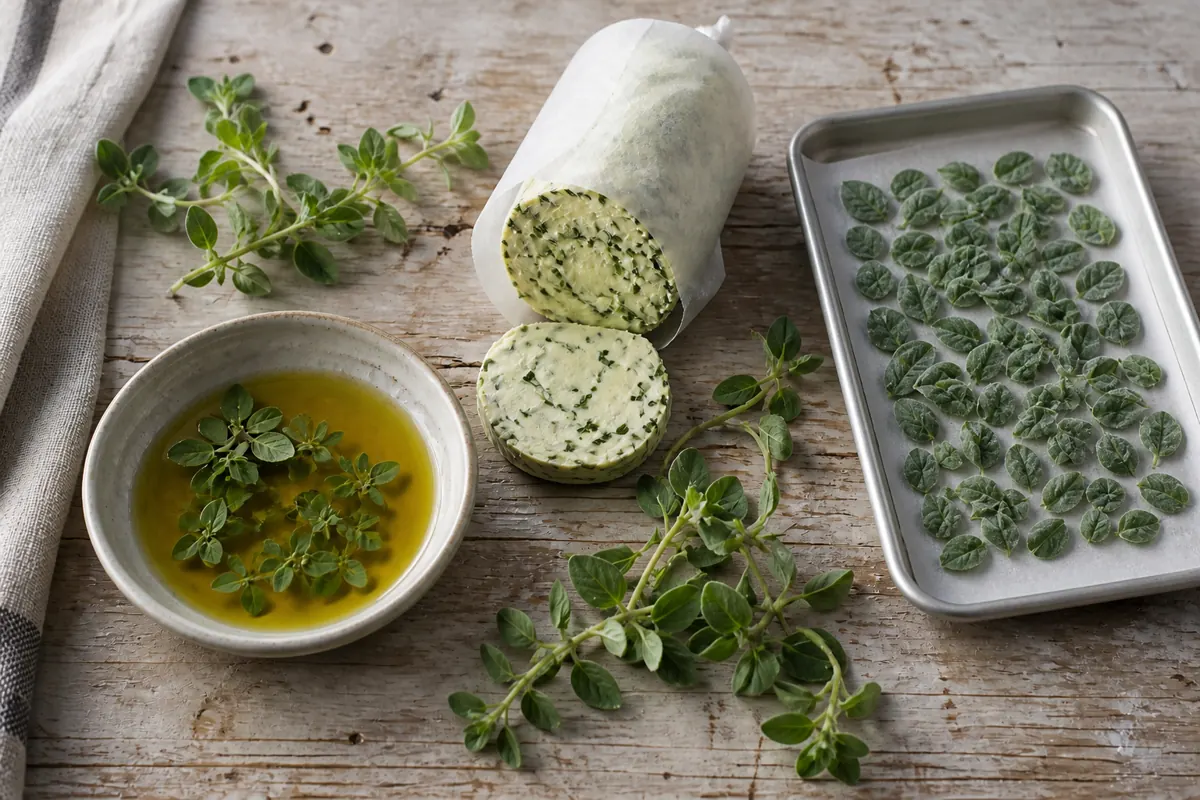
- Herb butter: Portion and freeze it for potatoes, pork, beans or eggs.
- Refrigerated oil: Make a small batch and use it within four days, or freeze it.
- Loose frozen leaves: Freeze them flat and add them directly to cooked food.
Drying remains useful for sausage and slow dishes, but it cannot preserve the floral top note. Choose the method according to the job instead of expecting all three forms to taste alike.
Growing, harvesting, buying, and storing marjoram
Sweet marjoram is a tender Mediterranean perennial that many gardeners grow as an annual. It wants full sun, sharp drainage and soil that never stays waterlogged.
The plant grows readily from seed and does well in a pot on a windowsill.
Pinch the growing tips to keep it bushy and delay flowering.
Harvest when the rounded bud clusters look like small green knots but have not opened. Once the flowers open, the leaves become coarser and the sweetness drops.
Fresh marjoram wilts faster than oregano. Choose firm grey-green sprigs with intact leaves and no blackening where leaf meets stem.
- Fresh bunch: Reject slimy stems, black leaf joints and packets wet with condensation.
- Fridge: Stand the stems in a little water, cover loosely and use within four or five days.
- Freezer: Strip and freeze extra leaves flat for cooked dishes.
- Dried jar: Buy a small quantity and replace it when a rubbed pinch no longer smells sweet and floral.
Old dried marjoram smells of little and explains why many cooks think the herb is boring. Adding more stale leaf only adds dusty texture.
How marjoram balances herb blends
Marjoram keeps herbes de Provence from tasting like a pile of pine needles.
Thyme, rosemary and savory are resinous herbs built for long roasting. Marjoram rounds their sharper edges with sweetness and a softer floral aroma.
That balance changes as the jar ages because marjoram fades before rosemary does. An old blend can taste medicinal even when its woody herbs still smell strong.
A pinch of fresh or recently dried marjoram can rescue that imbalance. Top up the softening herb instead of adding more of the whole mixture.
The same reasoning applies to other blends, but the balancing ingredient changes. Basil often softens Italian seasoning, while sumac supplies the bright edge in za'atar.
What can replace marjoram
Oregano is the easiest marjoram substitute, but it makes the dish sharper and more peppery.
Use one half to two thirds as much oregano. Thyme is the better swap in slow savory cooking because it survives the heat that makes marjoram disappear.
| Instead of marjoram | Use | What changes |
|---|---|---|
| Oregano | Half to two thirds | Sharper, peppery, less sweet |
| Thyme | The same amount | More resinous, less floral |
| Summer savory | The same amount | Similar savoury role, harder to find |
| Herbes de Provence | Half the amount | Adds rosemary, thyme and savory too |
No substitute fully reproduces fresh marjoram's sweetness. When that floral finish matters, use less of a stronger replacement and add it cautiously rather than trying to match the volume.