
Which Herbs de Provence Substitute Fits Your Dish?
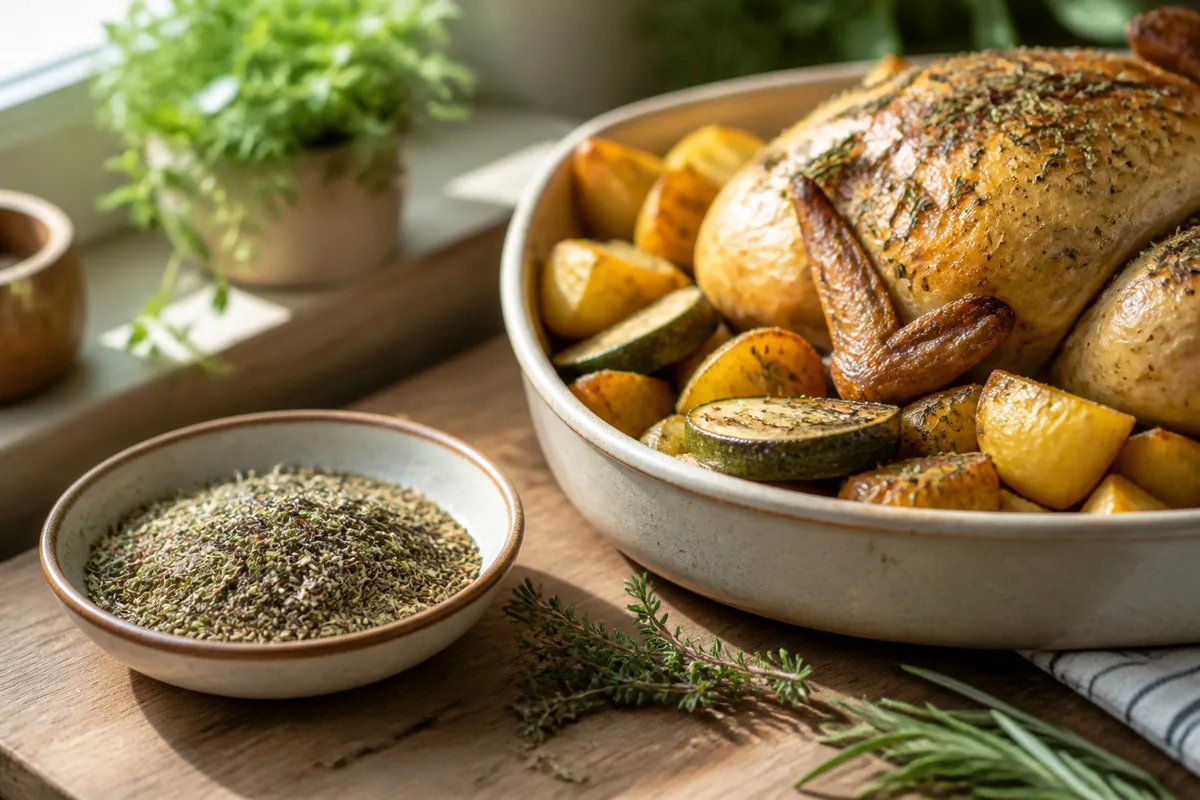
Herbs de Provence Is a Savory Herb Blend Before It Is Floral
The closest herbs de Provence substitute is a measured mixture of thyme, savory, rosemary, and oregano. Italian seasoning is the fastest one-jar answer when the dish can accept more basil or oregano.
Lavender is optional rather than the foundation of the blend.
The fixed French Label Rouge composition uses rosemary, oregano, savory, and thyme without lavender. Commercial jars outside France may add marjoram, basil, fennel, bay, or lavender, so the label on your missing jar matters.
A useful replacement must preserve the sturdy herbal base first.
- Savory base
- Thyme and savory give the blend its dry, earthy center.
- Resinous note
- Rosemary adds pine-like aroma and needs a smaller share when the needles are coarse.
- Sharp lift
- Oregano can brighten tomatoes and beans but can turn medicinal when it leads.
- Floral note
- Culinary lavender is a tiny optional correction, not a required equal part.
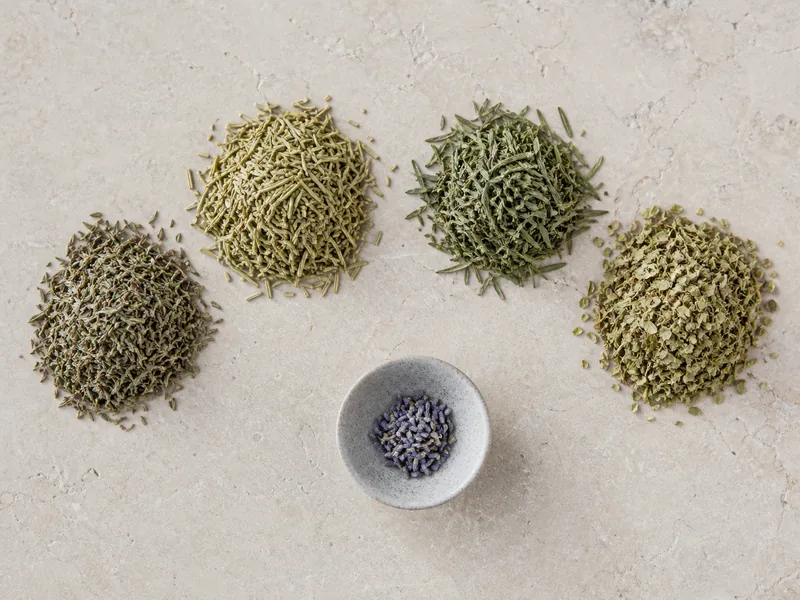
- Savory arc: Thyme, rosemary, savory, and oregano build the cooking blend.
- Tiny bowl: Lavender needs only a pinch when it belongs at all.
- Separate measure: Floral aroma should not be mistaken for the whole blend.
Dried thyme, rosemary, savory, and oregano tolerate roasting or simmering because their aroma releases over time. A delicate fish fillet or pale cream sauce exposes woody rosemary much faster than a browned chicken or tomato braise.
Smell each jar before measuring.
Stale leaves need replacement, not a larger quantity that adds dust without aroma.
Five Herbs de Provence Substitutes for Different Dishes
A four-herb homemade blend gives you the most control.
The other choices work by accepting a narrower flavor direction that suits the food.
| Number | Substitute | Starting amount | Best use | Main change |
|---|---|---|---|---|
| 1 | Four-herb homemade blend | 1 tablespoon | Roasts, braises, beans, tomatoes | Closest controlled savory core |
| 2 | Italian seasoning | 1 tablespoon | Tomato dishes, vegetables, general roasts | More basil or oregano |
| 3 | Thyme and rosemary | 2 teaspoons thyme plus 1 teaspoon rosemary | Chicken, lamb, potatoes, squash | More resinous and less rounded |
| 4 | Marjoram and oregano | 2 teaspoons marjoram plus 1 teaspoon oregano | Beans, tomatoes, zucchini, mild soup | Softer and less woody |
| 5 | Culinary lavender correction | Up to 1/8 teaspoon per tablespoon base blend | A recipe based on a lavender-containing jar | Floral and easy to overuse |
1. A Four-Herb Homemade Blend
For one tablespoon herbs de Provence, combine one teaspoon dried thyme, one teaspoon dried savory, one-half teaspoon crushed rosemary, and one-half teaspoon oregano. The measured total is three teaspoons, which equals one tablespoon.
Thyme and savory carry the volume because they remain earthy without becoming strongly resinous. Rosemary and oregano speak more loudly, so each receives a smaller measure.
- Crush the rosemaryRub coarse needles between your fingers or pulse them briefly so they distribute.
- Measure the baseAdd one teaspoon thyme and one teaspoon savory to a small bowl.
- Add the stronger herbsMix in one-half teaspoon rosemary and one-half teaspoon oregano.
- Smell the blendAdd another thyme pinch if rosemary is the first aroma you can name.
- Season the dishUse the mixture at the recipe's original dried-herb stage.
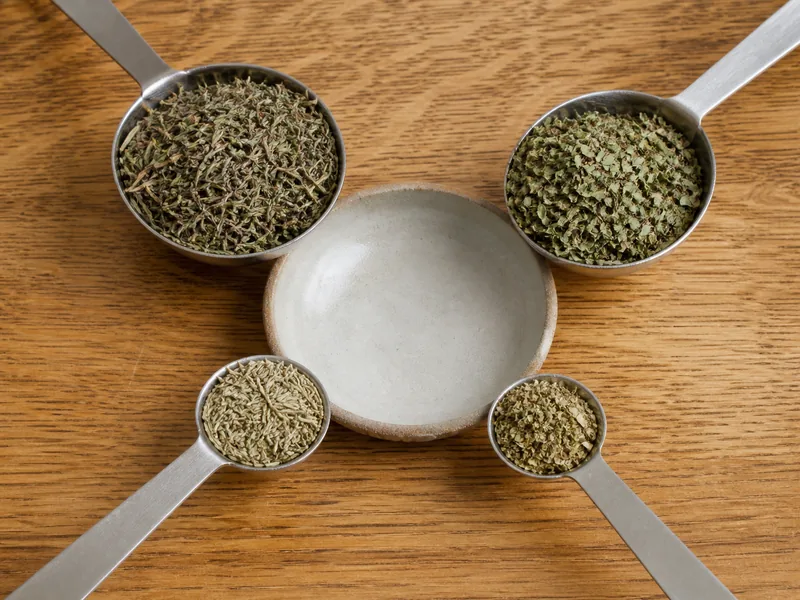
- Large measures: Thyme and savory form the earthy center.
- Small measures: Rosemary and oregano add stronger high notes.
- Center bowl: Mix before seasoning so no herb lands in a patch.
This ratio is a practical small-batch reconstruction, not a universal regional formula. The official fixed formula itself uses different percentages, and household or commercial blends vary further.
Use the homemade blend in roast chicken, lamb, potatoes, ratatouille-style vegetables, white beans, or a long tomato braise.
Skip lavender unless the original package listed it or the recipe clearly expects a floral note.
A small batch keeps the herbs fresh. Mix only what the dish needs rather than storing a spoonful left in a wide bowl where aroma escapes.
2. Italian Seasoning
Use one tablespoon Italian seasoning for one tablespoon herbs de Provence.
It is the easiest replacement because thyme, rosemary, oregano, and marjoram often appear in both families of blends.
Read the label before the pan.
Basil may make the mixture sweeter and greener, while an oregano-heavy jar can sharpen tomato sauce or beans.
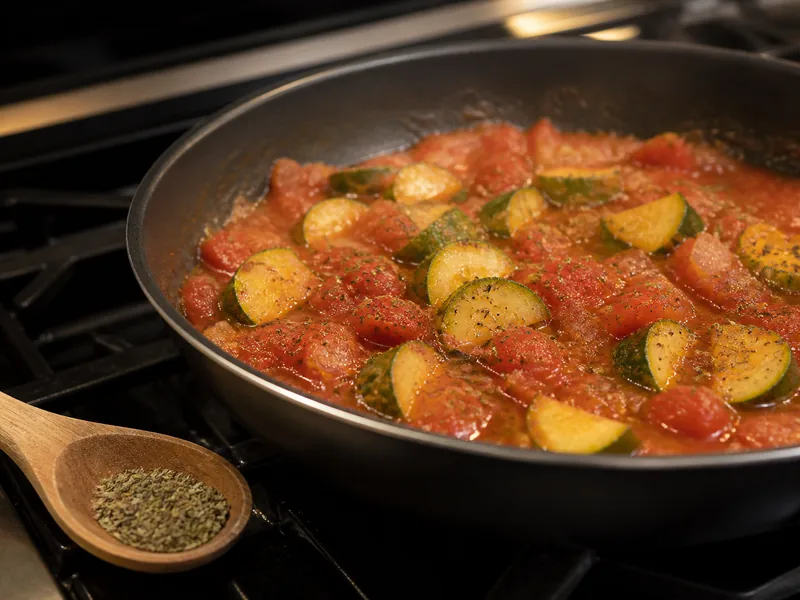
- Wet braise: Moisture hydrates the dried leaves.
- Tomato base: Acidity can carry extra oregano.
- Small spoon: Begin below the full amount when the jar smells sharp.
Italian seasoning fits tomato sauces, vegetable braises, bean soup, roast zucchini, and general chicken seasoning. Moisture and cooking time integrate its softer basil note.
A lamb roast or dish built around rosemary may taste flatter with the one-jar swap.
Add only a small crushed rosemary pinch after smelling the blend, since many Italian seasonings already contain it.
This is a convenient cross-regional change. The result can taste balanced without reproducing the exact herb profile of the missing French blend.
3. Thyme and Rosemary
Mix two teaspoons dried thyme with one teaspoon crushed rosemary for each tablespoon herbs de Provence. The unequal ratio keeps rosemary from taking over the roast.
Thyme provides a dry, earthy line that sits behind meat and vegetables.
Rosemary brings a more resinous aroma that fat and browned surfaces carry well.
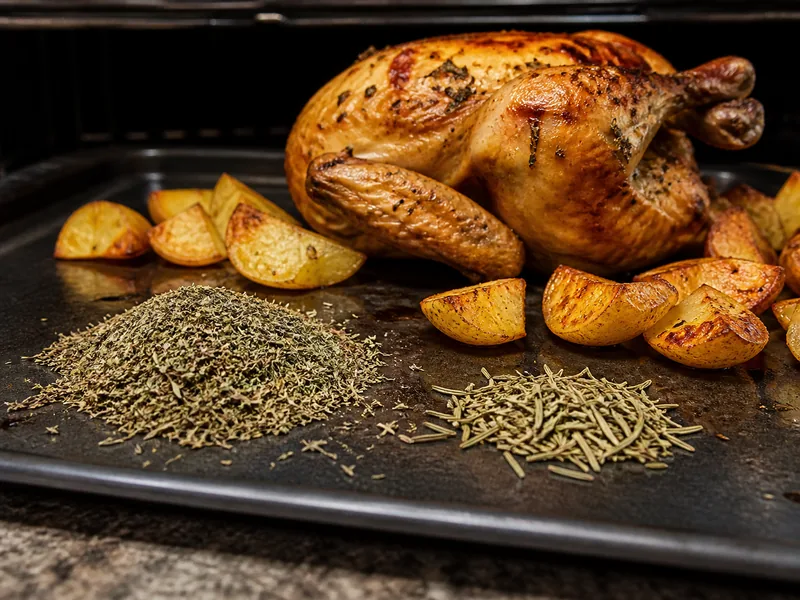
- Thyme measure: The earthy herb forms the larger base.
- Rosemary measure: Crushed needles stay below the thyme volume.
- Roast surface: Fat and browning integrate the resinous note.
A roast chicken, lamb shoulder, potatoes, squash, or mushroom tray can accept this narrower pair. Add it before roasting so the herbs meet oil and surface moisture.
Crush long rosemary needles before measuring. Large needles distribute poorly and can feel woody in a sauce or on tender fish.
The pair lacks oregano lift, savory depth, and softer marjoram. In a tomato dish, add a small oregano pinch only when the sauce tastes muted after simmering.
4. Marjoram and Oregano
Use two teaspoons dried marjoram plus one teaspoon oregano for one tablespoon herbs de Provence. Marjoram softens oregano's sharper edge while keeping a leafy Mediterranean character.
Marjoram stays gentle while oregano lifts the broth.
Acidity can carry oregano's sharper aroma.
The soft vegetables welcome leafy herbs without needing rosemary.
Marjoram keeps the result lighter than a woody blend.
Choose the thyme and rosemary pair when a resinous backbone matters.
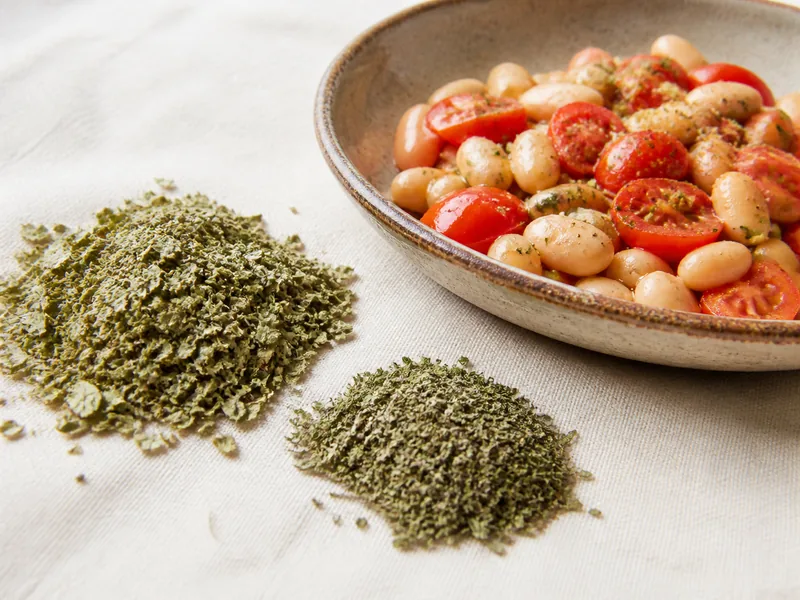
- Larger pile: Marjoram keeps the mixture soft.
- Smaller pile: Oregano adds sharper lift.
- Bean dish: Mild ingredients expose the pair without demanding rosemary.
This option lacks the pine-like depth of rosemary and the dry peppery quality of savory.
It works best when those absences make the dish gentler rather than incomplete.
Start below the full amount if your oregano is freshly opened. Its volatile aroma may be much stronger than the marjoram beside it.
For a long tomato braise, add most of the pair early and reserve a small marjoram pinch for the final minutes. That split preserves some fresh herbal lift without leaving raw dried oregano on the surface.
5. Culinary Lavender as a Small Correction
Lavender should correct a savory substitute rather than replace the full blend. Add no more than one-eighth teaspoon dried culinary lavender to one tablespoon homemade blend or Italian seasoning.
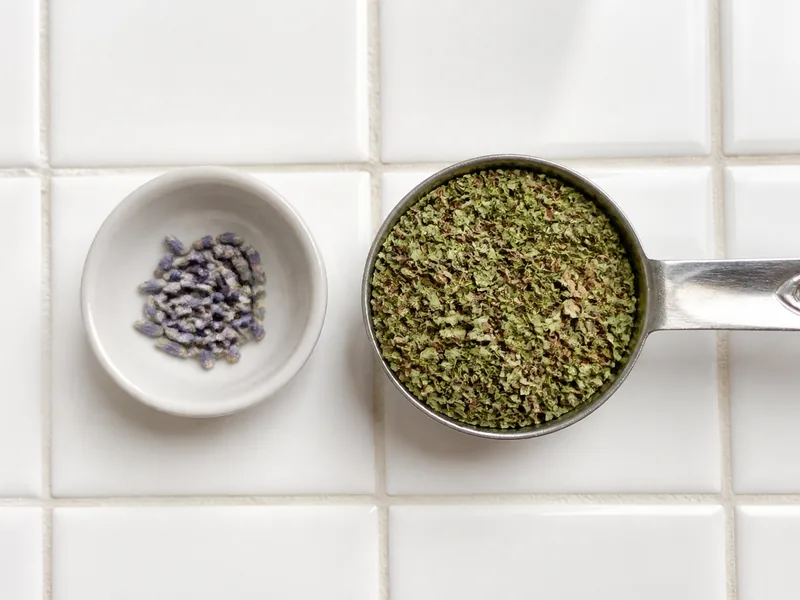
- Tiny bowl: Use only food-grade culinary buds.
- Full spoon: The savory blend carries nearly all the volume.
- White surface: The size difference stays easy to judge.
Use the correction only when the original jar listed lavender or when the recipe depends on a faint floral edge with lamb, roast chicken, honey, or citrus.
Many credible herbs de Provence formulas omit lavender completely.
Crush the buds lightly with thyme before mixing them into the larger blend. This prevents one bite from receiving the whole floral dose.
If you can name lavender immediately after the food is cooked, it is already leading.
Dilute with more unseasoned food or sauce rather than adding rosemary to fight it.
Match the Substitute to the Dish
Browning, fat, acidity, and cooking time decide which missing herb matters.
A roast can absorb resinous rosemary, while delicate fish exposes it.
Use the homemade blend or thyme and rosemary.
Use the homemade blend, with a lavender pinch only when the recipe expects it.
Use Italian seasoning or marjoram and oregano.
Use the homemade blend for savory depth or the leafy pair for a gentler result.
Use mostly thyme with a small marjoram amount and keep rosemary minimal.
Use the homemade blend before grilling so oil carries the dried herbs.
Tomatoes give oregano room because acidity and long cooking round its sharpness. White beans reveal dusty herbs, so simmer dried leaves long enough to hydrate.
Fish needs restraint because the cooking time is short and the flesh is delicate.
A teaspoon of thyme plus a small marjoram pinch is often cleaner than a full woody substitute.
For a dry rub, crush every coarse leaf before it touches the food. Smaller particles distribute across oil and salt instead of collecting in bitter patches.
In a marinade, mix the herbs into oil or another wet ingredient before coating the food.
Dried rosemary left on an exposed hot surface can scorch.
Reduce the Substitute When the Recipe Already Lists Herbs
Some recipes list thyme, rosemary, or oregano separately and then ask for herbs de Provence as well.
Read the whole ingredient list before rebuilding the blend so one herb does not enter twice at full strength.
Start with the separately measured herb because the recipe writer chose that note on purpose.
Build only the missing parts of the blend around it.
If a recipe already contains one teaspoon thyme and asks for one tablespoon herbs de Provence, leave thyme out of the replacement. Use one teaspoon savory, one-half teaspoon crushed rosemary, and one-half teaspoon oregano, then taste before filling the missing volume with anything else.
The same logic applies to rosemary. Keep the recipe's rosemary measure, then use one teaspoon thyme, one teaspoon savory, and one-half teaspoon oregano as the replacement.
Omit thyme from the homemade blend and use the savory, rosemary, and oregano portions.
Omit rosemary and keep thyme, savory, and oregano.
Omit oregano so tomato sauce or beans do not turn sharp.
Choose one blend rather than stacking two multi-herb mixtures.
Keep salt separate until the herbs have dispersed and the food can be tasted.
A commercial Italian seasoning needs a different adjustment because its proportions are unknown.
Begin with half the requested herbs de Provence volume when the recipe already includes thyme, rosemary, or oregano, then smell and taste after cooking.
For a dry rub, mix the adjusted herbs with the oil and salt before coating all the meat. Cook a small trimming or a single vegetable piece first when a new jar smells strongly of rosemary.
A small recipe needs the same reasoning at a smaller scale.
For one teaspoon herbs de Provence, the homemade ratio becomes roughly one-third teaspoon thyme, one-third teaspoon savory, one-sixth teaspoon rosemary, and one-sixth teaspoon oregano.
One-sixth teaspoon is difficult to measure with ordinary spoons. Use a small pinch for each stronger herb, mix thoroughly, and stop when the rosemary is present without being the first aroma.
Do not compensate for a smaller herb volume with garlic powder, onion powder, salt, or pepper unless the recipe already needs those ingredients. They change a seasoning mixture in ways the missing herb blend did not request.
This adjustment may produce less than the volume printed in the recipe, and that is acceptable.
The goal is to restore the missing herb roles while respecting the seasoning that is already in the dish.
Know When a Missing Spoonful Is Better Left Out
Omission is a real option when the recipe asks for only a small finishing pinch.
A strongly rosemary-led or lavender-heavy replacement can change a delicate dish more than the missing blend would have improved it.
Skip the substitute in a raw dressing when every available dried herb tastes dusty or coarse. Fresh thyme or marjoram can be added separately if the dressing still needs a green note.
Short-cooked fish, eggs, and pale cream sauces also offer little time for woody leaves to soften. Season the food with salt, fat, and acid first, then decide whether a small thyme pinch is genuinely missing.
For a long braise or roast, omission has a larger cost because the blend contributes throughout cooking. In that case, the controlled homemade mixture is safer than abandoning the herb layer completely.
The quantity in the recipe helps set the decision. Leaving out one-quarter teaspoon from a large stew is usually less noticeable than replacing it with the same amount of an unsuitable perfumed blend.
Fresh Herbs Change the Ratio and the Clock
Fresh herbs contain water and occupy more loose volume than dried leaves. Use about three times the volume as a starting point, then adjust for the herb rather than applying the number blindly.
For one tablespoon dried blend, begin with three tablespoons total chopped fresh herbs.
Keep fresh rosemary below an equal share because its flavor remains forceful even when the needles are tender.
- Choose the herbsUse mostly thyme and savory or marjoram, with less rosemary and oregano.
- Strip and chopRemove tough stems and chop the leaves so they disperse.
- Separate the timingAdd rosemary and sturdy thyme earlier, then save soft marjoram for later.
- Protect the leavesMix chopped herbs with oil for roasting or add them after liquid enters a pan.
- Taste near the endAdd another fresh thyme pinch only after the herbs have wilted and released aroma.
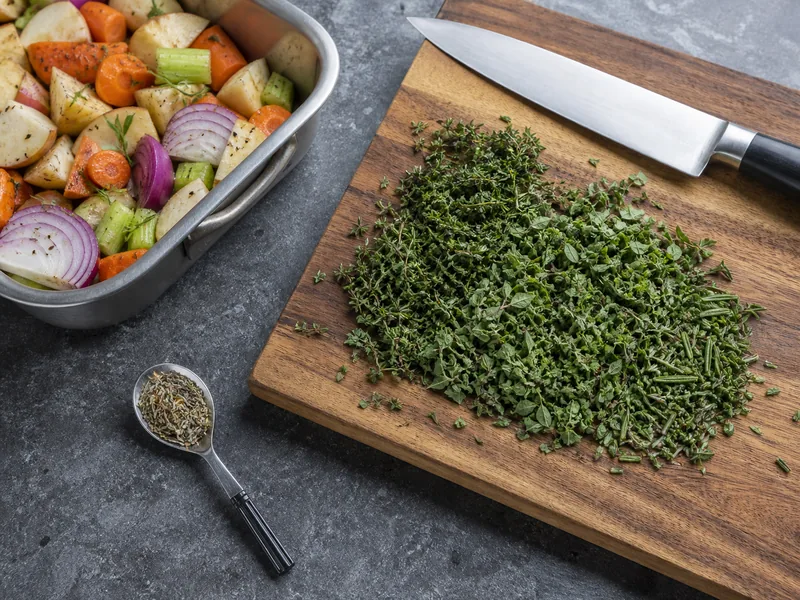
- Small spoon: Dried leaves pack concentrated aroma.
- Large board: Fresh herbs contain water and occupy more volume.
- Roasting pan: Add sturdy herbs earlier and softer leaves later.
Whole thyme or rosemary sprigs can simmer in a braise and be removed before serving. Chopped fresh leaves become part of the dish and release their aroma faster.
Fresh oregano can taste peppery or grassy when used at triple volume in a short sauce.
Start lower when the leaves are young and strongly aromatic.
Do not replace a dried tablespoon with a fresh tablespoon and expect equal strength. The small fresh measure often disappears, especially in a large roast or pot of beans.
Correct the Herb That Is Leading
Name the dominant note before adding another herb blend.
Each imbalance needs a different correction.
- Too resinousRosemary is leading. Add more unseasoned food, sauce, beans, or potatoes and stop adding woody herbs.
- Too sharpOregano is leading. Dilute the base and give a wet dish more cooking time before tasting again.
- Too floralLavender is leading. Increase the unseasoned base because another strong herb will create competition rather than remove perfume.
- Too dustyOld dried herbs or underhydrated leaves are exposed. Add moisture and gentle cooking time, but replace stale jars next time.
- Too flatAdd a small fresh thyme or marjoram pinch near the end instead of another full dried tablespoon.
- Too woody in textureRemove visible rosemary needles when possible and crush them more finely for the next batch.
Acid can brighten a heavy bean or tomato dish, but it does not erase lavender or rosemary. Use lemon only when the recipe already welcomes it.
More salt may make weak herbs seem louder for one bite while leaving the balance unchanged.
Correct the herb ratio before seasoning again.
Omission is cleaner when a delicate dish needs only a small herb accent and every available blend smells strongly of rosemary or lavender. The food can keep its own flavor without the missing spoonful.